Go and dig my grave today!

Full Text

Go and dig my grave today!
Weary of my wanderings all,
Now from earth I pass away,
For the heavenly peace doth call;
Angel voices from above
Call me to their rest and love.

Go and dig my grave today!
Homeward doth my journey tend,
And I lay my staff away
Here where all things earthly end,
And I lay my weary head
In the only painless bed.

What is there I yet should do,
Lingering in this darksome vale?
Proud and mighty, fair to view,
Are our schemes, and yet they fail,
Like the sand before the wind,
That no power of man can bind.

Farewell, earth, then; I am glad
That in peace I now depart,
For thy very joys are sad,
And thy hopes deceive the heart;
Fleeting is thy beauty's gleam,
False and changing as a dream.

253
And to you a last good night,
Sun and moon, and stars so dear;
Farewell all your golden light;
I am travelling far from here,
To the splendours of that day
Where ye all must fade away.

Farewell, O ye much-loved friends!
Grief hath smote you as a sword,
But the Comforter descends
Unto them that love the Lord.
Weep not o'er a passing show,
To th' eternal world I go.

Weep not that I take my leave
Of the world; that I exchange
Errors that too closely cleave,
Shadows, empty ghosts that range
Through this world of nought and night,
For a land of truth and light.

Weep not, dearest to my heart,
For I find my Saviour near,
And I know that I have part
In the pains He suffered here,
When He shed His sacred blood
For the whole world's highest good.

Weep not, my Redeemer lives;
Heavenward springing from the dust,
Clear-eyed Hope her comfort gives;
Faith, Heaven's champion, bids us trust;
Love eternal whispers nigh,
"Child of God, fear not to die!"

Lyra Germanica: The Christian Year, 1861

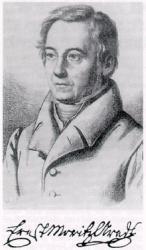
Author: Ernst Moritz Arndt

Arndt, Ernst Moritz, son of Ludwig Nicolaus Arndt, estate manager for Count Putbus, in the island of Rugen, was b. at Schoritz in Rugen, Dec. 26, 1769. After studying at the Universities of Greifswald and Jena, where he completed his theological course under Paulus, he preached for two years as a candidate, but in 1798 abandoned theology. After a pedestrian tour through South Germany, Hungary, Northern Italy, France, and Belgium, he became, at Easter 1800, lecturer at the University of Greifswald, and in 1805 professor of history there. But in 1806, lamenting over the tyranny of France, he wrote his fiery Gent der Zeit (pt. ii. 1809, iii. 1813, iv. 1818) which awakened the patriotism of his countrymen, but drew on him the hatred of Napoleon… Go to person page >

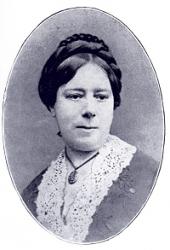
Translator: Catherine Winkworth

Catherine Winkworth is "the most gifted translator of any foreign sacred lyrics into our tongue, after Dr. Neale and John Wesley; and in practical services rendered, taking quality with quantity, the first of those who have laboured upon German hymns. Our knowledge of them is due to her more largely than to any or all other translators; and by her two series of Lyra Germanica, her Chorale Book, and her Christian Singers of Germany, she has laid all English-speaking Christians under lasting obligation." --Annotations of the Hymnal, Charles Hutchins, M.A., 1872… Go to person page >

Text Information

First Line: Go and dig my grave today!
Author: Ernst Moritz Arndt
Translator: Catherine Winkworth (1855)
Meter: 7.7.7.7.7.7
Language: English

Notes

Geht nun hin und grabt mein Grab. [Burial of the Dead.] Written in 1818, and first published 1819 (No. 19) as above in 9 stanzas of 6 lines, and included in Bunsen's Versuch, 1833, and since in many other collections, e.g. Unverfalschter Liedersegen. 1851, No. 815. It is the most popular of his hymns and was sung at his own funeral at Bonn, Feb. 1, 1860 (Koch, vii. 147). The translations. in common use are:—

    (1 )Go and dig my grave today! A good and full translation in the 1st Series, 1855, of Miss Winkworth's Lyra Germanica, p. 241 (ed. 1856, p. 243), and repeated as No. 188 in her Chorale Book for England, 1863. In Schaff's Christ in Song, ed. 1879, p. 536.

    - John Julian, Dictionary of Hymnology (1907)

Timeline

Instances

Instances (4)TextImageAudioScore
Chorale Book for England, The #188TextImage
Lyra Germanica: hymns for the Sundays and chief festivals of the Christian year #241Image
Lyra Germanica: The Christian Year #98Text
The Catholic Hymnal: containing hymns for congregational and home use, and the vesper psalms, the office of compline, the litanies, hymns at benediction, etc. #238Image