Scripture References:
st. 2 = Eph. 1:4
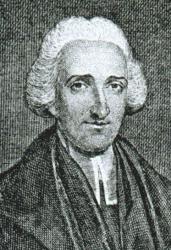
Written by ardent Calvinist Augustus M. Toplady (b. Farnham, Surrey, England, 1740; d. Kensington, London, England, 1778), this text was published in the Gospel Magazine (Dec. 1774). Dewey
Westra (PHH 98) revised Toplady's text in 1931 for the first edition of the Psalter Hymnal (1934).
This teaching text presents in song the essential points of the doctrine of redemption (like 496 but more comprehensively): only in Christ are we saved, for we have no merit of our own. Our redemption was ordained "before the world began" (see election texts referred to in 496), and our salvation ultimately leads to ruling with Christ in his kingdom.
Toplady is primarily known for writing "Rock of Ages" and for being an outspoken Calvinist opponent of John Wesley (PHH 267). After his father's death, Toplady moved with his mother to Ireland, where he studied at Trinity College, Dublin. He experienced a conversion while listening to the Wesleyan Methodist lay preacher James Morris. Ordained in the Church of England in 1762, Toplady served several congregations, including Broadhembury in Devonshire (1770-1775) and the Chapel of the French Calvinists in Leicester Fields, London, from 1775 on. Although converted under the preaching of a Methodist, Toplady became a bitter opponent in sermons and print of John Wesley and his Arminian teaching. Often using scurrilous language, such as "Wesley is guilty of Satanic shamelessness," he pressed his Calvinistic interpretation of the Bible, to which Wesley responded with equal disdain. Toplady wrote 130 hymn texts and produce Poems on Sacred Subjects (1769) and Psalms and Hymns for Public and Private Worship (1776).
Liturgical Use:
With preaching on redemption, probably after the sermon; Lent.
--Psalter Hymnal Handbook


 My Starred Hymns
 My Hymnals
 My Purchased Files