Lord, it belongs not to my care

Full Text

1 Lord, it belongs not to my care
Whether I die or live;
To love and serve Thee is my share,
And this Thy grace must give.

2 If life be long, oh, make me glad
The longer to obey;
If short, no laborer is sad
To end his toilsome day.

3 Christ leads me through no darker rooms
Than He went through before;
And he that to God's kingdom comes
Must enter by this door.

4 Come, Lord, when grace has made me meet
Thy blessed face to see;
For if Thy work on earth be sweet,
What will Thy glory be?

5 Then I shall end my sad complaints
And weary, sinful days,
And join with the triumphant saints
Who sing my Savior's praise.

6 My knowledge of that life is small,
The eye of faith is dim;
But 'tis enough that Christ knows all,
And I shall be with Him.

The Hymnal: revised and enlarged as adopted by the General Convention of the Protestant Episcopal Church in the United States of America in the year of our Lord 1892

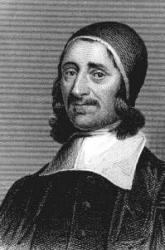
Author: Richard Baxter

Baxter, Richard. Only s. of Richard Baxter, yeoman, Eaton Constantine, Shropshire, b. at Rowton, Shropshire, Nov. 12,1615. He was educated at Wroxeter School, and for a time held the Mastership of the Dudley Grammar School. On taking Holy Orders, he became, in 1640, Ourate of Kidderminster. Subsequently he was for some time chaplain to one of Cromwell's regiments. Through weakness he had to take an enforced rest, during which he wrote his Saints’ Everlasting Rest. On regaining his health he returned to Kidderminster, where he remained until 1660, when he removed to London. At the Restoration he became chaplain to Charles II and was offered the bishopric of Hereford, which he refused. On the passing of the Act of Uniformity, he retired fro… Go to person page >

Tune

EVAN (Havergal)

This tune is likely the work of the composer named here, but has also been attributed to others as shown in the instances list.

Go to tune page >


HOLY TRINITY (Barnby)


ST. AGNES (Dykes)

John B. Dykes (PHH 147) composed ST. AGNES for [Jesus the Very Thought of Thee]. Dykes named the tune after a young Roman Christian woman who was martyred in A.D. 304 during the reign of Diocletian. St. Agnes was sentenced to death for refusing to marry a nobleman to whom she said, "I am already eng…

Go to tune page >


Timeline

Instances

Instances (3)TextImageAudioScore
Hymns Ancient & Modern, New Standard Edition #242
Lutheran Service Book #757Text
Rejoice in the Lord #584Text