You help make Hymnary.org possible. More than 10 million people from 200+ countries found hymns, liturgical resources and encouragement on Hymnary.org in 2025, including you. Every visit affirms the global impact of this ministry.

If Hymnary has been meaningful to you this year, would you take a moment today to help sustain it? A gift of any size—paired with a note of encouragement if you wish—directly supports the server costs, research work and curation that keep this resource freely available to the world.

Give securely online today, or mail a check to:
Hymnary.org
Calvin University
3201 Burton Street SE
Grand Rapids, MI 49546

Thank you for your partnership, and may the hope of Advent fill your heart.

Mother of Christ, hear thou thy people's cry

Mother of Christ, hear thou thy people's cry

Author: Edward Caswall
Published in 3 hymnals


Author: Edward Caswall

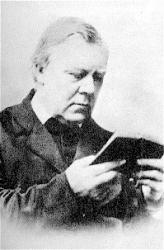
Edward Caswall was born in 1814, at Yately, in Hampshire, where his father was a clergyman. In 1832, he went to Brasenose College, Oxford, and in 1836, took a second-class in classics. His humorous work, "The Art of Pluck," was published in 1835; it is still selling at Oxford, having passed through many editions. In 1838, he was ordained Deacon, and in 1839, Priest. He became perpetural Curate of Stratford-sub-Castle in 1840. In 1841, he resigned his incumbency and visited Ireland. In 1847, he joined the Church of Rome. In 1850, he was admitted into the Congregation of the Oratory at Birmingham, where he has since remained. He has published several works in prose and poetry. --Annotations of the Hymnal, Charles Hutchins, M.A. 1872… Go to person page >

Text Information

First Line: Mother of Christ, hear thou thy people's cry
Author: Edward Caswall
Copyright: Public Domain

Notes

Alma Redemptoris Mater quae pervia coeli. [Blessed Virgin Mary.] One of four Antiphons to the B. V. M. used at the termination of the Offices, the remaining three being the Ave Regina, the Regina coeli, and the Salve Regina. It is ascribed to Hermannus Contractus, who died 1054.

How well this Antiphon was known in England in the Middle Ages we may judge from the use which Chaucer made of it in his Prioress's Tale, where the whole story is associated therewith. The Poet then explains the way in which the child mastered the Antiphon, together with the music to which it was set; and describes his singing it in the public streets, his murder by the Jews for so doing, and the subsequent results.

Translation in common use:—
Mother of Christ, hear thou thy people's cry. By E. Caswall, first published in his Lyra Catholica, 1849, p. 38, and in his Hymns & Poems, 1873, p. 22. Its use is confined to the Roman Catholic collections for schools and missions.

-- Excerpts from John Julian, Dictionary of Hymnology (1907)

Instances in all hymnals

Instances (1 - 3 of 3)
Page Scan

Lyra Catholica #84

Page Scan

The Catholic Hymn Book #24a

The Little Catholic Hymn Book #d46

Suggestions or corrections? Contact us
It looks like you are using an ad-blocker. Ad revenue helps keep us running. Please consider white-listing Hymnary.org or getting Hymnary Pro to eliminate ads entirely and help support Hymnary.org.