Author: Richard Frederick Littledale
Richard Frederick Littledale (b. Dublin, 1833; d. London, 1890) entered Trinity College, Dublin, as a foundation scholar, graduated with a bachelors degree in classics, a Masters of Divinity in 1858, then a Bachelors and Doctorate in Civil Law at Oxford in 1862. From 1856 to 1857 he was the curate of St. Matthew in Thorpe Hamlet, Norfolk, and from 1857 to 1861 was the curate of St. Mary the Virgin, in Soho, London. For the remainder of his life he suffered from chronic illness and spent most of his time writing. He authored many books and pamphlets on Anglican liturgy, theology, and the church’s engagement with society, and completed his good friend John Mason Neale’s work on the psalms after Neale died in 1866.
Laura de Jong…
Go to person page >Author: Henry Alford
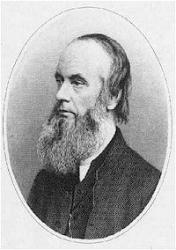
Alford, Henry, D.D., son of the Rev. Henry Alford, Rector of Aston Sandford, b. at 25 Alfred Place, Bedford Row, London, Oct. 7, 1810, and educated at Trinity College, Cambridge, graduating in honours, in 1832. In 1833 he was ordained to the Curacy of Ampton. Subsequently he held the Vicarage of Wymeswold, 1835-1853,--the Incumbency of Quebec Chapel, London, 1853-1857; and the Deanery of Canterbury, 1857 to his death, which took. place at Canterbury, Jan. 12, 1871. In addition he held several important appointments, including that of a Fellow of Trinity, and the Hulsean Lectureship, 1841-2. His literary labours extended to every department of literature, but his noblest undertaking was his edition of the Greek Testament, the result…
Go to person page >Author: Frances R. Havergal
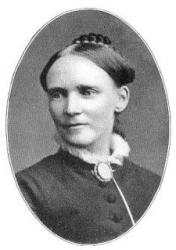
Havergal, Frances Ridley, daughter of the Rev. W. H. Havergal, was born at Astley, Worcestershire, Dec. 14, 1836. Five years later her father removed to the Rectory of St. Nicholas, Worcester. In August, 1850, she entered Mrs. Teed's school, whose influence over her was most beneficial. In the following year she says, "I committed my soul to the Saviour, and earth and heaven seemed brighter from that moment." A short sojourn in Germany followed, and on her return she was confirmed in Worcester Cathedral, July 17, 1853. In 1860 she left Worcester on her father resigning the Rectory of St. Nicholas, and resided at different periods in Leamington, and at Caswall Bay, Swansea, broken by visits to Switzerland, Scotland, and North Wales. She died…
Go to person page >

 My Starred Hymns
 My FlexScores
 My Hymnals
 My Purchased Files