The text of "Savior, Like a Shepherd Lead Us" first appeared in Hymns for the Young, 1840, which was edited by Dorothy Ann Thrupp (1779-1847). Although no author's name appears with the text, it is thought that Thrupp wrote it, since she often published hymns anonymously, under the pseudonym "Iota," or simply using her initials.
The tune we sing today was written by William Bradbury expressly for this text and appeared in his Sunday School collection, Oriola, 1859. Bradbury was a protege of the great music educator, Lowell Mason. Bradbury sang in Mason's Bowdoin Street Church choir and Boston Academy of Music as a youth, and later started similar church and school music programs in New York where he served as organist at First Baptist Church. Beyond his work as an educator and church musician, Bradbury studied composition in Europe, founded the Bradbury Piano Company with his brother, and edited a number of music books. Bradbury is probably most famous for writing the music to "Jesus Loves Me."
It's interesting that "Savior, Like a Shepherd Lead Us" was originally intended for children. In fact, many classic hymns like "Morning Has Broken" and "All Things Bright and Beautiful" were originally written for youth. Certainly this proves that educating our children and creating lasting music need not be mutually exclusive goals! --Greg Scheer, 1997
===================================
Saviour, like a Shepherd, lead us. [The Good Shepherd.] The authorship of this hymn is a matter of some doubt. The earliest source to which we have traced it is Miss D. A. Thrupp's Hymns for the Young, 4th edition 1836, in 4 stanzas of 6 lines, where it is unsigned. We next find it in the Rev. W. Carus Wilson's Children's Friend for June, 1838, again in 4 stanzas of 6 lines, and signed “Lyte." In the January number of the same magazine there is a National Hymn in the metre of "God save the Queen" ("Lord, Thy best blessing shed"), which is signed "H. Lyte," and dated from "Brixham".
"Saviour, like a Shepherd, lead us" appears again in 1838, in Mrs. Herbert Mayo's Selections of Hymns and Poetry for the use of Infant and Juvenile School, No. 171; and again in the edition of 1846, but without signature. As in that collection several hymns and poems are signed "D. A. T.," it is clear that Mrs. Mayo did not regard the hymn as Miss Thrupp's production. The most that we can say is that the evidence is decidedly against Miss Thrupp, and somewhat uncertain with regard to Lyte as the writer of the hymn. Its use is extensive both in G. Britain and America. [William T. Brooke]
--John Julian, Dictionary of Hymnology (1907)
Hymnary Pro Subscribers
Access
an additional article
on the Canterbury Dictionary of Hymnology:
Hymnary Pro subscribers have full access to the Canterbury Dictionary of Hymnology.
Get Hymnary Pro


 My Starred Hymns
 My Hymnals
 My Purchased Files


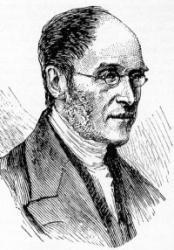 Lyte, Henry Francis, M.A., son of Captain Thomas Lyte, was born at Ednam, near Kelso, June 1, 1793, and educated at Portora (the Royal School of Enniskillen), and at Trinity College, Dublin, of which he was a Scholar, and where he graduated in 1814. During his University course he distinguished himself by gaining the English prize poem on three occasions. At one time he had intended studying Medicine; but this he abandoned for Theology, and took Holy Orders in 1815, his first curacy being in the neighbourhood of Wexford. In 1817, he removed to Marazion, in Cornwall. There, in 1818, he underwent a great spiritual change, which shaped and influenced the whole of his after life, the immediate cause being the illness and death of a brother cler… Go to person page >






