1 Sing, my tongue, the glorious battle;
sing the ending of the fray.
Now above the cross, the trophy,
sound the loud triumphant lay:
tell how Christ, the world's Redeemer,
as a victim won the day.
2 Tell how, when at length the fullness
of the appointed time was come,
He, the Word, was born of woman,
left for us His Father's home,
blazed the path of true obedience,
shone as light amidst the gloom.
3 Thus, with thirty years accomplished,
He went forth from Nazareth,
destined, dedicated, willing,
did His work, and met His death;
like a lamb He humbly yielded
on the cross His dying breath.
4 Faithful cross, true sign of triumph,
be for all the noblest tree;
none in foliage, none in blossom,
none in fruit your equal be;
symbol of the world's redemption,
for the weight that hung on thee!
5 Unto God be praise and glory:
to the Father and the Son,
to the eternal Spirit honor
now and evermore be done;
praise and glory in the highest,
while the timeless ages run.
Source: Psalms and Hymns to the Living God #279

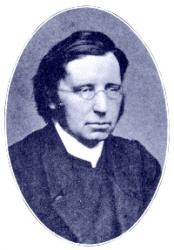
John M. Neale's life is a study in contrasts: born into an evangelical home, he had sympathies toward Rome; in perpetual ill health, he was incredibly productive; of scholarly temperament, he devoted much time to improving social conditions in his area; often ignored or despised by his contemporaries, he is lauded today for his contributions to the church and hymnody. Neale's gifts came to expression early–he won the Seatonian prize for religious poetry eleven times while a student at Trinity College, Cambridge, England. He was ordained in the Church of England in 1842, but ill health and his strong support of the Oxford Movement kept him from ordinary parish ministry. So Neale spent the years between 1846 and 1866 as a warden of Sackvi… Go to person page >
Venantius Honorius Clematianus Fortunatus (b. Cenada, near Treviso, Italy, c. 530; d. Poitiers, France, 609) was educated at Ravenna and Milan and was converted to the Christian faith at an early age. Legend has it that while a student at Ravenna he contracted a disease of the eye and became nearly blind. But he was miraculously healed after anointing his eyes with oil from a lamp burning before the altar of St. Martin of Tours. In gratitude Fortunatus made a pilgrimage to that saint's shrine in Tours and spent the rest of his life in Gaul (France), at first traveling and composing love songs. He developed a platonic affection for Queen Rhadegonda, joined her Abbey of St. Croix in Poitiers, and became its bishop in 599. His Hymns far all th… Go to person page >| First Line: | Sing, my tongue, the glorious battle, Sing the last the dread affray (Neale) |
| Title: | Sing, My Tongue, the Glorious Battle |
| Latin Title: | Pange lingua gloriosi lauream certaminus |
| Author: | Venantius Honorius Clementianus Fortunatus |
| Translator: | J. M. Neale |
| Meter: | 8.7.8.7.8.7 |
| Language: | English |
| Copyright: | Public Domain |
My Starred Hymns