Scripture References:
st. 1 = Rom. 8:26, Eph. 3:16
st. 2 = John 16:13
st. 3 = Ps. 51:10-12, Ezek. 36:26, Acts 2:2-3
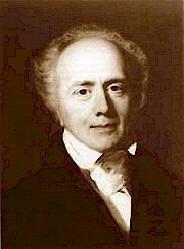
Although the text was written by Andrew Reed (b. St. Clement Danes, London, England, 1787; d. Hackney, London, 1862), it was published anonymously in the Evangelical Magazine, June 1829, with the heading "Hymn to the Spirit, Sung on the late Day appointed for solemn Prayer and Humiliation." The "late Day" referred to Good Friday of that year, which had been set aside by the Congregational clergy of London for prayer for "the renewal of religion in the British churches." The original text began "Spirit divine, attend our prayers" and had seven stanzas (st. 7 was a virtual repeat of st. 1), His stanzas 1-3 and 6 are included in modernized form.
The text begins with a prayer for the working of the Holy Spirit in our hearts (st. 1). It then uses the metaphors of light, fire, and the dove to enable us to see the Spirit's work more clearly: "Come as the light" is a prayer for illumination (st. 2); "Come as the fire" is a prayer for cleansing (st. 3); and "Come as the dove" is a prayer for peace and unity (st. 4).
The son of a watchmaker, Reed entered that profession until he felt a call to the ministry. Educated at Hackney College, London, he became a Congregational minister in 1811. He served a flourishing congregation in St. George's-in-the-East, London (later named Wycliffe Chapel), until his retirement in 1861. Known for his administrative skills, Reed founded various charitable institutions such as the London Orphan Asylum, the Asylum for Fatherless Children, the Royal Hospital for Incurables, the Infant Orphan Asylum, and the Asylum for Idiots. He published a Supplement (1817) to Isaac Watts' (PHH 155) hymns, which was enlarged in 1825 and called The Hymn Book; it included twenty-one hymn texts by Reed and twenty anonymous texts by Reed's wife (not properly credited until the Wycliffe Chapel Supplement of 1872), In 1842 Reed issued The Hymn Book, a compilation of his hymns as well as those by Watts and others.
Liturgical Use:
Pentecost; other services of prayer for the work of the Holy Spirit.
--Psalter Hymnal Handbook
==============================
Spirit Divine, attend our prayer. A. Reed. [Whitsuntide.] This hymn appeared, unsigned, in 7 stanzas of 4 lines, in the Evangelical Magazine for June 1829, with the heading, "Hymn to the Spirit. Sung on the late Day appointed for solemn Prayer and Humiliation in the Eastern District of the Metropolis". From the April number of the same magazine we find that the "Day appointed for Solemn Prayer," &c, was the Good Friday of that year, and that it was "cordially recommended . . . " as a day of humiliation and prayer, with a view to promote, by the divine blessing, a revival of religion in the British churches," by the Board of Congregational Ministers, resident in and about London, whose recommendation is dated "Tuesday, Feb. 10, 1829." The hymn was republished in Dr. Reed's Hymn Book, 1842; and again, in the Wyliffe Chapel Supply 1872. It is the most widely known of Dr. Reed's hymns, and is in extensive use. It is one of his best productions.
-- John Julian, Dictionary of Hymnology (1907)
===============
Spirit Divine, attend our prayer, p. 1074, ii. The form of this hymn most generally adopted in modern American collections is that rewritten by S. Longfellow, and I included in Longfellow and Johnson's Hymns of the Spirit, 1864. It is No. 67 in The Pilgrim Hymnal, 1904.
--John Julian, Dictionary of Hymnology, New Supplement (1907)


 My Starred Hymns
 My FlexScores
 My Hymnals
 My Purchased Files