Log in to make the most of Hymnary.org collections.
The God of Abraham praise, Who reigns enthroned aboveAuthor (attributed to): Daniel ben Judah; Paraphraser: Thomas Olivers (1770)Tune: LEONI Published in 356 hymnals Printable scores: PDF, SibeliusAudio files: MIDI | ||
1 The God of Abraham praise,
who reigns enthroned above;
Ancient of Everlasting Days,
and God of Love;
Jehovah, great I AM!
by earth and heaven confessed;
I bow and bless the sacred name
forever blest.
2 The great I AM has sworn;
I on this oath depend.
I shall, on eagle wings upborne,
to heaven ascend.
I shall behold God's face;
I shall God's power adore,
and sing the wonders of God's grace
forevermore.
3 The heavenly land I see,
with peace and plenty blest;
a land of sacred liberty,
and endless rest.
There milk and honey flow,
and oil and wine abound,
and trees of life forever grow
with mercy crowned.
4 The God who reigns on high
the great archangels sing,
and "Holy, holy, holy!" cry
"Almighty King!
Who was, and is, the same,
and evermore shall be:
Jehovah, Lord, the great I AM,
we worship thee!"
United Methodist Hymnal, 1989
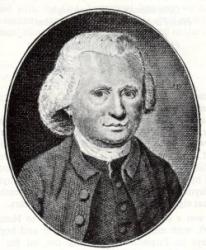
Thomas Olivers was born in Tregonan, Montgomeryshire, in 1725. His youth was one of profligacy, but under the ministry of Whitefield, he was led to a change of life. He was for a time apprenticed to a shoemaker, and followed his trade in several places. In 1763, John Wesley engaged him as an assistant; and for twenty-five years he performed the duties of an itinerant ministry. During the latter portion of his life he was dependent on a pension granted him by the Wesleyan Conference. He died in 1799.
--Annotations of the Hymnal, Charles Hutchins, M.A., 1872.… Go to person page >| First Line: | The God of Abraham praise, Who reigns enthroned above |
| Title: | The God of Abraham Praise |
| Author (attributed to): | Daniel ben Judah |
| Paraphraser: | Thomas Olivers (1770) |
| Meter: | 6.6.8.4 D |
| Source: | Yigdal Elohim Hai |
| Place of Origin: | Israel |
| Copyright: | Public Domain |
Scripture References:
st. 1 = Ex. 3:6, 15, Dan. 7:9, 13, 22
st. 2 = Gen. 22:16-17, Mal. 3:6
st. 3 = Rev. 22: 1-2
st. 4 = Jer. 23:6, Jer.33:16
st. 5 = Isa. 6:3, Rev. 4:8-11
This text is based on a Jewish doxology of thirteen articles formulated by Moses ben Maimon (Maimonides) in the latter part of the twelfth century. A fourteenth-century metrical version of that doxology, Yigdal Elohim ("magnify the Lord"), is traditionally used in daily morning synagogue services and during the Sabbath eve in Jewish family worship. That version is variously attributed to Daniel ben Judah or to Immanuel ben Solomon, both of whom lived in Rome. After hearing the Jewish cantor Meyer Lyon sing this Yigdal in the Duke's Place Synagogue, London, England, Thomas Olivers (b. Tregynon, Montgomeryshire, England, 1725; d. London, England, 1799) prepared an English paraphrase in twelve stanzas (around 1770). About his paraphrase, Olivers reportedly said, "I have rendered it from the Hebrew, giving it, as far as I could, a Christian character, and I have called on Leoni [the cantor Lyon] who has given me a synagogue melody to suit it."
Orphaned at the age of four, Olivers was negligently cared for by various relatives and received very little formal education. He worked as a cobbler but lived such a scandalous life that he was forced to leave his hometown. However, his life changed drastically after he was converted by a George Whitefield sermon on the text "Is not this a branch plucked out of the fire?" (Zech. 3:2). At first a follower of Whitefield, Olivers joined John and Charles Wesley (PHH 267) in 1753. He served as an itinerant Methodist preacher, traveling one hundred thousand miles on horseback through much of England, Scotland, and Ireland until 1777. He became editor of the Arminian Magazine in 1775, but John Wesley dismissed him in 1789 because of flagrant printing errors and the insertion of articles that Wesley did not approve. Olivers wrote only a few hymns, of which "The God of Abraham Praise" is most well-known.
His text with Leoni's tune was published as a leaflet, "A Hymn to the God of Abraham," in 1772. The hymn was also published by John Wesley in his Sacred Harmony (1780) and in 1830 in Joshua Leavitt's popular American frontier hymnal The Christian Lyre (PHH 171). It appears in most modern hymnals (but should not be confused with another hymnic translation of the Yigdal that begins, "Praise to the living God," by Max Landsberg, Newton Mann, and William Gannett). The Psalter Hymnal includes Olivers' stanzas 1, 4, 6, 7, and 12 in a modernized text borrowed in part from Hymns for Today's Church (1982).
Like the Yigdal, this text begins by praising God for his sovereignty and faithfulness to his people (st. 1-2). God gives his people a land "of milk and honey," an image that becomes a rich eschatological metaphor for the new creation (st. 3-4) in which angels sing "Holy, holy, holy," and all creatures join in praise to God (st. 5). Olivers appended many biblical references to the margin of his text. The primary ones for these stanzas are Exodus 3 and the great doxologies in Revelation 4, 5, and 7.
Liturgical Use:
As a monumental hymn of praise, especially at the close of a service; with eschatological preaching; during Advent.
--Psalter Hymnal Handbook
=========================
The God of Abraham praise. T. Olivers. [Praise to and Trust in the God of Abraham.] Concerning the origin and first publication of this hymn somewhat conflicting accounts are in circulation. The most circumstantial is that quoted by Miller from an authenticated source. (Singers & Songs, 1869, p. 245):—
The son of & Wesleyan Minister said a few years ago, "I remember my father telling me that he was once standing in the aisle of City Road Chapel, during a conference in Wesley's time. Thomas Olivers, one of the preachers, came down to him and said,'Look at this; I have rendered it from the Hebrew, giving it, as far as I could, a Christian character, and I have called on Leoni, the Jew, who has given me a synagogue melody to suit it; here is the tune, and it is to be called Leoni.'"
On communicating with the late Rev. Dr. Adler, the Chief Rabbi of the British Empire, we find that this account of the origin of this hymn is as near the actual facts as possible. The hymn is a free rendering, with, as Olivers puts it, as decided "a Christian character" as he could give to it, of the Hebrew Yigdal or Doxology, which rehearses in metrical form the thirteen articles of the Hebrew Creed. The Yigdal is supposed to have been composed by Daniel ben Judah, a Mediaeval writer, the date of whose birth and death is unknown. The thirteen articles were drawn up by Moses Maimonides (1130-1205), the first who formulated the Dogmas of Judaism. The Yigdal is contained in the Hebrew daily Prayer Books, and is sung at the conclusion of divine service on the eve of Sabbaths and Festivals. Leoni, or rather Meyer Lyon, was chorister at the Great Synagogue, Duke's Place, to the melody now known as Leoni. It is still chanted on Friday evening in every Synagogue of the British Empire, and at the family worship in Jewish homes (Dr. Adler's manuscript.)
Tradition says that Olivers wrote the hymn at the house of John Bakewell at Westminster, in 1770. The copy from which we print is undated; the 4th edition is 1772; 5th, 1772; 6th (London and Philadelphia) and 7th, 1773; 8th, Pine, Bristol, 1773. In addition to its use in an abbreviated form in varying lengths, all beginning with the first stanza, there are also the following centos:—
1. By faith we, day to day. This, in T. Darling's Hymns for the Church of England, 1887, is a cento in 3 stanzas from T. Olivers and T. Darling.
2. The God who reigns on high. This is the most popular cento of any, and is in numerous hymnals in Great Britain and America. It begins with stanza x.
3. The goodly land I see. This, opening with stanza vi., is in several collections in Great Britain and America.
4. Though mortal strength be weak. This cento, in the People’s Hymnal, 1867, in 9 stanzas of 4 lines is in S.M., and is a portion of Olivers's hymn, beginning with stanza v., rewritten by Dr. Littledale.
5. Though nature's strength decay. This cento, beginning with stanza v., is in a few collections only, including Kennedy, 1863.
6. Where dwells the glorious King? This, in Darling's Hymns for the Church of England, 1889, is based on this hymn.
Christophers in his Epworth Singers, Stevenson in his Methodist Hymn Book Notes, 1883, and Duffield in his English Hymnal, 1886, enter largely upon the spiritual use of striking portions of this hymn to many individuals. Stevenson's account is specially worthy of attention. Under date of July 29, 1805, Henry Martyn, then on the eve of his voyage to India, wrote:—
”I was much engaged at intervals in learning the hymn, 'The God of Abraham praise'; as often as I could use the language of it with any truth, my heart was a little at ease. There was something peculiarly solemn and affecting to me in this hymn, and particularly at this time. The truth of the sentiments I knew well enough. But, alas! I felt that the state of mind expressed in it was above mine at the time, and I felt loath to forsake all on earth.”
-- Excerpts from John Julian, Dictionary of Hymnology (1907)

In the twelfth century, Moses Maimonides wrote a Jewish creed in thirteen articles in Hebrew. In the fourteenth century, a Jew from Rome (probably Daniel ben Judah) formed a metrical version, the Yigdal. Around 1763 or 1770, Thomas Olivers heard the Yigdal chanted in the Great Synagogue of London, and he wrote a deliberately Christianized translation of that text in twelve stanzas. This translation was published in an undated pamphlet around 1772. Another shorter translation of the Yigdal was made by Max Landsberg and Newton Mann in 1885, which is a different hymn, though some hymnals replace their first line with that of Olivers.
Of the original twelve stanzas, three are never used, and modern hymnals typically contain four to six of the remaining nine. The first (second line “Who reigns enthroned above”) and fourth (beginning “He by Himself hath sworn”) are always used in modern hymnals, and the twelfth (beginning “The whole triumphant host”) is usually included. The tenth (“The God who reigns on high”) and seventh (“There dwells the Lord our King”) are usually included, and the remaining stanzas only occasionally. The text is rich with scriptural allusions, such as Exodus 3:14 in the first stanza and Revelation 4:8 in the last. Most of the stanzas focus on praising God for His power and guidance, and the ending stanza or two looks forward to when all the people of God shall worship before His throne in heaven.
LEONI is a Hebrew synagogue melody. It is also called YIGDAL after the original Hebrew name of the text. The name LEONI comes from Meyer Lyon, a Jewish cantor who transcribed the tune upon Olivers' request. The tune begins in a minor key and modulates to the relative major halfway through. However, it returns to the opening minor key by its close. This tune works well when sung in unison, with a firm backing from the accompaniment. Keep a moderate to quick tempo to stay with the mood of exaltation.
This hymn may be used any time a hymn of praise is wanted. A quiet instrumental setting would make a good prelude as the congregation prepares to praise God. For this Jewish melody, string instruments make an excellent choice, as in “God of Abraham Praise” for violin trio or the setting of LEONI in “Five Hymn Preludes for Cello and Keyboard.” For a rousing postlude to a jubilant service, Michael Burkhardt's organ arrangement of LEONI in “Praise and Thanksgiving, Set 3” has lots of melodic interest.
Tiffany Shomsky Hymnary.org
| Instances (34) | First Line | Text Title | Refrain First Line | Authors | Composers | Meter | Scripture | Tune Title | Tune Key | Incipit | Languages | Publication Date | |||||
|---|---|---|---|---|---|---|---|---|---|---|---|---|---|---|---|---|---|
| Celebration Hymnal #23 | The God of Abr'ham praise | The God of Abraham Praise | Thomas Olivers | Meyer Lyon | 6.6.8.4 D | Romans 4:20 | LEONI | e minor or modal | English | 1997 | |||||||
| Church Hymnal, Fifth Edition #323 | The God of Abraham praise | 2000 | |||||||||||||||
| Church Hymnary, Fourth Edition #162 | The God of Abraham praise | Thomas Olivers (1725-1799) | Thomas Olivers (1725-1799) | 6.6.8.4 D | LEONI | e minor or modal | English | 2005 | |||||||||
| Common Praise #347 | The God of Abraham praise | The God of Abraham Praise | Thomas Olivers (1725-1799); Daniel ben Judah | Meier Leon (1751-1797); Thomas Olivers (1725-1799) | 6.6.8.4 D | Genesis 15:1-18; Genesis 17:1-7; Genesis 17:15-16; Genesis 18:1-15; Exodus 3:1-15; Exodus 19:1-8; Exodus 24:12-18; Deuteronomy 1:6-25; Deuteronomy 8:1-18; Deuteronomy 34:1-12; Isaiah 6:1-8; Isaiah 40:21-31; Romans 4:1-5; Romans 4:13-25; Revelation 4:1-11; Revelation 5:11-14; Revelation 7:9-17; Revelation 21:1-6; Revelation 21:10; Revelation 22:7; Genesis 15:1-18; Genesis 17:1-7; Genesis 17:15-16; Genesis 18:1-15; Exodus 3:1-15; Exodus 19:1-8; Exodus 24:12-18; Deuteronomy 1:6-25; Deuteronomy 8:1-18; Deuteronomy 34:1-12; Isaiah 6:1-8; Isaiah 40:21-31; Romans 4:1-5; Romans 4:13-25; Revelation 4:1-11; Revelation 5:11-14; Revelation 7:9-17; Revelation 21:1-6; Revelation 21:10; Revelation 22:7 | LEONI | f minor | 1998 | ||||||||
| Complete Anglican Hymns Old & New #656 | The God of Abraham praise | The God of Abraham praise | 2000 | ||||||||||||||
| Complete Mission Praise #645 | The God of Abraham praise | 6.6.8.4 D | 2000 | ||||||||||||||
| Evangelical Lutheran Hymnary #69 | The God of Abr'am praise | The God of Abraham Praise | T. Olivers, 1725-99 | M. Lyon, c. 1751-97 | 6.6.8.4 D | YIGDAL | f minor | English | 1996 | ||||||||
| Evangelical Lutheran Worship #831 | The God of Abr'ham praise | Thomas Olivers, 1725-1799 | Meyer Lyon, 1751-1797 | 6.6.8.4 D | YIGDAL | f minor | 2006 | ||||||||||
| Gather Comprehensive #544 | The God of Abraham praise | The God of Abraham Praise | Daniel ben Judah Dayyan, fl. 1400; Thomas Olivers, 1725-1799 | Meyer Lyon, c. 1751-1797 | 6.6.8.4 D | Exodus 19:4; Genesis 22:16-17; Exodus 3:6-14; Genesis 14:18; Genesis 12:1 | LEONI | f minor | Hebrew; English | 1994 | |||||||
| Hymnal 1982: according to the use of the Episcopal Church #401 | The God of Abraham praise | Thomas Olivers, 1725-1799 | 6.6.8.4 D | LEONI | f minor | English | 1985 | ||||||||||
| Hymns Ancient & Modern, New Standard Edition #331 | The God of Abraham praise | 6.6.8.4 D | 1983 | ||||||||||||||
| Hymns for a Pilgrim People #24 | The God of Abraham praise, Who reigns enthroned above | LEONI | 2007 | ||||||||||||||
| Hymns Old and New: New Anglican #478 | The God of Abraham praise | 6.6.8.4 D | 1996 | ||||||||||||||
| Lift Up Your Hearts: psalms, hymns, and spiritual songs #39 | The God of Abraham praise | The God of Abraham Praise | Thomas Olivers | Meyer Lyon | 6.6.8.4 D | Exodus 3:6; Daniel 7:7; Daniel 7:9; Daniel 7:13; Daniel 7:22; Revelation 4:8-11 | LEONI | f minor | 2013 | ||||||||
| Lutheran Service Book #798 | The God of Abr'ham praise | The God of Abraham Praise | Thomas Olivers, 1725-99 | 6.6.8.4 D | Exodus 3:6; Exodus 3:14; Psalm 142:5-6; Revelation 4:8 | YIGDAL | f minor | English | 2006 | ||||||||
| Presbyterian Hymnal #488 | The God of Abraham praise | The God of Abraham Praise | Daniel ben Judah; Newton Mann; Max Landsberg | Meyer Lyon; Thomas Olivers | 6.6.8.4 | Exodus 3:6 | LEONI | c minor | English | 1990 | |||||||
| Psalter Hymnal (Gray) #621 | The God of Abraham praise | The God of Abraham Praise | Thomas Olivers | Meyer Lyon | 6.6.8.4 D | Exodus 3:15; Exodus 3:6; Genesis 22:16-17; Isaiah 6:3; Jeremiah 23:6; Jeremiah 33:16; Daniel 7:7-22; Malachi 3:6; Hebrews 11:17-19; Revelation 4:8-11; Philippians 2:11; Revelation 4:11; Hebrews 11:19 | LEONI | f minor | English | 1987 | |||||||
| Rejoice in the Lord #595 | The God of Abr'am praise | The God of Abr'am Praise | Thomas Olivers | Thomas Olivers; Meyer Lyon | 6.6.8.4 D | Daniel 7:9; Genesis 15:1; Genesis 22:16; Exodus 3:6; Exodus 3:14; Exodus 6:3; Exodus 19:4; Psalm 89:26; Isaiah 40:31; John 17:24; Romans 1:20; 1 Corinthians 1:25; Revelation 4:8; Revelation 5:13 | LEONI | f minor | English | 1985 | |||||||
| Renew! #51 | The God of Abraham praise | The God of Abraham Praise | Thomas Olivers | Meyer Lyon | 6.6.8.4 D | LEONI | e minor | English | 1995 | ||||||||
| Revival Hymns and Choruses #28 | The God of Abraham praise, Who reigns enthroned above | The God of Abraham Praise | Thomas Olivers, 1725-1799 | Meyer Lyon (Leoni), 1751-1797 | 12.12.12.12 | LEONI | f minor | English | 1982 | ||||||||
| Seventh-day Adventist Hymnal #11 | The God of Abraham praise, Who reigns enthroned above | LEONI | 1985 | ||||||||||||||
| Sing Glory: Hymns, Psalms and Songs for a New Century #66 | The God of Abraham praise | 6.6.8.4 D | 1999 | ||||||||||||||
| Sing Glory: Hymns, Psalms and Songs for a New Century #315 | The God of heaven thuunders | 7.7.7.5.6 | 1999 | ||||||||||||||
| Sing Joyfully #21 | The God of Abraham praise | The God of Abraham Praise | Thomas Olivers | Meyer Lyon | [The God of Abraham praise] | f minor | English | 1989 | |||||||||
| The Christian Life Hymnal #16 | The God of Abraham praise, who reigns enthroned above | The God of Abraham Praise | Leoni | 2006 | |||||||||||||
| The Hymnal for Worship and Celebration #34 | The God of Abraham praise | The God of Abraham Praise | Thomas Olivers | Meyer Lyon | 6.6.8.3 D | LEONI | f minor | 1986 | |||||||||
| The New Century Hymnal #24 | Yigda elohim chai (The God of Abraham praise) | Yigdal Elohim Chai (The God of Abraham Praise) | Moses Maimonides, 12th century; Newton Mann; Daniel ben Judah; Max Landsberg | Meyer Lyon | 6.6.8.4 D | Isaiah 44:6; Revelation 4:8; Genesis 12:1; Genesis 17:15-16; Exodus 3:14 | LEONI | f minor | Hebrew; Hebrew, English | 1995 | |||||||
| The United Methodist Hymnal #116 | The God of Abraham praise | The God of Abraham Praise | Thomas Olivers | 6.6.8.4 D | LEONI | f minor | English | 1989 | |||||||||
| The United Methodist Hymnal #801b | The God of Abraham praise | Psalm 80 | The God of Abraham praise | Thomas Olivers | Psalm 80 | [Psalm 80] | A Flat Major | English | 1989 | ||||||||
| The United Methodist Hymnal #802 | The God of Abraham praise | Psalm 80 cont. | 1989 | ||||||||||||||
| The Worshiping Church #66 | The God of Abraham praise | The God of Abraham Praise | Thomas Olivers | Meyer Lyon | 6.6.8.4 D | Philippians 2:11; Revelation 4:11; Hebrews 11:19; Hebrews 6:13; Philippians 2:9-11; Exodus 3:6-14; Isaiah 40:31; Daniel 7:9; Revelation 4:8-11; Revelation 22:4-5 | LEONI | e minor | English | 1990 | |||||||
| Together in Song: Australian Hymn Book II #125 | The God of Abraham praise | 6.6.8.4 D | 1999 | ||||||||||||||
| Trinity Hymnal #34 | The God of Abraham praise | The God of Abraham Praise | Thomas Olivers | Meyer Lyon | 6.6.8.4 D | Jeremiah 33:16; Hebrews 6:17-18; Hebrews 11:6 | LEONI | f minor | English | 1990 | |||||||
| Worship and Rejoice #16 | The God of Abraham praise | The God of Abraham Praise | Newton Mann, 1836-1926 ;; Max Landsberg, 1845-1928; Daniel ben Judah | Thomas Olivers, 1725-1799; Meyer Lyon, 1751-1797 | 6.6.8.4 D | Revelation 22:4-5; Daniel 7:9; Revelation 4:8-11; Isaiah 40:31; James 1:17; Ecclesiastes 3:11; Hebrews 6:13; Exodus 3:6; Philippians 2:9-11 | LEONI | e minor or modal | 2001 |