Scripture References:
all st. = Ex. 7
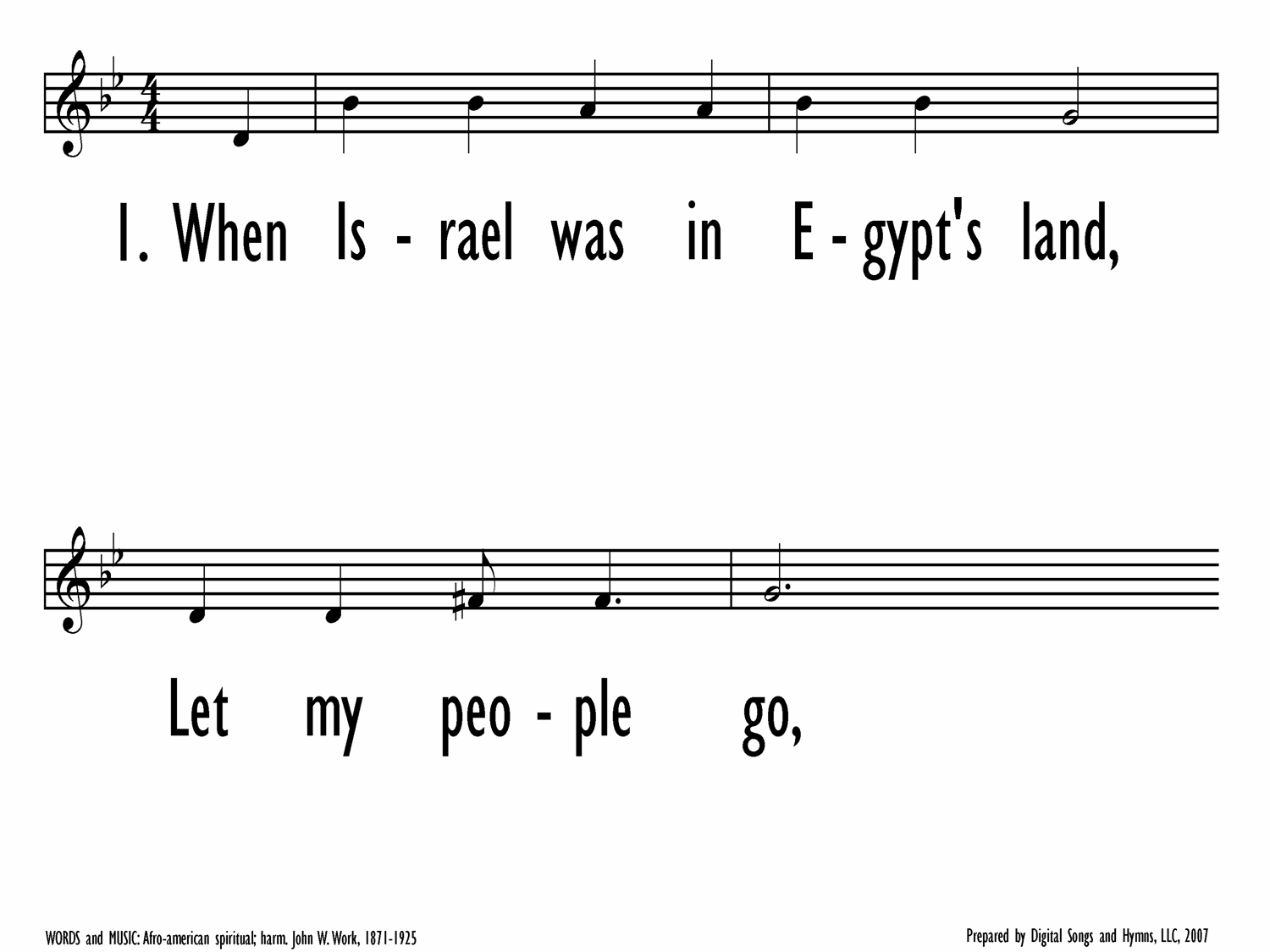
This African American spiritual dates from before the Civil War. It was published in the Jubilee Songs (1872), made popular by the Jubilee Singers of Fisk University in their concert tours (see also PHH 356). Often known by its refrain line, "Go down, Moses," the spiritual was also published in J. B. T. Marsh's The Story of the Jubilee Singers with their Songs (1876). "When Israel Was in Egypt's Land" originally had twenty-four stanzas of which the Psalter Hymnal (as well as other modern hymnals) include four narrative stanzas and one stanza of application. Commenting on the spiritual’s message, John Lovell, Jr., writes:
"Go Down, Moses" does not employ the undercurrent symbolism of "Steal Away to Jesus" and other such poems. Only a very obtuse listener can miss its point. It says flatly that Moses freed these Egyptian slaves boldly and justly because slavery is wrong. It clearly projects the principles of this experience to all the world: wherever men are held in bondage, they must and shall be freed. The "Let my people go!" refrain is thunderous. It does not argue economic, sociological, historical, and racial points. . . . It wastes no words and moves relentlessly toward its goal of filling every listener with a pervasive contempt for oppression and a resounding enthusiasm for freedom.
-from Black Song, 1972, pp. 326-327
A stanza not printed in the Psalter Hymnal reiterates Lovell's point:
We need not always weep and moan
Let my people go!
And wear these slavery chains forlorn
Let my people go!
Psalter Hymnal is a prayer to God for freedom for all who are oppressed, a petition for liberation in Christ.
Liturgical Use:
Worship that focuses on the Old Testament Exodus event or on redemption for the oppressed and freedom in Christ; Easter Vigil service.
--Psalter Hymnal Handbook


 My Starred Hymns
 My FlexScores
 My Hymnals
 My Purchased Files