You help make Hymnary.org possible. More than 10 million people from 200+ countries found hymns, liturgical resources and encouragement on Hymnary.org in 2025, including you. Every visit affirms the global impact of this ministry.

If Hymnary has been meaningful to you this year, would you take a moment today to help sustain it? A gift of any size—paired with a note of encouragement if you wish—directly supports the server costs, research work and curation that keep this resource freely available to the world.

Give securely online today, or mail a check to:
Hymnary.org
Calvin University
3201 Burton Street SE
Grand Rapids, MI 49546

Thank you for your partnership, and may the hope of Advent fill your heart.

Person Results

Meter:8.7.8.7.8.8.8.7
In:person

Planning worship? Check out our sister site, ZeteoSearch.org, for 20+ additional resources related to your search.
Showing 1 - 10 of 52Results Per Page: 102050

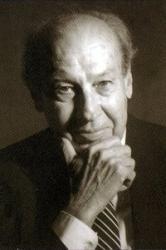
Jaroslav J. Vajda

1919 - 2008 Person Name: Jaroslav J. Vajda, b. 1919 Meter: 8.7.8.7.8.8.8.7 Author of "Go, My Children, with My Blessing" in Evangelical Lutheran Worship Jaroslav J. Vajda (b. Lorain, Ohio, 1919; d. 2008) Born of Czechoslovakian parents, Vajda was educated at Concordia College in Fort Wayne, Indiana, and Concordia Theological Seminary in St. Louis, Missouri. Ordained as a Lutheran pastor in 1944, he served congregations in Pennsylvania and Indiana until 1963. He was editor of the periodicals The Lutheran Beacon (1959-1963) and This Day (1963-1971) and book editor and developer for Concordia Publishing House in St. Louis from 1971 until his retirement in 1986. Working mainly with hymn texts, Vajda served on several Lutheran commissions of worship. A writer of original poetry since his teens, he was the author of They Followed the King (1965) and Follow the King (1977). His translations from Slovak include Bloody Sonnets (1950), Slovak Christmas (1960), An Anthology of Slovak Literature (1977), and contributions to the Lutheran Worship Supplement (1969) and the Lutheran Book of Worship (1978). A collection of his hymn texts, carols, and hymn translations was issued as Now the Joyful Celebration (1987); its sequel is So Much to Sing About (1991). Vajda's hymns are included in many modern hymnals, and he was honored as a Fellow of the Hymn Society in the United States and Canada in 1988. Bert Polman

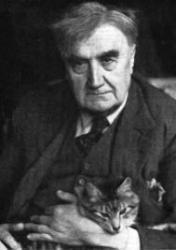
Ralph Vaughan Williams

1872 - 1958 Person Name: Ralph Vaughan Williams, 1872-1958 Meter: 8.7.8.7.8.8.8.7 Arranger of "AR HYD Y NOS" in Evangelical Lutheran Worship Through his composing, conducting, collecting, editing, and teaching, Ralph Vaughan Williams (b. Down Ampney, Gloucestershire, England, October 12, 1872; d. Westminster, London, England, August 26, 1958) became the chief figure in the realm of English music and church music in the first half of the twentieth century. His education included instruction at the Royal College of Music in London and Trinity College, Cambridge, as well as additional studies in Berlin and Paris. During World War I he served in the army medical corps in France. Vaughan Williams taught music at the Royal College of Music (1920-1940), conducted the Bach Choir in London (1920-1927), and directed the Leith Hill Music Festival in Dorking (1905-1953). A major influence in his life was the English folk song. A knowledgeable collector of folk songs, he was also a member of the Folksong Society and a supporter of the English Folk Dance Society. Vaughan Williams wrote various articles and books, including National Music (1935), and composed numerous arrange­ments of folk songs; many of his compositions show the impact of folk rhythms and melodic modes. His original compositions cover nearly all musical genres, from orchestral symphonies and concertos to choral works, from songs to operas, and from chamber music to music for films. Vaughan Williams's church music includes anthems; choral-orchestral works, such as Magnificat (1932), Dona Nobis Pacem (1936), and Hodie (1953); and hymn tune settings for organ. But most important to the history of hymnody, he was music editor of the most influential British hymnal at the beginning of the twentieth century, The English Hymnal (1906), and coeditor (with Martin Shaw) of Songs of Praise (1925, 1931) and the Oxford Book of Carols (1928). Bert Polman

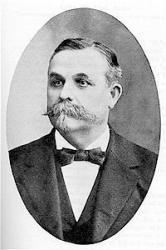
James McGranahan

1840 - 1907 Meter: 8.7.8.7.8.8.8.7 Composer of "[When the storms of life are raging]" in Timeless Truths James McGranahan USA 1840-1907. Born at West Fallowfield, PA, uncle of Hugh McGranahan, and son of a farmer, he farmed during boyhood. Due to his love of music his father let him attend singing school, where he learned to play the bass viol. At age 19 he organized his first singing class and soon became a popular teacher in his area of the state. He became a noted musician and hymns composer. His father was reluctant to let him pursue this career, but he soon made enough money doing it that he was able to hire a replacement farmhand to help his father while he studied music. His father, a wise man, soon realized how his son was being used by God to win souls through his music. He entered the Normal Music School at Genesco, NY, under William B Bradbury in 1861-62. He met Miss Addie Vickery there. They married in 1863, and were very close to each other their whole marriage, but had no children. She was also a musician and hymnwriter in her own right. For a time he held a postmaster’s job in Rome, PA. In 1875 he worked for three years as a teacher and director at Dr. Root’s Normal Music Institute. He because well-known and successful as a result, and his work attracted much attention. He had a rare tenor voice, and was told he should train for the operatic stage. It was a dazzling prospect, but his friend, Philip Bliss, who had given his wondrous voice to the service of song for Christ for more than a decade, urged him to do the same. Preparing to go on a Christmas vacation with his wife, Bliss wrote McGranahan a letter about it, which McGranahan discussed with his friend Major Whittle. Those two met in person for the first time at Ashtubula, OH, both trying to retrieve the bodies of the Bliss’s, who died in a bridge-failed train wreck. Whittle thought upon meeting McGranahan, that here is the man Bliss has chosen to replace him in evangelism. The men returned to Chicago together and prayed about the matter. McGranahan gave up his post office job and the world gained a sweet gospel singer/composer as a result. McGranahan and his wife, and Major Whittle worked together for 11 years evangelizing in the U.S., Great Britain, and Ireland. They made two visits to the United Kingdom, in 1880 and 1883, the latter associated with Dwight Moody and Ira Sankey evangelistic work. McGranahan pioneered use of the male choir in gospel song. While holding meetings in Worcester, MA, he found himself with a choir of only male voices. Resourcefully, he quickly adapted the music to those voices and continued with the meetings. The music was powerful and started what is known as male choir and quartet music. Music he published included: “The choice”, “Harvest of song”, “Gospel Choir”,, “Gospel hymns #3,#4, #5, #6” (with Sankey and Stebbins), “Songs of the gospel”, and “Male chorus book”. The latter three were issued in England. In 1887 McGranahan’s health compelled him to give up active work in evangelism. He then built a beautiful home, Maplehurst, among friends at Kinsman, OH, and settled down to the composition of music, which would become an extension of his evangelistic work. Though his health limited his hours, of productivity, some of his best hymns were written during these days. McGranahan was a most lovable, gentle, modest, unassuming, gentleman, and a refined and cultured Christian. He loved good fellowship, and often treated guests to the most delightful social feast. He died of diabetes at Kinsman, OH, and went home to be with his Savior. John Perry

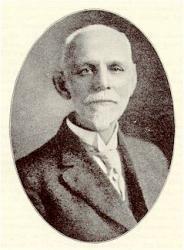
J. H. Fillmore

1849 - 1936 Person Name: James Henry Fillmore, Dr. Meter: 8.7.8.7.8.8.8.7 Composer of "KODAMBAKKAM" in The Cyber Hymnal James Henry Fillmore USA 1849-1936. Born at Cincinnati, OH, he helped support his family by running his father's singing school. He married Annie Eliza McKrell in 1880, and they had five children. After his father's death he and his brothers, Charles and Frederick, founded the Fillmore Brothers Music House in Cincinnati, specializing in publishing religious music. He was also an author, composer, and editor of music, composing hymn tunes, anthems, and cantatas, as well as publishing 20+ Christian songbooks and hymnals. He issued a monthly periodical “The music messsenger”, typically putting in his own hymns before publishing them in hymnbooks. Jessie Brown Pounds, also a hymnist, contributed song lyrics to the Fillmore Music House for 30 years, and many tunes were composed for her lyrics. He was instrumental in the prohibition and temperance efforts of the day. His wife died in 1913, and he took a world tour trip with single daughter, Fred (a church singer), in the early 1920s. He died in Cincinnati. His son, Henry, became a bandmaster/composer. John Perry

Carolina Sandell

1823 - 1903 Person Name: Karolina W. Sandell-Berg Meter: 8.7.8.7.8.8.8.7 Author of "Now Before Thee, Lord, We Gather" in The Cyber Hymnal Caroline W. Sandell Berg (b. Froderyd, Sweden, 1832; d. Stockholm, Sweden, 1903), is better known as Lina Sandell, the "Fanny Crosby of Sweden." "Lina" Wilhelmina Sandell Berg was the daughter of a Lutheran pastor to whom she was very close; she wrote hymns partly to cope with the fact that she witnessed his tragic death by drowning. Many of her 650 hymns were used in the revival services of Carl O. Rosenius, and a number of them gained popularity particularly because of the musical settings written by gospel singer Oskar Ahnfelt. Jenny Lind, the famous Swedish soprano, underwrote the cost of publishing a collection of Ahnfelt's music, Andeliga Sänger (1850), which consisted mainly of Berg's hymn texts. Bert Polman

Hubert P. Main

1839 - 1925 Person Name: Hubert Platt Main Meter: 8.7.8.7.8.8.8.7 Composer of "MOZAMBIQUE" in The Cyber Hymnal Hubert Platt Main DD USA 1839-1925. Born at Ridgefield, CT, he attended singing school as a teenager. In 1854 he went to New York City and worked as an errand boy in a wallpaper house. The next year he became an errand boy in the Bristow & Morse Piano Company. He was an organist, choir leader, and compiled books of music. He also helped his father edit the “Lute Songbook” by Isaac Woodbury. In 1866 he married Olphelia Louise Degraff, and they had two sons: Lucius, and Hubert. In 1867 he filled a position at William B Bradbury’s publishing house. After Bradbury’s death in 1868 the Bigelow & Main Publishers were formed as its successor. He also worked with his father until his father’s death in 1873. Contributors to their efforts were Fanny Crosby, Ira Sankey, Wilbur Crafts, and others. In addition to publishing, Main wrote 1000+ pieces of music, including part song, singing school songs, Sunday school music, hymns, anthems, etc. He also arranged music and collected music books. He 1891 he sold his collection of over 3500 volumes to the Newberry Library in Chicago, IL, where they were known as the Main Library. Some of his major publications include: “Book of Praise for the Sunday school” (1875), “Little pilgrim songs” (1884), “Hymns of Praise” (`1884), “Gems of song for the Sunday school” (1901), “Quartettes for men’s voices: Sacred & social selections” (1913). In 1922 Hope Publishing Company acquired Bigelow & Main. He was an editor, author, compiler, and composer, as well as publisher. He died in Newark, NJ. John Perry

Fanny Crosby

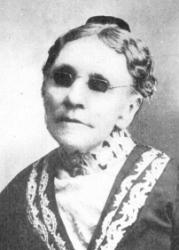
1820 - 1915 Person Name: Fanny Crosby Meter: 8.7.8.7.8.8.8.7 Author of "Drifting Away From The Savior" in The Cyber Hymnal Pseudonymns: A.V., Mrs. A. E. Andrews, Mrs. E. A. Andrews, Mrs. E. L. Andrews, James L. Black, Henrietta E. Blair, Charles Bruce, Robert Bruce, Leah Carlton, Eleanor Craddock, Lyman G. Cuyler, D.H.W., Ella Dare, Ellen Dare, Mrs. Ellen Douglass, Lizzie Edwards. Miss Grace Elliot, Grace J. Frances, Victoria Frances, Jennie Garnett, Frank Gould, H. D. K., Frances Hope, Annie L. James, Martha J. Lankton [Langton], Grace Lindsey, Maud Marion, Sallie Martin, Wilson Meade, Alice Monteith, Martha C. Oliver, Mrs. N. D. Plume, Kate Smiley, Sallie Smith, J. L. Sterling, John Sterling, Julia Sterling, Anna C. Storey, Victoria Stuart, Ida Scott Taylor, Mary R. Tilden, Mrs. J. B. Thresher, Hope Tryaway, Grace Tureman, Carrie M. Wilson, W.H.D. Frances Jane Crosby, the daughter of John and Mercy Crosby, was born in Southeast, Putnam County, N. Y., March 24, 1820. She became blind at the age of six weeks from maltreatment of her eyes during a spell of sickness. When she was eight years old she moved with her parents to Ridgefield, Conn., the family remaining there four years. At the age of fifteen she entered the New York Institution for the Blind, where she received a good education. She became a teacher in the institution in 1847, and continued her work until March 1, 1858. She taught English grammar, rhetoric and American history. This was the great developing period in her life. During the vacations of 1852 and 1853, spent at North Reading, Mass., she wrote the words to many songs for Dr. Geo. F. Root, then the teacher of music at the blind institution. Among them were, "Hazel Dell,", "The Honeysuckle Glen," "Rosalie, the Prairie Flower," "Music in the Air," "Proud World, Good-bye, I'm Going Home," "All Together", "Never Forget the Dear Ones," and others. Subsequently she wrote the words for the cantatas of The Flower Queen and The Pilgrim Fathers, all of which were very popular in their day, though it was not generally known at the time that she was the author. While teaching at the institution she met Presidents Van Buren and Tyler, Hon. Henry Clay, Governor Wm. H. Seward, General Winfield Scott, and other distinguished characters of American history. Concerning Mr. Clay, she gives the following: "When Mr. Clay came to the institution during his last visit to New York, I was selected to welcome him with a poem. Six months before he had lost a son at the battle of Monterey, and I had sent him some verses. In my address I carefully avoided any allusion to them, in order not to wound him. When I had finished he drew my arm in his, and, addressing the audience, said through his tears: 'This is not the first poem for which I am indebted to this lady. Six months ago she sent me some lines on the death of my dear son.' Both of us were overcome for a few moments. Soon, by a splendid effort, Mr. Clay recovered himself, but I could not control my tears." In connection with her meeting these notable men, we might add that Miss Fanny Crosby had the honor of being the first woman whose voice was heard publicly in the Senate Chamber at Washington. She read a poem there on one occasion. In addition to the thousands of hymns that she has written (about eight thousand poems in all), many of which have not been set to music, she has published four volumes of verses. The first was issued in 1844 and was entitled The Blind Girl, and Other Poems, a second volume, Monterey, and Other Poems, followed in 1849, and the third, A Wreath of Columbia's Flowers, in 1858. The fourth, Bells at Evening and Other Verses, with a biographical sketch by Rev. Robert Lowry, and a fine half-tone portrait, in 1897, the sales of which have reached a fourth edition. The book is published by The Biglow & Main Co., New York. Though these show the poetical bent of her mind, they have little to do with her world-wide fame. It is as a writer of Sunday-school songs and gospel hymns that she is known wherever the English language is spoken, and, in fact, wherever any other language is heard. Fanny was married March 5, 1858, to Alex. Van Alstyne, who was also a scholar in the same institution in which she was educated. She began to write Sunday-school hymns for Wm. B. Bradbury in 1864. Her first hymn, "We are going, we are going To a home beyond the skies", was written at the Ponton Hotel on Franklin Street, New York City, on February 5th of that year. This hymn was sung at Mr. Bradbury's funeral in January, 1868. Since 1864 she supported herself by writing hymns. She resided in New York City nearly all her life, where, she says, she is "a member of the Old John Street M. E. Church in good standing." She spent regular hours on certain days at the office of The Biglow & Main Co., the firm for which she did most of her writing, and for whom she has composed over four thousand hymns. Her hymns have been in great demand and have been used by many of our most popular composers, among whom may be mentioned Wm. B. Bradbury, Geo. F. Root, W. H. Doane, Rev. Robert Lowry, Ira D. Sankey, J. R. Sweney, W. J. Kirkpatrick, H. P. Main, H. P. Danks, Philip Phillips, B. G. Unseld, and others. She could compose at any time and did not need to wait for any special inspiration, and her best hymns have come on the spur of the moment. She always composed with an open book in her hand, generally a copy of Golden Hymns, held closely over her eyes, bottom side up. She learned to play on the guitar and piano while at the institution, and has a clear soprano voice. She also received a technical training in music, and for this reason she could, and did, compose airs for some of her hymns. One of these is, "Jesus, dear, I come to Thee, Thou hast said I may," both words and music of which are wonderfully sweet. "Safe in the arms of Jesus", probably one of her best known hymns, was her own favorite. Fanny loved her work, and was happy in it. She was always ready either to sympathize or join in a mirthful conversation, as the case may be. The secret of this contentment dates from her first composition at the age of eight years. "It has been the motto of my life," she says. It is: "O what a happy soul am I! Although I cannot see, I am resolved that in this world Contented I will be;" This has continued to be her philosophy. She says that had it not been for her affliction she might not have so good an education, nor so great an influence, and certainly not so fine a memory. She knows a great many portions of the Bible by heart, and had committed to memory the first four books of the Old Testament, and also the four Gospels before she was ten years of age. Her scope of subjects is wide, embracing everything from a contemplation of heaven, as in "The Bright Forever" and "The Blessed Homeland", to an appeal to the work of this world, as in "To the Work" and "Rescue the Perishing." The most of Fanny's published hymns have appeared under the name of Fanny J. Crosby or Mrs. Yan Alstyne, but quite a large number have appeared under the nom de plumes of Grace J. Frances, Mrs. C. M. Wilson, Lizzie Edwards, Ella Dale, Henrietta E. Blair, Rose Atherton, Maud Marion, Leah Carlton, nearly two hundred different names. -Biographies of Gospel Song and Hymn Writers (excerpts) ======================= Van Alstyne, Frances Jane, née Crosby, a member of the Methodist Episcopal Church, was born at South East, Putnam County, New York, March 24, 1823. When six weeks old she lost her sight. About 1835 she entered the New York City Institution for the Blind. On completing her training she became a teacher therein from 1847 to 1858. In 1858 she was married to Alexander Van Alstyne, a musician, who was also blind. Her first poem was published in 1831; and her first volumes of verse as A Blind Girl, and Other Poems, 1844; Monteresy, and Other Poems, 1849; and A Wreath of Columbia's Flowers, 1858. Her first hymn was "We are going, we are going" (Death and Burial), which was written for Mr. Bradbury and published in the Golden Censer, 1864. From 1853 to 1858 she wrote 20 songs, which were set to music by G. F. Root. Her songs and hymns number some 2,000 or more, and have been published mainly in several of the popular American Sunday school collections, and often under a nom de plume. About 60 have come into common use in Great Britain. The majority of these are taken from the following American collections:— i. From The Shining Star, 1864. 1. Softly on the breath of evening. Evening. ii. From Fresh Laurels, 1867. 2. Beautiful Mansions, home of the blest. Heaven. 3. Jesus the Water of Life has given. The Water of Life. 4. Light and Comfort of my soul. In Affliction. 5. There's a cry from Macedonia. Missions. 6. We are marching on with shield and banner bright. Sunday School Anniversary. iii. From Musical Leaves, 1868. 7. 0 what are you going to do, brother? Youth for God. iv. From Sabbath Carols, 1868. 8. Dark is the night, and cold the wind is blowing. Affliction anticipated. 9. Lord, at Thy mercy seat, Humbly I fall. Lent. v. From Silver Spray, 1868. 10. If I come to Jesus, He will make me glad. Peace in Jesus. 11. 'Twill not be long—our journey here. Heaven anticipated. vi. From Notes of Joy, 1869. 12. Little beams of rosy light. The Divine Father. 13. Press on! press on! a glorious throng. Pressing towards the Prize. vii. From Bright Jewels, 1869. 14. Christ the Lord is risen today, He is risen indeed. Easter. 15. Holy, holy, holy is the Lord! Sing 0 ye people, &c. Holiness of God. 16. Jesus, keep me near the Cross. Near the Cross of Christ. 17. Saviour, bless a little child. A Child's Prayer. Written Feb. 6, 1869. viii. From Songs of Devotion, 1870. 18. Pass me not, 0 gentle Saviour. Lent. Written in 1868. 19. Rescue the perishing, care for the dying. Home Missions. ix. From Pure Gold, 1871. 20. Great is Jehovah. King of kings. Greatness of God. 21. I would be Thy little lamb. The Good Shepherd. 22. Lead me to Jesus, lead me to Jesus. Desiring Jesus. 23. To the work, to the work, we are servants of God. Home Missions. 24. Why labour for treasures that rust and decay? The Fadeless Crown. x. From the Royal Diadem, 1873. 25. I am Jesus' little friend. For Infant Schools. 26. Jesus I love Thee. Loving Jesus. 27. Mourner, wheresoe'er thou art. To the Sorrowing and Penitent. Written Oct. 3, 1871. 28. Never be faint or weary. Joy in Jesus. 29. Only a step to Jesus. Invitation. xi. From Winnowed Hymns, 1873-4. 30. Loving Saviour, hear my cry. Lent. xii. From Echoes of Zion, 1874. 31. Say, where is thy refuge, my brother? Home Missions. xiii. From Songs of Grace and Glory, 1874. 32. Thou my everlasting Portion. Christ the Portion of His People. xiv. From Brightest and Best, 1875. 33. All the way my Saviour leads me. Jesus the Guide. 34. I am Thine, O Lord: I have heard Thy voice. Holiness desired. 35. O come to the Saviour, believe in His name. Invitation. Written, Sep. 7, 1874. 36. O how sweet when we mingle. Communion of Saints. Written in 1866. 37. O my Saviour, hear me. Prayer to Jesus for blessing and love. 38. Only Jesus feels and knows. Jesus the Divine Friend. 39. Revive Thy work, O Lord. Home Missions. 40. Saviour, more than life to me. Jesus All and in All. 41. To God be the glory, great things He hath done. Praise for Redemption. xv. From Calvary Songs, 1875. 42. Come, O come with thy broken heart. Invitation. xvi. From Gospel Music, 1876. 43. Here from the world we turn. Divine Worship. 44. When Jesus comes to reward His servants. Watching, xvii. From Welcome Tidings, 1877. 45. O hear my cry, be gracious now to me. For Pardon and Peace. xviii. From The Fountain of Song, 1877. 46. Lord, my trust I repose on Thee. Trusting in Jesus. xix. From Good as Gold, 1880. 47. In Thy cleft, O Rock of Ages. Safety in Jesus. 48. Sound the alarm ! let the watchman cry. Home Missions. 49. Tenderly He leads us. Christ the Leader. 50. 'Tis the blessed hour of prayer. The Hour of Prayer. In addition to these hymns, all of which are in common use in Great Britain (mainly through I. D. Sankey's Sacred Songs and Solos, the Methodist Sunday School Hymn Book, the Silver Street Sunday Scholars Companion, and other collections for Sunday schools), there are also "A blessing for you, will you take it?" (Pardon through Jesus); "My song shall be of Jesus" (Praise of Jesus); “Now, just a word for Jesus"(Home Missions); "Onward, upward, Christian soldier" (Pressing Heavenward); 44 Sinner, how thy heart is troubled" (Invitation); "'Tis a goodly, pleasant land" (Heaven anticipated); and "When the dewy light was fading" (Death anticipated). All of these are in I. D. Sankey's Sacred Songs & Solos. Mrs. Van Alstyne's most popular composition is "Safe in the arms of Jesus" (Safety in Jesus). This was written in 1868, at the request of Mr. W. H. Doane, to his well-known melody with which it is inseparably associated, and published in Bright Jewels, 1869. Mrs. Van Alstyne's hymns have sometimes been published anonymously; but the greater part are signed by a bewildering number of initials. The combined sales of the volumes of songs and hymns named above have amounted in English-speaking countries to millions of copies. Notwithstanding the immense circulation thus given to Mrs. Van Alstyne's hymns, they are, with few exceptions, very weak and poor, their simplicity and earnestness being their redeeming features. Their popularity is largely due to the melodies to which they are wedded. Since the above was in type we have found that the following are also in common use in Great Britain:— 51. Suppose the little cowslip. Value of Little Things. 52. Sweet hour of prayer. The Hour of Prayer. These are in Bradbury's Golden Chain, 1861. 53. Never lose the golden rule. Love to our Neighbours. In Bradbury's Golden Censer, 1864. 54. I will not be afraid at night. Trust in God. In Bradbury's Fresh Laurels, 1867. 55. Praise Him, praise Him, Jesus our, &c. Praise of Jesus. In Biglow & Main's Bright Jewels, 1869. 56. More like Jesus would I be. More like Jesus. In Perkins & Taylor's Songs of Salvation, 1870. 57. Behold me standing at the door. Christ at the Door. In Biglow & Main's Christian Songs, 1872. 58. If I come to Jesus. Jesus the Children's Guide. 59. Jesus, Lord, I come to Thee. Trust in Jesus. 60. Let me learn of Jesus. Jesus the Children's Friend. 61. Singing for Jesus, O singing for Jesus. Singing for Jesus. 62. There is a Name divinely sweet Holy Name of Jesus. Of these hymns Nos. 58-62 we have not been able to trace. --Excerpts from John Julian, Dictionary of Hymnology (1907 ================ Van Alstyne, Frances J., p. 1203, ii. From the American collections of recent date we find that Mrs. Van Alstyne is still actively engaged in hymn-writing. In the Funk and Wagnalls Company Gloria Deo, 1903, there are about 30 of her hymns, most of which are new. They are all signed, and some are dated, but we have not space to quote the first lines and subjects, as this hymnal is not an official collection of any denomination. Another name, "Mrs. S. K. Bourne" is credited in the same hymnal with about 40 new hymns. If this signature is not another pen-name of Mrs. Van Alstyne's (and these pen-names and initials of hers are very numerous), we can only say that she has a very successful understudy in "Mrs. S. K. Bourne." --John Julian, Dictionary of Hymnology, New Supplement (1907)

Thomas O. Chisholm

1866 - 1960 Meter: 8.7.8.7.8.8.8.7 Author of "I Want to Be Like Jesus" in The Hymnal for Worship and Celebration Thomas O. Chisholm was born in Franklin, Kentucky in 1866. His boyhood was spent on a farm and in teaching district schools. He spent five years as editor of the local paper at Franklin. He was converted to Christianity at the age of 26 and soon after was business manager and office editor of the "Pentecostal Herald" of Louisville, Ky. In 1903 he entered the ministry of the M. E. Church South. His aim in writing was to incorporate as much Scripture as possible and to avoid flippant or sentimental themes. Dianne Shapiro, from "The Singers and Their Songs: sketches of living gospel hymn writers" by Charles Hutchinson Gabriel (Chicago: The Rodeheaver Company, 1916) ============================== Signed letter from Chisholm dated 9 August 1953 located in the DNAH Archives.

D. S. Warner

1842 - 1895 Person Name: Daniel S. Warner Meter: 8.7.8.7.8.8.8.7 Author of "Lift Up Your Hands" in Timeless Truths Warner, Daniel Sidney. (near Marshallville, Wayne County, Ohio, 1842--1895). Church of God. Reared on an Ohio farm. During the Civil War, he substituted for a brother. Later he taught school. He attended Oberlin College briefly in 1865. By 1867 he was licensed to preach by the Western Ohio Eldership of the Church of God (Winebrennerian). His experience in preaching was gained on circuits in Nebraska and Ohio. In 1874 he was in trouble with the Eldership for preaching entire sanctification. Soon he joined the Indiana Eldership. In 1881 he was in trouble with this Eldership over sectism. Warner was an associate editor of the Herals of Gospel Freedom in 1878. this paper was merged with the Pilgrim about 1881, and the new paper was called the Gospel Trumpet, with Warner as its editor. Warner was forced to move the paper about, seeing for firm financial foundations. The publishing work was at last established in Grand Junction, Michigan, enabling Warner to travel more extensively with a group of evangelists. Warner's time was spent in editing the Trumpet, writing books, tracts, and songs, and making evangelistic tours of the United States. --John W.V. Smith, DNAH Archives =================================== Daniel Sidney Warner, 1842-1895 Born: June 25, 1842, Bris­tol (now Mar­shall­ville), Ohio. Died: De­cem­ber 12, 1895, Grand Junc­tion, Mi­chi­gan, of pneu­mon­ia. Buried: Near Grand Junc­tion, Mi­chi­gan, at the edge of the Church of God camp­ground that was once there. As of 1880, Warner was liv­ing in Rome Ci­ty, In­di­a­na. His works in­clude: Echoes From Glo­ry, with Bar­ney War­ren (Grand Junc­tion, Mi­chi­gan: The Gos­pel Trump­et Pub­lish­ing Com­pa­ny, 1893) Lyrics-- Ah Poor Ali­en Far from the Fold of Love Ah Poor Sin­ner, Think of Cal­va­ry All This World, Its Wealth and Hon­or All Ye People, Come Down to the Judg­ment Be­gun Along a Dark and Gloomy Path Are You of the Holy Rem­nant Are You Rea­dy, Wait­ing for the Lord? Are You Sow­ing Seeds of Kind­ness? Asleep in Je­sus, Oh, How Sweet A Gentle Hand Un­seen by Us A Long Time I Wan­dered Away Beautiful, Peace­ful Zi­on Behold a Form upon the Lone­ly Mount Behold, What Love, What Bound­less Love Bond of Per­fect­ness, The Borne Away in Mind and Spir­it Brighter Days Are Sweet­ly Dawn­ing By Thy Blessed Word Obey­ing Can the Spir­it of a Mor­tal Church of God, Thou Spot­less Vir­gin Church of the Liv­ing God Come, Be­hold the Love of Je­sus Come unto Me, All Ye That La­bor Come, With­in That Upper Cham­ber Dear Friends, We Have Pre­cious Tidings of Old Don’t Re­sist the Ho­ly Spirit Down into the Flow­ing Ri­ver Do You Tr­iumph, O My Bro­ther? Ere Christ Will Reign Within Thy Heart Fair C­ity of the Gos­pel Day Far Down o’er the Ag­es a Prom­ise Di­vine Fill Me with Thy Spir­it From My Soul and All With­in From the Mount of Heav­en­ly Vi­sion God Is Sit­ting in the Aw­ful Val­ley God Is Sweep­ing through the Na­tions God of Mer­cy, God of Love Great Peace Have They That Love Thy Law Hallelujah to Je­sus! Hark, in the Bi­ble a Warn­ing Hear the Tid­ings of a King­dom Hear the Voice of Our Com­mand­er Hear Ye the Moan of a Soul That Is Lost Here We Meet and Part in Je­sus His Yoke Is Ea­sy How Often I’ve Pondered My Struggles Within How Sweet Is My Walk with Je­sus! How Sweet This Bond of Per­fect­ness I Am Rest­ing in Je­sus, Hal­le­lu­jah! I Know My Name Is There I Heard the Dear Re­deem­er Say I Lost My Life for Je­sus on the Cross I Ought to Love My Sav­ior I Seem to Hear an An­gel Choir I Will Be with Thee, O, Child of Love I Will Part with Thee, Old Mas­ter I Will Trust Thee, O My Fa­ther If Thou Wilt Know the Foun­tain Deep I’ll Sing of a Ri­ver Di­vine In the Cham­bers of Thy Bo­som In the Light of God In the Morn­ing of the Lord Is the Spirit Glow­ing in Thy Heart? It Is Writ­ten in the Bi­ble I’ve Found a Friend in Je­sus I’ve Found My Lord and He Is Mine I’ve Reached the Land of Pure De­light Jesus Drank the Cup of Sor­row Jesus Has Taken My Load of Sin Jesus, Thou a Fount­ain Art Last Great Day, The Let Us Sing an In­vi­ta­tion Let Us Sing a Sweet Song of the Home of the Soul Let Us Sing the Name of Je­sus Life Is Not a Mys­tic Dream Light in Our Dark­ness, Bro­ther Lord Our Shep­herd, The Listen, Sin­ner, to the Voice Lord, the Shades of Night Lo, Heav­en Now Opens to Rap­tur­ous View Lo the King­dom of Hea­ven We See Lo, wisdom Crieth in the Streets Mansion Is Wai­ting in Glo­ry, A Men Speak of a Church Tri­umph­ant Mighty Mes­sen­gers Are Run­ning My Je­sus Died for Me up­on the Cross My Name Is in the Book of Life My Soul in Trou­ble Roamed My Soul Is Sa­tis­fied My Soul Is Saved from Sin Not in the Tem­ples Made with Hands Now My Pil­grim toils Are Over Now the Great King of Ba­bel O Blessed Je­sus, for Thee W Are Wait­ing O Blessed Je­sus, Thy Love Is Su­preme O Careless Sin­ner, Wake to Mer­cy’s Call O God, In­spire Our Morn­ing Hymn O How Can Any­one Re­fuse O How Sublime Is the Life of the Christ­ian O Let Us Sing the Mighty Love O Love Di­vine, Un­fa­thomed! O Praise the Lord, My Soul Is Saved O Precious Bi­ble! Burn­ing Words from Hea­ven O Sin­ner, Come Home to the Sav­ior O W Love the Child­ren’s Mee­ting O What Deep and Pure Com­pas­sion O Wor­ship God, the Fa­ther O Ye Pil­grims, Sing an Ex­hor­ta­tion O’er the Door of Hea­ven’s King­dom Oft My Heart Has Bled with Sor­row Oh, Wor­ship God the Fa­ther, Just and True Oh, Come and Praise the Lord To­day Oh, When We Re­mem­ber the Good­ness O Who Can Stand the Judg­ment Day Oh, Why Should I Be Lost Onward Moves the Great Eter­nal Our God Is Love, the An­gels Know Perishing Souls at Stake Tod­ay! Pilgrim of Je­sus, o’er Life’s Trou­bled Sea Praise the Lord with Songs of Glo­ry Rejoice, Little Ones, in the Pro­mise Di­vine River of Peace Salvation Is the Sweet­est Thing See the Great King of Ba­bel Shall I Tell You Why I Ceased from Fol­ly? Shall My Soul As­cend with Rap­ture Shield of Faith, The Since I Have Found My Sa­vior Sing of Salvation, O, it Was Love Sinner, will You Lose Your Soul Sunbeams Spark­ling and Glanc­ing Sweet Fellowship, Thy Crys­tal Tide Sweetly Whis­pered the Lord in My Mind Take the Shield of Faith, My Bro­ther Tell Me, Pil­grim, Traveling Home­ward Tell Me, Watch­man, Oh, What of the Morn­ing There Are Some Rays of Hope Di­vine There Are Tidings of a Land Far Away There Is a Blest Pa­vil­ion There Is a Grace Few Mor­tals Find There Is a Story I Oft­en Must Pon­der There Is Joy in the Ser­vice of the Mas­ter There Was a Bright and Love­ly Boy There’s an An­gel of Mer­cy from Hea­ven There’s a Fact No Mortal Ever Can Deny There’s a Fount­ain of Blood That Atones for the Soul There’s a Land of Ev­er­last­ing Song There’s a Peace­ful Valley of De­ci­sion Found There’s a Song We Love to Sing There’s an Awful Day That’s Com­ing There’s Mercy, Poor Sin­ner, for Thee There’s Mu­sic in My Soul This Is Why I Love My Sav­ior Tho’ All Along My Hap­py Pil­grim Race Time Enough, the Slug­gard Cries Time On­ward Flows Like a R­iver Vast Trusting in Je­sus, My Sa­vior and Friend ’Twas Sung by the Po­ets Two Little Hands Are Sweet­ly Fold­ed Unheeding Win­ter’s Cru­el Blast Un­i­verse Is God’s Do­main, The We Are Com­ing, Hal­le­lu­jah! We Are Going Home to Hea­ven’s Gold­en City We Are the Hap­py Child­ren We Have Met To­day on the Old Camp­ground We Have Reached an Aw­ful Era We Have Read in Sac­red Sto­ry We Stand upon the Sea of Glass We Tread up­on the Aw­ful Verge We Will Work for Je­sus We’ll Fol­low the Lord All the Way We’re a Hap­py Christ­ian Band What Awful Dark­ness Shrouds All the Earth! When Lost in the Dark­ness of Guilt and Despair When We Pass the Gold­en Sum­mer Where Art Thou, Wan­d’ring Sin­ner? Where Shall We Look for Help in Af­flict­ion? While Sleep­ing Care­less on the Brink Whiter Than Snow Who but the Christ­ian Is Hap­py and Free? Who Can Sing the Won­drous Love of the Son Di­vine?? Who Is My Life but Christ Alone? Who Will Suf­fer with the Sav­ior? Why Should a Doubt or Fear Arise? Why Should a Mor­tal Man Com­plain? Wonderful Fount­ain of Glo­ry --hymntime.com/tch

E. E. Hewitt

1851 - 1920 Person Name: Eliza E. Hewitt Meter: 8.7.8.7.8.8.8.7 Author of "Redeeming Love" in The Cyber Hymnal Pseudonym: Li­die H. Ed­munds. Eliza Edmunds Hewitt was born in Philadelphia 28 June 1851. She was educated in the public schools and after graduation from high school became a teacher. However, she developed a spinal malady which cut short her career and made her a shut-in for many years. During her convalescence, she studied English literature. She felt a need to be useful to her church and began writing poems for the primary department. she went on to teach Sunday school, take an active part in the Philadelphia Elementary Union and become Superintendent of the primary department of Calvin Presbyterian Church. Dianne Shapiro, from "The Singers and Their Songs: sketches of living gospel hymn writers" by Charles Hutchinson Gabriel (Chicago: The Rodeheaver Company, 1916)

Pages


Export as CSV
It looks like you are using an ad-blocker. Ad revenue helps keep us running. Please consider white-listing Hymnary.org or getting Hymnary Pro to eliminate ads entirely and help support Hymnary.org.