You help make Hymnary.org possible. More than 10 million people from 200+ countries found hymns, liturgical resources and encouragement on Hymnary.org in 2025, including you. Every visit affirms the global impact of this ministry.

If Hymnary has been meaningful to you this year, would you take a moment today to help sustain it? A gift of any size—paired with a note of encouragement if you wish—directly supports the server costs, research work and curation that keep this resource freely available to the world.

Give securely online today, or mail a check to:
Hymnary.org
Calvin University
3201 Burton Street SE
Grand Rapids, MI 49546

Thank you for your partnership, and may the hope of Advent fill your heart.

Person Results

Topics:scripture+songs
In:people

Planning worship? Check out our sister site, ZeteoSearch.org, for 20+ additional resources related to your search.
Showing 1 - 10 of 293Results Per Page: 102050

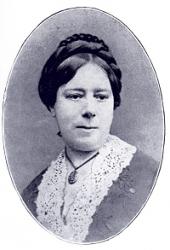
Catherine Winkworth

1827 - 1878 Topics: liturgical Scripture Songs Translator of "Isaiah 40 (Comfort, Comfort Now My People)" in Voices United Catherine Winkworth (b. Holborn, London, England, 1827; d. Monnetier, Savoy, France, 1878) is well known for her English translations of German hymns; her translations were polished and yet remained close to the original. Educated initially by her mother, she lived with relatives in Dresden, Germany, in 1845, where she acquired her knowledge of German and interest in German hymnody. After residing near Manchester until 1862, she moved to Clifton, near Bristol. A pioneer in promoting women's rights, Winkworth put much of her energy into the encouragement of higher education for women. She translated a large number of German hymn texts from hymnals owned by a friend, Baron Bunsen. Though often altered, these translations continue to be used in many modern hymnals. Her work was published in two series of Lyra Germanica (1855, 1858) and in The Chorale Book for England (1863), which included the appropriate German tune with each text as provided by Sterndale Bennett and Otto Goldschmidt. Winkworth also translated biographies of German Christians who promoted ministries to the poor and sick and compiled a handbook of biographies of German hymn authors, Christian Singers of Germany (1869). Bert Polman ======================== Winkworth, Catherine, daughter of Henry Winkworth, of Alderley Edge, Cheshire, was born in London, Sep. 13, 1829. Most of her early life was spent in the neighbourhood of Manchester. Subsequently she removed with the family to Clifton, near Bristol. She died suddenly of heart disease, at Monnetier, in Savoy, in July, 1878. Miss Winkworth published:— Translations from the German of the Life of Pastor Fliedner, the Founder of the Sisterhood of Protestant Deaconesses at Kaiserworth, 1861; and of the Life of Amelia Sieveking, 1863. Her sympathy with practical efforts for the benefit of women, and with a pure devotional life, as seen in these translations, received from her the most practical illustration possible in the deep and active interest which she took in educational work in connection with the Clifton Association for the Higher Education of Women, and kindred societies there and elsewhere. Our interest, however, is mainly centred in her hymnological work as embodied in her:— (1) Lyra Germanica, 1st Ser., 1855. (2) Lyra Germanica, 2nd Ser., 1858. (3) The Chorale Book for England (containing translations from the German, together with music), 1863; and (4) her charming biographical work, the Christian Singers of Germany, 1869. In a sympathetic article on Miss Winkworth in the Inquirer of July 20, 1878, Dr. Martineau says:— "The translations contained in these volumes are invariably faithful, and for the most part both terse and delicate; and an admirable art is applied to the management of complex and difficult versification. They have not quite the fire of John Wesley's versions of Moravian hymns, or the wonderful fusion and reproduction of thought which may be found in Coleridge. But if less flowing they are more conscientious than either, and attain a result as poetical as severe exactitude admits, being only a little short of ‘native music'" Dr. Percival, then Principal of Clifton College, also wrote concerning her (in the Bristol Times and Mirror), in July, 1878:— "She was a person of remarkable intellectual and social gifts, and very unusual attainments; but what specially distinguished her was her combination of rare ability and great knowledge with a certain tender and sympathetic refinement which constitutes the special charm of the true womanly character." Dr. Martineau (as above) says her religious life afforded "a happy example of the piety which the Church of England discipline may implant.....The fast hold she retained of her discipleship of Christ was no example of ‘feminine simplicity,' carrying on the childish mind into maturer years, but the clear allegiance of a firm mind, familiar with the pretensions of non-Christian schools, well able to test them, and undiverted by them from her first love." Miss Winkworth, although not the earliest of modern translators from the German into English, is certainly the foremost in rank and popularity. Her translations are the most widely used of any from that language, and have had more to do with the modern revival of the English use of German hymns than the versions of any other writer. -- John Julian, Dictionary of Hymnology (1907) ============================ See also in: Hymn Writers of the Church

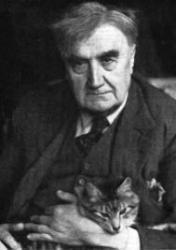
Ralph Vaughan Williams

1872 - 1958 Topics: liturgical Scripture Songs Composer of "[Halellujah! Hallelujah!]" in Voices United Through his composing, conducting, collecting, editing, and teaching, Ralph Vaughan Williams (b. Down Ampney, Gloucestershire, England, October 12, 1872; d. Westminster, London, England, August 26, 1958) became the chief figure in the realm of English music and church music in the first half of the twentieth century. His education included instruction at the Royal College of Music in London and Trinity College, Cambridge, as well as additional studies in Berlin and Paris. During World War I he served in the army medical corps in France. Vaughan Williams taught music at the Royal College of Music (1920-1940), conducted the Bach Choir in London (1920-1927), and directed the Leith Hill Music Festival in Dorking (1905-1953). A major influence in his life was the English folk song. A knowledgeable collector of folk songs, he was also a member of the Folksong Society and a supporter of the English Folk Dance Society. Vaughan Williams wrote various articles and books, including National Music (1935), and composed numerous arrange­ments of folk songs; many of his compositions show the impact of folk rhythms and melodic modes. His original compositions cover nearly all musical genres, from orchestral symphonies and concertos to choral works, from songs to operas, and from chamber music to music for films. Vaughan Williams's church music includes anthems; choral-orchestral works, such as Magnificat (1932), Dona Nobis Pacem (1936), and Hodie (1953); and hymn tune settings for organ. But most important to the history of hymnody, he was music editor of the most influential British hymnal at the beginning of the twentieth century, The English Hymnal (1906), and coeditor (with Martin Shaw) of Songs of Praise (1925, 1931) and the Oxford Book of Carols (1928). Bert Polman

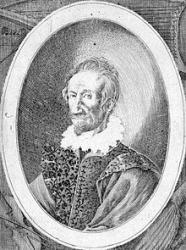
Louis Bourgeois

1510 - 1561 Topics: liturgical Scripture Songs Composer of "GENEVAN 42" in Voices United Louis Bourgeois (b. Paris, France, c. 1510; d. Paris, 1561). In both his early and later years Bourgeois wrote French songs to entertain the rich, but in the history of church music he is known especially for his contribution to the Genevan Psalter. Apparently moving to Geneva in 1541, the same year John Calvin returned to Geneva from Strasbourg, Bourgeois served as cantor and master of the choristers at both St. Pierre and St. Gervais, which is to say he was music director there under the pastoral leadership of Calvin. Bourgeois used the choristers to teach the new psalm tunes to the congregation. The extent of Bourgeois's involvement in the Genevan Psalter is a matter of scholar­ly debate. Calvin had published several partial psalters, including one in Strasbourg in 1539 and another in Geneva in 1542, with melodies by unknown composers. In 1551 another French psalter appeared in Geneva, Eighty-three Psalms of David, with texts by Marot and de Beze, and with most of the melodies by Bourgeois, who supplied thirty­ four original tunes and thirty-six revisions of older tunes. This edition was republished repeatedly, and later Bourgeois's tunes were incorporated into the complete Genevan Psalter (1562). However, his revision of some older tunes was not uniformly appreciat­ed by those who were familiar with the original versions; he was actually imprisoned overnight for some of his musical arrangements but freed after Calvin's intervention. In addition to his contribution to the 1551 Psalter, Bourgeois produced a four-part harmonization of fifty psalms, published in Lyons (1547, enlarged 1554), and wrote a textbook on singing and sight-reading, La Droit Chemin de Musique (1550). He left Geneva in 1552 and lived in Lyons and Paris for the remainder of his life. Bert Polman

Claude Goudimel

1514 - 1572 Topics: liturgical Scripture Songs Harmonizer of "GENEVAN 42" in Voices United The music of Claude Goudimel (b. Besançon, France, c. 1505; d. Lyons, France, 1572) was first published in Paris, and by 1551 he was composing harmonizations for some Genevan psalm tunes-initially for use by both Roman Catholics and Protestants. He became a Calvinist in 1557 while living in the Huguenot community in Metz. When the complete Genevan Psalter with its unison melodies was published in 1562, Goudimel began to compose various polyphonic settings of all the Genevan tunes. He actually composed three complete harmonizations of the Genevan Psalter, usually with the tune in the tenor part: simple hymn-style settings (1564), slightly more complicated harmonizations (1565), and quite elaborate, motet-like settings (1565-1566). The various Goudimel settings became popular throughout Calvinist Europe, both for domestic singing and later for use as organ harmonizations in church. Goudimel was one of the victims of the St. Bartholomew's Day massacre of Huguenots, which oc­curred throughout France. Bert Polman

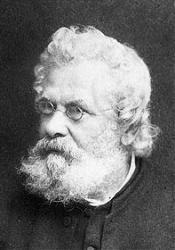
Johann Olearius

1611 - 1684 Person Name: Johannes G. Olearius Topics: liturgical Scripture Songs Author of "Isaiah 40 (Comfort, Comfort Now My People)" in Voices United Johannes Olearius (b. Halle, Germany, 1611; d. Weissenfels, Germany, 1684) Born into a family of Lutheran theologians, Olearius received his education at the University of Wittenberg and later taught theology there. He was ordained a Lutheran pastor and appointed court preacher to Duke August of Sachsen-Weissenfels in Halle and later to Duke Johann Adolph in Weissenfels. Olearius wrote a commentary on the entire Bible, published various devotional books, and produced a translation of the Imitatio Christi by Thomas a Kempis. In the history of church music Olearius is mainly remembered for his hymn collection, which was widely used in Lutheran churches. Bert Polman ======================= Olearius, Johannes, son of Johann Olearius, pastor of St. Mary's Church and superintendent at Halle, was born at Halle, Sept. 17, (N.S.) 1611. He entered the University of Wittenberg in 1629 (M.A. 1632, D.D. 1643], where he became lecturer, and, in 1635, adjunct of the philosophical faculty. In 1637 he became Superintendent at Querfurt; and, in 1643, was appointed by Duke August of Sachsen-Weissenfels as his chief court preacher, and private chaplain at Halle, where he became in 1657 Kirchenrath, and in 1664 General Superintendent. When, on the death of Duke August in 1680, the administration of Magdeburg fell to the Elector of Brandenburg, Duke Johann Adolf gave Olearius similar appointments at Weissenfels, which he held till his death on April 24, 1684 (Koch, iii. 346; Allgemeine Deutsche Biographie xxiv. 279, &c). Olearius was the author of a Commentary on the whole Bible, and of various devotional works. He was also the compiler of one of the largest and most important German hymn-books of the 17th century, viz. the Geistliche Singe-Kunst, of which the first edition appeared at Leipzig in 1671, with 1207 (1218) hymns, and the second at Leipzig in 1672, with 1340. The first edition contained 302 hymns by Olearius himself, and marked "D. J. O." They may best be described as useful, being for times and seasons hitherto unprovided for, and filling up many gaps in the various sections of the German hymn-books. They are mostly short, many of only two verses, simple and easy of comprehension, often happy in expression and catching, and embodying in a concise form the leading ideas of the season or subject. Many were speedily adopted into German hymn-books, and a considerable number are still in use. Of Olearius's hymns the following have passed into English:— i. Gelobet sei der Herr. Trinity Sunday. One of his best hymns. Founded on the Gospel for Trinity Sunday. Included in 1(571 as above, No. 709, in 5 stanzas of 8 lines, and entitled "Encouragement from the Gospel to thankful meditation on this great mystery." In the Berlin Geistliche Lieder ed. 1863, No. 17. Translated as:— 1. Blest be my Lord and God. A good translation, omitting st. v. by A. T. Russell, as No. 134, in his Psalms & Hymns 1851. 2. 0 praise the Lord! His name extol. A version of st. i.-iii., as No. 115 in the Ohio Lutheran Hymnal, 1880. ii. Herr Jesu Christ, dein theures Blut. Passiontide. His finest hymn. Founded on I St. John i. 7. In 1671 as above, No. 576, in 4 stanzas of 4 lines and entitled "Meditation on the Precious Blood of Jesus Christ." St. ii. is based on the hymn “In Christi Wunden schlaf ich ein" (p. 319, ii.). In the Berlin Geistliche Lieder, edition 1863, No. 233. Translated as:— 1. Lord Jesu Christ! Thy precious blood Brings to my soul. A good and full translation by A. T. Russell, as No. 161 in his Psalms & Hymns, 1851. 2. Lord Jesus Christ! Thy precious blood Is to my soul. In full by C. H. L. Schnette, as No. 77 in the Ohio Lutheran Hymnal, 1880. Another translation is "Lord Jesus Christ, Thy blessed blood." By Miss Manington, 1863, p. 43. iii. Herr, öffhe mir die Herzensthür. Holy Scripture. After Sermon. In 1671 as above, No. 975, in 2 stanzas and a doxology. In the Berlin Geistliche Lieder, ed. 1863, No. 422. The translation in common use is:— Lord, open Thou my heart to hear, And by Thy Word to me draw near. In full by Dr. M. Loy in the Ohio Lutheran Hymnal, 1880. iv. Nun kommt das neue Kirchenjahr. Advent. In 1671 as above, No. 384, in 3 stanzas and a doxology. In the Berlin Geistliche Lieder, ed. 1863, No. 145. The translation is:— The new Church year again is come. By E. Cronenwett, as No. 15 in the Ohio Lutheran Hymnal, l880. v. Tröstet, tröstet meine Lieben. St. John Baptist's Day. In 1671 as above, No. 733, in 4 stanzas of 8 lines, and entitled "Meditation on the Lesson of the Festival. Isaiah xl." In the Berlin Geistliche Lieder, ed. 1863, No. 124. Translated as:— Comfort, comfort ye my people. A full and good translation by Miss Winkworth, as No. 83 in her Chorale Book for England, 1863. Repeated in full in the Parish Hymn Book, 1865, and the Ohio Lutheran Hymnal, 1880, and, omitting st. ii. in the Pennsylvania Lutheran Church Book, 1868. Other hymns by Olearius have been translated into English, viz.:— vi. Gott Lob, mein Jesus macht mich rein. Presentation in the Temple. In 1671 as above, No. 507, as a hymn on the Purification in 6 stanzas, and entitled "Encouragement from the Gospel," viz. St. Luke ii. 22-32. In the Berlin Geistliche Lieder, ed. 1863, No. 1270. The form tr. is "Durch Jesum kann ich auch mit Freud," which is No. 428 in Knapp's Evangelischer Liederschatz, 1837, and is st. iv.-vi. altered. Translated as "I too, through Jesus, may in peace." By Dr. H. Mills, 1845 (1856, p. 277). vii. Sollt ich meinem Gott nicht trauen. Trust in God. In 1671 as above, No. 878, in 6 stanzas, and entitled “Encouragement from the Gospel," viz. St. Matt. vi. 24 ff, the Gospel for the 15th Sunday after Trinity. In the Berlin Geistliche Lieder, ed. 1863, No. 857. Tr. as, "Shall I not trust my God." By Miss Warner, 1858, p. 206. viii. Wenn dich Unglüick hat betreten. Cross and Consolation. In 1671 as above, No. 827, in 6 st., and entitled "Encouragement from the Gospel," viz. St. Matt. xv. 21-28, the Gospel for Reminiscere Sunday (2nd Sunday in Lent). In Porst's Gesang-Buch, ed. 1855, No. 997. The translations are (1) "When afflictions sore oppress you." By Miss Cox, 1841, p. 129. (2) "When affliction rends the heart." By Lady E. Fortescue, 1843, p. 55. [Rev. James Mearns, M.A.] --John Julian, Dictionary of Hymnology (1907)

Miriam Therese Winter

b. 1938 Topics: liturgical Scripture Songs Author of "Song of Mary (My Soul Gives Glory to My God)" in Voices United

Frederick C. Atkinson

1841 - 1896 Topics: liturgical Scripture Songs Composer of "[Spirit of God, descend upon my heart]" in Voices United Born: Au­gust 21, 1841, Nor­wich, Nor­folk, Eng­land. Died: No­vem­ber 30, 1896, East Dere­ham, Nor­folk, Eng­land. As a boy Atkinson was a chorister and assistant organist at Norwich Cathedral. In 1867 he graduated with a Bachelor of Music degree from Cambridge and then served as organist and choirmaster in St. Luke's Church, Manningham, Bradford. He also held that position at Norwich Cathedral and at St. Mary's Parish Church in Lewisham. Atkinson wrote hymn tunes, anthems, and complete Anglican services, as well as songs and piano pieces. Psalter Hymnal Handbook, 1988

Herbert Brokering

1926 - 2009 Person Name: Herbert Frederick Brokering Topics: liturgical Scripture Songs Author of "Earth and All Stars" in Voices United Herbert F. Brokering (b. Beatrice, Nebraska, May 21, 1926; d. Bloomington, Minnesota, November 7, 2009) was a Lutheran pastor with German roots, an author of more than forty books, and a poet and hymn writer known especially for two hymn texts, “Earth and All Stars” and “Alleluia! Christ Is Risen,” both set to the same tune. He was born in Nebraska, the son of a German Lutheran pastor; earned degrees from Wartburg College in Iowa, University of Iowa, and Trinity Lutheran Seminary in Columbus, OH, and pursued graduate study in Germany at the University of Kiel and the University of Erlangen. He served as a pastor of three Lutheran congregations, in Pennsylvania, New York, and Texas; taught at the Navy Chaplain’s Career School in Newport, Rhode Island, Luther Seminary and Trinity Seminary, and was also active in the Lutheran World Federation services and the World Council of Churches. Emily Brink

Michael Joncas

b. 1951 Topics: liturgical Scripture Songs Composer of "[To God I lift my soul in praise]" in Voices United

John H. Hopkins

1820 - 1891 Topics: liturgical Scripture Songs Author of "We Three Kings of Orient Are" John Henry Hopkins, Jr MA USA 1820-1891. Born in Pittsburgh, PA, having 12 siblings, the son of pioneer parents (his father from Dublin, his mother from Hamburg) he became an ecclesiologist. His father had been an ironmaster, school teacher, lawyer, priest and second Episcopal Bishop of Vermont, (becoming presiding bishop in 1865). When his father founded the Vermont Episcopal Institute, he needed an assistant to help run it, so he picked his son to become a tutor and disciplinarian. The younger Hopkins played the flute and bugle in the school orchestra and also taught Sunday school. John Henry reflected the artistic talents of both parents in music, poetry, and art. After graduating from the University of Vermont in 1839, he returned to help his father with the school, but a financial crisis hit that year and the school had to close. He worked as a reported in New York City while studying law. He developed a throat ailment and went south to be in a warmer climate. From 1842-1844 he tutored the children of Episcopal Bishop Elliott of Savannah, GA, returning to take his M.A. from Vermont in 1845. He graduated from General Theological Seminary in 1850 and was ordained a deacon, serving as first instructor in church music at the Seminary. He founded and edited the “Church Journal” from 1853 to 1868. Interested in New York’s Ecclesiological Society, his artistic talents were apparent in designing stained-glass windows, episcopal seals, and a variety of other church ornaments. At the same time, his musical talents led to the writing and composing of a number of fine hymns and tunes, as well as anthems and services. He was ordained a priest in 1872, and was Rector of Trinity Church, Plattsburg, NY, from 1872-1876, then of Christ Episcopal Church in Williamsport, PA, from 1876-1887. He helped get the building debt paid off by 1879 with(in 10 years of its construction). During his time there a Sunday school building was also erected, having steam heat and a tiled floor. He designed some of the church furniture and bishop periphernalia as well as wrought iron tombs in Wildwood Cemetery. He also helped design two other church buildings in the area. A man of many talents, he was much beloved as a scholar, writer, preacher, controvertialist, musician, poet, and artist, excelling in all that he did. Totally devoted to his parish people, he especially loved children and was kind to anyone in need. He was considered very down-to-earth. He delivered the eulogy at the funeral of President Usysses S Grant in 1885. He was considered a great developer of hymnody in the Episcopal Church in the mid-19th century. His “Carols, hymns, and songs,”, published in 1863, had a 4th edition in 1883. In 1887 he edited “Great hymns of the church”. He wrote a biography of his father (the life of John Henry Hopkins, S.T.D.) He never married. He died at Hudson, NY. John Perry ======================= Hopkins, John Henry, D.D., Jun., son of J. H. Hopkins, sometime Bishop of Vermont, was born at Pittsburg, Pa., Oct. 28, 1820, educated at the University of Vermont, ordained in 1850, Rector of Christ's Church, Williamsport, Pa., 1876, and died at Troy, New York, Aug. 13, 1891. He published Poems by the Wayside written during more than Forty Years, N.Y., James Pott, 1883; and Carols, Hymns, and Songs, 1862; 3rd ed. 1882. Of his hymns the following are in common use: 1. Blow on, thou [ye] mighty Wind. Missions. 2. Come with us, O blessed Jesus. Holy Communion. 3. Glory to God the Father be. (Dated 1867.) Holy Trinity. 4. God hath made the moon whose beam. (Dated 1840.) Duty. 5. Lord, now round Thy Church behold. (Dated 1867.) For the Reunion of Christendom. These hymns are in his Poems by the Wayside, 1883. In the same volume there are translations of the O Antiphons. --John Julian, Dictionary of Hymnology, Appendix, Part II (1907) ============== Hopkins, J. H., p. 1571, ii. The following additional hymns by him are in the American Hymnal, revised and enlarged .... Protestant Episcopal Church. . . U.S.A., 1892:— 1. God of our fathers, bless this our land. National Hymn. 2. When from the east the wise men came. Epiphany. --John Julian, Dictionary of Hymnology, New Supplement (1907)

Pages


Export as CSV
It looks like you are using an ad-blocker. Ad revenue helps keep us running. Please consider white-listing Hymnary.org or getting Hymnary Pro to eliminate ads entirely and help support Hymnary.org.