You help make Hymnary.org possible. More than 10 million people from 200+ countries found hymns, liturgical resources and encouragement on Hymnary.org in 2025, including you. Every visit affirms the global impact of this ministry.

If Hymnary has been meaningful to you this year, would you take a moment today to help sustain it? A gift of any size—paired with a note of encouragement if you wish—directly supports the server costs, research work and curation that keep this resource freely available to the world.

Give securely online today, or mail a check to:
Hymnary.org
Calvin University
3201 Burton Street SE
Grand Rapids, MI 49546

Thank you for your partnership, and may the hope of Advent fill your heart.

Person Results

Tune Identifier:"^calon_lan_hughes$"
In:person

Planning worship? Check out our sister site, ZeteoSearch.org, for 20+ additional resources related to your search.
Showing 1 - 10 of 21Results Per Page: 102050

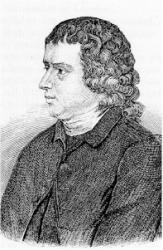
Robert Robinson

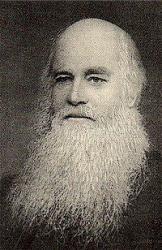
1735 - 1790 Person Name: Robert Robinson 1735-90 Author of "Come, O Fount of every blessing" in Praise! psalms hymns and songs for Christian worship Robert Robinson was born at Swaffham, Norfolk, in 1735. In 1749, he was apprenticed to a hairdresser, in Crutched Friars, London. Hearing a discourse preached by Whitefield on "The Wrath to Come," in 1752, he was deeply impressed, and after a period of much disquietude, he gave himself to a religious life. His own peculiar account of this change of life is as follows:--"Robertus Michaelis Marineque Robinson filius. Natus Swaffhami, comitatu Norfolciae, Saturni die Sept. 27, 1735. Renatus Sabbati die, Maii 24, 1752, per predicationem potentem Georgii Whitefield. Et gustatis doloribus renovationis duos annos mensesque septem, absolutionem plenam gratuitamque, per sanguinem pretiosum i secula seculorum. Amen." He soon after began to preach, and ministered for some time in connection with the Calvinistic Methodists. He subsequently joined the Independents, but after a short period preferred the Baptist connection. In 1761, he became pastor of a Baptist congregation at Cambridge. About the year 1780, he began to incline towards Unitarianism, and at length his people deemed it essential to procure his resignation. While arrangements for this purpose were in progress he died suddenly at Bingham, in June 1790. He wrote and published a good many works of ability. --Annotations of the Hymnal, Charles Hutchins, M.A. 1872. ============================= Robinson, Robert, the author of "Come, Thou fount of every blessing," and "Mighty God, while angels bless Thee," was born at Swaffham, in Norfolk, on Sept. 27, 1735 (usually misgiven, spite of his own authority, as Jan. 8), of lowly parentage. Whilst in his eighth year the family migrated to Scarning, in the same county. He lost his father a few years after this removal. His widowed mother was left in sore straits. The universal testimony is that she was a godly woman, and far above her circumstances. Her ambition was to see her son a clergyman of the Church of England, but poverty forbade, and the boy (in his 15th year) was indentured in 1749 to a barber and hairdresser in London. It was an uncongenial position for a bookish and thoughtful lad. His master found him more given to reading than to his profession. Still he appears to have nearly completed his apprenticeship when he was released from his indentures. In 1752 came an epoch-marking event. Out on a frolic one Sunday with like-minded companions, he joined with them in sportively rendering a fortune-telling old woman drunk and incapable, that they might hear and laugh at her predictions concerning them. The poor creature told Robinson that he would live to see his children and grandchildren. This set him a-thinking, and he resolved more than ever to "give himself to reading”. Coincidently he went to hear George Whitefield. The text was St. Matthew iii. 7, and the great evangelist's searching sermon on "the wrath to come" haunted him blessedly. He wrote to the preacher six years later penitently and pathetically. For well nigh three years he walked in darkness and fear, but in his 20th year found "peace by believing." Hidden away on a blank leaf of one of his books is the following record of his spiritual experience, the Latin doubtless having been used to hold it modestly private:— "Robertus, Michaelis Mariseque Robinson filius. Natus Swaffhami, comitatu Norfolciae, Saturni die Sept. 27, 1735. Renatus Sabbati die, Maii 24,1752, per predicationem potentem Georgii Whitefield. Et gustatis doloribus renovationis duos annosque septem absolutionem plenam gratuitamque, per sanguinem pretiosum Jesu Christi, inveni (Tuesday, December 10, 1755) cui sit honor et gloria in secula seculorum. Amen." Robinson remained in London until 1758, attending assiduously on the ministry of Gill, Wesley, and other evangelical preachers. Early in this year he was invited as a Calvinistic Methodist to the oversight of a chapel at Mildenhall, Norfolk. Thence he removed within the year to Norwich, where he was settled over an Independent congregation. In 1759, having been invited by a Baptist Church at Cambridge (afterwards made historically famous by Robert Hall, John Foster, and others) he accepted the call, and preached his first sermon there on Jan. 8, 1759, having been previously baptized by immersion. The "call" was simply "to supply the pulpit," but he soon won such regard and popularity that the congregation again and again requested him to accept the full pastoral charge. This he acceded to in 1761, alter persuading the people to "open communion." In 1770 he commenced his abundant authorship by publishing a translation from Saurin's sermons, afterwards completed. In 1774 appeared his masculine and unanswerable Arcana, or the Principles of the Late Petitioners to Parliament for Relief in the matter of Subscription. In 1776 was published A Plea for the Divinity of our Lord Jesus Christ in a Pastoral Letter to a Congregation of Protestant Dissenters at Cambridge. Dignitaries and divines of the Church of England united with Nonconformists in lauding this exceptionally able, scholarly, and pungently written book. In 1777 followed his History and Mystery of Good Friday. The former work brought him urgent invitations to enter the ministry of the Church of England, but he never faltered in his Nonconformity. In 1781 he was asked by the Baptists of London to prepare a history of their branch of the Christian Church. This resulted, in 1790, in his History of Baptism and Baptists, and in 1792, in his Ecclesiastical Researches. Other theological works are included in the several collective editions of his writings. He was prematurely worn out. He retired in 1790 to Birmingham, where he was somehow brought into contact with Dr. Priestley, and Unitarians have made much of this, on exceedingly slender grounds. He died June 9, 1790. His Life has been fully written by Dyer and by William Robinson respectively, both with a bias against orthodoxy. His three changes of ecclesiastical relationship show that he was somewhat unstable and impulsive. His hymns are terse yet melodious, evangelical but not sentimental, and on the whole well wrought. His prose has all…that vehement and enthusiastic glow of passion that belongs to the orator. (Cf. Dyer and Robinson as above, and Gadsby's Memoirs of Hymn-Writers(3rd ed., 1861); Belcher's Historical Sketches of Hymns; Millers Singers and Songs of the Church; Flower's Robinson's Miscellaneous Works; Annual Review, 1805, p. 464; Eclectic Review, Sept. 1861. [Rev. A. B. Grosart, D.D., LL.D.] --John Julian, Dictionary of Hymnology (1907)

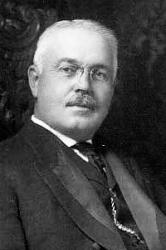
Francis H. Rowley

1854 - 1952 Person Name: Francis Harold Rowley, 1854-1952 Author of "Yes, I'll sing the wondrous story" in Singing the Faith Rv Francis Harold Rowley DD USA 1854-1952. Born at Hilton, NH, the son of a doctor, he graduated from Rochester University in 1875 and Rochester Theological Seminary of NY in 1878. He married Ida Amelia Babcock in 1878, and they had four children: John, Alice, Charles, and Esmond. He became a Baptist minister, animal welfare campaigner, and hymn writer. He pastored for over 30 years at Titusville, PA, North Adams, MA (1884-1892), Oak Park, IL, Fall River, MA, and the First Baptist Church at Boston, MA, until 1910. He preached at Appleton Chapel, Harvard University. He was also a trustee of the University of Chicago Divinity School (1894-1896). While at North Adams, MA, Peter Bilhorn, a fine musician and his assistant minister, asked him to write a hymn for Bilhorn to set to music. He wrote the hymn text overnight. The hymn was presented to Ira Sankey and he altered the text some before publishing it. Visiting in London, he once heard a Salvation Army band playing his hymn. They had no idea he was nearby. Rowley became aware of dismemberment of animals in slaughter houses across the country and lobbied for the animals to be rendered unconscious before being cut open. From 1892-1900 he was Secretary of the American Humane Association. In 1915, through his influence, a building was made to house the MA Society for the Prevention of Cruelty to Animals. He was president of that organization and of the American Humane Education Society from 1908-1945, and the Angell Memorial Animal Hospital. He was also Chairman of the Animal Protection Committee for the MA Committee on Public Safety and VP of the American Society for the Humane Regulation of Vivisection. In 1947 the Rowley School of Human Understanding was established in his honor. In 1948 the MA Society for the Prevention of Cruelty to Animals named the Rowley Memorial Hospital in Springfield, MA, for him. A humanitarian, he also worked with hospitals: Robert Brigham Hospital (for incurables) and N E Baptist Hospital of Boston. He was a member of the advisory council at Yenching University, China; a member of the alumni committee, University of Rochester, NY; member Alpha Delta Phi, Phi Beta Kappa. Rochester University gave him an honorary Doctor of Divinity degree. He died at Boston, MA. Oglethorpe University, Atlanta, GA, named the Rowley School of Humanities after him. John Perry

John Barnard

b. 1948 Person Name: John Barnard (born 1948) Arranger of "CALON LÂN" in Hymns for Today's Church (2nd ed.)

John Hughes

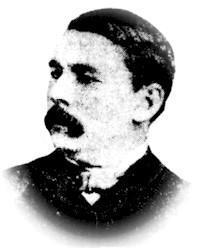
1873 - 1932 Composer of "CALON LAN" in Redemption Hymnal John Hughes (b. Dowlais, Glamorganshire, Wales, 1873; d. Llantwit Fardre, Wales, 1932) received little formal education; at age twelve he was already working as a doorboy at a local mining company in Llantwit Fardre. He eventually became an official in the traffic department of the Great Western Railway. Much of his energy was devoted to the Salem Baptist Church in Pontypridd, where he served as both deacon and precentor. Hughes composed two anthems, a number of Sunday school marches, and a few hymn tunes, of which CWM RHONDDA is universally known, the tune was composed in 1905 Baptist Cymanfa Ganu (song festival) in Capel Rhondda, Pontypridd, Wales. Bert Polman

Fanny Crosby

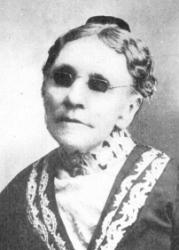
1820 - 1915 Person Name: Fanny Crosby Author of "Better Far Than Life To Me" in The Cyber Hymnal Pseudonymns: A.V., Mrs. A. E. Andrews, Mrs. E. A. Andrews, Mrs. E. L. Andrews, James L. Black, Henrietta E. Blair, Charles Bruce, Robert Bruce, Leah Carlton, Eleanor Craddock, Lyman G. Cuyler, D.H.W., Ella Dare, Ellen Dare, Mrs. Ellen Douglass, Lizzie Edwards. Miss Grace Elliot, Grace J. Frances, Victoria Frances, Jennie Garnett, Frank Gould, H. D. K., Frances Hope, Annie L. James, Martha J. Lankton [Langton], Grace Lindsey, Maud Marion, Sallie Martin, Wilson Meade, Alice Monteith, Martha C. Oliver, Mrs. N. D. Plume, Kate Smiley, Sallie Smith, J. L. Sterling, John Sterling, Julia Sterling, Anna C. Storey, Victoria Stuart, Ida Scott Taylor, Mary R. Tilden, Mrs. J. B. Thresher, Hope Tryaway, Grace Tureman, Carrie M. Wilson, W.H.D. Frances Jane Crosby, the daughter of John and Mercy Crosby, was born in Southeast, Putnam County, N. Y., March 24, 1820. She became blind at the age of six weeks from maltreatment of her eyes during a spell of sickness. When she was eight years old she moved with her parents to Ridgefield, Conn., the family remaining there four years. At the age of fifteen she entered the New York Institution for the Blind, where she received a good education. She became a teacher in the institution in 1847, and continued her work until March 1, 1858. She taught English grammar, rhetoric and American history. This was the great developing period in her life. During the vacations of 1852 and 1853, spent at North Reading, Mass., she wrote the words to many songs for Dr. Geo. F. Root, then the teacher of music at the blind institution. Among them were, "Hazel Dell,", "The Honeysuckle Glen," "Rosalie, the Prairie Flower," "Music in the Air," "Proud World, Good-bye, I'm Going Home," "All Together", "Never Forget the Dear Ones," and others. Subsequently she wrote the words for the cantatas of The Flower Queen and The Pilgrim Fathers, all of which were very popular in their day, though it was not generally known at the time that she was the author. While teaching at the institution she met Presidents Van Buren and Tyler, Hon. Henry Clay, Governor Wm. H. Seward, General Winfield Scott, and other distinguished characters of American history. Concerning Mr. Clay, she gives the following: "When Mr. Clay came to the institution during his last visit to New York, I was selected to welcome him with a poem. Six months before he had lost a son at the battle of Monterey, and I had sent him some verses. In my address I carefully avoided any allusion to them, in order not to wound him. When I had finished he drew my arm in his, and, addressing the audience, said through his tears: 'This is not the first poem for which I am indebted to this lady. Six months ago she sent me some lines on the death of my dear son.' Both of us were overcome for a few moments. Soon, by a splendid effort, Mr. Clay recovered himself, but I could not control my tears." In connection with her meeting these notable men, we might add that Miss Fanny Crosby had the honor of being the first woman whose voice was heard publicly in the Senate Chamber at Washington. She read a poem there on one occasion. In addition to the thousands of hymns that she has written (about eight thousand poems in all), many of which have not been set to music, she has published four volumes of verses. The first was issued in 1844 and was entitled The Blind Girl, and Other Poems, a second volume, Monterey, and Other Poems, followed in 1849, and the third, A Wreath of Columbia's Flowers, in 1858. The fourth, Bells at Evening and Other Verses, with a biographical sketch by Rev. Robert Lowry, and a fine half-tone portrait, in 1897, the sales of which have reached a fourth edition. The book is published by The Biglow & Main Co., New York. Though these show the poetical bent of her mind, they have little to do with her world-wide fame. It is as a writer of Sunday-school songs and gospel hymns that she is known wherever the English language is spoken, and, in fact, wherever any other language is heard. Fanny was married March 5, 1858, to Alex. Van Alstyne, who was also a scholar in the same institution in which she was educated. She began to write Sunday-school hymns for Wm. B. Bradbury in 1864. Her first hymn, "We are going, we are going To a home beyond the skies", was written at the Ponton Hotel on Franklin Street, New York City, on February 5th of that year. This hymn was sung at Mr. Bradbury's funeral in January, 1868. Since 1864 she supported herself by writing hymns. She resided in New York City nearly all her life, where, she says, she is "a member of the Old John Street M. E. Church in good standing." She spent regular hours on certain days at the office of The Biglow & Main Co., the firm for which she did most of her writing, and for whom she has composed over four thousand hymns. Her hymns have been in great demand and have been used by many of our most popular composers, among whom may be mentioned Wm. B. Bradbury, Geo. F. Root, W. H. Doane, Rev. Robert Lowry, Ira D. Sankey, J. R. Sweney, W. J. Kirkpatrick, H. P. Main, H. P. Danks, Philip Phillips, B. G. Unseld, and others. She could compose at any time and did not need to wait for any special inspiration, and her best hymns have come on the spur of the moment. She always composed with an open book in her hand, generally a copy of Golden Hymns, held closely over her eyes, bottom side up. She learned to play on the guitar and piano while at the institution, and has a clear soprano voice. She also received a technical training in music, and for this reason she could, and did, compose airs for some of her hymns. One of these is, "Jesus, dear, I come to Thee, Thou hast said I may," both words and music of which are wonderfully sweet. "Safe in the arms of Jesus", probably one of her best known hymns, was her own favorite. Fanny loved her work, and was happy in it. She was always ready either to sympathize or join in a mirthful conversation, as the case may be. The secret of this contentment dates from her first composition at the age of eight years. "It has been the motto of my life," she says. It is: "O what a happy soul am I! Although I cannot see, I am resolved that in this world Contented I will be;" This has continued to be her philosophy. She says that had it not been for her affliction she might not have so good an education, nor so great an influence, and certainly not so fine a memory. She knows a great many portions of the Bible by heart, and had committed to memory the first four books of the Old Testament, and also the four Gospels before she was ten years of age. Her scope of subjects is wide, embracing everything from a contemplation of heaven, as in "The Bright Forever" and "The Blessed Homeland", to an appeal to the work of this world, as in "To the Work" and "Rescue the Perishing." The most of Fanny's published hymns have appeared under the name of Fanny J. Crosby or Mrs. Yan Alstyne, but quite a large number have appeared under the nom de plumes of Grace J. Frances, Mrs. C. M. Wilson, Lizzie Edwards, Ella Dale, Henrietta E. Blair, Rose Atherton, Maud Marion, Leah Carlton, nearly two hundred different names. -Biographies of Gospel Song and Hymn Writers (excerpts) ======================= Van Alstyne, Frances Jane, née Crosby, a member of the Methodist Episcopal Church, was born at South East, Putnam County, New York, March 24, 1823. When six weeks old she lost her sight. About 1835 she entered the New York City Institution for the Blind. On completing her training she became a teacher therein from 1847 to 1858. In 1858 she was married to Alexander Van Alstyne, a musician, who was also blind. Her first poem was published in 1831; and her first volumes of verse as A Blind Girl, and Other Poems, 1844; Monteresy, and Other Poems, 1849; and A Wreath of Columbia's Flowers, 1858. Her first hymn was "We are going, we are going" (Death and Burial), which was written for Mr. Bradbury and published in the Golden Censer, 1864. From 1853 to 1858 she wrote 20 songs, which were set to music by G. F. Root. Her songs and hymns number some 2,000 or more, and have been published mainly in several of the popular American Sunday school collections, and often under a nom de plume. About 60 have come into common use in Great Britain. The majority of these are taken from the following American collections:— i. From The Shining Star, 1864. 1. Softly on the breath of evening. Evening. ii. From Fresh Laurels, 1867. 2. Beautiful Mansions, home of the blest. Heaven. 3. Jesus the Water of Life has given. The Water of Life. 4. Light and Comfort of my soul. In Affliction. 5. There's a cry from Macedonia. Missions. 6. We are marching on with shield and banner bright. Sunday School Anniversary. iii. From Musical Leaves, 1868. 7. 0 what are you going to do, brother? Youth for God. iv. From Sabbath Carols, 1868. 8. Dark is the night, and cold the wind is blowing. Affliction anticipated. 9. Lord, at Thy mercy seat, Humbly I fall. Lent. v. From Silver Spray, 1868. 10. If I come to Jesus, He will make me glad. Peace in Jesus. 11. 'Twill not be long—our journey here. Heaven anticipated. vi. From Notes of Joy, 1869. 12. Little beams of rosy light. The Divine Father. 13. Press on! press on! a glorious throng. Pressing towards the Prize. vii. From Bright Jewels, 1869. 14. Christ the Lord is risen today, He is risen indeed. Easter. 15. Holy, holy, holy is the Lord! Sing 0 ye people, &c. Holiness of God. 16. Jesus, keep me near the Cross. Near the Cross of Christ. 17. Saviour, bless a little child. A Child's Prayer. Written Feb. 6, 1869. viii. From Songs of Devotion, 1870. 18. Pass me not, 0 gentle Saviour. Lent. Written in 1868. 19. Rescue the perishing, care for the dying. Home Missions. ix. From Pure Gold, 1871. 20. Great is Jehovah. King of kings. Greatness of God. 21. I would be Thy little lamb. The Good Shepherd. 22. Lead me to Jesus, lead me to Jesus. Desiring Jesus. 23. To the work, to the work, we are servants of God. Home Missions. 24. Why labour for treasures that rust and decay? The Fadeless Crown. x. From the Royal Diadem, 1873. 25. I am Jesus' little friend. For Infant Schools. 26. Jesus I love Thee. Loving Jesus. 27. Mourner, wheresoe'er thou art. To the Sorrowing and Penitent. Written Oct. 3, 1871. 28. Never be faint or weary. Joy in Jesus. 29. Only a step to Jesus. Invitation. xi. From Winnowed Hymns, 1873-4. 30. Loving Saviour, hear my cry. Lent. xii. From Echoes of Zion, 1874. 31. Say, where is thy refuge, my brother? Home Missions. xiii. From Songs of Grace and Glory, 1874. 32. Thou my everlasting Portion. Christ the Portion of His People. xiv. From Brightest and Best, 1875. 33. All the way my Saviour leads me. Jesus the Guide. 34. I am Thine, O Lord: I have heard Thy voice. Holiness desired. 35. O come to the Saviour, believe in His name. Invitation. Written, Sep. 7, 1874. 36. O how sweet when we mingle. Communion of Saints. Written in 1866. 37. O my Saviour, hear me. Prayer to Jesus for blessing and love. 38. Only Jesus feels and knows. Jesus the Divine Friend. 39. Revive Thy work, O Lord. Home Missions. 40. Saviour, more than life to me. Jesus All and in All. 41. To God be the glory, great things He hath done. Praise for Redemption. xv. From Calvary Songs, 1875. 42. Come, O come with thy broken heart. Invitation. xvi. From Gospel Music, 1876. 43. Here from the world we turn. Divine Worship. 44. When Jesus comes to reward His servants. Watching, xvii. From Welcome Tidings, 1877. 45. O hear my cry, be gracious now to me. For Pardon and Peace. xviii. From The Fountain of Song, 1877. 46. Lord, my trust I repose on Thee. Trusting in Jesus. xix. From Good as Gold, 1880. 47. In Thy cleft, O Rock of Ages. Safety in Jesus. 48. Sound the alarm ! let the watchman cry. Home Missions. 49. Tenderly He leads us. Christ the Leader. 50. 'Tis the blessed hour of prayer. The Hour of Prayer. In addition to these hymns, all of which are in common use in Great Britain (mainly through I. D. Sankey's Sacred Songs and Solos, the Methodist Sunday School Hymn Book, the Silver Street Sunday Scholars Companion, and other collections for Sunday schools), there are also "A blessing for you, will you take it?" (Pardon through Jesus); "My song shall be of Jesus" (Praise of Jesus); “Now, just a word for Jesus"(Home Missions); "Onward, upward, Christian soldier" (Pressing Heavenward); 44 Sinner, how thy heart is troubled" (Invitation); "'Tis a goodly, pleasant land" (Heaven anticipated); and "When the dewy light was fading" (Death anticipated). All of these are in I. D. Sankey's Sacred Songs & Solos. Mrs. Van Alstyne's most popular composition is "Safe in the arms of Jesus" (Safety in Jesus). This was written in 1868, at the request of Mr. W. H. Doane, to his well-known melody with which it is inseparably associated, and published in Bright Jewels, 1869. Mrs. Van Alstyne's hymns have sometimes been published anonymously; but the greater part are signed by a bewildering number of initials. The combined sales of the volumes of songs and hymns named above have amounted in English-speaking countries to millions of copies. Notwithstanding the immense circulation thus given to Mrs. Van Alstyne's hymns, they are, with few exceptions, very weak and poor, their simplicity and earnestness being their redeeming features. Their popularity is largely due to the melodies to which they are wedded. Since the above was in type we have found that the following are also in common use in Great Britain:— 51. Suppose the little cowslip. Value of Little Things. 52. Sweet hour of prayer. The Hour of Prayer. These are in Bradbury's Golden Chain, 1861. 53. Never lose the golden rule. Love to our Neighbours. In Bradbury's Golden Censer, 1864. 54. I will not be afraid at night. Trust in God. In Bradbury's Fresh Laurels, 1867. 55. Praise Him, praise Him, Jesus our, &c. Praise of Jesus. In Biglow & Main's Bright Jewels, 1869. 56. More like Jesus would I be. More like Jesus. In Perkins & Taylor's Songs of Salvation, 1870. 57. Behold me standing at the door. Christ at the Door. In Biglow & Main's Christian Songs, 1872. 58. If I come to Jesus. Jesus the Children's Guide. 59. Jesus, Lord, I come to Thee. Trust in Jesus. 60. Let me learn of Jesus. Jesus the Children's Friend. 61. Singing for Jesus, O singing for Jesus. Singing for Jesus. 62. There is a Name divinely sweet Holy Name of Jesus. Of these hymns Nos. 58-62 we have not been able to trace. --Excerpts from John Julian, Dictionary of Hymnology (1907 ================ Van Alstyne, Frances J., p. 1203, ii. From the American collections of recent date we find that Mrs. Van Alstyne is still actively engaged in hymn-writing. In the Funk and Wagnalls Company Gloria Deo, 1903, there are about 30 of her hymns, most of which are new. They are all signed, and some are dated, but we have not space to quote the first lines and subjects, as this hymnal is not an official collection of any denomination. Another name, "Mrs. S. K. Bourne" is credited in the same hymnal with about 40 new hymns. If this signature is not another pen-name of Mrs. Van Alstyne's (and these pen-names and initials of hers are very numerous), we can only say that she has a very successful understudy in "Mrs. S. K. Bourne." --John Julian, Dictionary of Hymnology, New Supplement (1907)

Wade Robinson

1838 - 1876 Person Name: G. W. Robinson (1838-1877) Author of "Loved with everlasting love" in Hymns for Today's Church (2nd ed.) George Wade Robinson, born at Cork in 1838, Robinson, George, contributed five hymns to J. Leifchild's Original Hymns, 1842, from which "One sole baptismal sign" (Unity), and educated at Trinity College, Dublin, and New College, St. John's Wood, London. He entered the Congregational Ministry, and was co-pastor at York Street Chapel, Dublin, with Dr. Urwick; then pastor at St. John's Wood, at Dudley, and at Union Street, Brighton. He d. at Southhampton, Jan. 28, 1877. He published two vols. of poems, (1) Songs in God's World; (2) Loveland. His hymn, "Strangers and pilgrims here below" (Jesus Only), from his Songs in God's World, is in Horder's Congregational Hymns, 1884, in an abridged form; and "Weary with my load of sin" (Contrition), is in the 1874 Supplement "When to the New Congregational Hymn Book -- exiled seer were given" (New Jerusalem), are taken with alterations. --John Julian, Dictionary of Hymnology, John Julian, 1907. Hymnology, Appendix, Part II (1907)

Henry Francis Lyte

1793 - 1847 Author of "Jesus, I My Cross Have Taken" in Hymns and Devotions for Daily Worship Lyte, Henry Francis, M.A., son of Captain Thomas Lyte, was born at Ednam, near Kelso, June 1, 1793, and educated at Portora (the Royal School of Enniskillen), and at Trinity College, Dublin, of which he was a Scholar, and where he graduated in 1814. During his University course he distinguished himself by gaining the English prize poem on three occasions. At one time he had intended studying Medicine; but this he abandoned for Theology, and took Holy Orders in 1815, his first curacy being in the neighbourhood of Wexford. In 1817, he removed to Marazion, in Cornwall. There, in 1818, he underwent a great spiritual change, which shaped and influenced the whole of his after life, the immediate cause being the illness and death of a brother clergyman. Lyte says of him:— "He died happy under the belief that though he had deeply erred, there was One whose death and sufferings would atone for his delinquencies, and be accepted for all that he had incurred;" and concerning himself he adds:— "I was greatly affected by the whole matter, and brought to look at life and its issue with a different eye than before; and I began to study my Bible, and preach in another manner than I had previously done." From Marazion he removed, in 1819, to Lymington, where he composed his Tales on the Lord's Prayer in verse (pub. in 1826); and in 1823 he was appointed Perpetual Curate of Lower Brixham, Devon. That appointment he held until his death, on Nov. 20, 1847. His Poems of Henry Vaughan, with a Memoir, were published in 1846. His own Poetical works were:— (1) Poems chiefly Religious 1833; 2nd ed. enlarged, 1845. (2) The Spirit of the Psalms, 1834, written in the first instance for use in his own Church at Lower Brixham, and enlarged in 1836; (3) Miscellaneous Poems (posthumously) in 1868. This last is a reprint of the 1845 ed. of his Poems, with "Abide with me" added. (4) Remains, 1850. Lyte's Poems have been somewhat freely drawn upon by hymnal compilers; but by far the larger portion of his hymns found in modern collections are from his Spirit of the Psalms. In America his hymns are very popular. In many instances, however, through mistaking Miss Auber's (q. v.) Spirit of the Psalms, 1829, for his, he is credited with more than is his due. The Andover Sabbath Hymn Book, 1858, is specially at fault in this respect. The best known and most widely used of his compositions are "Abide with me, fast falls the eventide;” “Far from my heavenly home;" "God of mercy, God of grace;" "Pleasant are Thy courts above;" "Praise, my soul, the King of heaven;" and "There is a safe and secret place." These and several others are annotated under their respective first lines: the rest in common use are:— i. From his Poems chiefly Religious, 1833 and 1845. 1. Above me hangs the silent sky. For Use at Sea. 2. Again, 0 Lord, I ope mine eyes. Morning. 3. Hail to another Year. New Year. 4. How good, how faithful, Lord, art Thou. Divine care of Men. 5. In tears and trials we must sow (1845). Sorrow followed by Joy. 6. My [our] rest is in heaven, my [our] rest is not here. Heaven our Home. 7. 0 Lord, how infinite Thy love. The Love of God in Christ. 8. Omniscient God, Thine eye divine. The Holy Ghost Omniscient. 9. The leaves around me falling. Autumn. 10. The Lord hath builded for Himself. The Universe the Temple of God. 11. Vain were all our toil and labour. Success is of God. 12. When at Thy footstool, Lord, I bend. Lent. 13. When earthly joys glide swift away. Ps. cii. 14. Wilt Thou return to me, O Lord. Lent. 15. With joy we hail the sacred day. Sunday. ii. From his Spirit of the Psalms, 1834. 16. Be merciful to us, O God. Ps. lvii. 17. Blest is the man who knows the Lord. Ps. cxii. 18. Blest is the man whose spirit shares. Ps. xli. 19. From depths of woe to God I cry. Ps. cxxxx. 20. Gently, gently lay Thy rod. Ps. vi. 21. Glorious Shepherd of the sheep. Ps. xxiii. 22. Glory and praise to Jehovah on high. Ps. xxix. 23. God in His Church is known. Ps. lxxvi. 24. God is our Refuge, tried and proved. Ps. xlvi. 25. Great Source of my being. Ps. lxxiii. 26. Hear, O Lord, our supplication. Ps. lxiv. 27. How blest the man who fears the Lord. Ps.cxxviii. 28. Humble, Lord, my haughty spirit. Ps. cxxxi. 29. In this wide, weary world of care. Ps. cxxxii. 30. In vain the powers of darkness try. Ps.lii. 31. Jehovah speaks, let man be awed. Ps. xlix. 32. Judge me, O Lord, and try my heart. Ps. xxvi. 33. Judge me, O Lord, to Thee I fly. Ps. xliii. 34. Lord, I have sinned, but O forgive. Ps. xli. 35. Lord, my God, in Thee I trust. Ps. vii. 36. Lord of the realms above, Our Prophet, &c. Ps.xlv. 37. Lone amidst the dead and dying. Ps. lxii. 38. Lord God of my salvation. Ps. lxxxviii. 39. Lord, I look to Thee for all. Ps. xxxi. 40. Lord, I would stand with thoughtful eye. Ps. lxix. 41. Lord, my God, in Thee I trust. Ps. vii. 42. My God, my King, Thy praise I sing. Ps. cviii. 43. My God, what monuments I see. Ps. xxxvi. 44. My spirit on [to] Thy care. Ps. xxxi. 45. My trust is in the Lord. Ps. xi. 46. Not unto us, Almighty Lord [God]. Ps. cxv. 47. O God of glory, God of grace. Ps. xc. 48. O God of love, how blest are they. Ps. xxxvii. 49. O God of love, my God Thou art. Ps. lxiii. 50. O God of truth and grace. Ps. xviii. 51. O had I, my Saviour, the wings of a dove. Ps. lv. 52. O how blest the congregation. Ps. lxxxix. 53. O how safe and [how] happy he. Ps. xci. 54. O plead my cause, my Saviour plead. Ps. xxxv. 55. O praise the Lord, 'tis sweet to raise. Ps. cxlvii. 56. O praise the Lord; ye nations, pour. Ps. cxvii. 57. O praise ye the Lord With heart, &c. Ps. cxlix. 58. O that the Lord's salvation. Ps. xiv. 59. O Thou Whom thoughtless men condemn. Ps. xxxvi. 60. Of every earthly stay bereft. Ps. lxxiv. 61. Our hearts shall praise Thee, God of love. Ps. cxxxviii. 62. Pilgrims here on earth and strangers. Ps. xvi. 63. Praise for Thee, Lord, in Zion waits. Ps. lxv. 64. Praise to God on high be given. Ps. cxxxiv. 65. Praise ye the Lord, His servants, raise. Ps. cxiii. 66. Redeem'd from guilt, redeem'd from fears. Ps. cxvi. 67. Save me by Thy glorious name. Ps. liv. 68. Shout, ye people, clap your hands. Ps. xlvii. 69. Sing to the Lord our might. Ps. lxxxi. 70. Strangers and pilgrims here below. Ps. cix. 71. Sweet is the solemn voice that calls. Ps. cxxii. 72. The Church of God below. Ps. lxxxvii. 73. The Lord is King, let earth be glad. Ps. xcvii. 74. The Lord is on His throne. Ps. xciii. 75. The Lord is our Refuge, the Lord is our Guide. Ps. xlvii. 76. The mercies of my God and King. Ps. lxxxix. 77. The Lord Who died on earth for men. Ps. xxi. 78. Tis a pleasant thing to fee. Ps. cxxxiii. 79. Thy promise, Lord, is perfect peace. Ps. iii. 80. Unto Thee I lift mine [my] eyes. Ps. cxxiii. 81. Whom shall [should] we love like Thee? Ps. xviii. Lyte's versions of the Psalms are criticised where their sadness, tenderness and beauty are set forth. His hymns in the Poems are characterized by the same features, and rarely swell out into joy and gladness. --John Julian, Dictionary of Hymnology (1907) ================== Lyte, Henry Francis, p. 706, i. Additional versions of Psalms are in common use:-- 1. Lord, a thousand foes surround us. Psalms lix. 2. Praise, Lord, for Thee in Zion waits. Psalms lxv. 3. The Christian like his Lord of old. Psalms cxl. 4. The Lord of all my Shepherd is. Psalms xxiii. 5. The Lord of heaven to earth is come. Psalms xcviii. 6. Thy mercy, Lord, the sinner's hope. Psalms xxxvi. 7. To Thee, O Lord, in deep distress. Psalms cxlii. Sometimes given as "To God I turned in wild distress." 8. Uphold me, Lord, too prone to stray. Psalms i. 9. When Jesus to our [my] rescue came. Psalms cxxvi. These versions appeared in the 1st edition of Lyte's Spirit of the Psalms, 1834. It must be noted that the texts of the 1834, the 1836, and the 3rd ed., 1858, vary considerably, but Lyte was not responsible for the alterations and omissions in the last, which was edited by another hand for use at St. Mark's, Torquay. Lyte's version of Psalms xxix., "Glory and praise to Jehovah on high" (p. 706, ii., 22), first appeared in his Poems, 1st ed., 1833, p. 25. Read also No. 39 as "Lord, I look for all to Thee." --John Julian, Dictionary of Hymnology, Appendix, Part II (1907)

John Hughes

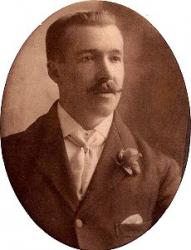
1872 - 1914 Composer of "CALON LÂN" in Psalms, Hymns, and Spiritual Songs [Landore] John Hughes was born in 1872 in Penybryn Pembrokeshire, but when he was 3 the family moved to Swansea. He left school at 11 to become an office boy in the Dyffryn Steel Works Morriston and at the time of his death in 1914 he had become the Marketing Manager for the company and travelled worldwide for the business. He taught himself 6 languages. John Hughes composed many hymn tunes while he was travelling. Many of them were for "Gymanfa Ganu" which were popular annual singing festivals in Wales. One day he was approached by Daniel James who asked him to put music to a poem which he had written. John Hughes did so, and played it for the first time on the organ of Philadelphia Chapel where he was the organist. The rest of the story is well known! John married Mary Ann Thomas, and they had 3 daughters, the eldest of whom was my mother. John Hughes died of a cereberal haemorrage in June 1914 at the age of 42, and is buried in the graveyard of Caersalem Chapel in Treboeth Swansea. G. Dunstone (grandson) ================== Born: February 13, 1872, Pen-y-bryn, Pembrokeshire, Wales. Died: June 16, 1914, Stockwell Villas, Mount Pleasant, Swansea, Wales, of a cerebral hemorrhage. Buried: Caersalem Newydd Baptist Chapel, Treboeth, Swansea, Wales Hughes’ family moved to Swansea when he around two years old. He is sometimes confused with the John Hughes who wrote the tune CWM RHONDDA. After following his usual duties at the works on Monday 15th June 1914, John Hughes at night drove an employee, who had a piece of steel lodged in his hand, from Morriston, to the Hospital. It was late when he retired, in his usual cheerful mood, apparently in the best of health, but he soon became ill and his death at 6.45am on Tuesday morning, the 16th June 1914, was caused by a clot of blood on the brain. He died at his residence No. 3 Stockwell Villas, Mount Pleasant, Swansea. He left a widow and three small children. All his friends were extremely grieved to hear of his untimely death at the age of 42. His death deprived the Duffryn Works of a highly capable manager. John’s fresh colour and robust appearance generally flattered, only to deceive. His sad demise came as a great shock to the inhabitants of Morriston, where he was personally known to almost everyone. He died at number 3 Stockwell Villas, Swansea, on the 16th June 1914, aged forty-two, and was buried in the cemetery of Caersalem Newydd Welsh Baptist Chapel in Treboeth, with his parents.

Joseph Medlicott Scriven

1819 - 1886 Person Name: Joseph M Scriven Author of "What a Friend we have in Jesus" in Redemption Hymnal Joseph M. Scriven (b. Seapatrick, County Down, Ireland, 1819; d. Bewdley, Rice Lake, ON, Canada, 1886), an Irish immigrant to Canada, wrote this text near Port Hope, Ontario, in 1855. Because his life was filled with grief and trials, Scriven often needed the solace of the Lord as described in his famous hymn. Educated at Trinity College, Dublin, Ireland, he enrolled in a military college to prepare for an army career. However, poor health forced him to give up that ambition. Soon after came a second blow—his fiancée died in a drowning accident on the eve of their wedding in 1844. Later that year he moved to Ontario, where he taught school in Woodstock and Brantford. His plans for marriage were dashed again when his new bride-to-be died after a short illness in 1855. Following this calamity Scriven seldom had a regular income, and he was forced to live in the homes of others. He also experienced mistrust from neighbors who did not appreciate his eccentricities or his work with the underprivileged. A member of the Plymouth Brethren, he tried to live according to the Sermon on the Mount as literally as possible, giving and sharing all he had and often doing menial tasks for the poor and physically disabled. Because Scriven suffered from depression, no one knew if his death by drowning in Rice Lake was suicide or an accident. Bert Polman ================ Scriven, Joseph. Mr. Sankey, in his My Life and Sacred Songs, 1906, p. 279, says that Scriven was b. in Dublin in 1820, was a graduate of Trinity College, Dublin, and went to Canada when he was 25, and died there at Port Hope, on Lake Ontario, in 1886. His hymn:— What a Friend we have in Jesus. [Jesus our Friend] was, according to Mr. Sankey, discovered to be his in the following manner: "A neighbour, sitting up with him in his illness, happened upon a manuscript of 'What a Friend we have in Jesus.' Reading it with great delight, and questioning Mr. Scriven about it, he said he had composed it for his mother, to comfort her in a time of special sorrow, not intending any one else should see it." We find the hymn in H. 1... Hastings's Social Hymns, Original and Selected, 1865, No. 242; and his Song of Pilgrimage, 1886, No. 1291, where it is attributed to "Joseph Scriven, cir. 1855." It is found in many modern collections. --John Julian, Dictionary of Hymnology, New Supplement (1907)

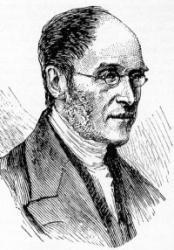
James G. Deck

1802 - 1884 Person Name: James Deck Author of "Abba, Father! We Approach Thee" in The Cyber Hymnal Deck, James George, eldest son of John Deck, of Bury St. Edmunds, was born in 1802 and educated for the army, and became an officer in the Indian service. Retiring from the army, and having joined the Plymouth Brethren, he undertook, in 1843, the charge of a congregation of that body, at Wellington, Somerset. In 1852 be went abroad and settled in New Zealand. His hymns were published in Hymns for the Poor of the Flock, 1837-1838; Psalms and Hymns, &c, London, Walther (containing those in the former collection), 1842; the Wellington Hymn Book, 1857; Hymns and Spiritual Songs, 1860. Of his hymns now in use outside his own denomination, the greater part appeared in the 1837-1838 book, and are found in his brother-in-law's (Dr. Walker's) Cheltenham Psalms & Hymns, 1855. His compositions are marked by directness of aim, simplicity of language, and great earnestness. The rhythm is good, and an expressive tenderness pervades many of them. Although dealing mainly with the "Second Advent," there are several on other subjects which are of more than average merit. In a collected form they were published in his Hymns and Sacred Poems, Melbourne, H. Seelenmeyer, 1876. The more important of his hymns are annotated under their respective first lines. Of the rest we have:— i. From Hymns for the Poor of the Flock, 1838. 1. Behold yon bright and countless throng. All Saints. Repeated in Maurice's Choral Hymnbook, 1861. 2. How long, O Lord our Saviour. Second Advent desired. In the Parish Hymnbook., 1803 and 1875, this is altered to "How long, O Lord, Beloved." 3. Jesus, spotless Lamb of God. Good Friday. 4. Lord Jesus, are we [we are] one with Thee? One with Christ. In Walker's Psalms and Hymns, 1855-1880, and several American hymn-books. 5. Lord, we are Thine, our God Thou art. One with Christ. Originally in 4 st. of 8 1., it appeared, in a re-written form in 3 st. in Walker's Psalms and Hymns, 1855, as " Lord, we are Thine, in Thee we live." 6. 0 happy day when first we felt. The Day of Peace. 7. 0 Jesus Christ, the Saviour. Jesus All in All. In Walker's Psalms and Hymns, it begins: "0 Jesus Christ, our Saviour." 8. 0 Jesus, gracious Saviour." The Advocate. 9. 0 Lord, when we the path retrace. Christ our Example. 10. 0 Lord, who now art seated. Christ in glory. 11. Saviour, haste; our souls are waiting. Second Advent desired. This is given in Walker's Psalms and Hymns, in a rewritten form as "Saviour, hasten Thine appearing." 12. Soon shall our Master come. Waiting for Christ. 13. There is a place of endless joy. Heaven. 14. We're not of the world that fadeth away. Christ's Sheep. 15. When along life's thorny road. Passiontide. ii. From Appendix, to the 1841 edition of the Hymns for the Poor of the Flock. 16. Lamb of God, our souls adore Thee. Praise to Christ. Sometimes it begins with st. ii.," Lamb of God, Thy Father's bosom." 17. Lamb of God, Thou now art seated. 2nd Part. of No. 10. iii. From Psalms and Hymns, in Two Parts, Lond., D. Waither, 1842. 18. Again we meet in Jesus' name. Divine Worship. 19. Great Captain of Salvation. Burial. In the Irish Church Hymnal, and other collections. 20. Jesus, Thy name indeed is sweet. Hope of the Resurrection. 21. O blessed Jesus, Lamb of God. Praise to Jesus. 22. 0 Lamb of God, still keep me [us]. Christ's Presence desired. This hymn is somewhat popular in America. 23. 0 Lord, in nothing would I boast. Christ All in All. 24. Oft we, alas! forget the love. Holy Communion. 25. The veil is rent! lo, Jesus stands [our souls draw near]. The Intercessor. 26. We bless our Saviour's name. Thanksgiving for Forgiveness. iv. From Psalms and Hymns for Public and Social Worship (Dr. Walker's Collection), 1855. 27. Father, to seek Thy face. Public Worship. 28. Jesus, [I] we rest in [on] Thee. Joy in Forgiveness. 29. 0 Lord, 'tis joy to look above. Joy in the service of Christ. 30. Thou hast stood here, Lord Jesus. Burial. 31. 'Twas Thy love, 0 God, that knew us. Praise to God. 32. When first o'erwhelm ed with sin and shame. Peace with God. All these hymns, except No. 1, are given in Dr. Walker's Collection, 1855-1880, and most of them are also found in other collections. -- John Julian, Dictionary of Hymnology (1907) ====================== Deck, James George, p. 285, ii. He died circa 1884. His hymn, noted on p. 286, No. 28, "Jesus [I] we rest in [on] Thee," should be dated 1842. Additional hymns in common use are:—(1) "Lord Jesus, when I think of Thee," 1856 (Jesus, All and in All); (2) "The day of glory, bearing," 1838 (Passiontide). --John Julian, Dictionary of Hymnology, Appendix, Part II (1907) ==================== Deck, J. G., pp. 285, ii.; 1559, ii. Miss M. O. Deck, of Motueka, Nelson, New Zealand, informs us that her father, Mr. J. G. Deck, died at the village of Motueka, near Nelson, N.Z., on the 14th of August, 1884. --John Julian, Dictionary of Hymnology, New Supplement (1907) ==================== James Deck wrote of his youth, "I hoped there were no God," yet his mother's training pursued after him. "She read to me of Jesus, Of all his grace and love." After his conversion, the study of scripture revealed the doctrinal error of his Anglican upbringing. Forsaking all, he set his heart to follow God "at any cost." Later, his son testified this determination was "a trust never disappointed." - Psalms and Hymns and Spiritual Songs (2018)

Pages


Export as CSV
It looks like you are using an ad-blocker. Ad revenue helps keep us running. Please consider white-listing Hymnary.org or getting Hymnary Pro to eliminate ads entirely and help support Hymnary.org.