You help make Hymnary.org possible. More than 10 million people from 200+ countries found hymns, liturgical resources and encouragement on Hymnary.org in 2025, including you. Every visit affirms the global impact of this ministry.

If Hymnary has been meaningful to you this year, would you take a moment today to help sustain it? A gift of any size—paired with a note of encouragement if you wish—directly supports the server costs, research work and curation that keep this resource freely available to the world.

Give securely online today, or mail a check to:
Hymnary.org
Calvin University
3201 Burton Street SE
Grand Rapids, MI 49546

Thank you for your partnership, and may the hope of Advent fill your heart.

Person Results

Tune Identifier:"^fillmore_ingalls$"
In:person

Planning worship? Check out our sister site, ZeteoSearch.org, for 20+ additional resources related to your search.
Showing 1 - 10 of 20Results Per Page: 102050

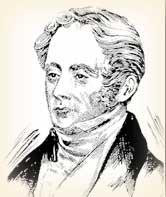
Robert Grant

1779 - 1838 Author of "When Gathering Clouds" in The New Christian Hymnal Robert Grant (b. Bengal, India, 1779; d. Dalpoorie, India, 1838) was influenced in writing this text by William Kethe’s paraphrase of Psalm 104 in the Anglo-Genevan Psalter (1561). Grant’s text was first published in Edward Bickersteth’s Christian Psalmody (1833) with several unauthorized alterations. In 1835 his original six-stanza text was published in Henry Elliott’s Psalm and Hymns (The original stanza 3 was omitted in Lift Up Your Hearts). Of Scottish ancestry, Grant was born in India, where his father was a director of the East India Company. He attended Magdalen College, Cambridge, and was called to the bar in 1807. He had a distinguished public career a Governor of Bombay and as a member of the British Parliament, where he sponsored a bill to remove civil restrictions on Jews. Grant was knighted in 1834. His hymn texts were published in the Christian Observer (1806-1815), in Elliot’s Psalms and Hymns (1835), and posthumously by his brother as Sacred Poems (1839). Bert Polman ======================== Grant, Sir Robert, second son of Mr. Charles Grant, sometime Member of Parliament for Inverness, and a Director of the East India Company, was born in 1785, and educated at Cambridge, where he graduated in 1806. Called to the English Bar in 1807, he became Member of Parliament for Inverness in 1826; a Privy Councillor in 1831; and Governor of Bombay, 1834. He died at Dapoorie, in Western India, July 9, 1838. As a hymnwriter of great merit he is well and favourably known. His hymns, "O worship the King"; "Saviour, when in dust to Thee"; and "When gathering clouds around I view," are widely used in all English-speaking countries. Some of those which are less known are marked by the same graceful versification and deep and tender feeling. The best of his hymns were contributed to the Christian Observer, 1806-1815, under the signature of "E—y, D. R."; and to Elliott's Psalms & Hymns, Brighton, 1835. In the Psalms & Hymns those which were taken from the Christian Observer were rewritten by the author. The year following his death his brother, Lord Glenelg, gathered 12 of his hymns and poems together, and published them as:— Sacred Poems. By the late Eight Hon. Sir Robert Grant. London, Saunders & Otley, Conduit Street, 1839. It was reprinted in 1844 and in 1868. This volume is accompanied by a short "Notice," dated "London, Juno 18, 1839." ===================== Grant, Sir R., p. 450, i. Other hymns are:— 1. From Olivet's sequester'd scats. Palm Sunday. 2. How deep the joy, Almighty Lord. Ps. lxxxiv. 3. Wherefore do the nations wage. Ps. ii. These are all from his posthumous sacred Poems, 1839. --John Julian, Dictionary of Hymnology, Appendix, Part II (1907)

J. Hart

1712 - 1768 Author of "O for a Glance of Heavenly Day" in Waves of Glory Hart, Joseph, was born in London in 1712. His early life is involved in obscurity. His education was fairly good; and from the testimony of his brother-in-law, and successor in the ministry in Jewin Street, the Rev. John Hughes, "his civil calling was" for some time "that of a teacher of the learned languages." His early life, according to his own Experience which he prefaced to his Hymns, was a curious mixture of loose conduct, serious conviction of sin, and endeavours after amendment of life, and not until Whitsuntide, 1757, did he realize a permanent change, which was brought about mainly through his attending divine service at the Moravian Chapel, in Fetter Lane, London, and hearing a sermon on Rev. iii. 10. During the next two years many of his most earnest and impassioned hymns were written. These appeared as:— Hymns composed on Various Subjects, with the Author's Experience, London, 1759. During this year he became the Minister of the Independent Chapel, Jewin Street, London. In 1762 he added a Supplement to his Hymns; and in 1765 an Appendix. In modern editions of his Hymns these three are embodied in one volume as:— Hymns composed on Various Subjects: With the Author's Experience, The Supplement and Appendix. By the Rev. Joseph Hart, late Minister of the Gospel in Jewin Street, London. Allott & Co. [no date]. Hart died on May 24, 1768. At one time his hymns were widely used, especially by Calvinistic Nonconformists. Many of them are of merit, and are marked by great earnestness, and passionate love of the Redeemer. The best known are: “Come, Holy Spirit, come"; “Come, ye sinners, poor and wretched"; "This God is the God we adore"; and "Lord, look on all assembled here." Those which are more limited in their use include:— i. From his Hymns, &c, 1759. 1. Descend from heaven, celestial Dove. Whitsuntide. No. 6, in 6 stanzas of 6 lines. In Snepp's Songs of Grace & Glory., 1872, No. 374, st. iv., v. are omitted. It is in extensive use in America. 2. Great High Priest, we view Thee stooping. High Priesthood of Christ. No. 56, pt. ii., in 3 stanzas of 8 lines. In Snepp's Songs of Grace & Glory, 1872, No. 236; Hatfield's Church Hymn Book, N. Y., 1872, No. 435, &c. 8. How wondrous are the works of God. Redeeming Love. No. 21, in 9 stanzas of 4 lines. In the Scottish Evangelical Union Hymnal, 1878, st. i.-iv. are given as No. 11. 4. If ever it could come to pass. Final Perseverance. No. 58, in 3 stanzas of 6 lines. Repeated in Snepp's Songs of Grace & Glory, 1872, No. 729. 6. Jesus is our God and Saviour . Faith and Repentance. No. 54, in 7 stanzas of 8 lines. In Snepp's Songs of Grace & Glory, 1872, No. 146, st. iv. is omitted. In the London Hymn Book (enlarged), 1879, st. iii. and v. are given as "Nothing but Thy blood, 0 Jesus." 6. Jesus, while He dwelt below. Gethsemane. No. 75, in 23 stanzas of 6 lines. In Snepp's Songs of Grace & Glory, 1872, No. 230, sixteen stanzas are broken up into three parts: (i.) "Jesus, while He dwelt below"; (ii.) "Full of love to man's lost race"; (iii.) "There my God bore all my guilt." A cento is also given in Hatfield's Church Hymn Book, N. Y., 1872, No. 441, as "Many woes had Christ [He] endured." It is composed of st. viii., ix., xiii., xx., xxiii., slightly altered. In the Scottish Evangelical Union Hymnal, 1878, No. 34, 8 stanzas are given in two parts: pt. i. as, "Jesus, while He dwelt below"; pt. ii. "Eden from each flowery bed." 7. Lamb of God, we fall before Thee. Christ All in All. No. 17 in 4 stanzas of 8 lines. It is in various collections, and as altered in Kennedy , 1863, No. 1171, is much improved. 8. Let us all with grateful praises. Christmas. No. 14 in 7 stanzas of 8 lines. In Spurgeon's 0ur Own Hymn Book, 1866, it is reduced to 4 stanzas of 4 lines. 9. Lord, look on all assembled here. For a Public Fast. No. 96, in 8 stanzas of 4 lines. It is in several of the older hymnbooks. 10. Lord, we lie before Thy feet. Lent. No. 74, in 6 stanzas of 6 lines, and based on 2 Chron. xx. 20. In Spurgeon's 0ur Own Hymn Book, 1866, stanza i., iii., vi. are given as No. 585. 11. Mercy is welcome news indeed. God's Mercy in pardoning Sin. No. 51, in 6 stanzas of 4 lines, on St. Luke vii. 42. In Spurgeon, 1866, No. 544. 12. Much we talk of Jesu's blood. Passiontide. No. 41, in 4 st. of 8 lines, on Lam. i. 12. In Spurgeon, 1866, it is abridged to 4 stanzas of 4 lines. 13. Bow from the garden to the cross. Good Friday. No. 63, in 9 stanzas of 4 lines, and entitled, "The Crucifixion." In Spurgeon, 1866, No. 274, st. ii.-v., vi.-ix. are given as "See how the patient Jesus stands." 14. The Fountain of Christ Assist me to sing. The Fountain. No. 86, in 8 stanzas of 8 lines on Zech. xiii. 1. In Spurgeon, 1866, st. i., v., vii., viii., are given as No. 375. 15. The moon and stars shall lose their light. Advent. No. 48, in 4 stanzas of 4 lines, on St. Matt. xxiv. 35. In Spurgeon, 1866. 16. The sinner that truly believes. Saving Faith. No. 88, in 5 stanzas of 4 lines, and entitled, "Saving Faith" In Spurgeon, 1866, No. 533, st. ii. is omitted, and the opening line is altered to "The moment a sinner believes." ii. From his Supplement, 1762. 17. Behold what awful pomp. Advent. No. 52, in 8 stanzas of 4 lines. It is usually abridged as in the American Methodist Episcopal Hymns, 1849, No. 1107. 18. Christ is the Eternal Rock. The Offices of Christ. No. 27, in 6 stanzas of 8 lines. In Windle's Metrical Psalter & Hymnal, 1862, stanzas i., ii., v. are given as No. 53. 19. Christians, dismiss your fear. Easter. No. 33, in 4 stanzas of 8 lines into Dr. Alexander's Augustine Hymn Book, 1849, No. 79, in 7 stanzas of 4 lines. 20. Dismiss us with Thy blessing, Lord. Close of Service. No. 78, in 2 stanzas of 4 lines. In a few collections. 21. Gird thy loins up, Christian soldier. The Christian Armour . No. 29, in 5 stanzas of 8 lines, on Eph. vi. 11. Found in several of the older, and a few of the modern collections. 22. Glory to God on high, Our peace, &c. Holy Communion. No. 3, in 6 stanzas of 4 lines. In Hatfield's Church Hymn Book, 1872, No. 704, st. v., vi. are omitted. 23. Holy Ghost, inspire our praises. On behalf of Ministers. No. 77, in 5 stanzas of 8 lines. In the Scottish Evangelical Union Hymnal, 1878, No. 412, st. iii.-v. are given as, "Happy soul that hears and follows." 24. Jesus once for sinners slain. Holy Communion. No. 18, in 6 stanzas of 4 lines. In American use. 25. Lord, help us on Thy word to feed. Close of Service. No. 80, in 2 stanzas of 4 lines. In several modern hymnbooks. 26. O for a glance of heavenly day. Lent. No. 64, in 5 stanzas of 4 lines. In Hatfield's Church Hymn Book, 1872, and other American collections it is usually repeated in full. In Bickersteth's Christian Psalmody, 1833, it was given as, "Lord, shed a beam of heavenly day," and this is repeated in modern hymnbooks. 27. Once more before we part. Close of Service. No. 79, in 2 stanzas of 4 lines. Popular in Great Britain and America. 28. Once more we come before our God. Before a Sermon. No. 21, in 6 stanzas of 4 lines, into Hatfield, 1872, No. 111, and others. 29. Sons of God by bless'd adoption. Burial. No. 45, in 3 stanzas of 8 lines, into Snepp's Songs of Grace & Glory, 1872, No. 981, as "Sons of God by blest adoption." 30. Suffering Saviour, Lamb of God . Holy Communion. No. 14, in 8 stanzas of 4 lines. In W. F. Stevenson's Hymns for Church & Home, 1873, st. iii., vii. are omitted. 31. That doleful night before His death. Holy Communion. No. 17, in 2 stanzas of 8 lines. In the Scottish Evangelical Union Hymnal, 1878, st. i. 11. 4-8, and st. ii., are given as, "To keep Thy Feast, Lord, we are met." iii. From his Appendix, 1765. 32. Christians, in your several stations. Christian Duty. No. 7, in 5 stanzas of 6 lines. It is slightly altered in Snepp's Songs of Grace & Glory, 1872, No. 742, and dated 1759 in error. 33. Prayer was [is] appointed to convey. Prayer. No. 12 in 6 stanzas of 4 lines into Snepp's Songs of Grace & Glory, 1872, No. 542, with alterations and the omission of st. ii., v. In some American collections it begins, "Prayer is to God, the soul's sure way." --John Julian, Dictionary of Hymnology (1907) ======================= Hart, Joseph, p. 492, ii. Other hymns in common use are— 1. The blest memorials of Thy grief (1762). Holy Communion. 2. To comprehend the great Three-One (1759). Holy Trinity. 3. Vain man, thy fond pursuits forbear (1759). Death. 4. When the blest day of Pentecost (1759). Whitsuntide. --John Julian, Dictionary of Hymnology, Appendix, Part II (1907)

Edward Mote

1797 - 1874 Author of "On Christ the solid rock I stand" in Sacred Hymns and Tunes Mote, Edward, was born in Upper Thames Street, London, Jan. 21, 1797. Through the preaching of the Rev. J. Hyatt, of Tottenham Court Road Chapel, he underwent a great spiritual change; and ultimately he became a Baptist minister. For the last 26 years of his life he was pastor at Horsham, Sussex, where he died Nov. 13, 1874. Mr. Mote published several small pamphlets; and also:- Hymns of Praise. A New Selection of Gospel Hymns, combining all the Excellencies of our spiritual Poets, with many Originals. By E. Mote. London. J. Nichols, 1836. The Originals number nearly 100. Concerning the authorship of one of these original hymns much uncertainty has existed. The hymn is:— 1. Nor earth, nor hell my soul can move. [Jesus All in All.] In 6 stanzas of 4 lines, with a refrain. Mr. Mote's explanation, communicated to the Gospel Herald, is:— "One morning it came into my mind as I went to labour, to write an hymn on the ‘Gracious Experience of a Christian.' As I went up Holborn I had the chorus, ‘On Christ the solid Rock I stand, All other ground is sinking sand.’ In the day I had four first verses complete, and wrote them off. On the Sabbath following I met brother King as I came out of Lisle Street Meeting . . . who informed me that his wife was very ill, and asked me to call and see her. I had an early tea, and called afterwards. He said that it was his usual custom to sing a hymn, read a portion, and engage in prayer, before he went to meeting. He looked for his hymnbook but could find it nowhere. I said, ‘I have some verses in my pocket; if he liked, we would sing them.' We did; and his wife enjoyed them so much, that after service he asked me, as a favour, to leave a copy of them for his wife. 1 went home, and by the fireside composed the last two verses, wrote the whole off, and took them to sister King. . . As these verses so met the dying woman's case, my attention to them was the more arrested, and I had a thousand printed for distribution. I sent one to the Spiritual Magazine, without my initials, which appeared some time after this. Brother Rees, of Crown Street, Soho, brought out an edition of hymns [1836], and this hymn was in it. David Denham introduced it [1837] with Rees's name, and others after... . Your inserting this brief outline may in future shield me from the charge of stealth, and be a vindication of truthfulness in my connection with the Church of God." The form in which the hymn is usually found is:— 2. My hope is built on nothing less (st. ii.), sometimes in 4 stanzas, and at others in 5 st., and usually without the refrain. The original in the author's Hymns of Praise, 1836, is No. 465, and entitled, "The immutable Basis of a Sinner's hope." Bishop Bickersteth calls it a "grand hymn of faith." It dates circa 1834, and is in extensive use. [Rev. W. R. Stevenson, M.A.] --John Julian, Dictionary of Hymnology (1907)

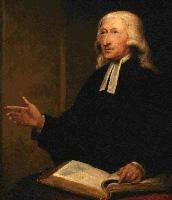
John Wesley

1703 - 1791 Author of "And can it Be?" in The Ark of Praise John Wesley, the son of Samuel, and brother of Charles Wesley, was born at Epworth, June 17, 1703. He was educated at the Charterhouse, London, and at Christ Church, Oxford. He became a Fellow of Lincoln College, Oxford, and graduated M.A. in 1726. At Oxford, he was one of the small band consisting of George Whitefield, Hames Hervey, Charles Wesley, and a few others, who were even then known for their piety; they were deridingly called "Methodists." After his ordination he went, in 1735, on a mission to Georgia. The mission was not successful, and he returned to England in 1738. From that time, his life was one of great labour, preaching the Gospel, and publishing his commentaries and other theological works. He died in London, in 1791, in his eighty-eighth year. His prose works are very numerous, but he did not write many useful hymns. It is to him, however, and not to his brother Charles, that we are indebted for the translations from the German. --Annotations of the Hymnal, Charles Hutchins, M.A., 1872 ====================== John Wesley, M.A., was born at Epworth Rectory in 1703, and, like the rest of the family, received his early education from his mother. He narrowly escaped perishing in the fire which destroyed the rectory house in 1709, and his deliverance made a life-long impression upon him. In 1714 he was nominated on the foundation of Charterhouse by his father's patron, the Duke of Buckingham, and remained at that school until 1720, when he went up, with a scholarship, from Charterhouse to Christ Church, Oxford. Having taken his degree, he received Holy Orders from the Bishop of Oxford (Dr. Potter) in 1725. In 1726 he was elected Fellow of Lincoln College, and remained at Oxford until 1727, when he returned into Lincolnshire to assist his father as curate at Epworth and Wroot. In 1729 he was summoned back to Oxford by his firm friend, Dr. Morley, Rector of Lincoln, to assist in the College tuition. There he found already established the little band of "Oxford Methodists" who immediately placed themselves under his direction. In 1735 he went, as a Missionary of the Society for the Propagation of the Gospel, to Georgia, where a new colony had been founded under the governorship of General Oglethorpe. On his voyage out he was deeply impressed with the piety and Christian courage of some German fellow travellers, Moravians. During his short ministry in Georgia he met with many discouragements, and returned home saddened and dissatisfied both with himself and his work; but in London he again fell in with the Moravians, especially with Peter Bohler; and one memorable night (May 24, 1738) he went to a meeting in Aldersgate Street, where some one was reading Luther's preface to the Epistle to the Romans. There, "About a quarter before nine, while he was describing the change which God works in the heart through faith in Christ, I felt my heart strangely warmed. I felt I did trust in Christ, Christ alone, for salvation; and an assurance was given me, that He had taken away my sins, even mine, and saved me from the law of sin and death." From that moment his future course was sealed; and for more than half a century he laboured, through evil report and good report, to spread what he believed to be the everlasting Gospel, travelling more miles, preaching more sermons, publishing more books of a practical sort, and making more converts than any man of his day, or perhaps of any day, and dying at last, March 2, 1791, in harness, at the patriarchal age of 88. The popular conception of the division of labour between the two brothers in the Revival, is that John was the preacher, and Charles the hymnwriter. But this is not strictly accurate. On the one hand Charles was also a great preacher, second only to his brother and George Whitefield in the effects which he produced. On the other hand, John by no means relegated to Charles the exclusive task of supplying the people with their hymns. John Wesley was not the sort of man to depute any part of his work entirely to another: and this part was, in his opinion, one of vital importance. With that wonderful instinct for gauging the popular mind, which was one element in his success, he saw at once that hymns might be utilized, not only for raising the devotion, but also for instructing, and establishing the faith of his disciples. He intended the hymns to be not merely a constituent part of public worship, but also a kind of creed in verse. They were to be "a body of experimental and practical divinity." "In what other publication," he asks in his Preface to the Wesleyan Hymn Book, 1780 (Preface, Oct. 20,1779), "have you so distinct and full an account of Scriptural Christianity; such a declaration of the heights and depths of religion, speculative and practical; so strong cautions against the most plausible errors, particularly those now most prevalent; and so clear directions for making your calling and election sure; for perfecting holiness in the fear of God?" The part which he actually took in writing the hymns, it is not easy to ascertain; but it is certain that more than thirty translations from the German, French and Spanish (chiefly from the German) were exclusively his; and there are some original hymns, admittedly his composition, which are not unworthy to stand by the side of his brother's. His translations from the German especially have had a wide circulation. Although somewhat free as translations they embody the fire and energy of the originals. It has been the common practice, however for a hundred years or more to ascribe all translations from the German to John Wesley, as he only of the two brothers knew that language; and to assign to Charles Wesley all the original hymns except such as are traceable to John Wesley through his Journals and other works. The list of 482 original hymns by John and Charles Wesley listed in this Dictionary of Hymnology have formed an important part of Methodist hymnody and show the enormous influence of the Wesleys on the English hymnody of the nineteenth century. -- Excerpts from John Julian, Dictionary of Hymnology (1907) =================== See also in: Hymn Writers of the Church

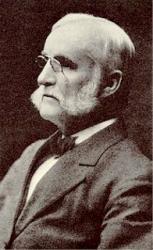
W. G. Fischer

1835 - 1912 Person Name: Wm. G. Fischer Composer of "[And can it be that I should gain] " in Calvary Songs William Gustavus Fischer In his youth, William G. Fischer (b. Baltimore, MD, 1835; d. Philadelphia, PA, 1912) developed an interest in music while attending singing schools. His career included working in the book bindery of J. B. Lippencott Publishing Company, teaching music at Girard College, and co-owning a piano business and music store–all in Philadelphia. Fischer eventually became a popular director of music at revival meetings and choral festivals. In 1876 he conducted a thousand-voice choir at the Dwight L. Moody/Ira D. Sankey revival meeting in Philadelphia. Fischer composed some two hundred tunes for Sunday school hymns and gospel songs. Bert Polman

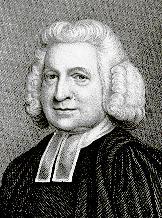
Charles Wesley

1707 - 1788 Author of "Away, my unbelieving fear!" in Hymnal of the Methodist Episcopal Church Charles Wesley, M.A. was the great hymn-writer of the Wesley family, perhaps, taking quantity and quality into consideration, the great hymn-writer of all ages. Charles Wesley was the youngest son and 18th child of Samuel and Susanna Wesley, and was born at Epworth Rectory, Dec. 18, 1707. In 1716 he went to Westminster School, being provided with a home and board by his elder brother Samuel, then usher at the school, until 1721, when he was elected King's Scholar, and as such received his board and education free. In 1726 Charles Wesley was elected to a Westminster studentship at Christ Church, Oxford, where he took his degree in 1729, and became a college tutor. In the early part of the same year his religious impressions were much deepened, and he became one of the first band of "Oxford Methodists." In 1735 he went with his brother John to Georgia, as secretary to General Oglethorpe, having before he set out received Deacon's and Priest's Orders on two successive Sundays. His stay in Georgia was very short; he returned to England in 1736, and in 1737 came under the influence of Count Zinzendorf and the Moravians, especially of that remarkable man who had so large a share in moulding John Wesley's career, Peter Bonier, and also of a Mr. Bray, a brazier in Little Britain. On Whitsunday, 1737, [sic. 1738] he "found rest to his soul," and in 1738 he became curate to his friend, Mr. Stonehouse, Vicar of Islington, but the opposition of the churchwardens was so great that the Vicar consented that he "should preach in his church no more." Henceforth his work was identified with that of his brother John, and he became an indefatigable itinerant and field preacher. On April 8, 1749, he married Miss Sarah Gwynne. His marriage, unlike that of his brother John, was a most happy one; his wife was accustomed to accompany him on his evangelistic journeys, which were as frequent as ever until the year 1756," when he ceased to itinerate, and mainly devoted himself to the care of the Societies in London and Bristol. Bristol was his headquarters until 1771, when he removed with his family to London, and, besides attending to the Societies, devoted himself much, as he had done in his youth, to the spiritual care of prisoners in Newgate. He had long been troubled about the relations of Methodism to the Church of England, and strongly disapproved of his brother John's "ordinations." Wesley-like, he expressed his disapproval in the most outspoken fashion, but, as in the case of Samuel at an earlier period, the differences between the brothers never led to a breach of friendship. He died in London, March 29, 1788, and was buried in Marylebone churchyard. His brother John was deeply grieved because he would not consent to be interred in the burial-ground of the City Road Chapel, where he had prepared a grave for himself, but Charles said, "I have lived, and I die, in the Communion of the Church of England, and I will be buried in the yard of my parish church." Eight clergymen of the Church of England bore his pall. He had a large family, four of whom survived him; three sons, who all became distinguished in the musical world, and one daughter, who inherited some of her father's poetical genius. The widow and orphans were treated with the greatest kindness and generosity by John Wesley. As a hymn-writer Charles Wesley was unique. He is said to have written no less than 6500 hymns, and though, of course, in so vast a number some are of unequal merit, it is perfectly marvellous how many there are which rise to the highest degree of excellence. His feelings on every occasion of importance, whether private or public, found their best expression in a hymn. His own conversion, his own marriage, the earthquake panic, the rumours of an invasion from France, the defeat of Prince Charles Edward at Culloden, the Gordon riots, every Festival of the Christian Church, every doctrine of the Christian Faith, striking scenes in Scripture history, striking scenes which came within his own view, the deaths of friends as they passed away, one by one, before him, all furnished occasions for the exercise of his divine gift. Nor must we forget his hymns for little children, a branch of sacred poetry in which the mantle of Dr. Watts seems to have fallen upon him. It would be simply impossible within our space to enumerate even those of the hymns which have become really classical. The saying that a really good hymn is as rare an appearance as that of a comet is falsified by the work of Charles Wesley; for hymns, which are really good in every respect, flowed from his pen in quick succession, and death alone stopped the course of the perennial stream. It has been the common practice, however for a hundred years or more to ascribe all translations from the German to John Wesley, as he only of the two brothers knew that language; and to assign to Charles Wesley all the original hymns except such as are traceable to John Wesley through his Journals and other works. The list of 482 original hymns by John and Charles Wesley listed in this Dictionary of Hymnology have formed an important part of Methodist hymnody and show the enormous influence of the Wesleys on the English hymnody of the nineteenth century. -- Excerpts from John Julian, Dictionary of Hymnology (1907) ================== Charles Wesley, the son of Samuel Wesley, was born at Epworth, Dec. 18, 1707. He was educated at Westminster School and afterwards at Christ Church, Oxford, where he graduated M.A. In 1735, he took Orders and immediately proceeded with his brother John to Georgia, both being employed as missionaries of the S.P.G. He returned to England in 1736. For many years he engaged with his brother in preaching the Gospel. He died March 29, 1788. To Charles Wesley has been justly assigned the appellation of the "Bard of Methodism." His prominence in hymn writing may be judged from the fact that in the "Wesleyan Hymn Book," 623 of the 770 hymns were written by him; and he published more than thirty poetical works, written either by himself alone, or in conjunction with his brother. The number of his separate hymns is at least five thousand. --Annotations of the Hymnal, Charles Hutchins, M.A., 1872.

Henry Collins

1827 - 1919 Person Name: Rev. Henry Collins Author of "Jesus, my Lord, my God, my All" in Evangelical Hymnal Collins, Henry, M.A., educated at Oxford, where he graduated about 1854. He was ordained to the Ministry of the Church of England, but in Nov., 1857, he entered the Roman communion, becoming a member of the Cistercian Order in 1860. Author of Life of the Rev. Father Gentili, &c, 1861; The Spirit and Mission of the Cistercian Order , &c. His hymns were published by him before leaving the Church of England, in his Hymns for Missions , 1854, first published at Leeds, and then by Shrimpton of Oxford, and Masters of London. It contains 37 hymns, of which two only were by him:—"Jesu, meek and lowly" (Passiontide), and "Jesu, my Lord, my God, my all." (Love of Jesus desired) These hymns are in extensive use. --John Julian, Dictionary of Hymnology (1907)

Isaac Watts

1674 - 1748 Author of "The Friend of Sinners Dies!" in Waves of Glory Isaac Watts was the son of a schoolmaster, and was born in Southampton, July 17, 1674. He is said to have shown remarkable precocity in childhood, beginning the study of Latin, in his fourth year, and writing respectable verses at the age of seven. At the age of sixteen, he went to London to study in the Academy of the Rev. Thomas Rowe, an Independent minister. In 1698, he became assistant minister of the Independent Church, Berry St., London. In 1702, he became pastor. In 1712, he accepted an invitation to visit Sir Thomas Abney, at his residence of Abney Park, and at Sir Thomas' pressing request, made it his home for the remainder of his life. It was a residence most favourable for his health, and for the prosecution of his literary labours. He did not retire from ministerial duties, but preached as often as his delicate health would permit. The number of Watts' publications is very large. His collected works, first published in 1720, embrace sermons, treatises, poems and hymns. His "Horae Lyricae" was published in December, 1705. His "Hymns" appeared in July, 1707. The first hymn he is said to have composed for religious worship, is "Behold the glories of the Lamb," written at the age of twenty. It is as a writer of psalms and hymns that he is everywhere known. Some of his hymns were written to be sung after his sermons, giving expression to the meaning of the text upon which he had preached. Montgomery calls Watts "the greatest name among hymn-writers," and the honour can hardly be disputed. His published hymns number more than eight hundred. Watts died November 25, 1748, and was buried at Bunhill Fields. A monumental statue was erected in Southampton, his native place, and there is also a monument to his memory in the South Choir of Westminster Abbey. "Happy," says the great contemporary champion of Anglican orthodoxy, "will be that reader whose mind is disposed, by his verses or his prose, to imitate him in all but his non-conformity, to copy his benevolence to men, and his reverence to God." ("Memorials of Westminster Abbey," p. 325.) --Annotations of the Hymnal, Charles Hutchins, M.A., 1872. ================================= Watts, Isaac, D.D. The father of Dr. Watts was a respected Nonconformist, and at the birth of the child, and during its infancy, twice suffered imprisonment for his religious convictions. In his later years he kept a flourishing boarding school at Southampton. Isaac, the eldest of his nine children, was born in that town July 17, 1674. His taste for verse showed itself in early childhood. He was taught Greek, Latin, and Hebrew by Mr. Pinhorn, rector of All Saints, and headmaster of the Grammar School, in Southampton. The splendid promise of the boy induced a physician of the town and other friends to offer him an education at one of the Universities for eventual ordination in the Church of England: but this he refused; and entered a Nonconformist Academy at Stoke Newington in 1690, under the care of Mr. Thomas Rowe, the pastor of the Independent congregation at Girdlers' Hall. Of this congregation he became a member in 1693. Leaving the Academy at the age of twenty, he spent two years at home; and it was then that the bulk of the Hymns and Spiritual Songs (published 1707-9) were written, and sung from manuscripts in the Southampton Chapel. The hymn "Behold the glories of the Lamb" is said to have been the first he composed, and written as an attempt to raise the standard of praise. In answer to requests, others succeeded. The hymn "There is a land of pure delight" is said to have been suggested by the view across Southampton Water. The next six years of Watts's life were again spent at Stoke Newington, in the post of tutor to the son of an eminent Puritan, Sir John Hartopp; and to the intense study of these years must be traced the accumulation of the theological and philosophical materials which he published subsequently, and also the life-long enfeeblement of his constitution. Watts preached his first sermon when he was twenty-four years old. In the next three years he preached frequently; and in 1702 was ordained pastor of the eminent Independent congregation in Mark Lane, over which Caryl and Dr. John Owen had presided, and which numbered Mrs. Bendish, Cromwell's granddaughter, Charles Fleetwood, Charles Desborough, Sir John Hartopp, Lady Haversham, and other distinguished Independents among its members. In this year he removed to the house of Mr. Hollis in the Minories. His health began to fail in the following year, and Mr. Samuel Price was appointed as his assistant in the ministry. In 1712 a fever shattered his constitution, and Mr. Price was then appointed co-pastor of the congregation which had in the meantime removed to a new chapel in Bury Street. It was at this period that he became the guest of Sir Thomas Abney, under whose roof, and after his death (1722) that of his widow, he remained for the rest of his suffering life; residing for the longer portion of these thirty-six years principally at the beautiful country seat of Theobalds in Herts, and for the last thirteen years at Stoke Newington. His degree of D.D. was bestowed on him in 1728, unsolicited, by the University of Edinburgh. His infirmities increased on him up to the peaceful close of his sufferings, Nov. 25, 1748. He was buried in the Puritan restingplace at Bunhill Fields, but a monument was erected to him in Westminster Abbey. His learning and piety, gentleness and largeness of heart have earned him the title of the Melanchthon of his day. Among his friends, churchmen like Bishop Gibson are ranked with Nonconformists such as Doddridge. His theological as well as philosophical fame was considerable. His Speculations on the Human Nature of the Logos, as a contribution to the great controversy on the Holy Trinity, brought on him a charge of Arian opinions. His work on The Improvement of the Mind, published in 1741, is eulogised by Johnson. His Logic was still a valued textbook at Oxford within living memory. The World to Come, published in 1745, was once a favourite devotional work, parts of it being translated into several languages. His Catechisms, Scripture History (1732), as well as The Divine and Moral Songs (1715), were the most popular text-books for religious education fifty years ago. The Hymns and Spiritual Songs were published in 1707-9, though written earlier. The Horae Lyricae, which contains hymns interspersed among the poems, appeared in 1706-9. Some hymns were also appended at the close of the several Sermons preached in London, published in 1721-24. The Psalms were published in 1719. The earliest life of Watts is that by his friend Dr. Gibbons. Johnson has included him in his Lives of the Poets; and Southey has echoed Johnson's warm eulogy. The most interesting modern life is Isaac Watts: his Life and Writings, by E. Paxton Hood. [Rev. H. Leigh Bennett, M.A.] A large mass of Dr. Watts's hymns and paraphrases of the Psalms have no personal history beyond the date of their publication. These we have grouped together here and shall preface the list with the books from which they are taken. (l) Horae Lyricae. Poems chiefly of the Lyric kind. In Three Books Sacred: i.To Devotion and Piety; ii. To Virtue, Honour, and Friendship; iii. To the Memory of the Dead. By I. Watts, 1706. Second edition, 1709. (2) Hymns and Spiritual Songs. In Three Books: i. Collected from the Scriptures; ii. Composed on Divine Subjects; iii. Prepared for the Lord's Supper. By I. Watts, 1707. This contained in Bk i. 78 hymns; Bk. ii. 110; Bk. iii. 22, and 12 doxologies. In the 2nd edition published in 1709, Bk. i. was increased to 150; Bk. ii. to 170; Bk. iii. to 25 and 15 doxologies. (3) Divine and Moral Songs for the Use of Children. By I. Watts, London, 1715. (4) The Psalms of David Imitated in the Language of the New Testament, And apply'd to the Christian State and Worship. By I. Watts. London: Printed by J. Clark, at the Bible and Crown in the Poultry, &c, 1719. (5) Sermons with hymns appended thereto, vol. i., 1721; ii., 1723; iii. 1727. In the 5th ed. of the Sermons the three volumes, in duodecimo, were reduced to two, in octavo. (6) Reliquiae Juveniles: Miscellaneous Thoughts in Prose and Verse, on Natural, Moral, and Divine Subjects; Written chiefly in Younger Years. By I. Watts, D.D., London, 1734. (7) Remnants of Time. London, 1736. 454 Hymns and Versions of the Psalms, in addition to the centos are all in common use at the present time. --Excerpts from John Julian, Dictionary of Hymnology (1907) ================================== Watts, I. , p. 1241, ii. Nearly 100 hymns, additional to those already annotated, are given in some minor hymn-books. --John Julian, Dictionary of Hymnology, Appendix, Part II (1907) ================= Watts, I. , p. 1236, i. At the time of the publication of this Dictionary in 1892, every copy of the 1707 edition of Watts's Hymns and Spiritual Songs was supposed to have perished, and all notes thereon were based upon references which were found in magazines and old collections of hymns and versions of the Psalms. Recently three copies have been recovered, and by a careful examination of one of these we have been able to give some of the results in the revision of pp. 1-1597, and the rest we now subjoin. i. Hymns in the 1709 ed. of Hymns and Spiritual Songs which previously appeared in the 1707 edition of the same book, but are not so noted in the 1st ed. of this Dictionary:— On pp. 1237, L-1239, ii., Nos. 18, 33, 42, 43, 47, 48, 60, 56, 58, 59, 63, 75, 82, 83, 84, 85, 93, 96, 99, 102, 104, 105, 113, 115, 116, 123, 124, 134, 137, 139, 146, 147, 148, 149, 162, 166, 174, 180, 181, 182, 188, 190, 192, 193, 194, 195, 197, 200, 202. ii. Versions of the Psalms in his Psalms of David, 1719, which previously appeared in his Hymns and Spiritual Songs, 1707:— On pp. 1239, U.-1241, i., Nos. 241, 288, 304, 313, 314, 317, 410, 441. iii. Additional not noted in the revision:— 1. My soul, how lovely is the place; p. 1240, ii. 332. This version of Ps. lxiv. first appeared in the 1707 edition of Hymns & Spiritual Songs, as "Ye saints, how lovely is the place." 2. Shine, mighty God, on Britain shine; p. 1055, ii. In the 1707 edition of Hymns & Spiritual Songs, Bk. i., No. 35, and again in his Psalms of David, 1719. 3. Sing to the Lord with [cheerful] joyful voice, p. 1059, ii. This version of Ps. c. is No. 43 in the Hymns & Spiritual Songs, 1707, Bk. i., from which it passed into the Ps. of David, 1719. A careful collation of the earliest editions of Watts's Horae Lyricae shows that Nos. 1, 7, 9, 10, 11, 12, 14, 16, p. 1237, i., are in the 1706 ed., and that the rest were added in 1709. Of the remaining hymns, Nos. 91 appeared in his Sermons, vol. ii., 1723, and No. 196 in Sermons, vol. i., 1721. No. 199 was added after Watts's death. It must be noted also that the original title of what is usually known as Divine and Moral Songs was Divine Songs only. --John Julian, Dictionary of Hymnology, New Supplement (1907) =========== See also in: Hymn Writers of the Church

W. T. Dale

1845 - 1924 Person Name: Rev. W. T. Dale Arranger of "[And can it be that I should gain]" in Times of Refreshing

J. J. Rambach

1693 - 1735 Person Name: J J Rambach Author of "I Am Baptized In Thy Name" in The A.M.E. Zion Hymnal Rambach, Johann Jakob, D.D., son of Hans Jakob Rambach, cabinet maker at Halle on the Saale, was born at Halle, Feb. 24, 1693. In 1706 he left school and entered his father's workshop, but, in the autumn of 1707, he dislocated his ankle. During his illness he turned again to his schoolbooks; the desire for learning reawoke; and on his recovery, early in 1708, he entered the Latin school of the Orphanage at Halle (Glaucha). On Oct. 27, 1712, he matriculated at the University of Halle as a student of medicine, but soon turned his attention to theology. He became specially interested in the study of the Old Testament under J. H. Michaelis. In May 1715 he became one of Michaelis's assistants in preparing his edition of the Hebrew Bible, for which he wrote the commentary on Ruth, Esther, Nehemiah, &c. His health began to suffer in the spring of 1719, and he gladly accepted the invitation of Count von Heukel to stay at Polzig, near Ronneburg, where he spent several months. By August he had quite recovered, and went to pay a visit to Jena, where a number of the students asked him to lecture to them. For this purpose he settled at Jena in Oct., 1719, and lived in the house of Professor Buddeus (J. F. Budde). He graduated M.A. in March 1720. In 1723 he was appointed adjunct of the Theological Faculty at Halle, as also inspector of the Orphanage; in 1726 extraordinary professor of theology; and in 1727, after A. H. Francke's death, ordinary professor as well as preacher at the Schulkirche. Here he was very popular, both as preacher and professor, but the jealousy of his colleagues induced him to accept an offer from the Landgrave Ernst Ludwig of Hesse, who, in 1731, invited him to Giessen as superintendent and first professor of theology (before leaving Halle he graduated D.D., June 28, 1731), and in Aug., 1732, appointed him also director of the Paedagogium at Giessen. In 1734 he was, for various reasons, greatly inclined to accept the offer of the first professorship of theology in the newly-founded University of Göttingen, but eventually, at the earnest request of the Landgrave, remained in Giessen, where he died of fever, April 19, 1735 (Die Familie Rambach. By Dr. T. Hansen, Gotha, 1875: Allgemeine Deutsche Biographie, xxvii. 196; Blätter fur Hymnologie, 1883, pp. 113, 129, 145, 163, 186; 1884, p. 20; 1885, p. 13, &c.) Rambach was a voluminous author in various departments of practical theology, e.g. his Institutiones hermeneuticae sacrae, Jena, 1724, which passed through four editions in his lifetime; hisErbauliches Handbüchlein fur Kinder, 1734 (see below), which reached an eighth edition in 1736, and a 14th in 1766; his various volumes of sermons, &c. He justly earned his popularity by the thoroughness of his researches, and the clear and concise way in which he set forth the results of his investigations. It is however as a hymnwriter that his name is likely to be best known. While not entitled to rank with the best hymn-writers of the 16th and 17th centuries, he yet takes a high place among his contemporaries, and deserves to be remembered as much as almost any of the 18th cent, hymnwriters. His style is good and dignified; his thought is profound yet clearly expressed. While his hymns are often sufficiently didactic, they are generally scriptural and churchly in tone, and are characterised by lyric force, lively imagination, and earnest, sober piety. Of hymns, in the strict sense, he wrote over 180, a large number of which passed into the German hymn-books of the 18th cent. (e.g. the Hannover Gesang-Buch, 1740, and Lüneburg Gesang-Buch, 1767, contains 52 by him), and a good many are still found in modern hymn-books. Of these Dr. J. L. Pasig gives 165 in his edition of Rambach's Geistliche Lieder, Leipzig, 1844, and the rest are printed by Hansen as above, while the first lines of the whole are given in the Blätter as above. Four are recasts (practically originals), made for the 11th edition, 1719, of Freylinghausen's Gesang-Buch, to replace similar hymns in the ed. of 1705. The rest principally appeared in the following works by Rambach, viz.: (1) Geistliche Poesien, Halle. 1720 [British Museum] The first part contains 72 cantatas on the Gospels for Sundays and festivals; the second part includes 20 hymns, mostly written at Polzig in 1719. (2) Poetische Fest-Gedancken. Jena and Leipzig, 1723 [Royal Library, Berlin]. Included are 15 pieces which may be called hymns. The second edition of 1727 [Brit. Mus.] has 28 new hymns; and the 3rd ed., 1729 [Gottingen Library], has 22 more. (3) Erbauliches Handbuchlein für Kinder, Giessen, 1734 [Hamburg Library]. The 3rd part contains 8 new hymns. (4) Geistreiches Haus-Gesang-Buch, Frankfurt and Leipzig, 1735 [Hamburg Library], with a preface dated April 10, 1735. This contains 112 hymns by Rambach, of which 58 are practically new, 11 of these, however, being recasts of his own earlier hymns. (5) Wander der bis zum Tode des Kreutzes erniedrigten Liebe, Giessen, 1750 [Berlin Library]. This includes 27 new hymns. Rambach's hymns …which have passed into English are:— i. Auf! Seele, schicke dich. Holy Communion. Written, by request for the eleventh edition, 1719, of Freylinghausen's Gesang-Buch, 1704, as No. 229, in 16 stanzas of 6 lines in order to replace the hymn "Auf, Seele, sey gerüst." This hymn, by George Heine, was included in the Geistreiches Gesang-Buch, Halle, 1697, p. 433. In the second ed., 1771, of the complete book formed by the fusion of pt. i., 1704, and its supplement of 1705 with pt. ii., 1714, of Freylinghausen's Gesang-Buch, both hymns are given, Heine's as No. 524, and Rambach's as No. 522, both marked as being No. 229 in pt. i., 1704. Rambach's hymn is in his Haus Gesang-Buch, 1735, No. 369; the Berlin Geistliche Lieder, ed. 1863, No. 471, &c. In Pasig's edition of his Geistliche Lieder, 1844, p. 112, entitled "Before the reception of Holy Communion." It has been translated as:— My soul prepare to meet. Omitting st. i., 11. 4-6 ; ii., 11. 4-6; vii., xiv., as No. 570 in the Moravian Hymn Book, 1789 (1849, No. 966). In the edition of 1886, No. 979 begins with st. iv., "How should I, slaughtered Lamb"; and No. 1012 with st. xi., "Lord, of Thy wondrous love." ii. Mein Jesu, der du vor dem Scheiden. Holy Communion. Appeared in Freylinghausen's Gesang-Buch, 11th ed., 1719, as No. 238, in 9 st. of 6 1. It was written to replace the hymn "Mein Jesn, hier sind deine Brüder" (Geistreiches Gesang-Buch, Halle, 1697, p. 363), in the first edition of Freylinghausen's Gesang-Buch. It is in his Haus Gesang-Buch, 1735, No. 365; the Berlin Geistliche Lieder, ed. 1863, No. 1601; and in Pasig, 1844, p. 110, entitled, "On the treasures of Grace in Holy Communion." The translations are:— 1. Lord Jesus, Who before Thy passion. Omitting st. ix., this is No. 1181 in the Supplement of 1808 to the Moravian Hymn Book, 1801 (1886, No. 963). 2. 0 Lord, Who on that last sad eve. A good translation omitting st. ix., by Miss Cox, contributed to Lyra Eucharistica, 1863, p. 15, and repeated in her Hymns from the German, 1864, p. 75. Included, omitting st. iii., in G. S. Jellicoe's Collection, 1867. iii. 0 Lehrer, dem kein Andrer gleich. Christ our Prophet. In his Haus Gesang-Buch1735, No. 107, in 8 st. of 6 1., entitled, "On the prophetical office of Jesus Christ." Repeated in the Berlin Geistliche Lieder, ed. 1863, No. 118, and in Pasig, 1844, p. 51. Translated as:— Surely none like Thee can teach. By Miss Fry, in 102 lines, in her Hymns of the Reformation,1845, p. 126. A recast in 3 st. of 8 1., beginning, "Saviour, none like Thee can teach," was included in J. Whittemore's Supplement to all Hymn Books, 1860, No. 263, and repeated in the Methodist New Congregational Hymn Book, 1863, No. 62. iv. Wie herrlich ists ein Schäflein Christi werden. Joy in Believing. In his Poetiche Fest-Gedancken, 2nd ed. 1727, p. 131, in 6 st. of 6 l., entitled, "The Blessedness of the Sheep of Christ. John x. 28, ‘I give my sheep eternal life.'" In his Haus Gesang-Buch 1735, No. 325; the Berlin Geistliche Lieder, ed. 1863, No. 645; and Pasig, 1844, p. 139. Translated as:— How great the bliss to be a sheep of Jesus. A translation of st. i., ii., v., by C. J. Latrobe, as No. 293, in the Moravian Hymn Book, 1789 (1886, No. 385). Hymns not in English common use:— v. Allwissender, vollkommner Geist. The Omniscient One. In his Haus Gesang-Buch, 1735, No. 12, in 6 stanzas; the Berlin Geistliche Lieder, ed. 1863; and in Pasig, p. 8. Translated as, "Thou Spirit, perfect and allwise." By Dr. H. Mills, 1856, p. 11. vi. Frommes Lamm, von was für Hunden. Passiontide. In his Poetische Fest-Gedancken, 2nd ed., 1727, p. 49, in 8 st. In his Haus Gesang-Buch, 1735, No. 151, it begins, "Frommes Lamm, durch dessen Wunden." Also in Pasig, p. 67. Translated as, "Great Thy sorrows, injur'd Jesus." By Dr. H. Mills, 1845 (1856, p. 297). vii. Gesetz und Evangelium, Law and Gospel. In his Haus Gesang-Buch, 1735, No. 356, in 10 st.; the Berlin Geistliche Lieder, ed. 1863; and Pasig, p. 105. Translated as, "The holy law and gospel, both." By Dr. II. Mills, 1845 (1856, p. 27.) viii. Herr, du hast nach dem Fall. Before Work. In his Haus Gesang-Buch, 1735, No. 565, in 4 st.; and Pasig, p. 150. In the Berlin Gesang-Buch, 1765, No. 206, it is altered (probably by J. S. Diterich), and begins "Du hast uns, Heir die Pflicht." This is translated as, “Lord, Thou hast bid us labour, bid us toil." By Miss Warner, 1858, p. 230. ix. Hier bin ich Herr, du rufest mir. Christian Work. In his Haus Gesang-Buch, 1735, No. 269, in 6 st.; the Württemberg Gesang-Buch, 1842, No. 306; and Pasig, p. 119. The translations are (1) "Here am I, Lord, Thou callest me, Thou drawest me." By Miss Warner, 1858, p. 209. (2) "Here am I, Lord, Thou callest me, Thou drawest and." By Mrs. Findlater, in Hymns from the Land of Luther, 4th series, 1862. x. Höchste Vollkommenheit, reineste Sonne. God's Majesty . Written for the 11th ed., 1719, of Freylinghausen's Gesang-Buch, No. 170 (in 20 st.), to replace an anonymous hymn in the first edition, 1704, which began "Höchste Vollkommenheit, alles in Einem." In his Haus Gesang-Buch 1735, No. 8, Rambach reduced it to 12 st., and rewrote it to an easier metre, so as to begin "Höchstes Wesen, reinste Sonne." Both forms are in Pasig, pp. 3-6. Translated as "If Heav'ns and Earths there were innumerable," a tr. of st. iii., viii., xi., xv., xvii., xix., xx., as No. 672, in pt. i. of the Moravian Hymn Book, 1754. xi. O grosser Geist, dess Wesen Alles füllet. The Omnipresent One. In his Geistliche Poesien, 1720, p. 330, in 9 st.; his Haus Gesang-Buch, 1735, No. 13; the Württemberg Gesang-Buch, 1842, No. 44 ; and Pasig, p. 7. Translated as, “Eternal God, Thy dwelling-place." By Dr. G. Walker, 1860, p. 73. xii. 0 grosser Geist! O Ursprung aller Dinge. God's Holiness. In his Geistliche Poesien, 1729, p. 327, in 9 st.; his Haus Gesang-Buch, 1735, No. 19; and Pasig, p. 15. Translated as, "O mighty Spirit! Source whence all things sprung." By Miss Winkworth, 1858, p. 153. xiii. Verklärte Majestät, anbetungs-würdigst Wesen. God's Majesty. Founded on 1 Tim. vi. 15, 16. In his Geistliche Poesien, 1720, p. 303, in 11 st.; his Haus Gesang-Buch, 1735, No. 7; and Pasig, p. 2. The form translation is "Anbetungswürdger Gott," a recast (probablv by J. S. Diterich), which is No. l in the Berlin Gesang-Buch 1765, and No. 5 in the Berlin Geistliche Lieder, ed. 1863. Translated as, "Dread Majesty above." By Dr. H. Mills, 1845 (1856, p. 8). xiv. Wirf, blöder Sinn, den Kummer hin. Christmas. In his Haus Gesang-Buch, 1735, No. 129, in 6 st. (founded on Rom. viii. 31, 32). In Pasig, p. 6, and the Unverfälschter Liedersegen 1851, No. 60. Translated as, "Throw, soul, I say, thy fears away." By Miss Manington, 1864, p. 28. [Rev. James Mearns, M.A.] --John Julian, Dictionary of Hymnology (1907

Pages


Export as CSV
It looks like you are using an ad-blocker. Ad revenue helps keep us running. Please consider white-listing Hymnary.org or getting Hymnary Pro to eliminate ads entirely and help support Hymnary.org.