You help make Hymnary.org possible. More than 10 million people from 200+ countries found hymns, liturgical resources and encouragement on Hymnary.org in 2025, including you. Every visit affirms the global impact of this ministry.

If Hymnary has been meaningful to you this year, would you take a moment today to help sustain it? A gift of any size—paired with a note of encouragement if you wish—directly supports the server costs, research work and curation that keep this resource freely available to the world.

Give securely online today, or mail a check to:
Hymnary.org
Calvin University
3201 Burton Street SE
Grand Rapids, MI 49546

Thank you for your partnership, and may the hope of Advent fill your heart.

Person Results

Tune Identifier:"^old_time_religion_traditional$"
In:person

Planning worship? Check out our sister site, ZeteoSearch.org, for 20+ additional resources related to your search.
Showing 1 - 10 of 36Results Per Page: 102050

Charlie D. Tillman

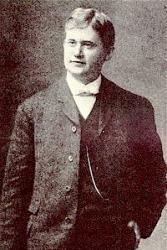
1861 - 1943 Person Name: Charles D. Tillman Adapter of "Old Time Religion" in The Cyber Hymnal Tillman, Charles "Charlie" Davis. (Tallahassee, Talapoosa County, Alabama, March 20, 1861--1943). Married Anna Killingsworth (Dec. 24, 1889); four daughters, one son (d.1910). --Keith C. Clark, DNAH Archives

John J. Overholt

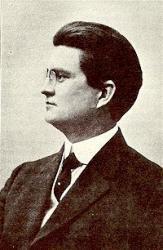
1918 - 2000 Person Name: Compiler Arranger of "OLD TIME RELIGION" in The Christian Hymnary John J. Overholt was born to an Amish family of limited means in the state of Ohio in 1918. As a child he was soon introduced to his father's personal collection of gospel songs and hymns, which was to have a marked influence on his later life. With his twin brother Joe, he early was exposed to the Amish-Mennonite tradition hymn-singing and praising worship. An early career in Christian service led to a two-year period of relief work in the country of Poland following World War II. During that interim he began to gather many European songs and hymns as a personal hobby, not realizing that these selections would become invaluable to The Christian Hymnary which was begun in 1960 and completed twelve years later in 1972, with a compilation of 1000 songs, hymns and chorales. (The largest Menn. hymnal). A second hymnal was begun simultaneously in the German language entitled Erweckungs Lieder Nr.1 which was brought to completion in 1986. This hymnal has a total of 200 selections with a small addendum of English hymns. Mr. Overholt married in 1965 to an accomplished soprano Vera Marie Sommers, who was not to be outdone by her husband's creativity and compiled a hymnal of 156 selections entitled Be Glad and Sing, directed to children and youth and first printed in 1986. During this later career of hymn publishing, Mr. Overholt also found time for Gospel team work throughout Europe. At this writing he is preparing for a 5th consecutive tour which he arranges and guides. The countries visited will be Belgium, Switzerland, France, Germany, Poland, USSR and Romania. Mr. Overholt was called to the Christian ministry in 1957 and resides at Sarasota, Florida where he is co-minister of a Beachy Amish-Mennonite Church. Five children were born to this family and all enjoy worship in song. --Letter from Hannah Joanna Overholt to Mary Louise VanDyke, 10 October 1990, DNAH Archives. Photo enclosed.

Grant Colfax Tullar

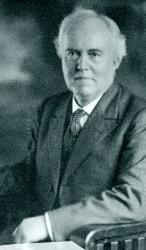
1869 - 1950 Person Name: Grant C. Tuller Arranger of "[It was good for our mothers]" in Rescue Songs Grant Colfax Tullar was born August 5, 1869, in Bolton, Connecticut. He was named after the American President Ulysses S. Grant and Vice President Schuyler Colfax. After the American Civil War, his father was disabled and unable to work, having been wounded in the Battle of Antietam. Tullar's mother died when he was just two years old so Grant had no settled home life until he became an adult. Yet from a life of sorrow and hardship he went on to bring joy to millions of Americans with his songs and poetry. As a child, he received virtually no education or religious training. He worked in a woolen mill and as a shoe clerk. The last Methodist camp meeting in Bolton was in 1847. Tullar became a Methodist at age 19 at a camp meeting near Waterbury in 1888. He then attended the Hackettstown Academy in New Jersey. He became an ordained Methodist minister and pastored for a short time in Dover, Delaware. For 10 years he was the song leader for evangelist Major George A. Hilton. Even so, in 1893 he also helped found the well-known Tullar-Meredith Publishing Company in New York, which produced church and Sunday school music. Tullar composed many popular hymns and hymnals. His works include: Sunday School Hymns No. 1 (Chicago, Illinois: Tullar Meredith Co., 1903) and The Bible School Hymnal (New York: Tullar Meredith Co., 1907). One of Grant Tullar's most quoted poems is "The Weaver": My Life is but a weaving Between my Lord and me; I cannot choose the colors He worketh steadily. Oft times He weaveth sorrow And I, in foolish pride, Forget He sees the upper, And I the under side. Not til the loom is silent And the shuttles cease to fly, Shall God unroll the canvas And explain the reason why. The dark threads are as needful In the Weaver's skillful hand, As the threads of gold and silver In the pattern He has planned. He knows, He loves, He cares, Nothing this truth can dim. He gives His very best to those Who chose to walk with Him. Grant Tullar --http://www.boltoncthistory.org/granttullar.html, from Bolton Community News, August 2006.

George C. Stebbins

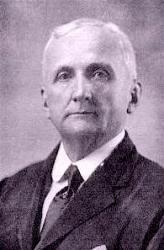
1846 - 1945 Person Name: Geo. C. Stebbins Arranger of "[It was good for our mothers]" in Alexander's Male Choir Stebbins studied music in Buffalo and Rochester, New York, then became a singing teacher. Around 1869, he moved to Chicago, Illinois, to join the Lyon and Healy Music Company. He also became the music director at the First Baptist Church in Chicago. It was in Chicago that he met the leaders in the Gospel music field, such as George Root, Philip Bliss, & Ira Sankey. At age 28, Stebbins moved to Boston, Massachusetts, where he became music director at the Claredon Street Baptist Church; the pastor there was Adoniram Gordon. Two years later, Stebbins became music director at Tremont Temple in Boston. Shortly thereafter, he became involved in evangelism campaigns with Moody and others. Around 1900, Stebbins spent a year as an evangelist in India, Egypt, Italy, Palestine, France and England. (www.hymntime.com/tch)

Edmund S. Lorenz

1854 - 1942 Person Name: E. S. L. Arranger of "[t was good for our mothers]" in Songs of Revival Power Pseudonymns: John D. Cresswell, L. S. Edwards, E. D. Mund, ==================== Lorenz, Edmund Simon. (North Lawrence, Stark County, Ohio, July 13, 1854--July 10, 1942, Dayton, Ohio). Son of Edward Lorenz, a German-born shoemaker who turned preacher, served German immigrants in northwestern Ohio, and was editor of the church paper, Froehliche Botschafter, 1894-1900. Edmund graduated from Toledo High School in 1870, taught German, and was made a school principal at a salary of $20 per week. At age 19, he moved to Dayton to become the music editor for the United Brethren Publishing House. He graduated from Otterbein College (B.A.) in 1880, studied at Union Biblical Seminary, 1878-1881, then went to Yale Divinity School where he graduated (B.D.) in 1883. He then spent a year studying theology in Leipzig, Germany. He was ordained by the Miami [Ohio] Conference of the United Brethren in Christ in 1877. The following year, he married Florence Kumler, with whom he had five children. Upon his return to the United States, he served as pastor of the High Street United Brethren Church in Dayton, 1884-1886, and then as president of Lebanon Valley College, 1887-1889. Ill health led him to resign his presidency. In 1890 he founded the Lorenz Publishing Company of Dayton, to which he devoted the remainder of his life. For their catalog, he wrote hymns, and composed many gospel songs, anthems, and cantatas, occasionally using pseudonyms such as E.D. Mund, Anna Chichester, and G.M. Dodge. He edited three of the Lorenz choir magazines, The Choir Leader, The Choir Herald, and Kirchenchor. Prominent among the many song-books and hymnals which he compiled and edited were those for his church: Hymns for the Sanctuary and Social Worship (1874), Pilgerlieder (1878), Songs of Grace (1879), The Otterbein Hymnal (1890), and The Church Hymnal (1934). For pastors and church musicians, he wrote several books stressing hymnody: Practical Church Music (1909), Church Music (1923), Music in Work and Worship (1925), and The Singing Church (1938). In 1936, Otterbein College awarded him the honorary D.Mus. degree and Lebanon Valley College the honorary LL.D. degree. --Information from granddaughter Ellen Jane Lorenz Porter, DNAH Archives

A. J. Showalter

1858 - 1924 Person Name: A. J. S. Arranger of "[Makes me love ev'rybody]" in God's Glory Anthony Johnson Showalter USA 1858-1924/ Born in Cherry Grove, VA, he became an organist, gospel music composer, author, teacher, editor, and publisher. He was taught by his father and in 1876 received training at the Ruebush-Kieffer School of Music, Dayton, VA. He also attended George Root’s National Normal school at Erie, PA, and Dr Palmer’s International Normal at Meadville, PA. He was teaching music in shape note singing schools by age 14. He taught literary school at age 19, and normal music schools at age 22, when he also published his first book. In 1881 he married Lucy Carolyn (Callie) Walser of TX, and they had seven children: Tennie, Karl, Essie, Jennie, Lena, Margaret, and Nellie. At age 23 he published his “Harmony & composition” book, and years later his “Theory of music”. In 1884 he moved to Dalton, GA, and in 1890 formed the Showalter Music Company of Dalton. His company printed and published hymnals, songbooks, schoolbooks, magazines, and newspapers, and had offices in Texarkana, AR, and Chattanooga, TN. In 1888 he became a member of the M T N A (Music Teachers National Association) and was vice-president for his state for several years. In 1895 he went abroad to study methods of teachers and conductors in Europe. He held sessions of his Southern Normal Music Institute in a dozen or more states. He edited “The music teacher & home magazine” for 20 years. In 1895 he issued his “New harmony & composition” book. He authored 60+ books on music theory, harmony, and song. He published 130+ music books that sold over a million copies. Not only was he president of the A J Showalter Music Company of Dalton, GA, but also of the Showalter-Patton Company of Dallas, TX, two of the largest music publishing houses in the American south. He was a choir leader and an elder in the First Presbyterian Church in Dalton (and his daughter, Essie, played the organ there). He managed his fruit farm, looking after nearly 20,000 trees , of which 15,000 are the famous Georgia Elberta peaches, the rest being apples, plums, pecans, and a dozen other varieties of peaches. He was also a stockholder and director of the Cherokee Lumber Company of Dalton, GA, furnishing building materials to a large trade in many southern, central and eastern states. He died in Chattanooga, TN, and is buried in Dalton, GA. He loved hymns, and kept up with many of his students over the years, writing them letters of counsel and encouragement. In 2000 Showalter was inducted into the Southern Gospel Music Hall of Fame. Note: Showalter received two letters one evening from former music students, both of who were grieving over the death of their wives. He had heard a sermon about the arms of Moses being held up during battle, and managed to form a tune and refrain for a hymn, but struggled to find words for the verses that fit. He wrote to his friend in OH, Rev Elisha Hoffman, who had already composed many hymns and asked if he could write some lyrics, which he gladly did. John Perry

George Allan

Person Name: G. Allan Arranger of "OLD TIME RELIGION" in Redemption Songs

T. M. Bowdish

1860 - 1937 Arranger of "FAITH" in Revival Tidings T. M. Bowdish was born on Feb­ru­a­ry 28, 1860 in Jeff­er­son Coun­ty, Penn­syl­van­ia and died on July 26, 1937 in Brock­way, Penn­syl­van­ia. His works in­clude: The King­dom of Song (To­le­do, Ohio: The W. W. Whit­ney Com­pa­ny, 1900) © The Cyber Hymnal™ (www.hymntime.com/tch)

George C. Kersey

Person Name: Geo. E. Kersey Arranger of "[It was good for our mothers]" in Cream of Song

J. Jefferson Cleveland

1937 - 1986 Person Name: J. Jefferson Cleveland, 1937- Arranger of "[It was good for my ole father]" in Songs of Zion Judge Jefferson Cleveland (1937-1986) was one of the most important scholars and editors of African-American congregational song of the 20th century. Along with Verogla Nix, he edited what is arguably the most groundbreaking collection of African-American song in the last half of the 20th century, Songs of Zion (1981/1982). Lutheran hymnologist Marilyn Stulken provides a biographical sketch of Cleveland’s life and accomplishments. Born in Georgia, Cleveland graduated from Clark College (Atlanta), Illinois Wesleyan University and received his doctorate in education from Boston University. He served on the faculty of three historically black Christian colleges: Claflin College (South Carolina), Langston University (Oklahoma), and Jarvis Christian College (Texas), before teaching at the University of Massachusetts and Wesley Theological Seminary in Washington, D.C. Cleveland’s musical arrangements, historical research and scholarship on the performance practice of African-American song have proven invaluable for the advancement of black gospel song, not only among African Americans, but also in Anglo hymnals to the present day. For example, Cleveland’s essay, “A Historical Account of the Hymn in the Black Worship Experience,” in Songs of Zion is a helpful introduction for laypersons and scholars alike. In addition to serving as a hymnody consultant for the United Methodist General Board of Discipleship, he toured the United States and Africa in 1981 and Europe in 1984 as a teacher, lecturer and performer. --www.umportal.org/

Pages


Export as CSV
It looks like you are using an ad-blocker. Ad revenue helps keep us running. Please consider white-listing Hymnary.org or getting Hymnary Pro to eliminate ads entirely and help support Hymnary.org.