

 My Starred Hymns
 My FlexScores
 My Hymnals
 My Purchased Files
Planning worship?
Check out our sister site, ZeteoSearch.org,
for 20+ additional resources related to your search.
- |
User Links
Person Results
A. H. Mann
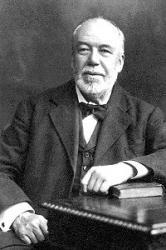
1850 - 1929 Person Name: Arthur H. Mann Composer of "ANGEL'S STORY" in Timeless Truths Arthur Henry ‘Daddy’ Mann MusB MusD United Kingdom 1850-1929. Born at Norwich, Norfolk, England, he graduated from New College, Oxford. He married Sarah Ransford, and they had five children: Sarah, Francis, Arthur, John, and Mary. Arthur died in infancy. Mann was a chorister and assistant organist at Norwich Cathedral, then, after short stints playing the organ at St Peter’s, Wolverhampton (1870-71); St. Michael’s Tettenhall Parish Church (1871-75); and Beverley Minster (1875-76); he became organist at King’s College Chapel, Cambridge (1876-1929), Cambridge University organist (1897-1929), and music master and organist at the Leys School, Cambridge (1894-1922). In addition to composing an oratorio and some hymn tunes, he was music editor of the Church of England Hymnal (1894). In 1918 he directed the music and first service of “Nine lessons & carols” at King’s College Chapel. He was an arranger, author, composer, and editor. His wife, Sarah, died in 1918. He died at Cambridge, England.
John Perry
A. H. Mann
Timothy R. Matthews
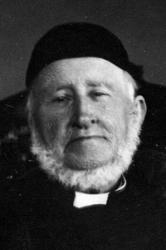
1826 - 1910 Person Name: Rev. T. R. Matthews (1826- ) Composer of "CHENIES" in School and Parish Hymnal Timothy Richard Matthews MusB United Kingdom 1826-1910. Born at Colmworth, England, son of the Colmworth rector, he attended the Bedford and Gonville Schools and Caius College, Cambridge. In 1853 he became a private tutor to the family of Rev Lord Wriothesley Russell, a canon of St. George’s Chapel, Windsor Castle, where he studied under organist, George Elvey, subsequently a lifelong friend. He married Margaret Mary Thompson, and they had 11 children: Norton, Mary, George, Cecil, Evelyn, Eleanor, Anne, Arthur, Wilfred, Stephen, and John. Matthews served as Curate and Curate-in-Charge of St Mary’s Church, Nottingham (1853-1869). While there, he founded the Nottingham Working Men’s Institute. He became Rector at North Coates, Lincolnshire (1869-1907). He retired in 1907 to live with his eldest son, Norton, at Tetney vicarage. He edited the “North Coates supplemental tune book” and “Village organist”. An author, arranger, and editor, he composed morning and evening services, chants, and responses, earning a reputation for simple but effective hymn tunes, writing 100+. On a request he wrote six tunes for a children’s hymnal in one day. He composed a Christmas carol and a few songs. His sons, Norton, and Arthur, were also known as hymn tune composers. He died at Tetney, Lincolnshire, England.
John Perry
Timothy R. Matthews
J. W. Elliott
1833 - 1915 Composer of "[O Jesus, I have promised]" in The Hymnal, Revised and Enlarged, as adopted by the General Convention of the Protestant Episcopal Church in the United States of America in the year of our Lord 1892 J.W. Elliott was a popular composer of the Victorian period, and is best known for his nursery rhyme music and for his work on hymnals in the 1870s. He was born James William Elliott, in Warwick, England, on February 13, 1833. As a child, he sang as a chorister in the Leamington Parish Church. In those days, choristers were given lessons in all facets of church music, including organ lessons, counterpoint studies, and more in exchange for providing an extraordinary level of service to their parish church (services throughout the week, all holidays, extra services, etc.). The result is that most choristers who completed their studies received an excellent music education, and James was no exception. After starting his career as an organist and choirmaster for a countryside church, his talent became obvious. He moved to London, where he assisted Sir Arthur Sullivan (of Gilbert and Sullivan fame) in editing Church Hymns. In addition, James worked for a music publisher.
His compositions include two operettas, numerous anthems, service music, works for instruments including the very popular harmonium, and most particularly for Nursery Rhymes and Nursery Songs, his children’s music score that sets many of the Nursery Rhymes to delightful music. Several of his hymn tunes are still in use today in many hymnals, most notably his hymn tune “Day of Rest.” He was heavily involved in the preparation of the musical edition of Church Hymns in 1874, the Choral Service Book of 1892, and transcriptions of hymn tunes using harmonies different than the traditional ones found in hymnals. He died in St. Marylebone, London, on February 5, 1915.
--www.nursery-songs.com/
J. W. Elliott
Justin Heinrich Knecht
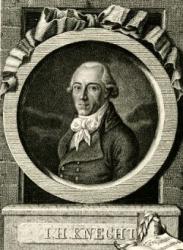
1752 - 1817 Person Name: J. H. Knecht Composer of "[O Jesus, I have promised]" in The King's Praises Justin Heinrich Knecht Germany 1752-1817. Born at Biberach Baden-Wurttemberg, Germany, he attended a Lutheran college in Esslingen am Neckar from 1768-1771. Having learned the organ, keyboard, violin and oratory, he became a Lutheran preceptor (professor of literature) and music director in Biberach. It was a free imperial city until 1803 and had a rich cultural life. He became organist of St. Martin’s Church in 1792, used by both Lutherans and Catholics, and was there for many years. He led an energetic, busy musical life, composing for both the theatre and church, organizing subscription concerts, teaching music theory, acoustics, aesthetics, composition, and instruments at the Gymnasium, affiliated to the Musikschule in 1806. He went to Stuttgart in 1806 in hopes of a post there as Kapellmeister, serving two years as Konzertmeister, but he was appointed Direktor Beim Orchester by the King of Wurttemberg in 1807. However, he returned to his former life in 1808 and remained there the rest of his life. He died at Biberach. He wrote 10 vocals, 11 opera and stage works, one symphony, 3 chamber music instrumentals, 7 organ works, 4 piano works, and 6 music theories. He was an author composer, editor, contributor, musician, compiler, and lyricist.
John Perry
Justin Heinrich Knecht
George J. Elvey
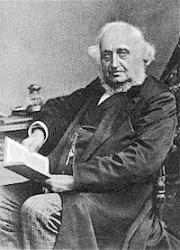
1816 - 1893 Person Name: G. J. Elvey Composer of "WELLESLEY" in The Church Hymnal George Job Elvey (b. Canterbury, England, 1816; d. Windlesham, Surrey, England, 1893) As a young boy, Elvey was a chorister in Canterbury Cathedral. Living and studying with his brother Stephen, he was educated at Oxford and at the Royal Academy of Music. At age nineteen Elvey became organist and master of the boys' choir at St. George Chapel, Windsor, where he remained until his retirement in 1882. He was frequently called upon to provide music for royal ceremonies such as Princess Louise's wedding in 1871 (after which he was knighted). Elvey also composed hymn tunes, anthems, oratorios, and service music.
Bert Polman
George J. Elvey
William Harold Ferguson
1874 - 1950 Person Name: W. H. Ferguson Composer of "WOLVERCOTE" in Rejoice in the Lord Born: January 1, 1874, Leeds, England.
Died: October 18, 1950, Littlehampton, Sussex, England.
Ferguson was educated at Magdalen College School, Oxford, and was a chorister in the College chapel. After graduating from Keble College, he taught at St. Edward’s School, Oxford (1896-69) and Bilton Grange, Rugby (1899-1901). He later attended Cuddesdon Theological College. After ordination, he served as assistant master, chaplain, organist and director of chapel music at Lancing College (1902-13); Warden of St. Edward’s School, Oxford (1913-25); Warden of St Peter’s College, Radley, Abingdon, Oxfordshire (1925-37); and Canon and Precentor of Salisbury Cathedral (1937-47). With Geoffrey Shaw, he was joint music editor of The Public School Hymn Book in 1919.
--www.hymntime.com/tch/
William Harold Ferguson
Basil Harwood
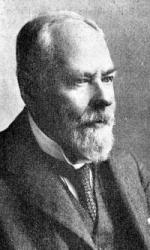
1859 - 1949 Person Name: Basil Harwood (1859-1949) Composer of "THORNBURY" in Hymns of Glory, Songs of Praise Basil Harwood (11 April 1859 – 3 April 1949) was an English organist and composer.
Basil Harwood was born in Woodhouse, Gloucestershire (the second youngest of 12 children) on 11 April 1859. His mother died in 1867 when Basil was eight. His parents were Quakers but his elder sister Ada, on reaching 21 in 1867, converted to the Anglican Church. Basil was allowed to attend the ceremony at the Church of England in Almondsbury and this is where he was first drawn to organ music and choral singing. His father, Edward, remarried two years later in 1869 to a lady from an Anglican family. Basil was now sent to the Montpellier School in Weston-super-Mare for a year. In 1871, at 12 he was enrolled in Clevedon, the preparatory school for Charterhouse where he was first to formally study music.
He went up to Charterhouse in 1874 and left in 1876 having won a leaving Exhibition to Trinity College, Oxford where he initially studied Classics (1879) and Modern History (1880). He then studied for a further two years, 1881–1882, at the Leipzig Conservatory under Carl Reinecke and Salomon Jadassohn. It was here in 1882, Basil composed his first anthem for chorus and organ "O Saving Grace." He returned from Leipzig to realise that he had now passed the age limit to study music formally.
In 1883, Basil became organist of St. Barnabas Church, Pimlico completing his Sonata in C# Minor here in 1885, selling the copyright to the publisher Schott for one shilling a year or two later. After this success, he then moved to Ely Cathedral in 1887 where he wrote the bulk of Dithyramb, possibly his greatest organ work. His final appointment was as organist at Christ Church, Oxford and as precentor of Keble College, Oxford from 1892 to 1909. Whilst there he co-founded and conducted the Oxford Bach Choir which helped to earn him his degree as Doctor of Music. He conducted the Oxford Orchestral Association (1892–1898).
He was musical editor of the 1908 Oxford Hymn Book and Examiner for Musical Degrees (1900–1925).
During this time, he met and married Mabel Ada Jennings (the daughter of George Jennings) (who had become a pupil of his in 1896) at All Souls St. Marylebone, London (27 December 1899). Mabel had studied music herself, piano and composition, and was also a writer. She may well have composed lyrics for some of his lesser known tunes. At an advanced age she wrote a small volume of collected poems named Questing Soul.
He retired early at 50 (in 1909) after the death of his father, Edward Harwood, from whom he inherited the family estate of Woodhouse having outlived his seven older brothers. Soon after moving in he had a three manual chamber organ built in the library by Bishop & Sons of Ipswich (now in Minehead Parish Church), on which he promptly finished his Sonata in F# Minor. He continued to compose prolifically.
He was a keen walker, and named many of his hymn tunes after local places that he loved to visit, the most notable being the hymn tunes such as Tockington, Olveston, Almondsbury and Thornbury.
In 1936 advancing in years, he let the Woodhouse estate and moved to Bournemouth. Part of the estate, Woodhouse Down, was later sold to his contemporary Robert Baden-Powell who was two years older than he was and who had also attended Charterhouse School, and is used as a Scout Camp to this day.
In 1939, at eighty, he moved to London, taking a flat in Fleet Street. After a long life, he died on 3 April 1949, eight days short of his 90th birthday, at Courtfield Gardens in the Royal Borough of Kensington, London. A memorial service was held in St Paul's Cathedral on 22 April 1949. Mabel survived him, dying shortly before her 103rd birthday on 20 July 1974. He was survived by two sons; Major John Edward Godfrey Harwood (1900–1996) and Basil Antony Harwood (1903–1990) Senior Master of the Supreme Court, Q.B.D. and Queen's Remembrancer.
His remains are interred in St. Barnabas Church, Pimlico and marked by a plaque inset in floor of the chancel, close to where he would have stood to conduct the choir.
He composed cantatas, church music and works for the organ; his Service in A flat, the anthem O how Glorious and the hymn tunes LUCKINGTON ("Let all the world in every corner sing") and THORNBURY ("Thy hand O God has guided"), first used during a festival of the London Church Choir Association, remain in the Anglican repertory.
--en.wikipedia.org/wiki
Basil Harwood
William F. Sherwin
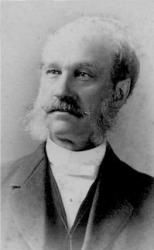
1826 - 1888 Person Name: W. F. Sherwin Composer of "[O Jesus, I have promised]" in The Canadian Hymnal Sherwin, William Fisk, an American Baptist, was born at Buckland, Massachusetts, March 14,1826. His educational opportunities, so far as schools were concerned, were few, but he made excellent use of his time and surroundings. At fifteen he went to Boston and studied music under Dr. Mason: In due course he became a teacher of vocal music, and held several important appointments in Massachusetts; in Hudson and Albany, New York County, and then in New York City. Taking special interest in Sunday Schools, he composed carols and hymn-tunes largely for their use, and was associated with the Rev. R. Lowry and others in preparing Bright Jewels, and other popular Sunday School hymn and tune books. A few of his melodies are known in Great Britain through I. D. Sankey's Sacred Songs and Solos, where they are given with his signature. His hymnwriting was limited. The following pieces are in common use:—
1. Grander than ocean's story (1871). The Love of God.
2. Hark, bark, the merry Christmas bells. Christmas Carol.
3. Lo, the day of God is breaking. The Spiritual Warfare.
4. Wake the song of joy and gladness. Sunday School or Temperance Anniversary.
5. Why is thy faith, 0 Child of God, so small. Safety in Jesus.
Mr. Sherwin died at Boston, Massachusetts, April 14, 1888.
-- John Julian, Dictionary of Hymnology (1907)
==================
Sherwin, W. F., p. 1055, i. Another hymn from his Bright Jewels, 1869, p. 68, is "Sound the battle cry" (Christian Courage), in the Sunday School Hymnary, 1905, and several other collections.
--John Julian, Dictionary of Hymnology, New Supplement (1907)
William F. Sherwin
Harold H. DeCou
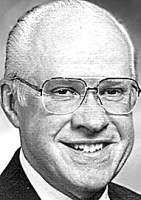
1932 - 2008 Person Name: Harold DeCou, 1932- Arranger of "ANGEL'S STORY" in Revival Hymns and Choruses Peoria - Harold H. DeCou, 76, of Peoria died at 7:30 a.m. Friday, Dec. 26, 2008, at his residence.
He was born Oct. 7, 1932, in Philadelphia, Pa., to Harold H. and Kathrine Holbrook DeCou. He married Rose N. Layman on June 25, 1955, in Brookfield, Ill. She survives.
Also surviving are his four sons, Harold H. (Nancy) DeCou III of Apple Valley, Calif., Mark T. DeCou of Peoria, Jonathan (Shari) DeCou of Muskegon, Mich., and Perry A. (Suiann) DeCou of Ramona, Calif.; eight grandchildren; and two great-grandchildren.
He attended Temple University in Philadelphia.
He was a concert artist (piano and organ), composer, arranger and orchestrator for 58 years.
He served as church organist at Grace Presbyterian Church in Peoria from 1988 to 2001. He was a member of Redeemer Presbyterian Church in Peoria. He is also an Honorary Fellow of Shenandoah Society Award.
…
Burial will be in Springdale Cemetery in Peoria.
…
Memorials may be made to Redeemer Presbyterian Church.
Published in Peoria Journal Star on Dec. 27, 2008 - See more at:
http://www.legacy.com/obituaries/pjstar/obituary.aspx?n=harold-decou&pid=121874596#sthash.k7o3BCQY.dpuf
Harold H. DeCou
Edward Husband
1843 - 1908 Person Name: E. Husband Composer of "[O Jesus, I have promised]" in The King's Praises Husband, Edward was educated at St. Aidan's College, Birkenhead. Taking Holy Orders in 1866, he was successively Curate of Atherstone and Folkestone; and in 1878 Vicar of St. Michael and All Angels, Folkestone. In 1874 Mr. Husband published The Mission Hymnal, in which appeared his hymns as follows:—
1. Alas! poor world, I loved thee long. Rest in Jesus.
2. And dost Thou ask me, dearest Lord. Christ's Invitation, " Follow Me."
3. I must have Jesus only. Jesus only desired
4. Sweet Blood, dear ransom of our souls. The Blood of Jesus.
These hymns are very simple, earnest, and impassioned: and bear a great resemblance to Facer's compositions.
--John Julian, Dictionary of Hymnology (1907)
Edward Husband
Pages




