

 My Starred Hymns
 My FlexScores
 My Hymnals
 My Purchased Files
Planning worship?
Check out our sister site, ZeteoSearch.org,
for 20+ additional resources related to your search.
- |
User Links
Person Results
Daniel Hughes
Person Name: D. H. Translator of "'N awr ar drothwy blywyddyn (Standing at the portal)" in Mawl a chân = praise and song
Daniel Hughes
A. H. Mann
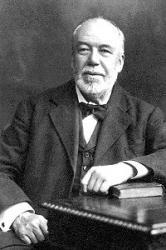
1850 - 1929 Person Name: Arthur H. Mann Author of "Standing At the Portal" in The New Christian Hymnal Arthur Henry ‘Daddy’ Mann MusB MusD United Kingdom 1850-1929. Born at Norwich, Norfolk, England, he graduated from New College, Oxford. He married Sarah Ransford, and they had five children: Sarah, Francis, Arthur, John, and Mary. Arthur died in infancy. Mann was a chorister and assistant organist at Norwich Cathedral, then, after short stints playing the organ at St Peter’s, Wolverhampton (1870-71); St. Michael’s Tettenhall Parish Church (1871-75); and Beverley Minster (1875-76); he became organist at King’s College Chapel, Cambridge (1876-1929), Cambridge University organist (1897-1929), and music master and organist at the Leys School, Cambridge (1894-1922). In addition to composing an oratorio and some hymn tunes, he was music editor of the Church of England Hymnal (1894). In 1918 he directed the music and first service of “Nine lessons & carols” at King’s College Chapel. He was an arranger, author, composer, and editor. His wife, Sarah, died in 1918. He died at Cambridge, England.
John Perry
A. H. Mann
Charles Edward Pollock
1853 - 1928 Person Name: Chas. Edw. Pollock Composer of "[Standing at the portal of the coming year]" in Songs of Grace and Glory Charles Edward Pollock USA 1853-1928. Born at Newcastle, PA, he moved to Jefferson City, MO, when age 17. He was a cane maker for C W Allen. He also worked 20 years for the MO Pacific Railroad, as a depot clerk and later as Assistant Roadmaster. He was a musician and prolific songwriter, composing 5000+ songs, mostly used in Sunday school settings and church settings. He took little remuneration for his compositions, preferring they be freely used. He produced three songbooks: “Praises”, “Beauty of praise”, and “Waves of melody”. In 1886 he married Martha (Mattie) Jane Harris, and they had three children: Robert, Edward, and a daughter. He died in Merriam, KS.
John Perry
=================
Pollock, Charles Edward. (Jefferson City, Missouri, 1853-1924). Records of Jefferson City indicate the following:
1897 clerk at depot; residence at 106 Broadway (with Mildred Pollock)
1904-1905 cane maker for C. W. Allen
1908-1909 musician; residence at 106 Broadway (with wife Matty)
1912-1913 residence at St. Louis Road, east city limits
--Wilmer Swope, DNAH Archives
Note: not to be confused with Charles Edward Pollock (c.1871-1924).
Charles Edward Pollock
Henry G Trembath
1844 - 1908 Person Name: Henry G. Trembath Composer of "ROSMORE" in The New Christian Hymnal
Henry G Trembath
William F. Sherwin
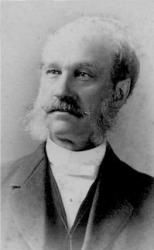
1826 - 1888 Person Name: W. F. Sherwin Composer of "REJOICING" in Laudes Domini Sherwin, William Fisk, an American Baptist, was born at Buckland, Massachusetts, March 14,1826. His educational opportunities, so far as schools were concerned, were few, but he made excellent use of his time and surroundings. At fifteen he went to Boston and studied music under Dr. Mason: In due course he became a teacher of vocal music, and held several important appointments in Massachusetts; in Hudson and Albany, New York County, and then in New York City. Taking special interest in Sunday Schools, he composed carols and hymn-tunes largely for their use, and was associated with the Rev. R. Lowry and others in preparing Bright Jewels, and other popular Sunday School hymn and tune books. A few of his melodies are known in Great Britain through I. D. Sankey's Sacred Songs and Solos, where they are given with his signature. His hymnwriting was limited. The following pieces are in common use:—
1. Grander than ocean's story (1871). The Love of God.
2. Hark, bark, the merry Christmas bells. Christmas Carol.
3. Lo, the day of God is breaking. The Spiritual Warfare.
4. Wake the song of joy and gladness. Sunday School or Temperance Anniversary.
5. Why is thy faith, 0 Child of God, so small. Safety in Jesus.
Mr. Sherwin died at Boston, Massachusetts, April 14, 1888.
-- John Julian, Dictionary of Hymnology (1907)
==================
Sherwin, W. F., p. 1055, i. Another hymn from his Bright Jewels, 1869, p. 68, is "Sound the battle cry" (Christian Courage), in the Sunday School Hymnary, 1905, and several other collections.
--John Julian, Dictionary of Hymnology, New Supplement (1907)
William F. Sherwin
Albert Lowe
Person Name: A. Lowe Composer of "AMBLESIDE" in The Song Companion to the Scriptures
Albert Lowe
James T. Lightwood
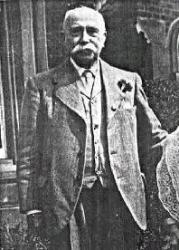
1856 - 1944 Person Name: J. T. Lightwood Composer of "FYLDE" in The New Canadian Hymnal Born: 1856, Leeds, England.
Died: 1944, Lytham, Lancashire, England.
Son of Wesleyan minister Edward Lightwood, James was born and baptized while his father was on the Leeds Brunswick Circuit. He attended Kingswood School (1866-72), earned a BA from London University, and became Headmaster of Pembroke House, a private school in Lytham. He went on to serve for three years as a member of the Board of Improvement Commissioners in Lytham, on the Lytham Council for six years, and as Chairman of the Streets Committee for four years. His resolution to bring gas into Fairhaven was eventually carried by one vote. Apart from music, his other great love was cycling. He began cycling in 1874 on a "boneshaker." By 1885, he was a member of the Cyclists Touring Club (CTC), and soon gained prominence. He was Chief Consul for Lancashire, and a member of the Council of the CTC from 1887. Honorary life membership came in 1907 in recognition of his services to the club, and in particular with publication of the club’s route books and other writings.
Music was his great love, though, and hymnody in particular. He was an accomplished organist, and after two years as deputy organist at the Drive Wesleyan Church, St. Annes, he was appointed Honorary Organist and Choirmaster in 1894. When the pressure of work due to his appointment as editor of the new Methodist publication The Choir and organizing the newly formed Music Department of the Methodist Publishing House, the trustees at Drive Church made him a grant of £20 to assist him in his research in hymnology. While advising Methodism on musical matters, he found the unique 1761 Snetzler organ for the New Room at Bristol.
Lightwood’s works include:
Hymn Tunes and Their Story (London: Charles H. Kelly, 1905)
Charles Dickens and Music, 1912
Samuel Wesley, Musician: The Story of His Life
Cyclists’ Touring Club: The Romance of 50 Years Cycling, 1928
The Music of the Methodist Hymn-Book (London: The Epworth Press, 1935)
http://www.hymntime.com/tch/bio/l/i/g/lightwood_jt.htm
James T. Lightwood
J. D. Brunk
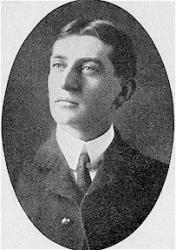
1872 - 1926 Composer of "[Standing at the portal of the opening year]" in New Onward and Upward John David Brunk born in Virginia, died in Indiana
Dianne Shapiro, from Find a Grave website (accessed 6/20/2022)
J. D. Brunk
Frederick Alexander Mann
1844 - 1903 Person Name: F. A. Mann Composer of "[Standing at the portal of the opening year]" in Westminster Sabbath School Hymnal, a collection of hymns and tunes for use in sabbath-schools and social meetings See his obituary in The Musical Herald, May 1, 1903. The hymnal Hymns of Prayer and Praise (1921) confirms these birth and death dates, in addition to his composing hymn tunes as listed here.
Not to be confused with Frederick Mann, 1846-1928.
--Tina Schneider, 01 July 2014.
=======================
Mr. F. A. Mann was the musical director of the children’s Home at Victoria Park. He possessed a find conception for music; he gave a “reading” and interpretation to everything he touched, even to a children’s hymn. He composed but little; probably his reserve in this respect was due to his high ideals and his reverence for the great masters.
For nineteen years F. A. Mann practiced the musical profession at Lowestoft. Here he was organist successively of the Parish Church of St. Margaret, and of the church at Kirkley. His power as a choir-trainer was soon discovered by other churches, including nonconformists, and by the help of deputies he managed to train three or four choirs abreast.
For fourteen years he devoted himself to training the choir of children belonging to the Children’s Home. Mr. Mann understood children; his poetic musical instinct drew forth their powers; he interested them and they needed no spur.
Excerpt from The Musical Herald, Issues 658-669 (1903)
By John Spencer Curwen
Frederick Alexander Mann
Pages




