

 My Starred Hymns
 My FlexScores
 My Hymnals
 My Purchased Files
Planning worship?
Check out our sister site, ZeteoSearch.org,
for 20+ additional resources related to your search.
- |
User Links
Person Results
Joachim Magdeburg
1525 - 1587 Author (stanza 1) of "Who Trusts in God, a Strong Abode" in Hymnal and Liturgies of the Moravian Church Magdeburg, Joachim , was born circa 1525 at Gardelegen in the Altmark. He matriculated at the University of Wittenberg, April, 1544, and in 1546 was appointed rector of the school at Schöningen, near Helmstädt, Brunswick. He became pastor of Dannenberg in Lüneburg in 1547, but being unable to exist on his slender income resigned in 1549, and in the same year became pastor of Salzwedel in the Altmark. But refusing to adopt the Roman ceremonies prescribed by the Act of Interim he was, in 1552 (Easter Sunday, April 17) banished from the Electorate of Brandenburg. About May, 1552, by the influence of Johann Aepinus, Superintendent of Hamburg, he was appointed diaconus of St. Peter's Church in Hamburg, and there became acquainted with Flacius Illyricus [Matthias Flach, Extreme Lutheran, church historian, &c, died at Frankfurt-am-Main, March 11, 1575]. After the death of Aepinus, May 13, 1553, Paulus von Eitzen, his successor, was not so friendly, and when, during the controversy in 1558 regarding Holy Communion, Magdeburg published a tractate without submitting it to the revision of Eitzen, the latter obtained the removal of Magdeburg from his post, May 25, 1558. He then went to Magdeburg to help his friend Flacius as one of the compilers of the Church history known as the Magdeburg Centuries. Shortly thereafter he was appointed pastor of Ossmanstedt in Thuringia; but, as a follower of Flacius, was dispossessed in 1562. He then stayed for longer or shorter periods with Count von Mansfeld, Baron von Schönburg and others, until, after the Emperor Maximilian II. had once more permitted Protestant preachers in Austria, he was, at Count von Mansfeld's recommendation, appointed by the commandant of Raab in Hungary as regimental chaplain at Raab in 1564, and, after his house there was burnt, at the castle of Gräfenworth (east of Krems), to the German-speaking Austrian troops. There he had to contend with the machinations of the Roman clergy, and after joining with nineteen others of the Evangelical clergy in Austria in presenting a Confession of Faith to an Austrian Diet (Landtag), was compelled to leave; and in 1571 we find him living at Erfurt. In 1581 he was preacher at Efferding in Austria; but in 1583 was expelled as an adherent of Flacius. His later history is unknown (Koch, i. 446; Allgemeine Deutsche Biographie, xx., 53, &c). Wachernagel, iii. pp. 1035-1042, gives five pieces under his name. The only one translation into English is:—
Wer Gott vertraut, hat wohl gebaut. Trust in God. Founded on Ps. lxxiii. 25, 26. Wachernagel, iii. p. 1042, prints st. i. from Magdeburg's Christliche und tröstliche Tischgesenge, mit vier Stimmen, Erfurt, 1572 (where it is the hymn for Saturday evening); and thinks it probable, though not certain, that it is an original by Magdeburg. In S. Calvisius's Harmonia cantionum ecclesiasticarum, Leipzig, 1597, st. ii. and iii., are first found. Lauxmann in Koch, viii., 373, thus sums up the evidence:—
”From these circumstances it seems evident that the hymn originally consisted only of the first stanza, but that Magdeburg's authorship, in opposition to other claims [it has been ascribed to J. Kolross and to J. Mühlmann] is beyond doubt."
The text of 1597 is repeated in Wachernagel, iii. p. 1043, and the Unverfälschter Liedersegen, 1851, No. 642, in 3 st. of 8 (or 12) lines. Translated as:—
1. Who trusts in God, his work abides. By A. T. Russell, of st. i., ii., as No. 230, in his Psalms & Hymns, 1851.
2. Who puts his trust in God most just. A good and full translation by Miss Winkworth, in her Lyra Germanica, 2nd Service, 1858, p. 192, and her Chorale Book for England, 1863, No. 145. Repeated, slightly altered, in the Pennsylvania Lutheran Church Book, 1568.
3. Who trusts in God a strong abode. A good but free translated by Dr. B. H. Kennedy, as No. 486, in his Hymnologia Christiana, 1863, repeated in J. L. Porter's Collection 1876, and others. In Morrell and How's Psalms & Hymns, 1864, No 208, it was considerably altered by Bishop How, and this form is repeated in the Society for Promoting Knowledge’s Church Hymns, 1871; Thring's Collection, 1882, and others; the Baptist Hymnal, 1879, omitting the last four lines, and ascribing it, in error, to M. Luther.
Another translation is: "Who lives in God has safe abode." By Dr. H. Mills, 1856, p. 244. [Rev. James Mearns, M.A.]
-- John Julian, Dictionary of Hymnology (1907)
Joachim Magdeburg
F. S. Spalding
1865 - 1914 Person Name: The Rt. Rev. F. S. Spalding, D. D. Author of "Oh Friend Divine, who left a throne" in The Mission Hymnal. (Enlarged Edition)
F. S. Spalding
John Julian
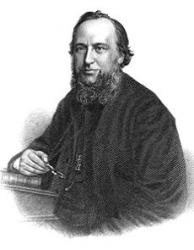
1839 - 1913 Person Name: Canon John Julian Author of "Great God, to thee our hearts we raise" in The Book of Common Praise Born: January 27, 1839, St. Agnes, Cornwall.
Died: January 22, 1913, Thirsk, Yorkshire, England.
Educated privately, Julian graduated from Durham University (MA 1887), Lambeth (DD 1894), and Howard University in Washington, DC (LLD 1894). He took Holy Orders in 1866, and served as Vicar of Wincobank (1876-1905) and Vicar of Topcliff, Yorkshire (1905-). However, he is best known as a hymnologist. The standard reference work in this field is his massive Dictionary of Hymnology: Origin and History of Christian Hymns and Hymnwriters of All Ages and Nations, Together with Biographical and Critical Notices of Their Authors and Translators. This work has been revised and reprinted several times; its publication dates include:
-- London: J. Murray, 1892
-- London: J. Murray, 1908 (this may be the edition revised by James Mearns (1855-1922), Vicar of Rushden, Hertfordshire)
--Grand Rapids, Michigan: Kregel Publications, 1985
His other works include:
Concerning Hymns, 1874
History of the Use of Hymns in Public Worship, and Their Proper Characteristics, 1894
Carols, Ancient and Modern, 1900
Julian donated his large collection of hymnological books and manuscripts to the Church House, Dean’s Yard, London, where it formed the hymnological department of the library.
www.hymntime.com/tch
John Julian
G. A. Simon
Person Name: George Albert Simons Author of "The World's Thy Parish" in Songs of Life
G. A. Simon
Edward Bickersteth
1786 - 1850 Person Name: Edward H Bickersteth Author of "For My Sake and the Gospel’s, go" in Redemption Hymnal
Edward Bickersteth
Walter John Mathams
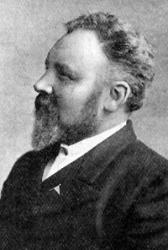
1853 - 1931 Person Name: Walter J. Mathams Author of "Lord Jesus Christ! For Love of Thee" in Worship and Song. (Rev. ed.) Mathams, Walter John, was born in London, Oct. 30, 1853. Early in life he went to sea; but on returning through Palestine to England he began to study for the Ministry. In 1874 he entered the Regent's Park Baptist College as a Student, and subsequently had a pastoral charge at Preston, Lancashire. In 1879, his health failing, he went for a time to Australia and other places. Returning to England, he became, in 1883, minister at Falkirk, Scotland, and in 1888, at Birmingham. Whilst a student, he published a small volume of hymns and poems as At Jesus' Feet, (1876). He is also the author of several religious books of a popular character, as: Fireside Parables, 1879; Sunday Parables, 1883, &c. His principal hymns are:—
1. Bright falls the morning light. Morning.
2. Gentle Jesus, full of grace. Learning of Christ.
3. Go, work for God, and do not say. Christian Work.
4. God loves the little sparrows. Divine Providence.
5. Jesus, Friend of little children. Child's Prayer to Christ.
6. My heart, 0 God, be wholly Thine. Consecration.
7. No room for Thee, Lord Jesus. No room for
Christ.
8. Reign in my heart, Great God. Consecration.
9. Sailing on the ocean. Life a Voyage.
Nos. 1 and 6 of these hymns first appeared in his At Jesus’ Feet, 1876. Mr. Mathams has written several other hymns which have appeared in magazines and elsewhere. One of these, "Good has come from Nazareth," has been set to music by Dr. E. J. Hopkins. The 9 hymns named above are mainly in Baptist hymnbooks. [Rev. W. R. Stevenson, M.A.]
-- John Julian, Dictionary of Hymnology (1907)
==============
Mathams, W. J. , p. 718, ii. Mr. Mathams entered the ministry of the Established Church of Scotland in 1900, acted for two years as chaplain to the Scottish forces in Egypt, and is now (1906) minister in charge of the parish of Stronsay, Orkney. His recent hymns include:—
1. Captain and Comrade of us all. [For Soldiers and Sailors.] Written and printed for use at a service held at Gourock Parish Church, April 10, 1904, on behalf of the Queen Victoria Memorial School for sons of Scottish sailors and soldiers.
2. From heights where God is reigning. [Boys' Brigade.] Written, 1905, for the S. S. Hymnary, 1905.
3. God is with us, God is with us. [Christian Warfare.] Written by request of the Nat. Council of Evang. Free Churches, first sung at their Congress at Nottingham, 1896, and published in the Christian Endeavour Hymnal, 1896.
4. Lord Jesus Christ! for love of Thee. [Christian Warfare.] Written in 1899, in connection with the Centenary Fund of the Congreg. Union. In the Sunday School Hymnary, 1905.
5. 0 Christ, sweet Rose of Sharon. [The Rose of Sharon.] Contributed to the Christian Endeavour Hymnal, 1896.
We may add that of the hymns noted at p. 718, ii., Nos. 2, 3, 4, 5, 8, 9 were contributed to the Baptist Psalms and Hymns for School and Home, 1882, and that No. 7, first printed as a leaflet in 1878, is in the Suppl. of 1880 to the Baptist Psalms and Hymns. [Rev. James Mearns, M.A.]
--John Julian, Dictionary of Hymnology, New Supplement (1907)
Walter John Mathams
George T. Coster
1835 - 1912 Person Name: G. T. Coster Author of "Serving One Another" in The Fellowship Hymn Book Coster, George Thomas, was born in 1835 at Chatham, Kent; studied for the Congregational Ministry at New College, London; ordained in 1859 at Newport, Essex, and has since held pastorates at Barnstaple, Hull, South Norwood, and Whitby. He has published (besides many sermons and tracts) Pastors and People, 1869; Allegories, 1878; Lorrin and other Poems, 1859; the Rhyme of St. Peter's Fall, 1871, and Poems and Hymns, 1882. He has also contributed several poems on Scripture characters (a line in which he excels) to The Poet's Bible, and edited, in 1869 Temperance Melodies and Religious Hymns. Of his hymns the following are in common use:—
1. Dost thou bow beneath the burthen. Fellowship with God. This is an imitation of Dr. Neale's "Art thou weary." It is No. 1112 in the 1880 Supplement to the Baptist Psalms and Hymns.
2. From north and south and east and west. Missions.
3. Lord of the sea! afar from land. Sabbath at Sea. Nos. 2 and 3 are in Horder's Congregational Hymns, 1884. [Rev. W. Garrett Horder]
--John Julian, Dictionary of Hymnology (1907)
===============
Coster, G. T., p. 263, i. The following hymns by Mr. Coster have been written and have come into common use since 1892:—
1. Going to the Father. [The Man of Sorrows.] Written in 1899, and published in his Hessle Hymns, 1901, No. 13, in 5 stanzas of 8 lines.
2. Lord God Almighty, in Thy hand. [Praise.] Written in 1897, and published in his Hessle Hymns, 1901, No. 3, in 7 stanzas of 4 lines, and entitled "We praise Thy power."
3. Lord of the gracious sunshine. [Temperance.] Written at the request of the Rev. W. G. Horder for his Hymns Supplemental on Oct. 51893. It is in extensive use in Great Britain and America. In the author'sHessle Hymns, 1901, No. 30, and entitled "A National Foe."
4. March on, 0 Soul, with strength. [Christian Battle Song.] Written in Bedford Park, London, Aug. 3, 1897, and printed in The Evangelical Magazine, Feb., 1898. In the Hessle Hymns, 1901, No. 29, in 6 stanzas of 6 lines, and headed "Battle Song." It is in common use in America, including The Pilgrim Hymnal, 1904, and others.
5. O Friend Divine! with Thee apart. [Fellowship with Christ.] First published in the Evangelical Magazine, Sept., 1900; also in his Hessle Hymns, 1901 No. 25, in 6 stanzas of 4 lines. Included in The Pilgrim Hymnal, 1904.
6. Skill and beauty from Thee live. [Opening of a Sale of Work.] First published in his Hymns and Poems, 1882, and again in his Hessle Hymns, 1901, No. 33, in 3 stanzas of 4 lines.
7. Thou Whose great baptismal hour. [Holy Baptism.] Written in 1892, at the request of W. G. Horder, for the Baptist edition of his Worship Song, and given therein 1895, No. 697; also in the Baptist Church Hymnal, 1900, No. 504, and the author's Hessle Hymns, 1901, No. 19.
8. We join with all in every place. [Holy Communion.] Written in 1891, and first published in Border's Hymns Supplemental, 1894, and the Hessle Hymns, 1901, No. 20, in 3 stanzas of 6 lines, and entitled “United Communion Service."
In addition to the above the following hymns are appearing in forthcoming collections:—
9. Comrades' names are on our banner. [National Hymn] Written at Scarborough, July, 1901, and printed in The Examiner (the weekly organ of the Congregational Churches), May 8, 1902; also in the author's When the Stars Appear, 1903, p. 11, in 6 stanzas of 6 lines, and entitled "Names on Our Banner."
10. King of the City Splendid. [National Hymn) Written at Bedford Park, London, Aug. 18, 1897, and printed in The Independent (Congregational weekly), Jan. 27, 1898. In his Hessle Hymns, 1901, No. 40, in 10 stanzas of 6 lines, and entitled "Prayer for our Cities."
Concerning the three hymns noted on p. 263, i., the author says :—
1. Dost thou bow beneath the burden! "It was
written in 1879, and first printed in the Evangelical Magazine, May, 1879." In the Hessle Hymns, 1901, No. 22.
2. From north and south, and east and west. "Originally written in 1864, and first printed in the Evangelical Magazine. In later collections it haft been considerably altered" In its varying forms it is the most widely known of the author's hymns. Authorised text in Hessle Hymns, 1901, No. 26.
3. Lord of the Sea, afar from land. "Written in 1874, and printed in The Christian World magazine, 1879." Included in Hessle Hymns, 1901, No. 31.
Since 1890 Mr. Coster has held the pastorates of Stroud and of Hessle, near Hull. He retired from the active ministry in 1902. His later poetical works include Collected Poems, 1890; Gloria Christi, 189G; Hessle Hymns, 1901; When the Stars appear, 1903; and Beams of Christ's Glory, 1904. In these works Mr. Coster has maintained his reputation as a writer of hymns.
--John Julian, Dictionary of Hymnology, New Supplement (1907)
George T. Coster
Ellen Gregory
1891 - 1976 Author of "Ĉe l' Kristofesto ĝojas ni" in TTT-Himnaro Cigneta Ellen Gregory, born 1891, died July 2, 1976, in Peasedown St. John, Bath, England, was a British Esperantist and author of original Esperanto verse for children. She learned the International Language before she was 20, and was active on its behalf for more than 65 years. She was a talented teacher, leading i.a. correspondence courses. Among her earliest and most successful pupils was her brother Mark Starr, an eminent figure in the international Esperanto movement, whom she taught as early as 1917. Under the pen name "Nenjo Rimanto" she brought out several Esperanto books for children. She also wrote the Christmas song "Cxe l' Kristofesto gxojas ni", one of the first such songs to be written originally in Esperanto.
Her works include ABC-rimoj por etuloj (1953), Ludiloj (1955), El Kornvalo (1958), Juveloj (1965), Rimoj por infanoj (1965), Versoj por infanoj (1966).
-- translated from the Esperanto Wikipedia
Ellen Gregory
Pages




