You help make Hymnary.org possible. More than 10 million people from 200+ countries found hymns, liturgical resources and encouragement on Hymnary.org in 2025, including you. Every visit affirms the global impact of this ministry.

If Hymnary has been meaningful to you this year, would you take a moment today to help sustain it? A gift of any size—paired with a note of encouragement if you wish—directly supports the server costs, research work and curation that keep this resource freely available to the world.

Give securely online today, or mail a check to:
Hymnary.org
Calvin University
3201 Burton Street SE
Grand Rapids, MI 49546

Thank you for your partnership, and may the hope of Advent fill your heart.

Person Results

Tune Identifier:"^bromley_clarke$"
In:people

Planning worship? Check out our sister site, ZeteoSearch.org, for 20+ additional resources related to your search.
Showing 11 - 20 of 20Results Per Page: 102050

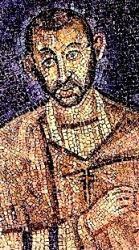
St. Ambrose

340 - 397 Person Name: St. Ambrose, 340-397 Author of "O Trinity of blessed light" in The Hymnal Ambrose (b. Treves, Germany, 340; d. Milan, Italy, 397), one of the great Latin church fathers, is remembered best for his preaching, his struggle against the Arian heresy, and his introduction of metrical and antiphonal singing into the Western church. Ambrose was trained in legal studies and distinguished himself in a civic career, becoming a consul in Northern Italy. When the bishop of Milan, an Arian, died in 374, the people demanded that Ambrose, who was not ordained or even baptized, become the bishop. He was promptly baptized and ordained, and he remained bishop of Milan until his death. Ambrose successfully resisted the Arian heresy and the attempts of the Roman emperors to dominate the church. His most famous convert and disciple was Augustine. Of the many hymns sometimes attributed to Ambrose, only a handful are thought to be authentic. Bert Polman ===================== Ambrosius (St. Ambrose), second son and third child of Ambrosius, Prefect of the Gauls, was born at Lyons, Aries, or Treves--probably the last--in 340 A.D. On the death of his father in 353 his mother removed to Rome with her three children. Ambrose went through the usual course of education, attaining considerable proficiency in Greek; and then entered the profession which his elder brother Satyrus had chosen, that of the law. In this he so distinguished himself that, after practising in the court of Probus, the Praetorian Prefect of Italy, he was, in 374, appointed Consular of Liguria and Aemilia. This office necessitated his residence in Milan. Not many months after, Auxentius, bishop of Milan, who had joined the Arian party, died; and much was felt to depend upon the person appointed as his successor. The church in which the election was held was so filled with excited people that the Consular found it necessary to take steps fur preserving the peace, and himself exhorted them to peace and order: when a voice suddenly exclaimed, "Ambrose is Bishop," and the cry was taken up on all sides. He was compelled to accept the post, though still only a catechumen; was forthwith baptized, and in a week more consecrated Bishop, Dec. 7, 374. The death of the Emperor Valentinian I., in 375, brought him into collision with Justina, Valentinian's second wife, an adherent of the Arian party: Ambrose was supported by Gratian, the elder son of Valentinian, and by Theodosius, whom Gratian in 379 associated with himself in the empire. Gratian was assassinated in 383 by a partisau of Maximus, and Ambrose was sent to treat with the usurper, a piece of diplomacy in which he was fairly successful. He found himself, however, left to carry on the contest with the Arians and the Empress almost alone. He and the faithful gallantly defended the churches which the heretics attempted to seize. Justina was foiled: and the advance of Maximus on Milan led to her flight, and eventually to her death in 388. It was in this year, or more probably the year before (387), that Ambrose received into the Church by baptism his great scholar Augustine, once a Manichaean heretic. Theodosius was now virtually head of the Roman empire, his colleague Valentinian II., Justina's son, being a youth of only 17. In the early part of 390 the news of a riot at Thessalonica, brought to him at Milan, caused him to give a hasty order for a general massacre at that city, and his command was but too faithfully obeyed. On his presenting himself a few days after at the door of the principal church in Milan, he was met by Ambrose, who refused him entrance till he should have done penance for his crime. It was not till Christmas, eight months after, that the Emperor declared his penitence, and was received into communion again by the Bishop. Valentinian was murdered by Arbogastes, a Frank general, in 392; and the murderer and his puppet emperor Eugenius were defeated by Theodosius in 394. But the fatigues of the campaign told on the Emperor, and he died the following year. Ambrose preached his funeral sermon, as he had done that of Valentinian. The loss of these two friends and supporters was a severe blow to Ambrose; two unquiet years passed, and then, worn with labours and anxieties, he himself rested from his labours on Easter Eve, 397. It was the 4th of April, and on that day the great Bishop of Milan is remembered by the Western Church, but Rome commemorates his consecration only, Dec. 7th. Great he was indeed, as a scholar, an organiser, a statesman; still greater as a theologian, the earnest and brilliant defender of the Catholic faith against the Arians of the West, just as Athanasius (whose name, one cannot but remark, is the same as his in meaning) was its champion against those of the East. We are now mainly concerned with him as musician and poet, "the father of Church song" as he is called by Grimm. He introduced from the East the practice of antiphonal chanting, and began the task, which St. Gregory completed, of systematizing the music of the Church. As a writer of sacred poetry he is remarkable for depth and severity. He does not warm with his subject, like Adam of St. Victor, or St. Bernard. "We feel," says Abp. Trench, "as though there were a certain coldness in his hymns, an aloofness of the author from his subject. "A large number of hymns has been attributed to his pen; Daniel gives no fewer than 92 called Ambrosian. Of these the great majority (including one on himself) cannot possibly be his; there is more or less doubt about the rest. The authorities on the subject are the Benedictine ed. of his works, the Psalterium, or Hymnary, of Cardinal Thomasius, and the Thesaurus Hymnologicus of Daniel. The Benedictine editors give 12 hymns as assignable to him, as follows:—1. Aeterna Christi munera. 2. Aeterne rerum Conditor. 3. Consors Paterni luminii. 4. Deus Creator omnium. 5. Fit porta Christi pervia, 6. Illuminans Altissimus. 7. Jam surgit hora tertia. 8. 0 Lux Beata Trinitas. 9. Orabo mente Dominum. 10. Somno refectis artubus. 11. Splendor Paternae gloriae. 12. Veni Redemptor gentium. Histories of these hymns, together with details of translations into English, are given in this work, and may be found under their respective first lines. The Bollandists and Daniel are inclined to attribute to St. Ambrose a hymn, Grates tibi Jesu novas, on the finding of the relics of SS. Gervasius and Protasius. These, we know, were discovered by him in 386, and it is by no means unlikely that the bishop should have commemorated in verse an event which he announces by letter to his sister Marcellina with so much satisfaction, not to say exultation.A beautiful tradition makes the Te Deum laudamus to have been composed under inspiration, and recited alternately, by SS. Ambrose and Augustine immediately after the baptism of the latter in 387. But the story rests upon a passage which there is every reason to consider spurious, in the Chronicon of Dacius, Bishop of Milan in 550. There is no hint of such an occurrence in the Confessions of St. Augustine, nor in Paulinue's life of St. Ambrose, nor in any authentic writing of St. Ambrose himself. The hymn is essentially a compilation, and there is much reason to believe, with Merati, that it originated in the 5th century, in the monastery of St. Honoratus at Lerins. [Te Deum.] -- John Julian, Dictionary of Hymnology (1907) Also known as: Ambrotio, Ambrosio de Milán Ambrosius Mediolanensis Ambrosius Saint, Bp. of Milan Ambrosius von Mailand Aurelio Ambrogio, Saint, Bishop of Milan Aurelius Ambrosius, Saint, Bishop of Milan Milan, d. 397

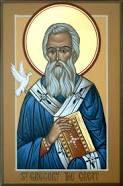
Pope Gregory I

540 - 604 Person Name: Gregory I, 540-604 Author (attributed to) of "O Blest Creator of the Light" in The Cyber Hymnal Gregory I., St., Pope. Surnamed The Great. Was born at Rome about A.D. 540. His family was distinguished not only for its rank and social consideration, but for its piety and good works. His father, Gordianus, said to have been the grandson of Pope Felix II. or III., was a man of senatorial rank and great wealth; whilst his mother, Silvia, and her sisters-in-law, Tarsilla and Aemiliana, attained the distinction of canonization. Gregory made the best use of his advantages in circumstances and surroundings, so far as his education went. "A saint among saints," he was considered second to none in Rome in grammar, rhetoric, and logic. In early life, before his father's death, he became a member of the Senate; and soon after he was thirty and accordingly, when his father died, he devoted the whole of the large fortune that he inherited to religious uses. He founded no less than six monasteries in Sicily, as well as one on the site of his own house at Rome, to which latter he retired himself in the capacity of a Benedictine monk, in 575. In 577 the then Pope, Benedict I, made him one of the seven Cardinal Deacons who presided over the seven principal divisions of Rome. The following year Benedict's successor, Pelagius II, sent him on an embassy of congratulation to the new emperor Tiberius, at Constantinople. After six years' residence at Constantinople he returned to Rome. It was during this residence at Rome, before he was called upon to succeed Pelagius in the Papal chair, that his interest was excited in the evangelization of Britain by seeing some beautiful children, natives of that country, exposed for sale in the slave-market there ("non Angli, sed Angeli"). He volunteered to head a mission to convert the British, and, having obtained the Pope's sanction for the enterprise, had got three days' journey on his way to Britain when he was peremptorily recalled by Pelagius, at the earnest demand of the Roman people. In 590 he became Pope himself, and, as is well known, carried out his benevolent purpose towards Britain by the mission of St. Augustine, 596. His Papacy, upon which he entered with genuine reluctance, and only after he had taken every step in his power to be relieved from the office, lasted until 604, when he died at the early age of fifty-five. His Pontificate was distinguished by his zeal, ability, and address in the administration of his temporal and spiritual kingdom alike, and his missionaries found their way into all parts of the known world. In Lombardy he destroyed Arianism; in Africa he greatly weakened the Donatists; in Spain he converted the monarch, Reccared: while he made his influence felt even in the remote region of Ireland, where, till his day, the native Church had not acknowledged any allegiance to the See of Rome. He advised rather than dictated to other bishops, and strongly opposed the assumption of the title of "Universal Patriarch" by John the Faster of Constantinople, on the ground that the title had been declined by the Pope himself at the Council of Chalcedon, and declared his pride in being called the “Servant of God's Servants." He exhibited entire toleration for Jews and heretics, and his disapproval of slavery by manumitting all his own slaves. The one grave blot upon his otherwise upright and virtuous character was his gross flattery in congratulating Phocas on his accession to the throne as emperor in 601, a position the latter had secured with the assistance of the imperial army in which he was a centurion, by the murder of his predecessor Mauricius (whose six sons had been slaughtered before their father's eyes), and that of the empress Constantina and her three daughters. Gregory's great learning won for him the distinction of being ranked as one of the four Latin doctors, and exhibited itself in many works of value, the most important of which are his Moralium Libri xxxv., and his two books of homilies on Ezekiel and the Gospels. His influence was also great as a preacher and many of his sermons are still extant, and form indeed no inconsiderable portion of his works that have come down to us. But he is most famous, perhaps, for the services he rendered to the liturgy and music of the Church, whereby he gained for himself the title of Magister Caeremoniarum. His Sacramentary, in which he gave its definite form to the Sacrifice of the Mass, and his Antiphonary, a collection which he made of chants old and new, as well as a school called Orplianotrophium, which he established at Rome for the cultivation of church singing, prove his interest in such subjects, and his success in his efforts to render the public worship of his day worthy of Him to Whom it was addressed. The Gregorian Tones, or chants, with which we are still familiar after a lapse of twelve centuries, we owe to his anxiety to supersede the more melodious and flowing style of church music which is popularly attributed to St. Ambrose, by the severer and more solemn monotone which is their characteristic. The contributions of St. Gregory to our stores of Latin hymns are not numerous, nor are the few generally attributed to him quite certainly proved to be his. But few as they are, and by whomsoever written, they are most of them still used in the services of the Church. In character they are well wedded to the grave and solemn music which St. Gregory himself is supposed to have written for them. The Benedictine editors credit St. Gregory with 8 hymns, viz. (1) “Primo dierum omnium;" (2) "Nocte surgentes vigilemus;" (3) "Ecce jam noctis tenuatur tunbra;" (4) “Clarum decus jejunii;" (5) "Audi benigne conditor;" (6) "Magno salutis gaudio;" (7) “Rex Christe factor omnium;" (8) "Lucis Creator Optime." Daniel in his vol. i. assigns him three others. (9) “Ecce tempus idoneum;" (10) "Summi largitor praemii;" (11) "Noctis tempus jam praeterit." For translations of these hymns see under their respective first lines. (For an elaborate account of St. Gregory, see Smith and Wace's Dictionary of Christian Biography.) [Rev. Digby S. Wrangham, M.A.] -- John Julian, Dictionary of Hymnology (1907) =================== Gregory I., St., Pope, p. 469, i. We have been unable to discover any grounds which justified the Benedictine editors and Daniel in printing certain hymns (see p. 470, i.) as by St. Gregory. Modern scholars agree in denying him a place among hymnwriters; e.g., Mr. F. H. Dudden, in his Gregory the Great (London, 1905, vol. i.,p. 276), says "The Gregorian authorship of these compositions [the hymns printed by the Benedictine editors] however cannot be maintained... Gregory contributed ... nothing at all to the sacred music and poetry of the Roman Church." [Rev. James Mearns, M.A.] --John Julian, Dictionary of Hymnology, New Supplement (1907)

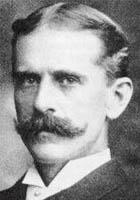
Henry Van Dyke

1852 - 1933 Person Name: Henry van Dyke Author of "Thy wisdom and thy might appear" in Hymns for the Living Age See biography and works at CCEL

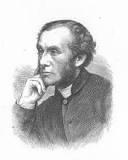
William Dalrymple Maclagan

1826 - 1910 Person Name: Archbishop W. D. Maclagan Author of "Be still, my soul, for God is near" in The Book of Common Praise Maclagan, William Dalrymple , D.D., son of David Maclagan, M.D., was born in Edinburgh, June 18, 1826. In early life he entered the army, and served for some time in India. Retiring with the rank of lieutenant, he entered St. Peter's College, Cambridge, where he graduated B.A. 1856 and M.A. in 1860. Taking Holy Orders, he was curate of St. Saviour's, Paddington, 1856-58, and St. Stephen's, Marylebone, 1858-60. He then became Secretary to the London Diocesan Church Building Society, from 1860 to 1865; curate of Enfield, 1865-69; Rector of Newington, 1869-75; and Vicar of Kensington, 1875-78. He was also Hon. Chaplain to the Queen, and Prebendary of Reculverland in St. Paul's Cathedral, London. In 1878 he was consecrated Bishop of Lichfield. Bishop Maclagan's work has been mainly of a practical character, and his publications are few. The few hymns which he has written have been received with great favour, and create a desire for more of the same kind and quality. The following are in common use.:— 1. Again the trumpet sounds. Missions. Written about 1870. Appeared in the Hymns Ancient & Modern Hymns Ancient & Modern series of Hymns for Mission Services. 1871. 2. Be still, my soul, for God is near. Holy Communion. Part ii. is “O Body, broken for my sake." Written about 1873 for St. Mary's, Newington. In Thring's Collection, 1882. 3. Holy Spirit, Lord of love. Confirmation. Written about 1873, and published in Mrs. C. Brock's Children's Hymn Book, 1884. 4. It is finished, blessed Jesus [Saviour]. Good Friday. Written for Hymns Ancient & Modern, 1875. In several collections. 5. Lord, when Thy Kingdom comes, remember me. Good Friday. Written for the 1875 ed. of Hymns Ancient & Modern. Sometimes given in two parts: Pt. ii. Beginning, “Lord, when with dying lips my prayer is said." 6. The Saints of God their conflict past. All Saints. First published in Church Bells, 1870; and again in the Society for Promoting Christian Knowledge Church Hymns, 1871. 7. What thanks and praise to Thee we owe. St. Luke. Written for the 1875 edition of Hymns Ancient & Modern These hymns are of more than usual merit, being characterized by great simplicity, tenderness, and fervour. The special season or purpose is clearly indicated, and its lessons earnestly enforced. -- John Julian, Dictionary of Hymnology (1907) ============= Maclagan, Abp. W. D., pp. 709, i.; 1578, ii. At the present time all Abp. Maclagan's hymns are in common use, and most of his tunes likewise. With regard to the latter, it is exceptional to find so many tunes by the author of popular hymns sharing the same popularity in the principal hymnals. In Church Hymnal, 1903, and Hymns Ancient & Modern, 1904, combined, there are eight of his tunes, whilst the hymns are six in all. --John Julian, Dictionary of Hymnology, New Supplement (1907)

Anne K. LeCroy

1930 - 2016 Person Name: Anne K. LeCroy, b. 1930 Translator of "O blest Creator, source of light" in The Hymnal 1982 Rev. Anne LeCroy was a professor of English at East Tennessee State University. Following her work as a translator she was a vocational deacon in the diocese of East Tennessee, serving St. Timothy's in Kingsport, and St. John's in Johnson City. Dianne Shapiro, from email sent by Rev. Margaret Zeller, Rector, St. Christopher's, Kingsport

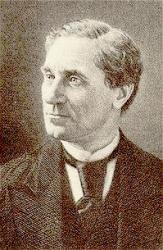
Octavius B. Frothingham

1822 - 1895 Author of "Thou, Lord of Hosts, Whose Guiding Hand" in A. M. E. C. Hymnal Frothingham, Octavius Brooks, M.A., son of Dr. N. L. Frothingham, was born at Boston, Nov. 26, 1822, and educated at Harvard, graduating in Arts, 1843, and in Theology, 1846. In 1847 he became Pastor at Salem, from whence he passed to Jersey City, 1855; and again to the 3rd Unitarian Society, New York, 1860. His works are numerous and well known. Mr. Frothingham is known as a leader of the Free Religious movement. His hymn, "Thou Lord of Hosts, Whose guiding hand" (Soldiers of the Cross), was written for the Graduating Exercise of the class of 1846 (see also "God of the earnest heart"), and published in the same year in Longfellow and Johnson's Book of Hymns, No. 425. It has been adopted by Dr. Martineau in his Hymns of Praise & Prayer, 1873. [Rev. F. M. Bird, M.A.] --John Julian, Dictionary of Hymnology (1907)

Philip A. Porter

b. 1953 Person Name: Philip A. Porter, 1953- Author of "The Wordless Mountains Bravely Still" in Singing the Living Tradition

M. M. Bridges

1863 - 1949 Person Name: M. M. B. Arranger of "BROMLEY" in Hymns

Rosalie M. Cody

Author of "Almighty one, whose tender thought" in Hymns for the Living Age

David Evans

1874 - 1948 Person Name: David Evans, 1874-1948 Harmonizer of "BROMLEY" in Together in Song David Evans (b. Resolven, Glamorganshire, Wales, 1874; d. Rosllannerchrugog, Denbighshire, Wales, 1948) was an important leader in Welsh church music. Educated at Arnold College, Swansea, and at University College, Cardiff, he received a doctorate in music from Oxford University. His longest professional post was as professor of music at University College in Cardiff (1903-1939), where he organized a large music department. He was also a well-known and respected judge at Welsh hymn-singing festivals and a composer of many orchestral and choral works, anthems, service music, and hymn tunes. Bert Polman

Pages


Export as CSV
It looks like you are using an ad-blocker. Ad revenue helps keep us running. Please consider white-listing Hymnary.org or getting Hymnary Pro to eliminate ads entirely and help support Hymnary.org.