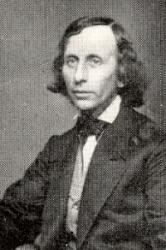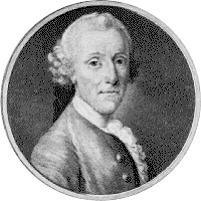
1715 - 1769 Person Name: Christian F. Gellert Author of "Who Keepeth Not God's Word" in The Cyber Hymnal Gellert, Christian Fürchtegott, son of Christian Gellert, pastor at Hainichen in the Saxon Harz, near Freiberg, was born at Hainichen, July 4, 1715. In 1734 he entered the University of Leipzig as a student of theology, and after completing his course acted for some time as assistant to his father. But then, as now, sermons preached from manuscript were not tolerated in the Lutheran Church, and as his memory was treacherous, he found himself compelled to try some other profession. In 1739 he became domestic tutor to the sons of Herr von Lüttichau, near Dresden, and in 1741 returned to Leipzig to superintend the studies of a nephew at the University. He also resumed his own studies. He graduated M.A. 1744; became in 1745 private tutor or lecturer in the philosophical faculty; and was in 1751 appointed extraordinary professor of philosophy, lecturing on poetry and rhetoric, and then on moral philosophy. An ordinary professorship offered to him in 1761 he refused, as he did not feel strong enough to fulfil its duties, having been delicate from a child, and after 1752 suffering very greatly from hypochondria. He died at Leipzig, Dec. 13, 1769 (Koch, vi. 263-277; Allgemeine Deutsche Biographie, viii. 544-549, &c).
As a professor, Gellert was most popular, numbering Goethe and Lessing among his pupils, and won from his students extraordinary reverence and affection, due partly to the warm interest he took in their personal conduct and welfare. In his early life he was one of the contributors to the Bremer Beiträge; and was one of the leaders in the revolt against the domination of Gottsched and the writers of the French school. His Fables (1st Ser. 1746; 2nd 1748), by their charm of style, spirit, humour and point, may justly be characterised as epoch-making, won for him universal esteem and influence among his contemporaries of all classes, and still rank among the classics of German literature.
As a hymnwriter he also marks an epoch; and while in the revival of churchly feeling the hymns of the Rationalistic period of 1760 to 1820 have been ignored by many recent compilers, yet the greatest admirers of the old standard hymns have been fain to stretch their area of selection from Luther to Gellert. He prepared himself by prayer for their composition, and selected the moments when his mental horizon was most unclouded. He was distinguished by deep and sincere piety, blameless life, and regularity in attendance on the services of the Church. His hymns are the utterances of a sincere Christian morality, not very elevated or enthusiastic, but genuine expressions of his own feelings and experiences; and what in them he preached he also put in practice in his daily life. Many are too didactic in tone, reading like versifications of portions of his lectures on morals, and are only suited for private use. But in regard to his best hymns, it may safely be said that their rational piety and good taste, combined with a certain earnestness and pathos, entitle them to a place among the classics of German hymnody. They exactly met the requirements of the time, won universal admiration, and speedily passed into the hymnbooks in use over all Germany, Roman Catholic as well as Lutheran.
Two of Gellert's hymns are noted under their own first lines, viz., "Jesus lebt, mit ihm auch ich," and "Wie gross ist des All-mächtgen Güte." The following have also passed into English, almost all being taken from his Geistliche Oden und Lieder, a collection of 54 hymns first published at Leipzig, 1757, and which has passed through very numerous editions:—
I. Hymns in English common use:
i. An dir allein, an dir hab ich gesündigt. Lent. 1757, p. 102, in 6 stanzas of 4 lines, entitled "Hymn of Penitence." In Zollikofer's Gesange-Buch, 1766, and the Berlin Geistliche Lieder S., ed. 1863, No. 499. Translated as:—
Against Thee only have I sinn'd, I own it. A good and full version, by Miss Wink worth, as No. 42 in her Chorale Book for England, 1863.
Another translation is:— "Against Thee, Lord, Thee only my transgression," by N. L. Frothingham, 1870, p. 241.
ii. Dies ist der Tag, den Gott gemacht. Christmas. One of his best and most popular hymns. 1757, p. 72, in 11 stanzas of 4 lines, repeated in the Berlin Gesang-Buch, 1765, No. 55, and the Berlin Geistliche Lieder S. ed. 1863, No. 154. Translated as:—
This is the day the Lord hath made, O'er all the earth. A translation of stanzas i.-iii., x., by Miss Borthwick, as No. 22 in Dr. Pagenstecher's Collection, 1864, and included in Hymns from the Land of Luther, 1884, p. 256.
Other trs. are:—(1) "This is the day which God ordains," by Dr. G. Walker, 1860, p. 27. (2) "This day shall yet by God's command," in the Family Treasury, 1811, p. 278.
iii. Für alle Güte sei gepreist. Evening. 1757, p. 85, in 4 stanzas of 6 lines, included in Zollikofer's Gesang-Buch 1766, No. 78, and the Berlin Geistliche Lieder S., ed. 1863, No. 1160. Translated as:—
To Father, Son, and Spirit praise. A good and full translation by A. T. Russell, as No. 7 in his Psalms & Hymns, 1851.
Another translation is: — "For all Thy kindness laud I Thee," by H. J. Buckoll, 1842, p. 96.
iv. Gott ist mein Lied. Praise. On God's Might and Providence. 1757, p. 78, in 15 st. of 5 1. In the Berlin Geistliche Lieder S.., ed. 1863, No. 24. Translated as:—
God is my song, His praises I'll repeat, A free translation of stanzas i.-v., as No. 94 in Sir John Bowring's Hymns, 1825. Repeated, omitting stanza ii., as No. 114 in Dale's English Hymn Book, 1875.
Other translations are:— (1) “Of God I sing," by Dr. H. Mills, 1856, p. 11. (2) "God is my song, With sovereign," by N. L. Frothingham, 1870, p. 243.
v. Wenn ich, o Schöpfer, deine Macht. Praise. This fine hymn of Praise for Creation and Providence was first published 1757, p. 62, in 6 stanzas of 7 lines. In the Berlin Gesang-Buch, 1765, No. 25, and Berlin Geistliche Lieder S.ed. 1863, No. 72. Translated as:—-
Thou Great First Cause! when of Thy skill. In full in Dr. H. Mills's Horae Germanicae, 1845 (1856, p. 5). Stanzas ii., iii., v., vi., altered and beginning, "The earth, where'er I turn mine eye," are in the American Lutheran General Synod's Collection, 1852.
Other trs. are:— (1) "When, O my dearest Lord, I prove," by Miss Dunn, 1857, p. 80. (2) "Creator! when I see Thy might," in Madame de Pontes's Poets and Poetry of Germany, 1858, v. i. p. 472. (3) "When I, Creator, view Thy might," by Miss Manington, 1863.
vi. Wer Gottes Wort nicht halt, und spricht. Faith in Works. This didactic hymn on Faith proved by Works, was first published 1757, p. 49, in 5 stanzas of 6 lines. In Zollikofer's Gesang-Buch, 1766, and the Berlin Geistliche Lieder S. ed. 1863, No. 72. Translated as:—
Who keepeth not God's Word, yet saith. A good and full translation by Miss Winkworth, in her Lyra Germanica, 2nd Ser., 1858, p. 161. A greatly altered version of stanzas ii.—v., beginning, "True faith in holy life will shine," was included as No. 418 in Kennedy, 1863, and repeated in the Ibrox Hymnal 1871, J. L. Porter's Collection 1876, and others.
II. Hymns not in English common use:
vii. Auf Gott, und nicht auf meinen Rath. Trust in God's Providence. 1757, p. 134, in 6 stanzas. Translated as: (1) "Rule Thou my portion, Lord, my skill," by Dr. H. Mills, 1845 (1856, p. 164). (2) "On God and on no earthly trust," by J. D. Burns, in his Remains, 1869.
viii. Auf, schicke dich. Christmas. 1757, p. 109, in 1 stanza. Translated as, "Come, tune your heart," by Miss Cox, 1841, p. 17 (1864, p. 39).
ix. Dein Heil, o Christ! nicht zu verscherzen. Prayer. 1757, p. 6, in 14 stanzas of 8 lines. In J. A. Schlegel's Geistliche Gesänge, 3rd Ser., 1772, p. 193, recast as "Zu deinem Gotte beten," in 5 stanzas of 12 lines; and this in the Kaiserwerth Lieder-Buch für Kleinkinderschulen, 1842, No. 208, appears "Zu Gott im Himmel beten," in 8 stanzas of 4 lines. The 1842 was translated as, "O how sweet it is to pray," by Mrs. Bevan, 1859, p. 148.
x. Der Tag ist wieder hin, und diesen Theil des Lebens. Evening. 1757, p. 13, in 10 stanzas, as "Self-Examination at Eventide." Translated as,"Another day is ended," by Miss Warner, 1869 (1871, p. 9).
xi. Du klagst, und fühlest die Beschwerden. Contentment. 1757, p. 91, in 8 stanzas. Translated as "Thy wounded spirit feels its pain," by Dr. B. Maguire, 1883, p. 153.
xii. Erinnre dich, mein Geist, erfreut. Easter. 1757, p. 27, in 13 stanzas. Translated as, "Awake, my soul, and hail the day," in Dr. J. D. Lang's Aurora Australis, Sydney, 1826, p. 43.
xiii. Er ruft der Sonn, und schafft den Mond. New Year. 1757, p. 154, in 6 stanzas. In the Berlin Gesang-Buch, 1765, No. 233, as "Gott ruft." Translated as, “Lord, Thou that ever wast and art," in the British Magazine, Jan., 1838, p. 36.
xiv. Gott, deine Güte reicht so weit. Supplication. 1757, p. 1, in 4 stanzas, founded on 1 Kings iii. 5-14. The translations are: (1) "O God, Thy goodness doth extend, Far as," by Dr. J. D. Lang, 1826, p. 10. (2) "Behold! Thy goodness, oh my God," by Miss Fry, 1845, p. 78.
xv. Gott ist mein Hort. Holy Scripture. 1757, p. 70, in 8 stanzas. Translated as, "I trust the Lord, Upon His word," by Dr. H. Mills, 1845 (1856, p. 23).
xvi. Herr, der du mir das Leben. Evening. 1757, p. 121, in 5 stanzas. Translated as, "By Thee, Thou Lord of Heaven," by H. J. Buckoll, 1842, p. 97.
xvii. Herr, starke mich, dein Leiden su bedenken. Passiontide. 1757, p. 123, in 22 stanzas. Translated as, "Clothe me, oh Lord, with strength! that I may dwell” by Miss Fry, 1859, p. 153.
xviii. Ich hab in guten Stunden. For the Sick. 1757, p. 128, in 6 stanzas. [See the Story of a Hymn, in the Sunday at Home for Sept., 1865.] Translated as: (1) “I have had my days of blessing," by Mrs. Findlater, in Hymns from the Land of Luther, 1855, p. 60. (2) "Once, happy hours with blessings crowned," by A. B. H., in the Day of Rest, 1877, p. 405.
xix. Ich komme, Herr, und suche dich. Holy Communion. 1757, p. 89, in 5 stanzas. The translations are: (1) "I come, 0 Lord, and seek for Thee," by Miss Manington, 1863, p. 14. (2) “Weary and laden with my load, I come," by Dr. B. Maguire, 1872, p. 178.
xx. Ich komme vor dein Angesicht. Supplication. 1757, p. 140. in 13 stanzas. The translations are: (1) "Great God, I bow before Thy face," by Dr. J. D. Lang, 1826, p. 23. (2) “Now in Thy presence I appear," by Dr. H. Mills, 1845 (1856, p. 137).
xxi. Mein erst Gefühl sei Preis und Dank. Morning. 1757, p. 55, in 12 stanzas. Translated as, "I bless Thee, Lord, Thou God of might," beginning with st. vi., by H. J. Buckoll, 1842, p. 56.
xxii. Nach einer Prüfung kurzer Tage. Eternal Life. 1757, p. 158, in 12 stanzas, as "The Consolation of Eternal Life." Though hardly a hymn for congregational use and too individualised, it has been a very great favourite in Germany. In the Berlin Gesang-Buch, 1765, 132, and the Berlin Geistliche Liedersegen, ed. 1863, No. 1483. The translations are: (1) "A few short days of trial past," in Miss Knight's Prayers and Hymns from the German, 1812 (1832, p. 107). (2) "A few short hours of transient joy," by Dr. J. D. Lang, 1826, p. 123. (3) “When these brief trial-days are past," by J. Sheppard, 1857, p. 98. (4) “A few short days of trial here,” by Miss Burlingham, in the British Herald, July 1865, p. 98. (5) "Our few short years of trial o'er," by Dr. J. Guthrie, 1869, d. 124. (6) “When these brief trial-days are spent," by Miss Winkworth, 1869, p. 318. (7) "A few more days, a few more years," by Dr. R. Maguire, 1883, p. 165.
xxiii 0 Herr, mein Gott! durch den ich bin und lebe. Resignation to the will of God. 1757, p. 152. in 7 st. Translated as, "In Thee, my God, I live and move," by Dr. R. Maguire, 1883, p. 113.
xxiv. So hoff’ ich denn mit festem Muth . Assurance of the Grace of God. 1757, p. 115, in 4 stanzas. The translations are: (1) "Firm is my hope of future good," by Dr. H. Mills, 1845 (1856, p. 188). (2) “In Thee, O Lord, my hope hath stood," by Dr. R. Maguire, 1872.
zzv. Was ists dast ich mich quäle. Patience. 1757, p. 17, in 7 stanzas. The translations are: (1) "O foolish heart, be still," by Miss Warner, 1858 (1861, p. 452), repeated in Bishop Ryle's Collection, 1860, No. 181 (2) “What billows these that o'er thee roll," by Dr. R. Maguire, 1872.
xxvi. Wie sicher lebt der Mensch, der Staub. For the Dying. 1757, p. 149, in 14 stanzas. Translated as, "How heedless, how secure is man!" by Dr. H. Mills, 1845 (1856, p. 238).
One or two recasts from Gellert's Lehrgedichte und Erzählungen, Leipzig, 1754, came into German common use, and one has passed into English, viz.:—
xxvii. Mensch, der du Christus schmähst, was ist in ihrer Lehre. Love to Mankind. 1754, pp. 27-56, being a poem entitled “The Christian." A recast from portions of this made by J. S. Diterich, beginning "Gieb mir, O Gott, ein Herz," in 9 stanzas, appears as No. 219 in the Berlin Gesang-Buch, 1765; and has been translated as "Grant me, O God! a tender heart," by Miss Knight, 1812 (1832, p. 97). [Rev. James Mearns, M.A.]
-- John Julian, Dictionary of Hymnology (1907)
Christian Fürchtegott Gellert


 My Starred Hymns
 My FlexScores
 My Hymnals
 My Purchased Files