You help make Hymnary.org possible. More than 10 million people from 200+ countries found hymns, liturgical resources and encouragement on Hymnary.org in 2025, including you. Every visit affirms the global impact of this ministry.

If Hymnary has been meaningful to you this year, would you take a moment today to help sustain it? A gift of any size—paired with a note of encouragement if you wish—directly supports the server costs, research work and curation that keep this resource freely available to the world.

Give securely online today, or mail a check to:
Hymnary.org
Calvin University
3201 Burton Street SE
Grand Rapids, MI 49546

Thank you for your partnership, and may the hope of Advent fill your heart.

Person Results

Tune Identifier:"^selma_scottish$"
In:people

Planning worship? Check out our sister site, ZeteoSearch.org, for 20+ additional resources related to your search.
Showing 11 - 17 of 17Results Per Page: 102050

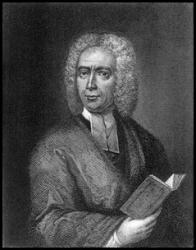
Isaac Watts

1674 - 1748 Person Name: Isaac Watts, 1674-1748 Author of "My soul, repeat His praise" in The Methodist Hymn-Book with Tunes Isaac Watts was the son of a schoolmaster, and was born in Southampton, July 17, 1674. He is said to have shown remarkable precocity in childhood, beginning the study of Latin, in his fourth year, and writing respectable verses at the age of seven. At the age of sixteen, he went to London to study in the Academy of the Rev. Thomas Rowe, an Independent minister. In 1698, he became assistant minister of the Independent Church, Berry St., London. In 1702, he became pastor. In 1712, he accepted an invitation to visit Sir Thomas Abney, at his residence of Abney Park, and at Sir Thomas' pressing request, made it his home for the remainder of his life. It was a residence most favourable for his health, and for the prosecution of his literary labours. He did not retire from ministerial duties, but preached as often as his delicate health would permit. The number of Watts' publications is very large. His collected works, first published in 1720, embrace sermons, treatises, poems and hymns. His "Horae Lyricae" was published in December, 1705. His "Hymns" appeared in July, 1707. The first hymn he is said to have composed for religious worship, is "Behold the glories of the Lamb," written at the age of twenty. It is as a writer of psalms and hymns that he is everywhere known. Some of his hymns were written to be sung after his sermons, giving expression to the meaning of the text upon which he had preached. Montgomery calls Watts "the greatest name among hymn-writers," and the honour can hardly be disputed. His published hymns number more than eight hundred. Watts died November 25, 1748, and was buried at Bunhill Fields. A monumental statue was erected in Southampton, his native place, and there is also a monument to his memory in the South Choir of Westminster Abbey. "Happy," says the great contemporary champion of Anglican orthodoxy, "will be that reader whose mind is disposed, by his verses or his prose, to imitate him in all but his non-conformity, to copy his benevolence to men, and his reverence to God." ("Memorials of Westminster Abbey," p. 325.) --Annotations of the Hymnal, Charles Hutchins, M.A., 1872. ================================= Watts, Isaac, D.D. The father of Dr. Watts was a respected Nonconformist, and at the birth of the child, and during its infancy, twice suffered imprisonment for his religious convictions. In his later years he kept a flourishing boarding school at Southampton. Isaac, the eldest of his nine children, was born in that town July 17, 1674. His taste for verse showed itself in early childhood. He was taught Greek, Latin, and Hebrew by Mr. Pinhorn, rector of All Saints, and headmaster of the Grammar School, in Southampton. The splendid promise of the boy induced a physician of the town and other friends to offer him an education at one of the Universities for eventual ordination in the Church of England: but this he refused; and entered a Nonconformist Academy at Stoke Newington in 1690, under the care of Mr. Thomas Rowe, the pastor of the Independent congregation at Girdlers' Hall. Of this congregation he became a member in 1693. Leaving the Academy at the age of twenty, he spent two years at home; and it was then that the bulk of the Hymns and Spiritual Songs (published 1707-9) were written, and sung from manuscripts in the Southampton Chapel. The hymn "Behold the glories of the Lamb" is said to have been the first he composed, and written as an attempt to raise the standard of praise. In answer to requests, others succeeded. The hymn "There is a land of pure delight" is said to have been suggested by the view across Southampton Water. The next six years of Watts's life were again spent at Stoke Newington, in the post of tutor to the son of an eminent Puritan, Sir John Hartopp; and to the intense study of these years must be traced the accumulation of the theological and philosophical materials which he published subsequently, and also the life-long enfeeblement of his constitution. Watts preached his first sermon when he was twenty-four years old. In the next three years he preached frequently; and in 1702 was ordained pastor of the eminent Independent congregation in Mark Lane, over which Caryl and Dr. John Owen had presided, and which numbered Mrs. Bendish, Cromwell's granddaughter, Charles Fleetwood, Charles Desborough, Sir John Hartopp, Lady Haversham, and other distinguished Independents among its members. In this year he removed to the house of Mr. Hollis in the Minories. His health began to fail in the following year, and Mr. Samuel Price was appointed as his assistant in the ministry. In 1712 a fever shattered his constitution, and Mr. Price was then appointed co-pastor of the congregation which had in the meantime removed to a new chapel in Bury Street. It was at this period that he became the guest of Sir Thomas Abney, under whose roof, and after his death (1722) that of his widow, he remained for the rest of his suffering life; residing for the longer portion of these thirty-six years principally at the beautiful country seat of Theobalds in Herts, and for the last thirteen years at Stoke Newington. His degree of D.D. was bestowed on him in 1728, unsolicited, by the University of Edinburgh. His infirmities increased on him up to the peaceful close of his sufferings, Nov. 25, 1748. He was buried in the Puritan restingplace at Bunhill Fields, but a monument was erected to him in Westminster Abbey. His learning and piety, gentleness and largeness of heart have earned him the title of the Melanchthon of his day. Among his friends, churchmen like Bishop Gibson are ranked with Nonconformists such as Doddridge. His theological as well as philosophical fame was considerable. His Speculations on the Human Nature of the Logos, as a contribution to the great controversy on the Holy Trinity, brought on him a charge of Arian opinions. His work on The Improvement of the Mind, published in 1741, is eulogised by Johnson. His Logic was still a valued textbook at Oxford within living memory. The World to Come, published in 1745, was once a favourite devotional work, parts of it being translated into several languages. His Catechisms, Scripture History (1732), as well as The Divine and Moral Songs (1715), were the most popular text-books for religious education fifty years ago. The Hymns and Spiritual Songs were published in 1707-9, though written earlier. The Horae Lyricae, which contains hymns interspersed among the poems, appeared in 1706-9. Some hymns were also appended at the close of the several Sermons preached in London, published in 1721-24. The Psalms were published in 1719. The earliest life of Watts is that by his friend Dr. Gibbons. Johnson has included him in his Lives of the Poets; and Southey has echoed Johnson's warm eulogy. The most interesting modern life is Isaac Watts: his Life and Writings, by E. Paxton Hood. [Rev. H. Leigh Bennett, M.A.] A large mass of Dr. Watts's hymns and paraphrases of the Psalms have no personal history beyond the date of their publication. These we have grouped together here and shall preface the list with the books from which they are taken. (l) Horae Lyricae. Poems chiefly of the Lyric kind. In Three Books Sacred: i.To Devotion and Piety; ii. To Virtue, Honour, and Friendship; iii. To the Memory of the Dead. By I. Watts, 1706. Second edition, 1709. (2) Hymns and Spiritual Songs. In Three Books: i. Collected from the Scriptures; ii. Composed on Divine Subjects; iii. Prepared for the Lord's Supper. By I. Watts, 1707. This contained in Bk i. 78 hymns; Bk. ii. 110; Bk. iii. 22, and 12 doxologies. In the 2nd edition published in 1709, Bk. i. was increased to 150; Bk. ii. to 170; Bk. iii. to 25 and 15 doxologies. (3) Divine and Moral Songs for the Use of Children. By I. Watts, London, 1715. (4) The Psalms of David Imitated in the Language of the New Testament, And apply'd to the Christian State and Worship. By I. Watts. London: Printed by J. Clark, at the Bible and Crown in the Poultry, &c, 1719. (5) Sermons with hymns appended thereto, vol. i., 1721; ii., 1723; iii. 1727. In the 5th ed. of the Sermons the three volumes, in duodecimo, were reduced to two, in octavo. (6) Reliquiae Juveniles: Miscellaneous Thoughts in Prose and Verse, on Natural, Moral, and Divine Subjects; Written chiefly in Younger Years. By I. Watts, D.D., London, 1734. (7) Remnants of Time. London, 1736. 454 Hymns and Versions of the Psalms, in addition to the centos are all in common use at the present time. --Excerpts from John Julian, Dictionary of Hymnology (1907) ================================== Watts, I. , p. 1241, ii. Nearly 100 hymns, additional to those already annotated, are given in some minor hymn-books. --John Julian, Dictionary of Hymnology, Appendix, Part II (1907) ================= Watts, I. , p. 1236, i. At the time of the publication of this Dictionary in 1892, every copy of the 1707 edition of Watts's Hymns and Spiritual Songs was supposed to have perished, and all notes thereon were based upon references which were found in magazines and old collections of hymns and versions of the Psalms. Recently three copies have been recovered, and by a careful examination of one of these we have been able to give some of the results in the revision of pp. 1-1597, and the rest we now subjoin. i. Hymns in the 1709 ed. of Hymns and Spiritual Songs which previously appeared in the 1707 edition of the same book, but are not so noted in the 1st ed. of this Dictionary:— On pp. 1237, L-1239, ii., Nos. 18, 33, 42, 43, 47, 48, 60, 56, 58, 59, 63, 75, 82, 83, 84, 85, 93, 96, 99, 102, 104, 105, 113, 115, 116, 123, 124, 134, 137, 139, 146, 147, 148, 149, 162, 166, 174, 180, 181, 182, 188, 190, 192, 193, 194, 195, 197, 200, 202. ii. Versions of the Psalms in his Psalms of David, 1719, which previously appeared in his Hymns and Spiritual Songs, 1707:— On pp. 1239, U.-1241, i., Nos. 241, 288, 304, 313, 314, 317, 410, 441. iii. Additional not noted in the revision:— 1. My soul, how lovely is the place; p. 1240, ii. 332. This version of Ps. lxiv. first appeared in the 1707 edition of Hymns & Spiritual Songs, as "Ye saints, how lovely is the place." 2. Shine, mighty God, on Britain shine; p. 1055, ii. In the 1707 edition of Hymns & Spiritual Songs, Bk. i., No. 35, and again in his Psalms of David, 1719. 3. Sing to the Lord with [cheerful] joyful voice, p. 1059, ii. This version of Ps. c. is No. 43 in the Hymns & Spiritual Songs, 1707, Bk. i., from which it passed into the Ps. of David, 1719. A careful collation of the earliest editions of Watts's Horae Lyricae shows that Nos. 1, 7, 9, 10, 11, 12, 14, 16, p. 1237, i., are in the 1706 ed., and that the rest were added in 1709. Of the remaining hymns, Nos. 91 appeared in his Sermons, vol. ii., 1723, and No. 196 in Sermons, vol. i., 1721. No. 199 was added after Watts's death. It must be noted also that the original title of what is usually known as Divine and Moral Songs was Divine Songs only. --John Julian, Dictionary of Hymnology, New Supplement (1907) =========== See also in: Hymn Writers of the Church

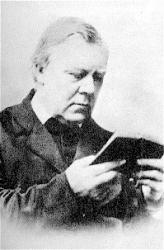
James Drummond Burns

1823 - 1864 Person Name: James Drummond Burns, 1823-64 Author of "Still with Thee, O my God" in The Methodist Hymn-Book with Tunes Burns, James Drummond, M.A., was born at Edinburgh, February 18, 1823. He studied and graduated M.A. at the University of Edinburgh. In 1845 he became Free Church minister of Dunblane, but resigned through failing health, in 1848, and took charge of the Presbyterian Church at Funchal, Madeira. In 1855 he became minister of Hampstead Presbyterian Church, London. Died at Mentone, Nov. 27, 1864, and was buried in Highgate Cemetery, London. His hymns appeared in:— (l) The Vision of Prophecy: and other Poems (Edin., Edmonston and Douglas). This was originally published in 1854, and enlarged in 1858. The Poems are distinguished by vivid colouring and poetic imagination, along with directness, delicacy of execution, pensive sweetness, and tenderness. They have never however become widely popular. Included are 29 "Hymns and Meditations," many of which rank among the very best of our modern hymns for beauty, simplicity of diction, and depth of religious feeling. (2) The Evening Hymn (Lond., T. Nelson & Sons), 1857. This consists of an original hymn and an original prayer for every evening in the month— 31 in all. The Hymns and Prayers alike are characterised by reverence, beauty, simplicity, and pathos. Some of the hymns in this volume are now well known; e.g. "Still with Thee, 0 my God," "Hushed was the evening hymn," "As helpless as a child who clings." (3) Memoir and Remains of the late Rev. James D. Burns, M.A., of Hampstead. By the late Rev. James Hamilton, D.D. (London, J. Nisbet & Co.), 1869. Besides 13 Sermons and the Memoir, this work includes 40 “Hymns and Miscellaneous Pieces." A number of these had appeared in periodicals. Some of them are very good though not equal to those previously published. Also 39 translations of German hymns, which appeared in the Family Treasury, &c., are rendered exactly in the metres of the originals and many had not previously been translated. The translations are generally very good. (4) Burns also wrote the article Hymn in the 8th edition of the Encyclopedia Britannica. [Rev. James Mearns, M.A.] -- John Julian, Dictionary of Hymnology (1907) ===================== Burns, James Drummond, p, 197, i. Additional hymns in common use are:— 1. Not, Lord, unto that mount of dread. Safety in Christ. From Vision of Prophecy, 1st ed., 1854, p. 266. 2. O Thou whose tender [sacred] feet have trod. Resignation. From Vision of Prophecy, 1st ed., 1854, p. 227. 3. Thou, Lord, art love, and everywhere. Divine Love. From Vision of Prophecy, 2nd ed., 1858, p. 275. --John Julian, Dictionary of Hymnology, Appendix, Part II (1907) See also in: Hymn Writers of the Church

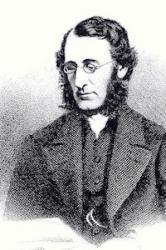
Edward Caswall

1814 - 1878 Person Name: Edward Caswall (1814-1878) Translator of "To Christ the Prince of peace" in The Summit Choirbook Edward Caswall was born in 1814, at Yately, in Hampshire, where his father was a clergyman. In 1832, he went to Brasenose College, Oxford, and in 1836, took a second-class in classics. His humorous work, "The Art of Pluck," was published in 1835; it is still selling at Oxford, having passed through many editions. In 1838, he was ordained Deacon, and in 1839, Priest. He became perpetural Curate of Stratford-sub-Castle in 1840. In 1841, he resigned his incumbency and visited Ireland. In 1847, he joined the Church of Rome. In 1850, he was admitted into the Congregation of the Oratory at Birmingham, where he has since remained. He has published several works in prose and poetry. --Annotations of the Hymnal, Charles Hutchins, M.A. 1872 ===================== Caswall, Edward, M.A., son of the Rev. R. C. Caswall, sometime Vicar of Yately, Hampshire, born at Yately, July 15, 1814, and educated at Brasenose College, Oxford, graduating in honours in 1836. Taking Holy Orders in 1838, he became in 1840 Incumbent of Stratford-sub-Castle, near Salisbury, and resigned the same in 1847. In 1850 (Mrs. Caswall having died in 1849) he was received into the Roman Catholic communion, and joined Dr. Newman at the Oratory, Edgbaston. His life thenceforth, although void of stirring incidents, was marked by earnest devotion to his clerical duties and a loving interest in the poor, the sick, and in little children. His original poems and hymns were mostly written at the Oratory. He died at Edgbaston, Jan. 2, 1878, and was buried on Jan. 7 at Redwall, near Bromsgrove, by his leader and friend Cardinal Newman. Caswall's translations of Latin hymns from the Roman Breviary and other sources have a wider circulation in modern hymnals than those of any other translator, Dr. Neale alone excepted. This is owing to his general faithfulness to the originals, and the purity of his rhythm, the latter feature specially adapting his hymns to music, and for congregational purposes. His original compositions, although marked by considerable poetical ability, are not extensive in their use, their doctrinal teaching being against their general adoption outside the Roman communion. His hymns appeared in:— (1) Lyra Catholica, which contained 197 translations from the Roman Breviary, Missal, and other sources. First ed. London, James Burns, 1849. This was reprinted in New York in 1851, with several hymns from other sources added thereto. This edition is quoted in the indices to some American hymn-books as Lyra Cath., as in Beecher's Plymouth Collection, 1855, and others. (2) Masque of Mary, and Other Poems, having in addition to the opening poem and a few miscellaneous pieces, 53 translations, and 51 hymns. 1st ed. Lon., Burns and Lambert, 1858. (3) A May Pageant and Other Poems, including 10 original hymns. Lon., Burns and Lambert, 1865. (4) Hymns and Poems, being the three preceding volumes embodied in one, with many of the hymns rewritten or revised, together with elaborate indices. 1st ed. Lon., Burns, Oates & Co., 1873. Of his original hymns about 20 are given in the Roman Catholic Crown of Jesus Hymn Book, N.D; there are also several in the Hymns for the Year, N.D., and other Roman Catholic collections. --John Julian, Dictionary of Hymnology (1907) ====================== Caswall, E. , p. 214, ii. Additional original hymns by Caswall are in the Arundel Hymns, 1902, and other collections. The following are from the Masque of Mary, &c, 1858:— 1. Christian soul, dost thou desire. After Holy Communion. 2. Come, let me for a moment cast. Holy Communion. 3. O Jesu Christ [Lord], remember. Holy Communion. 4. Oft, my soul, thyself remind. Man's Chief End. 5. Sleep, Holy Babe. Christmas. Appeared in the Rambler, June 1850, p. 528. Sometimes given as "Sleep, Jesus, sleep." 6. The glory of summer. Autumn. 7. This is the image of the queen. B. V. M. His "See! amid the winter's snow,” p. 1037, i., was published in Easy Hymn Tunes, 1851, p. 36. In addition the following, mainly altered texts or centos of his translations are also in common use:— 1. A regal throne, for Christ's dear sake. From "Riches and regal throne," p. 870, ii. 2. Come, Holy Ghost, Thy grace inspire. From "Spirit of grace and union," p. 945, i. 3. Hail! ocean star, p. 99, ii,, as 1873. In the Birmingham Oratory Hymn Book, 1850, p. 158. 4. Lovely flow'rs of martyrs, hail. This is the 1849 text. His 1873 text is "Flowers of martyrdom," p. 947, i. 5. None of all the noble cities. From "Bethlehem! of noblest cities," p. 946, ii. 6. O Jesu, Saviour of the World. From “Jesu, Redeemer of the world," p. 228, ii. 7. 0 Lady, high in glory raised. From "O Lady, high in glory, Whose," p. 945, i. The Parochial Hymn Book, 1880, has also the following original hymns by Caswall. As their use is confined to this collection, we give the numbers only:— IS os. 1, 2, 3, 159 (Poems, 1873, p. 453), 209 (1873, p. 288), 299, 324 (1873, p. 323), 357, 402, 554, 555, 558, 569 (1873, p. 334). These are from his Masque of Mary 1858. Nos. 156, 207 (1873, p. 296), 208 (1873, p. 297), 518. These are from his May Pageant, 1865. As several of these hymns do not begin with the original first lines, the original texts are indicated as found in his Poems, 1873. [Rev. James Mearns, M.A.] --John Julian, Dictionary of Hymnology, New Supplement (1907)

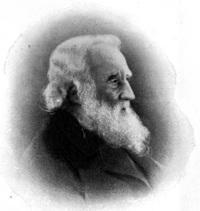
Robert C. Chapman

1803 - 1902 Person Name: Robert C. Chapman (1803-1902) Author of "With Jesus In Our Midst" in The Believers Hymn Book Robert Cleaver Chapman (1 April 1803 – 6 December 1902), known as the "apostle of Love", was a pastor, teacher and evangelist. Chapman was born in Helsingor, Denmark, in a wealthy Anglican merchant family from Whitby, Yorkshire. Robert was educated by his mother whilst the family was in Denmark and later at a boarding school in Yorkshire, after the return of the family to England. At the age of 15 Robert moved to London to work as an apprentice clerk in the legal profession. Robert completed his 5 year apprenticeship and became an attorney in 1823. In the same year he became a Christian after listening to the gospel preached by James Harrington Evans in a nonconformist chapel in London. He prospered in his career and also spiritually and spent most of his spare time visiting and helping the poor of London. His dedication to the poor made a great impression on his cousin's husband, a Mr. Pugsley, from Barnstaple, Devon. So much so that Puglsey, another lawyer, also became a Christian and began working with the poor in Barnstaple. In 1831 Robert visited Barnstaple on a holiday and helped out in preaching and other Christian work in the vicinity. On returning to London he became convinced that he was being called into full time Christian work, he also increasingly felt that some aspects of his legal work sat uncomfortably with his faith. In 1832 he was invited by the Ebenezer Strict Baptist Chapel in Barnstaple to be their pastor. In April 1832 he left the lucrative legal profession and stepped down the social ladder and moved to Barnstaple to become pastor. He accepted the post as pastor of a Strict Baptist chapel only on the condition that he would only be bound by what was written in the Bible and not by any denominational creeds or beliefs. Fellowship, for example, he believed was open to all true believers in Christ, and not restricted to those who had been baptised by full immersion on a profession of faith. His views on fellowship were similar to those of Anthony Norris Groves. Over time, the chapel changed from being Strict Baptist to a non denominational one ran on similar grounds to the assembly led by George Muller in Bristol, with a building at Grosvenor Street eventually being known as Grosvenor Street Chapel. In 1994 this church moved from Grosvenor Street to another part of Barnstaple occupying a converted railway shed and is now known as Grosvenor Church – http://www.grosvenorchurch.org Other examples of the assembly moving to a non denominational position are one man ministry being replaced by the priesthood of all believers and Chapman refusing any clerical salary. Chapman never enforced these changes onto the chapel and never forced his viewpoint but was prepared to wait for every believer meeting at the chapel to see the need for change. Chapman rose to become an influential figure within the Plymouth Brethren alongside John Nelson Darby and George Muller. His zeal and compassion for people led to him being referred to by many as the "apostle of love". For example, Chapman preferred to live very frugally in a deprived area of Barnstaple in order to reach the poor. In 1848 he sided with George Muller in regards to a dispute over the independency of each assembly and believed that John Nelson Darby should have waited much longer before excommunicating Muller's assembly in Bristol for not supporting Darby in his dispute with Benjamin Wills Newton. This riled some supporters of Darby who were wanting to discredit Chapman. Darby, however reproved them, saying, "You leave that man alone; We talk of the heavenlies, but Robert Chapman lives in them." In regards to the timing of the rapture of the Church, an issue which became prominent within the brethren movement, Chapman held a partial rapture view with part of the saved being raptured before the Great Tribulation and a part of them after the Great Tribulation. Charles Spurgeon called Chapman "the saintliest man I ever knew". Chapman became so well known that a letter from abroad addressed only to "R.C. Chapman, University of Love, England" was correctly delivered to him. --en.wikipedia.org ============================== Chapman, Robert Cleaver, was born Jan. 4, 1803, and has been for more than fifty years a "Minister of tho Gospel" at Barnstaple. In 1837 he published:— Hymns for the Use of the Church of Christ. By R. C. Chapman, Minister of the Gospel, Barnstaple. 1837. This was reprinted in 1852. Some copies of the 1852 edition have bound up with them An Appendix selected from Various Sources. By John Chapman. Several of these hymns were repeated in the Plymouth Brethren Hymns for the Poor of the Flock, 1838; A Few Hymns and Some Spiritual Songs, selected 1856 for the Little Flock; and in other collections. These include:— 1. Go behold [and search] the tomb of Jesus. Easter. 2. God's tender mercies follow still. Heaven. Com¬posed of stanza xxi. of "The Lamb of God exalted reigns." 3. King of glory set on high. Ascension. 4. My soul, amid this stormy world. Longing for heaven. 5. No condemnation—0 my soul. Peace in Believing. 6. 0 God, Whose wondrous Name is Love. Resignation. 7. The Prince of Life, once slain for us. Advent. Mr. Chapman's hymns and poems number 162, and are mainly in use with the Plymouth Brethren, with whom he was a Minister. They are given in his Hymns and Meditations, Barnstaple, 1871. He died June 12, 1902. --John Julian, Dictionary of Hymnology (1907)

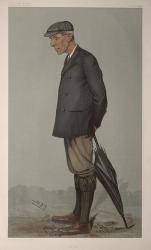
Arthur Campbell Ainger

1841 - 1919 Person Name: A. C. Ainger Author of "Not ours to mourn and weep" in The Church and School Hymnal Ainger, Arthur Campbell, M.A., son of the Rev. F. A. Ainger, incumbent of Hampstead, Middlesex; born in 1841, educated Trinity College, Cambridge, 1st Class Class. Trip. 1864, Assistant Master at Eton 1864-1901. Author of Eton Songs, 1901-2; Carmen Etonense, Vale, &c, and joint author with H. G. Winkle, M.A., of an English-Latin Verse Dictionary. Mr. Ainger's hymns in common use are the following :— 1. God is working His purpose out. [Missions.] Written and first published in 1894, with Dedication to Archbishop Benson. It was given in Church Hymns, 1903, Hymns Ancient & Modern, 1904, and other collections. 2. God of our Fathers, unto Thee. [National Thanksgiving.] Included in English Hymnal, 1906. 3. Let all our brethren join in one. [Harvest.] Included in C. W. A. Brooke's Additional Hymns, 1903. 4. Let God arise to lead forth those. [In Time of War.] Written in 1900, and first printed in the Times the same year. Subsequently pub. by Novello & Co., with music by Sir J. Stainer, and included in Church Hymns, 1903, and Hymns Ancient & Modern, 1904. 5. Like a mighty man rejoicing in his strength. [Missions.] Written by request for the S.P.G. Centenary, and published in the Centenary collection of Hymns, 1901. 6. Not ours to mourn and weep. [Lent. For the Young.] First published in the Public School Hymn Book, 1903. 7. On them who here, 0 Lord. [Holy Matrimony.] A Wedding Hymn, published with music by Novello & Co., 1903. A most acceptable addition to hymns for Holy Matrimony. 8. Praise the Lord: to-day we raise Hymns of thankfulness and praise. [For Victory] Written in 1902, and first printed in the Times, and t' en, with music, by Novello & Co. Included in Church Hymns, 1903. 9. Praise the Lord! to-day we sing. Birthday of our Founder King. [For Founder's Day.] Written for use at Eton, and included in Eton Songs, 1891-2, as "Hymn for Founder's Day." Admirably suited, with slight change in the opening line, for any Public School. 10. Uprose the stately temple. [Dedication of a School Chapel]. Written in 1891, and published in his Eton Songs, 1891-2. Mr. Ainger has written several other hymns, including one for the Coronation of King Edward VII., a Thanksgiving Hymn for his recovery from sickness (Skeffingtons), and others not in common use. --John Julian, Dictionary of Hymnology, New Supplement (1907)

Christian A. Bernstein

1672 - 1712 Person Name: Christian Bernstein Author of "O Patient, Spotless One!" in The Believers Hymn Book Bernstein, Christian Andreas, was born at Domnitz, near Halle, where his father, Daniel Bernstein, was pastor. After completing his studies at Halle, he was appointed, in 1695, by A. H. Francke, a tutor in the Padagogium there; was then ordained as assistant to his father (probably at the end of 1696); and died at Domnitz, Oct. 18,1699 (Koch, iv. 365, Allg. Deutsche Biographie ii. 484). From extracts from the Kirchenbuch of Domnitz, kindly sent by Pastor Tauer, it appears that Bernstein was baptized there, July 12, 1672, and thus was probably born July 9. He signed the book as assistant to his father on March 5, 1697. The funeral sermon, Oct. 20, 1699, was preached at his request by Francke, from Isaiah lxi. The statement by his father (who survived till Feb. 27, 1712), that Christian died at the age of 27 years, 3 months, and 2 days, and in the 3rd month and 2nd day of his age, and 3rd year, 14th week of his ministry, seems hardly reconcilable with the other facts. In Freylinghausen's Gesang-Buch., 1704-5, six of his hymns were included, four of which have been translated into English:— i. Ihr Kinder des Höchsten! wie steht's urn die Liebe. [Brotherly Love.] 1704, as above, No. 386, in 9 stanzas. Previously in G. Arnold's Göttliche Sophia, Leipzig, 1700, pt. ii. p. 309, as No. i. of the "Some hitherto unknown hymns." Translated as:—" We in one covenant are joined," of stanza v. by J. Swertner, as No. 384 in the Moravian Hymn Book, 1789. ii. Mein Vater! zeuge mich, dein Kind, nach deinem Bilde. [Names and Offices of Christ.] 1704, as above, No. 62, in 14 stanzas. The translations are:— (1) "My Father! form Thy Child according to Thine Image," by J. C. Jacobi, 1722, p. 125 (1732, p. 12). (2) "Father, make me Thy child," No. 546 in pt. i. of the Moravian Hymn Book, 1754. iii. Schönster aller Schönen. [Love to Christ.] First published in the Geistreiches Gesang-Buch, Halle, 1697, p. 246, in 8 stanzas. Translated as:—"Fairest of all beauties," No. 681 in pt. i. of the Moravian Hymn Book, 1754. iv. Zuletzt gents wohl dem der gerecht auf Erden. [Cross & Consolation.] 1704, as above, No. 440, in 7 stanzas. The translations are:— "At last he's well, who thro' the Blood of Jesus" No. 693, in pt. 1 of the Moravian Hymn Book, 1754. Altered 1789, and changed in metre, 1801, beginning "At last he's blest." (2) "At last all shall be well with those, His own," by Miss Borthwick, in Hymns from the Land of Luther, 1858 (1862, p. 225; 1884, p. 172). [Rev. James Mearns, M. A.] -- John Julian, Dictionary of Hymnology (1907) ========================= Bernstein, Christian Andreas, p. 135, ii. In Spurgeon's Our Own Hymn Book, and others, "O patient, spotless One" is an altered form of a part of the Moravian Hymn Book translation of "Mein Vater," noted on p. 135, ii. (2). Another cento beginning with the same first line is in the Lady Huntingdon Hymn Book, 1764, and later editions. --John Julian, Dictionary of Hymnology, Appendix, Part II (1907)

Bayard Taylor

1825 - 1878 Person Name: Bayard Taylor (1825-1878) Author of "Not so in haste, my heart!" in The University Hymn Book Taylor, Bayard, the well-known American author, was born at Kennett Square, Chester Co., Penn., Jan. 11, 1825, and died at Berlin, whilst U.S. Minister to Germany, Dec. 19, 1878. His association with hymnody is very slight, consisting only of a few pieces from his Poet's Journal, &c. These include, "Thou sendest sun, Thou sendest rain"; "God, to Whom we look up blindly," in Horder's Treasury of American Sacred Song, 1900; and "Not so in haste, my heart," in The Pilgrim Hymnal, Boston, 1901. --John Julian, Dictionary of Hymnology, Appendix I (1907)

Pages


Export as CSV
It looks like you are using an ad-blocker. Ad revenue helps keep us running. Please consider white-listing Hymnary.org or getting Hymnary Pro to eliminate ads entirely and help support Hymnary.org.