

 My Starred Hymns
 My FlexScores
 My Hymnals
 My Purchased Files
Planning worship?
Check out our sister site, ZeteoSearch.org,
for 20+ additional resources related to your search.
- |
User Links
Person Results
John Bacchus Dykes
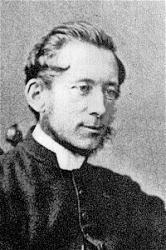
1823 - 1876 Person Name: John B. Dykes Meter: 6.5.6.5.6.5.6.5.6.5.6.5 Arranger of "ST. ALBAN" in The Hymnal As a young child John Bacchus Dykes (b. Kingston-upon-Hull' England, 1823; d. Ticehurst, Sussex, England, 1876) took violin and piano lessons. At the age of ten he became the organist of St. John's in Hull, where his grandfather was vicar. After receiving a classics degree from St. Catherine College, Cambridge, England, he was ordained in the Church of England in 1847. In 1849 he became the precentor and choir director at Durham Cathedral, where he introduced reforms in the choir by insisting on consistent attendance, increasing rehearsals, and initiating music festivals. He served the parish of St. Oswald in Durham from 1862 until the year of his death. To the chagrin of his bishop, Dykes favored the high church practices associated with the Oxford Movement (choir robes, incense, and the like). A number of his three hundred hymn tunes are still respected as durable examples of Victorian hymnody. Most of his tunes were first published in Chope's Congregational Hymn and Tune Book (1857) and in early editions of the famous British hymnal, Hymns Ancient and Modern.
Bert Polman
John Bacchus Dykes
Henry Alford
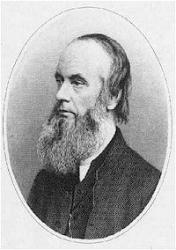
1810 - 1871 Meter: 6.5.6.5.6.5.6.5.6.5.6.5 Author of "Forward! Be our watchword" in The Hymnal Alford, Henry, D.D., son of the Rev. Henry Alford, Rector of Aston Sandford, b. at 25 Alfred Place, Bedford Row, London, Oct. 7, 1810, and educated at Trinity College, Cambridge, graduating in honours, in 1832. In 1833 he was ordained to the Curacy of Ampton. Subsequently he held the Vicarage of Wymeswold, 1835-1853,--the Incumbency of Quebec Chapel, London, 1853-1857; and the Deanery of Canterbury, 1857 to his death, which took. place at Canterbury, Jan. 12, 1871. In addition he held several important appointments, including that of a Fellow of Trinity, and the Hulsean Lectureship, 1841-2. His literary labours extended to every department of literature, but his noblest undertaking was his edition of the Greek Testament, the result of 20 years' labour. His hymnological and poetical works, given below, were numerous, and included the compiling of collections, the composition of original hymns, and translations from other languages. As a hymn-writer he added little to his literary reputation. The rhythm of his hymns is musical, but the poetry is neither striking, nor the thought original. They are evangelical in their teaching, but somewhat cold and conventional. They vary greatly in merit, the most popular being "Come, ye thankful people, come," "In token that thou shalt not fear," and "Forward be our watchword." His collections, the Psalms and Hymns of 1844, and the Year of Praise, 1867, have not achieved a marked success. His poetical and hymnological works include—
(1) Hymns in the Christian Observer and the Christian Guardian, 1830. (2) Poems and Poetical Fragments (no name), Cambridge, J. J. Deighton, 1833. (3) The School of the Heart, and other Poems, Cambridge, Pitt Press, 1835. (4) Hymns for the Sundays and Festivals throughout the Year, &c.,Lond., Longman ft Co., 1836. (5) Psalms and Hymns, adapted for the Sundays and Holidays throughout the year, &c, Lond., Rivington, 1844. (6) Poetical Works, 2 vols., Lond., Rivington, 1845. (7) Select Poetical Works, London, Rivington, 1851. (8) An American ed. of his Poems, Boston, Ticknor, Reed & Field, 1853(9) Passing away, and Life's Answer, poems in Macmillan's Magazine, 1863. (10) Evening Hexameters, in Good Words, 1864. (11) On Church Hymn Books, in the Contemporary Review, 1866. (12) Year of Praise, London, A. Strahan, 1867. (13) Poetical Works, 1868. (14) The Lord's Prayer, 1869. (15) Prose Hymns, 1844. (16) Abbot of Muchelnaye, 1841. (17) Hymns in British Magazine, 1832. (18) A translation of Cantemus cuncti, q.v.
-- John Julian, Dictionary of Hymnology (1907)
==================
Alford, Henry, p. 39, ii. The following additional hymns by Dean Alford are in common use:—
1. Herald in the wilderness. St. John Baptist. (1867.)
2. Let the Church of God rejoice. SS. Simon and Jude. (1844, but not in his Psalms & Hymns of that year.)
3. Not in anything we do. Sexagesima. (1867.)
4. O Thou at Whose divine command. Sexagesima. (1844.)
5. 0 why on death so bent? Lent. (1867.)
6. Of all the honours man may wear. St. Andrew's Day. (1867.)
7. Our year of grace is wearing to a close. Close of the Year. (1867.)
8. Saviour, Thy Father's promise send. Whit-sunday. (1844.)
9. Since we kept the Saviour's birth. 1st Sunday after Trinity. (1867.)
10. Thou that art the Father's Word. Epiphany. (1844.)
11. Thou who on that wondrous journey. Quinquagesima. (1867.)
12. Through Israel's coasts in times of old. 2nd Sunday after Epiphany. (1867.)
13. Thy blood, O Christ, hath made our peace. Circumcision . (1814.)
14. When in the Lord Jehovah's name. For Sunday Schools. (1844.)
All these hymns are in Dean Alford's Year of Praise, 1867, and the dates are those of their earliest publication, so far as we have been able to trace the same.
--Excerpts from John Julian, Dictionary of Hymnology, Appendix, Part II (1907)
Henry Alford
Godfrey Thring
1823 - 1903 Meter: 6.5.6.5.6.5.6.5.6.5.6.5 Author of "From the eastern mountains" in The Hymnal Godfrey Thring (b. Alford, Somersetshire, England, 1823; d. Shamley Green, Guilford, Surrey, England, 1903) was born in the parsonage of Alford, where his father was rector. Educated at Balliol College, Oxford, England, he was ordained a priest in the Church of England in 1847. After serving in several other parishes, Thring returned to Alford and Hornblotten in 1858 to succeed his father as rector, a position he retained until his own retirement in 1893. He was also associated with Wells Cathedral (1867-1893). After 1861 Thring wrote many hymns and published several hymnals, including Hymns Congregational (1866), Hymns and Sacred Lyrics (1874), and the respected A Church of England Hymn Book Adapted to the Daily Services of the Church Throughout the Year (1880), which was enlarged as The Church of England Hymn Book (1882).
Bert Polman
================
Thring, Godfrey, B.A., son of the Rev. J. G. D. Thring, of Alford, Somerset, was born at Alford, March 25, 1823, and educated at Shrewsbury School, and at Balliol College, Oxford, B.A. in 1845. On taking Holy Orders he was curate of Stratfield-Turgis, 1846-50; of Strathfieldsaye, 1850-53; and of other parishes to 1858, when he became rector of Alford-with-Hornblotton, Somerset. R.D. 1867-76. In 1876 he was preferred as prebend of East Harptree in Wells cathedral. Prebendary Thring's poetical works are:— Hymns Congregational and Others, 1866; Hymns and Verses, 1866; and Hymns and Sacred Lyrics, 1874. In 1880 he published A Church of England Hymnbook Adapted to the Daily Services of the Church throughout the Year; and in 1882, a revised and much improved edition of the same as The Church of England Hymn Book, &c.
A great many of Prebendary Thring's hymns are annotated under their respective first lines; the rest in common use include:—
1. Beneath the Church's hallowed shade. Consecration of a Burial Ground. Written in 1870. This is one of four hymns set to music by Dr. Dykes, and first published by Novello & Co., 1873. It was also included (but without music) in the author's Hymns & Sacred Lyrics, 1874, p. 170, and in his Collection, 1882.
2. Blessed Saviour, Thou hast taught us. Quinquagesima. Written in 1866, and first published in the author's Hymns Congregational and Others, 1866. It was republished in his Hymns & Sacred Lyrics, 1874; and his Collection, 1882. It is based upon the Epistle for Quinquagesima.
3. Blot out our sins of old. Lent. Written in 1862, and first published in Hymns Congregational and Others
Godfrey Thring
A. H. Mann
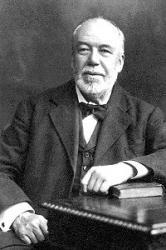
1850 - 1929 Person Name: Arthur H. Mann Meter: 6.5.6.5.6.5.6.5.6.5.6.5 Composer of "THE NEW YEAR" in The Hymnal Arthur Henry ‘Daddy’ Mann MusB MusD United Kingdom 1850-1929. Born at Norwich, Norfolk, England, he graduated from New College, Oxford. He married Sarah Ransford, and they had five children: Sarah, Francis, Arthur, John, and Mary. Arthur died in infancy. Mann was a chorister and assistant organist at Norwich Cathedral, then, after short stints playing the organ at St Peter’s, Wolverhampton (1870-71); St. Michael’s Tettenhall Parish Church (1871-75); and Beverley Minster (1875-76); he became organist at King’s College Chapel, Cambridge (1876-1929), Cambridge University organist (1897-1929), and music master and organist at the Leys School, Cambridge (1894-1922). In addition to composing an oratorio and some hymn tunes, he was music editor of the Church of England Hymnal (1894). In 1918 he directed the music and first service of “Nine lessons & carols” at King’s College Chapel. He was an arranger, author, composer, and editor. His wife, Sarah, died in 1918. He died at Cambridge, England.
John Perry
A. H. Mann
Charles Harford Lloyd
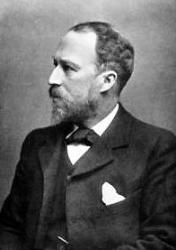
1849 - 1919 Meter: 6.5.6.5.6.5.6.5.6.5.6.5 Composer of "APPLETHWAITE" Born: October 16, 1849, Thornbury, Gloss, England.
Died: October 16, 1919, Slough, England.
Buried: Windsor Cemetery, Windsor, Berkshire, England.
Lloyd attended Thornbury Grammar School and Rossall School, and was a Scholar of Magdalen School, Hertford College, Oxford (BMus 1871, BA 1872, MA 175, DMus 1891). He served as organist at Gloucester Cathedral (1876); Christ Church, Oxford (1882, succeeding Samuel Wesley); precentor of Eton College (1892); organist of the Chapel Royal (1914); and editor of Church Hymns (1903).
Sources:
Frost, p. 680
Music:
Credo Domine
Lundy
Sacramentum Unitatis
Savile
St. Frideswide
http://www.hymntime.com/tch/bio/l/l/o/lloyd_ch.htm
Charles Harford Lloyd
Arthur Henry Brown
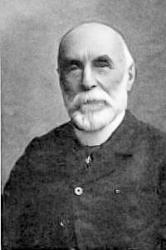
1830 - 1926 Meter: 6.5.6.5.6.5.6.5.6.5.6.5 Composer of "UPMINSTER (Brown)" Born: July 24, 1830, Brentwood, Essex, England.
Died: February 15, 1926, Brentwood, Essex, England.
Almost completely self taught, Brown began playing the organ at the age 10. He was organist of the Brentwood Parish Church, Essex (1842-53); St. Edward’s, Romford (1853-58); Brentwood Parish Church (1858-88); St. Peter’s Church, South Weald (from 1889); and Sir Anthony Browne’s School (to 1926). A member of the London Gregorian Association, he helped assemble the Service Book for the annual festival in St. Paul’s Cathedral. He supported the Oxford Movement, and pioneered the restoration of plainchant and Gregorian music in Anglican worship.
Brown edited various publications, including the Altar Hymnal. His other works include settings of the Canticles and the Holy Communion Service, a Children’s Festival Service, anthems, songs, part songs, and over 800 hymn tunes and carols.
Music:
Alleluia! Sing the Triumph
Arthur
Dale Abbey
Fields of Gold Are Glowing
Gerran
Holy Church
Holy Rood
If Angels Sang Our Savior’s Birth
Lammas
O, Sing We a Carol
Purleigh
Redemptor Mundi
Ring On, Ye Joyous Christmas Bells
Saffron Walden
St. Anatolius
St. Austell
St. John Damascene
St. Mabyn
St. Sophronius
Story of the Cross
Sweet Child Divine
--www.hymntime.com/tch
Arthur Henry Brown
John Ellerton

1826 - 1893 Meter: 6.5.6.5.6.5.6.5.6.5.6.5 Arranger & Translator of ""Welcome, happy morning!"" in The Hymnal John Ellerton (b. London, England, 1826; d. Torquay, Devonshire, England, 1893) Educated at King William's College on the Isle of Man and at Trinity College, Cambridge, England, he was ordained in the Church of England in 1851. He served six parishes, spending the longest time in Crewe Green (1860-1872), a church of steelworkers and farmers. Ellerton wrote and translated about eighty hymns, many of which are still sung today. He helped to compile Church Hymns and wrote its handbook, Notes and Illustrations to Church Hymns (1882). Some of his other hymn texts were published in The London Mission Hymn Book (1884).
Bert Polman
=========================
Ellerton, John, M.A., son of George Ellerton, was born in London, Dec. 16, 1826, and educated at Trinity College, Cambridge (B.A. 1849; M.A. 1854). Taking Holy Orders he was successively Curate of Easebourne, Sussex, 1850; Brighton, and Lecturer of St. Peter's, Brighton, 1852; Vicar of Crewe Green, and Chaplain to Lord Crewe, 1860; Rector of Hinstock, 1872; of Barnes, 1876; and of White Roding, 1886. Mr. Ellerton's prose writings include The Holiest Manhood, 1882; Our Infirmities, 1883, &c. It is, however, as a hymnologist, editor, hymnwriter, and translator, that he is most widely known. As editor he published: Hymns for Schools and Bible Classes, Brighton, 1859. He was also co-editor with Bishop How and others of the Society for Promoting Christian Knowledge Church Hymns, 1871. His Notes and Illustrations of Church Hymns, their authors and translators, were published in the folio edition of 1881. The notes on the hymns which are special to the collection, and many of which were contributed thereto, are full, accurate, and of special value. Those on the older hymns are too general for accuracy. They are written in a popular form, which necessarily precludes extended research, fulness, and exactness of detail. The result is acceptable to the general public, but disappointing to the hymnological expert. Mr. Ellerton's original hymns number about fifty, and his translations from the Latin ten or more. Nearly every one of these are in common use and include:—
1. Before the day draws near its ending. Afternoon. Written April 22, 1880, for a Festival of Choirs at Nantwich, and first published in the Nantwich Festival Book, 1880. In 1883 it passed into the Westminster Abbey Hymn Book.
2. Behold us, Lord, a little space. General for Weekdays. Written in 1870 for a mid-day service in a City Church, and published in Church Hymns in 1871. It has passed into several collections.
3. Come forth, 0 Christian brothers. Processional for Choral Festival. Written for a Festival of Parochial Choirs held at Chester, May, 1870, and 1st printed in the Service-book of the same. In 1871 it passed into Church Hymns.
4. Father, Name of love and fear. Confirmation. Written in 1871 for a Confirmation in the North of England, and published in Church Hymns, 1871, and other collections.
5. God, Creator and Preserver. In Time of Scarcity. Written for and first published in The Hymnary, 1870; and again in the revised edition, 1872, and other hymnbooks.
6. Hail to the Lord Who comes. Presentation of Christ in the Temple. Written Oct. 6, 1880, for Mrs. Brock's Children's Hymn Book, and published therein, 1881.
7. In the Name which earth and heaven. Foundation of a Church. Written for and first published in Church Hymns, 1871, and repeated in several collections. The hymn sung at the re-opening of the Nave of Chester Cathedral, January 25, 1872, was compiled by Mr. Ellerton from this hymn, and his "Lift the strain of high thanksgiving.”
8 King Messiah, long expected. The Circumcision. Written Jan. 14, 1871, and first published in Church Hymns, 1871. It has passed into other collections.
9. King of Saints, to Whom the number. St. Bartholomew. Written for and first published in Church Hymns., 1871. It is very popular, and has been repeated in many hymnals.
10. Mary at the Master's feet. Catechizing. Written for and first published in Church Hymns, 1871.
11. O Father, all-creating. Holy Matrimony. Written Jan. 29, 1876, at the request of the Duke of Westminster, for the marriage of his daughter to the Marquess of Ormonde. It was published in Thring's Collection, 1880 and 1882.
12 O! how fair the morning broke. Septuagesima. Written March 13, 1880, for Mrs. Brock's Children's Hymn Book, and included therein, 1881.
13. O Lord of life and death, welcome. In Time of Pestilence. Written for and first published in Church Hymns, 1871.
14. O shining city of our God. Concerning the Hereafter. First published in the Rev. R. Brown-Borthwick's Sixteen Hymns with Tunes, &c, 1870; and again in Church Hymns, 1871.
15. O Son of God, our Captain of Salvation. St. Barnabas. Written April 5, 1871, and first published in Church Hymns, 1871; and again in Hymns Ancient & Modern, 1875, Thring's Collection, 1882, and others.
16. O Thou in Whom Thy saints repose. Consecration of a Burial Ground. Written for the consecration of an addition to the Parish Churchyard of Tarporley, Cheshire, 1870, and published in Church Hymns, 1871.
17. O Thou Whose bounty fills the earth. Flower Services. Written for a Flower Service at St. Luke's Church, Chelsea, June 6, 1880, and published in Mrs. Brock's Children's Hymn Book, 1881.
18. Praise to our God, Whose bounteous hand. National Thanksgiving. Written in 1870 for Church Hymns, but first published in the Rev. R. Brown-Borthwick's Select Hymns, &c., 1871, and then in Church Hymns later the same year.
19. The day Thou gavest, Lord, is ended. The darkness, &c. Evening. Written in 1870 for A Liturgy for Missionary Meetings (Frome, Hodges), and revised for Church Hymns, 1871. The revised form has passed into other collections.
20. The Lord be with us when we bend. Close of Afternoon Service. Written [in 1870] at the request of a friend for use at the close of Service on Sunday afternoons when (as in summer) strictly Evening hymns would be unsuitable. It was published in Church Hymns, 1871, Thring's Collection, 1882, and others.
21. This day the Lord's disciples met. Whitsuntide. "Originally written in 1855 for a class of children, as a hymn of 8 verses of 5 lines each, beginning, 'The Fiftieth day was come at last.’ It was abridged, revised, and compressed into C.M. for Mrs. Brock's Children's Hymn Book, 1880," and published therein, 1881.
22. Thou in Whose Name the two or three. Wednesday. Appeared in the Parish Magazine, May, 1871, as a hymn for Wednesday. After revision it was included in Church Hymns, 1871, and repeated in other collections.
23. Thou Who sentest Thine Apostles. SS. Simon and Jude. Written in June, 1874, for the revised edition of Hymns Ancient & Modern, and published in the same in 1875.
24. We sing the glorious conquest. Conversion of St. Paul. Written Feb. 28, 1871, for and published later the same year in Church Hymns. It was repeated in Hymns Ancient & Modern, 1875.
25. When the day of toil is done. Eternal Best. Written in Jan., 1870, and first published in the Rev. R. Brown-Borthwick's Sixteen Hymns with Tunes, &c. 1870, Church Hymns, 1871, and subsequently in several Scottish hymn-books. The tune "Preston," in Church Hymns was written for this hymn.
To these hymns must be added those which are annotated under their respective first lines, and the translations from the Latin. The grandest of his original compositions is, "Throned upon the awful tree," and the most beautiful and tender, "Saviour, again to Thy dear Name we raise"; and of his translations, "Sing Alleluia forth in duteous praise," and "Welcome, happy morning, age to age shall say," are the most successful and popular. The subjects of Mr. Ellerton's hymns, and the circumstances under which they were written, had much to do with the concentration of thought and terseness of expression by which they are characterized. The words which he uses are usually short and simple; the thought is clear and well stated; the rhythm is good and stately. Ordinary facts in sacred history and in daily life are lifted above the commonplace rhymes with which they are usually associated, thereby rendering the hymns bearable to the cultured, and instructive to the devout. His antitheses are frequent and terse, almost too much so for devotional verse, and are in danger of interrupting the tranquil flow of devotion. His sympathy with nature, especially in her sadder moods, is great; he loves the fading light and the peace of eve, and lingers in the shadows. Unlike many writers who set forth their illustrations in detail, and then tie to them the moral which they are to teach, he weaves his moral into his metaphor, and pleases the imagination and refreshes the spirit together. Now and again he falls into the weakness of ringing changes on words; but taken as a whole his verse is elevated in tone, devotional in spirit, and elegant in diction.
-- John Julian, Dictionary of Hymnology (1907)
=====================
Ellerton, John, p. 326, i. Other hymns are:—
1. O Father, bless the children. Holy Baptism. Written in 1886, and published in his Hymns, &c, 1888, in 4 stanzas of 8 lines. Also in the 1889 Suppl. Hymns to Hymns Ancient & Modern.
2. O Thou Who givest food to all. Temperance. Written Aug. 30, 1882, and printed in the Church of England Temperance Chronicle, Sept. 1882. Also in his Hymns, &c, 1888.
3. Praise our God for all the wonders. St. Nicholas's Day. Dated in his Hymns, 1888, "December 1882." It was written for the Dedication Festival of St. Nicholas's Church, Brighton, and first printed as a leaflet in 1882.
4. Praise our God, Whose open hand. Bad Harvest. Written as a hymn for the bad harvest of 1881, and printed in the Guardian in August of that year. Also in his Hymns, &c, 1888.
5. Praise to the Heavenly Wisdom. St. Matthias's Day. Dated in his Hymns, &c, 1888, "January, 1888." Also in the 1889 Suppl. Hymns to Hymns Ancient & Modern.
6. Shine Thou upon us, Lord. For a Teachers' Meeting. Contributed to the 1889 Suppl. Hymns to Hymns Ancient & Modern.
7. Thou Who wearied by the well. Temperance. Written for the Opening of a Workmen's Coffee Tavern, and dated in his Hymns, &c, 1888, "September 23, 1882." It was printed in the Church of England Temperance Chronicle the same year.
8. Throned upon the awful Tree. Good Friday. Written in 1875, and published in the 1875 ed. of Hymns Ancient & Modern. It has passed into many collections, and is one of the finest of Mr. Ellerton's productions.
Mr. Ellerton's original and translated hymns to the number of 76 were collected, and published by Skeffington & Son in 1888, as Hymns, Original and Translated. By John Ellerton, Rector of White Roding.
--John Julian, Dictionary of Hymnology, Appendix, Part II (1907)
===================
Ellerton, J., pp. 326, ii.; 1561, ii. He was appointed Hon. Canon of St. Albans in 1892. and died June 15, 1893. His Life and Works, by H. Housman, was published in 1896.
--John Julian, Dictionary of Hymnology, New Supplement (1907)
John Ellerton
Henry Robert Gadsby
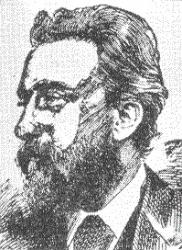
1842 - 1907 Person Name: Henry Gadsby Meter: 6.5.6.5.6.5.6.5.6.5.6.5 Composer of "ST. BONIFACE" in The Hymnal Born: December 15, 1840, Hackney, England. Though many sources show his birth year as 1842, census entries indicate an 1840 birth.
Died: November 11, 1907, Putney, England.
Buried: Putney Vale Cemetery.
Gadsby was a chorister at St. Paul’s Cathedral (1849-58), and organist at St. Peter’s, Brockley, until 1884, when he succeeded John Hullah at Queen’s College, Harley Street, London. In 1880, he became a professor at the Guildhall School of Music.
www.hymntime.com/tch/
Henry Robert Gadsby
Paul Mazakute
Meter: 6.5.6.5.6.5.6.5.6.5.6.5 Translator of "Woniya Wakan Niṡakowinpi kin (Hear us, thou that broodedst)" in Wakan Cekiye Odowan
Paul Mazakute
Christopher M. Idle
b. 1938 Meter: 6.5.6.5.6.5.6.5.6.5.6.5 Author of "Glory and Praise to God" in Scripture Song Database Christopher Martin Idle (b. Bromley, Kent, England, 1938) was educated at Elthan College, St. Peter's College, Oxford, and Clifton Theological College in Bristol, and was ordained in the Church of England. He served churches in Barrow-in-Furness, Cumbria; London; and Oakley, Suffolk; and recently returned to London, where he is involved in various hymnal projects. A prolific author of articles on the Christian's public responsibilities, Idle has also published The Lion Book of Favorite Hymns (1980) and at least one hundred of his own hymns and biblical paraphrases. Some of his texts first appeared in hymnals published by the Jubilate Group, with which he is associated. He was also editor of Anglican Praise (1987). In 1998 Hope Publishing released Light Upon the River, a collection of 279 of his psalm and hymn texts, along with suggested tunes, scripture references, and commentary.
Bert Polman
Christopher M. Idle
Pages




