You help make Hymnary.org possible. More than 10 million people from 200+ countries found hymns, liturgical resources and encouragement on Hymnary.org in 2025, including you. Every visit affirms the global impact of this ministry.

If Hymnary has been meaningful to you this year, would you take a moment today to help sustain it? A gift of any size—paired with a note of encouragement if you wish—directly supports the server costs, research work and curation that keep this resource freely available to the world.

Give securely online today, or mail a check to:
Hymnary.org
Calvin University
3201 Burton Street SE
Grand Rapids, MI 49546

Thank you for your partnership, and may the hope of Advent fill your heart.

Person Results

Meter:8.6.8.6 with repeat
In:people

Planning worship? Check out our sister site, ZeteoSearch.org, for 20+ additional resources related to your search.
Showing 11 - 20 of 43Results Per Page: 102050

Rosamond E. Herklots

1905 - 1987 Meter: 8.6.8.6 with repeat Author of "Forgive Our Sins As We Forgive" in Trinity Hymnal (Rev. ed.) Rosamond E. Herklots was born of British parents in North India. Educated at Leeds University in England, she worked for many years as secretary to an eminent neurologist, and later in the head office of the Association for Spina Bifida and Hydrocephalus in London. She began writing hymns late in life, and some achieved an immediate success. --www.societyholytrinity.org/2007gr-hymnfestcommentary.htm Herklots began writing poetry in her childhood and turned to hymn writing in her adult years. She wrote over seventy hymns, many specifically with children in mind. --Presbyterian Hymnal Companion

George Gascoigne

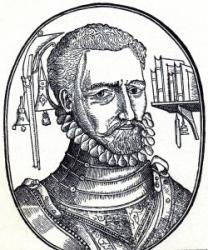
1525 - 1577 Person Name: George Gascoigne, 1540-1577 Meter: 8.6.8.6 with repeat Author of "You That Have Spent the Silent Night" in Singing the Living Tradition Gascoigne, George, son and heir of Sir John Gascoigne. The date and place of his birth are unknown, but it is probable that he was born about 1525, and from a statement in the Address to Queen Elizabeth prefixed to one of his works, he seems to have spent a part of his early life in Westmoreland. He was educated at Trinity College, Cambridge, from whence he entered the Middle Temple as a student of law before 1548; but neglecting his studies he led a life of reckless extravagance and dissipation, on account of which he was disinherited by his father. In 1555 he migrated to Gray's Inn, but seems to have left it also. In 1557-58 he represented Bedford in Parliament. In 1565 he returned to Gray's Inn, and there, in the following year, two plays by him were represented, The Supposes, translated from the Italian of Ariosto, and Jocasta, adapted from the Phoenissae of Euripides. To the latter Gascoigne contributed three acts. In 1572 he was returned to Parliament as member for the borough of Midhurst: but objections being made to his character he appears not to have taken his seat, and not long afterwards went to the Low Countries and took service with William of Orange, from whom he received a captain's commission. His gallant conduct in the field obtained the favourable notice of that Prince, but after some time he was taken prisoner by the Spaniards and sent back to England. During Gascoigne's absence his first book, A Hundredth sundrie Floures bound up in one small Poesie, the manuscript of which he had left in the hands of a friend, was printed in 1572 or 1573 without his permission, and after his return from Holland, he published in 1575 a corrected and enlarged edition of his Poesies. Thenceforward he seems to have led a literary life, and is said to have been in some way attached to the court. On the occasion of Elizabeth's celebrated visit to Kenilworth in the summer of 1575, Gascoigne was commissioned by Leicester to devise the masques, &c, performed for the Queen's entertainment. He died at Stamford, Lincolnshire, Oct. 7, 1577, and was probably buried by his friend George Whetstone in the family vault of the Whetstones at Barnack, but this id not certainly known. At some time between 1558 and 1568 Gascoigne married Elizabeth Breton, mother, by her first husband, of the poet Nicholas Breton, and by her had a son. His widow survived until 1585. Gascoigne is noticeable as being one of the earliest English dramatists, the first English satirist, and the first English critic in poetry. In 1869 his poems were collected and edited for the Roxburghe Library by W. C. Hazlitt, and in 1868 his Notes of Instruction in English Verse; The Steele Glas; and The Complaynt of Philomene were included in English reprints edited by Edward Arber, together with Whetstone's metrical life of Gascoigne. To modern hymnody he is known by "We that have passed in slumber sweet," an altered version of his morning hymn, "Ye that have spent the silent night;" and other religious poems. [George Arthur Crawford, M.A.] -- John Julian, Dictionary of Hymnology (1907)

Robert Campbell

1814 - 1868 Meter: 8.6.8.6 with repeat Translator of "Sing, Choirs of New Jerusalem" in Trinity Hymnal (Rev. ed.) Robert Campbell was an advocate residing in Edinburgh. He is not much known as an author, but some of his hymns have been adopted in several hymnals. He was Roman Catholic. His death occurred in 1868. --Annotations of the Hymnal, Charles Hutchins, M.A. 1872. ==================== Campbell, Robert. Advocate, of Sherrington, Scotland, was born at Trochmig, Ayrshire, Dec. 19, 1814. When quite a boy he attended the University of Glasgow. Though showing from his earliest years a strong predilection for Theological studies, eventually he fixed upon the Scottish law as a profession. To this end he entered the Law Classes of the University of Edinburgh, and in due course entered upon the duties of an advocate. Originally a Presbyterian, at an early age he joined the Episcopal Church of Scotland. He became a zealous and devoted Churchman, directing his special attention to the education of the children of the poor. His classical attainments were good, and his general reading extensive. In 1848 he began a series of translations of Latin hymns. These he submitted to Dr. Neale, Dr. Mills of Ely, and other competent judges. In 1850, a selection therefrom, together with a few of his original hymns, and a limited number from other writers, was published as Hymns and Anthems for Use in the Holy Services of the Church within the United Diocese of St. Andrews, Dunkeld, and Dunblane. Edinburgh, R. Lendrum & Co. This collection, known as the St. Andrews Hymnal, received the special sanction of Bishop Torry, and was used throughout the Diocese for some years. Two years after its publication he joined the Roman Catholic Church. During the next sixteen years he devoted much time to the young and poor. He died at Edinburgh, Dec. 29, 1868. From his collection of 1850, four translations were given in Hymns Ancient & Modern, 1861, "At the Lamb's high feast we sing;" “Come, pure hearts, in sweetest measures;" "Ye Choirs of New Jerusalem;" " Ye servants of a martyr'd God" (altered). Attention was thereby directed to his translations. They are smooth, musical, and well sustained. A large number, not included in his 1850 collection, were left by him in manuscript. From these Mr. O.Shipley has printed several in his Annus Sanctus, 1884. (C. MSS.) --John Julian, Dictionary of Hymnology (1907)

Henry Rosevear

1903 - 2003 Person Name: Henry Rosevear, b.1903 Meter: 8.6.8.6 with repeat Harmonizer of "ANTIOCH" in The Book of Praise

Benjamin Beddome

1717 - 1795 Person Name: Benjamin Beddome, 1717-1795 Meter: 8.6.8.6 with repeat Author of "How Great the Wisdom" in Our Great Redeemer's Praise Benjamin Beddome was born at Henley-in Arden, Warwickshire, January 23, 1717. His father was a Baptist minister. He studied at various places, and began preaching in 1740. He was pastor of a Baptist society at Bourton-on-the-Water, Gloucestershire, until his death in 1795. In 1770, he received the degree of M.A. from the Baptist College in Providence, Rhode Island. He published several discourses and hymns. "His hymns, to the number of 830, were published in 1818, with a recommendation from Robert Hall." Montgomery speaks of him as a "writer worthy of honour both for the quantity and the quality of his hymns." --Annotations of the Hymnal, Charles Hutchins, M.A. 1872. ========================= Beddome, Benjamin , M.A. This prolific hymnwriter was born at Henley-in-Arden, Warwickshire, Jan. 23, 1717, where his father, the Rev. John Beddome, was atthat time Baptist Minister. He was apprenticed to a surgeon in Bristol, but removing to London, he joined, in 1739, the Baptist church in Prescott St. At the call of this church he devoted himself to the work of the Christian ministry, and in 1740 began to preach at Bourton-on-the-Water, in Gloucestershire. Declining invitations to remove to London or elsewhere, he continued pastor at Bourton until his death, on Sep. 3, 1795, at the age of 78. Mr. Beddome was for many years one of the most respected Baptist ministers in the West of England. He was a man of some literary culture. In 1770 he received the degree of M.A. from Providence College, Rhode Island. He was the author of an Exposition of the Baptist Catechism, 1752, in great repute at the time, and reprinted by Dr. C. Evans in 1772. It was his practice to prepare a hymn every week to be sung after his Sunday morning sermon. Though not originally intended for publication, he allowed thirteen of these to appear in the Bristol Baptist Collection of Ash & Evans (1769), and thirty-six in Dr. Rippon's Baptist Selection (1787), whence a number of them found their way into the General Baptist Hymn Book of 1793 and other collections. In 1817, a posthumous collection of his hymns was published, containing 830 pieces, with an introduction by the Rev. Robert Hall, and entitled "Hymns adapted to Public Worship or Family Devotion, now first published from the Manuscripts of the late Rev. B. Beddome, M.A." Preface dated "Leicester, Nov. 10, 1817." Some of the early copies bear the same date on the title page. Copies bearing both the 1817 and 1818 dates are in the British Museum. The date usually given is 1818. Some hymns are also appended to his Sermons, seven volumes of which were published l805—1819; and over twenty are given in the Baptist Register of various dates. Beddome's hymns were commended by Montgomery as embodying one central idea, "always important, often striking, and sometimes ingeniously brought out." Robert Hall's opinion is just, when in his "Recommendatory Preface" to the Hymns, &c, he says, p. vii.:— "The man of taste will be gratified with the beauty and original turns of thought which many of them ex¬hibit, while the experimental Christian will often perceive the most secret movements of his soul strikingly delineated, and sentiments pourtrayed which will find their echo in every heart." With the exception of a few composed for Baptisms and other special occasions, their present use in Great Britain is limited, but in America somewhat extensive. One of the best is the Ordination Hymn, "Father of Mercies, bow Thine ear." Another favourite is “ My times of sorrow and of joy," composed, by a singular coincidence, to be sung on Sunday, Jan. 14, 1778, the day on which his son died, most unexpectedly, in Edinburgh. "Let party names no more," is very popular both in Great Brit, and America. "Faith, His a precious gift," "Witness, ye men and angels, now," and the hymn for Holy Baptism, "Buried beneath the yielding wave," are also found in many collections. Beddome's popularity is, however, now mainly in America. [Rev. W. R. Stevenson, M.A.] Beddome is thus seen to be in common use to the extent of about 100 hymns. In this respect he exceeds every other Baptist hymnwriter; Miss Steele ranking second. The authorities for Beddome's hymns are: (1) A Collection of Hymns adapted to Public Worship, Bristol, W. Pine, 1769, the Collection of Ash & Evans; (2) Dr. Rippon's Selections 1787, and later editions; (3) Sermons printed from the Manuscripts of the late Rev. Benjamin Beddome, M.A.,... with brief Memoir of the Author, Dunstable & Lond., 1805-1819; (4) Dr. Rippon's Baptist Register, 1795, &c.; (5) The Beddome Manuscripts, in the Baptist College, Bristol; (6) and Hymns adapted to Public Worship, or Family Devotion now first published, from Manuscripts of the late Rev. B. Beddome, A.M. With a Recommendatory Preface by the Rev. R. Hall, A.M. Lond., 1817. In his Preface, Mr. Hall gives this account of the Beddome Manuscript:— "The present Editor was entrusted several years ago with the MSS, both in prose and verse, with permission from the late Messrs. S. & B. Beddome, sons of the Author, to publish such parts of them as he might deem proper. He is also indebted to a descendant of the Rev. W. Christian, formerly pastor of the Baptist Church at Sheepshead, Leicestershire, for some of the Author's valuable hymns, which had been carefully preserved in the family. From both these sources, as well as others of less consequence, the present interesting volume has been derived." -- Excerpts from John Julian, Dictionary of Hymnology (1907) ======================= Beddome, Benjamin, pp. 121-124. Other hymns in common use:— 1. Great God, before Thy mercy-seat. (1817). Lent. 2. Great God, oppressed with grief and fear. (1787.) Reading H. Scripture. 3. How glorious is Thy word, 0 God. Holy Scripture. From "When Israel, &c," p. 124, i. 4. In God I ever will rejoice. Morning. From his Hymns, &c, 1817. 5. Jesus, my Lord, divinely fair. (1817.) Jesus the King of Saints. Begins with stanza ii. of “Listen, ye mortals, while I sing." 6. Rejoice, for Christ the Saviour reigns. Missions. Altered form of "Shout, for the blessed, &c," p. 123, ii. 7. Satan, the world, and sin. (1817.) In Temptation. 8. Thou, Lord of all above. (1817.) Lent. 9. Unto Thine altar, Lord. (1787.) Lent. 10. Ye saints of every rank, with joy. (1800.) Public Worship. The dates given above are, 1787 and 1800, Rippon's Selection; and 1817 Beddome's Hymns. --John Julian, Dictionary of Hymnology, Appendix, Part II

John Morison

1750 - 1798 Meter: 8.6.8.6 with repeat Author of "The People That in Darkness Sat" in Trinity Psalter Hymnal Morison, John, D.D., was born in Aberdeenshire in 1749. He studied at the University of Aberdeen (King's College), where he graduated M.A. in 1771. In 1780 he became parish minister of Canisbay, Caithness. He received the degree of D.D. from the University of Edinburgh in 1792. He died at Canisbay, June 12, 1798. He was one of the members added on May 26, 1781, to the Committee appointed by the General Assembly of 1775 to revise the Translations and Paraphrases of 1745. To him are ascribed Nos. 19, 21, 29, 30 and 35, in the 1781 collection, and he is said to have been joint author with John Logan of Nos. 27 and 28. [Rev. James Mearns, M.A.] --John Julian, Dictionary of Hymnology (1907)

Thomas Jarman

1776 - 1861 Meter: 8.6.8.6 with repeat Composer of "LYNGHAM" in Trinity Hymnal (Rev. ed.) Thomas Jarman was born on 21st December 1776 in Clipston, a small village near the northern border of the County of Northampton. His father was not only a Baptist lay preacher, but also a tailor, and Thomas was brought up in the same trade, although his brother, John, followed his father’s calling to become a minister. His natural taste for music, however, considerably interfered with his work, and he was frequently reduced to dire straits, from which only the extreme liberality of his publishers relieved him. He was a man of fine, commanding presence, but self-willed, and endowed with a considerable gift of irony, as choirs frequently found to their cost. Weston quotes from Kant that Jarman neglected his work and ‘this kept him poor and soured his temper’. He joined the choir of the Baptist chapel in his native village when quite a youth, and soon became the choirmaster there. He adopted music as a profession (with occasional returns to his old trade), and was engaged as teacher of harmony and singing in many of the neighbouring villages. He was a successful choir-trainer, spending several years at Leamington, and conducted concerts as well as services, for which he was ‘constantly composing works’. The village choir festival held under his direction at Naseby, in 1837, is said to have been the talk of the district for long after. He spent some six or seven years at Leamington, during which time he enjoyed the friendship of C. Rider, a wealthy Methodist who did much good for the psalmody of Lancashire and elsewhere some fifty or sixty years ago. Jarman published an enormous quantity of music, including over six hundred hymn-tunes, besides anthems, services, and similar pieces. Amongst his many anthems written for special occasions there is one for the opening of the new Baptist chapel at Clipston. Another is a MAGNIFICAT for Dr Marsh's Episcopal chapel at Leamington, where Thomas Jarman was called to assist the quire in their study and performance of psalmody. Thomas Jarman lived to the good old age of eighty-five, dying in 1861, and lies buried in the graveyard attached to the Baptist chapel at Clipston in Northants. --immanuelsground.com/composers/ (excerpts)

Nikolaus Hermann

1500 - 1561 Person Name: Nikolaus Hermann (c. 1480-1561) Meter: 8.6.8.6 with repeat Composer of "LOBT GOTT, IHR CHRISTEN ALL ZUGLEICH" in The Summit Choirbook Nikolaus Herman was a German Lutheran cantor and teacher, creating numerous Protestant hymns. Some of them are contained in hymnals in several languages.

Thomas Benjamin

b. 1940 Person Name: Thomas Benjamin, 1940- Meter: 8.6.8.6 with repeat Composer of "BENNINGTON" in Singing the Living Tradition Thomas Benjamin was born in 1940 in Bennington, Vermont. He received degrees from Bard College, Bradeis, Harvard and Eastman. He has taught at the National Music Camp at Interlochen, the University of Houston's School of Music, and the Peabody Conservatory of The John Hopkins University. He is the co-author of three music theory texts and the author of two books on counterpoint. He has composed music for violin, piano, viola, orchestra, chamber orchestras and choir. He has also written oratorios, cantatas, operas, and a number of hymn tunes for the Unitarian church. Dianne Shapiro from "A digital library of Unitarian Universalist biographies, books, and media," Harvard Square Library, accessed online 8/9/2020

Robert Bennett

1787 - 1819 Meter: 8.6.8.6 with repeat Composer of "EASTGATE" in The Presbyterian Book of Praise Robert Bennett was born at Bakewell, Derbyshire in 1787. His family moved to Cambridge when he was young and he became a chorister at King's College. He took music lessons from Dr. Clarke Whitfield. In 1811 he was appointed organist of the parish church in Sheffield. He was a close friend of William Sterndale, who he named his son after. (See William Sterndale Bennett) Robert Bennett composed several hymn tunes. Dianne Shapiro, from "Hymn-Tunes and Their Story" by James T. Lightwood (London: Charles H. Kelly, 1905)

Pages


Export as CSV
It looks like you are using an ad-blocker. Ad revenue helps keep us running. Please consider white-listing Hymnary.org or getting Hymnary Pro to eliminate ads entirely and help support Hymnary.org.