You help make Hymnary.org possible. More than 10 million people from 200+ countries found hymns, liturgical resources and encouragement on Hymnary.org in 2025, including you. Every visit affirms the global impact of this ministry.

If Hymnary has been meaningful to you this year, would you take a moment today to help sustain it? A gift of any size—paired with a note of encouragement if you wish—directly supports the server costs, research work and curation that keep this resource freely available to the world.

Give securely online today, or mail a check to:
Hymnary.org
Calvin University
3201 Burton Street SE
Grand Rapids, MI 49546

Thank you for your partnership, and may the hope of Advent fill your heart.

Person Results

Text Identifier:"^awake_my_soul_and_with_the_sun$"
In:people

Planning worship? Check out our sister site, ZeteoSearch.org, for 20+ additional resources related to your search.
Showing 11 - 20 of 39Results Per Page: 102050

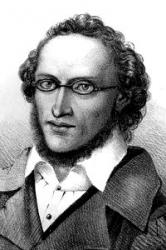
Joseph Mainzer

1801 - 1851 Person Name: Dr. Mainzer Composer of "MORNING HYMN" in The New Canadian Hymnal Abbe Joseph Mainzer, b. Trier, 1807; d. Mancehster, 1851 Evangelical Lutheran Hymnal, ====================== Born: October 21, 1801, Trier, Germany. Died: November 10, 1851, Higher Broughton (near Manchester), England. Mainzer was educated at the Maîtrise of Trier Cathedral. Having studied engineering, he worked in mines at Saarbrücken, but was ordained in 1826 and after a few years became an abbé. He left Germany in 1833 for political reasons, settling in Brussels, then Paris, and Britain in 1839, living first in Edinburgh, then, after 1847, in Manchester. He published the Musical Times and Singing Circular. Novello took over the publication in 1844, renaming it the Musical Times. Sources: Pratt, p. 622 http://www.hymntime.com/tch/bio/m/a/i/mainzer_j.htm ===================== http://en.wikisource.org/wiki/Mainzer,_Joseph_(DNB00)

Thomas Hastings

1784 - 1872 Person Name: Dr. T. Hastings Composer of "BADEN" in The National Baptist Hymnal Hastings, Thomas, MUS. DOC., son of Dr. Seth Hastings, was born at Washington, Lichfield County, Connecticut, October 15, 1784. In 1786, his father moved to Clinton, Oneida Co., N. Y. There, amid rough frontier life, his opportunities for education were small; but at an early age he developed a taste for music, and began teaching it in 1806. Seeking a wider field, he went, in 1817, to Troy, then to Albany, and in 1823 to Utica, where he conducted a religious journal, in which he advocated his special views on church music. In 1832 he was called to New York to assume the charge of several Church Choirs, and there his last forty years were spent in great and increasing usefulness and repute. He died at New York, May 15, 1872. His aim was the greater glory of God through better musical worship; and to this end he was always training choirs, compiling works, and composing music. His hymn-work was a corollary to the proposition of his music-work; he wrote hymns for certain tunes; the one activity seemed to imply and necessitate the other. Although not a great poet, he yet attained considerable success. If we take the aggregate of American hymnals published duriug the last fifty years or for any portion of that time, more hymns by him are found in common use than by any other native writer. Not one of his hymns is of the highest merit, but many of them have become popular and useful. In addition to editing many books of tunes, Hastings also published the following hymnbooks:— (1) Spiritual Songs for Social Worship: Adapted to the Use of Families and Private Circles in Seasons of Revival, to Missionary Meetings, &c, Utica, 1831-2, in which he was assisted by Lowell Mason; (2) The Mother's Hymn-book, 1834; (3) The Christian Psalmist; or, Watts's Psalms and Hymns, with copious Selections from other Sources, &c, N. Y., 1836, in connection with "William Patton; (4) Church Melodies, N. Y., 1858, assisted by his son, the Rev. T. S. Hastings; (5) Devotional Hymns and Poems, N. Y., 1850. The last contained many, but not all, of his original hymns. (6) Mother's Hymn-book, enlarged 1850. The authorship of several of Hastings's hymns has been somewhat difficult to determine. All the hymns given in the Spiritual Songs were without signatures. In the Christian Psalmist some of his contributions were signed "Anon." others "M. S.," whilst others bore the names of the tune books in which they had previously appeared; and in the Church Melodies some were signed with his name, and others were left blank. His MSS [manuscript] and Devotional Hymns, &c, enable us to fix the authorship of over 50 which are still in common use. These, following the chronological order of his leading work, are:— i. From the Spiritual Songs, 1831:— 1. Before Thy footstool kneeling. In Sickness. No. 358, in 3 stanzas of 8 lines. 2. Bleeding hearts defiled by sin. Fulness of Christ. No. 261, in 5 stanzas of 4 lines. 3. Child of sin and sorrow, Filled with dismay. Lent. No. 315, in 2 stanzas of 8 lines. It is sometimes given as "Child of sin and sorrow, Where wilt thou flee?" It is in extensive use. 4. Delay not, delay not, 0 sinner draw near. Exhortation to Repentance. No. 145, in 5 stanzas of 4 lines. Given in several important collections. 5. Forgive us, Lord, to Thee we cry. Forgiveness desired. No. 165, in 4 stanzas of 4 lines. 6. Gently, Lord, 0 gently lead us. Pilgrimage of Life. No. 29, in 2 stanzas of 8 lines. It is given in several collections. The first two lines are taken from a hymn which appeared in the Christian Lyre, 1830. 7. Go forth on wings of fervent prayer. For a blessing on the distribution of Books and Tracts. No. 250, in 4 stanzas of 5 lines. It is sometimes given as “Go forth on wings of faith and prayer," as in the Baptist Praise Book, N. Y., 1871, No. 1252; but the alterations are so great as almost to constitute it a new hymn. 8. Hail to the brightness of Zion's glad morning. Missionary Success. No. 239, in 4 stanzas of 4 lines. In several hymnbooks in Great Britain and America. 9. How calm and beautiful the morn. Easter. No. 291, in 5 stanzas of 6 lines. Very popular. 10. In this calm, impressive hour. Early Morning. No. 235, pt. i. in 3 stanzas of 6 lines. In several collections. 11. Jesus, save my dying soul. Lent. No. 398, in 4 stanzas of 4 lines. A deeply penitential hymn. 12. Now be the gospel banner. Missions. No. 178, in 2 stanzas of 8 lines. In several collections (see below). 13. Now from labour, and from care. Evening. No. 235. Pt. ii. in 3 stanzas of 6 lines. This hymn, with No. 10 above, "In this calm," &c, constitute one hymn of 6 st. in the Spiritual Songs, but divided into two parts, one for Morning and the other for Evening. Both parts are popular as separate hymns. 14. 0 God of Abraham, hear. Prayer on behalf of Children. No. 288, in 5 stanzas of 4 lines. In use in Great Britain. 15. 0 tell me, Thou Life and delight of my soul. Following the Good Shepherd. No. 151, in 5 stanzas of 4 lines, on Cant. i. 7, 8. 16. Return, O wanderer, to thy home. The Prodigal recalled. No. 183, in 3 stanzas of 4 lines, with the refrain, " Return, return " (see below). 17. Soft and holy is the place. Public Worship. No. 351, in 4 stanzas of 4 lines. In Dr. Hatfield's Church Hymn Book, N. Y., 1872, and some other collections, the opening line is altered to "Sweet and holy is the place." 18. That warning voice, 0 sinner, hear. Exhortation to Repentance. No. 231, in 4 stanzas of 6 lines. 19. To-day the Saviour calls. Lent. No. 176, in 4 stanzas of 4 lines. Dr. Hastings says, in a communication to Dr. Stevenson (Hymns for Church and Home, 1873), this hymn “was offered me in a hasty sketch which I retouched." The sketch was by the Rev. S. F. Smith. 20. Why that look of sadness. Consolation. No. 268, in 3 stanzas of 8 lines. 21. Zion, dreary and in anguish. The Church Comforted. No. 160, in 4 stanzas of 4 lines. Concerning the two hymns, No. 12, "Now be the gospel banner"; and No. 16, "Beturn, O wanderer, to thy home," Dr. Stevenson has the following note in his Hymns for Church and Home, London, 1873:— "In a letter to the Editor, Dr. Hastings wrote, not more than a fortnight before his death, 'These two hymns of mine were earlier compositions, the former ["Now be," &c.] for a Utica Sunday School celebration, the latter ["Return, 0 wanderer," &c.] after hearing a stirring revival sermon on the Prodigal Son, by the Rev. Mr. Kint, at a large union meeting in the Presbyterian Church, where two hundred converts were present. The preacher at the close eloquently exclaimed with tender emphasis, "Sinner, come home! come home! come home!" It was easy afterwards to write, "Return, 0 wanderer."'" Several additional hymns in the Spiritual Songs, 1831, have been ascribed to Dr. Hastings, but without confirmation. The sum of what can be said on his behalf is that the hymns are in his style, and that they have not been claimed by others. They are:— 22. Drooping souls, no longer mourn. Pardon promised. No. 40, in 3 stanzas of 8 1., of which st. i., ii. are altered from J. J. Harrod's Public, Parlour, and Cottage Hymns, Baltimore, 1823, that is, 8 years before the Spiritual Songs were published. 23. Dying souls, fast bound in sin. Pardon offered. No. 41, in 5 stanzas of 8 lines. It is usually given in an abridged form. ii. From his Mother's Hymn Book, 1834:—- 24. Forbid them not, the Saviour cried. Holy Baptism. No. 44. 25. God of mercy, hear our prayer. On behalf of Cliildrcn, No. 48, in 5 stanzas of 4 lines. It was included in J. Campbell's Comprehensive Hymn Book, Lond., 1837, and subsequently in several collections. 26. God of the nations, bow Thine ear. Missions. No. 115, in 4 stanzas of 6 lines. In several collections. 27. How tender is Thy hand. Affliction. No. 99, in 5 stanzas of 41. 28. Jesus, while our hearts are bleeding. Death. Resignation. No. 95, in 5 stanzas of 4 lines. This is in extensive use and is one of his best and most popular hymns. 29. Lord, I would come to Thee. Self-dedication of a Child. No. 72, in 4 stanzas of 4 lines. 30. 0 Lord, behold us at Thy feet. Lent. No. 59, in 4 stanzas of 4 lines. It is doubtful if this is by Hastings. It is sometimes signed "Mrs. T." 31. The rosy light is dawning. Morning. No. 11, in 3 stanzas of 8 lines. 32. The Saviour bids us [thee] watch and pray. Watch and Pray. No. 119, in 4 stanzas of 4 lines. 33. Thou God of sovereign grace. On behalf of Children. No. 66, in 6 stanzas of 4 lines. 34. Wherever two or three may meet. Divine Service. No. 56. 35. Within these quiet walls, 0 Lord. Mothers' Meetings. No. 58, in 5 stanzas of 4 lines. In Spurgeon's Our Own Hymn Book, 1866, No. 1010, it begins, "Within these peaceful walls." This reading is from J. Campbell's Comprehensive Hymn Book, London, 1837. It is very doubtful if this is by Hastings. iii. From the Christian Psalmist, 1836:— 36. Children, hear the melting story. On the life of Christ. No. 430, in 3 stanzas of 6 lines. It is given as from the Union Minstrel, and the statement that it is by Hastings is very doubtful, no evidence to that effect being in the possession of his family. Dr. Hatfield, in his Church Hymn Book, dates it 1830, and gives it as "Anon." 37. Go, tune thy voice to sacred song. Praise No. 190, in 5 stanzas of 5 lines, and given as from "ms." 38. He that goeth forth with weeping. Missions No. 212, in 2 stanzas of 8 lines, and given as from "ms." It is in several collections. 39. I love the Lord, Whose gracious ear. Ps. cxvi. Page 186, in 4 stanzas of 6 lines, as from "ms." 40. Lord of the harvest, bend Thine ear. For the Increase of the Ministry. No. 407, in 6 stanzas of 4 lines, as from "ms." This hymn Dr. Hastings altered for his Devotional Hymns & Poems, 1850, but it has failed to replace the original in the hymnbooks. iv. From the Reformed Dutch Additional Hymns, 1846:— 41. Child of sorrow, child of care [woe]. Trust. No. 168, in 2 stanzas of 8 lines, appeared in W. Hunter's Minstrel of Zion, 1845. 42. Heirs of an immortal crown. Christian Warfare. No. 136, in 2 stanzas of 8 lines. 43. O Saviour, lend a listening ear. Lent. No. 175. Stanzas vi., i., iv., v., altered. 44. The Lord Jehovah lives. Ps. xviii. No. 26, in 4 stanzas of 6 lines. These three hymns, together with many others, are given in the Dutch Reformed Hymns of the Church, N. Y., 1869. In the 1847 Psalms & Hymns there were, including these, 38 hymns by Hastings, and 2 which are doubtful. v. From Dr. Hastings's Devotional Hymns and Religious Poems, 1850:— 45. In time of fear, when trouble's near. Encouragement in Trial. Page 95, in 3 stanzas of 4 lines. In use in Great Britain. vi. From Church Melodies, 1858:—- 46. For those in bonds as bound with them. Missions. No. 416, in 5 stanzas of 4 lines, on Heb. xiii. 3. 47. Forget thyself, Christ bids thee come. Holy Communion. No. 683, in 3 stanzas of 6 lines. 48. Jesus, Merciful and Mild. Leaning on Christ. No. 585, in 4 stanzas of 8 1. In several collections. 49. Pilgrims in this vale of sorrow. Self-denial. No. 397, in 4 stanzas of 4 lines. 50. Saviour, I look to Thee. Lent. In time of Trouble. No. 129, in 4 stanzas of 7 lines. 51. Saviour of our ruined race. Holy Communion. No. 379, in 3 stanzas of 6 lines. 52. Why that soul's commotion? Lent. No. 211, in 3 stanzas of 8 lines. It is doubtful if this is by Hastings. vii. In Robinson's Songs of the Church, 1862: 53. Be tranquil, 0 my soul. Patience in Affliction. No. 519, in 4 stanzas of 4 lines. Altered in Robinson's Songs for the Sanctuary, 1865. 54. Peace, peace, I leave with you. Peace, the benediction of Christ. No. 386, in 3 stanzas of 7 lines. 55. Saviour, Thy gentle voice. Christ All in All. No. 492, in 3 stanzas of 7 lines. viii. In Bobinson's Songs for the Sanctuary, 1865:— 56. God of the morning ray. Morning. No. 53, in 2 stanzas of 7 lines. Of Hastings's hymns about 40 are in the Reformed Dutch Psalms & Hymns, 1847; 39 in Robinson's Songs for the Sanctuary, 1865; 15 in Hatfield's Church Hymn Book, 1872; and 13 in the Lyra Sacra Americana, 1868. They are also largely represented in other collections. Many other of his compositions are found in collections now or recently in common use, but these are not of the highest merit. [Rev. F. M. Bird, M.A.] --John Julian, Dictionary of Hymnology (1907) ======================== Hastings, T., p. 494, i. Additional hymns are:— 1. Children hear the wondrous story; and "Sinners, hear the melting story," are altered forms of No. 36, on p. 495, i. 2. Father, we for our children plead. On behalf of Children. 3. Forgive my folly, O Lord most holy. Lent. 4. Hosanna to the King, That for, &c. Praise to Jesus. 5. I look to Thee, O Lord, alone. Pardon desired. 6. Jesus, full of every grace. Pardon desired. 7. O why should gloomy thoughts arise? The Mourner Encouraged. 8. Peace to thee, O favoured one. Peace in Jesus. 9. Saviour, hear us through Thy merit. Forgiveness. Of these hymns, No. 3 is in Hasting’s Spiritual Songs, 1831; No. 9 in his Mother's Hymn Book, 1834, and his Devotional Hymns, 1850; and Nos. 4, 5 & 8 in his Devotional Hymns, 1850. --John Julian, Dictionary of Hymnology, Appendix, Part II (1907)

J. E. Sweetser

1817 - 1873 Composer of "LOWRY" in The Standard Church Hymnal

John Kent

1766 - 1843 Person Name: J. Kent Author of "Awake, My Soul" in Hymns of Consecration and Faith Kent, John, was born at Bideford, Devonshire, Dec. 1766, and died Nov. 15, 1843. As a working shipwright his opportunities for acquiring the education and polish necessary for the production of refined verse were naturally limited. His hymns are strongly worded, very earnest and simple, and intensely Calvinistic. A few were published in Samuel Reece's Collection, 1799. The first edition of his Collection of Original Gospel Hymns, was published in 1803, and the 10th edition, with "The Author's Experience," in verse, 264 hymns, 15 longer pieces, and a Life by his Son in 1861. The Calvinistic teaching so prominent in his hymns has restricted their use to a limited number of collections. The greatest use made of them in modern hymnbooks has been by Mr. Spurgeon (Our Own Hymn Book, 1866) and Mr. Snepp (Songs of Grace & Glory, 1872). In the following list the dates in brackets indicate the dates of publication:— 1. Before the Almighty began (1841). Election. 2. Betroth'd in love, ere time began (1803). Election. 3. Christ exalted is our song (1803). Christ the sin tier's Surety. 4. Come saints, and sing in sweet accord (1803). Stability of the Covenant. 5. Hark, how the blood-bought host above (1803). Election. 6. How sweet the notes of yonder choir (1841). Christmas. 7. In types and shadows we are told (1803). Pardon. 8. Indulgent God, how kind (1803). Electing Love. 9. Let Zion in her songs record (1803). Pardon--Grace exalted. 10. Love was the great self-moving cause (1803). Free Grace. 11. Precious is the Name of Jesus (1841). The Precious Name. 12. Salvation by grace, how charming the song (1803). Free Grace. 13. Saved from the damning power of sin (1803). Eternal Love. 14. Sons of God, in tribulation (1803). Affliction. 15. Sons of peace, redeemed by blood (1803). Good Friday. 16. Sovereign grace o'er sin abounding (1827). Perseverance of the faint. 17. 'Tis the Church triumphant singing (1803). Praise. 18. 'Twas not to make Jehovah's love (1803). Election. 19. 'Twas with an everlasting love (1803). Election. 20. What cheering words are these (1803). Safety in God. 21. With David's Lord, and ours (1803). The Divine Covenant. -- John Julian, Dictionary of Hymnology (1907)

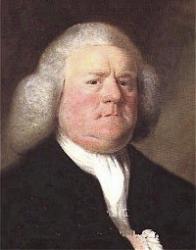
William Boyce

1711 - 1779 Person Name: Wm. Boyce Composer of "MORNING HYMN" in The National Hymn Book of the American Churches William Boyce (baptised 1711 – d. 7 February 1779) was an English composer and organist. See also in: Wikipedia

Samuel Sebastian Wesley

1810 - 1876 Person Name: Samuel Sebastian Wesley (1810-1876) Arranger of "MORNING HYMN" in Church Hymnary (4th ed.) Samuel Sebastian Wesley (b. London, England, 1810; d. Gloucester, England, 1876) was an English organist and composer. The grandson of Charles Wesley, he was born in London, and sang in the choir of the Chapel Royal as a boy. He learned composition and organ from his father, Samuel, completed a doctorate in music at Oxford, and composed for piano, organ, and choir. He was organist at Hereford Cathedral (1832-1835), Exeter Cathedral (1835-1842), Leeds Parish Church (1842­-1849), Winchester Cathedral (1849-1865), and Gloucester Cathedral (1865-1876). Wesley strove to improve the standards of church music and the status of church musicians; his observations and plans for reform were published as A Few Words on Cathedral Music and the Music System of the Church (1849). He was the musical editor of Charles Kemble's A Selection of Psalms and Hymns (1864) and of the Wellburn Appendix of Original Hymns and Tunes (1875) but is best known as the compiler of The European Psalmist (1872), in which some 130 of the 733 hymn tunes were written by him. Bert Polman

Peter Ritter

1760 - 1846 Person Name: P. Ritter Composer of "SUN OF MY SOUL" in Christian Hymns Peter Ritter; b. 1760, Mannheim; d. 1846 Evangelical Lutheran Hymnal, 1908

John Frederick Lampe

1703 - 1751 Person Name: J. H. Lampe Composer of "KENT" in Redemption Songs John Frederick Lampe (born Johann Friedrich Lampe; probably 1703 – 25 July 1751) was a musician. He was born in Saxony, but came to England in 1724 and played the bassoon in opera houses. His wife, Isabella Lampe, was sister-in-law to the composer Thomas Arne with whom Lampe collaborated on a number of concert seasons. John and Isabella's son, Charles John Frederick Lampe, was a successful organist and composer as well. Like Arne, Lampe wrote operatic works in English in defiance of the vogue for Italian opera popularised by George Frideric Handel and Nicola Porpora. Lampe, along with Henry Carey and J. S. Smith, founded the short-lived English Opera Project. He became a friend of Charles Wesley, and wrote several tunes to accompany Wesley's hymns. His works for the stage include the mock operas Pyramus and Thisbe (1745) and The Dragon of Wantley (1734), which ran for 69 nights, a record for the time, surpassing The Beggar's Opera. He was based for a time in Dublin and later in Edinburgh, where he died. --en.wikipedia.org/wiki/ See also in: Wikipedia

Charles Wesley

1707 - 1788 Person Name: Charles Wesley, 1707-1788 Author of "Awake, my soul, and with the sun" in A Choice Selection of Hymns. 2nd ed. Charles Wesley, M.A. was the great hymn-writer of the Wesley family, perhaps, taking quantity and quality into consideration, the great hymn-writer of all ages. Charles Wesley was the youngest son and 18th child of Samuel and Susanna Wesley, and was born at Epworth Rectory, Dec. 18, 1707. In 1716 he went to Westminster School, being provided with a home and board by his elder brother Samuel, then usher at the school, until 1721, when he was elected King's Scholar, and as such received his board and education free. In 1726 Charles Wesley was elected to a Westminster studentship at Christ Church, Oxford, where he took his degree in 1729, and became a college tutor. In the early part of the same year his religious impressions were much deepened, and he became one of the first band of "Oxford Methodists." In 1735 he went with his brother John to Georgia, as secretary to General Oglethorpe, having before he set out received Deacon's and Priest's Orders on two successive Sundays. His stay in Georgia was very short; he returned to England in 1736, and in 1737 came under the influence of Count Zinzendorf and the Moravians, especially of that remarkable man who had so large a share in moulding John Wesley's career, Peter Bonier, and also of a Mr. Bray, a brazier in Little Britain. On Whitsunday, 1737, [sic. 1738] he "found rest to his soul," and in 1738 he became curate to his friend, Mr. Stonehouse, Vicar of Islington, but the opposition of the churchwardens was so great that the Vicar consented that he "should preach in his church no more." Henceforth his work was identified with that of his brother John, and he became an indefatigable itinerant and field preacher. On April 8, 1749, he married Miss Sarah Gwynne. His marriage, unlike that of his brother John, was a most happy one; his wife was accustomed to accompany him on his evangelistic journeys, which were as frequent as ever until the year 1756," when he ceased to itinerate, and mainly devoted himself to the care of the Societies in London and Bristol. Bristol was his headquarters until 1771, when he removed with his family to London, and, besides attending to the Societies, devoted himself much, as he had done in his youth, to the spiritual care of prisoners in Newgate. He had long been troubled about the relations of Methodism to the Church of England, and strongly disapproved of his brother John's "ordinations." Wesley-like, he expressed his disapproval in the most outspoken fashion, but, as in the case of Samuel at an earlier period, the differences between the brothers never led to a breach of friendship. He died in London, March 29, 1788, and was buried in Marylebone churchyard. His brother John was deeply grieved because he would not consent to be interred in the burial-ground of the City Road Chapel, where he had prepared a grave for himself, but Charles said, "I have lived, and I die, in the Communion of the Church of England, and I will be buried in the yard of my parish church." Eight clergymen of the Church of England bore his pall. He had a large family, four of whom survived him; three sons, who all became distinguished in the musical world, and one daughter, who inherited some of her father's poetical genius. The widow and orphans were treated with the greatest kindness and generosity by John Wesley. As a hymn-writer Charles Wesley was unique. He is said to have written no less than 6500 hymns, and though, of course, in so vast a number some are of unequal merit, it is perfectly marvellous how many there are which rise to the highest degree of excellence. His feelings on every occasion of importance, whether private or public, found their best expression in a hymn. His own conversion, his own marriage, the earthquake panic, the rumours of an invasion from France, the defeat of Prince Charles Edward at Culloden, the Gordon riots, every Festival of the Christian Church, every doctrine of the Christian Faith, striking scenes in Scripture history, striking scenes which came within his own view, the deaths of friends as they passed away, one by one, before him, all furnished occasions for the exercise of his divine gift. Nor must we forget his hymns for little children, a branch of sacred poetry in which the mantle of Dr. Watts seems to have fallen upon him. It would be simply impossible within our space to enumerate even those of the hymns which have become really classical. The saying that a really good hymn is as rare an appearance as that of a comet is falsified by the work of Charles Wesley; for hymns, which are really good in every respect, flowed from his pen in quick succession, and death alone stopped the course of the perennial stream. It has been the common practice, however for a hundred years or more to ascribe all translations from the German to John Wesley, as he only of the two brothers knew that language; and to assign to Charles Wesley all the original hymns except such as are traceable to John Wesley through his Journals and other works. The list of 482 original hymns by John and Charles Wesley listed in this Dictionary of Hymnology have formed an important part of Methodist hymnody and show the enormous influence of the Wesleys on the English hymnody of the nineteenth century. -- Excerpts from John Julian, Dictionary of Hymnology (1907) ================== Charles Wesley, the son of Samuel Wesley, was born at Epworth, Dec. 18, 1707. He was educated at Westminster School and afterwards at Christ Church, Oxford, where he graduated M.A. In 1735, he took Orders and immediately proceeded with his brother John to Georgia, both being employed as missionaries of the S.P.G. He returned to England in 1736. For many years he engaged with his brother in preaching the Gospel. He died March 29, 1788. To Charles Wesley has been justly assigned the appellation of the "Bard of Methodism." His prominence in hymn writing may be judged from the fact that in the "Wesleyan Hymn Book," 623 of the 770 hymns were written by him; and he published more than thirty poetical works, written either by himself alone, or in conjunction with his brother. The number of his separate hymns is at least five thousand. --Annotations of the Hymnal, Charles Hutchins, M.A., 1872.

John E. Whittaker

Person Name: J. Whittaker Composer of "WIMBORNE" in University Hymns

Pages


Export as CSV
It looks like you are using an ad-blocker. Ad revenue helps keep us running. Please consider white-listing Hymnary.org or getting Hymnary Pro to eliminate ads entirely and help support Hymnary.org.