You help make Hymnary.org possible. More than 10 million people from 200+ countries found hymns, liturgical resources and encouragement on Hymnary.org in 2025, including you. Every visit affirms the global impact of this ministry.

If Hymnary has been meaningful to you this year, would you take a moment today to help sustain it? A gift of any size—paired with a note of encouragement if you wish—directly supports the server costs, research work and curation that keep this resource freely available to the world.

Give securely online today, or mail a check to:
Hymnary.org
Calvin University
3201 Burton Street SE
Grand Rapids, MI 49546

Thank you for your partnership, and may the hope of Advent fill your heart.

Person Results

Text Identifier:"^guide_me_o_thou_great_jehovah$"
In:people

Planning worship? Check out our sister site, ZeteoSearch.org, for 20+ additional resources related to your search.
Showing 11 - 20 of 112Results Per Page: 102050

Lowell Mason

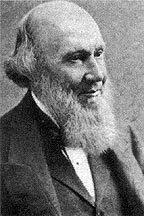
1792 - 1872 Arranger of "OLIPHANT" in The Hymnal Dr. Lowell Mason (the degree was conferred by the University of New York) is justly called the father of American church music; and by his labors were founded the germinating principles of national musical intelligence and knowledge, which afforded a soil upon which all higher musical culture has been founded. To him we owe some of our best ideas in religious church music, elementary musical education, music in the schools, the popularization of classical chorus singing, and the art of teaching music upon the Inductive or Pestalozzian plan. More than that, we owe him no small share of the respect which the profession of music enjoys at the present time as contrasted with the contempt in which it was held a century or more ago. In fact, the entire art of music, as now understood and practiced in America, has derived advantage from the work of this great man. Lowell Mason was born in Medfield, Mass., January 8, 1792. From childhood he had manifested an intense love for music, and had devoted all his spare time and effort to improving himself according to such opportunities as were available to him. At the age of twenty he found himself filling a clerkship in a banking house in Savannah, Ga. Here he lost no opportunity of gratifying his passion for musical advancement, and was fortunate to meet for the first time a thoroughly qualified instructor, in the person of F. L. Abel. Applying his spare hours assiduously to the cultivation of the pursuit to which his passion inclined him, he soon acquired a proficiency that enabled him to enter the field of original composition, and his first work of this kind was embodied in the compilation of a collection of church music, which contained many of his own compositions. The manuscript was offered unavailingly to publishers in Philadelphia and in Boston. Fortunately for our musical advancement it finally secured the attention of the Boston Handel and Haydn Society, and by its committee was submitted to Dr. G. K. Jackson, the severest critic in Boston. Dr. Jackson approved most heartily of the work, and added a few of his own compositions to it. Thus enlarged, it was finally published in 1822 as The Handel and Haydn Society Collection of Church Music. Mason's name was omitted from the publication at his own request, which he thus explains, "I was then a bank officer in Savannah, and did not wish to be known as a musical man, as I had not the least thought of ever making music a profession." President Winchester, of the Handel and Haydn Society, sold the copyright for the young man. Mr. Mason went back to Savannah with probably $500 in his pocket as the preliminary result of his Boston visit. The book soon sprang into universal popularity, being at once adopted by the singing schools of New England, and through this means entering into the church choirs, to whom it opened up a higher field of harmonic beauty. Its career of success ran through some seventeen editions. On realizing this success, Mason determined to accept an invitation to come to Boston and enter upon a musical career. This was in 1826. He was made an honorary member of the Handel and Haydn Society, but declined to accept this, and entered the ranks as an active member. He had been invited to come to Boston by President Winchester and other musical friends and was guaranteed an income of $2,000 a year. He was also appointed, by the influence of these friends, director of music at the Hanover, Green, and Park Street churches, to alternate six months with each congregation. Finally he made a permanent arrangement with the Bowdoin Street Church, and gave up the guarantee, but again friendly influence stepped in and procured for him the position of teller at the American Bank. In 1827 Lowell Mason became president and conductor of the Handel and Haydn Society. It was the beginning of a career that was to win for him as has been already stated the title of "The Father of American Church Music." Although this may seem rather a bold claim it is not too much under the circumstances. Mr. Mason might have been in the average ranks of musicianship had he lived in Europe; in America he was well in advance of his surroundings. It was not too high praise (in spite of Mason's very simple style) when Dr. Jackson wrote of his song collection: "It is much the best book I have seen published in this country, and I do not hesitate to give it my most decided approbation," or that the great contrapuntist, Hauptmann, should say the harmonies of the tunes were dignified and churchlike and that the counterpoint was good, plain, singable and melodious. Charles C. Perkins gives a few of the reasons why Lowell Mason was the very man to lead American music as it then existed. He says, "First and foremost, he was not so very much superior to the members as to be unreasonably impatient at their shortcomings. Second, he was a born teacher, who, by hard work, had fitted himself to give instruction in singing. Third, he was one of themselves, a plain, self-made man, who could understand them and be understood of them." The personality of Dr. Mason was of great use to the art and appreciation of music in this country. He was of strong mind, dignified manners, sensitive, yet sweet and engaging. Prof. Horace Mann, one of the great educators of that day, said he would walk fifty miles to see and hear Mr. Mason teach if he could not otherwise have that advantage. Dr. Mason visited a number of the music schools in Europe, studied their methods, and incorporated the best things in his own work. He founded the Boston Academy of Music. The aim of this institution was to reach the masses and introduce music into the public schools. Dr. Mason resided in Boston from 1826 to 1851, when he removed to New York. Not only Boston benefited directly by this enthusiastic teacher's instruction, but he was constantly traveling to other societies in distant cities and helping their work. He had a notable class at North Reading, Mass., and he went in his later years as far as Rochester, where he trained a chorus of five hundred voices, many of them teachers, and some of them coming long distances to study under him. Before 1810 he had developed his idea of "Teachers' Conventions," and, as in these he had representatives from different states, he made musical missionaries for almost the entire country. He left behind him no less than fifty volumes of musical collections, instruction books, and manuals. As a composer of solid, enduring church music. Dr. Mason was one of the most successful this country has introduced. He was a deeply pious man, and was a communicant of the Presbyterian Church. Dr. Mason in 1817 married Miss Abigail Gregory, of Leesborough, Mass. The family consisted of four sons, Daniel Gregory, Lowell, William and Henry. The two former founded the publishing house of Mason Bros., dissolved by the death of the former in 1869. Lowell and Henry were the founders of the great organ manufacturer of Mason & Hamlin. Dr. William Mason was one of the most eminent musicians that America has yet produced. Dr. Lowell Mason died at "Silverspring," a beautiful residence on the side of Orange Mountain, New Jersey, August 11, 1872, bequeathing his great musical library, much of which had been collected abroad, to Yale College. --Hall, J. H. (c1914). Biography of Gospel Song and Hymn Writers. New York: Fleming H. Revell Company.

Norman Johnson

1928 - 1983 Person Name: Norman Johnson, 1928- Arranger of "RHONDDA" in Revival Hymns and Choruses

Hubert P. Main

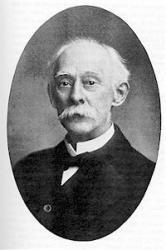
1839 - 1925 Person Name: H. P. M. Harmonizer of "[Guide me, O Thou great Jehovah] (Hastings)" in Christian Service Songs Hubert Platt Main DD USA 1839-1925. Born at Ridgefield, CT, he attended singing school as a teenager. In 1854 he went to New York City and worked as an errand boy in a wallpaper house. The next year he became an errand boy in the Bristow & Morse Piano Company. He was an organist, choir leader, and compiled books of music. He also helped his father edit the “Lute Songbook” by Isaac Woodbury. In 1866 he married Olphelia Louise Degraff, and they had two sons: Lucius, and Hubert. In 1867 he filled a position at William B Bradbury’s publishing house. After Bradbury’s death in 1868 the Bigelow & Main Publishers were formed as its successor. He also worked with his father until his father’s death in 1873. Contributors to their efforts were Fanny Crosby, Ira Sankey, Wilbur Crafts, and others. In addition to publishing, Main wrote 1000+ pieces of music, including part song, singing school songs, Sunday school music, hymns, anthems, etc. He also arranged music and collected music books. He 1891 he sold his collection of over 3500 volumes to the Newberry Library in Chicago, IL, where they were known as the Main Library. Some of his major publications include: “Book of Praise for the Sunday school” (1875), “Little pilgrim songs” (1884), “Hymns of Praise” (`1884), “Gems of song for the Sunday school” (1901), “Quartettes for men’s voices: Sacred & social selections” (1913). In 1922 Hope Publishing Company acquired Bigelow & Main. He was an editor, author, compiler, and composer, as well as publisher. He died in Newark, NJ. John Perry

William Owen

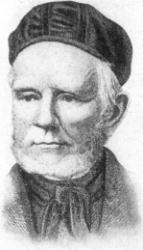
1813 - 1893 Person Name: W. Owen (1813-1898) Composer of "BRYN CALFARIA" in Hymns for Today's Church (2nd ed.) Owen, William (‘William Owen of Prysgol,’ 1813-1893), musician; b. 12? Dec. 1813 [in Lônpopty], Bangor, the son of William and Ellen Owen. The father was a quarryman at Cae Braich-y-cafn quarry, Bethesda, and the son began to work in the same quarry when he was ten years old. He learnt music at classes held by Robert Williams (Cae Aseth), at Carneddi, and from William Roberts, Tyn-y-maes, the composer of the hymn-tune ‘Andalusia.’ He wrote his first hymn-tune when he was 18 — it was published in Y Drysorfa for June 1841. After the family had [removed] to [Caesguborwen], Bangor, [sometimes called Cilmelyn] — they had spent some years [at Tŷhen] near the quarry — William Owen formed a temperance choir which sang ‘Cwymp Babilon,’ the work of the conductor, at the Caernarvon temperance festival, 1849. In 1852, with the help of some friends at Bethesda, he published Y Perl Cerddorol yn cynnwys tonau ac anthemau, cysegredig a moesol; of this 3,000 copies were sold, A solfa edition appeared in 1886 of which 4,000 copies were sold. He composed several temperance pieces, some of which were sung in the Eryri temperance festivals held at Caernarvon castle. His anthem, ‘Ffynnon Ddisglair,’ and the hymn-tunes ALMA and DEEMSTER became popular, but it was the hymn-tune called BRYN CALFARIA which made the composer famous; this continues to have a considerable vogue in Wales and in England. He married the daughter of the house called Prysgol and went there to live; he also became precentor at Caeathro C.M. chapel. He died 20 July 1893, and was buried in Caeathro chapel burial ground. --wbo.llgc.org.uk/en/

Ralph Vaughan Williams

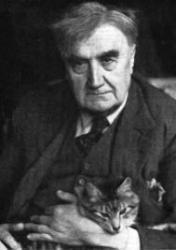
1872 - 1958 Person Name: R. Vaughan Williams (1872-1958) Arranger of "BRYN CALFARIA" in Hymns for Today's Church (2nd ed.) Through his composing, conducting, collecting, editing, and teaching, Ralph Vaughan Williams (b. Down Ampney, Gloucestershire, England, October 12, 1872; d. Westminster, London, England, August 26, 1958) became the chief figure in the realm of English music and church music in the first half of the twentieth century. His education included instruction at the Royal College of Music in London and Trinity College, Cambridge, as well as additional studies in Berlin and Paris. During World War I he served in the army medical corps in France. Vaughan Williams taught music at the Royal College of Music (1920-1940), conducted the Bach Choir in London (1920-1927), and directed the Leith Hill Music Festival in Dorking (1905-1953). A major influence in his life was the English folk song. A knowledgeable collector of folk songs, he was also a member of the Folksong Society and a supporter of the English Folk Dance Society. Vaughan Williams wrote various articles and books, including National Music (1935), and composed numerous arrange­ments of folk songs; many of his compositions show the impact of folk rhythms and melodic modes. His original compositions cover nearly all musical genres, from orchestral symphonies and concertos to choral works, from songs to operas, and from chamber music to music for films. Vaughan Williams's church music includes anthems; choral-orchestral works, such as Magnificat (1932), Dona Nobis Pacem (1936), and Hodie (1953); and hymn tune settings for organ. But most important to the history of hymnody, he was music editor of the most influential British hymnal at the beginning of the twentieth century, The English Hymnal (1906), and coeditor (with Martin Shaw) of Songs of Praise (1925, 1931) and the Oxford Book of Carols (1928). Bert Polman

T. C. O'Kane

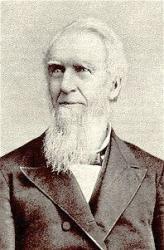
1830 - 1912 Composer of "[Guide me, O thou great Jehovah]" in Song Anchor O'Kane, Tullius Clinton, an American writer, born March 10, 1830, is the author of "O sing of Jesus, Lamb of God" (Redemption); and "Who, who are these beside the chilly wave?" (Triumph in Death), in I. D. Sankey's Sacred Songs and Solos, 1878 and 1881. --John Julian, Dictionary of Hymnology, Appendix, Part II (1907) =========================== Tullius Clinton O'Kane was born in Fairfield County, Ohio, March 10, 1830. He resided with his parents in this vicinity until the spring of 1849, when he went to Delaware, Ohio, and entered the Ohio Wesleyan University, from which he graduated in 1852, with the degree A. B., and received his A. M. degree three years later from his Alma Mater. Immediately upon his graduation, he was tendered a position in the Faculty as Tutor of Mathematics, which he accepted and successfully filled for five years. The students always called him "Professor," by which title he is known to the present day. His musical abilities were early recognized in the University, and for years he was the musical precentor in the daily chapel devotions. He organized and maintained a Choral Society in the College, and was the first musical instructor in the Ohio Wesleyan Female College, which a few years ago was incorporated into the University. In 1857 he was elected to a principalship in the Cincinnati public schools, and served in that capacity until 1861, when he resigned his position to accept a place in the piano establishment of Philip Phillips & Co. He remained with this house until its removal to New York City in 1867, when, although urged to be transferred with the house to that city, he preferred to remove with his family back to Delaware, Ohio. For the ensuing six years he traveled over the state of Ohio as the general agent for the Smith American Organ Co., of Boston, Mass. During this time he visited conferences, Sunday-school conventions, both State and County, introducing his Sunday-school singing books, and in this way became well known throughout his native state, and quite extensively in some of the adjoining states. His musical compositions were first published in Philip Phillips' Musical Leaves, in 1865, and since then but few Sunday-school singing books have appeared without one or more of his compositions. His first music book, Fresh Leaves, was issued in 1868. This was followed at intervals by Dew Drops, Songs of Worship, Every Sabbath, Jasper and Gold, Redeemer's Praise, Glorious Things and Morning Stars. In connection with his son, Edward T. O'Kane, who is himself a most excellent composer and a very skillful organist, in 1882 he issued Selected Anthems, a book designed for use by the more advanced choirs. In association with J. R. Sweney and "Chaplain" McCabe, he issued Joy to the World, a song book for prayer-meetings, and the same editors, with the addition of W. J. Kirkpatrick, compiled Songs of Redeeming Love, No. 1, in 1882, and No. 2 in 1884. He also issued Songs of Praises, Unfading Treasures and Forward Songs. Some of Professor O'Kane's best known songs are Glorious Fountain, The Home Over There, On Jordan's Stormy Banks, Say, are You Ready? and many others. With Mr. O'Kane, music and musical composition have ever been a recreation, rather than a profession. He is an excellent leader of choirs, but his forte seems to be in leading large congregations, Sunday-schools and social religious meetings in sacred song. He sings "with the spirit and the understanding also " — with a due appreciation of both words and music — and very naturally infuses his enthusiasm into his audiences so that they cannot "keep from singing." In his music he endeavors to catch the spirit of the hymn, and then give it expression in the music he composes for it. This sometimes seems to have been almost an inspiration, and could be illustrated by a reference to the circumstances under which many of his compositions have been made. One of his earlier and more widely known pieces is that entitled, Over There. He says he cut this hymn out of some newspaper and put it with others in his portfolio, intending some time when he felt like it to give it a musical setting. One Sunday afternoon, after studying his lesson for the next session of his Sunday-school, he opened his portfolio, and turning over the selections, found these words, and something seemed to say, "Now's your time." He sat down at the organ, studied the hymn intently for a few moments, and then, as his fingers touched the keys of the instrument, melody and harmony were in every movement, and when the stanza was ended, melody and harmony found their expression in the chorus, and Over There was finished. Another of his well known songs is Sweeping Through the Gates. One cold, blustery day he had occasion to go from his residence to the railroad depot, about a mile distant, and in his route had to cross the river on a suspension foot-bridge. As he came down to the bridge, he thought of the "river of death," so cold, with no bridge, and then the words of the dying Cookman came to his mind, and he exclaimed to himself: 'Who, who are these beside the chilly wave? " Words, melody and refrain seemed to come all at once and all together, so that by the time he arrived back at his home, the composition was complete. Professor O'Kane is a genial, modest Christian gentleman, who carries sunshine wherever he goes. His greatest joy comes from the consciousness that his music has cheered and comforted the hearts of Christian people all over the world, and has been the means of winning thousands from the pleasures of the world to the higher enjoyments of the Christian religion. His song, Sweeping Through the Gates, will be sung till all the ransomed are gathered Over There. -Hall, J. H. (c1914). Biographies of Gospel Song and Hymn Writers. New York: Fleming H. Revell Company. ======================== O'Kane, Tullius Clinton. Died 10 February 1912, Delaware, Ohio. Buried in Oak Grove Cemetery, Delaware, Ohio. --DNAH Archives

Wolfgang Amadeus Mozart

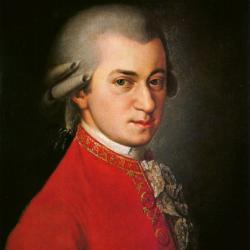
1756 - 1791 Person Name: Mozart Composer of "[Guide me, O thou great Jehovah]" in Gospel Hymns No. 2 Wolfgang Amadeus Mozart Austria 1756-1791. Born at Salzburg, Austria, the son of Leopold Mozart, a minor composer and violinist, and youngest of seven children, he showed amazing ability on violin and keyboard from earliest childhood, even starting to compose music at age four when his father would play a piece and Mozart would play it exactly as did his father. At five, he composed some of his own music, which he played to his father, who wrote it down. When Mozart was eight, he wrote his first symphony, probably transcribed by his father. In his early years his father was his only teacher, teaching his children languages and academic subjects, as well as fundamentals of their strict Catholic faith. Some of his early compositions came as a surprise to his father, who eventually gave up composing himself when he realized how talented his son was. His family made several European journeys and he and his sister, Nanneri, performed as child prodigies, at the court of Prince-elector Maximillian II of Bavaria in Munich, and at the Imperial Courts in Vienna and Prague. A long concert tour followed, for 3.5 years, taking the family to courts in Munich, Mannheim, Paris, London, Dover, The Hague, Amsterdam, Utrecht, Mechelen, and again to Paris, and back home via Zurich, Donaueschingen, and Munich. During these trips Mozart met many musicians, acquainting himself with the works of other composers. He met Johann Christian Bach in London in 1764. Family trips were challenging, and travel conditions were primitive. They had to wait for invitations and reimbursements from nobility, and they endured long, near-fatal illnesses far from home. First Leopold (1764) got sick, then both children (1765). They traveled again to Vienna in 1767 and stayed there over a year. After a year back in Salzburg, Leopold and Wolfgang went to Italy (1769-1771), Leopold wished to display his son’s abilities as a performer and maturing composer. In Bologna, Italy, Wolfgang was accepted as a member of the famous Academia Filamonica. In Rome he heard Gregorio Allegri’s Miserere twice in performance. Back in the Sistine Chapel, Mozart wrote the whole performance out from memory, thus producing the first unauthorized copy of this closely guarded property of the Vatican. In the next few years Mozart wrote several operas performed with success in Italy, but his father’s hopes of securing a professional appointment for his son were not realized. At age 17 he was engaged as a musician at the Salzburg court, but grew restless and traveled in search of a better position. After returning to Salzburg, Mozart was employed as a court musician by the ruler of Salzburg, Prince Archbishop Hieronymus Colloredo. This gave Mozart ample opportunity to develop relationships with other musicians and his admirers, resulting in his development of new symphonies, sonatas, string quartets, masses, serenades, and some minor operas. In 1775 he wrote his only violin concertos, five in all. Again, he was discontent with work in Salzburg and traveled to find more opportunity to write operas. He and his father again visited Munich and Vienna, but neither visit was successful with the exception of his opera ‘La finta giardiniera’ in Munich. In 1777 he resigned his Salzburg position and went to Augsburg, Mannheim, Paris, and Munich again. In Mannheim he met and fell in love with Aloysia Weber, one of four daughters of a musical family. He could find no real employment there and left for Paris in 1778. He might have had a position as organist at Versailles, but he was not interested in that. He fell into debt and started pawning valuables. During these events his mother died. Meanwhile his father was still trying to find him a position in Salzburg. After checking out several other European cities and Munich, he again encountered Aloysia, but she was no longer interested in him, so he returned to Salzburg, having written another symphony, concerto, and piano sonata, and took the new appointment his father had found. However, he was still in discontent. Visiting Vienna in 1781, he was dismissed from his Salzburg position. He wrote another opera, ‘Idomeneo’, in 1781, that was successful in Munich. Two months later he was summoned to Vienna, where his employer, Archbishop Colloredo, wanted him around due to his notoriety. Mozart wished to meet the emperor and perform for him, and finally got that opportunity. It resulted in a part-time position and substantial commissions. Colloredo became a nemesis to Mozart’s career, finally releasing Mozart from his employ with a literal kick in the pants, much against his father’s wishes. However, he was now independent. Mozart then decided to settle in Vienna as a free lance performer and composer. He lived with the Fridolin Weber family, who had moved from Mannheim to Vienna. Fridolin, the father, had died, and they were taking in lodgers to make ends meet. His career there went well, and he performed as a pianist before the Emperor, establishing himself as the finest keyboard player in Vienna. He wrote another opera in 1782, again achieving success. Mozart had now become a prolific and influential composer of the Classical period and was known throughout Europe. Aloysia was now married to actor, Joseph Lange, and Mozart’s interest shifted to her sister, Constanze. In 1782 he married Constanze Weber Mozart Nissen. The marriage started out with a brief separation, and there was a problem getting Mozart’s father’s permission, which finally came. They had six children, but only two survived infancy: Carl and Franz. He lived in Vienna and achieved some notoriety, composing many of his best-known symphonies, concertos, and operas. In 1782-83 he became intimately acquainted with Johann Sebastian Bach and George Friederic Handel, as his friend, Gottfried van Swieten, owned many manuscripts of the Baroque masters, which Mozart studied intently. He altered his style of composition as a result. That year Mozart and his wife visited his father and sister, and he composed a liturgical piece, a Mass, with a singing part for his wife. He also met Joseph Hadyn in Vienna in 1784 and they became friends. They even played together in a string quartet from time to time. Mozart wrote six quartets dedicated to Hadyn. In 1785 Hadyn told Leopold Mozart, “Your son is the greatest composer known to me by person and repute, he has taste, and what is more, the greatest skill in composition”. Over the next several years Mozart booked several piano concertos in various places as a sole performer to delighted audiences, making substantial remuneration for his work. He and his wife then adopted a more luxurious lifestyle. They moved to an expensive apartment and he bought a fine fortepiano and billiard table. They sent their son, Karl, to an expensive boarding school and also kept servants. In 1784 Mozart became a Freemason and even composed Masonic music. Over the next several years he did little operatic writing and focused on his career as a piano soloist and writer of concertos. He again began operatic collaboration in 1785, creating ‘The marriage of Figaro’, then ‘Don Giovanni’ in 1787. That year his father died. Also that year he obtained a steady post under Emperor Joseph II as his chamber composer. This was part-time employment that was important when hard times arrived. However, Joseph aimed at keeping Mozart from leaving Vienna for better work. The Austrio-Turkish War made life difficult for musicians, and his aristocracy support had declined. He moved to save on expenses, but that did not help much, and he was reduced to borrowing funds from his friends, and pleading for loans. During this period he produced his last three symphonies. In 1789 he then set up on a journey to Leipzig, Dresden, and Berlin hoping to improve his fortunes. In 1790 he was highly productive, producing concertos, an opera, ‘The magic flute’, a series of string quintets, a motet, and an (unfinished) Requiem. Finances began to improve and he begin paying back his debts. Public reaction to his works also brought him great satisfaction. In 1791, while in Prague for the premiere of his opera, ‘La clemenza di Tito’, he fell ill. He continued professional functions for a short time, but had to go home and be nursed by his wife over the next couple of months. He died at Vienna, Austria, at the age of 35, a small thin man with undistinguishing characteristics. He was buried in a modest grave, having had a small funeral. Beethoven composed his early works in the shadow of Mozart, and Joseph Hadyn wrote “posterity will not see such a talent (as Mozart) again in 100 years”. 600+ works. Side note: Mozart enjoyed billiards, dancing, and had a pet canary, a starling, a dog, and a horse for recreational riding. He liked off-color humor. He wore elegant clothing when performing and had a modest tenor voice. John Perry

E. J. Hopkins

1818 - 1901 Composer of "ST. RAPHAEL" in The Hymnal of Praise Dr Edward John Hopkins MusDoc United Kingdom 1818-1901. Born at Westminster, England, the son of a clarinetist with the Royal Opera House orchestra, he became an organist (as did two of his brothers) and a composer. In 1826 he became a chorister of the Chapel Royal and sang at the coronation of King William IV in Westminster Abbey. He also sang in the choir of St. Paul’s Cathedral, a double schedule requiring skill and dexterity. On Sunday evenings he would play the outgoing voluntary at St. Martin’s in-the-field. He left Chapel Royal in 1834 and started studying organ construction at two organ factories. He took an appointment at Mitcham Church as organist at age 16, winning an audition against other organists. Four years later he became organist at the Church of St. Peter, Islington. In 1841 he became organist at St. Luke’s, Berwick St., Soho. Two Years later he was organist at Temple Church, which had a historic organ (built in 1683). He held this position for 55 years. In 1845 he married Sarah Lovett, and they had four sons and five daughters. He was closely associated with the Bach Society and was organist for the first English performances of Bach’s St. Matthew Passion. In 1855 he collaborated with Edward Rimbault publishing “The organ, its history and construction” (3 editions 1855-70-77). In 1864 he was one of the founders of the “College of organists”. In 1882 he received an honorary Doctorate of Music from the Archbishop of Canterbury. He composed 30+ hymn tunes and some psalm chants, used by the Church of England. He died in London, England. John Perry

Michael Haydn

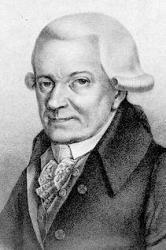
1737 - 1806 Person Name: Johann Michael Haydn, 1737-1806 Composer of "DULCE CARMEN (Salzburg)" in Evangelical Lutheran hymnal Johann Michael Haydn Austria 1737-1806. Born at Rohrau, Austria, the son of a wheelwright and town mayor (a very religious man who also played the harp and was a great influence on his sons' religious thinking), and the younger brother of Franz Joseph Haydn, he became a choirboy in his youth at the Cathedral of St. Stephen in Vienna, as did his brother, Joseph, an exceptional singer. For that reason boys both were taken into the church choir. Michael was a brighter student than Joseph, but was expelled from music school when his voice broke at age 17. The brothers remained close all their lives, and Joseph regarded Michael's religious works superior to his own. Michael played harpsichord, violin, and organ, earning a precarious living as a freelance musician in his early years. In 1757 he became kapellmeister to Archbishop, Sigismund of Grosswardein, in Hungary, and in 1762 concertmaster to Archbishop, Hieronymous of Salzburg, where he remained the rest of his life (over 40 years), also assuming the duties of organist at the Church of St. Peter in Salzburg, presided over by the Benedictines. He also taught violin at the court. He married the court singer, Maria Magdalena Lipp in 1768, daughter of the cathedral choir-master, who was a very pious women, and had such an affect on her husband, trending his inertia and slothfulness into wonderful activity. They had one daughter, Aloysia Josepha, in 1770, but she died within a year. He succeeded Wolfgang Amadeus Mozart, an intimate friend, as cathedral organist in 1781. He also taught music to Carl Maria von Weber. His musical reputation was not recognized fully until after World War II. He was a prolific composer of music, considered better than his well-known brother at composing religious works. He produced some 43 symphonies,12 concertos, 21 serenades, 6 quintets, 19 quartets, 10 trio sonatas, 4 due sonatas, 2 solo sonatas, 19 keyboard compositions, 3 ballets, 15 collections of minuets (English and German dances), 15 marches and miscellaneous secular music. He is best known for his religious works (well over 400 pieces), which include 47 antiphons, 5 cantatas, 65 canticles, 130 graduals, 16 hymns, 47 masses, 7 motets, 65 offertories, 7 oratorios, 19 Psalms settings, 2 requiems, and 42 other compositions. He also composed 253 secular vocals of various types. He did not like seeing his works in print, and kept most in manuscript form. He never compiled or cataloged his works, but others did it later, after his death. Lothar Perger catalogued his orchestral works in 1807 and Nikolaus Lang did a biographical sketch in 1808. In 1815 Anton Maria Klafsky cataloged his sacred music. More complete cataloging has been done in the 1980s and 1990s by Charles H Sherman and T Donley Thomas. Several of Michael Haydn's works influenced Mozart. Haydn died at Salzburg, Austria. John Perry

Charles H. Webb

b. 1933 Person Name: Charles H. Webb Composer (descant) of "CWM RHONDDA" in The United Methodist Hymnal Music Supplement

Pages


Export as CSV
It looks like you are using an ad-blocker. Ad revenue helps keep us running. Please consider white-listing Hymnary.org or getting Hymnary Pro to eliminate ads entirely and help support Hymnary.org.