You help make Hymnary.org possible. More than 10 million people from 200+ countries found hymns, liturgical resources and encouragement on Hymnary.org in 2025, including you. Every visit affirms the global impact of this ministry.

If Hymnary has been meaningful to you this year, would you take a moment today to help sustain it? A gift of any size—paired with a note of encouragement if you wish—directly supports the server costs, research work and curation that keep this resource freely available to the world.

Give securely online today, or mail a check to:
Hymnary.org
Calvin University
3201 Burton Street SE
Grand Rapids, MI 49546

Thank you for your partnership, and may the hope of Advent fill your heart.

Person Results

Text Identifier:"^safely_through_another_week$"
In:people

Planning worship? Check out our sister site, ZeteoSearch.org, for 20+ additional resources related to your search.
Showing 11 - 20 of 29Results Per Page: 102050

Johann Georg Ebeling

1637 - 1676 Person Name: Johann G. Ebeling Composer of "VOLLER WUNDER" in The Lutheran Hymnal Johann George Ebeling Germany 1637-1676. Born at Luneburg, Germany, he studied theology at the University of Helmstedt. He was a composer, author, editor, and collector of music. In 1660 he became head of the Hamburg Collegium, and in 1662 cantor of St. Nicholas Church in Berlin. In 1667 he begam teaching music and Greek in Stettin. He wrote choruses, chorales, cantatas, instrumentals oratorios, requiems and music for over 100 lyrics of Paul Gerhardt. He also wrote about music history. 278 works. He died in Stettin. John Perry

Joseph Barnby

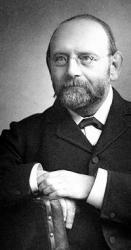
1838 - 1896 Person Name: Sir J. Barnby, 1838-1896 Composer of "DIDSBURY" in Methodist Hymn and Tune Book Joseph Barnby (b. York, England, 1838; d. London, England, 1896) An accomplished and popular choral director in England, Barnby showed his musical genius early: he was an organist and choirmaster at the age of twelve. He became organist at St. Andrews, Wells Street, London, where he developed an outstanding choral program (at times nicknamed "the Sunday Opera"). Barnby introduced annual performances of J. S. Bach's St. John Passion in St. Anne's, Soho, and directed the first performance in an English church of the St. Matthew Passion. He was also active in regional music festivals, conducted the Royal Choral Society, and composed and edited music (mainly for Novello and Company). In 1892 he was knighted by Queen Victoria. His compositions include many anthems and service music for the Anglican liturgy, as well as 246 hymn tunes (published posthumously in 1897). He edited four hymnals, including The Hymnary (1872) and The Congregational Sunday School Hymnal (1891), and coedited The Cathedral Psalter (1873). Bert Polman

M. M. Wells

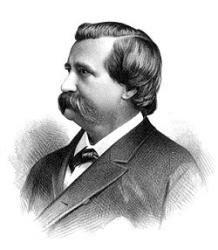
1815 - 1895 Person Name: Marcus Morris Wells, 1815- Composer of "GUIDANCE" in The Book of Praise Converted to Christianity as a youth at a mission in Buffalo, New York, Marcus Morris Wells (b. Cooperstown, NY, 1815; d. Hartwick, NY, 1895) spent most of his life near Hartwick as a farmer and maker of farm implements. He is remembered in hymnody for writing both the text and tune of "Holy Spirit, Faithful Guide." "On a Saturday afternoon, October 1858, while at work in my cornfield, the sentiment of the hymn came to me," writes Wells. "The next day, Sunday, being a very stormy day, I finished the hymn and wrote the tune for it and sent it to Prof. I. B. Woodbury." Isaac Woodbury was the editor of the New York Musical Pioneer, and the original text and tune were first published in that periodical's November 1858 issue. Bert Polman ================= Wells, Marcus M. Concerning this author and his hymn we have no information beyond the following facts:— Holy Spirit, faithful Guide. [Whitsuntide.] Appeared in The Sacred Lute, by T. E. Perkins, N.Y., undated [1864], p. 373, with music. Both words and music are attributed therein to M. M. Wells. The hymn has since been repeated in several English and American collections, including I. D. Sankey's Sacred Songs and Solos, 1878. It is dated 1858. --John Julian, Dictionary of Hymnology, New Supplement (1907)

Adam Geibel

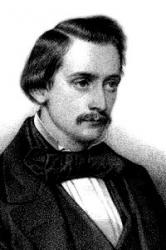
1855 - 1933 Composer of "[Safely through another week]" in Uplifted Voices Born: September 15, 1855, Neuenheim, Germany. Died: August 3, 1933, Philadelphia, Pennsylvania. Though blinded by an eye infection at age eight, Geibel was a successful composer, conductor, and organist. Emigrating from Germany probably around 1864, he studied at the Philadelphia Institute for the Blind, and wrote a number of Gospel songs, anthems, cantatas, etc. He founded the Adam Geibel Music Company, later evolved into the Hall-Mack Company, and later merged to become the Rodeheaver Hall-Mack Company. He was well known for secular songs like "Kentucky Babe" and "Sleep, Sleep, Sleep." In 1885, Geibel organized the J. B. Stetson Mission. He conducted the Stetson Chorus of Philadelphia, and from 1884-1901, was a music instructor at the Pennsylvania Institution for the Instruction of the Blind. His works include: Evening Bells, 1874 Saving Grace, with Alonzo Stone (Philadelphia, Pennsylvania: Stone & Bechter, Publishers, 1898) Consecrated Hymns, (Philadelphia, Pennsylvania: Geibel & Lehman, 1902) Uplifted Voices, co-editor with R. Frank Lehman (Philadelphia, Pennsylvania: Geibel & Lehman, 1901) World-Wide Hosannas, with R. Frank Lehman (Philadelphia, Pennsylvania: Geibel & Lehman, 1904) Hymns of the Kingdom, co-editor with R. Frank Lehman et al. (Philadelphia, Pennsylvania: Geibel & Lehman, 1905) --www.hymntime.com/tch/

Louis F. Benson

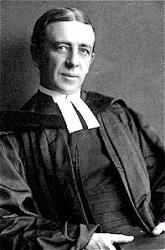
1855 - 1930 Person Name: Louis FitzGerald Benson, 1855-1930- Adapter of "Safely through another week" in The Hymnary of the United Church of Canada Benson, Louis FitzGerald, D.D., was born at Philadelphia, Penn., July 22, 1855, and educated at the University of Penn. He was admitted to the Bar in 1877, and practised until 1884. After a course of theological studies he was ordained by the Presbytery of Philadelphia North, in 1888. His pastorate of the Church of the Redeemer, Germantown, Phila., extended from his ordination in 1888 to 1894, when he resigned and devoted himself to literary and Church work at Philadelphia. He edited the series of Hymnals authorised for use by the General Assembly of the Presbyterian Church in the U.S.A., as follows:— (1) The Hymnal, Phila., 1895; (2) The Chapel Hymnal, 1898; and (3) The School Hymnal, 1899. Dr. Benson's hymnological writings are somewhat extensive. They include:— (1) Hymns and Verses (original and translations), 1897; (2) The Best Church Hymns, 1898; (3) The Best Hymns, 1898; (4) Studies of Familiar Hymns, 1903, &c. Of his original hymns the following have come into American common use:— I. In The Hymnal, 1895:— 1. O Christ, Who didst our tasks fulfil. For Schools and Colleges. Written in 1894. 2. O risen Christ, Who from Thy throne. For Installation of a Pastor. Written in 1894. II. In The School Hymnal, 1899:— 3. A glory lit the wintry sky. Loneliness of Jesus. Written in 1897. 4. Happy town of Salem. Heaven. 5. Now the wintry days are o'er. Easter. 6. O sing a song of Bethlehem. Early Life of Jesus. 7. Open the door to the Saviour. Invitation. 8. Out of the skies, like angel eyes. Lullaby. 9. Who will teach me how to pray? Prayer. In Carey Bonner's Sunday School Hymnary, 1905:— 10. The sun is on the land and sea. Morning. 11. Our wilful hearts have gone astray. Penitence. 12. When I awake from slumber. Morning. Of the above, Nos. 1-4, 10-12 are from Hymns and Verses, 1897. In the above collection by C. Bonner, Nos. 1, 4, and 6 are also found. Of Dr. Benson's translations from the Latin one only is in common use. See "Plaudite coeli, Rideat aether." As a hymn writer Dr. Benson is not widely known, mainly through the recent publication of his verse. His hymns deserve attention, and will, no doubt, gain the public ear in due time; whilst his hymnological researches and publications are thorough and praiseworthy. --John Julian, Dictionary of Hymnology, New Supplement (1907)

J. H. Deane

1824 - 1881 Composer of "[Safely through another week]" in The Church and Home Hymnal

Edwin George Monk

1819 - 1900 Person Name: Edwin G. Monk Composer of "ST. NINIAN" in Common Service Book of the Lutheran Church

John Dahle

1853 - 1931 Composer of "[Safely through another week]" in The Lutheran Hymnary Born: Jan­u­ary 3, 1853, Øystre Slidre, Opp­land, Nor­way. Dahle em­i­grat­ed to Amer­i­ca in 1877. He was an or­gan­ist, com­pos­er, song lead­er, mu­sic ed­i­tor, teach­er, and authority on hym­nol­o­gy. Dahle taught at Lu­ther The­o­lo­gi­cal Sem­in­a­ry in St. Paul, Min­ne­sota. From 1924 to 1928 he ed­it­ed a three vol­ume Lib­ra­ry of Chris­tian Hymns, with the his­to­ry of each of the 615 hymns in the Lu­ther­an hym­na­ry. --www.hymntime.com/tch/

Jacques Blumenthal

1829 - 1908 Person Name: Blumenthal Composer of "[Safely through another week]" in Beautiful Songs; a new and choice collection of songs for the sunday school. Also, a responsive service for each month in the year Jacques Blumenthal (Jacob), born in Hamburg, Oct 4, 1829. Pianist, pupil of Grund in Hamburg, and of Bocklet and Sechter in Vienna, and from 1846 of Herz and Halévy in Paris. In 1848 he went to London and became a fashionable teacher, and pianist to the Queen. besides compositions for the violin and violoncello, and pianoforte, he has written many songs. Cyclopedia of Music and Musicians by John Denison Camplin, Jr. and William Foster Apthorp (Charles Scribner’s Sons, 1888)

Christian Ignatius LaTrobe

1758 - 1836 Person Name: C. I. La Trobe, 1758-1836 Composer of "NEWTON" in Hymnal and Liturgies of the Moravian Church Born: February 12, 1758, Fulneck (near Leeds), Yorkshire, England. Died: May 6, 1836, Liverpool, England. La Trobe, Christian Ignatius, eldest son of Benjamin La Trobe, was born at the Moravian Settlement, Fulneck, Leeds, Yorkshire, Feb. 12, 1758, and educated in England and at the Brethren's College, Niesky, Silesia. Taking orders in the Moravian Church, he became in 1784 Secretary to their Society for the Furtherance of the Gospel, and in 1795 Secretary to the Unity of the Brethren in England. He died at Fairfield, near Liverpool, May 6, 1836. He is best known through his Selection of Sacred Music, in six volumes, which appeared in 1806-25. His hymnological contributions consist of a few translations from the German. [George Arthur Crawford, M.A.] --John Julian, Dictionary of Hymnology (1907)

Pages


Export as CSV
It looks like you are using an ad-blocker. Ad revenue helps keep us running. Please consider white-listing Hymnary.org or getting Hymnary Pro to eliminate ads entirely and help support Hymnary.org.