You help make Hymnary.org possible. More than 10 million people from 200+ countries found hymns, liturgical resources and encouragement on Hymnary.org in 2025, including you. Every visit affirms the global impact of this ministry.

If Hymnary has been meaningful to you this year, would you take a moment today to help sustain it? A gift of any size—paired with a note of encouragement if you wish—directly supports the server costs, research work and curation that keep this resource freely available to the world.

Give securely online today, or mail a check to:
Hymnary.org
Calvin University
3201 Burton Street SE
Grand Rapids, MI 49546

Thank you for your partnership, and may the hope of Advent fill your heart.

Person Results

Topics:common+hymns+for+high+mass
In:people

Planning worship? Check out our sister site, ZeteoSearch.org, for 20+ additional resources related to your search.
Showing 11 - 18 of 18Results Per Page: 102050

Samuel Zehner

1594 - 1635 Person Name: S. Zehner Topics: Common Hymns for High Mass After Preaching Author of "Hjælp Gud, at vi den Naade faa" in M. B. Landstads Kirkesalmebog og "Nokre Salmar" ved Professor Dr. E. Blix, samt følgende tillæg Zehner, Samuel, D.D., p. 54, ii. 2. Born at Suhl in Thuringia, May 4, 1594; became pastor and superintendent at Schleusingen, 1632, and died there April 27, 1635. --John Julian, Dictionary of Hymnology, Appendix, Part II (1907)

Bartholomaüs Ringwaldt

1532 - 1599 Person Name: B. Ringwald Topics: Common Hymns for High Mass After Preaching Author of "Gud Helligaand, i Tro os lær" in M. B. Landstads Kirkesalmebog og "Nokre Salmar" ved Professor Dr. E. Blix, samt følgende tillæg Bartholomew Ringwaldt was born at Frankfort-on-the-Oder, in 1530, and was a Lutheran pastor at Langfield, in Prussia, where he died, 1598. His hymns resemble Luther's in their simplicity and power. Several of them were written to comfort himself and others in the sufferings they endured from famine, pestilence, fire and floods. In 1581, he published "Hymns for the Sundays and Festivals of the whole Year." --Annotations of the Hymnal, Charles Hutchins, M.A. 1872. ============================ Ringwaldt, Bartholomäus (Ringwalt, Ringwald), was born Nov. 28, 1532, at Frankfurt a. Oder. He was ordained in 1557, and was pastor of two parishes before he settled in 1566 as pastor of Langfeld (or Langenfeld), near Sonnenburg, Brandenburg. He was still there in 1597, but seems to have died there in 1599, or at least not later than 1600. (Koch, ii. 182; Goedeke's Grundriss, vol. ii. 1886, p. 512; Blätter fur Hymnologie, 1885. Ringwaldt exercised a considerable influence on his contemporaries as a poet of the people, as well as by his hymns properly so called. He was a true German patriot, a staunch Lutheran, and a man who was quite ready to face the consequences of his plain speaking. His style is as a rule clear and good, though his rhymes are often enough halting; and he possessed considerable powers of observation and description. After 1577 he published various didactic poems, the most important being, (1) Newezeittung: So Hanns Fromman mit sich auss der Hellen unnd dem Himel bracht, Amberg, 1582, and the later editions enlarged and rewritten as Christliche Warnung des Trewen Eckarts, &c, Frankfurt a. Oder, 1588. In various forms and abridgments it passed through at least 34 editions up to 1700. This work is a mirror of the times and of the morals of the people. (2) Die Lauter Warheit, darinnen angezeiget, wie sich ein Weltlicher und Geistlicher Kriegsman in seinen Beruff vorhalten soil, &c, Erfurt, 1586. Of this again at least 18 eds. appeared up to 1700. In it he gives lively pictures of the life of the various ranks and orders of his time, and shows the temptations and failings of each, not by any means sparing his own class, i.e. the Lutheran clergy. As a hymnwriter Ringwaldt was also of considerable importance. He was one of the most prolific hymn-writers of the 16th century. Wackernagel, iv. pp. 906-1065, gives 208 pieces under his name, about 165 of which may be called hymns. A selection of 59 as his Geistliche Lieder, with a memoir by H. Wendebourg, was published at Halle in 1858. A number appeared in the various eds. of his Trewer Echart and Lauter Warheit as above. The rest appeared principally in his (1) Der 91. Psalm neben Siben andern schönen Liedern, &c, Frankfurt,a. Oder, 1577. (2) Evangelia, Auffalle Sontag unnd Fest, Durchs gantze Jahr, &c, Frankfurt a. Oder, N.D. The earliest edition now known is undated, but Wackernagel, i., p. 523, gives it as of 1582. It is marked as a 2nd edition, and has a preface dated Nov. 28, 1581. It contains hymns founded on the Gospels for Sundays and Festivals, &c. (3) Handbüchlin: geistliche Lieder und Gebetlein, Auff der Reiss, &c, Frankfurt a. Oder, 1586 (preface, Feb. 21, 1582). A good many of his hymns passed into German collections of the 16th and 17th centuries, and a number are still in German common use. Those of Ringwaldt's hymns which have passed into English are:— i. Es ist gewisslich an derZeit. Second Advent. The anonymous original of this hymn is one of Zwey schöne Lieder, printed separately circa 1565, and thence in Wackernagel, iv. p. 344. W. von Maltzahn, in his Bücherschatz, 1875, No. 616, p. 93, cites it as in an undated Nürnberg broadsheet, circa 1556. Wackernagel also gives along with the original the revised form in Ringwaldt's Handbüchlin, 1586. Both forms are also in the Unverfälschter Liedersegen, 1851, No. 746, in 7 stanzas of 7 lines. It is based on the "Dies Irae," but can hardly be called a version of it. The original has a picturesqueness and force which are greatly lost in Ringwaldt's revision. It was much used in Germany during the Thirty Years' War, when in these distressful times men often thought the Last Day was at hand. The translations are all, except No. 2, from Ringwaldt's text. They are:— 1. 'Tis sure that awful time will come. In full, by J. C. Jacobi, in his Psalter Germanica, 1722, p. 95 (1732, p. 202). Repeated, altered and abridged, in the Moravian Hymn Book, 1754 to 1886. It is also found in two centos. (1) The waking trumpets all shall hear (st. ii.), in Montgomery's Christian Psalmist, 1825. (2) When all with awe shall stand around (st. v.), from the Moravian Hymn Book, 1801, in the Pennsylvania Lutheran Church Book, 1868. 2. Most surely at th' appointed time. By A. T. Russell, as No. 38 in his Psalms & Hymns, 1851, repeated in the College Hymnal, N. Y., 1876. It is marked a translation from the "Dies Irae," but is really a good translation of st. i., ii., v. of the German of 1565, 3. Behold that awful day draws nigh. A translation of st. i., ii.. v., by W. Sugden, as No. 129 in the Methodist Scholars' Hymn Book, 1870. 4. The day is surely drawing near. In full by P. A. Peter as No. 457 in the Ohio Lutheran Hymnal, 1880. 5. Surely at the appointed time. By H. L. Hastings, made in 1878, and included as No. 722 in his Songs of Pilgrimage, 1886. It condenses iii., iv. as iii. 6. Tho time draws near with quickening pace. By Miss Fry, in her Hymns of the Reformation, 1845, p. 56. A hymn which has been frequently but erroneously called a translation from Ringwaldt's text, is noted as “Great God, what do I see and hear" (p. 454, i.). Hymns not in English common use:-- ii. Allein auf Gott setzt dein Vertraun. The Christian Life. In many of the older Gorman hymnbooks this is ascribed to Ringwaldt, but it is not found in any of his works now extant. Wackernagel, v. p. 327, gives it as anonymous from the Greifswald Gesang-Buch, 1597, where it is entitled "The golden A. B. C. wherein is very in¬geniously comprised what a man needs to know in order to lead an honourable and godly life." It is in 24 stanzas of 4 lines, each stanza beginning with successive letters of the alphabet. Also in Porst's Gesang-Buch, ed. 1855, No. 784. Bäumker, ii. p. 276, cites it as in the manuscript collection of a nun called Catherine Tirs, written in 1588, in the nunnery of Niesing, Münster. There it is in Low German, and begins "Allene up godt hope und truwe." Bäumker thinks Ringwaldt may possibly be the person who made the High German version. Translated as (1) "Alone in God put thou thy trust." By J. C. Jacobi, 1725, p. 29 (1732, p. 110). iii. Der Herr ist mein getreuer Hirt, Hält mich in seiner Hute. Ps. xxiii. Wackernagel, iv. p. 944, prints it from Ringwaldt's Evangelia, N.D., 1582 as above, in 7 st. of 7 1. The first four-lines of st. i. are taken from the older version, "Der Herre ist mein treuer Hirt." In the Minden Kavensberg Gesang-Buch, 1854, No. 512. Translated as (i.) "The Lord He is my Shepherd kind." By Miss Manington, 1863, p. 20. iv. Herr Jesu Christ, du höchstes Gut, Du Brunnquell der Genaden. Lent. One of the finest of German penitential hymns. Wackernagel, iv. p. 1028, gives it, in 8 st. of 7 1., from Ringwaldt's Christliche Warnung, 1588, where it is entitled "A fine hymn [of supplication] for the forgiveness of sins." In Burg's Gesang-Buch, Breslau, 1746, No. 1574. The translations are (1) “Lord Saviour Christ, my sovereign good." In the Supplement to German Psalmody, ed. 1765, p. 39. Rewritten as (2) "Lord Jesus Christ, my sov'reign good," as No. 226 in the Moravian Hymn Book , 1789. In the edition of 1886, No. 278, it begins "Jesus, thou source of every good." (3) "O Christ, thou chiefest good, thou spring." By Dr. G. Walker, 1860, p. 76. (4) "Lord Jesus Christ, thou highest good." By F. W. Young, in the Family Treasury, 1877, p. 653. [Rev. James Mearns, M.A.] --John Julian, Dictionary of Hymnology (1907)

Johannes Schneesing

1497 - 1567 Person Name: Schnesing Topics: Common Hymns for High Mass Author of "Til dig alene, Herre Krist" in M. B. Landstads Kirkesalmebog og "Nokre Salmar" ved Professor Dr. E. Blix, samt følgende tillæg Schneesing, Johannes, sometimes called Cnionmsus or Chyomusus, was a native of Frankfurt-am-Main. He was appointed, sometime before 1524, assistant to Johann Langenhayn, pastor of St. Margaret's church, in Gotha, who had begun, in 1522, to preach the doctrines of the Reformation. Subsequently he became pastor at Friemar, near Gotha; and in the records of the Visitation in 1534, he is described as a "learned, diligent, pious, and godly man." He died at Friemar, in 1567. (Koch, i. 376, &c.) During Sehneesing's early years at Friemar, his energies were greatly exercised in combating the Anabaptist doctrines promulgated in the neighbourhood by Nicolaus Storch, of Zwickau. Throughout his incumbency, he greatly interested himself in the children of his flock, for whom he prepared a Catechism, taught them in school, catechised them in church, and, as his pupil, Marx Wagner declares, taught them to sing many hymns and tunes which he had himself composed. He also possessed some skill as a painter. The only hymn which has been ascribed to Schneesing, with any certainty, is— Allein zu dir, Herr Jesu Christ. Penitence. The earliest hymn-book to which this has yet been traced, is the (Low German) Magdeburg Gesang-Buch, 1542, where it begins, "Alleyn tho dy," and is entitled, "A Hymn of Penitence." Wackernagel, iii., pp. 174-177, gives this, and three other forms (the oldest being from an undated Nürnberg broadsheet, circa 1540), and ascribes it to Schneesing. It was included by Luther in V. Babst's Gesang-Buch, 1545; and this text, in 4 stanzas of 9 lines, is repeated in many later collections, as in the Unverfälschter Liedersegen, 1851, No. 361. Bunsen, in his Versuch, 1833, p. 85, calls it "an immortal hymn of prayer of a confident faith." Its rhymes show that it was evidently written in High German, and, therefore, apparently, earlier than 1542. In the earliest broadsheets and hymnbooks, it appears without name…. The translations of Schneesing's hymn are:— 1. In Thee alone, 0 Christ, my Lord. A good tr. of st. i.—iii.- by A. T. Russell, as No. 194, in his Psalms & Hymns, 1851. 2. Lord Jesus Christ, in Thee alone. A good and full tr., by Miss Winkworth, in her Lyra Germanica, 2nd Ser., l858, p. 129. Repeated, slightly varied in metre in her Chorale Book for England, 1863, No. 112. Other translations are:— (1) "In Thee, Lord Christ, is fix'd my hope." By J. C. Jacobi, 1725, p. 20. (2) “In Thee alone, Lord Jesus Christ." This is No. 308, in pt. i, of the Moravian Hymn Book, 1754. (3) " In Thee, O Christ, is all my Hope." This is based on Jacobi's tr., and is No. 539, in pt. i., of the Moravian Hymn Book, 1754 (1886, No. 284). Included in the 1780 and later eds. of Lady Huntingdon's Selection. (4) “According to Thy mercy, Lord." This is a translation of st. iii., by J. Swertner, as st. i. of No. 720, in the Moravian Hymn Book, 1789 (1886, No. 711). [Rev. James Mearns, M.A.] --Excerpts from John Julian, Dictionary of Hymnology (1907)

N. K. Arktander

Person Name: N. Arctander Topics: Common Hymns for High Mass Translator of "Jesu, dine dybe Vunder" in M. B. Landstads Kirkesalmebog og "Nokre Salmar" ved Professor Dr. E. Blix, samt følgende tillæg

Hermann Bonnus

1504 - 1548 Person Name: H. Bonn Topics: Common Hymns for High Mass Author of "O vi arme Synd're!" in M. B. Landstads Kirkesalmebog og "Nokre Salmar" ved Professor Dr. E. Blix, samt følgende tillæg Bonn, Hermann (or Gude), son of Arnold Gude, Councillor at Quakenbrück near Osnabrück, was born at Quakenbrück about 1504. He matriculated at Wittenberg in 1523, and after studying under Luther and Melanchthon, he was for some time employed as a tutor. In 1530 he was appointed Rector of the newly founded St. Mary's School, in Lübeck; and in 1531, Superintendent of Lübeck. In 1543 at the request of the burgesses of Osnabrück he proceeded thither, and in the course of that year as the result of his work the principality was won to the cause of the Reformation. He died at Lübeck, Feb. 12, 1548 (Koch, i. 428-436; Allg. Deutsche Biographie, iii. 133). As a hymn-writer his work consisted mainly of revisions of the older Latin hymns, and translations of some of them and of a few High German hymns into Low German. His hymns appeared as Etlike schone Geistlike gesenge appended to the Magdeburg Gesang-Buch, 1542-43. The only one translated into English is:— 0 wir armen Sünder. [Fall & Redemption). First published 1542 as above in 6 stanzas of 4 lines, and thence in Wackernagel, iii. p. 735. It begins "Och wy armen sünders! unse missedadt," and first appeared in High German in the Magdeburg Gesang-Buch, 1588. Based on the old Judas hymn, c. 1400, "O du armer Judas." Translated as "We wratcheit sinnaris pure" in the Gude and Godly Ballates (edition 1567-68, folio 13), edition 1868, p. 21. (2) "'Twas our great transgression," in the Christian Examiner, Boston, U.S., Sept. 1860 [Rev. James Mearns, M.A.] -- John Julian, Dictionary of Hymnology (1907)

Hans Kugelmann

1495 - 1542 Person Name: Kugelmann Topics: Common Hymns for High Mass Composer of "[Alenest' Gud i Himmerig]" in M. B. Landstads Kirkesalmebog og "Nokre Salmar" ved Professor Dr. E. Blix, samt følgende tillæg

Birgitte K. Boye

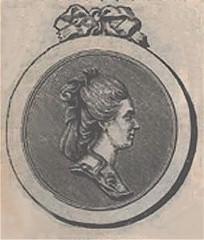
1742 - 1824 Person Name: Birgitte Katr. Boye Topics: Common Hymns for High Mass For Preaching Author of "O Lue fra Guds Kjærlighed" in M. B. Landstads Kirkesalmebog og "Nokre Salmar" ved Professor Dr. E. Blix, samt følgende tillæg Birgitte was born on March 7, 1742, in Gen­tofte, Den­mark. She was the daughter of Jens Jo­han­sen. Boye mar­ried a su­preme court judge in Co­pen­ha­gen, Den­mark. She found time to study German, French and English and translated hymns into Danish from these languages. As a hym­nist, she was in­volved with Guld­bergs og Har­boes Psalm­e­bog (Ove Guld­berg’s and Lud­vig Har­boe’s Psalt­er), to which she con­trib­ut­ed 146 hymns. She al­so pro­duced "na­tion­al dra­ma­tic writ­ing." She died on Oc­to­ber 17, 1824. Sources: Julian, p. 1001 & Stulken, p. 145

Anna Sophia von Hessen-Darmstadt

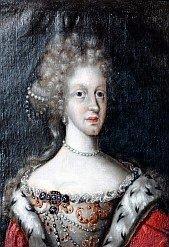
1638 - 1683 Person Name: Anna Sofia Topics: Common Hymns for High Mass For Preaching Author of "Herre tal, din Tjener hører" in M. B. Landstads Kirkesalmebog og "Nokre Salmar" ved Professor Dr. E. Blix, samt følgende tillæg Anna Sophia, daughter of the Landgrave Georg II. of Hesse-Darmstadt, was born at Marburg, Dec. 17, 1638. Carefully educated, especially in Holy Scripture and the Christian Fathers, she was in 1657 elected Pröbstin of the Lutheran Fürsten-Tochter-Stift at Quedlinburg, where she became Abbess 1680, and died Dec, 13, 1683 (Koch, iii. 549-554; Stromberger's preface, &c). Her hymns, contemplations on the union of the soul with Christ, in the spirit of the Canticles, mostly appeared in her devotional work:— Der Treue Seelen-Freund Christus Jesus mit nach denklichen Sinn-Gemählden, anmuthigen Lehr-Gedichten und neuen geistreichen Gesangen, abgedruckt und vorgestellet, Jena, 1658. The only one translation into English is Wohl dent der Jesum liebet [Holy Scripture], her best hymn, 1658, Appx. p. 26. The translations are: (l) "How happy they, who know and love," by Dr. G. Walker, 1860, p. 82. (2) "What joy to love the Saviour," in the British Herald, Nov. 1866, p. 363, repeated as No. 433 in Reid's Praise Book, 1872. [Rev. James Mearns, M.A.] -- John Julian, Dictionary of Hymnology (1907)

Pages


Export as CSV
It looks like you are using an ad-blocker. Ad revenue helps keep us running. Please consider white-listing Hymnary.org or getting Hymnary Pro to eliminate ads entirely and help support Hymnary.org.