You help make Hymnary.org possible. More than 10 million people from 200+ countries found hymns, liturgical resources and encouragement on Hymnary.org in 2025, including you. Every visit affirms the global impact of this ministry.

If Hymnary has been meaningful to you this year, would you take a moment today to help sustain it? A gift of any size—paired with a note of encouragement if you wish—directly supports the server costs, research work and curation that keep this resource freely available to the world.

Give securely online today, or mail a check to:
Hymnary.org
Calvin University
3201 Burton Street SE
Grand Rapids, MI 49546

Thank you for your partnership, and may the hope of Advent fill your heart.

Person Results

Topics:continuing+revelation
In:people

Planning worship? Check out our sister site, ZeteoSearch.org, for 20+ additional resources related to your search.
Showing 11 - 20 of 44Results Per Page: 102050

Franklin L. Sheppard

1852 - 1930 Person Name: Franklin L. Sheppard, 1852-1930 Topics: Continuing Revelation Adapter of "TERRA BEATA" in Community of Christ Sings Franklin L. Sheppard (b. Philadelphia, PA, 1852; d. Germantown, PA, 1930) arranged the tune for Babcock's text and published it in the Presbyterian church school hymnal Alleluia (1915), edited by Sheppard (Babcock and Sheppard were friends). After graduating from the University of Pennsylvania, Philadelphia, Sheppard entered the family foundry business in Baltimore, Maryland, in 1875. He was organist at Zion Episcopal Church and later was an elder and music director of the Second Presbyterian Church in Baltimore. President of the Presbyterian Board of Publications, Sheppard also served on the committee that prepared the Presbyterian Hymnal of 1911. In the history of hymnody he is remembered primarily for arranging the tune TERRA BEATA for “This Is My Father's World.” Bert Polman

George Rawson

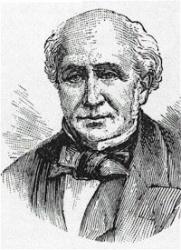
1807 - 1889 Person Name: George Rawson, 1807-1889 Topics: Continuing Revelation Author of "We Limit Not the Truth of God" in Community of Christ Sings Born: June 5, 1807, Leeds, England. Died: March 25, 1889, Clifton, England. Buried: Arno’s Vale Cemetery, Bristol, England. Pseudonym: A Leeds Layman. Rawson, George, was born June 5, 1807, at Leeds, in which town he practised for many years as a solicitor. In 1853 he assisted the Congregational ministers of Leeds in the compilation of Psalms, Hymns, and Passages of Scripture for Christian Worship, a volume commonly known as the Leeds Hymn-book. Mr. Rawson was a member of the Congregational body. In 1858 he also assisted Rev. Dr. Green and other Baptist ministers in the preparation of Psalms and Hymns for the use of the Baptist Denomination. A number of Mr. Rawson's own compositions first appeared in this and in the Leeds Hymn-book In 1876 he published his Hymns, Verses and Chants (Hodder and Stoughton, London), including his previously published hymns, and containing (exclusive of chants) 80 original pieces. In 1885 most of these, with several additional hymns, were published by the R. T. S. under the title Songs of Spiritual Thought. Mr. Rawson died March 25, 1889. His hymns are distinguished by refinement of thought, and delicacy and propriety of language; and if they do not attain the first rank among the songs of the Christian Church, many are of great excellence. The most widely known are, "By Christ redeemed, in Christ restored;" "Come to our poor nature's night;" "Father in high heaven dwelling;" "In the dark and cloudy day;" and "Reaper, behold the fields are white." In the Leeds Hymn-book, 1853, and the Baptist Psalms & Hymns, 1858, there are also several recasts of and additions to the hymns of other writers. In addition to Mr. Rawson's hymns which are annotated under their respective first lines, the following are also in common use:- i. From the Leeds Hymn-book, 1853. 1. Captain and Saviour of the host. Burial. 2. Give dust to dust: and here we leave. Burial. 3. God the Lord is King-—before him. Ps. xcix. 4. In the dark and cloudy day. Consolation. 5. Soul, thy week of toil is ended. Saturday Evening. 6. Though the night be very long. Resignation. ii. From the Baptist Psalms & Hymns, 1858. 7. Beautiful, desired, and dear. Public Worship. 8. Blessed are they who have not seen. Faith. 9. Blessed is the faithful heart. Faithfulness. 10. Christ to heaven is gone before. Ascension. 11. God the Father, be Thou near. Evening. 12. He fell asleep in Christ the Lord. Burial. 13. Immersed beneath the closing wave. Holy Baptism. 14. Lord, we bless Thee, Who hast given. Holy Communion. 15. My Father God, with filial awe. Abiding in God. 16. Our eyes we lift up to the hills. The Lord the Pastor's Keeper. 17. Reaper, behold the fields are ripe [white] . Missions. 18. Rise, heart, thy Lord arose. Sunday. 19. Upon the holy mountains high. Security of the Church. iii. From the Leeds Sunday School Hymn Book, 1858. 20. And will [How shall] the mighty God. The Holy Ghost. 21. Jesus, the Lord, our Righteousness. Jesus, the children's Friend. 22. O Thou Good Shepherd. The Good Shepherd. iv. From Dr. Allon's Supplemental Hymns, 1868. 23. My Father, it is good for me. Trust. 24. Thou Who hast known the careworn breast. Evening. 25. Walking with Thee, my God. Walking with God. v. From Mr. Rawson's Hymns, Verses, &c. 1876. 26. God is our Refuge; God our Strength. Ps. xlvi. 27. Lo, a voice from heaven hath said. Burial. 28. Lord, let me pray. I know not how. The Holy Spirit desired. 29. O pallid, gentle, grief-worn face. Easter Eve. 30. Out of the depths, the gulfs, the night. Ps. cxxx. 31. This, the old world's day of rest. Saturday Evening. [1854-7.] 32. Thou who Thyself didst sanctify. Ordination. [1854-7.] 33. Voices of the deep blue night. The Heavenly Call. 34. With gladness we worship. Public Worship. Mr. Rawson is represented by about 50 hymns in the collections of the present day. It must be noted that in the Hymns, &c, 1876, and in the Songs, &c, 1885, the texts of the hymns have been revised, and in several instances been weakened thereby. [Rev.W. R. Stevenson, M.A.] --John Julian, Dictionary of Hymnology (1907) ================ Rawson, George, p. 952, i. Additional hymns by this author in common use include:— 1. Come, Spirit of the Lord. From his “How shall the mighty God," in his Hymns, Verses, &c, 1876, No. 43. 2. Each trial hath a gentle voice. Patience and Hope. In the 1880 Supplement to the Baptist Psalms and Hymns. This is dated 1857. It is not in the author's Hymns, 1876. 3. Stand up before your God. All Saints. In the 1880 Baptist Psalms and Hymns this is dated 1865. It is not in Rawson's Hymns, 1876. --John Julian, Dictionary of Hymnology, Appendix, Part II (1907)

Dan Damon

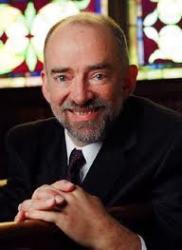
b. 1955 Person Name: Daniel Charles Damon, 1955- Topics: Continuing Revelation Author of "Blessed Is the Body and the Soul" in Community of Christ Sings Daniel Charles Damon (b. 1955) is an internationally published writer of hymn texts and tunes and is Associate Editor of Hymnody for Hope Publishing Company, Carol Stream, Illinois. Damon is also a jazz pianist and has played in many hotels and clubs in the San Francisco Bay area. He holds degrees from Greenville College, Greenville, Illinois (BME, 1977) and Pacific School of Religion, Berkeley, California (MDiv, 1987). He is an ordained Elder in the United Methodist Church in the San Francisco Bay area and a life member of the Hymn Society in the United States and Canada. Several single-author collections of Damon's hymns have been published: Faith Will Sing (Carol Stream, 1993), The Sound of Welcome (Carol Stream, 1998), To the Thirsty World (Nashville, 2002), Fields of Mercy (Carol Stream, 2007), and Garden of Joy (Carol Stream, 2011). He collaborated with text writer Gracia Grindal in A Treasury of Faith: Lectionary Hymns Series A (Colfax. 2012). Damon's hymns have been included in several major hymnals and supplements. He has also written hymn translations from Vietnamese, Portuguese, and Shona languages, and, with Patrick Matsikenyiri, edited Njalo, A Collection of 16 Hymns in the African Tradition (Nashville, 1996). He has released three recordings of hymns, carols, and traditional songs, and a solo piano recording of jazz standards (available at www.damonstuneshop.com). Damon has presented his work at national conferences of the Hymn Society in the United States and Canada and the Fellowship of United Methodists in Music and Worship Arts. He is a contributor to the Canterbury Dictionary of Hymnology. In 2016, Damon was made a Fellow of the hymn Society, the highest honor The Hymn Society can confer. Dan Damon

Max Landsberg

1845 - 1927 Person Name: Max Landsberg, 1845-1928 Topics: Continuing Revelation Translator of "The God of Abraham Praise" in Community of Christ Sings Max Landsberg was born in Berlin as the eldest son of a long-established Jewish family, shortly before his father, Meyer Landsberg, in Hildesheim took a job as a rabbi. First, Landsberg was privately educated, but then went to the high school Josephinum in Hildesheim . After graduation he studied in Göttingen, Breslau and Berlin. The training to become a rabbi he received from Lazarus eagle at the University of Kassel, Samuel Ephraim Meyer at the University of Hanover and of Abraham Geiger in Wroclaw. On 7 November 1866 he was codd at the University of Halle with his work Vita sultani Muradi "a Mohammed Amyn Mohibby, e. Mss. Bibliothecae regiae Berolinensis, addita versione latina atque adjectis adnotationibus Dr. phil. Doctorate. Since 1866, he was pin Rabbi and teachers at the seminar for Jewish teachers in Hanover. rabbi he was to his Semicha 1870. Shortly before his departure to the U.S. married Landsberg on 26 February 1871 in Hanover Miriam Isengarten (* 1847, † April 16, 1912 in Baltimore) In the fall of 1869, as in 1848 decided orthodox founded community in Rochester, hire a rabbi who could preach both in German and in English and should be a "gentleman of advanced ideas and reformed religious views". This quote is an excerpt from the ad for the position of rabbi in Rochester in the weekly magazine "The American Israelite", the public forum of the American Reform Judaism. After they found no suitable person in the country, they turned to Abraham Geiger, a pioneer of Reform Judaism in Europe. Geiger encouraged his former students to apply to this job. Because of its application in December 1870 Landsberg was invited and settled for Passover 1871 (early April 1871) to Rochester. By 1915, he stayed on as chief rabbi. What the liturgical reforms were concerned in the community, so Landsberg based on that of David Einhorn in 1858 published prayer book Olat Tamid. It contained the majority of prayers in German and was printed according to and read from left to right. However, there were already 10 days after launch on 27th April 1873 in the town of B'rith Kodesh to controversy. Then the parish council withdrew this prayer book and replaced it with a more tradition-setting, but also reforming the liturgy, which from Temple Emanu El was published in New York City. Despite the shortcomings Landsberg used this prayer book over a decade. On the other hand, it prompted him to contribute their own ideas of liturgical revision. The result was that in 1880, along with Sol[omon] Wile (1853-1931) published book Hymn Book for Jewish Worship. For two-thirds of it contained English-language songs, and the remaining were in German. Sol Wile at the time was president of the Temple B'rith Kodesh and in his preface to the hymnal, which was more intended for the community, as for the rabbi and the choir, he wrote that he is a "inbrünstigeren" of these songs worship hoped. But only the ritual prayer book for Jewish Worship by Max Landsberg itself, introduced in 1884, the community took to the center of the radical Jewish reform movement. It was the result of Landsberg efforts, in accordance with the ideas of community members to create a new liturgy, which "conform to the sentiments of the living generation" was. Landsberg not only received praise, but also harsh criticism, including by Isaac Mayer Wise. Even in our own community Landsberg faced a opposition, but this did not change in a takeover of the liturgy. It Landsberg, despite all the criticism has managed to create a completely appropriate in the English language and the Reform movement liturgy. An outstanding event for Max Landsberg in 1895 was the focus of the annual meeting of the Central Conference of American Rabbis (CCAR). He himself was in this movement since its founding in 1889 active. At this meeting there was a full agreement in the views of Isaac Mayer Wise and Landsberg that the greatest achievements of American Reform Judaism was to have freed the Jews from the ceremonial constraints. Another special feature of this period was the increased involvement of women in the community and especially in community work. There were just the women who took part in the worship and wanted to have more influence on the fortunes of the community. Here, Max Landsberg did show, by advocating openly for the rights of women. In his essay The Position of Women Among the Jews he grappled with the theological implications of women's emancipation. But Max Landsberg himself alienated since that time increasingly of the community. Maybe because it a lifelong Office guidance was issued never, but he had to extend from the council's term of office again and again. Already in July 1910, adjusted for the community Horace J. Wolf as an assistant. His contract was also extended several times. They tried to limit Landsberg's influence on the community. Particularly hard hit Landsberg his wife Miriam's death in 1912. This event was marked by bitterness his last years, so it took every joy of life. When, in March 1913, a committee at Landsberg "the lack of interest in the religious life of the congregation" found and published recommendations in October, Max Landsberg offered his resignation. Well with regard to the posted position of Landsberg gave you his resignation until December 1914 known, but he stepped into force on 1 März 1915. In the United States, Max Landsberg sat for a reform of Jewish worship one. So he held his services in English and not in Hebrew. Also published by him prayer books passed to two-thirds of English songs and the rest in German language. He also pushed for the marriage of Jews and non-Jews. As part of the American Reform Judaism Landsberg was among the rabbis, which began in the municipality for exemption from the ceremonial constraints, to use appropriate liturgies and thereafter led worship. --de.wikipedia.org/wiki (excerpts)

Moses Maimonides

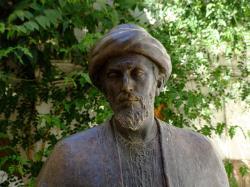
1135 - 1204 Person Name: Moses Maimonides, 1130-1205 Topics: Continuing Revelation Author of "The God of Abraham Praise" in Community of Christ Sings Moses Maimonides, original name Moses Ben Maimon, also called Rambam, Arabic name Abū ʿImran Mūsā ibn Maymūn ibn ʿUbayd Allāh (born March 30, 1135, Córdoba [Spain]—died Dec. 13, 1204, Egypt), Jewish philosopher, jurist, and physician, the foremost intellectual figure of medieval Judaism. His first major work, begun at age 23 and completed 10 years later, was a commentary on the Mishna, the collected Jewish oral laws. A monumental code of Jewish law followed in Hebrew, The Guide for the Perplexed in Arabic, and numerous other works, many of major importance. His contributions in religion, philosophy, and medicine have influenced Jewish and non-Jewish scholars alike. --www.britannica.com/ Maimonides's full name was Moses ben Maimon; in Hebrew he is known by the acronym of Rabbi Moses ben Maimon, Rambam. He was born in Spain shortly before the fanatical Muslim Almohades came to power there. To avoid persecution by the Muslim sect — which was wont to offer Jews and Christians the choice of conversion to Islam or death — Maimonides fled with his family, first to Morocco, later to Israel, and finally to Egypt. He apparently hoped to continue his studies for several years more, but when his brother David, a jewelry merchant, perished in the Indian Ocean with much of the family's fortune, he had to begin earning money. He probably started practicing medicine at this time. Maimonides's major contribution to Jewish life remains the Mishneh Torah, his code of Jewish law. His intention was to compose a book that would guide Jews on how to behave in all situations just by reading the Torah and his code, without having to expend large amounts of time searching through the Talmud. Needless to say, this provocative rationale did not endear Maimonides to many traditional Jews, who feared that people would rely on his code and no longer study the Talmud. Despite sometimes intense opposition, the Mishneh Torah became a standard guide to Jewish practice: It later served as the model for the Shulkhan Arukh, the sixteenth­century code of Jewish law that is still regarded as authoritative by Orthodox Jews. Philosophically, Maimonides was a religious rationalist. His damning attacks on people who held ideas he regarded as primitive — those, for example, who understood literally such biblical expressions as “the finger of God” so infuriated his opponents that they proscribed parts of his code and all of The Guide to the Perplexed. Other, more liberal, spirits forbade study of the Guide to anyone not of mature years. An old joke has it that these rabbis feared that a Jew would start reading a section in the Guide in which Maimonides summarizes a rationalist attack on religion, and fall asleep before reading Maimonides's counterattack-thereby spending the night as a heretic. How Maimonides's opponents reacted to his works was no joke, however. Three leading rabbis in France denounced his books to the Dominicans, who headed the French Inquisition. The Inquisitors were only too happy to intervene and burn the books. Eight years later, when the Dominicans started burning the Talmud, one of the rabbis involved, Jonah Gerondi, concluded that God was punishing him and French Jewry for their unjust condemnation of Maimonides. He resolved to travel to Maimonides's grave in Tiberias, in Israel, to request forgiveness. Throughout most of the Jewish world, Maimonides remained a hero, of course. When he died, Egyptian Jews observed three full days of mourning, and applied to his death the biblical verse "The ark of the Lord has been taken" (I Samuel 4:11). To this day, Maimonides and the French­Jewish sage Rashi are the most widely studied Jewish scholars. Contemporary yeshiva students generally focus on the Mishneh Torah, and his Book of Commandments (Sefer ha­Mitzvot) a compilation of the Torah's 613 commandments. Maimonides also formulated a credo of Judaism expressed in thirteen articles of faith, a popular reworking of which (the Yigdal prayer) appears in most Jewish prayerbooks. Among other things, this credo affirms belief in the oneness of God, the divine origins of the Torah, and the afterlife. Its twelfth statement of faith — “I believe with a full heart in the coming of the Messiah, and even though he may tarry I will still wait for him” — was often among the last words said by Jews being marched into Nazi gas chambers. Maimonides was one of the few Jewish thinkers whose teachings also influenced the non­Jewish world; much of his philosophical writings in the Guide were about God and other theological issues of general, not exclusively Jewish, interest. Thomas Aquinas refers in his writings to “Rabbi Moses,” and shows considerable familiarity with the Guide. In 1985, on the 850th anniversary of Maimonides's birth, Pakistan and Cuba — which do not recognize Israel — were among the co­sponsors of a UNESCO conference in Paris on Maimonides. Vitali Naumkin, a Soviet scholar, observed on this occasion: “;Maimonides is perhaps the only philosopher in the Middle Ages, perhaps even now, who symbolizes a confluence of four cultures: Greco­Roman, Arab, Jewish, and Western.” More remarkably, Abderrahmane Badawi, a Muslim professor from Kuwait University, declared: “I regard him first and foremost as an Arab thinker.” This sentiment was echoed by Saudi Arabian professor Huseyin Atay, who claimed that “if you didn't know he was Jewish, you might easily make the mistake of saying that a Muslim was writing.” That is, if you didn't read any of his Jewish writings. Maimonides scholar Shlomo Pines delivered perhaps the most accurate assessment at the conference: “Maimonides is the most influential Jewish thinker of the Middle Ages, and quite possibly of all time” (Time magazine, December 23, 1985). As a popular Jewish expression of the Middle Ages declares: “From Moses [of the Torah] to Moses [Maimonides] there was none like Moses.” Source: Joseph Telushkin. Jewish Literacy. NY: William Morrow and Co., 1991. Reprinted by permission of the author. --www.jewishvirtuallibrary.org/jsource/biography/Maimonides.html

Rosalee Elser

1925 - 2007 Person Name: Rosalee Elser, 1925-2007 Topics: Continuing Revelation Harmonizer of "BEACH SPRING" in Community of Christ Sings

Annabeth McClelland Gay

1925 - 2020 Person Name: Annabeth McClelland Gay, 1925- Topics: Continuing Revelation Composer of "SHEPHERDS' PIPES" in Community of Christ Sings Annabeth McClelland Gay was born in 1925 in Ottawa, Illinois, where her father was the pastor of the Presbyterian church. She was educated at Knox College (B.M.E. 1947) and Union Theological Seminary's School of Sacred Music, New York City(M.S.M. 1949). She has been choir director in the various churches her husband has served as pastor. The tune SHEPHERDS' PIPES was written by Annabeth McClelland Gay in 1952 as the setting for "The Lord Is Rich and Merciful" in the Pilgrim Hymnal (1958). Every Christmas, the Gays sent an original Christmas song to their friends. In 1952 it was Annabeth's turn to compose the music for which her husband would supply the words. "This tune 'dropped out of the blue' one evening while I was at the piano. Bill said, 'Sounds like shepherd pipes,' and ran for the Bible dictionary to see if such were used by the shepherds in Palestine, and the hymn tune was born.“ --www.firstpresbyterianfairborn.org/lifeline Annabeth McClelland Gay, 95, Lincoln, died 29 April 2020 at Eastmont Towers. Annabeth was born on 18 April 1925 to the Rev. Charles McClelland and Barbara Nessen McClelland in Ottawa, IL. She was the Valedictorian of her high school class and went to Knox College in Galesburg, IL, graduating in 1947 (Phi Beta Kappa) with a degree in music, specializing in voice and organ. She then attended Union Theological Seminary in New York, graduating in 1949 with a Master's Degree in Sacred Music. It was at Union that she met William Gay, her husband of 60 years. They married in 1949 and spent 40 years serving U.C.C. churches together in rural Ohio. During this time, she was very active in leading church music workshops throughout Ohio and adjoining states. She also gave uncountable organ, piano, and voice lessons to young and old. Annabeth was, above all, a hymnodist. With William, she composed a Christmas song or hymn every year that they sent to family and friends. Several of these were widely published and one, “Carol of Hope,” has been included in a wide variety of hymnals. Annabeth is survived by her son Timothy (Chris) of Lincoln, a brother, the Rev. Robert McClelland of St. Louis, MO, two grandsons, Frederick (Sara) of Ft. Worth, TX, and Bertram (Stacey Rickers) of Culver City, CA, and two great-grandaughters, Harriet and Beatrice, of Ft. Worth. She was preceded in death by her parents, husband, and sister, Charlotte Petersen. Memorial gifts may be made to the U.C.C. Mission Boards through First Plymouth Church or to Eastmont Towers, Lincoln. A memorial service will be held at a future date to be announced. Condolences and personal reflections may be left online at www.roperandsons.com. --www.newsbreak.com/news/1558740983045/annabeth-mcclelland-gay

Alan D. Tyree

b. 1929 Person Name: Alan D. Tyree, 1929- Topics: Continuing Revelation Author of "When as a Child We Spoke" in Community of Christ Sings

Thomas Brown

b. 1953 Person Name: Thomas Brown, 1953- Topics: Continuing Revelation Composer of "SPES" in Community of Christ Sings

Geoffrey F. Spencer

1927 - 2005 Person Name: Geoffrey F. Spencer, 1927-2005 Topics: Continuing Revelation Author of "The Living Word of Scripture" in Community of Christ Sings

Pages


Export as CSV
It looks like you are using an ad-blocker. Ad revenue helps keep us running. Please consider white-listing Hymnary.org or getting Hymnary Pro to eliminate ads entirely and help support Hymnary.org.