You help make Hymnary.org possible. More than 10 million people from 200+ countries found hymns, liturgical resources and encouragement on Hymnary.org in 2025, including you. Every visit affirms the global impact of this ministry.

If Hymnary has been meaningful to you this year, would you take a moment today to help sustain it? A gift of any size—paired with a note of encouragement if you wish—directly supports the server costs, research work and curation that keep this resource freely available to the world.

Give securely online today, or mail a check to:
Hymnary.org
Calvin University
3201 Burton Street SE
Grand Rapids, MI 49546

Thank you for your partnership, and may the hope of Advent fill your heart.

Person Results

Topics:fourth+sunday+in+advent
In:people

Planning worship? Check out our sister site, ZeteoSearch.org, for 20+ additional resources related to your search.
Showing 11 - 20 of 86Results Per Page: 102050

Christopher Tye

1497 - 1572 Topics: The Catechism The Redeemer; Fourth Sunday in Lent; Third Sunday of Advent; Fourteenth Sunday after Trinity; Nineteenth Sunday after Trinity; Twenty First Sunday after Trinity Composer of "DUNDEE" in Evangelical Lutheran hymnal Tye, Christopher, MUS. D., born at Westminster in the reign of Henry VIII. He was celebrated as a musician, and was granted the degree of MUS. D. at Cambridge in 1545. He was musical tutor to King Edward VI., and organist of the Chapel Royal under Queen Elizabeth. Besides composing numerous anthems, he rendered the first fourteen chapters of the Acts of the Apostles into metre, which were set to music by him and sung in Edward 6th's Chapel, and published in 1553. He died circa 1580. -- John Julian, Dictionary of Hymnology (1907)

Jeremiah Clarke

1669 - 1707 Person Name: Jeremiah Clarke (c. 1673-1707) Topics: Advent; Atonement; Church Year Advent; Church Year Christmas; Deliverance; God in judgement and justice; God Protection of; Light; Praise; The Fourth Sunday of Advent Year A Composer of "BROCKHAM" in Ancient and Modern

M. B. Landstad

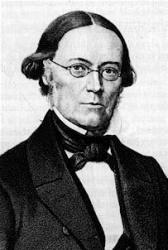
1802 - 1880 Topics: The Church Year Fourth Sunday in Advent; The Church Year Fourth Sunday in Advent Author of "When sinners see their lost condition" in The Lutheran Hymnary Magnus Brostrup Landstad (born 7 October 1802 in Måsøy, Norway and died 8 October 1880 in Kristiania) was a Norwegian minister, psalmist and poet who published the first collection of authentic Norwegian traditional ballads in 1853. This work was criticized for unscientific methods, but today it is commonly accepted that he contributed significantly to the preservation of the traditional ballads. Landstad lived with his father Hans Landstad (1771–1838) who was also a minister, first in 1806 to Øksnes, to Vinje in 1811 and to Seljord in 1819. He took a theological degree (cand. theol) in 1827, and worked after that as the resident chaplain in Gausdal for six years. After that he worked in different parishes in Telemark, Østfold before he became minister of Sandar in Vestfold in 1859. He married Wilhelmine Margrete Marie Lassen, in 1828. He is well known for introducing popular, contemporary Norwegian language into the hymns he wrote, contributing significantly to the spirit of Norwegian romantic nationalism which grew in Norway in this period. His greatest single achievement was the Landstad Hymnbook (Kirkepsalmebog), which with later revisions was used in Norwegian (bokmål) parishes from 1869 until 1985. The current official church hymnbook contains a lot of his hymns and his translations of foreign hymns. He was the cousin of Hans Peter Schnitler Krag. The Landstad-institute, which lies in Seljord, is named after him. He was a great grandfather of Magny Landstad, also a famous writer. Publications-- 1852: Norske Folkeviser. 3 vols. Christiania: C. Tönsberg, [1852-]1853. 1869: Kirkesalmebok: efter offentlig Foranstaltning. Kristiania: J. W. Cappelens Forlag, 1871 --http://en.wikipedia.org/wiki/ See also in: Wikipedia

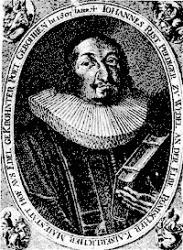
Johann Rist

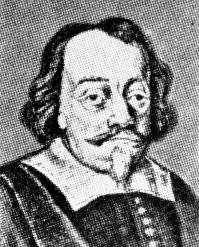
1607 - 1667 Person Name: Johan Rist Topics: Fourth Sunday in Advent Author of "Vorder Lys, I Hedninglande!" in Salmebog for Lutherske Kristne i Amerika Rist, Johann, son of Kaspar Rist, pastor at Ottensen, near Hamburg, was born at Ottensen, March 8, 1607, and from his birth was dedicated to the ministry. After passing through the Johanneum at Hamburg and the Gymnasium Illustre at Bremen, he matriculated, in his 21st year, at the University of Rinteln, and there, under Josua Stegmann (q. v.), he received an impulse to hymn-writing. On leaving Rinteln he acted as tutor to the sons of a Hamburg merchant, accompanying them to the University of Rostock, where he himself studied Hebrew, Mathematics and also Medicine. During his residence at Rostock the terrors, of the Thirty Years War almost emptied the University, and Rist himself also lay there for weeks ill of the pestilence. After his recovery he seems to have spent some time at Hamburg, and then, about Michaelmas, 1633, became tutor in the house of the lawyer (Landschreiber) Heinrich Sager, at Heide, in Holstein. There he betrothed himself to Elizabeth, sister of the Judge Franz Stapfel, whose influence seems to have had a good deal to do with Rist's appointment as pastor at Wedel. In the spring of 1635 he married and settled at Wedel (on the Elbe, a few miles below Hamburg), where, spite of various offers of preferment, he remained till his death, on Aug. 31, 1667. (Johann Rist und seine Zeit, by Dr. T. Hansen, Halle, 1872; K. Goedeke's Grundriss, vol. iii., 1887, p. 79; Koch, iii., 212; Bode, p. 135, &c. The statements of the various authorities regarding the period 1624-1635 vary greatly and irreconcilably.) During the Thirty Years War Rist had much to endure from famine, plundering, and pestilence. Otherwise he led a patriarchal and happy life at Wedel, close to the congenial society of Hamburg, and as years went on more and more esteemed and honoured by his contemporaries. The Emperor Ferdinand III. crowned him as a poet in 1644, and in 1653 raised him to the nobility, while nearer home Duke Christian of Mecklenburg appointed him Kirchenrath and Consistorialrath. Among other literary honours he was received in 1645 as a member of the Pegnitz Order, and in 1647 as a member of the Fruitbearing Society, the great German literary union of the 17th century; while in 1660 he himself became the founder and head of the Elbe Swan Order, which however did not survive his death. Rist was an earnest pastor and a true patriot. He of course took the side, and that with all his might, of the Protestants, but he longed as few did for the union of the scattered elements of the body politic in Germany. He was a voluminous and many-sided writer (see the full bibliographies in Hansen and Goedeke as above). His secular works are of great interest to the student of the history of the times, and his occasional poems on marriages, &c, to the genealogist and local historian. Perhaps the most interesting to the general reader are the Friede wünschende Teutschland, 1647, and the Friedejauchzende Teutschland, 1653, two plays in which there are vivid pictures of the times, especially of the condition of the lower classes during the Thirty Years War. These plays, with selections from his other secular poems and from his hymns, are included in his Dichtungen, Leipzig, 1885, edited by Goedeke and E. Goetze. Hansen gives analyses of the secular works, with a few extracts from them; and in his second part gives a full selection from the hymns, often however greatly abridged. As a hymn-writer Rist takes high rank. He wrote some 680 hymns, intended to cover the whole ground of Theology, and to be used by all ranks and classes, and on all the occasions of life. Naturally enough they are not of equal merit, and many are poor and bombastic. Rist meant them rather for private use than for public worship, and during his lifetime they were never used in the church at Wedel. But they were eagerly caught up, set to melodies by the best musicians of the day, and speedily passed into congregational use all over Germany, while even the Roman Catholics read them with delight. Over 200 may be said to have been in common use in Germany, and a large number still hold their place. Unfortunately many are very long. But speaking of Rist's better productions, we may say that their noble and classical style, their objective Christian faith, their scriptualness, their power to console, to encourage, and to strengthen in trust upon God's Fatherly love, and their fervent love to the Saviour (especially seen in the best of his hymns for Advent, and for the Holy Communion), sufficiently justify the esteem in which they were, and are, held in Germany. The best known of Rist's hymns appeared in the following collections:— (1) Himlischs Lieder. This contains 50 hymns. The Erste Zehen is dated Lüneburg, 1641, the 2-6 Zehen are dated 1642 [Royal Library, Berlin]. In the later editions Rist made various alterations, and also expanded the titles of the hymns, these changes being almost all for the worse. (2) Neüer himlischer Lieder sonderbahres Buch, Lüneburg, 1651 [Wernigerode Library]. 50 hymns. (3) Sabbahtische Seelenlust, Lüneburg, 1651 [British Museum and Göttingen]. With 58 hymns on the Gospels for Sundays, &c. (4) Frommer und gottseliger Christen alltägliche Haussmusik, Lüneburg, 1654 [Brit. Mus. and Göttingen], with 70 hymns. (5) Neüe musikalische Fest-Andachten, Lüneburg, 1655 [Wernigerode]. With 52 hymns on the Sunday Gospels. (6) Neüe musikalische Katechismus Andachten, Lüneburg, 1656 [British Museum and Wernigerode]. With 50 hymns. Seven of Rist's hymns are separately noted under their German first lines. The others which have passed into English are:-- i. Du Lebensbrod, Herr Jesu Christ. Holy Communion. In his Haussmusik, 1654, No. 7, p. 32, in 8 stanzas of 8 lines, entitled "A devotional hymn, which may be sung when the people are about to take their place at the Holy Communion of the Lord." Founded on Ps. xxiii. Included as No. 473 in the Berlin Geistliche Lieder, ed. 1863. Translated as:— Lord Jesu Christ, the living bread. A good translaton of stanzas i., ii., iii., v., by A. T. Russell, as No. 159 in his Psalms & Hymns, 1851. ii. Ehr und Dank sei dir gesungen. On the Angels. In his Fest-Andachten, 1655, No. 46, p. 304, in 9 stanzas of 10 lines, entitled "Another hymn of Praise and Thanksgiving on the same Gospel [S. Matt, xviii.] for St. Michael's Day. In which the great God who created the Angels, and appointed them for our service, is from the heart adored and praised." Included in Burg's Gesang-Buch, Breslau, 1746, No. 219, and in Bunsen's Versuch, 1833, No. 233. The translations in common use are:— 1. Praise and thanks to Thee be sung. By Miss Winkworth, omitting st. iii.—vi., in her Lyra Germanica, 1st Ser., 1855, p. 205, repeated in her Chorale Book for England, 1863, No. 85. 2. Glory, praise, to Thee be sung. A translation of st. i. as No. 1224, in the Moravian Hymn Book, 1886. iii. Ermuntre dich, mein schwacher Geist. Christmas. Founded on Isaiah ix. 2-7. First published in the Erstes Zehen of his Himlische Lieder, 1641, No. 1, p. 1, in 12 stanzas of 8 lines, entitled "A hymn of praise on the joyful Birth and Incarnation of our Lord and Saviour Jesus Christ." Included in Crüger's Praxis, 1656, No. 87, and recently, omitting st. viii., as No. 32 in the Unverfälschter Liedersegen 1851. The translations in common use are:— 1. Be cheerful, thou my spirit faint. A translation of st. i. by J. Gambold, as No. 138 in pt. i. of the Moravian Hymn Book, 1754; repeated as st. i. of No. 437, altered to "Arise my spirit, leap with joy," and with his trs. of st. ii., iv., ix. added. In the edition of 1789, No. 46 (1886, No. 41), it begins, "Arise, my spirit, bless the day.” 2. O Jesu! welcome, gracious Name! This is a translation of st. ii., vi., xii., by A. T. Russell, as No. 55 in his Psalms & Hymns., 1851. Another translation is "My languid spirit, upward spring." By N. L. Frothingham, 1870, p. 179. iv. Gott sei gelobet, der allein. Joy in God. In his Neüer Himlischer Lieder 1651, p. 126, No. 9, in 13 stanzas of 7 lines, entitled “A joyful hymn of Thanksgiving to God, that He permits us to enjoy our daily bread in health, peace and prosperity, with a humble prayer that He would graciously preserve us in the same." Included in Olearius's Singe-Kunst, 1671, No. 322, and recently in Knapp's Evangelischer Lieder-Schatz 1850, No. 1696 (1865, No. 1766). The tr. in common use is:— Now God be praised, and God alone . By Miss Winkworth, omitting st. iii., vi., viii., ix., in her Christian Singers, 1869, p. 192. Repeated, abridged, in Statham's Collection, Edinburgh, 1869, No. 63 (1870, No. 110). v. Jesu, der du meine Seele. Lent. In the Erstes Zehen of his Himlische Lieder, 1641, p. 35, No. 7, in 12 stanzas of 8 lines, entitled "A heartfelt hymn of penitence to his most beloved Lord Jesus, for the forgiveness of his many and manifold sins." Founded on prayer viii. in Class in. of J. Arndt's Paradiesgärtlein, 1612. In the Unverfälschter Liedersegen, 1851, No. 382. The translations in common use are:—- 1. Thou hast cancell'd my transgression. A translation of st. vi., viii., as No. 1022, in the Supplement of 1808 to the Moravian Hymn Book, 1801 (1886, No. 107). 2. Jesu! Who in sorrow dying. A free translation of st. i., iii. lines 1-4, v. 11. 5-8, xii., by A. T. Russell, as No. 78 in his Psalms & Hymns, 1851. vi. 0 Jesu, meine Wonne. Holy Communion. This beautiful hymn appears in Rist's Hauss-musik, 1654, No. 9, p. 42, in 14 stanzas of 4 lines, entitled "The heartfelt Thanksgiving of a pious Christian when he has partaken of the Holy Communion." In the Unverfälschter Liedersegen, 1851, No. 285. The translation in common use is:— 0 Sun of my salvation. A good tr. of st. i., iii., v., vi., by A. T. Russell, as No, 160 in his Psalms & Hymns, 1851. Another translation is:— “0 Christ, my joy, my soul's delight." By Dr. G. Walker, 1860, p. 65. vii. Werde licht, du Stadt der Heiden. Epiphany. In his Fest-Andachten , 1655, p. 82, No. 13, in 15 stanzas of 6 lines, entitled "Another festival hymn of the day of the Manifestation of Christ, in which the glorious, godlike, and eternal Light, which has graciously arisen on us poor heathen in thick darkness, is devotedly contemplated." In the Unverfälschter Liedersegen, 1851, No. 82. Translated as:— 1. All ye Gentile lands awake. A good tr. of st. i.-iv., vi., vii., xiv. xv., by Miss Winkworth, in her Lyra Germanica, 1st Ser., 1855, p. 30. Repeated, abridged, in Schaffs Christ in Song, 1869 aud 1870, and in Flett's Collection, Paisley, 1871. 2. Rise, O Salem, rise and shine. A good translation of stanzas i., iii., vii., xiv., xv., based on her Lyra Germanica version but altered in metre, by Miss Winkworth, in her Chorale Book for England, 1863, No. 38. Repeated in J. L. Porter's Collection, 1876, and the Pennsylvania Lutheran Ch. Book, 1868. viii. Wie wohl hast du gelabet. Holy Communion. In his Neüer Himlischer Lieder, 1651, p. 78, in 9 stanzas of 12 lines, entitled "A hymn of heartfelt Praise and Thanksgiving after the reception of the Holy Communion." In the Unverfälschter Liedersegen, 1851, No. 291. The translation in common use is:— O Living Bread from Heaven. A good tr., omitting st. iv., by Miss Winkworth, in her Lyra Germanica 2nd Ser., 1858, p. 103; repeated in her Chorale Book for England, 1863, No. 94, omitting the trsanslations of iii., v., vi. Her translations of st. i.-iii., ix. were included, slightly altered, in the Pennsylvania Lutheran Ch. Book, 1868. The following have also been tr. into English:— ix. Heut ist das rechte Jubelfest. Whitsuntide. In his Fest-Andachten, 1655, p. 216, No. 33, in 12 stanzas, founded on the Gospel for Whitsunday (St. John xiv.). In Olearius's Singe-Kunst, 1671, No. 704, and Porst's Gesang-Buch, ed. 1855, No. 173. The text translation is that in Bunsen's Allgemeine Gesang-Buch, 1846, No. 114, where it begins with st. v., "Heut hat der grosse Himmeleherr." Translated as "This day sent forth His heralds bold." By Miss Cox, in the Churchman's Shilling Magazine, June 1867. x. Ich will den Herren loben. Praise and Thanksgiving. Founded on Ps. xxxiv. In his Neüer Himlischer Lieder, 1651, p. 132 (No. 10 in pt. ii.), in 12 st. of 8 1. This form is in Burg's Gesang-Buch, Breslau, 174G, No. 1201. In his Haussmusik, 1654, p. 348, No. 64, Rist rewrote it to 6 stanzas of 12 lines, and of this form st. iv.-vi., beginning "Man lobt dich in der Stille, ed. 1863, No. 1018. The translation from this last text is "To Thee all praise ascendeth." In the British Herald, May 1866, p. 265, repeated in Reid's Praise Book, 1872. [Rev. James Mearns, M.A.] --John Julian, Dictionary of Hymnology (1907)

Bartholomaüs Ringwaldt

1532 - 1599 Person Name: Bart. Ringwald Topics: Fourth Sunday in Advent Author of "O Helligaand, du Skat saa skjøn" in Salmebog for Lutherske Kristne i Amerika Bartholomew Ringwaldt was born at Frankfort-on-the-Oder, in 1530, and was a Lutheran pastor at Langfield, in Prussia, where he died, 1598. His hymns resemble Luther's in their simplicity and power. Several of them were written to comfort himself and others in the sufferings they endured from famine, pestilence, fire and floods. In 1581, he published "Hymns for the Sundays and Festivals of the whole Year." --Annotations of the Hymnal, Charles Hutchins, M.A. 1872. ============================ Ringwaldt, Bartholomäus (Ringwalt, Ringwald), was born Nov. 28, 1532, at Frankfurt a. Oder. He was ordained in 1557, and was pastor of two parishes before he settled in 1566 as pastor of Langfeld (or Langenfeld), near Sonnenburg, Brandenburg. He was still there in 1597, but seems to have died there in 1599, or at least not later than 1600. (Koch, ii. 182; Goedeke's Grundriss, vol. ii. 1886, p. 512; Blätter fur Hymnologie, 1885. Ringwaldt exercised a considerable influence on his contemporaries as a poet of the people, as well as by his hymns properly so called. He was a true German patriot, a staunch Lutheran, and a man who was quite ready to face the consequences of his plain speaking. His style is as a rule clear and good, though his rhymes are often enough halting; and he possessed considerable powers of observation and description. After 1577 he published various didactic poems, the most important being, (1) Newezeittung: So Hanns Fromman mit sich auss der Hellen unnd dem Himel bracht, Amberg, 1582, and the later editions enlarged and rewritten as Christliche Warnung des Trewen Eckarts, &c, Frankfurt a. Oder, 1588. In various forms and abridgments it passed through at least 34 editions up to 1700. This work is a mirror of the times and of the morals of the people. (2) Die Lauter Warheit, darinnen angezeiget, wie sich ein Weltlicher und Geistlicher Kriegsman in seinen Beruff vorhalten soil, &c, Erfurt, 1586. Of this again at least 18 eds. appeared up to 1700. In it he gives lively pictures of the life of the various ranks and orders of his time, and shows the temptations and failings of each, not by any means sparing his own class, i.e. the Lutheran clergy. As a hymnwriter Ringwaldt was also of considerable importance. He was one of the most prolific hymn-writers of the 16th century. Wackernagel, iv. pp. 906-1065, gives 208 pieces under his name, about 165 of which may be called hymns. A selection of 59 as his Geistliche Lieder, with a memoir by H. Wendebourg, was published at Halle in 1858. A number appeared in the various eds. of his Trewer Echart and Lauter Warheit as above. The rest appeared principally in his (1) Der 91. Psalm neben Siben andern schönen Liedern, &c, Frankfurt,a. Oder, 1577. (2) Evangelia, Auffalle Sontag unnd Fest, Durchs gantze Jahr, &c, Frankfurt a. Oder, N.D. The earliest edition now known is undated, but Wackernagel, i., p. 523, gives it as of 1582. It is marked as a 2nd edition, and has a preface dated Nov. 28, 1581. It contains hymns founded on the Gospels for Sundays and Festivals, &c. (3) Handbüchlin: geistliche Lieder und Gebetlein, Auff der Reiss, &c, Frankfurt a. Oder, 1586 (preface, Feb. 21, 1582). A good many of his hymns passed into German collections of the 16th and 17th centuries, and a number are still in German common use. Those of Ringwaldt's hymns which have passed into English are:— i. Es ist gewisslich an derZeit. Second Advent. The anonymous original of this hymn is one of Zwey schöne Lieder, printed separately circa 1565, and thence in Wackernagel, iv. p. 344. W. von Maltzahn, in his Bücherschatz, 1875, No. 616, p. 93, cites it as in an undated Nürnberg broadsheet, circa 1556. Wackernagel also gives along with the original the revised form in Ringwaldt's Handbüchlin, 1586. Both forms are also in the Unverfälschter Liedersegen, 1851, No. 746, in 7 stanzas of 7 lines. It is based on the "Dies Irae," but can hardly be called a version of it. The original has a picturesqueness and force which are greatly lost in Ringwaldt's revision. It was much used in Germany during the Thirty Years' War, when in these distressful times men often thought the Last Day was at hand. The translations are all, except No. 2, from Ringwaldt's text. They are:— 1. 'Tis sure that awful time will come. In full, by J. C. Jacobi, in his Psalter Germanica, 1722, p. 95 (1732, p. 202). Repeated, altered and abridged, in the Moravian Hymn Book, 1754 to 1886. It is also found in two centos. (1) The waking trumpets all shall hear (st. ii.), in Montgomery's Christian Psalmist, 1825. (2) When all with awe shall stand around (st. v.), from the Moravian Hymn Book, 1801, in the Pennsylvania Lutheran Church Book, 1868. 2. Most surely at th' appointed time. By A. T. Russell, as No. 38 in his Psalms & Hymns, 1851, repeated in the College Hymnal, N. Y., 1876. It is marked a translation from the "Dies Irae," but is really a good translation of st. i., ii., v. of the German of 1565, 3. Behold that awful day draws nigh. A translation of st. i., ii.. v., by W. Sugden, as No. 129 in the Methodist Scholars' Hymn Book, 1870. 4. The day is surely drawing near. In full by P. A. Peter as No. 457 in the Ohio Lutheran Hymnal, 1880. 5. Surely at the appointed time. By H. L. Hastings, made in 1878, and included as No. 722 in his Songs of Pilgrimage, 1886. It condenses iii., iv. as iii. 6. Tho time draws near with quickening pace. By Miss Fry, in her Hymns of the Reformation, 1845, p. 56. A hymn which has been frequently but erroneously called a translation from Ringwaldt's text, is noted as “Great God, what do I see and hear" (p. 454, i.). Hymns not in English common use:-- ii. Allein auf Gott setzt dein Vertraun. The Christian Life. In many of the older Gorman hymnbooks this is ascribed to Ringwaldt, but it is not found in any of his works now extant. Wackernagel, v. p. 327, gives it as anonymous from the Greifswald Gesang-Buch, 1597, where it is entitled "The golden A. B. C. wherein is very in¬geniously comprised what a man needs to know in order to lead an honourable and godly life." It is in 24 stanzas of 4 lines, each stanza beginning with successive letters of the alphabet. Also in Porst's Gesang-Buch, ed. 1855, No. 784. Bäumker, ii. p. 276, cites it as in the manuscript collection of a nun called Catherine Tirs, written in 1588, in the nunnery of Niesing, Münster. There it is in Low German, and begins "Allene up godt hope und truwe." Bäumker thinks Ringwaldt may possibly be the person who made the High German version. Translated as (1) "Alone in God put thou thy trust." By J. C. Jacobi, 1725, p. 29 (1732, p. 110). iii. Der Herr ist mein getreuer Hirt, Hält mich in seiner Hute. Ps. xxiii. Wackernagel, iv. p. 944, prints it from Ringwaldt's Evangelia, N.D., 1582 as above, in 7 st. of 7 1. The first four-lines of st. i. are taken from the older version, "Der Herre ist mein treuer Hirt." In the Minden Kavensberg Gesang-Buch, 1854, No. 512. Translated as (i.) "The Lord He is my Shepherd kind." By Miss Manington, 1863, p. 20. iv. Herr Jesu Christ, du höchstes Gut, Du Brunnquell der Genaden. Lent. One of the finest of German penitential hymns. Wackernagel, iv. p. 1028, gives it, in 8 st. of 7 1., from Ringwaldt's Christliche Warnung, 1588, where it is entitled "A fine hymn [of supplication] for the forgiveness of sins." In Burg's Gesang-Buch, Breslau, 1746, No. 1574. The translations are (1) “Lord Saviour Christ, my sovereign good." In the Supplement to German Psalmody, ed. 1765, p. 39. Rewritten as (2) "Lord Jesus Christ, my sov'reign good," as No. 226 in the Moravian Hymn Book , 1789. In the edition of 1886, No. 278, it begins "Jesus, thou source of every good." (3) "O Christ, thou chiefest good, thou spring." By Dr. G. Walker, 1860, p. 76. (4) "Lord Jesus Christ, thou highest good." By F. W. Young, in the Family Treasury, 1877, p. 653. [Rev. James Mearns, M.A.] --John Julian, Dictionary of Hymnology (1907)

James E. Clarkes

Person Name: J. Clarke, 1670—1707 Topics: The Church Year The Fourth Sunday in Advent; The Church Year Fourth Sunday in Advent Composer of "[Hark the glad sound!]" in The Lutheran Hymnary

Valentin Thilo

1607 - 1662 Person Name: Thilo Topics: Fourth Sunday in Advent High Mass Author of "O Mennesker, bereder" in M. B. Landstads Kirkesalmebog og "Nokre Salmar" ved Professor Dr. E. Blix, samt følgende tillæg Thilo, Valentin, son of Valentin Thiel or Thilo [born Jan. 2, 1579, at Zinten, became diaconus of the Altstadt Church in 1603, and died of the pestilence at Königsberg in 1620], diaconus of the Altstadt Church in Königsberg, was born at Königsberg, April 19, 1607. He matriculated in 1624 at the University of Königsberg as a student of theology, but devoted himself more especially to the study of rhetoric. When the Professor of Rhetoric, Samuel Fuchs, retired in 1632, he recommended Thilo as his successor. The post was, at Thilo's desire, kept open for two years, during which he pursued his studies at the University of Leyden. On returning to Königsberg, he graduated M.A. there on April 20, 1634, and was thereafter installed as Professor of Rhetoric. During his 28 years’ tenure of office he was five times elected as dean of the Philosophical Faculty, and twice as Rector of the University. He died at Königsberg, July 27,1662. (Koch, iii 202; K. Goedeke's Grundriss, vol. iii., 1887, p. 135, &c.) Thilo was a great friend of Heinrich Albert and of Simon Dach, and was with them a member of the Königsberg Poetical Union. He was the author of two text books on Rhetoric, published in 1635 and 1647. Some of his separately printed occasional poems are noted by Goedeke as above. His hymns were almost all written for various Festivals of the Christian Year. They are as a rule short and vigorous, and are somewhat akin to those of Dach. They appeared principally in the Preussische Fest-Lieder, Elbing, 1642-44 [Berlin Library], and in the New Preussisches vollständiges Gesang-Buch, Königsberg, 1650 [Hamburg Library]. A list of their first lines is printed in the Altpreussische Monats-schrift, Königsberg, 1889, p. 308, where evidence is given to show that they are by the younger Thilo, and not, as has sometimes been said, by the father. The only hymn by Thilo translated into English is:— Mit Ernst, o Menschenkinder. Advent. This is a fine hymn founded on St. Luke iii. 4, 5, and was first published in pt. i., Elbing, 1642, of the Preussische Fest-Lieder, as No. 8, in 4 stanzas of 8 lines, entitled "On the Fourth Sunday of Advent. Parate viam Domino," and marked as by "Valentinus Thilo." Lauxmann, in Koch, viii. 8, considers st. iii. the finest, and thinks that it may have been suggested by the remembrance of his beloved sister (wife of Pastor Kuhn, of the Rossgart Church in Königsberg), who died of the pestilence on Aug. 16, 1639, and as a picture of her character. Translated as:— 1. 0 sons of men, your spirit. This is a good translation of st. i.-iii., by A. T. Russell, as No. 35 in his Psalms & Hymns 1851. 2. Ye sons of men, in earnest. This is a good translation of the original form, by Miss Winkworth, as No. 84 in her Chorale Book for England, 1863. It is repeated, omitting st. iii., in the Ohio Lutheran Hymnal 1880, No. 121. [Rev. James Mearns, M.A.] -- Excerpts from John Julian, Dictionary of Hymnology (1907)

Hans Adolf Brorson

1694 - 1764 Person Name: H. A. Brorson Topics: Fourth Sunday in Advent High Mass Author of "Driftig nu, mit bange Hjerte" in M. B. Landstads Kirkesalmebog og "Nokre Salmar" ved Professor Dr. E. Blix, samt følgende tillæg

William Jones

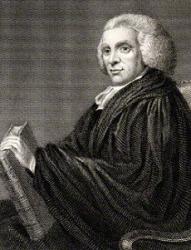
1726 - 1800 Person Name: William Jones (1726-1800) Topics: Advent; Church Year Advent; God in judgement and justice; God in majesty; Jesus coming again; Justice; Proper 10 Year C; Proper 14 Year C; The Fourth Sunday of Advent Year C; The Second Sunday of Advent Year A; Truth Composer of "ST STEPHEN (NEWINGTON)" in Ancient and Modern Born: Ju­ly 30, 1726, Lo­wick, North­amp­ton­shire, Eng­land. Died: Jan­u­ary 6, 1800, Hol­ling­bourne, Kent, Eng­land. Pseudonym: Jones of Nay­land. Jones was ed­u­cat­ed at Char­ter­house and Un­i­ver­si­ty Coll­ege, Ox­ford. He be­came Vi­car of Beth­ers­den, Kent (1764); Pluck­ley, Kent; and Pas­ton, North­amp­ton­shire; per­pe­tu­al Cur­ate of Nay­land, Suf­folk (1777); and Rec­tor of Hol­ling­bourne, Kent (1798). He be­came a Fel­low of the Roy­al So­ci­e­ty in 1775. His works in­clude: The Ca­tho­lic Doc­trine of the Trin­i­ty, 1756 Fairchild Dis­cours­es, 1775 Physiological Dis­qui­si­tions, 1781 A Treatise on the Art of Mu­sic, 1784 Church Piec­es for the Or­gan with Four An­thems in Score, 1789 Jones was a de­scend­ant of the Col. J. Jones, who was one of the sig­na­tor­ies to the death war­rant of King Charles I of Eng­land. He used to reg­u­lar­ly ob­serve Jan­u­a­ry 30 as a day of fast­ing and hu­mil­i­a­tion for his an­ces­tor’s sin. Music: ST. STEPHEN --www.hymntime.com/tch/

George Washington Doane

1799 - 1859 Topics: The Catechism The Redeemer; Fourth Sunday in Lent; Third Sunday of Advent; Fourteenth Sunday after Trinity; Nineteenth Sunday after Trinity; Twenty First Sunday after Trinity Author of "Thou art the way; to Thee alone" in Evangelical Lutheran hymnal Doane, George Washington, D.D. Bishop Doane was born at Trenton, New Jersey, May 27, 1799, and graduated at Union College, Schenectady, New York. Ordained in 1821, he was Assistant Minister at Trinity Church, New York, till 1824. In 1824 he became a Professor at Trinity College, Hartford, Conn.; in 1828 Rector of Trinity Church, Boston; and, in 1832, Bishop of New Jersey. He founded St. Mary's Hall, Burlington, 1837, and Burlington College, Burlington, 1846. Died April 27, 1859.  Bishop Doane's exceptional talents, learning, and force of character, made him one of the great prelates of his time. His warmth of heart secured devoted friends, who still cherish his memory with revering affection. He passed through many and severe troubles, which left their mark upon his later verse. He was no mean poet, and a few of his lyrics are among our best. His Works, in 4 volumes with Memoir by his son, were published in 1860. He issued in 1824 Songs by the Way, a small volume of great merit and interest. This edition is now rare. A second edition, much enlarged, appeared after his death, in 1859, and a third, in small 4to, in 1875. These include much matter of a private nature, such as he would not himself have given to the world, and by no means equal to his graver and more careful lyrics, on which alone his poetic fame must rest.The edition of 1824 contains several important hymns, some of which have often circulated without his name. Two of these are universally known as his, having been adopted by the American Prayer Book Collection, 1826:-- 1. Softly now the light of day. Evening. This, in addition to its use in American hymnals, is also found in the English Collections, including Snepp's Songs of Grace & Glory.   Written in 1824. 2. Thou art the way, to Thee alone. Christ the Way. This, in the judgment of many, is the first of American hymns, and one of the most admirable and useful in the English language. In the United States its use is most extensive, and since its introduction into the English Collections by Bickersteth in 1833, Hall in his Mitre, in 1836, and others, it has grown in favour until it ranks with the most popular of the great English hymns. Near in merit to the foregoing stands a companion piece in the same work, which deserves to be better known :— 3.  Lord, should we leave Thy hallowed feet. The next three have been overlooked at home, but have obtained considerable circulation in English Collections. 4.  Father of mercies hear,  Thy pardon we implore.    Ash Wednesday or Lent.    A translation of "Audi, benigne Conditor" q.v.), published in his Songs by the Way, 1824, together with several other translations, thus anticipating by twelve years the great English movement in that direction.   Original translation in his Songs by the Way, 1875Miller (S. & S., p. 12) attributes this translation to Dr. Neale in error. 5.  Return and come to God.   Invitation.   In his Songs, &c, 1824.   It is found in  Hall’s Mitre, 1836; the Baptist Hymnal, 1879, and several others. 6.  To thee, 0 Lord, with dawning light.  Morning.    This hymn is attributed to Heber by Miller (S. & S. , p. 381) in error.  It is included in the Society for Promoting Christian Knowledge Hymns, 1852; in Windle and others.    It is from the Songs, &c, 1824. His later hymns, the dates of which are generally preserved in the last edition of his Songs by the Way, include the following, which are more or less in use :— 7.  Beloved, it is well.   All well in Christ.   This is entitled "To my wife"; is dated Mar. 12, 1833, and was written in a copy of Dr. Bedell's "It is well."    It is given in Kennedy, 1863. 8.  Broken-hearted, weep no more.    Assurance of Peace.    The date of this hymn is not preserved. It is found as early as 1829, when it appeared in the 2nd edition of Cleland's (Baptist) Hymns. 9.  Fling out the banner, let it float.    Missions, Home & Foreign.    This hymn, sometimes dated 1824 in error, was written at Riverside, 2nd Sunday in Advent, 1848, and is one of the author's latest effusions.    It is in extensive use both in Great Britain and America. 10.  He came not with His heavenly crown.   The two Advents. In his Songs by the Way, edition 1875, this poem is dated Dec. 1827.    In Dale's English Hymnbook, 1879, it is given with the omission of stanza iii., and in the American Protestant Episcopal  Hymnal,   1871,  it begins  with stanza iv., "Once more, O Lord, Thy sign shall be."    Full text in Lyra Sac. Amer., p. 92. 11.  Lift not thou the wailing voice.   Burial.   A funeral hymn, adopted by the Anglican Hymnbook, but dated 1826 in error, for 1830. 12.  What is that, mother?  The lark, my child. This is not a hymn, but a familiar and long popular song. 13.  "When darkness erst [once] at God's command. Israel in Egypt.    In Kennedy, 1863, No. 722. 14.  Young and happy while thou art.    Youth for Christ.   A favourite piece in many juvenile collections.   It is dated Sept., 1827, and is given in Songs by the Way, 1875. The Lyra Sacra Americana also contains the following:— 15.  Brightness of the Father's glory.    Morning. A tr. of "Consors Paterni luminis " (q.v.).   It is from the Songs, &c, 1824. 16.  Child that kneelest meekly there.     Child at Prayer.    Suggested by a cast from a piece of sculpture by Greenough representing a child at prayer. 17.  Grant me, Lord, Thy graces three.    Faith, Hope, and Charity desired. 18.  Perfect through suffering may it be.     Uses of suffering.    Dated in Songs by the Way, "The Breakers, June 1, 1853." 19.  Yes, it is a faithful saying.   Redemption. In his Songs, &c, 1824.             [Rev. F. M. Bird, M.A.] -- John Julian, Dictionary of Hymnology (1907)

Pages


Export as CSV
It looks like you are using an ad-blocker. Ad revenue helps keep us running. Please consider white-listing Hymnary.org or getting Hymnary Pro to eliminate ads entirely and help support Hymnary.org.