You help make Hymnary.org possible. More than 10 million people from 200+ countries found hymns, liturgical resources and encouragement on Hymnary.org in 2025, including you. Every visit affirms the global impact of this ministry.

If Hymnary has been meaningful to you this year, would you take a moment today to help sustain it? A gift of any size—paired with a note of encouragement if you wish—directly supports the server costs, research work and curation that keep this resource freely available to the world.

Give securely online today, or mail a check to:
Hymnary.org
Calvin University
3201 Burton Street SE
Grand Rapids, MI 49546

Thank you for your partnership, and may the hope of Advent fill your heart.

Person Results

Topics:pentecost+5
In:people

Planning worship? Check out our sister site, ZeteoSearch.org, for 20+ additional resources related to your search.
Showing 11 - 20 of 226Results Per Page: 102050

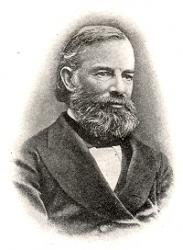
Samuel Longfellow

1819 - 1892 Person Name: S. Longfellow (1819-1892) Topics: Pentecost 5 The New Law Author of "Holy Spirit, truth divine" in Hymns for Today's Church (2nd ed.) Longfellow, Samuel, B. A., brother of the Poet, was born at Portland, Maine, June 18, 1819, and educated at Harvard, where he graduated in Arts in 1839, and in Theology in 1846. On receiving ordination as an Unitarian Minister, he became Pastor at Fall River, Massachusetts, 1848; at Brooklyn, 1853; and at Germantown, Pennsylvania, 1860. In 1846 he edited, with the Rev. S. Johnson (q. v.), A Book of Hymns for Public and Private Devotion. This collection was enlarged and revised in 1848. In 1859 his Vespers was published, and in 1864 the Unitarian Hymns of the Spirit , under the joint editorship of the Rev. S. Johnson and himself. His Life of his brother, the Poet Longfellow, was published in 1886. To the works named he contributed the following hymns:— i. To A Book of Hymns , revised ed., 1848. 1. Beneath the shadow of the Cross. Love. 2. 0 God, thy children gathered here. Ordination. ii. To the Vespers 1859. 3. Again as evening's shadow falls. Evening. 4. Now on land and sea descending. Evening. iii. To the Hymns of the Spirit, 1864. 5. A voice by Jordan's shore. Advent. 6. Father, give Thy benediction. Ordination. 7. Go forth to life, 0 child of earth. Life's Mission. 8. God of ages and of nations. Holy Scriptures. 9. Holy Spirit, Truth divine. The Holy Spirit desired. 10. I look to Thee in every need. Trust in God. 11. In the beginning was the Word. The Word. 12. Love for all, and can it be? Lent. The Prodigal Son. 13. 0 God, in Whom we live and move. God's Law and Love. 14. 0 God, Thou Giver of all good. Prayer for Food. 15. O still in accents sweet and strong. Missions. 16. 0 Thou, Whose liberal sun and rain. Anniversary of Church dedication. 17. One holy Church of God appears. The Church Universal. 18. Out of the dark, the circling sphere. The Outlook. 19. Peace, peace on earth! the heart of man for ever. Peace on Earth. 20. The loving Friend to all who bowed. Jesus of Nazareth. 21. ’Tis winter now, the fallen snow. Winter. Of these, hymn No. 2 was written for the Ordination of E. E. Hale (q. v.), at Worcester, 1846. Several are included in Martineau's Hymns, 1873. Died Oct. 3, 1892. [Rev. F. M. Bird, M.A.] --John Julian, Dictionary of Hymnology (1907), p. 685 =============== Longfellow, S., p. 685, i. Since Mr. Longfellow's death on Oct. 3, 1892, his hymns have been collected by his niece, Miss Alice Longfellow, as Hymns and Verses(Houghton, Mifflin & Co., 1904.) From this work we find many of the hymns signed Anon, in the Index to Longfellow and Johnson's Hymns of the Spirit, 1864, were his; several of these, including E. Osier's "O God unseen, yet ever near," were popular English hymns which he rewrote from his own theological standpoint. These re¬written hymns are very widely used by Unitarians and others. During the last ten years the following additional hymns by S. Long¬fellow have come into common use:— 1. Eternal One, Thou living God. Faith in God. 2. God of the earth, the sky, the sea. God in Nature. 3. God's trumpet wakes the slumbering world. Call to duty. 4. Light of ages and of nations. God in and through all time. 5. Lo, the earth is risen again. Spring. (1876.) 6. Now while we sing our closing psalm. Close of Worship. 7. O Life that maketh all things new. Unity. (1874.) 8. O Thou in Whom we live and move. The Divine Law. 9. The summer days are come again. Summer. From his hymn,"The sweet[bright] June days are come again." 10. Thou Lord of lite, our saving health. In Sickness. (1886.) Of these hymns Nos. 2, 3 appeared in the Hymns of the Spirit, 1864, and all with the dates appended in Hymns and Verses, 1904. --John Julian, Dictionary of Hymnology, New Supplement (1907) ================== http://en.wikipedia.org/wiki/Samuel_Longfellow

Samuel Sebastian Wesley

1810 - 1876 Person Name: Samuel S. Wesley Topics: Christian unity; Church Mission in the World; Jesus Christ Return of; Year B Pentecost; Year B Proper 5; Year C Pentecost; Year C Proper 11 Composer of "AURELIA" in The New Century Hymnal Samuel Sebastian Wesley (b. London, England, 1810; d. Gloucester, England, 1876) was an English organist and composer. The grandson of Charles Wesley, he was born in London, and sang in the choir of the Chapel Royal as a boy. He learned composition and organ from his father, Samuel, completed a doctorate in music at Oxford, and composed for piano, organ, and choir. He was organist at Hereford Cathedral (1832-1835), Exeter Cathedral (1835-1842), Leeds Parish Church (1842­-1849), Winchester Cathedral (1849-1865), and Gloucester Cathedral (1865-1876). Wesley strove to improve the standards of church music and the status of church musicians; his observations and plans for reform were published as A Few Words on Cathedral Music and the Music System of the Church (1849). He was the musical editor of Charles Kemble's A Selection of Psalms and Hymns (1864) and of the Wellburn Appendix of Original Hymns and Tunes (1875) but is best known as the compiler of The European Psalmist (1872), in which some 130 of the 733 hymn tunes were written by him. Bert Polman

Rowland Hugh Prichard

1811 - 1887 Topics: Jesus Christ Praise and Thanksgiving; Adoration and Praise; Christian Perfecction; Christian Year Advent; Compassion; Consummation; Conversion; Creation; Freedom; Funeral Vigil; Funerals and Memorial Services; God Adoration and Praise; God Love; God Presence; Heaven(s)/Paradise; Installation Services; Jesus Christ Adoration and Praise; Jesus Christ Love of; Jesus Christ Praise; Jesus Christ Presence; Jesus Christ Saviour; Jesus Christ Second Coming; Joy; Life; Love; Mercy; New Creation; Petition; Processionals (Opening of Worship); Purity; Recessionals; Salvation; Second Coming; Service Music Following Lord's Supper; Supplication; Surrender; Union With God/Christ; Weddings; Worship; Advent 2 Year A; Christmas 1 Year A; Lent 2 Year A; Easter 6 Year A; Proper 9 Year A; Proper 11 Year A; Proper 13 Year A; Proper 18 Year A; Reign of Christ Year A; Epiphany 6 Year B; Lent 4 Year B; Holy Thursday Year B; Easter 5 Year B; Easter 6 Year B; Proper 6 Year B; Proper 7 Year B; Proper 11 Year B; Proper 16 Year B; Proper 27 Year B; Reign of Christ Year B; Advent 2 Year C; Epiphany 3 Year C; Epiphany 9 Year C; Epiphany Last/Transfig. Year C; Lent 4 Year C; Easter 5 Year C; Pentecost Year C; Proper 5 Year C; Proper 6 Year C; Ash Wednesday Year ABC Composer of "HYFRYDOL" in Voices United Rowland H. Prichard (sometimes spelled Pritchard) (b. Graienyn, near Bala, Merionetshire, Wales, 1811; d. Holywell, Flintshire, Wales, 1887) was a textile worker and an amateur musician. He had a good singing voice and was appointed precentor in Graienyn. Many of his tunes were published in Welsh periodicals. In 1880 Prichard became a loom tender's assistant at the Welsh Flannel Manufacturing Company in Holywell. Bert Polman

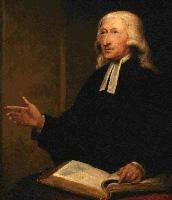
John Wesley

1703 - 1791 Person Name: John Wesley, 1703-1791 Topics: Year B, Ordinary Time after Pentecost, October 30-November 5; Year C, Ordinary Time after Pentecost, June 5-11 (if after Trinity Sunday) Author of "I'll Praise My Maker While I've Breath" in Psalms for All Seasons John Wesley, the son of Samuel, and brother of Charles Wesley, was born at Epworth, June 17, 1703. He was educated at the Charterhouse, London, and at Christ Church, Oxford. He became a Fellow of Lincoln College, Oxford, and graduated M.A. in 1726. At Oxford, he was one of the small band consisting of George Whitefield, Hames Hervey, Charles Wesley, and a few others, who were even then known for their piety; they were deridingly called "Methodists." After his ordination he went, in 1735, on a mission to Georgia. The mission was not successful, and he returned to England in 1738. From that time, his life was one of great labour, preaching the Gospel, and publishing his commentaries and other theological works. He died in London, in 1791, in his eighty-eighth year. His prose works are very numerous, but he did not write many useful hymns. It is to him, however, and not to his brother Charles, that we are indebted for the translations from the German. --Annotations of the Hymnal, Charles Hutchins, M.A., 1872 ====================== John Wesley, M.A., was born at Epworth Rectory in 1703, and, like the rest of the family, received his early education from his mother. He narrowly escaped perishing in the fire which destroyed the rectory house in 1709, and his deliverance made a life-long impression upon him. In 1714 he was nominated on the foundation of Charterhouse by his father's patron, the Duke of Buckingham, and remained at that school until 1720, when he went up, with a scholarship, from Charterhouse to Christ Church, Oxford. Having taken his degree, he received Holy Orders from the Bishop of Oxford (Dr. Potter) in 1725. In 1726 he was elected Fellow of Lincoln College, and remained at Oxford until 1727, when he returned into Lincolnshire to assist his father as curate at Epworth and Wroot. In 1729 he was summoned back to Oxford by his firm friend, Dr. Morley, Rector of Lincoln, to assist in the College tuition. There he found already established the little band of "Oxford Methodists" who immediately placed themselves under his direction. In 1735 he went, as a Missionary of the Society for the Propagation of the Gospel, to Georgia, where a new colony had been founded under the governorship of General Oglethorpe. On his voyage out he was deeply impressed with the piety and Christian courage of some German fellow travellers, Moravians. During his short ministry in Georgia he met with many discouragements, and returned home saddened and dissatisfied both with himself and his work; but in London he again fell in with the Moravians, especially with Peter Bohler; and one memorable night (May 24, 1738) he went to a meeting in Aldersgate Street, where some one was reading Luther's preface to the Epistle to the Romans. There, "About a quarter before nine, while he was describing the change which God works in the heart through faith in Christ, I felt my heart strangely warmed. I felt I did trust in Christ, Christ alone, for salvation; and an assurance was given me, that He had taken away my sins, even mine, and saved me from the law of sin and death." From that moment his future course was sealed; and for more than half a century he laboured, through evil report and good report, to spread what he believed to be the everlasting Gospel, travelling more miles, preaching more sermons, publishing more books of a practical sort, and making more converts than any man of his day, or perhaps of any day, and dying at last, March 2, 1791, in harness, at the patriarchal age of 88. The popular conception of the division of labour between the two brothers in the Revival, is that John was the preacher, and Charles the hymnwriter. But this is not strictly accurate. On the one hand Charles was also a great preacher, second only to his brother and George Whitefield in the effects which he produced. On the other hand, John by no means relegated to Charles the exclusive task of supplying the people with their hymns. John Wesley was not the sort of man to depute any part of his work entirely to another: and this part was, in his opinion, one of vital importance. With that wonderful instinct for gauging the popular mind, which was one element in his success, he saw at once that hymns might be utilized, not only for raising the devotion, but also for instructing, and establishing the faith of his disciples. He intended the hymns to be not merely a constituent part of public worship, but also a kind of creed in verse. They were to be "a body of experimental and practical divinity." "In what other publication," he asks in his Preface to the Wesleyan Hymn Book, 1780 (Preface, Oct. 20,1779), "have you so distinct and full an account of Scriptural Christianity; such a declaration of the heights and depths of religion, speculative and practical; so strong cautions against the most plausible errors, particularly those now most prevalent; and so clear directions for making your calling and election sure; for perfecting holiness in the fear of God?" The part which he actually took in writing the hymns, it is not easy to ascertain; but it is certain that more than thirty translations from the German, French and Spanish (chiefly from the German) were exclusively his; and there are some original hymns, admittedly his composition, which are not unworthy to stand by the side of his brother's. His translations from the German especially have had a wide circulation. Although somewhat free as translations they embody the fire and energy of the originals. It has been the common practice, however for a hundred years or more to ascribe all translations from the German to John Wesley, as he only of the two brothers knew that language; and to assign to Charles Wesley all the original hymns except such as are traceable to John Wesley through his Journals and other works. The list of 482 original hymns by John and Charles Wesley listed in this Dictionary of Hymnology have formed an important part of Methodist hymnody and show the enormous influence of the Wesleys on the English hymnody of the nineteenth century. -- Excerpts from John Julian, Dictionary of Hymnology (1907) =================== See also in: Hymn Writers of the Church

Christopher M. Idle

b. 1938 Person Name: Christopher Idle (born 1938) Topics: Pentecost 5 The New Law Author of "Now let us learn of Christ" in Hymns for Today's Church (2nd ed.) Christopher Martin Idle (b. Bromley, Kent, England, 1938) was educated at Elthan College, St. Peter's College, Oxford, and Clifton Theological College in Bristol, and was ordained in the Church of England. He served churches in Barrow-in-­Furness, Cumbria; London; and Oakley, Suffolk; and recently returned to London, where he is involved in various hymnal projects. A prolific author of articles on the Christian's public responsibilities, Idle has also published The Lion Book of Favorite Hymns (1980) and at least one hundred of his own hymns and biblical paraphrases. Some of his texts first appeared in hymnals published by the Jubilate Group, with which he is associated. He was also editor of Anglican Praise (1987). In 1998 Hope Publishing released Light Upon the River, a collection of 279 of his psalm and hymn texts, along with suggested tunes, scripture references, and commentary. Bert Polman

George Croly

1780 - 1860 Topics: Holy Spirit Praise and Invocation; Assurance; Christian Year Pentecost; Commitment; Consecration; Doubt; Faith; God Love for; Holy Spirit; Holy Spirit Indwelling; Holy Spirit Presence; Holy Spirit Work; Inner Life; Jesus Christ Teacher/Teachings; Love for God/Christ; Prayer; Renewal; Seeking God; Baptism of Jesus Year A; Epiphany 2 Year A; Epiphany 6 Year A; Lent 5 Year A; Proper 9 Year A; Proper 10 Year A; Proper 25 Year A; Proper 7 Year B; Proper 21 Year B; Baptism of Jesus Year C; Easter 7 Year C; Proper 22 Year C; Proper 26 Year C Author of "Spirit of God, Descend upon My Heart" in Voices United Croly, George, LL.D., born in Dublin, Aug. 17, 1780, and educated at the Dublin University (M.A. 1804, LL.D. 1831). After taking Holy Orders, he laboured in Ireland till about 1810, when he took up his residence in London, and devoted himself to literature. In 1835 he succeeded to the united benefices of St. Stephen's, Walbrook, and St. Benet Sherehog, retaining the same till his death, which occurred suddenly in the public street, Holborn, Nov. 24, 1860. His prose publications, in addition to contributions to Blackwood's Magazine, were numerous, and dealt with biographical, historical, and scriptural subjects. His hymns were given in his— Psalms and Hymns for Public Worship. Written and compiled by the Rev. George Croly, LL.D. London Kendrick, 1854. This collection contained 25 psalms, 50 hymns, and 6 poems. Of these 10 psalms, 12 hymns, and the 6 poems bear Dr. Croly's initial. The following have come into common use mainly through Windle's Collection:— 1. Be still, be still, impatient soul. Patience. 2. Behold me, Lord, and if thou find. Lent. 3. Lift up your heads, ye gates of light. Ascension. 4. Lord, who hast sought us out, unsought. Public Worship. 5. Teach us, O Lord, this day. Sunday. 6. Thou, Lord of mercy and of might. Lent. All these date from 1854, with the exception of No. 6, which appeared in his Scenes from Scripture and other Poems, 1851. -- John Julian, Dictionary of Hymnology (1907)

Nicolaus Selneccer

1530 - 1592 Person Name: NiKolaus Selnecker, 1532-1592 Topics: Pentecost 5 (Year A) Author (st. 1) of "Let Me Be Yours Forever" in Lutheran Book of Worship Selnecker, Nicolaus, D.D., son of Georg Selnecker (Selneccer, Schellenecker, who was protonotarius to the Nürnberg magistracy, but lived at Hersbruck near Nürnberg) was born at Hersbruck Dec. 5, 1532. In 1536 he was removed to Nürnberg, and became during his school time, when only twelve years old, organist at the chapel in the Kaiserburg there. He went to the university of Wittenberg in 1550 (where he became a favourite pupil of Melanchthon), graduated M.A. on July 31, 1554, and subsequently lectured as a privat-docent, sometimes to 200 students. In the end of 1557 he was appointed second court preacher at Dresden, and tutor to the heir apparent Prince Alexander, having also to supervise the education of the choirboys of the royal chapel. He was ordained at Wittenberg Jan. 6, 1558. The principal theologians at the Saxon court at that time were inclined to follow Melanchthon's lead and to approximate to Calvin's teachings regarding Consubstantiation. When therefore Selnecker thought it his duty openly to declare his adhesion to strict Lutheranism, he found his position almost untenable. When Martin Hoffmann of the Neustadt church in Dresden preached against the Elector August's passion for game preserving, Selnecker took Hoffmann's part. His enemies took advantage of this, and managed so that after Hoffmann had been expelled from Dresden, in August, 1564, Selnecker was requested to seek work elsewhere. He preached his farewell sermon at Dresden on March 15, 1565, and on the 26th he entered on his new office of Professor of Theology at Jena. After the siege of Gotha, Duke Johann Wilhelm of Saxony recalled Wigand and other professors of Theology who had been expelled from Jena, in 1561, as adherents of Flaeius; and Selnecker, not being so extreme a Lutheran as they, had to leave Jena. Thereupon the Elector August again received him into favour, appointed him professor of Theology at Leipzig, and also pastor of St. Thomas's church and Superintendent of Leipzig. He entered on his duties at Leipzig in August 1568, and for some time worked quietly and successfully. In July 1570 the Elector acceded to the request of Duke Julius of Brunswick for Selnecker's services, and gave Selnecker leave of absence to go to Wolfenbüttel as court preacher and general superintendent. Here he succeeded in inducing the clergy to receive the so-called Saxon Confession, and persevered in zealous visitations of churches, schools, &c. After 1572 he resided at Gandersheim, took an interest in the Gymnasium there, &c. In 1573 he also visited, and drew up a book of Church Order and Discipline for the district of Oldenburg-Jever. But in Brunswick, what with Martin Chemnitz the Superintendent of Brunswick, who was a High Lutheran, the Duke who wished for peace, and the other General Superintendent at Wolfenbüttel, Selnecker found it a difficult matter to work comfortably, and was himself accused of Crypto-Calvinism. He therefore gladly accepted the Elector August's recall to Leipzig, and began to lecture there again in Feb. 1574. In 1576 he was once more appointed pastor of St. Thomas's Church, and Superintendent. At Leipzig the sacramental controversy broke out afresh, and Selnecker became deeply involved therein, lie was then engaged in drawing up the Formula of Concord (meant to unite the Lutherans, but to exclude the Romanists on one hand, and the Calvinists on the other), which was finally revised on May 29, and published on July 22, 1577. The Formula of Concord was so far a success that it was very largely subscribed, but at the same time its authors, and specially Selnecker, were subjected to the most violent abuse both from the High Lutherans and from the Galvinists, so much so that he called 1579 his "year of patience and silence." For a few years immediately thereafter his life was a more peaceful one, and he found time to devote to poetry and music. At this time he assisted greatly in the building up of the famous Motett Choir of St. Thomas's Church, which J. S. Bach afterwards conducted. But on the death of the Elector August in 1586 the real direction of affairs passed into the hands of Dr. Nicolaus Crell, Chancellor to the Elector Christian I., and under his rule the Lutheran clergy were gradually displaced by Melanchthonians and Crypto-Calvinists. When the new court preacher Salmuth began to issue a German Bible with notes in which he clearly taught Calvinism and impugned the Formula of Concord, Selnecker published a pamphlet in opposition, and was in consequence deprived of his offices on May 17, 1589. For a time he stayed on in his own house in Leipzig, and used his pen in controversy. But after haying received, on Oct. 22, notice to cease writing, he thought it prudent to leave Leipzig, He found many sympathisers, and after a short time spent in Halle and then in Magdeburg, he accepted the appointment of Superintendent at Hildesheim. Here he had many anxious and weighty matters to settle, and was finally called on, in 1591, to arbitrate in matters of dispute at Augsburg. Returning from Augsburg in stormy December weather, and being worn out and seriously ill, he reached Hildesheim half dead, and was confined to his room till April. Meantime the Elector Christian I. had suddenly died, and his widow, after deposing the Chancellor Crell, proceeded to recall those whom Crell had banished. Selnecker, spite of his weakness, welcomed the idea of returning to Leipzig, left Hildesheim on May 9, and reached Leipzig on May 19; but only to die. He died at Leipzig, May 24, 1592. Seluecker, as we have seen, was a prominent figure in the ecclesiastical history of Germany in the latter half of the sixteenth century, and a good illustration of the extremes to which theological controversies were then carried. He was the author of some 175 theological and controversial works, in German and Latin, perhaps the most important being his Institutio Religionis Christianae, Frankfurt, 1572-73. He also ranks, with Helmbold and Ringwaldt, among the most important hymnwriters of the period. Amid the manifold changes and chances of his life he found inspiration and consolation in the study of and recourse to the Psalter, and in his love of music. In Latin verse he published a Scriptural play on the Fall of our First Parents, entitled Theophiania, &c, Wittenberg, 1560 [Brit. Mus.], and a version of the Psalms as Paraphrasis Psalterii, Heinrichstadt, 1573…His German hymns partake for the most part of the objective churchly character of the hymns of the Reformation period, and indeed contain many reminiscences of them. Of the rest, many only too faithfully mirror the misfortunes and changes and conflicts of his life, and are full of personal matter and careless in style. Still there remain not a few worthy of note, in which a genuine piety, a deep and fervent love to the Saviour, and a zeal for the best interests of His Church on earth, are expressed in clear, flowing and musical style. The hymns by Selnecker which have passed into English are:— i. Ach bleib bei uns, Herr Jesu Christ. Peace and Orthodoxy. It has sometimes been said of this hymn that st. i., ii. are by Selnecker, and that the rest are a later addition. The opposite however is the case. The full form appeared in theGeistliche Psalmen, &c, Nürnberg, 1611, p. 597, in 9 stanzas, viz.:— 1. Ach bleib bey uns, Herr Jesu Christ. 2. In diser schweren betrübten Zeit. 3. Herr Jesu, hilff, dein Kirch erhalt. 4. Erhalt unns nun bey deinem Wort. 5. Ach Gott es geht gar libel zu. 6. Den stoltzen Geistern wehre doch. 7. Die Sach und Ehr, Herr Jesu Christ. 8. Dein Wort ist unsers Hertzens Trutz. 9. Gib dass wir leben in deim Wort. The text of 1611 is in H. Thiele's ed. of Selnecker's Geistliche Lieder, 1855, p. 31, and in the Berlin Geistliche Lieder, ed. 1863, No. 408. The translations in common use from this text:— 1. Lord Jesus with Thy children stay. This is a tr. of st. 1, 2, 8, 6, 9, 3 by J. Swertner in the Moravian Hymn Book 1789, No. 6 (1886, No. 6). 2. Ah Jesu Christ, with us abide. This is a good tr. of st. 1-5, 9, by Dr. Kennedy as No. 41 in his Hymnologia Christiana 1863, repeated in Holy Song, 1869. 3. Lord Jesu Christ, with us abide, For round us fall, &c. By Miss Winkworth, of st. 1, 2, in her Chorale Book for England. 4. Forsake us not, 0 Lord be near. Other trs. are-—(1) Abide with us, O Jesu dear," as No. 336, in pt. i. of the Moravian Hymn Book, 1754. (2) "Lord Jesu Christ, with us abide, 'Tis now." By H. J. Buckoll, 1842, p. 69. (3) "With us, Lord Jesus Christ, abide." By Dr. G. Walker, 1860, p. 61. ii. Christus der wahre Gottes Sohn. Holy Baptism. Translated as:— Now Christ, the very Son of God. iii. Hilf, Herr, mein Gott, in dieser Noth. Cross and Consolatio. In hisChristliche Psalmen, 1587, in 15 lines entitled "Anno 1565. God knows why." It was probably written during his last months at Dresden. It has indeed been said to have been written to comfort Martin Hoffmann, diaconus of the Holy Cross Church at Dresden, on his expulsion after preaching about the Elector August's passion for hunting and game preserving; but the hymn is dated 1565, and Hoffmann left Dresden in August, 1564. The form translated into English is:— Hilf, Helffer, hilf in Angst und Noth. The translations are:— 1. My Helper, aid: Thy mercy show. By A. T. Russell, in full, as No. 223 in his Psalms and Hymns. 1851. 2. Help, Saviour! help, in fear and need By E. Cronenwett, in full, as No. 410 in the OhioLutheran Hymnal 1880. 3. Help, Jesus, help! in woe, in need. By Miss Manington in her Footprints of the Holy Dead, &c, 1863, p. 8. iv. Lass mich dein sein und bleiben. Close of Service. This is a beautiful stanza of 8 lines which is very frequently used in Germany at the close of Divine service. It was written as his daily prayer . The translations are:— 1. Let me be Thine for ever, My gracious. This is a tr. of st. i.-iii. by Dr. M. Loy as No. 230 in the Ohio Lutheran Hymnal, 1880. 2. Make me Thine own and keep me Thine. By Miss Winkworth in her Christian Singers of Germany, 1869, p. 152. v. 0 Herre Gott, in meiner Noth. For the Dying. Founded on Ps. cxvi. 9. Translated as:—- 0 Lord my God, I cry to Thee. This is a good and full tr. by Miss Winkworth in her Lyra Germanica 2nd Ser. 1858, p. 212, and her Chorale Book for England, 1863, No. 192. vi. Wir danken dir, Herr Jesu Christ, Dass du gen Himmel gefahren bist. Ascension. The translation in common use is:— We thank Thee, Jesus! dearest Friend, that Thou didst. Other trs. are—- (1) “Lord Jesus Christ! we thank Thee now." This is No. 334, in pt. i., of the Moravian Hymn Book, 1754. (2) "To Thee, our Lord, all praise be given." vii. Wir danken dir, o treuer Gott. Absolution. Translated as:— O Faithful God, thanks be to Thee. By C. H. L. Schnette, in full, as No. 246 in the Ohio Lutheran Hymnal 1880. [Rev. James Mearns, M.A.] --Excerpts from John Julian, Dictionary of Hymnology (1907)

Sydney H. Nicholson

1875 - 1947 Person Name: S. H. Nicholson (1875-1947) Topics: Pentecost 5 The Church's Mission to All Composer (descant) of "CARLISLE" in Hymns for Today's Church (2nd ed.) Sydney H. Nicholson, (b. St. Marylebone, London, England, 1875; d. Ashford, Kent, England, 1947) was an organist and church music educator who greatly influenced English hymnody. Educated at Oxford's New College, the Royal College of Music in London, and in Frankfurt, Germany, he became organist at several famous cathedrals, including Westminster Abbey (1919-1928). Nicholson founded and administered the School of English Church Music at Chislehurst in 1927; this important institution, with branches throughout the English-speaking world, was renamed the Royal School of Church Music in 1945. Located in Canterbury after World War II, its headquarters were moved to Addington Palace, Croydon, in 1954. Nicholson was music adviser for the 1916 Supplement of Hymns Ancient and Modern and prepared the way for its 1950 edition. He wrote Church Music: a Practical Handbook (1920) and Quires and Places Where They Sing (1932) and composed operettas, anthems, and hymn tunes. In 1938 he was knighted for his contributions to church music. Bert Polman

Pierre, de Corbeil

1122 - 1222 Person Name: P. de Corbeil (died 1222) Topics: Pentecost 5 The Church's Mission to All Composer of "ORIENTIS PARTIBUS(i)" in Hymns for Today's Church (2nd ed.)

G. W. Kitchin

1827 - 1912 Person Name: G. W. Kitchin (1827-1912) Topics: Pentecost 5 The Church's Mission to All Author of "Lift high the cross, the love of Christ proclaim" in Hymns for Today's Church (2nd ed.) A scholar and Anglican clergyman, George W. Kitchin (b. Naughton, Suffolk, England, 1827; d. Durham, England, 1912) spent most of his life in academic institu­tions. Educated at Christ Church, Oxford, England, he was ordained in the Church of England in 1852. He served initially as a headmaster in Twyford, Hampshire, and then as a tutor at Oxford (1863-1883). Later he served as Dean of Winchester Cathedral from 1883 to 1894 and of Durham Cathedral from 1894 to 1912; Kitchin was also chancellor of Durham University the last few years of his life. His publications include A Life of Pope Pius II (1881), a three ­volume work entitled A History of France (1877), and archeological writings. Bert Polman

Pages


Export as CSV
It looks like you are using an ad-blocker. Ad revenue helps keep us running. Please consider white-listing Hymnary.org or getting Hymnary Pro to eliminate ads entirely and help support Hymnary.org.