You help make Hymnary.org possible. More than 10 million people from 200+ countries found hymns, liturgical resources and encouragement on Hymnary.org in 2025, including you. Every visit affirms the global impact of this ministry.

If Hymnary has been meaningful to you this year, would you take a moment today to help sustain it? A gift of any size—paired with a note of encouragement if you wish—directly supports the server costs, research work and curation that keep this resource freely available to the world.

Give securely online today, or mail a check to:
Hymnary.org
Calvin University
3201 Burton Street SE
Grand Rapids, MI 49546

Thank you for your partnership, and may the hope of Advent fill your heart.

Person Results

Topics:people+of+god
In:people

Planning worship? Check out our sister site, ZeteoSearch.org, for 20+ additional resources related to your search.
Showing 11 - 20 of 757Results Per Page: 102050

M. M. Wells

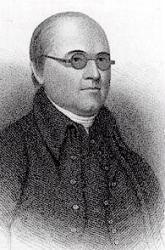
1815 - 1895 Person Name: Marcus M. Wells Topics: People of God / Church Citizens of Heaven; People of God / Church Family of God Composer of "GUIDE" in Psalms for All Seasons Converted to Christianity as a youth at a mission in Buffalo, New York, Marcus Morris Wells (b. Cooperstown, NY, 1815; d. Hartwick, NY, 1895) spent most of his life near Hartwick as a farmer and maker of farm implements. He is remembered in hymnody for writing both the text and tune of "Holy Spirit, Faithful Guide." "On a Saturday afternoon, October 1858, while at work in my cornfield, the sentiment of the hymn came to me," writes Wells. "The next day, Sunday, being a very stormy day, I finished the hymn and wrote the tune for it and sent it to Prof. I. B. Woodbury." Isaac Woodbury was the editor of the New York Musical Pioneer, and the original text and tune were first published in that periodical's November 1858 issue. Bert Polman ================= Wells, Marcus M. Concerning this author and his hymn we have no information beyond the following facts:— Holy Spirit, faithful Guide. [Whitsuntide.] Appeared in The Sacred Lute, by T. E. Perkins, N.Y., undated [1864], p. 373, with music. Both words and music are attributed therein to M. M. Wells. The hymn has since been repeated in several English and American collections, including I. D. Sankey's Sacred Songs and Solos, 1878. It is dated 1858. --John Julian, Dictionary of Hymnology, New Supplement (1907)

Ronald F. Krisman

Person Name: Ronald F. Krisman, b. 1946 Topics: People of God Translator (sts. 1, 2) of "All Hail the Power of Jesus' Name (A Jesucristo Póstrense)" in Oramos Cantando = We Pray In Song

Timothy Dwight

1752 - 1817 Person Name: Timothy Dwight, 1752 - 1817 Topics: The Church The People of God Author of "I love thy kingdom, Lord" in Service Book and Hymnal of the Lutheran Church in America Timothy Dwight (b. Northampton, MA, 1752; d. Philadelphia, PA, 1817) was a grandson of Jonathan Edwards who became a Congregationalist pastor, a Revolutionary War army chaplain, a tutor and professor at Yale College, and president of Yale from 1795 to 1817. As president he continued to teach and serve as chaplain and was instrumental in improving both the academic and the spiritual life of the college. Bert Polman =============== Dwight, Timothy, D.D. This is the most important name in early American hymnology, as it is also one of the most illustrious in American literature and education. He was born at Northampton, Massachusetts, May 14, 1752, and graduated at Yale College, 1769; was a tutor there from 1771 to 1777. He then became for a short time a chaplain in the United States Army, but passed on in 1783 to Fairfield, Connecticut, where he held a pastorate, and taught in an Academy, till his appointment, in 1795, as President of Yale College. His works are well known, and need no enumeration. He died at New Haven, Jan. 11, 1817. In 1797 the General Association of Connecticut, being dissatisfied with Joel Barlow's 1785 revision of Watts, requested Dwight to do the work de novo. This he did liberally, furnishing in some instances several paraphrases of the same psalm, and adding a selection of hymns, mainly from Watts. The book appeared as— "The Psalms of David, &c.... By I. Watts, D.D. A New Edition in which the Psalms omitted by Dr. Watts are versified, local passages are altered, and a number of Psalms are versified anew in proper metres. By Timothy Dwight, D.D., &c….To the Psalms is added a Selection of Hymns," 1800. Dwight's lyrics are all professedly psalms, but they are by no means literal versions. His original compositions number 33. Of these many are still in common use, the most important being:— 1. Blest be the Lord, Who heard my prayer. Psalm xxviii. This is the second part of Psalm xxviii., in 5 stanzas of 4 lines. It is in the English New Congregational Hymn Book, 1859. 2. I Love Thy kingdom, Lord. Psalm cxxxvii. This is version three of Ps. 137, in 8 stanzas of 4 lines, and is in extensive use at the present time throughout the States. It is also included in many English, Irish, and Scottish collections, sometimes in the original form, as in Alford's Year of Praise, 1867; again as, "I love Thy Church, 0 God," which opens with the second stanza, as in the Scottish Evangelical Union Hymnal, 1878, in 3 stanzas, and "We love Thy kingdom, Lord," in the Irish Church Hymnal, 1873. In Cleveland's Lyra Sacra Americana six stanzas only are given from the original. Next to this in popularity are his 2nd and 3rd renderings of Psalm lxxxviii.:— 3. Shall man, 0 God of life and light. (3rd stanza) 4. While life prolongs its precious light. (2nd stanza) Both of which are in extensive use. From his 4th version of the same Psalm (88), the following hymns have been compiled, each opening with the stanza indicated:— 5. Just o'er the grave I hung. Stanza ii. 6. I saw beyond the tomb. Stanza iv. 7. Ye sinners, fear the Lord. Stanza xii. This last is found in Spurgeon's 0ur Own Hymnbook. The original version consists of 13 stanzas. 8. 0 Thou Whose sceptre earth and seas obey. Psalm lxxii. This is his second version of this Psalm, and was given in the Comprehensive Rippon, 1844. The following, most of which are of a more jubilant character, are well known:— 9. How pleasing is Thy voice. Psalm lxv. 10. In Zion's sacred gates. Psalm cl. 11. Lord of all worlds, incline Thy gracious [bounteous] ear. Psalm llii. 12. Now to Thy sacred house. Psalm xliii., st. 3. 13. Sing to the Lord most high. Psalm c. 14. In barren wilds shall living waters spring. Psalm liii. 15. Lord, in these dark and dismal days. Psalm cxxxvii. No. 9 is found in Lyra Sacra Americana, pp. 101-2, the seven stanzas of the original being abbreviated to five. In addition to the Psalms, Dr. Dwight published three poems, "The Conquest of Canaan," 1785; "Greenfield Hill," 1794; "Triumph of Infidelity," 1788. [Rev. F. M. Bird, M.A.] - John Julian, Dictionary of Hymnology (1907)

Melchior Vulpius

1570 - 1615 Person Name: Melchoir Vulpius Topics: People of God / Church Suffering Composer of "CHRISTUS, DER IST MEIN LEBEN" in Psalms for All Seasons Born into a poor family named Fuchs, Melchior Vulpius (b. Wasungen, Henneberg, Germany, c. 1570; d. Weimar, Germany, 1615) had only limited educational oppor­tunities and did not attend the university. He taught Latin in the school in Schleusingen, where he Latinized his surname, and from 1596 until his death served as a Lutheran cantor and teacher in Weimar. A distinguished composer, Vulpius wrote a St. Matthew Passion (1613), nearly two hundred motets in German and Latin, and over four hundred hymn tunes, many of which became popular in Lutheran churches, and some of which introduced the lively Italian balletto rhythms into the German hymn tunes. His music was published in Cantiones Sacrae (1602, 1604), Kirchengesangund Geistliche Lieder (1604, enlarged as Ein schon geistlich Gesanglmch, 1609), and posthumous­ly in Cantionale Sacrum (1646). Bert Polman

Martin Shaw

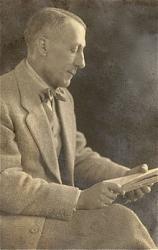
1875 - 1958 Person Name: Martin Shaw, b. 1875 Topics: The Church The People of God Composer of "MARCHING" in Service Book and Hymnal of the Lutheran Church in America Martin F. Shaw was educated at the Royal College of Music in London and was organist and choirmaster at St. Mary's, Primrose Hill (1908-1920), St. Martin's in the Fields (1920-1924), and the Eccleston Guild House (1924-1935). From 1935 to 1945 he served as music director for the diocese of Chelmsford. He established the Purcell Operatic Society and was a founder of the Plainsong and Medieval Society and what later became the Royal Society of Church Music. Author of The Principles of English Church Music Composition (1921), Shaw was a notable reformer of English church music. He worked with Percy Dearmer (his rector at St. Mary's in Primrose Hill); Ralph Vaughan Williams, and his brother Geoffrey Shaw in publishing hymnals such as Songs of Praise (1925, 1931) and the Oxford Book of Carols (1928). A leader in the revival of English opera and folk music scholarship, Shaw composed some one hundred songs as well as anthems and service music; some of his best hymn tunes were published in his Additional Tunes in Use at St. Mary's (1915). Bert Polman

Emily R. Brink

b. 1940 Person Name: Emily R. Brink, b. 1940 Topics: People of God / Church Suffering Harmonizer of "WONDROUS LOVE (fragment)" in Psalms for All Seasons Emily R. Brink is a Senior Research Fellow of the Calvin Institute of Christian Worship and Adjunct Professor of Church Music and Worship at Calvin Theological Seminary, Grand Rapids, Michigan. Her main areas of responsibility are conference planning and global resources. She is program manager of the annual Calvin Symposium on Worship, which draws more than 70 presenters and 1600 participants from around the world. She also travels widely to lecture and to learn about worship in different parts of the world, especially in Asia, where she has lectured in Bangladesh, China, Hong Kong, India, Indonesia, Japan, Nepal, Pakistan, Philippines, Singapore, and Taiwan. Her areas of interest include congregational song from all times and places; psalmody; hymnal editing. She was editor of four hymnals and consults with a wide range of churches on worship renewal issues. Dr. Brink is active in the American Guild of Organists, serving in both local and national offices, as well as in the Hymn Society in the United States and Canada (president from 1990 1992) and named a Fellow of the Hymn Society in 2004 in recognition of distinguished services to hymnody and hymnology. --internal.calvinseminary.edu/

John Barnard

b. 1948 Person Name: John Barnard (born 1948) Topics: Pentecost 2 The People of God Composer (descant) and Arranger of "ST. CLEMENT" in Hymns for Today's Church (2nd ed.)

Oliver Holden

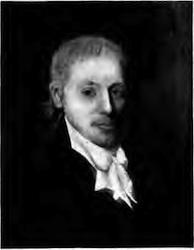
1765 - 1844 Person Name: Oliver Holden, 1765-1844 Topics: People of God Composer of "CORONATION" in Oramos Cantando = We Pray In Song Holden, Oliver, one of the pioneers of American psalmody, was born in 1765, and was brought up as a carpenter. Subsequently he became a teacher and music-seller. He died at Charlestown, Massachusetts, 1844. His published works are American Harmony, 1793; the Worcester Collection, 1797; and other Tune books. One of his most popular tunes is "Coronation." It is thought that he edited a small hymn-book, published at Boston before 1808, in which are 21 of his hymns with the signature "H." A single copy only of this book is known, and that is without title-page. Of his hymns the following are in common use:— 1. All those who seek a throne of grace. [God present where prayer is offered.] Was given in Peabody's Springfield Collection, 1835, No. 92, in a recast form as, “They who seek the throne of grace." This form is in extensive use in America, and is also in a few collections in Great Britain. 2. With conscious guilt, and bleeding heart. [Lent.] This, although one of the best of Holden's hymns, has passed out of use. It appeared, with two others, each bearing bis signature, in the Boston Collection (Baptist), 1808. 3. Within these doors assembled now. [Divine Worship.] [Rev. F. M. Bird, M.A.] -- John Julian, Dictionary of Hymnology

John Milton

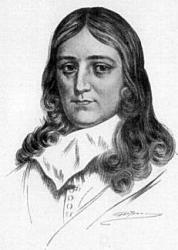
1608 - 1674 Person Name: John Milton, 1608-1674 Topics: People of God / Church Suffering Author of "Let Us With Gladsome Mind" in Psalms for All Seasons Milton, John, was born in London, Dec. 9, 1608, and died there Nov. 8, 1674. His poetical excellences and his literary fame are matters apart from hymnology, and are fully dealt with in numerous memoirs. His influence on English hymn-writing has been very slight, his 19 versions of various Psalms having lain for the most part unused by hymnal compilers. The dates of his paraphrases are:— Ps. cxiv. and cxxxvi., 1623, when he was 15 years of ago. These were given in his Poems in English and Latin 1645. Ps. lxxx.-lxxxviii., written in 1648, and published as Nine Psalmes done into Metre, 1645. Ps. i., 1653; ii., “Done August 8, 1653;" iii., Aug. 9, 1653; iv. Aug. 10, 1653; v., Aug. 12, 1653; vi., Aug. 13, 1653; vii.Aug. 14, 1653; viii., Aug. 14, 1653. These 19 versions were all included in the 2nd ed. of his Poems in English and Latin, 1673. From these, mainly in the form of centos, the following have come into common use:— 1. Cause us to see Thy goodness, Lord. Ps. lxxxv. 2. Defend the poor and desolate. Ps. lxxxii. 3. God in the great assembly stands. Ps. lxxxii. 4. How lovely are Thy dwellings fair. Ps. lxxxiv. From this, "They pass refreshed the thirsty vale," is taken. 5. Let us with a gladsome [joyful] mind. Ps. cxxxvi. 6. O let us with a joyful mind. Ps. cxxxvi. 7. The Lord will come and not be slow. Ps. lxxxv. Of these centos Nos. 4 and 5 are in extensive use. The rest are mostly in Unitarian collections. There are also centos from his hymn on the Nativity, "This is the month, and this the happy morn" (q.v.). --John Julian, Dictionary of Hymnology (1907)

Henry Purcell

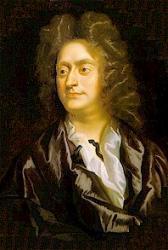
1659 - 1695 Person Name: Henry Purcell, 1659-95 Topics: People of God Composer of "WESTMINSTER ABBEY" in Together in Song Henry Purcell (b. Westminster, London, England, 1659; d. Westminster, 1695), was perhaps the greatest English composer who ever lived, though he only lived to the age of thirty-six. Purcell's first piece was published at age eight when he was also a chorister in the Chapel Royal. When his voice changed in 1673, he was appointed assistant to John Hingston, who built chamber organs and maintained the king's instruments. In 1674 Purcell began tuning the Westminster Abbey organ and was paid to copy organ music. Given the position of composer for the violins in 1677, he also became organist at Westminster Abbey in 1679 (at age twenty) and succeeded Hingston as maintainer of the king's instruments (1683). Purcell composed music for the theater (Dido and Aeneas, c. 1689) and for keyboards, provided music for royal coronations and other ceremonies, and wrote a substantial body of church music, including eighteen full anthems and fifty-six verse anthems. Bert Polman

Pages


Export as CSV
It looks like you are using an ad-blocker. Ad revenue helps keep us running. Please consider white-listing Hymnary.org or getting Hymnary Pro to eliminate ads entirely and help support Hymnary.org.