You help make Hymnary.org possible. More than 10 million people from 200+ countries found hymns, liturgical resources and encouragement on Hymnary.org in 2025, including you. Every visit affirms the global impact of this ministry.

If Hymnary has been meaningful to you this year, would you take a moment today to help sustain it? A gift of any size—paired with a note of encouragement if you wish—directly supports the server costs, research work and curation that keep this resource freely available to the world.

Give securely online today, or mail a check to:
Hymnary.org
Calvin University
3201 Burton Street SE
Grand Rapids, MI 49546

Thank you for your partnership, and may the hope of Advent fill your heart.

Person Results

Topics:poder+divino
In:people

Planning worship? Check out our sister site, ZeteoSearch.org, for 20+ additional resources related to your search.
Showing 11 - 20 of 56Results Per Page: 102050

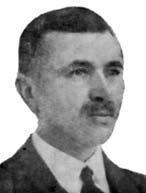
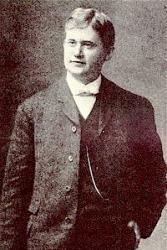
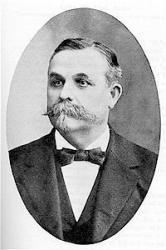
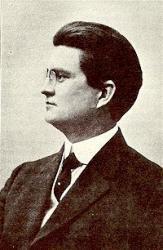
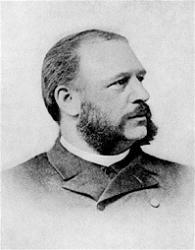
John Hughes

1873 - 1932 Topics: Poder Divino Composer of "CWM RHONDDA" in Celebremos Su Gloria John Hughes (b. Dowlais, Glamorganshire, Wales, 1873; d. Llantwit Fardre, Wales, 1932) received little formal education; at age twelve he was already working as a doorboy at a local mining company in Llantwit Fardre. He eventually became an official in the traffic department of the Great Western Railway. Much of his energy was devoted to the Salem Baptist Church in Pontypridd, where he served as both deacon and precentor. Hughes composed two anthems, a number of Sunday school marches, and a few hymn tunes, of which CWM RHONDDA is universally known, the tune was composed in 1905 Baptist Cymanfa Ganu (song festival) in Capel Rhondda, Pontypridd, Wales. Bert Polman

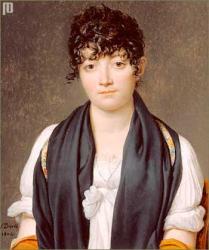
Luise Reichardt

1779 - 1826 Person Name: Luise Reichart Topics: Poder Divino Composer of "ARMAGEDDON" in Celebremos Su Gloria Caroline Luise Reichardt Germany 1779-1826. Born in Berlin to middle class parents and musical composers, she received some formal education and musical training from her father and his friends, but also was self-taught. Her grandfather was Konzertmeister, and her father was Kapellmeister at the court of Frederick, the Great. Louise was musical and had a good voice. She played piano and sang. In 1800 four of her own compositions were published along with a collection of her father’s songs. The Reichardts entertained well-known literary figures of the day. She later used poetry from Phillip Ludwig Achim von Arnim in a collection of 12 songs she composed. In 1809 she settled in Hamburg, Germany, where she made a living as a singing teacher and composed music. She also organized and directed a women’s chorus. She did behind-the-scenes conducting of music when she could. She was known for her untiring efforts in the production of Handel choral works, translating and preparing texts and choruses to be conducted by male counterparts. She also translated the Latin works of Hasse and Graun into German. She played a significant role in the formation of the German choral movement, a driving force in 19th century musical nationalism. She composed 75+ songs and choral pieces in various styles and accompaniments. Her husband-to-be, Friedrich August Eschen, died suddenly on the eve before their wedding. Her second husband-to-be, a painter, Franz Gareis, also died before their wedding. She died at Hamburg, Germany. John Perry

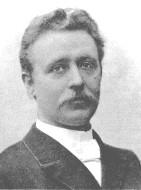
Carl Boberg

1859 - 1940 Topics: Poder Divino Author of "Cuán grande es él" in Celebremos Su Gloria Boberg, Carl Gustaf. (Mönsterås, Sweden, August 16, 1859--January 7, 1940, Kalmar). Swedish Covenant. Bible school at Kristinehamn. Editor of Sanningsvittnet 1890-1916, organ of the Evangelical National Foundation. Member of the Swedish Parliament, 1912-1931. Popular speaker and appreciated writer. Published several collections of poetry and a number of hymns. Member of committee responsible for first two hymnals of the Swedish Covenant. Author of "Jesus, Jesus, O det ordet" ("Jesus, Jesus, Name Most Precious"); "Min själ berömmer Gud med fröjd" (My Soul Now Magnifies the Lord"); "O store Gud" ("O Mighty God"). The text now known as "How Great Thou Art" is an English translation of a Russian version based on an earlier German translation of "O store Gud." --J. Irving Erickson, DNAH Archives

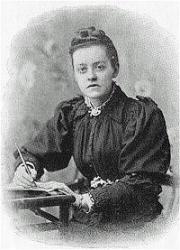
Edith G. Cherry

1872 - 1897 Person Name: Edith G. Cherry, s. 19 Topics: Poder Divino Author of "Descanso en ti" in Celebremos Su Gloria Edith Adeline Gilling Cherry United Kingdom 1872-1897. Born at Plymouth, Devon, she was disabled from the age of 16 months by poliomyelitis and walked with crutches. The death of her only sister, who died at age 4, when Edith was age 6, devastated her. She had a gift for poetry and wrote much before the age of 15. She had friends who helped her supporting Sunday school work and the YWCA. She was a gifted illustrator of cards and porcelain which she neatly embellished with flower or fern sprays and Bible texts. Of her verse, she said, they were given to me and all I had to do was write them down. Some of her poems appeared in print in the periodical “The Christian”. She had two strokes in early life, and a 3rd, at age 25, took her life. She wrote beautiful poems and many hymn lyrics, filling 2 volumes. She wrote a poem on hearing of the death of C. H. Spurgeon. John Perry

Charlie D. Tillman

1861 - 1943 Topics: Poder Divino Author (es. 1-2) of "En un aposento alto" in Celebremos Su Gloria Tillman, Charles "Charlie" Davis. (Tallahassee, Talapoosa County, Alabama, March 20, 1861--1943). Married Anna Killingsworth (Dec. 24, 1889); four daughters, one son (d.1910). --Keith C. Clark, DNAH Archives

James McGranahan

1840 - 1907 Topics: Poder Divino Author of "Ved los millones " in Celebremos Su Gloria James McGranahan USA 1840-1907. Born at West Fallowfield, PA, uncle of Hugh McGranahan, and son of a farmer, he farmed during boyhood. Due to his love of music his father let him attend singing school, where he learned to play the bass viol. At age 19 he organized his first singing class and soon became a popular teacher in his area of the state. He became a noted musician and hymns composer. His father was reluctant to let him pursue this career, but he soon made enough money doing it that he was able to hire a replacement farmhand to help his father while he studied music. His father, a wise man, soon realized how his son was being used by God to win souls through his music. He entered the Normal Music School at Genesco, NY, under William B Bradbury in 1861-62. He met Miss Addie Vickery there. They married in 1863, and were very close to each other their whole marriage, but had no children. She was also a musician and hymnwriter in her own right. For a time he held a postmaster’s job in Rome, PA. In 1875 he worked for three years as a teacher and director at Dr. Root’s Normal Music Institute. He because well-known and successful as a result, and his work attracted much attention. He had a rare tenor voice, and was told he should train for the operatic stage. It was a dazzling prospect, but his friend, Philip Bliss, who had given his wondrous voice to the service of song for Christ for more than a decade, urged him to do the same. Preparing to go on a Christmas vacation with his wife, Bliss wrote McGranahan a letter about it, which McGranahan discussed with his friend Major Whittle. Those two met in person for the first time at Ashtubula, OH, both trying to retrieve the bodies of the Bliss’s, who died in a bridge-failed train wreck. Whittle thought upon meeting McGranahan, that here is the man Bliss has chosen to replace him in evangelism. The men returned to Chicago together and prayed about the matter. McGranahan gave up his post office job and the world gained a sweet gospel singer/composer as a result. McGranahan and his wife, and Major Whittle worked together for 11 years evangelizing in the U.S., Great Britain, and Ireland. They made two visits to the United Kingdom, in 1880 and 1883, the latter associated with Dwight Moody and Ira Sankey evangelistic work. McGranahan pioneered use of the male choir in gospel song. While holding meetings in Worcester, MA, he found himself with a choir of only male voices. Resourcefully, he quickly adapted the music to those voices and continued with the meetings. The music was powerful and started what is known as male choir and quartet music. Music he published included: “The choice”, “Harvest of song”, “Gospel Choir”,, “Gospel hymns #3,#4, #5, #6” (with Sankey and Stebbins), “Songs of the gospel”, and “Male chorus book”. The latter three were issued in England. In 1887 McGranahan’s health compelled him to give up active work in evangelism. He then built a beautiful home, Maplehurst, among friends at Kinsman, OH, and settled down to the composition of music, which would become an extension of his evangelistic work. Though his health limited his hours, of productivity, some of his best hymns were written during these days. McGranahan was a most lovable, gentle, modest, unassuming, gentleman, and a refined and cultured Christian. He loved good fellowship, and often treated guests to the most delightful social feast. He died of diabetes at Kinsman, OH, and went home to be with his Savior. John Perry

Carol Owens

b. 1931 Topics: Poder Divino Author of "En el nombre del Señor Jesús" in Celebremos Su Gloria Owens, Carol Sue. (El Reno, Oklahoma, October 30, 1931-- ). Foursquare. Attended San Jose State College, San Jose, California; Cathedral School of the Bible, Oakland, Calif. With her husband James (Jimmy), she composed Christian musicals. --Terry W. York, DNAH Archives

Jean Sibelius

1865 - 1957 Topics: Poder Divino Composer of "FINLANDIA" in Celebremos Su Gloria Johann Julius Christian [Jean] Sibelius DM Finland 1865-1957. Born at Hameenlinna, Finland, the son of a Swedish-speaking medical doctor, he lost his father to typhoid in 1868, leaving the family in substantial debt. His mother, again pregnant, had to sell their property and move in with her widowed mother. His aunt Julia gave him piano lessons when he was seven on the family upright piano, wrapping him on the knuckles when he played a wrong note. He learned to improvise as he played. His uncle, Pehr Ferdinand Sibelius, was interested in music, especially the violin, and gave Jean a violin when he was 10. As his musical advisor his uncle encouraged him to play and compose music. He played music with sister on piano, brother on cello, and himself on violin. He attended a Finnish-speaking prep school in 1874 and continued his education at the Hameenlinna Normal Lyceum thereafter. Jean also showed a strong interest in nature, frequently walking around the countryside when the family moved to the Loviisa coast for the summer months. In 1881 he took violin lessons from the local bandmaster, and developed a strong interest in violin. He became an accomplished player, and thought of becoming a virtuoso, but realizing he began study too late in life for that, instead opted to compose. He often played music in quartets with neighboring families, adding to his chamber music experience. He took the French form of his name, Jean. He studied law at the Imperial Alexander University in Finland, but showed far more interest in music. He then studied music at the Helsinki Music Institute (now Sibelius Academy) from 1885-1889. The school’s founder, Martin Wegelius, did much to support education development in Finland and gave Sibelius his first lessons in composition. Another teacher,,Ferruccio Busoni, a pianist-composer, helped him as well and became a life-long friend. Other friends, pianist Adolf Paul, and conductor-to-be, Armas Jarnefelt, also helped him. In 1892 he married Armas ‘s sister, Aino Jarnefelt, daughter of General Alexander Jarnefelt, governor of Vaasa. They had six daughters, Eva, Ruth, Kirsti, Katarina, Margareta, and Heidi. He continued his musical studies in Berlin (1889-1890) with Albert Becker, and in Vienna (1890-1891) with Robert Fuchs and Karl Goldmark. In Berlin he had opportunity to attend concerts and operas. In Vienna he turned to orchestral composition and had much success, although he had gallstone surgery during that period. He also traveled to the UK, France, Germany, and the USA during this time in his life, composing, conducting, and socializing. In 1892 he took on teaching assignments at the Music Institute and at Kajanus’s conducting school, but this left him with little time for composing. Sibelius’ works were more and more appreciated in Helsinki concert halls as he composed and conducted symphonies in the mid-1890s. In 1898 he was awarded a substantial grant, initially for 10 years, and later extended for life, allowing him to concentrate on composition. Much of his music became popular in Finland and in Germany. In 1899 he began work on his first symphony. It went well, but other patriotic music hehad composed did even better, since Russia was trying to restrict the powers of the Grand Duchy of Finland. In 1900 Sibelius went on an international tour with Kajanus and his orchestra, presenting his recent works. In 1901 he wrote his second symphony, which received rave reviews. He continued to compose as he became popular and well-known. In 1903 he had a new home built near Lake Tuusula north of Helsinki, calleed Ainola (after his wife). He gave concerts in and around Finland, spending more and more time away from home, to the chagrin of his wife. After a time he returned home and composed from there. He spent much time wining and dining in Helsinki, and it had a disastrous effect on his wife, who finally entered a sanitorium. He resolved again to give up drinking and concentrate on composing his 3rd symphony. He met Gustav Mahler in Helsinki and they became friends. He performed his 3rd symphony in St Petersburg, Russia. In 1907 he underwent a serious operation for suspected throat cancer, and spent time in the hospital in 1908. His smoking and drinking had now become life-threatening. He cancelled concerts for Rome, Warsaw, and Berlin, but kept one in London. His health deteriorated further, And his brush with death inspired him to compose his 4th symphony. In 1909 his successful throat operation resulted in renewed happiness for him and his wife, Aino. He continued conducting concerts, and met Claude Debussy, who further encouraged his musical efforts. He began working on his 4th symphony in 1910, but had to write other music to compensate for dwindling funds. He finished his 4th symphony in Berlin and conducted concerts in Sweden in 1911. In 1912 he completed short orchestral works. Over the next several years he continued producing a variety of pieces of music, well-received, especially in America. He was given an honorary DM degree from Yale University and also another from the University of Helsinki about the same time. WW1 interrupted his music royalties in 1915, and he was forced to compose smaller works for publication to make ends meet. He completed his 5th symphony at age 50, but he was dissatisfied with it and reworked it three times In 1917 he starting drinking again, triggering arguments with his wife. The Russian Revolution in 1917 caused an improvement in their personal relationship, and he wrote his ‘Jager March’ to celebrate Finnish independence from Russia. The next year the Finnish Civil War began, putting a damper on his march. In 1919, after the war, he completed his 6th symphony. In 1920 George Eastman , of Eastman Kodak, asked him to teach for a year in New York, but he declined. He did enjoy a trip conducting several concerts in England in 1921. He premiered his 6th symphony in 1923. In 1924 he completed his 7th symphony. The next year he composed a number of small pieces. He began drinking again. He did write a few more major works, but for the last thirty years of his life he avoided publicly talking about his music. He tried to write an 8th symphony, but was unsatisfied with it and burned the scores. In fact, he burned a laundry basket full of music he had written, to the chagrin of his wife. But, afterward, he became calmer and gradually had a lighter mood. In 1935 he was awarded the Goethe-Metal, with a certificate signed by Adolf Hitler. A Soviet invasion of Finland in 1939 was repelled, but Finland gave up territory to Russia as a result. In 1941 Sibelius and his wife returned to their Finland home, Ainola, after a long absence. He did not compose much the last few years, and died at Ainola. His wife outlived him by 12 years. John Perry

Grant Colfax Tullar

1869 - 1950 Person Name: Grant Colfax Tuller Topics: Poder Divino Composer of "CHRIST IS OUR CAPTAIN" in Celebremos Su Gloria Grant Colfax Tullar was born August 5, 1869, in Bolton, Connecticut. He was named after the American President Ulysses S. Grant and Vice President Schuyler Colfax. After the American Civil War, his father was disabled and unable to work, having been wounded in the Battle of Antietam. Tullar's mother died when he was just two years old so Grant had no settled home life until he became an adult. Yet from a life of sorrow and hardship he went on to bring joy to millions of Americans with his songs and poetry. As a child, he received virtually no education or religious training. He worked in a woolen mill and as a shoe clerk. The last Methodist camp meeting in Bolton was in 1847. Tullar became a Methodist at age 19 at a camp meeting near Waterbury in 1888. He then attended the Hackettstown Academy in New Jersey. He became an ordained Methodist minister and pastored for a short time in Dover, Delaware. For 10 years he was the song leader for evangelist Major George A. Hilton. Even so, in 1893 he also helped found the well-known Tullar-Meredith Publishing Company in New York, which produced church and Sunday school music. Tullar composed many popular hymns and hymnals. His works include: Sunday School Hymns No. 1 (Chicago, Illinois: Tullar Meredith Co., 1903) and The Bible School Hymnal (New York: Tullar Meredith Co., 1907). One of Grant Tullar's most quoted poems is "The Weaver": My Life is but a weaving Between my Lord and me; I cannot choose the colors He worketh steadily. Oft times He weaveth sorrow And I, in foolish pride, Forget He sees the upper, And I the under side. Not til the loom is silent And the shuttles cease to fly, Shall God unroll the canvas And explain the reason why. The dark threads are as needful In the Weaver's skillful hand, As the threads of gold and silver In the pattern He has planned. He knows, He loves, He cares, Nothing this truth can dim. He gives His very best to those Who chose to walk with Him. Grant Tullar --http://www.boltoncthistory.org/granttullar.html, from Bolton Community News, August 2006.

Daniel C. Roberts

1841 - 1907 Topics: Poder Divino Author of "Señor Jehová, omnipotente Dios" in Celebremos Su Gloria Daniel C. Roberts (b. Bridgehampton, Long Island, NY, 1841; d. Concord, NH, 1907) Educated at Kenyon College, Gambier, Ohio, served in the union army during the Civil War. He was ordained in the Episcopal Church as a priest in 1866 and ministered to several congregations in Vermont and Massachusetts. In 1878 he began a ministry at St. Paul Church in Concord, New Hampshire, that lasted for twenty-three years. Serving for many years president of the New Hampshire State Historical Society, Roberts once wrote, "I remain a country parson, known only within my small world," but his hymn "God of Our Fathers" brought him widespread recognition. Bert Polman ================= Roberts, Daniel C., D.D., of the Prot. Episcopal Church in America, b. at Bridge Hampton, L.I., Nov. 5, 1841, and graduated at Gambler College, 1857. After serving for a time as a private in the Civil War, he was ordained in 1866. He is at present (1905) Rector of Concord, N.H. His hymn, "God of our fathers, Whose almighty hand " (National Hymn), was written in 1876 for the "Centennial" Fourth of July celebration at Brandon, Vermont. In 1892 it was included in the Protestant Episcopal Hymnal, and again in Sursum Corda, 1898. [Rev. L. F. Benson, D.D.] --John Julian, Dictionary of Hymnology, New Supplement (1907)

Pages


Export as CSV
It looks like you are using an ad-blocker. Ad revenue helps keep us running. Please consider white-listing Hymnary.org or getting Hymnary Pro to eliminate ads entirely and help support Hymnary.org.