You help make Hymnary.org possible. More than 10 million people from 200+ countries found hymns, liturgical resources and encouragement on Hymnary.org in 2025, including you. Every visit affirms the global impact of this ministry.

If Hymnary has been meaningful to you this year, would you take a moment today to help sustain it? A gift of any size—paired with a note of encouragement if you wish—directly supports the server costs, research work and curation that keep this resource freely available to the world.

Give securely online today, or mail a check to:
Hymnary.org
Calvin University
3201 Burton Street SE
Grand Rapids, MI 49546

Thank you for your partnership, and may the hope of Advent fill your heart.

Person Results

Topics:power+of+god
In:people

Planning worship? Check out our sister site, ZeteoSearch.org, for 20+ additional resources related to your search.
Showing 11 - 20 of 792Results Per Page: 102050

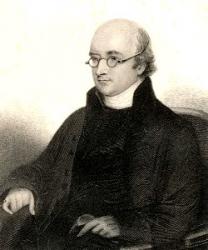
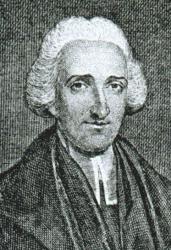
Richard Mant

1776 - 1848 Topics: God Power of Author of "God, my King, thy might confessing, Ever will I bless thy name" in Magnify the Lord Mant, Richard D.D., son of the Rev. Richard Mant, Master of the Grammar School, Southampton, was born at Southampton, Feb. 12, 1776. He was educated at Winchester and Trinity, Oxford (B.A. 1797, M.A., 1799). At Oxford he won the Chancellor's prize for an English essay: was a Fellow of Oriel, and for some time College Tutor. On taking Holy Orders he was successively curate to his father, then of one or two other places, Vicar of Coggeshall, Essex, 1810; Domestic Chaplain to the Archbishop of Canterbury, 1813, Rector of St. Botolph, Bishopsgate, London. 1816, and East Horsley, 1818, Bishop of Killaloe, 1820, of Down and Connor, 1823, and of Dromore, 1842. He was also Bampton Lecturer in 1811. He died Nov. 2, 1848. His prose works were numerous, and although now somewhat obsolete, they were useful and popular in their day. His poetical works, and other works which contain poetical pieces, are:— (1) The Country Curate, 1804; (2) Poems in three Parts, 1806; (3) The Slave, 1807; (4) The Book of Psalms in an English Metrical Version, &c, 1824; (5) The Holydays of the Church; or Scripture Narratives of Our Blessed Lord's Life and Ministry, and Biographical Notices of the Apostles, Evangelists, and Other Saints, with Reflections, Collects, and Metrical Sketches, vol. i., 1828; vol. ii., 1831; (6) The Gospel Miracles in a series of Poetical Sketches, &c., 1832; (7) The British Months, 2 vols., 1836; (8) Ancient Hymns from the Roman Breviary, for Domestick Use. . . .To which are added Original Hymns, principally of Commemoration and Thanksgiving for Christ's Holy Ordinances, 1837: new ed., 1871. (9) The Happiness of the Blessed Dead, 1847. Bishop Mant is known chiefly through his translations from the Latin. He was one of the earliest of the later translators, I. Williams and J. Chandler being his contemporaries. Concerning his translations, Mr. Ellerton, in his Notes on Church Hymns, 1881, p. xlviii. (folio ed.), says justly that:— "Mant had little knowledge of hymns, and merely took those of the existing Roman Breviary as he found them: consequently he had to omit many, and so to alter others that they have in fact become different hymns: nor was he always happy in his manipulation of them. But his book has much good taste and devout feeling, and has fallen into undeserved neglect." His metrical version of the Psalms has yielded very few pieces to the hymnals, the larger portion of his original compositions being from his work of 1837. The most popular of these is "Come Holy Ghost, my soul inspire, Spirit of," &c, and its altered forms; "Bright the vision that delighted," and its altered form of "Round the Lord in glory seated;" and "For all Thy saints, O Lord." His hymns in common use which are not annotated under their respective first lines are:— i. From his Metrical Version of the Psalms, 1824. 1. God, my King, Thy might confessing. Ps. cxlv. 2. Lord, to Thee I make my vows. Ps. xxvii. 3. Blessed be the Lord most High. Ps. xxviii. Pt. ii. 4. My trust is in the highest Name. Ps. xi. 5. Reign, Jehovah, King supreme. Ps. xcix. 6. Thy listening ear, O Lord, incline. Ps. Ixxxvi. 7. To God my earnest voice I raise. Ps. cxlii. 8. To Jehovah hymn the lay. Ps. cxviii. Two centos in Spurgeon's Our Own Hymn Book, 1866. (1) st. i., ii., v.; and (2) "Thee, Jehovah, will I bless" from st. vii.-x. ii. From his Holydays of the Church, &c, 1828-31. 9. Lo, the day the Lord hath made. Easter. 10. There is a dwelling place above. All Saints. iii. From his Ancient Hymns, &c, 1837. 11. Before Thy mercy's throne. Lent. 12. Father of all, from Whom we trace. Unity. 13. For these who first proclaimed Thy word. Apostles. 14. No! when He bids me seek His face. Holy Communion. 15. Oft as in God's own house we sit. Divine Worship. 16. Put off thy shoes, 'tis holy ground. The House of God . 17. Saviour of men, our Hope [Life] and Rest. The Greater Festivals. 18. Thy House each day of hallowed rest. Holy Communion. 19. We bless Thee for Thy Church, 0 Lord. Thanksgiving for the Church. 26. We deem and own it, Lord, a proof. Divine Grace. When all Bishop Mant's translations of original hymns, and versions of the Psalms in common use are taken into account, it is found that he is somewhat strongly represented in modern hymnody. -- John Julian, Dictionary of Hymnology (1907) ==================== http://en.wikipedia.org/wiki/Richard_Mant

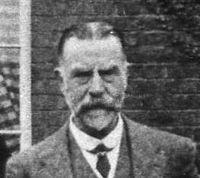
Charles V. Stanford

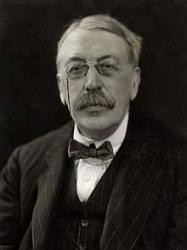
1852 - 1924 Person Name: Charles Villiers Stanford (1852-1924) Topics: God Power of Editor of "ST PATRICK" in Ancient and Modern Sir Charles Villiers Stanford (30 September 1852 – 29 March 1924) was an Irish composer, teacher and conductor. Born to a well-off and highly musical family in Dublin, Stanford was educated at the University of Cambridge before studying music in Leipzig and Berlin. He was instrumental in raising the status of the Cambridge University Musical Society, attracting international stars to perform with it. While still an undergraduate, Stanford was appointed organist of Trinity College, Cambridge. In 1882, aged 29, he was one of the founding professors of the Royal College of Music, where he taught composition for the rest of his life. From 1887 he was also the professor of music at Cambridge. As a teacher, Stanford was sceptical about modernism, and based his instruction chiefly on classical principles as exemplified in the music of Brahms. Among his pupils were rising composers whose fame went on to surpass his own, such as Gustav Holst and Ralph Vaughan Williams. As a conductor, Stanford held posts with the Bach Choir and the Leeds triennial music festival. Stanford composed a substantial number of concert works, including seven symphonies, but his best-remembered pieces are his choral works for church performance, chiefly composed in the Anglican tradition. He was a dedicated composer of opera, but none of his nine completed operas has endured in the general repertory. Some critics regarded Stanford, together with Hubert Parry and Alexander Mackenzie, as responsible for a renaissance in English music. However, after his conspicuous success as a composer in the last two decades of the 19th century, his music was eclipsed in the 20th century by that of Edward Elgar as well as former pupils. Stanford was born in Dublin, the only son of John James Stanford and his second wife, Mary, née Henn. John Stanford was a prominent Dublin lawyer, Examiner to the Court of Chancery in Ireland and Clerk of the Crown for County Meath. His wife was the third daughter of William Henn, Master of the High Court of Chancery in Ireland. Both parents were accomplished amateur musicians; John Stanford was a cellist and a noted bass singer who was chosen to perform the title role in Mendelssohn's Elijah at the Irish premiere in 1847. Mary Stanford was an amateur pianist, capable of playing the solo parts in concertos at Dublin concerts. The young Stanford was given a conventional education at a private day school in Dublin run by Henry Tilney Bassett, who concentrated on the classics to the exclusion of other subjects. Stanford's parents encouraged the boy's precocious musical talent, employing a succession of teachers in violin, piano, organ and composition. Three of his teachers were former pupils of Ignaz Moscheles, including his godmother Elizabeth Meeke, of whom Stanford recalled, "She taught me, before I was twelve years old, to read at sight. … She made me play every day at the end of my lesson a Mazurka of Chopin: never letting me stop for a mistake. … By the time I had played through the whole fifty-two Mazurkas, I could read most music of the calibre my fingers could tackle with comparative ease." One of the young Stanford's earliest compositions, a march in D♭ major, written when he was eight years old, was performed in the pantomime at the Theatre Royal, Dublin three years later. At the age of nine, Stanford gave a piano recital for an invited audience, playing works by Beethoven, Handel, Mendelssohn, Moscheles, Mozart and Bach. One of his songs was taken up by the University of Dublin Choral Society and was well received. In the 1860s Dublin received occasional visits from international stars, and Stanford was able to hear famous performers such as Joseph Joachim, Henri Vieuxtemps and Adelina Patti. The annual visit of the Italian Opera Company from London, led by Giulia Grisi, Giovanni Matteo Mario and later Thérèse Tietjens, gave Stanford a taste for opera that remained with him all his life. When he was ten, his parents took him to London for the summer, where he stayed with his mother's uncle in Mayfair. While there he took composition lessons from the composer and teacher Arthur O'Leary, and piano lessons from Ernst Pauer, professor of piano at the Royal Academy of Music (RAM). On his return to Dublin, his godmother having left Ireland, he took lessons from Henrietta Flynn, another former Leipzig Conservatory pupil of Moscheles, and later from Robert Stewart, organist of St Patrick's Cathedral, as well as from a third Moscheles pupil, Michael Quarry. During his second spell in London two years later, he met the composer Arthur Sullivan and the musical administrator and writer George Grove, who later played important parts in his career. John Stanford hoped that his son would follow him into the legal profession but accepted his decision to pursue music as a career. However, he stipulated that Stanford should have a conventional university education before going on to musical studies abroad. Stanford tried unsuccessfully for a classics scholarship at Trinity Hall, Cambridge, but gained an organ scholarship, and later a classics scholarship, at Queens' College. By the time he went up to Cambridge he had written a substantial number of compositions, including vocal music, both sacred and secular, and orchestral works (a rondo for cello and orchestra and a concert overture). Stanford immersed himself in the musical life of the university to the detriment of his Latin and Greek studies. He composed religious and secular vocal works, a piano concerto, and incidental music for Longfellow's play A Spanish Student. In November 1870 he appeared as piano soloist with the Cambridge University Musical Society (CUMS), and quickly became its assistant conductor and a committee member. The society had declined in excellence since its foundation in 1843. Its choir consisted solely of men and boys; the lack of women singers severely limited the works that the society could present. Stanford was unable to persuade the members to admit women, and so he staged what The Musical Times called "a bloodless revolution." In February 1872 he co-founded a mixed choir, the Amateur Vocal Guild, whose performances immediately put those of the CUMS singers in the shade. The members of CUMS rapidly changed their minds, and agreed to a merger of the two choirs, with women given associate membership of the society. The conductor of the combined choir was John Larkin Hopkins, who was also organist of Trinity College. He became ill, and handed over the conductorship to Stanford in 1873. Stanford was also appointed Hopkins's deputy organist at Trinity, and moved from Queens' to Trinity in April 1873. In the summer of that year Stanford made his first trip to continental Europe. He went to Bonn for the Schumann Festival held there, where he met Joachim and Brahms. His growing love of the music of Schumann and Brahms marked him as a classicist at a time when many music-lovers were divided into the classical or the modernist camps, the latter represented by the music of Liszt and Wagner. Stanford was not constrained by the fashion for belonging to one camp or the other; he immensely admired Die Meistersinger though he was unenthusiastic about some of Wagner's other works. After leaving Bonn he returned home by way of Switzerland and then Paris, where he saw Meyerbeer's Le prophète. Hopkins's illness proved fatal, and after his death the Trinity authorities invited Stanford to take over as organist of the college. He accepted with the proviso that he was to be released each year for a spell of musical study in Germany. The fellows of the college resolved on 21 February 1874: Two days after his appointment, Stanford took the final examinations for his classics degree. He ranked 65th of 66, and was awarded a third-class degree. On the recommendation of Sir William Sterndale Bennett, former professor of music at Cambridge and now director of the Royal Academy of Music, Stanford went to Leipzig in the summer of 1874 for lessons with Carl Reinecke, professor of composition and piano at the Leipzig Conservatory. The composer Thomas Dunhill commented that by 1874 it was "the tail-end of the Leipzig ascendancy, when the great traditions of Mendelssohn had already begun to fade." Nevertheless, Stanford did not seriously consider studying anywhere else. Neither Dublin nor London offered any comparable musical training; the most prestigious British music school, the RAM, was at that time hidebound and reactionary. He was dismayed to find in Leipzig that Bennett had recommended him to a German pedant no more progressive than the teachers at the RAM. Stanford said of Reinecke, "Of all the dry musicians I have ever known he was the most desiccated. He had not a good word for any contemporary composer… He loathed Wagner … sneered at Brahms and had no enthusiasm of any sort." Stanford's biographer Paul Rodmell suggests that Reinecke's ultra-conservatism may have been unexpectedly good for his pupil "as it may have encouraged Stanford to kick against the traces." During his time in Leipzig Stanford took piano lessons from Robert Papperitz (1826–1903), organist of the city's Nikolaikirche, whom he found more helpful. Among Stanford's compositions in 1874 was a setting of part one of Longfellow's poem "The Golden Legend." He intended to set the entire poem, but gave up, defeated by Longfellow's "numerous but unconnected characters." Stanford ignored this and other early works when assigning opus numbers in his mature years. The earliest compositions in his official list of works are a four-movement Suite for piano and a Toccata for piano, which both date from 1875. After a second spell in Leipzig with Reinecke in 1875, which was no more productive than the first, Stanford was recommended by Joachim to study in Berlin the following year with Friedrich Kiel, whom Stanford found "a master at once sympathetic and able … I learnt more from him in three months, than from all the others in three years." Returning to Cambridge in the intervals of his studies in Germany, Stanford had resumed his work as conductor of CUMS. He found the society in good shape under his deputy, Eaton Faning, and able to tackle demanding new works. In 1876 the society presented one of the first performances in Britain of the Brahms Requiem. In 1877 CUMS came to national attention when it presented the first British performance of Brahms's First Symphony. During the same period, Stanford was becoming known as a composer. He was composing prolifically, though he later withdrew some of his works from these years, including a violin concerto which, according to Rodmell, suffered from "undistinguished thematic material." In 1875 his First Symphony won the second prize in a competition held at the Alexandra Palace for symphonies by British composers, although he had to wait a further two years to hear the work performed. In the same year Stanford directed the first performance of his oratorio "The Resurrection," given by CUMS. At the request of Alfred Tennyson, he wrote incidental music for Tennyson's drama Queen Mary, performed at the Lyceum Theatre, London in April 1876. In April 1878, despite the disapproval of his father, Stanford married Jane Anna Maria Wetton, known as Jennie, a singer whom he had met when she was studying in Leipzig. They had a daughter, Geraldine Mary, born in 1883 and a son, Guy Desmond, born in 1885. In 1878 and 1879 Stanford worked on his first opera, The Veiled Prophet, to a libretto by his friend William Barclay Squire. It was based on a poem by Thomas Moore with characters including a virgin priestess and a mystic prophet, and a plot that culminates in poisoning and stabbing. Stanford offered the work to the opera impresario Carl Rosa, who refused it and suggested that the composer should try to have it staged in Germany: "Its success will (unfortunately) have much greater chances here if accepted abroad." Referring to the enormous popularity of Sullivan's comic operas, Rosa added, "If the work was of the Pinafore style it would be quite another matter." Stanford had greatly enjoyed Sullivan's Cox and Box, but The Veiled Prophet was intended to be a serious work of high drama and romance. Stanford had made many useful contacts during his months in Germany, and his friend the conductor Ernst Frank got the piece staged at the Königliches Schauspiel in Hanover in 1881. Reviewing the premiere for The Musical Times, Stanford's friend J A Fuller Maitland wrote, "Mr. Stanford's style of instrumentation … is built more or less on that of Schumann; while his style of dramatic treatment bears more resemblance to Meyerbeer than to that of any other master." Other reviews were mixed, and the opera had to wait until 1893 for its English premiere. Stanford nevertheless continued to seek operatic success throughout his career. In his lifelong enthusiasm for opera he differed strikingly from his contemporary Hubert Parry, who made one attempt at composing opera and then renounced the genre. By the early 1880s, Stanford was becoming a major figure in the British musical scene. His only major rivals were seen as Sullivan, Frederic Hymen Cowen, Parry, Alexander Mackenzie and Arthur Goring Thomas. Sullivan was by this time viewed with suspicion in high-minded musical circles for composing comic rather than grand operas; Cowen was regarded more as a conductor than as a composer; and the other three, though seen as promising, had not so far made a clear mark as Stanford had done. Stanford helped Parry in particular to gain recognition, commissioning incidental music from him for a Cambridge production of Aristophanes' The Birds and a symphony (the "Cambridge") for the musical society. At Cambridge Stanford continued to raise the profile of CUMS, as well as his own, by securing appearances by leading international musicians including Joachim, Hans Richter, Alfredo Piatti and Edward Dannreuther. The society attracted further attention by premiering works by Cowen, Parry, Mackenzie, Goring Thomas and others. Stanford was also making an impression in his capacity as organist of Trinity, raising musical standards and composing what his biographer Jeremy Dibble calls "some highly distinctive church music" including a Service in B♭ (1879), the anthem "The Lord is my shepherd" (1886) and the motet Justorum animae (1888). In the first half of the 1880s, Stanford collaborated with the author Gilbert à Beckett on two operas, Savonarola, and The Canterbury Pilgrims. The former was well received at its premiere in Hamburg in April 1884, but received a critical savaging when staged at Covent Garden in July of the same year. Parry commented privately, "It seems very badly constructed for the stage, poorly conceived and the music, though clean and well-managed, is not striking or dramatic." The most severe public criticism was in The Theatre, whose reviewer wrote, "The book of Savonarola is dull, stilted, and, from a dramatic point of view, weak. It is not, however, so crushingly tiresome as the music fitted to it. Savonarola has gone far to convince me that opera is quite out of [Stanford's] line and that the sooner he abandons the stage for the cathedral, the better for his musical reputation." The Canterbury Pilgrims had been premiered in London in April 1884, three months before Savonarola was presented at Covent Garden. It had a better reception than the latter, though reviews pointed out Stanford's debt to Die Meistersinger, and complained of a lack of emotion in the love music. George Grove agreed with the critics, writing to Parry, "Charlie's music contains everything but sentiment. Love not at all – that I heard not a grain of. … And I do think that there might be more tune. Melody is not a thing to be avoided surely." In 1896 a critic wrote that the opera had "just such a 'book' as would have suited the late Alfred Cellier. He would probably have made of it a charming light English opera. But Dr. Stanford has chosen to use it for the exemplification of those advanced theories which we know him to hold, and he has given us music which would incline us to think that Die Meistersinger had been his model. The effect of the combination is not happy." In 1883, the Royal College of Music was set up to replace the short-lived and unsuccessful National Training School for Music (NTSM). Neither the NTSM nor the longer-established Royal Academy of Music had provided adequate musical training for professional orchestral players, and the founder-director of the college, George Grove, was determined that the new institution should succeed in doing so. His two principal allies in this undertaking were the violinist Henry Holmes and Stanford. In a study of the founding of the college, David Wright notes that Stanford had two main reasons for supporting Grove's aim. The first was his belief that a capable college orchestra was essential to give students of composition the chance to experience the sound of their music. His second reason was the severe contrast between the competence of German orchestras and the performance of their British counterparts. He accepted Grove's offer of the posts of professor of composition and (with Holmes) conductor of the college orchestra. He held the professorship for the rest of his life; among the best known of his many pupils were Samuel Coleridge-Taylor, Gustav Holst, Ralph Vaughan Williams, John Ireland, Frank Bridge and Arthur Bliss. Stanford was never an easy-going teacher. He insisted on one-to-one tutorials, and worked his pupils hard. One of them, Herbert Howells, recalled, "Corner any Stanford pupil you like, and ask him to confess the sins he most hated being discovered in by his master. He will tell you 'slovenliness' and 'vulgarity.' When these went into the teacher's room they came out, badly damaged. Against compromise with dubious material or workmanship Stanford stubbornly set his face." Another pupil, Edgar Bainton, recalled: Stanford's teaching seemed to be without method or plan. His criticism consisted for the most part of "I like it, my boy," or "It's damned ugly, my boy" (the latter in most cases). In this, perhaps, lay its value. For in spite of his conservatism, and he was intensely and passionately conservative in music as in politics, his amazingly comprehensive knowledge of musical literature of all nations and ages made one feel that his opinions, however irritating, had weight. To Stanford's regret, many of his pupils who achieved eminence as composers broke away from his classical, Brahmsian precepts, as he had himself rebelled against Reinecke's conservatism. The composer George Dyson wrote, "In a certain sense the very rebellion he fought was the most obvious fruit of his methods. And in view of what some of these rebels have since achieved, one is tempted to wonder whether there is really anything better a teacher can do for his pupils than drive them into various forms of revolution." The works of some of Stanford's pupils, including Holst and Vaughan Williams, entered the general repertory in Britain, and to some extent elsewhere, as Stanford's never did. For many years after his death it seemed that Stanford's greatest fame would be as a teacher. Among his achievements at the RCM was the establishment of an opera class, with at least one operatic production every year. From 1885 to 1915 there were 32 productions, all of them conducted by Stanford. In 1887 Stanford was appointed professor of music at Cambridge in succession to Sir George Macfarren who died in October of that year. Up to this time, the university had awarded music degrees to candidates who had not been undergraduates at Cambridge; all that was required was to pass the university's music examinations. Stanford was determined to end the practice, and after six years he persuaded the university authorities to agree. Three years' study at the university became a prerequisite for sitting the bachelor of music examinations. During the last decades of the 19th century, Stanford's academic duties did not prevent him from composing or performing. He was appointed conductor of the Bach Choir, London, in 1885, succeeding its founding conductor Otto Goldschmidt. He held the post until 1902. Hans von Bülow conducted the German premiere of Stanford's Irish Symphony in Hamburg in January 1888, and was sufficiently impressed by the work to programme it in Berlin shortly afterwards. Richter conducted it in Vienna, and Mahler later conducted it in New York. For the Theatre Royal, Cambridge, Stanford composed incidental music for productions of Aeschylus's The Eumenides (1885), and Sophocles' Oedipus Tyrannos (1887). The Times said of the former, "Mr. Stanford's music is dramatically significant, as well as beautiful in itself. It has, moreover, that quality so rare among modern composers – style." In both sets of music Stanford made extensive use of leitmotifs, in the manner of Wagner; the critic of The Times noted the Wagnerian character of the prelude to Oedipus. In the 1890s, Bernard Shaw writing as "Corno di Bassetto", music critic of The World, voiced mixed feelings about Stanford. In Shaw's view, the best of Stanford's works displayed an uninhibited, Irish, character. The critic was dismissive of the composer's solemn Victorian choral music. In July 1891, Shaw's column was full of praise for Stanford's capacity for spirited tunes, declaring that Richard D'Oyly Carte should engage him to succeed Sullivan as the composer of Savoy operas. In October of the same year, Shaw attacked Stanford's oratorio Eden, bracketing the composer with Parry and Mackenzie as a mutual admiration society, purveying "sham classics": [W]ho am I that I should be believed, to the disparagement of eminent musicians? If you doubt that Eden is a masterpiece, ask Dr Parry and Dr Mackenzie, and they will applaud it to the skies. Surely Dr Mackenzie’s opinion is conclusive; for is he not the composer of Veni Creator, guaranteed as excellent music by Professor Stanford and Dr Parry? You want to know who Parry is? Why, the composer of "Blest Pair of Sirens," as to the merits of which you only have to consult Dr Mackenzie and Professor Stanford. To Fuller Maitland, the trio of composers lampooned by Shaw were the leaders of an English musical renaissance (although neither Stanford nor Mackenzie was English). This view persisted in some academic circles for many years. Stanford returned to opera in 1893, with an extensively revised and shortened version of The Veiled Prophet. It had its British premiere at Covent Garden in July. His friend Fuller Maitland was by this time the chief music critic of The Times, and the paper's review of the opera was laudatory. According to Fuller Maitland The Veiled Prophet was the best novelty of an opera season that had also included Leoncavallo's Pagliacci, Bizet's Djamileh and Mascagni's I Rantzau. Stanford's next opera was Shamus O'Brien (1896), a comic opera to a libretto by George H. Jessop. The conductor was the young Henry Wood, who recalled in his memoirs that the producer, Sir Augustus Harris, managed to quell the dictatorial composer and prevent him from interfering with the staging. Stanford attempted to give Wood lessons in conducting, but the young man was unimpressed. The opera was successful, running for 82 consecutive performances. The work was given in German translation in Breslau in 1907; Thomas Beecham thought it "a colourful, racy work", and revived it in his 1910 opéra comique season at His Majesty's Theatre, London. At the end of 1894, Grove retired from the Royal College of Music. Parry was chosen to succeed him, and although Stanford wholeheartedly congratulated his friend on his appointment, their relations soon deteriorated. Stanford was known as a hot-tempered and quarrelsome man. Grove had written of a board meeting at the Royal College "where somehow the spirit of the d----l himself had been working in Stanford all the time – as it sometimes does, making him so nasty and quarrelsome and contradictious as no one but he can be! He is a most remarkably clever and able fellow, full of resource and power – no doubt of that – but one has to purchase it often at a very dear price." Parry suffered worse at Stanford's hands with frequent rows, deeply upsetting to the highly-strung Parry. Some of their rows were caused by Stanford's reluctance to accept the authority of his old friend and protégé, but on other occasions Parry seriously provoked Stanford, notably in 1895 when he reduced the funding for Stanford's orchestral classes. In 1898, Sullivan, ageing and unwell, resigned as conductor of the Leeds triennial music festival, a post which he had held since 1880. He believed that Stanford's motive for accepting the conductorship of the Leeds Philharmonic Society the previous year was to position himself to take over the festival. Stanford later felt obliged to write to The Times, denying that he had been party to a conspiracy to oust Sullivan. Sullivan was by then thought to be a dull conductor of other composers' music, and although Stanford's work as a conductor was not without its critics, he was appointed in Sullivan's place. He remained in charge until 1910. His compositions for the festival included "Songs of the Sea" (1904), "Stabat Mater" (1907) and "Songs of the Fleet (1910)." New works by other composers presented at Leeds during Stanford's years in charge included pieces by Parry, Mackenzie, and seven of Stanford's former pupils. The best-known new work from Stanford's time is probably Vaughan Williams's A Sea Symphony, premiered in 1910. In 1901 Stanford returned once again to opera, with a version of Much Ado About Nothing, to a libretto by Julian Sturgis that was exceptionally faithful to Shakespeare's original. The Manchester Guardian commented, "Not even in the Falstaff of Arrigo Boito and Giuseppe Verdi have the characteristic charm, the ripe and pungent individuality of the original comedy been more sedulously preserved." Despite good notices for the opera, Stanford's star was waning. In the first decade of the century, his music became eclipsed by that of a younger composer, Edward Elgar. In the words of the music scholar Robert Anderson, Stanford "had his innings with continental reputation in the latter decades of the nineteenth century, but then Elgar bowled him out." When Elgar was struggling for recognition in the 1890s, Stanford had been supportive of his younger colleague, conducting his music, putting him forward for a Cambridge doctorate, and proposing him for membership of the exclusive London club, the Athenaeum. He was, however, put out when Elgar's success at home and abroad eclipsed his own, with Richard Strauss (whom Stanford detested) praising Elgar as the first progressive English composer. When Elgar was appointed professor of music at Birmingham University in 1904, Stanford wrote him a letter that the recipient found "odious". Elgar retaliated in his inaugural lecture with remarks about composers of rhapsodies, widely seen as denigrating Stanford. Stanford later counter-attacked in his book A History of Music, writing of Elgar, "Cut off from his contemporaries by his religion and his want of regular academic training, he was lucky enough to enter the field and find the preliminary ploughing done." Though bitter about being sidelined, Stanford continued to compose. Between the turn of the century and the outbreak of the First World War in 1914 his new works included a violin concerto (1901), a clarinet concerto (1902), a sixth and a seventh (and last) symphony (1906 and 1911), and his second piano concerto (1911). In 1916 he wrote his penultimate opera, The Critic. It was a setting of Sheridan's comedy of the same name, with the original text left mostly intact by the librettist, Lewis Cairns James. The work was well received at the premiere at the Shaftesbury Theatre, London, and was taken up later in the year by Beecham, who staged it in Manchester and London. The First World War had a severe effect on Stanford. He was frightened by air-raids, and had to move from London to Windsor to avoid them. Many of his former pupils were casualties of the fighting, including Arthur Bliss, injured, Ivor Gurney, gassed, and George Butterworth, killed. The annual RCM operatic production, which Stanford had supervised and conducted every year since 1885, had to be cancelled. His income declined, as the fall in student numbers at the college reduced the demand for his services. After a serious disagreement at the end of 1916, his relationship with Parry deteriorated to the point of hostility. Stanford's magnanimity, however, came to the fore when Parry died two years later and Stanford successfully lobbied for him to be buried in St Paul's Cathedral. After the war, Stanford handed over much of the direction of the RCM's orchestra to Adrian Boult, but continued to teach at the college. He gave occasional public lectures, including one on "Some Recent Tendencies in Composition", in January 1921 which was belligerently hostile to most of the music of the generation after his own. His last public appearance was on 5 March 1921 conducting the Royal Choral Society in his new cantata, At the Abbey Gate. Reviews were polite but unenthusiastic. The Times said, "we could not feel that the music had enough emotion behind it", The Observer thought it "quite appealing even though one feels it to be more facile than powerful." In September 1922, Stanford completed the sixth Irish Rhapsody, his final work. Two weeks later he celebrated his 70th birthday; thereafter his health declined. On 17 March 1924 he suffered a stroke and on 29 March he died at his home in London, survived by his wife and children. He was cremated at Golders Green Crematorium on 2 April and his ashes were buried in Westminster Abbey the following day. The orchestra of the Royal College of Music, conducted by Boult, played music by Stanford, ending the service with a funeral march that he had written for Tennyson's Becket in 1893. The grave is in the north choir aisle of the Abbey, near the graves of Henry Purcell, John Blow and William Sterndale Bennett. The Times said, "the conjunction of the music of Stanford with that of his great predecessors showed how thoroughly as composer he belonged to their line." Stanford's last opera, The Travelling Companion, composed during the war, was premiered by amateur performers at the David Lewis Theatre, Liverpool in 1925 with a reduced orchestra. The work was given complete at Bristol in 1928 and at Sadler's Wells Theatre, London, in 1935. Stanford received many honours, including honorary doctorates from Oxford (1883), Cambridge (1888), Durham (1894), Leeds (1904), and Trinity College, Dublin (1921). He was knighted in 1902 and in 1904 was elected a member of the Royal Academy of Arts, Berlin. In Stanford's music the sense of style, the sense of beauty, the feeling of a great tradition is never absent. His music is in the best sense of the word Victorian, that is to say it is the musical counterpart of the art of Tennyson, Watts and Matthew Arnold. Stanford composed about 200 works, including seven symphonies, about 40 choral works, nine operas, 11 concertos and 28 chamber works, as well as songs, piano pieces, incidental music, and organ works. He suppressed most of his earliest compositions; the earliest of works that he chose to include in his catalogue date from 1875. Throughout his career as a composer, Stanford's technical mastery was rarely in doubt. The composer Edgar Bainton said of him, "Whatever opinions may be held upon Stanford's music, and they are many and various, it is, I think, always recognised that he was a master of means. Everything he turned his hand to always 'comes off.'" On the day of Stanford's death, one former pupil, Gustav Holst, said to another, Herbert Howells, "The one man who could get any one of us out of a technical mess is now gone from us." After Stanford's death most of his music was quickly forgotten, with the exception of his works for church performance. His Stabat Mater and Requiem held their place in the choral repertoire, the latter championed by Sir Thomas Beecham. Stanford's two sets of sea songs and the song "The Blue Bird" were still performed from time to time, but even his most popular opera, Shamus O'Brien came to seem old fashioned with its "stage-Irish" vocabulary. However, in his 2002 study of Stanford Dibble writes that the music, increasingly available on disc if not in live performance, still has the power to surprise. In Dibble's view, the frequent charge that Stanford is "Brahms and water" was disproved once the symphonies and concertos, much of the chamber music and many of the songs became available for reappraisal when recorded for compact disc. In 2002, Rodmell's study of Stanford included a discography running to 16 pages. The criticism most often made of Stanford's music by writers from Shaw onwards is that his music lacks passion. Shaw praised "Stanford the Celt" and abominated "Stanford the Professor", who reined in the emotions of the Celt. In Stanford's church music, the critic Nicholas Temperley finds "a thoroughly satisfying artistic experience, but one that is perhaps lacking in deeply felt religious impulse." In his operas and elsewhere, Grove, Parry and later commentators found music that ought to convey love and romance failing to do so. Like Parry, Stanford strove for seriousness, and his competitive streak led him to emulate Sullivan not in comic opera, for which Stanford had a real gift, but in oratorio in what Rodmell calls grand statements that "only occasionally matched worthiness with power or profundity." --excerpts from en.wikipedia.org

Thomas M. Westrup

1837 - 1909 Person Name: Tomás M. Westrup, 1837-1909 Topics: Solemnities of the Lord Christ the King; Solemnidades del Señor Jesucristo, Rey del Universo; Alabanza; Praise; Canción; Song; Communion of the Saints; Comunión de los Santos; Majestad y Poder; Majesty and Power; Name of Jesus; Nombre de Jesús; People of God; Pueblo de Dios Translator (sts. 3,4 ) of "All Hail the Power of Jesus' Name (A Jesucristo Póstrense)" in Oramos Cantando = We Pray In Song Thomas Martin Westrup moved with his family from London to Mexico when he was fifteen years old. He translated hundreds of hymns and, along with his son, Enrique, published a three-volume hymnal Incienso Christiano. Dianne Shapiro from Celebremos su Gloria (Colombia/Illinois: Libros Alianza/Celebration), 1992

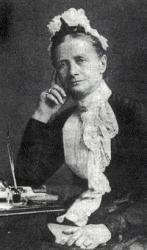
Cecil Frances Alexander

1818 - 1895 Person Name: Cecil F. Alexander (1823-1895) Topics: God the Father Power of God in Nature Author of "All Things Bright and Beautiful" in Seventh-day Adventist Hymnal As a small girl, Cecil Frances Humphries (b. Redcross, County Wicklow, Ireland, 1818; Londonderry, Ireland, 1895) wrote poetry in her school's journal. In 1850 she married Rev. William Alexander, who later became the Anglican primate (chief bishop) of Ireland. She showed her concern for disadvantaged people by traveling many miles each day to visit the sick and the poor, providing food, warm clothes, and medical supplies. She and her sister also founded a school for the deaf. Alexander was strongly influenced by the Oxford Movement and by John Keble's Christian Year. Her first book of poetry, Verses for Seasons, was a "Christian Year" for children. She wrote hymns based on the Apostles' Creed, baptism, the Lord's Supper, the Ten Commandments, and prayer, writing in simple language for children. Her more than four hundred hymn texts were published in Verses from the Holy Scripture (1846), Hymns for Little Children (1848), and Hymns Descriptive and Devotional ( 1858). Bert Polman ================== Alexander, Cecil Frances, née Humphreys, second daughter of the late Major John Humphreys, Miltown House, co. Tyrone, Ireland, b. 1823, and married in 1850 to the Rt. Rev. W. Alexander, D.D., Bishop of Derry and Raphoe. Mrs. Alexander's hymns and poems number nearly 400. They are mostly for children, and were published in her Verses for Holy Seasons, with Preface by Dr. Hook, 1846; Poems on Subjects in the Old Testament, pt. i. 1854, pt. ii. 1857; Narrative Hymns for Village Schools, 1853; Hymns for Little Children, 1848; Hymns Descriptive and Devotional, 1858; The Legend of the Golden Prayers 1859; Moral Songs, N.B.; The Lord of the Forest and his Vassals, an Allegory, &c.; or contributed to the Lyra Anglicana, the S.P.C.K. Psalms and Hymns, Hymns Ancient & Modern, and other collections. Some of the narrative hymns are rather heavy, and not a few of the descriptive are dull, but a large number remain which have won their way to the hearts of the young, and found a home there. Such hymns as "In Nazareth in olden time," "All things bright and beautiful," "Once in Royal David's city," "There is a green hill far away," "Jesus calls us o'er the tumult," "The roseate hues of early dawn," and others that might be named, are deservedly popular and are in most extensive use. Mrs. Alexander has also written hymns of a more elaborate character; but it is as a writer for children that she has excelled. - John Julian, Dictionary of Hymnology (1907) =============== Alexander, Cecil F., née Humphreys, p. 38, ii. Additional hymns to those already noted in this Dictionary are in common use:— 1. Christ has ascended up again. (1853.) Ascension. 2. His are the thousand sparkling rills. (1875.) Seven Words on the Cross (Fifth Word). 3. How good is the Almighty God. (1S48.) God, the Father. 4. In [a] the rich man's garden. (1853.) Easter Eve. 5. It was early in the morning. (1853.) Easter Day. 6. So be it, Lord; the prayers are prayed. (1848.) Trust in God. 7. Saw you never in the twilight? (1853.) Epiphany. 8. Still bright and blue doth Jordan flow. (1853.) Baptism of Our Lord. 9. The angels stand around Thy throne. (1848.) Submission to the Will of God. 10. The saints of God are holy men. (1848.) Communion of Saints. 11. There is one Way and only one. (1875.) SS. Philip and James. 12. Up in heaven, up in heaven. (1848.) Ascension. 13. We are little Christian children. (1848.) Holy Trinity. 14. We were washed in holy water. (1848.) Holy Baptism. 15. When of old the Jewish mothers. (1853.) Christ's Invitation to Children. 16. Within the Churchyard side by side. (1848.) Burial. Of the above hymns those dated 1848 are from Mrs. Alexander's Hymns for Little Children; those dated 1853, from Narrative Hymns, and those dated 1875 from the 1875 edition of Hymns Ancient & Modern. Several new hymns by Mrs. Alexander are included in the 1891 Draft Appendix to the Irish Church Hymnal. --John Julian, Dictionary of Hymnology, Appendix, Part II (1907) ============= Alexander, Cecil F. , p. 38, ii. Mrs. Alexander died at Londonderry, Oct. 12, 1895. A number of her later hymns are in her Poems, 1896, which were edited by Archbishop Alexander. --John Julian, Dictionary of Hymnology, New Supplement (1907) See also in:Hymn Writers of the Church

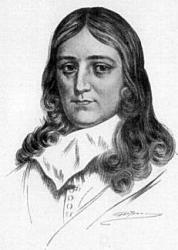
John Milton

1608 - 1674 Topics: God the Father Majesty and Power; Adoration of God; God Creator; God Faithfulness; God Mercy; Scripture Hymns and Songs Paraphraser of "Let Us, with a Gladsome Mind" in The Worshiping Church Milton, John, was born in London, Dec. 9, 1608, and died there Nov. 8, 1674. His poetical excellences and his literary fame are matters apart from hymnology, and are fully dealt with in numerous memoirs. His influence on English hymn-writing has been very slight, his 19 versions of various Psalms having lain for the most part unused by hymnal compilers. The dates of his paraphrases are:— Ps. cxiv. and cxxxvi., 1623, when he was 15 years of ago. These were given in his Poems in English and Latin 1645. Ps. lxxx.-lxxxviii., written in 1648, and published as Nine Psalmes done into Metre, 1645. Ps. i., 1653; ii., “Done August 8, 1653;" iii., Aug. 9, 1653; iv. Aug. 10, 1653; v., Aug. 12, 1653; vi., Aug. 13, 1653; vii.Aug. 14, 1653; viii., Aug. 14, 1653. These 19 versions were all included in the 2nd ed. of his Poems in English and Latin, 1673. From these, mainly in the form of centos, the following have come into common use:— 1. Cause us to see Thy goodness, Lord. Ps. lxxxv. 2. Defend the poor and desolate. Ps. lxxxii. 3. God in the great assembly stands. Ps. lxxxii. 4. How lovely are Thy dwellings fair. Ps. lxxxiv. From this, "They pass refreshed the thirsty vale," is taken. 5. Let us with a gladsome [joyful] mind. Ps. cxxxvi. 6. O let us with a joyful mind. Ps. cxxxvi. 7. The Lord will come and not be slow. Ps. lxxxv. Of these centos Nos. 4 and 5 are in extensive use. The rest are mostly in Unitarian collections. There are also centos from his hymn on the Nativity, "This is the month, and this the happy morn" (q.v.). --John Julian, Dictionary of Hymnology (1907)

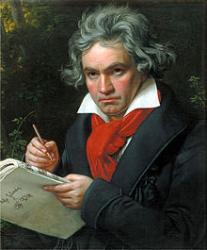
Ludwig van Beethoven

1770 - 1827 Person Name: Ludwig van Beethoven, 1770-1827 Topics: Power of God; Power of God; Power of God Composer of "HYMN TO JOY" in Journeysongs (2nd ed.) A giant in the history of music, Ludwig van Beethoven (b. Bonn, Germany, 1770; d. Vienna, Austria, 1827) progressed from early musical promise to worldwide, lasting fame. By the age of fourteen he was an accomplished viola and organ player, but he became famous primarily because of his compositions, including nine symphonies, eleven overtures, thirty piano sonatas, sixteen string quartets, the Mass in C, and the Missa Solemnis. He wrote no music for congregational use, but various arrangers adapted some of his musical themes as hymn tunes; the most famous of these is ODE TO JOY from the Ninth Symphony. Although it would appear that the great calamity of Beethoven's life was his loss of hearing, which turned to total deafness during the last decade of his life, he composed his greatest works during this period. Bert Polman

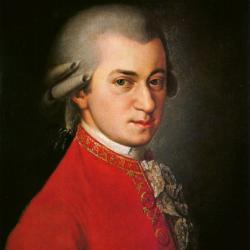
Wolfgang Amadeus Mozart

1756 - 1791 Person Name: Wolfgang A. Mozart, 1756-1791 Topics: Creation; Ecology; Faith; Food; Guidance; Joy; Life; Majesty and Power; Praise; Presence of God; Providence; Song; Wisdom Composer (attributed to) of "MOZART" in Worship (3rd ed.) Wolfgang Amadeus Mozart Austria 1756-1791. Born at Salzburg, Austria, the son of Leopold Mozart, a minor composer and violinist, and youngest of seven children, he showed amazing ability on violin and keyboard from earliest childhood, even starting to compose music at age four when his father would play a piece and Mozart would play it exactly as did his father. At five, he composed some of his own music, which he played to his father, who wrote it down. When Mozart was eight, he wrote his first symphony, probably transcribed by his father. In his early years his father was his only teacher, teaching his children languages and academic subjects, as well as fundamentals of their strict Catholic faith. Some of his early compositions came as a surprise to his father, who eventually gave up composing himself when he realized how talented his son was. His family made several European journeys and he and his sister, Nanneri, performed as child prodigies, at the court of Prince-elector Maximillian II of Bavaria in Munich, and at the Imperial Courts in Vienna and Prague. A long concert tour followed, for 3.5 years, taking the family to courts in Munich, Mannheim, Paris, London, Dover, The Hague, Amsterdam, Utrecht, Mechelen, and again to Paris, and back home via Zurich, Donaueschingen, and Munich. During these trips Mozart met many musicians, acquainting himself with the works of other composers. He met Johann Christian Bach in London in 1764. Family trips were challenging, and travel conditions were primitive. They had to wait for invitations and reimbursements from nobility, and they endured long, near-fatal illnesses far from home. First Leopold (1764) got sick, then both children (1765). They traveled again to Vienna in 1767 and stayed there over a year. After a year back in Salzburg, Leopold and Wolfgang went to Italy (1769-1771), Leopold wished to display his son’s abilities as a performer and maturing composer. In Bologna, Italy, Wolfgang was accepted as a member of the famous Academia Filamonica. In Rome he heard Gregorio Allegri’s Miserere twice in performance. Back in the Sistine Chapel, Mozart wrote the whole performance out from memory, thus producing the first unauthorized copy of this closely guarded property of the Vatican. In the next few years Mozart wrote several operas performed with success in Italy, but his father’s hopes of securing a professional appointment for his son were not realized. At age 17 he was engaged as a musician at the Salzburg court, but grew restless and traveled in search of a better position. After returning to Salzburg, Mozart was employed as a court musician by the ruler of Salzburg, Prince Archbishop Hieronymus Colloredo. This gave Mozart ample opportunity to develop relationships with other musicians and his admirers, resulting in his development of new symphonies, sonatas, string quartets, masses, serenades, and some minor operas. In 1775 he wrote his only violin concertos, five in all. Again, he was discontent with work in Salzburg and traveled to find more opportunity to write operas. He and his father again visited Munich and Vienna, but neither visit was successful with the exception of his opera ‘La finta giardiniera’ in Munich. In 1777 he resigned his Salzburg position and went to Augsburg, Mannheim, Paris, and Munich again. In Mannheim he met and fell in love with Aloysia Weber, one of four daughters of a musical family. He could find no real employment there and left for Paris in 1778. He might have had a position as organist at Versailles, but he was not interested in that. He fell into debt and started pawning valuables. During these events his mother died. Meanwhile his father was still trying to find him a position in Salzburg. After checking out several other European cities and Munich, he again encountered Aloysia, but she was no longer interested in him, so he returned to Salzburg, having written another symphony, concerto, and piano sonata, and took the new appointment his father had found. However, he was still in discontent. Visiting Vienna in 1781, he was dismissed from his Salzburg position. He wrote another opera, ‘Idomeneo’, in 1781, that was successful in Munich. Two months later he was summoned to Vienna, where his employer, Archbishop Colloredo, wanted him around due to his notoriety. Mozart wished to meet the emperor and perform for him, and finally got that opportunity. It resulted in a part-time position and substantial commissions. Colloredo became a nemesis to Mozart’s career, finally releasing Mozart from his employ with a literal kick in the pants, much against his father’s wishes. However, he was now independent. Mozart then decided to settle in Vienna as a free lance performer and composer. He lived with the Fridolin Weber family, who had moved from Mannheim to Vienna. Fridolin, the father, had died, and they were taking in lodgers to make ends meet. His career there went well, and he performed as a pianist before the Emperor, establishing himself as the finest keyboard player in Vienna. He wrote another opera in 1782, again achieving success. Mozart had now become a prolific and influential composer of the Classical period and was known throughout Europe. Aloysia was now married to actor, Joseph Lange, and Mozart’s interest shifted to her sister, Constanze. In 1782 he married Constanze Weber Mozart Nissen. The marriage started out with a brief separation, and there was a problem getting Mozart’s father’s permission, which finally came. They had six children, but only two survived infancy: Carl and Franz. He lived in Vienna and achieved some notoriety, composing many of his best-known symphonies, concertos, and operas. In 1782-83 he became intimately acquainted with Johann Sebastian Bach and George Friederic Handel, as his friend, Gottfried van Swieten, owned many manuscripts of the Baroque masters, which Mozart studied intently. He altered his style of composition as a result. That year Mozart and his wife visited his father and sister, and he composed a liturgical piece, a Mass, with a singing part for his wife. He also met Joseph Hadyn in Vienna in 1784 and they became friends. They even played together in a string quartet from time to time. Mozart wrote six quartets dedicated to Hadyn. In 1785 Hadyn told Leopold Mozart, “Your son is the greatest composer known to me by person and repute, he has taste, and what is more, the greatest skill in composition”. Over the next several years Mozart booked several piano concertos in various places as a sole performer to delighted audiences, making substantial remuneration for his work. He and his wife then adopted a more luxurious lifestyle. They moved to an expensive apartment and he bought a fine fortepiano and billiard table. They sent their son, Karl, to an expensive boarding school and also kept servants. In 1784 Mozart became a Freemason and even composed Masonic music. Over the next several years he did little operatic writing and focused on his career as a piano soloist and writer of concertos. He again began operatic collaboration in 1785, creating ‘The marriage of Figaro’, then ‘Don Giovanni’ in 1787. That year his father died. Also that year he obtained a steady post under Emperor Joseph II as his chamber composer. This was part-time employment that was important when hard times arrived. However, Joseph aimed at keeping Mozart from leaving Vienna for better work. The Austrio-Turkish War made life difficult for musicians, and his aristocracy support had declined. He moved to save on expenses, but that did not help much, and he was reduced to borrowing funds from his friends, and pleading for loans. During this period he produced his last three symphonies. In 1789 he then set up on a journey to Leipzig, Dresden, and Berlin hoping to improve his fortunes. In 1790 he was highly productive, producing concertos, an opera, ‘The magic flute’, a series of string quintets, a motet, and an (unfinished) Requiem. Finances began to improve and he begin paying back his debts. Public reaction to his works also brought him great satisfaction. In 1791, while in Prague for the premiere of his opera, ‘La clemenza di Tito’, he fell ill. He continued professional functions for a short time, but had to go home and be nursed by his wife over the next couple of months. He died at Vienna, Austria, at the age of 35, a small thin man with undistinguishing characteristics. He was buried in a modest grave, having had a small funeral. Beethoven composed his early works in the shadow of Mozart, and Joseph Hadyn wrote “posterity will not see such a talent (as Mozart) again in 100 years”. 600+ works. Side note: Mozart enjoyed billiards, dancing, and had a pet canary, a starling, a dog, and a horse for recreational riding. He liked off-color humor. He wore elegant clothing when performing and had a modest tenor voice. John Perry

John Oxenham

1852 - 1941 Topics: Gifts; God's Love; God's power; Kingdom of God; Living Christ; Peace; Truth Author of "Peace in Our Time, O Lord" in Worship in Song John Oxenham is a pseudonym for William Arthur Dunkerley, and is used as the name authority by the Library of Congress.

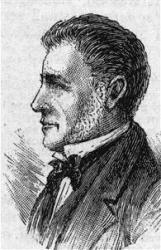
Josiah Conder

1789 - 1855 Person Name: Josiah Conder (1789-1855) Topics: God Power of Author of "The Lord is King! lift up thy voice" in Ancient and Modern Josiah Conder was born in London, in 1789. He became a publisher, and in 1814 became proprietor of "The Eclectic Review." Subsequently to 1824, he composed a series of descriptive works, called the "Modern Traveller," which appeared in thirty volumes. He also published several volumes of poems and hymns. He was the author of the first "Congregational Hymn Book" (1836). He died in 1855. --Annotations of the Hymnal, Charles Hutchins, M.A. 1872. ========================== Conder, Josiah, fourth son of Thomas Conder, engraver and bookseller, and grandson of the Rev. John Conder, D.D., first Theological Tutor of Homerton College, was born in Falcon Street (City); London, Sept. 17, 1789, and died Dec. 27, 1855. As author, editor and publisher he was widely known. For some years he was the proprietor and editor of the Eclectic Review, and also editor of the Patriot newspaper. His prose works were numerous, and include:— The Modern Traveller, 1830; Italy, 1831; Dictionary of Ancient and Modern Geography, 1834; Life of Bunyan, 1835; Protestant Nonconformity, 1818-19; The Law of the Sabbath, 1830; Epistle to the Hebrews (a translation), 1834; Literary History of the New Testament, 1845, Harmony of History with Prophecy, 1849, and others. His poetical works are:— (1) The Withered Oak,1805; this appeared in the Athenceum. (2) The Reverie, 1811. (3) Star in the East, 1824. (4) Sacred Poems, Domestic Poems, and Miscellaneous Poems, 1824. (5) The Choir and the Oratory; or, Praise and Prayer, 1837. Preface dated Nov. 8, 1836. (6) Hymns of Praise, Prayer, and Devout Meditation, 1856. This last work was in the press at the time of his death, and was revised and published by his son, the Rev. E. R. Conder, M.A. He also contributed many pieces to the magazines and to the Associated Minstrels, 1810, under the signature of " C." In 1838, selections from The Choir and Oratory were published with music by Edgar Sanderson, as Harmonia Sacra. A second volume was added in 1839. To Dr. Collyer’s (q.v.) Hymns, &c, he contributed 3 pieces signed "C"; and to Dr. Leifchild's Original Hymns, 1843, 8 hymns. As a hymn-book editor he was also well known. In 1836 he edited The Congregational Hymn Book: a Supplement to Dr. Watts’s Psalms and Hymns (2nd ed. 1844). To this collection he contributed fifty-six of his own hymns, some of which had previously appeared in The Star in the East, &c. He also published in 1851 a revised edition of Dr. Watts's Psalms and Hymns, and in the game year a special paper on Dr. Watte as The Poet of the Sanctuary, which was read before the Congregational Union at Southampton. The value of his work as Editor of the Congregational Hymn Book is seen in the fact that eight out of every ten of the hymns in that collection are still in use either in Great Britain or America. As a hymn writer Conder ranks with some of the best of the first half of the present century. His finest hymns are marked by much elevation of thought expressed in language combining both force and beauty. They generally excel in unity, and in some the gradual unfolding of the leading idea is masterly. The outcome of a deeply spiritual mind, they deal chiefly with the enduring elements of religion. Their variety in metre, in style, and in treatment saves them from the monotonous mannerism which mars the work of many hymn writers. Their theology, though decidedly Evangelical, is yet of a broad and liberal kind. Doubtless Conder's intercourse with many phases of theological thought as Editor of the Eclectic Review did much to produce this catholicity, which was strikingly shewn by his embodying many of the collects of the Book of Common Prayer, rendered into verse, in his Choir and Oratory. Of his versions of the Psalms the most popular are "How honoured, how dear" (84th), and "O be joyful in the Lord" (100th). His hymns in most extensive use are," Bread of heaven, on Thee I feed; " “Beyond, beyond that boundless sea;" "The Lord is King, lift up thy voice" (this last is one of his best); "Day by day the manna fell;" "How shall I follow him I serve;" "Heavenly Father, to whose eye" (all good specimens of his subdued and pathetic style); and "O shew me not my Saviour dying." This last is full of lyric feeling, and expresses the too often forgotten fact that the Church has a living though once crucified Lord. The popularity of Conder's hymns may be gathered from the fact that at the present time more of them are in common use in Great Britain and America than those of any other writer of the Congregational body, Watts and Doddridge alone excepted. [Rev. W. Garrett Horder] In addition to the hymns named above and others which are annotated under their respective first lines, the following, including two already named (4,16), are also in common use:— i. From Dr. Collyer's Hymns, &c, 1812. 1. When in the hours of lonely woe. Lent. ii. From The Star in the East, &c, 1824. 2. Be merciful, O God of grace. Ps. lxvii. 3. For ever will I bless the Lord. Ps. xxxiv. 4. How honoured, how dear. Ps. lxxxiv. 5. Now with angels round the throne. Doxology. 6. O Thou God, Who hearest prayer. Lent. Dated Sept. 1820. Usually abbreviated. iii. From The Congregational Hymn Book, 1836. 7. Blessed be God, He is not strict. Longsuffering of God. 8. Followers of Christ of every name. Communion of Saints. 9. Grant me, heavenly Lord, to feel. Zeal in Missions desired. 10. Grant, 0 Saviour, to our prayers. Collect 5th S. after Trinity. 11. Head of the Church, our risen Lord. Church Meetings. 12. Holy, holy, holy Lord, in the highest heaven, &c. Praise to the Father. 13. Jehovah's praise sublime. Praise. 14. Leave us not comfortless. Holy Communion. 15. Lord, for Thv Name's sake! such the plea. In National Danger. 16. O be joyful in the Lord. Ps. c. 17. 0 breathe upon this languid frame. Baptism of Holy Spirit desired. 18. 0 give thanks to Him Who made. Thanksgiving for Daily Mercies. 19. 0 God, Protector of the lowly. New Year. 20. 0 God, to whom the happy dead. Burial. 21. 0 God, Who didst an equal mate. Holy Matrimony. 22. 0 God, Who didst Thy will unfold. Holy Scriptures. 23. 0 God, Who dost Thy sovereign might. Prayer Meetings. 24. 0 how shall feeble flesh and blood. Salvation through Christ. 25. 0 how should those be clean who bear. Purity desired for God's Ministers. 26. 0 say not, think not in thy heart. Pressing Onward. 27. 0 Thou divine High Priest. Holy Communion. 28. 0 Thou Who givest all their food. Harvest. 29. 0 Thou Whose covenant is sure. Holy Baptism. 30. Praise on Thee, in Zion-gates. Sunday. 31. Praise the God of all creation. Doxology 32. See the ransomed millions stand. Praise to Christ. 33. The heavens declare His glory. Ps. xix. 34. Thou art the Everlasting Word. Praise to Christ. 35. Thy hands have made and fashioned me. Thanks for Daily Mercies. 36. To all Thy faithful people, Lord. For Pardon. 37. To His own world He came. Ascension. 38. To our God loud praises give. Ps. cxxxvi. 39. Upon a world of guilt and night. Purification of B.V.M. 40. Welcome, welcome, sinner, hear. Invitation to Christ. 41. Wheresoever two or three. Continued Presence of Christ desired. iv. From The Choir and the Oratory, 1837. 42. Baptised into our Saviour's death. Holy Baptism. 43. In the day of my [thy] distress. Ps. xx. 44. 0 comfort to the dreary. Christ the Comforter. v. From Leifchild's Original Hymns, 1843. 45. I am Thy workmanship, 0 Lord. God the Maker and Guardian. 46. 0 Lord, hadst Thou been here! But when. The Resurrection of Lazarus. 47. 'Tis not that I did choose Thee. Chosen of God. This is altered in the Church Praise Book, N. Y., 1882, to “Lord, 'tis not that I did choose Thee," thereby changing the metre from 7.6 to 8.5. vi. From Hymns of Praise, Prayer, &c, 1856. 48. Comrades of the heavenly calling. The Christian race. When to these 48 hymns those annotated under their respective first lines are added, Conder’s hymns in common use number about 60 in all. --John Julian, Dictionary of Hymnology (1907) =================== Conder, Josiah, p. 256, i. Other hymns are:— 1. O love beyond the reach of thought. The love of God. 2. O Thou, our Head, enthroned on high. Missions. 3. Son of David, throned in light. Divine Enlightenment desired. 4. Thou Lamb of God for sinners slain. Christ the Head of the Church. From "Substantial Truth, 0 Christ, Thou art." These hymns are all from his Hymns of Praise, &c, 1856. --John Julian, Dictionary of Hymnology, Appendix, Part II (1907)

Augustus Toplady

1740 - 1778 Person Name: Augustus Montague Toplady, 1740-1778 Topics: Church; Gladness / Happiness; God Glory of; God the Holy Spirit; Holy Spirit Power of; Holy Spirit Indwelling; Holy Spirit Comforter; New Day Translator of "Spirit, come, dispel our sadness" in The Book of Praise Toplady, Augustus Montague, the author of "Rock of Ages," was born at Farnham, Surrey, November 4, 1740. His father was an officer in the British army. His mother was a woman of remarkable piety. He prepared for the university at Westminster School, and subsequently was graduated at Trinity College, Dublin. While on a visit in Ireland in his sixteenth year he was awakened and converted at a service held in a barn in Codymain. The text was Ephesians ii. 13: "But now, in Christ Jesus, ye who sometimes were far off are made nigh by the blood of Christ." The preacher was an illiterate but warm-hearted layman named Morris. Concerning this experience Toplady wrote: "Strange that I, who had so long sat under the means of grace in England, should be brought nigh unto God in an obscure part of Ireland, amidst a handful of God's people met together in a barn, and under the ministry of one who could hardly spell his name. Surely this is the Lord's doing, and it is marvelous." In 1758, through the influence of sermons preached by Dr. Manton on the seventeenth chapter of John, he became an extreme Calvinist in his theology, which brought him later into conflict with Mr. Wesley and the Methodists. He was ordained to the ministry in the Church of England in 1762, and in 1768 he became vicar of Broadhembury, a small living in Devonshire, which he held until his death. The last two or three years of his life he passed in London, where he preached in a chapel on Orange Street. His last sickness was of such a character that he was able to make a repeated and emphatic dying testimony. A short time before his death he asked his physician what he thought. The reply was that his pulse showed that his heart was beating weaker every day. Toplady replied with a smile: "Why, that is a good sign that my death is fast approaching; and, blessed be God, I can add that my heart beats stronger and stronger every day for glory." To another friend he said: "O, my dear sir, I cannot tell you the comforts I feel in my soul; they are past expression. . . . My prayers are all converted into praise." He died of consumption August 11, 1778. His volume of Psalms and Hymns for Public and Private Worship was published in 1776. Of the four hundred and nineteen hymns which it contained, several were his own productions. If on a quiet sea 446 Rock of ages, cleft for me 279 Hymn Writers of the Church, 1915 by Charles S. Nutter =============================================== Toplady, Augustus Montague, M.A. The life of Toplady has been repeatedly and fully written, the last, a somewhat discursive and slackly put together book, yet matterful, by W. Winters (1872). Summarily, these data may be here given: he was born at Farnham, in Surrey, on November 4, 1740. His father, Richard Toplady, was a Major in the British array, and was killed at the siege of Carthagena (1741) soon after the birth of his son. His widowed mother placed him at the renowned Westminster school, London. By-and-by circumstances led her to Ireland, and young Augustus was entered at Trinity College, Dublin, where he completed his academical training, ultimately graduating M.A. He also received his "new birth" in Ireland under remarkable conditions, as he himself tells us with oddly mixed humility and lofty self-estimate, as "a favourite of heaven," common to his school:— "Strange that I who had so long sat under the means of grace in England should be brought right unto God in an obscure part of Ireland, midst a handful of people met together in a barn, and by the ministry of one who could hardly spell his own name. Surely it was the Lord's doing and is marvellous. The excellency of such power must be of God and cannot be of man. The regenerating spirit breathes not only on whom but likewise, when and where and as He listeth." Toplady received orders in the Church of England on June 6, 1762, and after some time was appointed to Broadhembury. His Psalms and Hymns of 1776 bears that he was then “B.A." and Vicar of Broadhembury. Shortly thereafter be is found in London as minister of the Chapel of the French Calvinists in Leicester Fields. He was a strong and partizan Calvinist, and not well-informed theologically outside of Calvinism. We willingly and with sense of relief leave unstirred the small thick dust of oblivion that has gathered on his controversial writings, especially his scurrilous language to John Wesley because of his Arminianism, as we do John Wesley's deplorable misunderstanding and misrepresentation of Calvinism. Throughout Toplady lacked the breadth of the divine Master's watchword "Forbid him not, for he that is not against us is for us" (St. Luke ix. 50). He was impulsive, rash-spoken, reckless in misjudgment; but a flame of genuine devoutness burned in the fragile lamp of his overtasked and wasted body. He died on August 11, 1778. The last edition of his works is in 6 vols., 8 vo., 1825. An accurate reproduction of most of his genuine hymns was one of the reprints of Daniel Sedgwick, 1860. His name occurs and recurs in contemporary memoirs and ecclesiastical histories, e.g., in Tyerman's Life of John Wesley. The reader will find in their places annotations on the several hymns of Toplady, and specially on his "Rock of Ages,” a song of grace that has given him a deeper and more inward place in millions of human hearts from generation to generation than almost any other hymnologist of our country, not excepting Charles Wesley. Besides the "Rock of Ages" must be named, for power, intensity, and higher afflatus and nicer workmanship, "Object of my first desire,” and "Deathless principle arise." It is to be regretted that the latter has not been more widely accepted. It is strong, firm, stirring, and masterful. Regarded critically, it must be stated that the affectionateness with which Toplady is named, and the glow and passion of his faith and life, and yearning after holiness, have led to an over-exaltation of him as a hymnwriter. Many of his hymns have been widely used, and especially in America, and in the Evangelical hymnbooks of the Church of England. Year by year, however, the number in use is becoming less. The reason is soon found. He is no poet or inspired singer. He climbs no heights. He sounds no depths. He has mere vanishing gleams of imaginative light. His greatness is the greatness of goodness. He is a fervent preacher, not a bard. [Rev. A. B. Grosart, D.D., LL.D.] Toplady's hymns and poetical pieces were published in his:— (1) Poems on Sacred Subjects wherein The Fundamental Doctrines of Christianity, with many other interesting Points, are occasionally introduced. . . Dublin: Printed by S. Powell, in Crane-lane, MDCCLIX.; (2) his Psalms & Hymns for Public and Private Worship, 1776; (3) in The Gospel Magazine, 1771-1776; and (4) in Hymns and Sacred Poems on a variety of Divine Subjects, &c. D. Sedgwick's reprint, 1860. His Works, with a Memoir by W. Row, were published in 6 volumes, in 1794. Walter How was also the editor of the 2nd and some later editions of the Psalms & Hymns. He was a most careless editor, and attributed several hymns by C. Wesley and others to Toplady. The following additional hymns in common use together with centos indicated in the sub-lines, are from:— i. His Poems on Sacred Subjects, 1759. 1. Can my heaven-born soul submit? All for Christ. 2. Come from on high, my King and God. Holiness desired. (1.) 0 might this worthless heart of mine. 3. Earnest of future bliss. The Witness of the Spirit. 4. From Thy supreme tribunal, Lord. Christ's Righteousness a Refuge. (1.) The spotless Saviour lived for me. 5. Great God, Whom heaven, and earth, and sea. For Peace. 6. I saw, and lo! a countless throng. Saints' Days. Revised form in the Gospel Magazine, 1774, p. 449. 7. Immovable our hope remains. Divine Faithfulness. 8. Jesus, God of love, attend. Divine Worship. Pt. ii. is "Prayer can mercy's door unlock." 9. Jesus, Thy power I fain would feel. Lent. 10. Lord, I feel a carnal mind. Mind of Christ desired. 11. My yielding heart dissolves as wax. On behalf of Arians, &c. (1.) 0 Jesus, manifest Thy grace. 12. Not to myself I owe. Praise for Conversion, (1.) Not to ourselves we owe. (2.) The Father's grace and love. 13. 0 that my heart was right with Thee. Dedication to God desired. 14. 0 Thou that hearest the prayer of faith. Christ the Propitiation. 15. 0 Thou Who didst Thy glory leave. Thanksgiving for Redemption. 16. 0 when wilt Thou my Saviour be. Trust in Jesus. (1.) Jesus, the sinner's Rest Thou art. 17. Redeemer, whither should I flee? Safety in the Cross. 18. Remember, Lord, that Jesus bled. Pardon. 19. Surely Christ thy griefs hath borne. Redemption. Revised text in Gospel Magazine, 1774, p. 548. (1.) Weary sinner, keep thine eyes. (2.) Weeping soul, no longer mourn. ii. From the Gospel Magazine. 20. Compared with Christ, in all besides. Christ All in All. Feb. 1772. 21. Eternal Hallelujahs Be to the Father given. Holy Trinity, Dec. 1774. 22. From whence this fear and unbelief. Reviving Faith, Feb. 1772. 23. How vast the benefits divine. Redemption. Dec. 1774. From this "Not for the works which we have done" is taken. 24. Whom have I in heaven but Thee? Christ All and in All, Feb. 1772. From this "If my Lord Himself reveal" is taken. 25. Jesus, immutably the same. Jesus, the True Vine. June, 1771. All these hymns, together with "O precious blood, 0 glorious death" (Death of Christ), are in D. Sedgwick's reprint of Toplady's Hymns, &c, 1860. We have met with several other hymns to which Toplady's name is appended, but for this we can find no authority whatever. -- Excerpts from John Julian, Dictionary of Hymnology (1907)

Pages


Export as CSV
It looks like you are using an ad-blocker. Ad revenue helps keep us running. Please consider white-listing Hymnary.org or getting Hymnary Pro to eliminate ads entirely and help support Hymnary.org.