You help make Hymnary.org possible. More than 10 million people from 200+ countries found hymns, liturgical resources and encouragement on Hymnary.org in 2025, including you. Every visit affirms the global impact of this ministry.

If Hymnary has been meaningful to you this year, would you take a moment today to help sustain it? A gift of any size—paired with a note of encouragement if you wish—directly supports the server costs, research work and curation that keep this resource freely available to the world.

Give securely online today, or mail a check to:
Hymnary.org
Calvin University
3201 Burton Street SE
Grand Rapids, MI 49546

Thank you for your partnership, and may the hope of Advent fill your heart.

Person Results

Topics:scripture+songs
In:people

Planning worship? Check out our sister site, ZeteoSearch.org, for 20+ additional resources related to your search.
Showing 11 - 20 of 293Results Per Page: 102050

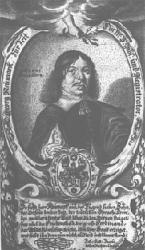
Georg Neumark

1621 - 1681 Topics: liturgical Scripture Songs Author of "If Thou but Suffer God to Guide Thee" Georg Neumark (b. Langensalza, Thuringia, Germany, 1621; d. Weimar, Germany, 1681) lived during the time of the Thirty Years' War, when social and economic conditions were deplorable. He had personal trials as well. On his way to Königsberg to study at the university, traveling in the comparative safety of a group of merchants, he was robbed of nearly all his possessions. During the next two years he spent much of his time looking for employment. He finally secured a tutoring position in Kiel. When he had saved enough money, he returned to the University of Königsberg and studied there for five years. In Königsberg he again lost all his belongings, this time in a fire. Despite his personal suffering Neumark wrote many hymns in which he expressed his absolute trust in God. In 1651 he settled in Weimar, Thuringia, where he became court poet and archivist to Duke Johann Ernst and librarian and registrar of the city. Neumark wrote thirty-four hymns, of which "If You But Trust in God to Guide You" has become a classic. Bert Polman ============== Neumark, Georg, son of Michael Neumark, clothier at Langensalza, in Thuringia (after 1623 at Miihlhausen in Thuringia), was born at Langensalza, March 16, 1621; and educated at the Gymnasium at Schleueingen, and at the Gymnasium at Gotha. He received his certificate of dimission from the latter in Sept. 1641 (not 1640). He left Gotha in the autumn of 1641 along with a number of merchants who were going to the Michaelmas Fair at Leipzig. He then joined a similar party who were going from Leipzig to Lübeck; his intention being to proceed to Königsberg and matriculate at the University there. After passing through Magdeburg they were plundered by a band of highwaymen on the Gardelegen Heath, who robbed Neumark of all he had with him, save his prayer-book and a little money sewed up in the clothes he was wearing. He returned to Magdeburg, but could obtain no employment there, nor in Lüneburg, nor in Winsen, nor in Hamburg, to which in succession the friends he made passed him on. In the beginning of December he went to Kiel, where he found a friend in the person of Nicolaus Becker, a native of Thuringia, and then chief pastor at Kiel. Day after day passed by without an opening, till about the end of the month the tutor in the family of the Judge Stephan Henning fell into disgrace and took sudden flight from Kiel. By Becker's recommendation Neumark received the vacant position, and this sudden end of his anxieties was the occasion of the writing of his hymn as noted below. In Henning's house the time passed happily till he had saved enough to proceed to Königsberg, where he matriculated June 21, 1643, as a student of law. He remained five years, studying also poetry under Dach, and maintaining himself as a family tutor. During this time (in 1046) he again lost all his property, and this time by fire. In 1648 he left Königsberg, was for a short time at Warsaw, and spent 1649-50 at Thorn. He was then in Danzig, and in Sept. 1651 we find him in Hamburg. In the end of 1651 he returned to Thuringia, and bronght himself under the notice of Duke Wilhelm II. of Sachse-Weimar, the chief or president of the Fruit-bearing Society, the principal German literary union of the 17th century. The Duke, apparently in 1652, appointed him court poet, librarian and registrar of the administration at Weimar; and finally secretary of the Ducal Archives. In Sept. 1653 he was admitted as a member of the Fruit-bearing Society, of which he became secretary in 1656, and of which he wrote a history (Der Neu-Sprossende Teutsche Palmbaum, Nürnberg and Weimar, 1668); and, in 1679, became also a member of the Pegnitz Order. In 1681 he became blind, but was permitted to retain his emoluments till his death, at Weimar, July 18, 1681. [K. Goedeke's Grundriss, vol. iii., 1887, p. 74; Allgemeine Deutsche Biographie. xxiii. 539; Weimarisches Jahrbuch, vol. iii., 1855, p. 176, &c. The dates given by the different authorities vary exceedingly, and are quite irreconcilable. In the registers at Schleusingen Neumark is last mentioned in 1636, and then as in the Third Form. Dr. von Bamberg, director of the Gymnasium at Gotha, informs me that Neumark's name appears in the matriculation book there under January 31, 1641; and as one of the "newly entered" scholars.] A long list of Neumark's poetical works is given by Goedeke. A large proportion of his secular poems are pastorals, or else occasional poems written to order at Weimar; and in all there is little freshness, or happiness in expression, or glow of feeling. As a musician, and as a hymn-writer, he is of more importance. His hymns appeared in his (1) Poetisch-und Musikalisches Lustwäldchen, Hamburg, 1652; the enlarged edition, entitled (2) Fortgepfiantzter Musikalizch-Poetischer Lustwald, Jena, 1657; and (3) Unterschiedliche, so wol gottseliger Andacht; als auch zu christlichen Tugenden aufmuntemde Lieder, Weimar, 1675. Of the 34 hymns in these three works a few are found in the German hymn-books of the 17th century, and three or four still survive. The best of Neumark's hymns are those of Trust in God, and patient waiting for His help under trial and suffering; and one of these may be fairly called classical and imperishable. It is:— Wer nur den lieben Gott lässt walten. Trust in God. First published in his Fortgepflantzter musikalisch-poetischer Lustwald, Jena, 1657, p. 26, in 7 stanzas of 6 lines, entitled “A hymn of consolation. That God will care for and preserve His own in His own time. After the saying 'Cast thy burden upon the Lord, and He shall sustain thee'“(Ps. lv. 22). This, his finest hymn, was written in 1641, at Kiel, when after unsuccessful attempts to procure employment he became a tutor in the family of the judge Stephan Henning. Of this appointment Neumark, in his Thrünendes Haus-Kreuiz, Weimar, 1681, speaks thus:-— "Which good fortune coming suddenly, and as if fallen from heaven, greatly rejoiced me, and on that very day I composed to the honour of my beloved Lord the here and there well-known hymn 'Wer nur den lieben Gott lässt walten'; and had certainly cause enough to thank the Divine compassion for such unlooked for grace shown to me," &c. As the date of its composition is thus December, 1641, or at latest Jan. 1642, it is certainly strange that it was not published in his Lustwäldchen, Hamburg, 1652. In that volume he does give, at p. 32, a piece entitled, "a hymn of consolation, when, in 1646, through a dreadful fire I came to my last farthing." The apocryphal story, according to which the hymn was written at Hamburg, about 1653 (see Miller's Singers and Songs, 1869, p. 91), has not been traced earlier than 1744. The hymn speedily became popular, and passed into hymn-books all over Germany (Leipzig Vorrath, 1673, No. 1169), and still holds its place as in the Berlin Geistliche Lieder, ed. 1863, No. 73. Lauxmann, in Koch, viii. 386-390, relates that it was the favourite hymn of Magdalena Sibylla (d. 1687), wife of the Elector Johann Georg II. of Saxony; was sung, by his command, at the funeral, in 1740, of King Friedrich Wilhelm I. of Prussia; was sung, or rather played, by the first band of missionaries from Herrmannsburg as they set sail from Brunshausen on the Elbe (near Stade) on Oct. 28, 1853, &c. The beautiful melody by Neumark was probably composed in 1641 along with the hymn, and was published with it in 1657. On it J. S. Bach composed a cantata. It is well known in England through its use by Mendelssohn in his St. Paul ("To Thee, 0 Lord, I yield my spirit"), and from its introduction into Hymns Ancient & Modern (as Bremen), and many other collections. Translations in common use:-- 1. Who leaves th' Almighty God to reign. A full but free translation by Sir John Bowring in his Hymns, 1825, No. 58. His translations of stanzas ii., iv.-vi. beginning "How vain are sighs! how vain regret," are included in Curtis's Union Collection, 1827. 2. Who all his will to God resigneth. A good and full translation by A. T. Kussell, as No. 236 in his Psalms & Hymns, 1851. His translations of st. v.-vii. beginning "Say not, I am of God forsaken," are in Dr. Pagenstecher's Collection, 1864. 3. Leave God to order all thy ways. A full and good translation by Miss Winkworth, in her Lyra Germanica, 1st Ser. 1855, p. 152. This is given in full in M. W. Stryker's Christian Chorals, 1885, and, omitting st. vi., in W. F. Stevenson's Hymns for Church and Home, 1873, and the Baptist Hymnal, 1879. Further abridged forms are in the Baptist Psalms & Hymns, 1858; Harrow School Hymn Book, l866; Holy Song, 1869, and others. In the Pennsylvania Lutheran Church Book, 1868; and the American Presbyterian Hymnal, 1874, st. v., vi. are omitted, and the rest altered to 6 stanzas, beginning "My God, I leave to Thee my ways." 4. Him who the blessed God trusts ever. A good and full translation by Dr.John Ker in the Juvenile Missionary Magazine, of the United Presbyterian Church, 1857. It was revised, and st. iii., v., vi. omitted, for the Ibrox Hymnal, 1871, where it begins: "He who,” &c. 5. If thou but suffer God to guide thee. A full and good translation by Miss Winkworth (based on her Lyra Germanica version and set to the original melody), as No. 134 in her Chorale Book for England, 1863. Repeated in full in the Baptist Psalmist, 1878, and in America in the Ohio Lutheran Hymnal, 1880. It is found, in various abridged forms, in J. Robinson's Collection, 1869; Horder's Congregational Hymns , 1884; the Evangelical Hymnal, N. Y., 1880, and others. 6. He, who the living God hath chosen. A translation of st. i., ii., vii. by Miss Borthwick, as No. 237 in Dr. Pagenstecher's Collection, 1864. 7. He who doth glad submission render. A good translation omitting st. vi., by J. M. Sloan, as No. 284 in J. H. Wilson's Service of Praise, 1865, repeated, omitting the translations of st. ii., vii., in Flett's Collection, Paisley, 1871. Other translations are:— (1) "He that confides in his Creator." By J. C. Jacobi, 1720, p. 13 (1722, p. 36; 1732, p. 61). Repeated in the Moravian Hymn Book, 1754, and later eds. (1886, No. 183). (2) "0 Christian! let the Lord direct." By Miss Knight in her Trs. from the German in Prose and Verse, 1812, p. 85. (3) "To let God rule who's but contented." By H. W. Dulcken in his Book of German Song, 1856, p. 274. (4) "He who the rule to God hath yielded." By J. D. Burns in the Family Treasury, 1859, p. 309, and his Memoir & Remains, 1869, p. 240. (5) "Who trusts in God's all-wise direction." By R. Massie, in the British Herald, Aug. 1865, p. 120, and Reid's Praise Book, 1872. (6) "Who yields his will to God's good pleasure. In the British Herald, April, 1866, p. 244, and in Reid's Praise Book, 1872. (7) "He who commits his way to God." In the Family Treasury, 1878, p. 49. [Rev. James Mearns, M.A.] --John Julian, Dictionary of Hymnology (1907) See also in: Hymn Writers of the Church

Christopher M. Idle

b. 1938 Person Name: Christopher Idle Topics: liturgical Scripture Songs Author of "Isaiah 35 (In the Desert)" in Voices United Christopher Martin Idle (b. Bromley, Kent, England, 1938) was educated at Elthan College, St. Peter's College, Oxford, and Clifton Theological College in Bristol, and was ordained in the Church of England. He served churches in Barrow-in-­Furness, Cumbria; London; and Oakley, Suffolk; and recently returned to London, where he is involved in various hymnal projects. A prolific author of articles on the Christian's public responsibilities, Idle has also published The Lion Book of Favorite Hymns (1980) and at least one hundred of his own hymns and biblical paraphrases. Some of his texts first appeared in hymnals published by the Jubilate Group, with which he is associated. He was also editor of Anglican Praise (1987). In 1998 Hope Publishing released Light Upon the River, a collection of 279 of his psalm and hymn texts, along with suggested tunes, scripture references, and commentary. Bert Polman

Winfred Douglas

1867 - 1944 Person Name: C. Winfred Douglas Topics: liturgical Scripture Songs Harmonizer of "MORNING SONG" in Voices United Charles Winfred Douglas (b. Oswego, NY, 1867; d. Santa Rosa, CA, 1944), an influential leader in Episcopalian liturgical and musical life. Educated at Syracuse University and St. Andrews Divinity School, Syracuse, New York, he moved to Colorado for his health. There he studied at St. Matthew's Hall, Denver, and founded the Mission of the Transfiguration in Evergreen (1897). Ordained a priest in the Episcopal Church in 1899, he also studied in France, Germany and England, where he spent time with the Benedictines of Solesmes on the Island of Wight from 1903 to 1906. For much of his life, Douglas served as director of music at the Community of St. Mary in Peekskill, New York, and had associations with cathedrals in Denver, Colorado, and Fond du Lac, Wisconsin. He promoted chanting and plainsong in the Episcopal Church through workshops and publications such as The American Psalter (1929), the Plainsong Psalter (1932), and the Monastic Diurnal (1932). His writings include program notes for the Denver Symphony Orchestra, various hymn preludes; organ, as well as the book, Church Music in History and Practice (1937). He was editor of both the Hymnal 1916 and its significant successor, Hymnal 1940, of the Episcopal Church. Douglas's other achievements include a thorough knowledge of the life and culture of Hopi and Navajo natives, among whom he lived for a number of years. Bert Polman

Stuart Dauermann

b. 1944 Person Name: Steffi G. Rubin Topics: liturgical Scripture Songs Author of "Isaiah 55 (You Shall Go Out with Joy)" in Voices United

Sarah Flower Adams

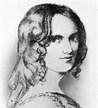
1805 - 1848 Person Name: Sarah F. Adams Topics: Scripture Songs Author of "Nearer, My God, to Thee" in Sing Joyfully Adams, Sarah, nee Flower. born at Harlow, Essex, Feb. 22nd, 1805; died in London, Aug. 14, 1848, and was buried at Harlow, Aug. 21,1848. She was the younger daughter of Mr. Benjamin Flower, editor and proprietor, of The Cambridge Intelligencer; and was married, in 1834, to William B. Adams, a civil engineer. In 1841 she published Vivia Perpetua, a dramatic poem dealing with the conflict of heathenism and Christianity, in which Vivia Perpetua suffered martyrdom; and in 1845, The Flock at the Fountain; a catechism and hymns for children. As a member of the congregation of the Rev. W. J. Fox, an Unitarian minister in London, she contributed 13 hymns to the Hymns and Anthems, published by C. Fox, Lond., in 1841, for use in his chapel. Of these hymns the most widely known are— "Nearer,my God,to Thee," and "He sendeth sun, He sendeth shower." The remaining eleven, most of which have come into common use, more especially in America, are:— Creator Spirit! Thou the first. Holy Spirit. Darkness shrouded Calvary. Good Friday. Gently fall the dews of eve. Evening. Go, and watch the Autumn leaves. Autumn. O hallowed memories of the past. Memories. O human heart! thou hast a song. Praise. O I would sing a song of praise. Praise. O Love! thou makest all things even. Love. Part in Peace! is day before us? Close of Service. Sing to the Lord! for His mercies are sure. Praise. The mourners came at break of day. Easter. Mrs. Adams also contributed to Novello's musical edition of Songs for the Months, n. d. Nearly all of the above hymns are found in the Unitarian collections of Great Britain, and America. In Martineau's Hymns of Praise & Prayer, 1873, No. 389, there is a rendering by her from Fenelon: —" Living or dying, Lord, I would be Thine." It appeared in the Hymns and Anthems, 1841. -John Julian, Dictionary of Hymnology (1907)

H. W. Baker

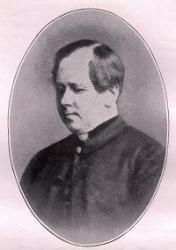
1821 - 1877 Person Name: Henry W. Baker Topics: Scripture Songs Author of "The King of Love My Shepherd Is" in Sing Joyfully Baker, Sir Henry Williams, Bart., eldest son of Admiral Sir Henry Loraine Baker, born in London, May 27, 1821, and educated at Trinity College, Cambridge, where he graduated, B.A. 1844, M.A. 1847. Taking Holy Orders in 1844, he became, in 1851, Vicar of Monkland, Herefordshire. This benefice he held to his death, on Monday, Feb. 12, 1877. He succeeded to the Baronetcy in 1851. Sir Henry's name is intimately associated with hymnody. One of his earliest compositions was the very beautiful hymn, "Oh! what if we are Christ's," which he contributed to Murray's Hymnal for the Use of the English Church, 1852. His hymns, including metrical litanies and translations, number in the revised edition of Hymns Ancient & Modern, 33 in all. These were contributed at various times to Murray's Hymnal, Hymns Ancient & Modern and the London Mission Hymn Book, 1876-7. The last contains his three latest hymns. These are not included in Hymns Ancient & Modern. Of his hymns four only are in the highest strains of jubilation, another four are bright and cheerful, and the remainder are very tender, but exceedingly plaintive, sometimes even to sadness. Even those which at first seem bright and cheerful have an undertone of plaintiveness, and leave a dreamy sadness upon the spirit of the singer. Poetical figures, far-fetched illustrations, and difficult compound words, he entirely eschewed. In his simplicity of language, smoothness of rhythm, and earnestness of utterance, he reminds one forcibly of the saintly Lyte. In common with Lyte also, if a subject presented itself to his mind with striking contrasts of lights and shadows, he almost invariably sought shelter in the shadows. The last audible words which lingered on his dying lips were the third stanza of his exquisite rendering of the 23rd Psalm, "The King of Love, my Shepherd is:"— Perverse and foolish, oft I strayed, But yet in love He sought me, And on His Shoulder gently laid, And home, rejoicing, brought me." This tender sadness, brightened by a soft calm peace, was an epitome of his poetical life. Sir Henry's labours as the Editor of Hymns Ancient & Modern were very arduous. The trial copy was distributed amongst a few friends in 1859; first ed. published 1861, and the Appendix, in 1868; the trial copy of the revised ed. was issued in 1874, and the publication followed in 1875. In addition he edited Hymns for the London Mission, 1874, and Hymns for Mission Services, n.d., c. 1876-7. He also published Daily Prayers for those who work hard; a Daily Text Book, &c. In Hymns Ancient & Modern there are also four tunes (33, 211, 254, 472) the melodies of which are by Sir Henry, and the harmonies by Dr. Monk. He died Feb. 12, 1877. --John Julian, Dictionary of Hymnology (1907)

Kate Hankey

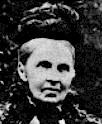
1834 - 1911 Person Name: Arabella Catherine Hankey, 1834-1911 Topics: The Godhead Jesus - God the Son; The Church of Jesus Christ The Scriptures; Songs Suitable for Children Author of "Tell me the old, old story" in Complete Mission Praise Arabella Katherine Hankey (b. Clapham, England, 1834; d. Westminster, London, England, 1911) was the daughter of a wealthy banker and was associated with the Clapham sect of William Wilberforce, a group of prominent evangelical Anglicans from the Clapham area. This group helped to establish the British and Foreign Bible Society, promoted the abolition of slavery, and was involved in improving the lot of England's working classes. Hankey taught Bible classes for shop girls in London, visited the sick in local hospitals, and used the proceeds of her writings to support various mission causes. Her publications include Heart to Heart (1870) and The Old, Old Story and Other Verses (1879). Bert Polman =============== Hankey, Katharine, has published several hymns of great beauty and simplicity which are included in her:— (1) The Old, Old Story, 1866; (2) The Old, Old Story, and other Verses, 1879; (3) Heart to Heart, 1870, enlarged in 1873 and 1876. In 1878 it was republished with music by the author. Miss Hankey's hymns which have come into common use are:— 1. Advent tells us, Christ is near. The Christian Seasons. Written for the Sunday School of St. Peter's, Eaton Square, London, and printed on a card with music by the author. 2. I love to tell the story Of unseen things above. The love of Jesus. This is a cento from No. 3, and is given in Bliss's Gospel Songs, Cincinnati, 1874, and other American collections. 3. I saw Him leave His Father's throne. Lovest than Me? Written in 1868. It is No. 33 of the Old, Old Story, and other Verses, 1879. 4. Tell me the old, old story. This Life of Jesus in verse was written in two parts. Pt. i., "The Story Wanted," Jan. 29; and Pt. ii., "The Story Told," Nov. 18, 1866. It has since been published in several forms, and sometimes with expressive music by the author, and has also been translated into various languages, including Welsh, German, Italian, Spanish, &c. The form in which it is usually known is that in I. P. Sankey's Sacred Songs & Solos. This is Part i. slightly altered. Miss Hankey's works contain many suitable hymns for Mission Services and Sunday Schools, and may be consulted both for words and music with advantage. --John Julian, Dictionary of Hymnology (1907)

John Milton

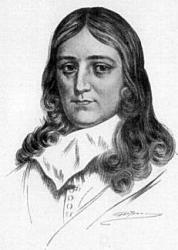
1608 - 1674 Person Name: John Milton (1608-1674) Topics: Scriptural Songs Author of "Let us all with gladsome mind" in The Summit Choirbook Milton, John, was born in London, Dec. 9, 1608, and died there Nov. 8, 1674. His poetical excellences and his literary fame are matters apart from hymnology, and are fully dealt with in numerous memoirs. His influence on English hymn-writing has been very slight, his 19 versions of various Psalms having lain for the most part unused by hymnal compilers. The dates of his paraphrases are:— Ps. cxiv. and cxxxvi., 1623, when he was 15 years of ago. These were given in his Poems in English and Latin 1645. Ps. lxxx.-lxxxviii., written in 1648, and published as Nine Psalmes done into Metre, 1645. Ps. i., 1653; ii., “Done August 8, 1653;" iii., Aug. 9, 1653; iv. Aug. 10, 1653; v., Aug. 12, 1653; vi., Aug. 13, 1653; vii.Aug. 14, 1653; viii., Aug. 14, 1653. These 19 versions were all included in the 2nd ed. of his Poems in English and Latin, 1673. From these, mainly in the form of centos, the following have come into common use:— 1. Cause us to see Thy goodness, Lord. Ps. lxxxv. 2. Defend the poor and desolate. Ps. lxxxii. 3. God in the great assembly stands. Ps. lxxxii. 4. How lovely are Thy dwellings fair. Ps. lxxxiv. From this, "They pass refreshed the thirsty vale," is taken. 5. Let us with a gladsome [joyful] mind. Ps. cxxxvi. 6. O let us with a joyful mind. Ps. cxxxvi. 7. The Lord will come and not be slow. Ps. lxxxv. Of these centos Nos. 4 and 5 are in extensive use. The rest are mostly in Unitarian collections. There are also centos from his hymn on the Nativity, "This is the month, and this the happy morn" (q.v.). --John Julian, Dictionary of Hymnology (1907)

Henry Alford

1810 - 1871 Topics: liturgical Scripture Songs Author of "Come, Ye Thankful People, Come" Alford, Henry, D.D., son of  the Rev. Henry Alford, Rector of Aston Sandford, b. at 25 Alfred Place, Bedford Row, London, Oct. 7, 1810, and educated at Trinity College, Cambridge, graduating in honours, in 1832. In 1833 he was ordained to the Curacy of Ampton. Subsequently he held the Vicarage of Wymeswold, 1835-1853,--the Incumbency of Quebec Chapel, London, 1853-1857; and the Deanery of Canterbury, 1857 to his death, which took. place  at  Canterbury, Jan. 12, 1871.  In addition he held several important appointments, including that of a Fellow of Trinity, and the Hulsean Lectureship, 1841-2. His literary labours extended to every department of literature, but his noblest undertaking was his edition of the Greek Testament, the result of 20 years' labour.    His hymnological and poetical works, given below, were numerous, and included the compiling of collections, the composition of original hymns, and translations from other languages.    As a hymn-writer he added little to his literary reputation. The rhythm of his hymns is musical, but the poetry is neither striking, nor the thought original.   They are evangelical in their teaching,   but somewhat cold  and  conventional. They vary greatly in merit, the most popular being "Come, ye thankful  people, come," "In token that thou  shalt  not fear," and "Forward be our watchword." His collections, the Psalms and Hymns of 1844, and the Year of Praise, 1867, have not achieved a marked success.  His poetical and hymnological works include— (1) Hymns in the Christian Observer and the Christian Guardian, 1830. (2) Poems and Poetical Fragments (no name), Cambridge, J.   J.  Deighton, 1833.  (3) The School of the Heart, and other Poems, Cambridge, Pitt Press, 1835. (4) Hymns for the Sundays and Festivals throughout the Year, &c.,Lond., Longman ft Co., 1836. (5) Psalms and Hymns, adapted for the Sundays and Holidays throughout the year, &c, Lond., Rivington, 1844. (6) Poetical Works, 2 vols., Lond., Rivington, 1845. (7) Select Poetical Works, London, Rivington, 1851. (8) An American ed. of his Poems, Boston, Ticknor, Reed & Field, 1853(9) Passing away, and Life's Answer, poems in Macmillan's Magazine, 1863. (10) Evening Hexameters, in Good Words, 1864. (11) On Church Hymn Books, in the Contemporary Review, 1866. (12) Year of Praise, London, A. Strahan, 1867. (13) Poetical Works, 1868. (14) The Lord's Prayer, 1869. (15) Prose Hymns, 1844. (16) Abbot of Muchelnaye, 1841. (17) Hymns in British Magazine, 1832.   (18) A translation of Cantemus cuncti, q.v. -- John Julian, Dictionary of Hymnology (1907) ================== Alford, Henry, p. 39, ii. The following additional hymns by Dean Alford are in common use:— 1. Herald in the wilderness. St. John Baptist. (1867.) 2. Let the Church of God rejoice. SS. Simon and Jude. (1844, but not in his Psalms & Hymns of that year.) 3. Not in anything we do. Sexagesima. (1867.) 4. O Thou at Whose divine command. Sexagesima. (1844.) 5. 0 why on death so bent? Lent. (1867.) 6. Of all the honours man may wear. St. Andrew's Day. (1867.) 7. Our year of grace is wearing to a close. Close of the Year. (1867.) 8. Saviour, Thy Father's promise send. Whit-sunday. (1844.) 9. Since we kept the Saviour's birth. 1st Sunday after Trinity. (1867.) 10. Thou that art the Father's Word. Epiphany. (1844.) 11. Thou who on that wondrous journey. Quinquagesima. (1867.) 12. Through Israel's coasts in times of old. 2nd Sunday after Epiphany. (1867.) 13. Thy blood, O Christ, hath made our peace. Circumcision . (1814.) 14. When in the Lord Jehovah's name. For Sunday Schools. (1844.) All these hymns are in Dean Alford's Year of Praise, 1867, and the dates are those of their earliest publication, so far as we have been able to trace the same. --Excerpts from John Julian, Dictionary of Hymnology, Appendix, Part II (1907)

Mary A. Lathbury

1841 - 1913 Person Name: Mary Artemisia Lathbury Topics: The Church at Worship Scripture; liturgical Songs of Illumination; Bible; Biblical Narrative; Calmness and Serenity; Comfort/Consolation; Holy Spirit Illumination; Jesus Christ Presence; Jesus Christ Word; Last Supper; Peace (Inner, Calmness, Serenity; Service Music Prayer for Illumination; Truth; Word of God; Proper 13 Year A; Easter 7 Year B; Proper 9 Year B; Proper 13 Year B; Palm/Passion Sunday Year C Author of "Break Now the Bread of Life" in Voices United Lathbury, Mary Ann, was born in Manchester, Ontario County, New York, Aug. 10, 1841. Miss Lathbury writes somewhat extensively for the American religious periodical press, and is well and favourably known (see the Century Magazine, Jan., 1885, p. 342). Of her hymns which have come into common use we have:— 1. Break Thou the bread of life. Communion with God. A "Study Song" for the Chautauqua Literary and Scientific Circle, written in the summer of 1880. It is in Horder's (Eng.) Congregational Hymns, 1884. 2. Day is dying in the west. Evening. "Written at the request of the Rev. John H. Vincent, D.D., in the summer of 1880. It was a "Vesper Song," and has been frequently used in the responsive services of the Chautauqua Literary and Scientific Circle." It is in the Laudes Domini, N. Y., 1884. For these details we are indebted to S. W. Duffield's English Hymns, &c, N. Y., 1886. --John Julian, Dictionary of Hymnology (1907) ================== Lathbury, Mary A., p. 640, i. Another hymn by this writer is, "Lift up, lift up thy voice with singing." [Praise to Christ), in Sankey's Sacred Songs & Solos, 1878. --John Julian, Dictionary of Hymnology, Appendix, Part II (1907)

Pages


Export as CSV
It looks like you are using an ad-blocker. Ad revenue helps keep us running. Please consider white-listing Hymnary.org or getting Hymnary Pro to eliminate ads entirely and help support Hymnary.org.