You help make Hymnary.org possible. More than 10 million people from 200+ countries found hymns, liturgical resources and encouragement on Hymnary.org in 2025, including you. Every visit affirms the global impact of this ministry.

If Hymnary has been meaningful to you this year, would you take a moment today to help sustain it? A gift of any size—paired with a note of encouragement if you wish—directly supports the server costs, research work and curation that keep this resource freely available to the world.

Give securely online today, or mail a check to:
Hymnary.org
Calvin University
3201 Burton Street SE
Grand Rapids, MI 49546

Thank you for your partnership, and may the hope of Advent fill your heart.

Person Results

Topics:attributes+of+god
In:person

Planning worship? Check out our sister site, ZeteoSearch.org, for 20+ additional resources related to your search.
Showing 11 - 20 of 272Results Per Page: 102050

William Gardiner

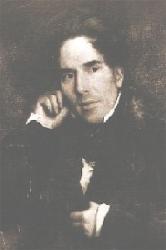
1770 - 1853 Topics: The Catechism Works and Attributes of God Composer of "DEDHAM" in Evangelical Lutheran hymnal William Gardiner (b. Leicester, England, 1770; d. Leicester, 1853) The son of an English hosiery manufacturer, Gardiner took up his father's trade in addition to writing about music, composing, and editing. Having met Joseph Haydn and Ludwig van Beethoven on his business travels, Gardiner then proceeded to help popularize their compositions, especially Beethoven's, in England. He recorded his memories of various musicians in Music and Friends (3 volumes, 1838-1853). In the first two volumes of Sacred Melodies (1812, 1815), Gardiner turned melodies from composers such as Haydn, Mozart, and Beethoven into hymn tunes in an attempt to rejuvenate the singing of psalms. His work became an important model for American editors like Lowell Mason (see Mason's Boston Handel and Haydn Collection, 1822), and later hymnbook editors often turned to Gardiner as a source of tunes derived from classical music. Bert Polman

A. Williams

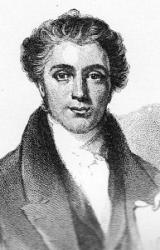
1731 - 1776 Person Name: Aaron Williams (1731-1776) Topics: God Attributes of Composer of "DALSTON" in Many Voices; or, Carmina Sanctorum, Evangelistic Edition with Tunes Aaron Williams (b. London, England, 1731; d. London, 1776) was a singing teacher, music engraver, and clerk at the Scottish Church, London Wall. He published various church music collections, some intended for rural church choirs. Representative of his compilations are The Universal Psalmodist (1763)— published in the United States as The American Harmony (1769)—The Royal Harmony (1766), The New Universal Psalmodist (1770), and Psalmody in Miniature (1778). His Harmonia Coelestis (1775) included anthems by noted composers. Bert Polman

Joachim Justus Breithaupt

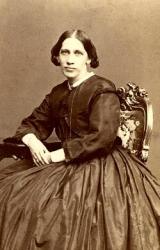
1658 - 1732 Person Name: Dr. Breithaupt Topics: Being and Attributes of God Alterer of "The Glory of God" in The Hymn Book of the African Methodist Episcopal Church Breithaupt, Joachim Justus, son of Christian Breithaupt, Superintendent of the district of Hohenstadt or Honstedt, Hannover, was born at Nordheim, in Hannover, Feb., 1658. After a theological course at Helmstadt he became, in 1680, Conrector of the Gymnasium at Wolfenbüttel, but left in 1681, and, after being Professor of Homiletics in Kiel, was appointed, in 1685, Court preacher and member of the Consistory at Meiningen. In 1687 he became Pastor and Professor of Theology at Erfurt, receiving in the same year the degree of D.D. from the University of Kiel. Driven from Kiel by the Pietistic Controversy, he was appointed in 1691 pastor of the Cathedral Church, and dean of the Theological Faculty, at Halle; and in 1705, in addition, General Superintendent of the Duchy of Magdeburg. In 1709 he became Abt of Kloster-Bergen and Inspector of the Saalkreis. He died at Kloster-Bergen, March 16, 1732 (Koch, iv. 331-312; Allgemeine Deutsche Biographie, iii. 291-292; Bode, p. 49). Of his 4 (5?) hymns one has passed into English:— Jesus Christus, Gottes Lamm. [Passiontide.] Founded on Romans viii. 8-11. First in the Geistreiches Gesang-Buch, Halle, 1697, p. 549, in 5 stanzas. The translations are—(1) "Christ, th' eternal Lamb of God," by J.C. Jacobi, 1725, p. 13), repeated as No. 537 in pt. i. of the Moravian Hymn Book, 1754. (2) "Jesus Christ, the Lamb of God," in G. Moultrie's Hymns and Lyrics, 1867, p. 64. [Rev. James Mearns, M.A.] -- John Julian, Dictionary of Hymnology (1907)

Thomas Rawson Taylor

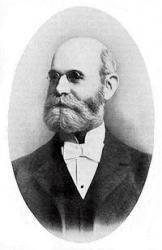
1807 - 1835 Person Name: Taylor Topics: Attributes of God Love Author of "Earth, with her ten thousand flowers" in The Voice of Praise Taylor, Thomas Rawson, son of the Rev. Thomas Taylor, some time Congregational Minister at Bradford, Yorkshire, was born at Ossett, near Wakefield, May 9, 1807, and educated at the Free School, Bradford, and the Leaf Square Academy, Manchester. From the age of 15 to 18 he was engaged, first in a merchant's, and then in a printer's office. Influenced by strong religious desires, he entered the Airedale Independent College at 18, to prepare for the Congregational ministry. His first and only charge was Howard Street Chapel, Sheffield. This he retained about six months, entering upon the charge in July 1830, and leaving it in the January following. For a short time he acted as classical tutor at Airedale College, but the failure of health which compelled him to leave Sheffield also necessitated his resigning his tutorship. He died March 7, 1835. A volume of his Memoirs and Select Remains, by W. S. Matthews, in which were several poems and a few hymns, was published in 1836. His best known hymn is "I'm but a stranger here". The rest in common use all from his Memoirs, 1836, are:— 1. Earth, with her ten thousand flowers. The love of God. 2. Saviour and Lord of all. Hymn to the Saviour. Altered as "Jesu, Immanuel" in the LeedsHymn Book, 1853. 3. There was a time when children sang. Sunday School Anniversary. 4. Yes, it is good to worship Thee. Divine Worship. From this "'Tis sweet, 0 God, to sing Thy praise," beginning with st. ii. 5. Yes, there are little ones in heaven. Sunday School Anniversary. -- John Julian, Dictionary of Hymnology (1907)

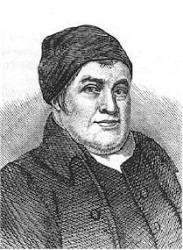
John Fawcett

1740 - 1817 Topics: Worship Attributes and Providence of God Author of "Thy way, O Lord, is in the sea" in The Seventh-Day Adventist Hymn and Tune Book An orphan at the age of twelve, John Fawcett (b. Lidget Green, Yorkshire, England, 1740; d. Hebden Bridge, Yorkshire, 1817) became apprenticed to a tailor and was largely self-educated. He was converted by the preaching of George Whitefield at the age of sixteen and began preaching soon thereafter. In 1765 Fawcett was called to a small, poor, Baptist country church in Wainsgate, Yorkshire. Seven years later he received a call from the large and influential Carter's Lane Church in London, England. Fawcett accepted the call and preached his farewell sermon. The day of departure came, and his family's belongings were loaded on carts, but the distraught congregation begged him to stay. In Singers and Songs of the Church (1869), Josiah Miller tells the story associated with this text: This favorite hymn is said to have been written in 1772, to commemorate the determination of its author to remain with his attached people at Wainsgate. The farewell sermon was preached, the wagons were loaded, when love and tears prevailed, and Dr. Fawcett sacrificed the attraction of a London pulpit to the affection of his poor but devoted flock. Fawcett continued to serve in Wainsgate and in the nearby village of Hebden Bridge for the remainder of his active ministry. Bert Polman =============== Fawcett, John, D.D., was born Jan. 6, 1739 or 1740, at Lidget Green, near Bradford, Yorks. Converted at the age of sixteen under the ministry of G. Whitefield, he at first joined the Methodists, but three years later united with the Baptist Church at Bradford. Having begun to preach he was, in 1765, ordained Baptist minister at Wainsgate, near Hebden Bridge, Yorks. In 1772 he was invited to London, to succeed the celebrated Dr. J. Gill, as pastor of Carter's Lane; the invitation had been formally accepted, the farewell sermon at Wainsgate had been preached and the wagons loaded with his goods for removal, when the love and tears of his attached people prevailed and he decided to remain. In 1777 a new chapel was built for him at Hebden Bridge, and about the same time he opened a school at Brearley Hall, his place of residence. In 1793 he was invited to become President of the Baptist Academy at Bristol, but declined. In 1811 he received from America the degree of D.D., and died in 1817, at the age of 78. Dr. Fawcett was the author of a number of prose works on Practical Religion, several of which attained a large circulation. His poetical publications are:— (1) Poetic Essays, 1767; (2) The Christian's Humble Plea, a Poem, in answer to Dr. Priestley against the Divinity of our Lord Jesus Christ, 1772; (3) Three hymns, in the Gospel Magazine, 1777; (4) The Death of Eumenio, a Divine Poem, 1779; (5) Another poem, suggested by the decease of a friend, The Reign of Death, 1780; and (6) Hymns adapted to the circumstances of Public Worship and Private Devotion, Leeds, G. Wright & Son. 1782. They are 166 in number, and were mostly composed to be sung after sermons by the author. Whilst not attaining a high degree of excellence as poetry, they are "eminently spiritual and practical," and a number of them are found in all the Baptist and Congregational hymn-books that have appeared during the last 100 years. The best known of these are, “Infinite excellence is Thine;" "How precious is the Book divine;" "Thus far my God hath led me on;" "Religion is the chief concern;" "Blest be the tie that binds;" “I my Ebenezer raise;" and "Praise to Thee, Thou great Creator." These hymns, together with others by Fawcett, are annotated under their respective first lines. [Rev. W. R. Stevenson, M.A.] In addition the following hymns, also by Fawcett, but of less importance, are in common use: 1. Behold the sin-atoning Lamb. Passiontide. No. 60 of his Hymns, 1782, in 7 stanzas of 4 lines. In several hymnals in Great Britain and America. 2. I my Ebenezer raise. Birthday. No. 102 of his Hymns, in 10 stanzas of 4 lines. Usually given in an abbreviated form. 3. Infinite excellence is Thine. Jesus the Desire of Nations. No. 42 of his Hymns, in 12 stanzas of 4 lines. In several hymn-books in Great Britain and America in an abridged form. 4. Jesus, the heavenly Lover, gave. Redemption in Christ. No. 10 of his Hymns, &c., 1782, in 7 stanzas of 4 lines, and headed, "The marriage between Christ and the Soul." In Snepp's Songs of Grace & Glory, 1872, it reads, “Jesus, the heavenly Bridegroom, gave," and stanza v. is omitted. 5. Lord, hast Thou made me know Thy ways? Perseverance. No. 122 of his Hymns, &c., 1782, in 8 stanza of 4 lines. In the Baptist Hymnal, 1879, No. 451, stanzas iv.-vii. are omitted. 6. 0 God, my Helper, ever near. New Year. No. 108 of his Hymns, &c., 1782, in 6 stanzas of 4 lines. The New Congregational Hymn Book, 1859-69 omits st. vi. 7. 0, my soul, what means this sadness? Sorrow turned to Joy. No. 111 of his Hymns, &c., 1782, in 5 stanzas of 6 lines, and based upon the words, "Why art Thou cast down, O my soul?" &c. It is in common use in America, and usually with the omission of stanza ii. as in Dr. Hatfield's Church Hymn Book, 1872. 8. Sinners, the voice of God regard. Invitation to Repentance. No. 63 of his Hymns, &c., 1782, in 7 stanzas of 4 lines on Isaiah lv. 7, "Let the wicked forsake his way," &c. It is in common use in America, but usually in an abbreviated form. 9. Thy presence, gracious God, afford. Before Sermon. No 165 in his Hymns, &c., in 4 stanzas of 4 lines, and a chorus of two lines. In Dr. Hatfield's Church Hymnbook, 1872, No. 126, the chorus is omitted. Fawcett has another hymn on the same subject (No. 79) and beginning, "Thy blessing, gracious God, afford," but this is not in common use. 10. Thy way, 0 God, is in the sea. Imperfect Knowledge of God. No. 66 in his Hymns, &c., 1782, in 7 stanzas of 4 lines on 1 Corinthians xiii. 9, "We know in part," &c. It is in several American collections, usually abbreviated, and sometimes as, "Thy way, O Lord, is in the sea." In this form it is in The Sabbath Hymn Book, 1858, &c. 11. With humble heart and tongue. Prayer for Guidance in Youth. No. 86 in his Hymns, &c., 1782, in 7 stanzas of 4 lines on Psalms cxix. 9. "Wherewith shall a young man cleanse his way." It is No. 954 in the Baptist Psalms and Hymns, 1858-80. About 20 of Fawcett's hymns are thus still in common use. Two hymns which have been ascribed to him from time to time, but concerning which there are some doubts, are fully annotated under their respective first lines. These are," Humble souls that seek salvation," and "Lord, dismiss us with Thy blessing." -- John Julian, Dictionary of Hymnology (1907)

Carolina Sandell

1823 - 1903 Person Name: Caroline V. Sandell-Berg Topics: Attributes of God Author of "Day by Day" in Baptist Hymnal 2008 Caroline W. Sandell Berg (b. Froderyd, Sweden, 1832; d. Stockholm, Sweden, 1903), is better known as Lina Sandell, the "Fanny Crosby of Sweden." "Lina" Wilhelmina Sandell Berg was the daughter of a Lutheran pastor to whom she was very close; she wrote hymns partly to cope with the fact that she witnessed his tragic death by drowning. Many of her 650 hymns were used in the revival services of Carl O. Rosenius, and a number of them gained popularity particularly because of the musical settings written by gospel singer Oskar Ahnfelt. Jenny Lind, the famous Swedish soprano, underwrote the cost of publishing a collection of Ahnfelt's music, Andeliga Sänger (1850), which consisted mainly of Berg's hymn texts. Bert Polman

William J. Kirkpatrick

1838 - 1921 Topics: God Attributes of Composer of "SAXONY" in The Psalter William J. Kirkpatrick (b. Duncannon, PA, 1838; d. Philadelphia, PA, 1921) received his musical training from his father and several other private teachers. A carpenter by trade, he engaged in the furniture business from 1862 to 1878. He left that profession to dedicate his life to music, serving as music director at Grace Methodist Church in Philadelphia. Kirkpatrick compiled some one hundred gospel song collections; his first, Devotional Melodies (1859), was published when he was only twenty-one years old. Many of these collections were first published by the John Hood Company and later by Kirkpatrick's own Praise Publishing Company, both in Philadelphia. Bert Polman

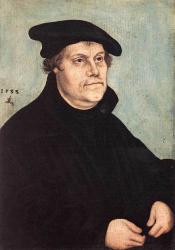
Martin Luther

1483 - 1546 Person Name: Martin Luther, 1483-1546 Topics: Cast Out Fear; Family Worship; God Fortress; God Truth of; God: His Being, Word and Works God the Father Almighty: The Divine Attributes; Reformation Day Author of "A mighty fortress is our God" in The Book of Praise Luther, Martin, born at Eisleben, Nov. 10, 1483; entered the University of Erfurt, 1501 (B.A. 1502, M.A.. 1503); became an Augustinian monk, 1505; ordained priest, 1507; appointed Professor at the University of Wittenberg, 1508, and in 1512 D.D.; published his 95 Theses, 1517; and burnt the Papal Bull which had condemned them, 1520; attended the Diet of Worms, 1521; translated the Bible into German, 1521-34; and died at Eisleben, Feb. 18, 1546. The details of his life and of his work as a reformer are accessible to English readers in a great variety of forms. Luther had a huge influence on German hymnody. i. Hymn Books. 1. Ellich cristlich lider Lobgesang un Psalm. Wittenberg, 1524. [Hamburg Library.] This contains 8 German hymns, of which 4 are by Luther. 2. Eyn Enchiridion oder Handbuchlein. Erfurt, 1524 [Goslar Library], with 25 German hymns, of which 18 are by Luther. 3. Geystliche Gesangk Buchleyn. Wittenberg, 1524 [Munich Library], with 32 German hymns, of which 24 are by Luther. 4. Geistliche Lieder auffs new gebessert. Wittenberg. J. Klug, 1529. No copy of this book is now known, but there was one in 1788 in the possession of G. E. Waldau, pastor at Nürnberg, and from his description it is evident that the first part of the Rostock Gesang-Buch, 1531, is a reprint of it. The Rostock Gesang-Buch, 1531, was reprinted by C. M. Wiechmann-Kadow at Schwerin in 1858. The 1529 evidently contained 50 German hymns, of which 29 (including the Litany) were by Luther. 5. Geistliche Lieder auffs new gebessert. Erfurt. A. Rauscher, 1531 [Helmstädt, now Wolfenbüttel Library], a reprint of No. 4. 6. Geistliche Lieder. Wittenberg. J. Klug, 1535 [Munich Library. Titlepage lost], with 52 German hymns, of which 29 are by Luther. 7. Geistliche Lieder auffs new gebessert. Leipzig. V. Schumann, 1539 [Wernigerode Library], with 68 German hymns, of which 29 are by Luther. 8. Geistliche Lieder. Wittenberg. J. Klug, 1543 [Hamburg Library], with 61 German hymns, of which 35 are by Luther. 9. Geystliche Lieder. Leipzig. V. Babst, 1545 [Gottingen Library]. This contains Luther's finally revised text, but adds no new hymns by himself. In pt. i. are 61 German hymns, in pt. ii. 40, of which 35 in all are by Luther. For these books Luther wrote three prefaces, first published respectively in Nos. 3, 4, 9. A fourth is found in his Christliche Geseng, Lateinisch und Deudsch, zum Begrebnis, Wittenberg, J. Klug, 1542. These four prefaces are reprinted in Wackernagel’s Bibliographie, 1855, pp. 543-583, and in the various editions of Luther's Hymns. Among modern editions of Luther's Geistliche Lieder may be mentioned the following:— Carl von Winterfeld, 1840; Dr. C. E. P. Wackernagel, 1848; Q. C. H. Stip, 1854; Wilhelm Schircks, 1854; Dr. Danneil, 1883; Dr. Karl Gerok, 1883; Dr. A. F. W. Fischer, 1883; A. Frommel, 1883; Karl Goedeke, 1883, &c. In The Hymns of Martin Luther. Set to their original melodies. With an English version. New York, 1883, ed. by Dr. Leonard Woolsey Bacon and Nathan H. Allen, there are the four prefaces, and English versions of all Luther's hymns, principally taken more or less altered, from the versions by A. T. Russell, R. Massie and Miss Winkworth [repub. in London, 1884]. Complete translations of Luther's hymns have been published by Dr. John Anderson, 1846 (2nd ed. 1847), Dr. John Hunt, 1853, Richard Massie, 1854, and Dr. G. Macdonald in the Sunday Magazine, 1867, and his Exotics, 1876. The other versions are given in detail in the notes on the individual hymns. ii. Classified List of Luther's Hymns. Of Luther's hymns no classification can be quite perfect, e.g. No. 3 (see below) takes hardly anything from the Latin, and No. 18 hardly anything from the Psalm. No. 29 is partly based on earlier hymns (see p. 225, i.). No. 30 is partly based on St. Mark i. 9-11, and xvi., 15, 16 (see p. 226, ii.). No. 35 is partly based on St. Luke ii. 10-16. The following arrangement, however, will answer all practical purposes. A. Translations from the Latin. i. From Latin Hymns: 1. Christum wir sollen loben schon. A solis ortus cardine 2. Der du bist drei in Einigkeit. O Lux beata Trinitas. 3. Jesus Christus unser Heiland, Der von. Jesus Christus nostra salus 4. Komm Gott Schopfer, heiliger Geist. Veni Creator Spiritus, Mentes. 5. Nun komm der Beidenheiland. Veni Redemptor gentium 6. Was flirchst du Feind Herodes sehr. A solis ortus cardine ii. From Latin Antiphons, &c.: 7. Herr Gott dich loben wir. Te Deum laudamus. 8. Verleih uns Frieden gnädiglich. Dapacem, Domine 9. Wir glauben all an einen Gott. iii. Partly from the Latin, the translated stanzas being adopted from Pre-Reformation Versions: 10. Komm, heiliger Geist, Herre Gott. 11. Mitten wir im Leben sind. Media vita in morte sumus. B. Hymns revised and enlarged from Pre-Reformation popular hymns. 12. Gelobet seist du Jesus Christ. 13. Gott der Vater wohn uns bei. 14. Gott sei gelobet und gebenedeiet. 15. Nun bitten wir den heiligen Geist. C. Psalm versions. 16. Ach Gott vom Himmel, sieh darein. 17. Aus tiefer Noth schrei ich zu dir. 18. Ein' feste Burg ist unser Gott. 19. Es spricht der Unweisen Mund wohl. 20. Es wollt uns Gott genädig sein. 21. War Gott nicht mit uns diese Zeit. 22. Wohl dem, der in Gotten Furcht steht. D. Paraphrases of other portions of Holy Scripture. 23. Diess sind die heilgen zehn Gebot. 24. Jesaia dem Propheten das geschah. 25. Mensch willt du leben seliglich. 26. Mit Fried und Freud ich fahr dahin. 27. Sie ist mir lieb die werthe Magd. 28. Vater unser im Himmelreich. E. Hymns mainly Original. 29. Christ lag in Todesbanden. 30. Christ unser Herr zum Jordan kam. 31. Ein neues Lied wir heben an. 32. Erhalt uns Herr bei deinem Wort. 33. Jesus Christus unser Heiland, Der den, 34. Nun freut euch lieben Christengemein. 35. Vom Himmel hoch da komm ich her. 36. Vom Himmel kam der Engel Schaar. In addition to these — 37. Fur alien Freuden auf Erden. 38. Kyrie eleison. In the Blätter fur Hymnologie, 1883, Dr. Daniel arranges Luther's hymns according to what he thinks their adaptation to modern German common use as follows:— i. Hymns which ought to be included in every good Evangelical hymn-book: Nos. 7-18, 20, 22, 28, 29, 30, 32, 34, 35, 36, 38. ii. Hymns the reception of which into a hymn-book might be contested: Nos. 2, 3, 4, 19, 21, 22, 23, 24, 25, 33. iii. Hymns not suited for a hymn-book: Nos. 1, 5, 6, 27, 31, 37. [Rev. James Mearns, M.A.] --John Julian, Dictionary of Hymnology (1907)

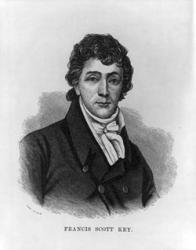
Francis Scott Key

1779 - 1843 Topics: Worship Attributes and Providence of God Author of "Lord, with glowing heart I'd praise thee" in The Seventh-Day Adventist Hymn and Tune Book Frances Scott Key USA 1779-1843. Born in Frederick County, MD, and educated at St. John’s College, Annapolis, MD, a devout Episcopalian, he practiced law in Washington, DC for four decades. He was U.S. District Attorney for the District of Columbia until his death. He argued some of his cases at the Supreme Court. Key served briefly in a Georgetown militia unit. He married Mary Tayloe Lloyd in 1802, and they had eleven children: Elizabeth, Maria, Francis, John, Anna. Edward, Daniel, Philip, Ellen, Maria, and Charles. He also wrote a few hymn lyrics. During the War of 1812, which Key was against, the British invaded the U.S. and burned the White House, Capitol Building, and Library of Congress. One of Key’s friends, Dr. William Beanes, accused of helping in the arrest of British soldiers, was taken prisoner by the British. With the permission of President James Madison, Keys went to Baltimore to try to secure his release with a prisoner exchange. Sailing on a sloup flying a flag of truce for several miles at sea, they found the Tonnant, the ship Beanes was held on, and finally negotiated the release, After showing the British letters from grateful wounded British troups that had been treated by Dr. Beanes. They tried to leave the area, but were temporarily prevented, as the British were bombarding Fort McHenry. Major George Armistead, Commander of Ft. McHenry, had asked that a large flag be made so British vessels could see it over the fort from a great distance. The flag made of cotton bunting was 24 x30 feet in size. When hoisted, it looked huge. Detained, and watching from a ship about eight miles away, Key saw the British fail to destroy the Fort, or even the flag flying over it. The British could not move in cfloser with their ships, as close-range bombardment from Americans had already sunk 22 vessels. After firing 1500 bomb shells, each weighing as much as 220 lbs. from a distance of several miles out the British gave up trying. Key penned his famous lines about the incident, then finished the poem in a hotel room later. The poem was printed in newspapers, and soon a popular drinking tune, “Anacreon in Heaven”, by John Stafford Smith, was chosen to accompany it, and people began referring to the song as “the star-spangled banner”. Four stanzas were written, but usually only one verse, the first, is sung. Key’s brother-in-law, Joseph Nicholson, noted that Key’s words fit the song, so he took the poem to a printer in Baltimore and had it printed. Two known copies of the printing have survived. His famous song was sung in 1897 at baseball opening day ceremonies in Philadelphia. In 1899 the U.S. Navy adopted the song. In 1916, President Woodrow Wilson announced that it should be played at all official events. In 1918 it was sung during the 7th inning of the World Series . It was adopted as the National Anthem in March 1931. During WWII it was sung at every baseball game. Key was a slave owner for years, but an opponent of slave trafficking. He eventually became a leader of the American Colonization Society which sent freed slaves to Africa, and he freed his slaves, even giving free legal representation to some seeking their freedom. He also represented owners of run-away slaves. In 1841 Key became a member of President Andrew Jackson’s “kitchen cabinet” a group of informal close advisors that did not hold public office but met with the president from time to time. In 1823 Key helped found the Virginia Theological Seminary. He supported the Episcopal Church for decades, taking an active roll in Christ Church and St. John’s Church in Georgetown, and Trinity Church in Washington, DC. He served as a lay rector for many years, leading services and visiting the sick. Of his many poems, religious themes were frequent, and most of his works were printed, collected and published in New York as “Poems” in 1857. Key died in Baltimore, MD, of pleurisy. Honors include: two bridges names after him (in Arlington, VA & Baltimore, MD), St. John’s College auditorium, Inducted in Songwriter’s Hall of Fame, Key Hall at University of MD, a residence hall at George Washington U, a high school in rural MD, a middle school in Houston, TX, elementary schools in several states, a mall in MD, a Baltimore minor league baseball team, A San Francisco monument (torn down in 2020 by a radical group after a $140,000 renovation), a WWII Liberty ship, and a U.S. Navy submarine. Special note: In 2001, after the 9/11 catastrophe in New York, Queen Elizabeth II allowed her guards at Buckingham Palace to play the song, and the next day, at St. Paul’s Cathedral, she joined in the singing of it at a memorial service. John Perry ================= Key, Francis Scott, was born in Frederick County, Maryland, 1779, and educated at St. John's College, Annapolis. He practised as a lawyer in Washington, District of Columbia, and was the United States District Attorney there till his death on Jan. 11, 1843. His poetical pieces, which were printed in various works, were collected and published in New York as Poems in 1857. His hymns in common use include:— 1. Before the lord we bow. National Thanksgiving. This Thanksgiving hymn for the 4th July was published in 1832, and was probably written for the celebration of that year. It is in use in Great Britain and America. 2. If life's pleasures charm [cheer] thee. The heart for God only. Appeared in The Christian Lyre, 1830. 3. Faith is the Christian's evidence. Faith. 4. Lord, with glowing heart I'll praise Thee. Praise for Pardon and Peace. Published in Dr. Mühlenberg's Church Poetry, 1823, the Prayer Book Collection, 1826, &c.; and altered as "Lord, with fervor I would praise Thee," in the Unitarian Hymns for the Church of Christ, Boston, 1853. In the Oberlin, Ohio, Manual of Praise, 1880, it begins with st. ii., "Praise, my soul, the God that sought thee." Of these hymns Nos. 1, 2, and 4 are in the Lyra Sacra Americana, 1868, together with the following:— 5. Behold the grant the King of kings. All things in Christ. 6. My God, my Father, may I dare. God, the Father. 7. When troubles, wave on wave, assail'd. Efficacy of Prayer. F. S. Key was also the author of "The Star Spangled Banner" (1814). For original text of his pieces see the Poems, 1857. [Rev. F. M. Bird, M.A.] -- John Julian, Dictionary of Hymnology (1907)

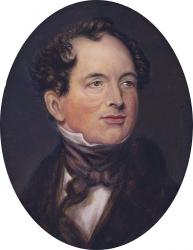
Thomas Moore

1779 - 1852 Person Name: Moore Topics: Being and Attributes of God Author of "All Things are of God" in The Hymn Book of the African Methodist Episcopal Church Thomas Moore United Kingdom 1779-1852. Born at Dublin, Ireland, the son of a grocer, he showed an early interest in music and acting. He was educated at a private school and Trinity College, Dublin. He read at the Middle Temple for the Bar. Moore did not profess religious piety. His translations of ‘Anacreon’ (celebrating wine, women, and song) were published in 1800, with a dedication to the Prince of Wales. He also wrote a comic opera, “the gypsy prince”, staged that year. In 1801 he published a collection of his own verse, “Poetical works of the late Thomas Little Esq”. A Catholic patriot, he defended the Church of Ireland, especially in later politics. In 1803 he held a post under the Government in Bermuda as registrar of the Admiralty Prize Court. He was bored of it within six months and appointed a deputy to take his place while he left for a tour of North America. He secured high society introductions and even met with President, Thomas Jefferson. Returning to England in 1804, he published “Epistles, Odes, & other poems” in 1806. Moore criticized American slavery and was accused of licentious writings, veiled as refinement. Francis Jeffrey denounced Moore’s writings in the ‘Edinburgh Review’, and Moore challenged him to a duel, but it never happened, and they became friends. Between 1808-1810 he was found acting in various plays, favoring comic roles. He met the sister of one of the actresses and, in 1811, they married. Elizabeth ‘Bessy’ Dyke, was an actress. She had no dowry, and Moore kept their marriage secret from his parents for some time, as his wife was Protestant. Bessie shrank from fashionable society, but those who met her held her in high regard. They had five children, but none survived to adulthood. Three girls died young, and both sons lost their lives as young men. One son, Tom, died in some disgrace in the French Foreign Legion in Algeria. Despite these losses, their marriage was said to be a happy one. He also had political trouble. The man he appointed as his replacement in Bermuda was found to have embezzled 6000 pounds sterling, a large sum, for which Moore was liable. He left for France in 1819 to escape debtor’s prison. He also met Lord Byron in Venice and was entrusted with a manuscript of his memoirs, which he promised to have published after Byron’s death. Moore’s wife and children joined him in Paris, where he learned that some of the debt was repaid with help from Lord Lansdowne, whom Moore had given a draft of money from payment by his publisher. The family returned to England a year later. To support his family Moore entered the field of ‘squib writing’ on behalf of his Whig friends. This resulted in years of political debate about Catholics and Protestants in government. Nearly persuaded to forego his Catholic allegiance in favor of Protestantism, he finally concluded that Protestants did not make a sound case for their faith, as they denounced Catholics so vociferously for erroneous teaching. From 1835 -1846 Moore published a four volume “History of Ireland”, which was basically an indictment of English rule over Ireland. He was primarily a writer, poet, entertainer, and composer, considered politically as a writer for the aristocratic Whigs. His “Sacred songs” (32) were published in 1816, and again, in his “collected works” in 1866. His “Memoirs, Journal, and Correspondence” were published by Lord John Russell in 1855. Moore is essentially remembered for his highly-praised lyrics written for Irish melodies, as requested by his publishers, and his memoirs of Lord Byron, his friend. He died at Bromham, Wilshire, England. John Perry ================== Moore, Thomas, son of John Moore, a small tradesman at Dublin, was born in that city, May 28, 1779, educated at a private school and Trinity College, Dublin; read at the Middle Temple for the Bar; held a post under the Government in Bermuda for a short time, and died Feb. 26, 1852. His Memoirs, Journal, and Correspondence were published by Lord John Russell in 1855. In that work every detail concerning himself and his numerous publications, most of them of high poetical merit, will be found. His connection with hymnody is confined to his Sacred Songs, which were published in 1816, and again in his Collected Works, 1866. These Songs were 32 in all, and were written to popular airs of various nations. Of these Songs the following have passed into a few hymnbooks, mainly in America:— 1. As down in the sunless retreats of the ocean. Private Prayer. 2. But who shall see the glorious day. The Final Bliss of Man. 3. Come, ye disconsolate, where'er you languish. Belief in Prayer. In American hymnbooks the text is sometimes as in T. Hastings and Lowell Mason's Spiritual Songs, 1831. This may be distinguished from the original by the third stanza, which reads, "Here see the Bread of life; see waters flowing," &c. 4. Fallen is thy throne, O Israel. Israel in Exile. 5. Like morning when her early breeze. Power of Divine Grace. 6. O Thou Who driest the mourner's tear. Lent. 7. Since first Thy word [grace] awaked my heart. God All and in All. 8. Sound the loud timbrel o'er Egypt's dark sea. Deliverance of Israel. 9. The bird [dove] let loose in eastern skies. Prayer for Constancy. 10. The turf shall be my fragrant shrine. The Temple of Nature. From this "There's nothing bright above, below" is taken. 11. Thou art, O God, the Life and Light. God, the Light and Life of Men. 12. Were not the sinful Mary's tears? Lent. Of these hymns No. 11 has attained the greatest popularity. --John Julian, Dictionary of Hymnology (1907)

Pages


Export as CSV
It looks like you are using an ad-blocker. Ad revenue helps keep us running. Please consider white-listing Hymnary.org or getting Hymnary Pro to eliminate ads entirely and help support Hymnary.org.