You help make Hymnary.org possible. More than 10 million people from 200+ countries found hymns, liturgical resources and encouragement on Hymnary.org in 2025, including you. Every visit affirms the global impact of this ministry.

If Hymnary has been meaningful to you this year, would you take a moment today to help sustain it? A gift of any size—paired with a note of encouragement if you wish—directly supports the server costs, research work and curation that keep this resource freely available to the world.

Give securely online today, or mail a check to:
Hymnary.org
Calvin University
3201 Burton Street SE
Grand Rapids, MI 49546

Thank you for your partnership, and may the hope of Advent fill your heart.

Person Results

Topics:being+and+attributes+of+god
In:person

Planning worship? Check out our sister site, ZeteoSearch.org, for 20+ additional resources related to your search.
Showing 11 - 20 of 43Results Per Page: 102050

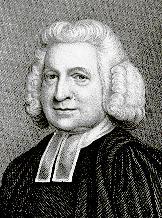
Charles Wesley

1707 - 1788 Person Name: C. Wesley Topics: Being and Attributes of God Author of "Glory to God" in The Hymn Book of the African Methodist Episcopal Church Charles Wesley, M.A. was the great hymn-writer of the Wesley family, perhaps, taking quantity and quality into consideration, the great hymn-writer of all ages. Charles Wesley was the youngest son and 18th child of Samuel and Susanna Wesley, and was born at Epworth Rectory, Dec. 18, 1707. In 1716 he went to Westminster School, being provided with a home and board by his elder brother Samuel, then usher at the school, until 1721, when he was elected King's Scholar, and as such received his board and education free. In 1726 Charles Wesley was elected to a Westminster studentship at Christ Church, Oxford, where he took his degree in 1729, and became a college tutor. In the early part of the same year his religious impressions were much deepened, and he became one of the first band of "Oxford Methodists." In 1735 he went with his brother John to Georgia, as secretary to General Oglethorpe, having before he set out received Deacon's and Priest's Orders on two successive Sundays. His stay in Georgia was very short; he returned to England in 1736, and in 1737 came under the influence of Count Zinzendorf and the Moravians, especially of that remarkable man who had so large a share in moulding John Wesley's career, Peter Bonier, and also of a Mr. Bray, a brazier in Little Britain. On Whitsunday, 1737, [sic. 1738] he "found rest to his soul," and in 1738 he became curate to his friend, Mr. Stonehouse, Vicar of Islington, but the opposition of the churchwardens was so great that the Vicar consented that he "should preach in his church no more." Henceforth his work was identified with that of his brother John, and he became an indefatigable itinerant and field preacher. On April 8, 1749, he married Miss Sarah Gwynne. His marriage, unlike that of his brother John, was a most happy one; his wife was accustomed to accompany him on his evangelistic journeys, which were as frequent as ever until the year 1756," when he ceased to itinerate, and mainly devoted himself to the care of the Societies in London and Bristol. Bristol was his headquarters until 1771, when he removed with his family to London, and, besides attending to the Societies, devoted himself much, as he had done in his youth, to the spiritual care of prisoners in Newgate. He had long been troubled about the relations of Methodism to the Church of England, and strongly disapproved of his brother John's "ordinations." Wesley-like, he expressed his disapproval in the most outspoken fashion, but, as in the case of Samuel at an earlier period, the differences between the brothers never led to a breach of friendship. He died in London, March 29, 1788, and was buried in Marylebone churchyard. His brother John was deeply grieved because he would not consent to be interred in the burial-ground of the City Road Chapel, where he had prepared a grave for himself, but Charles said, "I have lived, and I die, in the Communion of the Church of England, and I will be buried in the yard of my parish church." Eight clergymen of the Church of England bore his pall. He had a large family, four of whom survived him; three sons, who all became distinguished in the musical world, and one daughter, who inherited some of her father's poetical genius. The widow and orphans were treated with the greatest kindness and generosity by John Wesley. As a hymn-writer Charles Wesley was unique. He is said to have written no less than 6500 hymns, and though, of course, in so vast a number some are of unequal merit, it is perfectly marvellous how many there are which rise to the highest degree of excellence. His feelings on every occasion of importance, whether private or public, found their best expression in a hymn. His own conversion, his own marriage, the earthquake panic, the rumours of an invasion from France, the defeat of Prince Charles Edward at Culloden, the Gordon riots, every Festival of the Christian Church, every doctrine of the Christian Faith, striking scenes in Scripture history, striking scenes which came within his own view, the deaths of friends as they passed away, one by one, before him, all furnished occasions for the exercise of his divine gift. Nor must we forget his hymns for little children, a branch of sacred poetry in which the mantle of Dr. Watts seems to have fallen upon him. It would be simply impossible within our space to enumerate even those of the hymns which have become really classical. The saying that a really good hymn is as rare an appearance as that of a comet is falsified by the work of Charles Wesley; for hymns, which are really good in every respect, flowed from his pen in quick succession, and death alone stopped the course of the perennial stream. It has been the common practice, however for a hundred years or more to ascribe all translations from the German to John Wesley, as he only of the two brothers knew that language; and to assign to Charles Wesley all the original hymns except such as are traceable to John Wesley through his Journals and other works. The list of 482 original hymns by John and Charles Wesley listed in this Dictionary of Hymnology have formed an important part of Methodist hymnody and show the enormous influence of the Wesleys on the English hymnody of the nineteenth century. -- Excerpts from John Julian, Dictionary of Hymnology (1907) ================== Charles Wesley, the son of Samuel Wesley, was born at Epworth, Dec. 18, 1707. He was educated at Westminster School and afterwards at Christ Church, Oxford, where he graduated M.A. In 1735, he took Orders and immediately proceeded with his brother John to Georgia, both being employed as missionaries of the S.P.G. He returned to England in 1736. For many years he engaged with his brother in preaching the Gospel. He died March 29, 1788. To Charles Wesley has been justly assigned the appellation of the "Bard of Methodism." His prominence in hymn writing may be judged from the fact that in the "Wesleyan Hymn Book," 623 of the 770 hymns were written by him; and he published more than thirty poetical works, written either by himself alone, or in conjunction with his brother. The number of his separate hymns is at least five thousand. --Annotations of the Hymnal, Charles Hutchins, M.A., 1872.

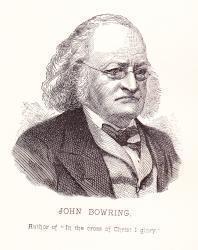
John Bowring

1792 - 1872 Person Name: Bowring Topics: Being and Attributes of God Author of "God is love" in The Hymn Book of the African Methodist Episcopal Church James Bowring was born at Exeter, in 1792. He possessed at an early age a remarkable power of attaining languages, and acquired some reputation by his metrical translations of foreign poems. He became editor of "The Westminster Review" in 1825, and was elected to Parliament in 1835. In 1849, he was appointed Consul at Canton, and in 1854, was made Governor of Hong Kong, and received the honour of knighthood. He is the author of some important works on politics and travel, and is the recipient of several testimonials from foreign governments and societies. His poems and hymns have also added to his reputation. His "Matins and Vespers" have passed through many editions. In religion he is a Unitarian. --Annotations of the Hymnal, Charles Hutchins, M.A., 1872 ======================================= Bowring, Sir John, LL.D., a distinguished man of letters, was born at Exeter, Oct. 17, 1792. His studies extended to philology, poetry, politics, and other branches of learning, whilst as editor of the Westminster Review for some years (he received the appointment in 1825) he did considerable work as a reviewer. He held several official appointments under the Government as Commissioner to France on commercial matters (1831-5); British Consul at Hong Kong (1849); and Governor of Hong Kong (1854). He was twice Member of Parliament, and was knighted in 1854. He died Nov. 23rd, 1872. His published works are very numerous, and display an astonishing acquaintance with various languages. Those specially bearing on poetry include:— (1) Russian Anthology, with Biographical and Critical notices of the Poets of Russia, 1821; (2) Specimens of the Russian Poets, 1823; (3) Ancient Poetry and Romance of Spain, 1824; (4) Batavian Anthology, or Specimens of Dutch Poets, 1824; (5) Servian Popular Poetry, 1821; (6) Specimens of Polish Poets, 1827; (1) Poetry of the Magyars, 1830; (8) History of the Poetical Literature of Bohemia, 1832, &c. In addition to these works, which are mainly translations, Sir John Bowring wrote original verse. This was published interspersed with a few translations, as follows:— (1) Matins and Vespers with Hymns and Occasional Devotional Pieces, Lond., 1823; 2nd edition, enlarged, 1824; 3rd edition, again enlarged, 1841; and the 4th, still further enlarged, in 1851. (2) Hymns: as a Sequel to the Matins, 1825. In addition he contributed to a few Unitarian hymnals, especially that of the Rev. J. R. Beard of Manchester, 1837. In that Collection many of the hymns added to the 3rd edition of Matins, &c, 1841, were first published A selection from these, together with a biographical sketch, was published by Lady Bowring in 1873, as a Memorial Volume of Sacred Poetry. This work contains hymns from the Matins and Vespers, together with others from Periodicals, and from his manuscripts. Of his hymns a very large percentage have come into common use. A few have been adopted by almost all denominations, as, "God is love, His mercy brightens;" "How sweetly flow'd the gospel sound;" "In the Cross of Christ I glory;" "Watchman, tell us of the night;"; and others, but the greater portion are confined to the Unitarian collections of Great Britain and America, of which denomination he was a member. In addition to the more important, which are annotated under their first lines, there are also the following in common use:—- 1. Clay to clay, and dust to dust. Burial. From his Hymns, 1825, into the Hymn & Tune Book, Boston, U.S., 1868, &c. 2. Come the rich, and come the poor. Divine Worship. Contributed to Beard's Collection, 1837, No. 290, and repeated in Bowring's Matins, &c., 3rd edition, 1841. It is in a few American collections. 3. Drop the limpid waters now. Holy Baptism. From Matins and Vespers, 3rd edition, 1841, into Kennedy, 1863. 4. Earth's transitory things decay. The Memory of the Just. From his Hymns, 1825, into Beard, 1837; the American Plymouth Collection, 1855; and the Songs for the Sanctuary, N.Y., 1865, &c. 5. Father, glorify Thy name. The Father glorified. Also from Hymns, 1825, into Beard, 1837; the Hymns of the Spirit, Boston, U.S., 1864, &c. 6. Father and Friend, Thy light, Thy love. Omnipresence. From Matins and Vespers, 2nd edition, 1824, into several collections, and sometimes in an abbreviated form. 7. Father of Spirits, humbly bent before Thee. Also in Hymns, 1825, and Dr. Martineau's Hymns of Praise & Prayer, 1873. In Longfellow and Johnson's Hymns of the Spirit, Boston, U.S., 1864, it is given as, "Father of Spirits, gathered now before Thee." 8. From all evil, all temptation. Preservation implored. Contributed to Beard's Collection, 1837. 9. From the recesses of a lowly spirit. Prayer of trust. From Matins and Vespers, 1st edition, 1823, into several American collections. 10. Gather up, 0 earth, thy dead. Published in his Matins & Vespers, 3rd ed., 1841, in 3 stanzas of 8 lines and repeated, slightly altered, in Kennedy, 1863, No. 753. 11. Gently the shades of night descends Evening. A cento from his poem on "Sunday Evening," in the Matins, &c, 1st edition, 1823, p. 6. It is given in the Boston Hymns of the Spirit, 1864; the Boston Hymn & Tune Book, 1868, and other collections. 12. How dark, how desolate. Hope. 1st published in his Matins, &c, 1823, p. 246. In Dr. Martineau's Hymns of Praise & Prayer, 1873, it is No. 515. 13. How shall we praise Thee, Lord of Light! Evening. A cento from the same poem as No. 7 above. It is given in the Hymns of the Spirit, 1864, and other American collections. 14. Lead us with Thy gentle sway. Divine Guidance desired. Hymns, 1825, into Hymns of the Spirit, 1864, and others. 15. Lord, in heaven, Thy dwelling-place. Praise. Contributed to Beard's Collection, 1837, No. 70, repeated in the author's Matins, &c, 3rd edition 1841, p. 235, and given in a few American collections. In the Hymns of the Spirit, 1864, it is altered to "Lord of every time and place." 16. 0 let my [thy] trembling soul be still. Resignation. From the 1st edition of the Matins, &c, 1823, p. 251, in 3 stanzas of 6 lines, into Beard's Collection, 1837; the Hymns of the Spirit, 1864, and others. It is sometimes given as, "0 let thy," &c. 17. 0, sweet it is to feel and know. Monday Morning. A poem in 16 stanzas of 4 lines, given in his Matins, &c, 1823, p. 60. In 1837 stanzas i.-iii. were given in Beard's Collection as No. 448, and entitled "God near in sorrow." In the 3rd edition of the Matins, &c, 1841, this cento was repeated (p. 245), with the same title, notwithstanding the full poem was in the same book. 18. On the dust I'm doomed to sleep. Resurrection. Appeared in his Matins, &c, 1st edition, 1823, p. 252, in 2 stanzas of 8 lines. In the 2nd edition, 1824, p. 232, it was altered to "In the dust," &c. This was repeated in 1841. In some hymnals it reads:— 19. The heavenly spheres to Thee, 0 God. Evening. This "Hymn to the Deity" appeared in the 2nd edition of his Matins, &c, 1824, pp. 235-6, in 4 stanzas of 4 double lines. It is also in the 3rd edition, 1841; the Boston Hymns of the Spirit, 1864 and other American collections. 20. When before Thy throne we kneel. Divine Worship. From his Hymns, 1825, into Beard's Collection, 1837, No. 93; the Boston Hymn & Tune Book, 1868, No. 21, and others. 21. Where is thy sting, 0 death! Death. Also from the Hymns, 1825, into the same collections as No. 20 above. It will be noted that Beard's Collection, 1837, is frequently named above. The full title of that hymnal is— A Collection of Hymns for Public and Private Worship. Compiled by John R. Board, Lond., John Green, 1837. The Rev. John Relly Beard was an Unitarian Minister in Manchester, and the collection is dedicated "To the Manchester Meeting of Ministers." It contained a large number of original hymns. Bowring contributed 82, of which 33 were published therein for the first time. Some of his hymns are of great merit, and most of them are characterised by great earnestness and deep devotion. -- John Julian, Dictionary of Hymnology (1907) ================== Bowring, Sir John, p. 166, i. In the article on Bowring the hymns numbered therein as 4 and 20 are stated to have appeared in his Hymns, 1825, but in error. The earliest date to which we can positively trace them is Beard's Collection, 1837. From the Hymns, 1825, we find, however, that the following are in modern hymnals:— 1. Our God is nigh. Divine Presence. 2. 'Tis not the gift; but 'tis the spirit. Outward and Inward Virtue. 3. When the storms of sorrow gather. God our Guide. From the various editions of his Matins and Vespers additional hymns arc also in modern use:— 4. If all our hopes and all our fears. Heaven Anticipated. (1823.) 5. In Thy courts let peace be found. Public Worship. (1841.) 6. The offerings to Thy throne which rise. Heart Worship. (1824.) 7. Who shall roll away the stone? Easter. In Beard's Collection, 1837, and Matins & Vespers, 1841. --John Julian, Dictionary of Hymnology, Appendix, Part II (1907)

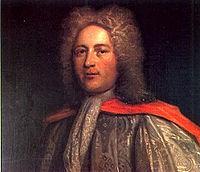
William Croft

1678 - 1727 Person Name: William Croft, 1678 - 1727 Topics: Anniversaries; God Defender; God Divine Attributes of; God: His Being, Word and Works God the Father Almighty: The Divine Attributes; Life Brevity of; Opening and Closing of the Year; Prayer in Tribulation and Suffering; Preservation of Christians; Reformation Day Composer (Ascribed to) of "ST. ANNE" in The Book of Praise William Croft, Mus. Doc. was born in the year 1677 and received his musical education in the Chapel Royal, under Dr. Blow. In 1700 he was admitted a Gentleman Extraordinary of the Chapel Boyd; and in 1707, upon the decease of Jeremiah Clarke, he was appointed joint organist with his mentor, Dr. Blow. In 1709 he was elected organist of Westminster Abbey. This amiable man and excellent musician died in 1727, in the fiftieth year of his age. A very large number of Dr. Croft's compositions remain still in manuscript. Cathedral chants of the XVI, XVII & XVIII centuries, ed. by Edward F. Rimbault, London: D. Almaine & Co., 1844

Horatius Bonar

1808 - 1889 Person Name: Horatius Bonar, 1808-1889 Topics: Cast Out Fear; Christ, the Lord Jesus Love and Grace of; God Love and Grace of; God: His Being, Word and Works God the Father Almighty: The Divine Attributes; Sun; Water of Life Author of "O Love that casts out fear" in The Book of Praise Horatius Bonar was born at Edinburgh, in 1808. His education was obtained at the High School, and the University of his native city. He was ordained to the ministry, in 1837, and since then has been pastor at Kelso. In 1843, he joined the Free Church of Scotland. His reputation as a religious writer was first gained on the publication of the "Kelso Tracts," of which he was the author. He has also written many other prose works, some of which have had a very large circulation. Nor is he less favorably known as a religious poet and hymn-writer. The three series of "Hymns of Faith and Hope," have passed through several editions. --Annotations of the Hymnal, Charles Hutchins, M.A. 1872 ================================ Bonar, Horatius, D.D. Dr. Bonar's family has had representatives among the clergy of the Church of Scotland during two centuries and more. His father, James Bonar, second Solicitor of Excise in Edinburgh, was a man of intellectual power, varied learning, and deop piety. Horatius Bonar was born in Edinburgh, Dec. 19th, 1808; and educated at the High School and the University of Edinburgh. After completing his studies, he was "licensed" to preach, and became assistant to the Rev. John Lewis, minister of St. James's, Leith. He was ordained minister of the North Parish, Kelso, on the 30th November, 1837, but left the Established Church at the "Disruption," in May, 1848, remaining in Kelso as a minister of the Free Church of Scotland. The University of Aberdeen conferred on him the doctorate of divinity in 1853. In 1866 he was translated to the Chalmers Memorial Church, the Grange, Edinburgh; and in 1883 he was chosen Moderator of the General Assembly of of the Free Church of Scotland. Dr. Bonar's hymns and poems were, he tells us, composed amid a great variety of circumstances; in many cases he cannot himself recall these circumstances; they also appeared in several publications, but nearly all have boen published or republished in the following:— (i) Songs for the Wilderness, 1843-4. (2) The Bible Hymn Book, 1845. (3) Hymns, Original and Selected, 1846. (4) Hymns of Faith and Hope, First Series, 1857; Second Series, 1861; Third Series, 1866. (5) The Song of the New Creation, 1872. (6) My Old Letters, a long poem, 1877. (7) Hymns of the Nativity, 1879. (8) Communion Hymns, 1881. In addition to numerous prose works, he has also edited The New Jerusalem; a Hymn of the Olden Time, 1852, &c. Dr. Bonar's poems—-including many beautiful lyrics, several psalm versions, and translations from the Greek and Latin, a large number of hymns, and a long meditative poem—-are very numerous, too numerous, perhaps, for their permanent fame as a whole. Dr. Bonar's scholarship is thorough and extensive; and his poems display the grace of style and wealth of allusion which are the fruit of ripe culture. Affected very slightly by current literary moods, still less by the influence of other religious poetry, they reveal extreme susceptibility to the emotional power which the phases of natural and of spiritual life exercise; the phases of natural life being recognised chiefly as conveying and fashioning spiritual life, used chiefly for depicting spiritual life, and handled for this purpose with greater delicacy of touch than in the Olney Hymns, and with less conscious purpose than in the Christian Year. As a result of this susceptibility, and from habitual contemplation of the Second Advent as the era of this world's true bliss, his hymns and poems are distinguished by a tone of pensive reflection, which some might call pessimism. But they are more than the record of emotion; another element is supplied by his intellectual and personal grasp of Divine truth, these truths particularly:—The gift of a Substitute, our Blessed Saviour; Divine grace, righteous, yet free and universal in offer; the duty of immediate reliance upon the privilege of immediate assurance through that grace; communion with God, especially in the Lord's Supper, respecting which he insists on the privilege of cherishing the highest conceptions which Scripture warrants; and finally, the Second Advent of our Lord: by his vigorous celebration of these and other truths as the source and strength of spiritual life, his hymns are protected from the blight of unhealthy, sentimental introspection. To sum up: Dr. Bonar's hymns satisfy the fastidious by their instinctive good taste; they mirror the life of Christ in the soul, partially, perhaps, but with vivid accuracy; they win the heart by their tone of tender sympathy; they sing the truth of God in ringing notes; and although, when taken as a whole, they are not perfect ; although, in reading them, we meet with feeble stanzas, halting rhythm, defective rhyme, meaningless Iteration; yet a singularly large number have been stamped with approval, both in literary circles and by the Church. In Great Britain and America nearly 100 of Dr. Bonar's hymns are in common use. They are found in almost all modern hymnals from four in Hymns Ancient & Modern to more than twenty in the American Songs for the Sanctuary, N. Y., 1865-72. The most widely known are, "A few more years shall roll;" "Come, Lord, and tarry not;" "Here, O my Lord, I see Thee face to face;" "I heard the Voice of Jesus say;" "The Church has waited long;" and "Thy way, not mine, O Lord." In addition to these and others which are annotated under their respective first lines, the following are also in common use:— From Songs for the Wilderness, No. 1, 1843. 1. For Thee we long and pray. Sunday Morning. 2. Holy Father, hear my cry. A Child's Prayer. 3. I thought upon my sins and I was sad. Christ our Peace. 4. Peace to the world, our Lord is come. A Millennial Song. 5. Spirit of everlasting grace. The Vision of Dry Bones. ii. From Songs for the Wilderness, No. 2,1844. 6. Ho, ye thirsty, parched and fainting. Invitation. 7. 0 'tis not what we fancied it. The world renounced. 8. Sing them, my children, sing them still. Children exhorted to Praise. 9. Time's sun is fast setting. Advent. 10. Weep, pilgrim, weep, yet 'tis not for the sorrow. Faith. 11. Yes, for me, for me He careth. Christ the Elder Brother . iii. From The Bible Hymn Book, 1845. 12. Jesus, my sorrow lies too deep. Jesus, the Great High Priest. 13. There is a Morning Star, my soul. The Morning Star. 14. This is not my place of resting. Pressing towards heaven. iv. From Hymns, Original and Selected, 1845. 15. Let there be light, Jehovah said. Creation. v. From Hymns of Faith and Hope, 1st series, 1857. 16. Be brave, my brother. The Fight of Faith. 17. Blessed be God, our God. Good Friday. 18. Everlasting praises. Doxology. 19. Go up, go up, my heart. Heavenly aspirations desired. 20. I close my heavy eye. Evening. Sometimes given as "We close our heavy eyes." 21. I see the crowd in Pilate's hall. Good Friday. 22. Jesus, while this rongh desert soil. Strength by the Way. 23. Jesus, Whom angel-hosts adore. The Word made Flesh. From "The Son of God, in mighty love." 24. Make haste, 0 man, to live. Exhortation to lay hold of Life. 25. No seas again shall sever. Heaven. 26. Oppressed with noonday's scorching heat. Shadow of the Cross. 27. Rest for the toiling hand. Burial. From "Lie down, frail body, here." 28. Shall this life of mine be wasted? Exhortation to Duty. 29. These are the crowns that we shall wear. Heaven. 30. Thy works, not mine, O Christ [Lord]. The Sin-bearer. 31. Where the faded flower shall freshen. Heaven. vi. From Hymns of Faith and Hope. 2nd series, 1861. 32. Be still, my soul, Jehovah loveth Thee. Rest in the Love of God. 33. Christ has done the mighty work. Good Friday. 34. Come, mighty Spirit, penetrate. Whitsuntide. 35. Deep down beneath the unresting surge. Burial at Sea. 36. Fear not the foe, thou flock of God [thou little flock]. Battle-Song of the Church. 37. For lack of love I languish. Lent. 38. From this bleak hill of storms. Eternal Rest desired. 39. He liveth long who liveth well. The True Life. 40. Here shall death's triumph end: the rock-barred door. Easter. From "The tomb is empty: wouldst thou have it full." 41. Jesus, Sun and Shield art Thou. Jesus the First and Last. 42. Jesus, the Christ of God. Praise to Christ. 43. Light of the world, for ever, ever shining. Christ the Light of the World. From "Why walk in darkness? Has the dear light vanished?" 44. Make use of me, my God. Duty desired. 45. Not what I am, 0 Lord, but what Thou art. The Love of God. 46. 0 Light of Light, shine in. Cry of the Weary. 47. 0 love of God, how strong and true. Love of God. 48. 0 love that casts out fear. Love of God. 49. 0 strong to save and bless. Lent. 50. 0 this soul, how dark and blind. Lent. 51. Safe across the waters. Thanksgiving at end of a journey. 52. Silent, like men in solemn haste. Pressing onwards. 53. Speak, lips of mine. Exhortation to Praise. 54. The Bridegroom comes. Advent. vii. From Hymns of Faith and Hope. 3rd series, 1866. 55. Bear Thou my burden, Thou Who bar'st my sin. Lent or Passiontide. 56. Done is the work that saves. Easter. 57. Father, our children keep. Prayer on behalf of Children. 58. Fill Thou my life, 0 Lord my God. Life's Praise. 59. Finish Thy work, the time is short. Earnest labour to the end. 60. From the Cross the blood is falling. Good Friday. 61. He called them, and they left. Obedience. 62. Help me, my [0] God to speak. Truth desired. 63. Holy Father, Mighty God. Holy Trinity. 64. How are my troubles multiplied. Ps. iii. 65. How sweetly doth He show His face Flower Service. 66. Light hath arisen, we walk in its brightness. Sustaining power of Faith. 67. Lo, God, our God has come. Christmas. 68. Lord, give me light to do Thy work. Divine guidance desired. 69. No, not despairingly. Lent. 70. Not to ourselves again. Life in Christ, or, Living unto God. 71. Now in parting, Father, bless us. Post Communion. 72. Sounds the trumpet from afar. Battle-Song of the Church. 73. Thee in the loving bloom of morn. God in all. 74. Through good report and evil, Lord. Faithfulness. 75. To Jehovah, God of might. Praise to the Father. 76. To the name of God on high. Doxology. 77. Upward, where the stars are burning. Heavenward Aspirations. 78. We take the peace which He hath won. The Gift of Peace. 79. When the weary, seeking rest. Intercession for all Conditions of Men. viii. From The Song of the New Creation,1872. 80. For the Bread and for the Wine. Holy Communion. 81. Light of life so softly shining. Light of Life. 82. Yet there is room. The Lamb's bright hall of song. Home Missions. ix. From Hymns of the Nativity, 1879. 83. Great Ruler of the land and sea. Sailors' Liturgy. From Communion Hymns, 1881. 84. Beloved, let us love. Brotherly Love. In several instances these hymns are given in an abbreviated form, and sometimes alterations are also introduced. In this latter respect however Dr. Bonar has suffered less than most modern hymn-writers. [Rev. James Mearns, M.A.] -- John Julian, Dictionary of Hymnology (1907) ==================== Bonar, Horatius, p. 161, i. He died at Edinburgh, July 31, 1889. In 1890 his son published a posthumous volume of his poetical pieces as Until the Day Break and other Hymns and Poems left behind. The following additional hymns are in common use:— 1. Almighty Comforter and Friend. (1866.) Whitsuntide. 2. Father, make use of me. An altered form of No. 44, p. 162, ii. 3. I ask a perfect creed. (1861.) Creed not Opinions. From this is also taken "O True One, give me truth." 4. Long, long deferred, now come at last. Marriage of the Lamb. Part of "Ascend, Beloved, to the joy." (1861.) 5. Nay 'tis not what we fancied it. (1857.) Vanity of the World. 6. No blood, no altar now. (1861.) The Finished Sacrifice. 7. No shadows yonder. (1857.) Heaven Anticipated. 8. Not with the light and vain. (1857.) Godly Companionship. 9. O Love invisible, yet infinite. (1866.) Divine Love. 10. On the great love of God I lean. (1866.) Love of God our Resting-place. 11. On Thee, O Jesus, strongly leaning. (1866.) Fellowship with Christ. 12. Peace upon peace, like wave on wave. (1866.) Divine Peace. 13. Sower divine, sow the good seed in me. (1857.) Heavenly Sowing. 14. Speaketh the sinner's sin within my heart. (1866.) Ps. xxxvi. 15. Still one in life and one in death. (1857.) Communion of Saints. Part of "'Tis thus they press the hand and part." 16. Surely, yon heaven, where angels see God's face. (1857.) Heaven Anticipated. 17. That city with the jewelled crest. (1857.) Heaven. Part of "These are the crowns that we shall wear." Another cento from the same is "Yon city, with the jewelled crest." 18. That clime is not like this dull clime of ours. (1843.) Heaven. 19. The Free One makes you free: He breaks the rod. (1857.) Freedom in Christ. From "Of old they sang the song of liberty." 20. There is a Morning-star, my soul. (1357.) Christ the Morning Star. 21. This is the day of toil. (1866.) Pressing Onwards. 22. Thy thoughts are here, my God. (1866.) Holy Scripture. 23. Till the day dawn. (1857.) Life's Journey. 24. To Him Who spread the skies. (1866.) Creation's Song. 25. Trustingly, trustingly. (1866.) Trust. 26. Unto th' eternal hills. (1866.) Ps. cxxi. The above dates are: 1843, Songs in the Wilderness; 1857, Hymns of Faith and Hope, 1st Series; 1861, same, 2nd Ser. (not 1864); 1866, same, 3rd Ser. (not 1867), The dates 1857, 1864,1867, were given by Dr. Bonar, but the British Museum copies are 1857, 1861, 1866 respectively. --John Julian, Dictionary of Hymnology, Appendix, Part II (1907) ============== Bonar, H., pp. 161, i.; 1554, i. The Rev. H. N. Bonar, Dr. Bonar's son, published in 1904, Hymns by Horatius Bonar, Selected and Arranged by his Son H. N. Bonar, With a brief History of some of the Hymns, &c. (London: H. Frowde). From this work we must correct the date of his Song of the New Creation to 1872. We have also enriched our pages by additional and expanded notes on several of Dr. Bonar's most widely used hymns. In his biographical notes, Mr. Bonar refers to Dr. Bonar's work as editor of the Quarterly Journal of Prophecy, begun in 1848, to which he contributed a hymn for each number. We find that the number of hymns contributed thereto is 101. With Dr. Bonar's poetical productions great difficulty has been encountered by the historian and annotator because of his absolute indifference to dates and details. It was enough for him that he had written, and that the Church of Christ approved and gladly used what, out of the fulness of his heart, he had given her. --Excerpt from John Julian, Dictionary of Hymnology, New Supplement (1907)

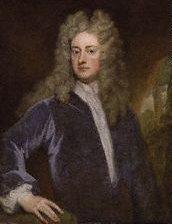
Joseph Addison

1672 - 1719 Person Name: Addison Topics: Being and Attributes of God Author of "The spacious firmament on high" in The Hymn Book of the African Methodist Episcopal Church Addison, Joseph, born at Milston, near Amesbury, Wiltshire, May 1, 1672, was the son of the Rev. Lancelot Addison, sometime Dean of Lichfield, and author of Devotional Poems, &c, 1699. Addison was educated at the Charterhouse, and at Magdalen College, Oxford, graduating B.A. 1691 and M.A. 1693. Although intended for the Church, he gave himself to the study of law and politics, and soon attained, through powerful influence, to some important posts. He was successively a Commissioner of Appeals, an Under Secretary of State, Secretary to the Lord Lieutenant of Ireland, and Chief Secretary for Ireland. He married, in 1716, the Dowager Countess of Warwick, and died at Holland House, Kensington, June 17, 1719. Addison is most widely known through his contributions to The Spectator, The Toiler, The Guardian, and The Freeholder. To the first of these he contributed his hymns. His Cato, a tragedy, is well known and highly esteemed. Addison's claims to the authorship of the hymns usually ascribed to him, or to certain of them, have been called in question on two occasions. The first was the publication, by Captain Thompson, of certain of those hymns in his edition of the Works of Andrew Marvell, 1776, as the undoubted compositions of Marvell; and the second, a claim in the Athenaeum, July 10th, 1880, on behalf of the Rev. Richard Richmond. Fully to elucidate the subject it will be necessary, therefore, to give a chronological history of the hymns as they appeared in the Spectator from time to time. i. The History of the Hymns in The Spectator. This, as furnished in successive numbers of the Spectator is :— 1. The first of these hymns appeared in the Spectator of Saturday, July 26, 1712, No. 441, in 4 stanzas of 6 lines. The article in which it appeared was on Divine Providence, signed “C." The hymn itself, "The Lord my pasture shall prepare," was introduced with these words:— "David has very beautifully represented this steady reliance on God Almighty in his twenty-third psalm, which is a kind of pastoral hymn, and filled with those allusions which are usual in that kind of writing As the poetry is very exquisite, I shall present my readers with the following translation of it." (Orig. Broadsheet, Brit. Mus.) 2. The second hymn appeared in the Spectator on Saturday, Aug. 9, 1712, No. 453, in 13 st. of 4 1., and forms the conclusion of an essay on " Gratitude." It is also signed " C," and is thus introduced:— “I have already obliged the public with some pieces of divine poetry which have fallen into my hands, and as they have met with the reception which they deserve, I shall, from time to time, communicate any work of the same nature which has not appeared in print, and may be acceptable to my readers." (Orig. Broadsheet, British Museum) Then follows the hymn:—"When all Thy mercies, 0 my God." 3. The number of the Spectator for Tuesday, Aug. 19, 1712, No. 461, is composed of three parts. The first is an introductory paragraph by Addison, the second, an unsigned letter from Isaac Watts, together with a rendering by him of Ps. 114th; and the third, a letter from Steele. It is with the first two we have to deal. The opening paragraph by Addison is:— “For want of time to substitute something else in the Boom of them, I am at present obliged to publish Compliments above my Desert in the following Letters. It is no small Satisfaction, to have given Occasion to ingenious Men to employ their Thoughts upon sacred Subjects from the Approbation of such Pieces of Poetry as they have seen in my Saturday's papers. I shall never publish Verse on that Day but what is written by the same Hand; yet shall I not accompany those Writings with Eulogiums, but leave them to speak for themselves." (Orig. Broadsheet, British Museum

John Needham

? - 1786 Person Name: Needham Topics: Being and Attributes of God Author of "Wisdom and Knowledge of God" in The Hymn Book of the African Methodist Episcopal Church Needham, John, was the son of John Needham, Baptist Minister, of Hitchin, Herts, but the date of his birth is unknown. He would doubtless be educated by his father, who was a tutor and in repute as a learned man. In 1750 Needham became co-pastor with John Beddome at the Baptist meetinghouse in the Pithay, Bristol; but, two years later, Beddome having retired through age, a violent controversy arose in the Church with regard to a continuance of the plan of co-pastorship. As the result, Needham and a number of his friends removed to a Baptist meetinghouse in Callowhill Street, where a Mr. Foot was pastor. For a time the two societies used the same builing at different hours, but in 1755 they were united, with Mr. Needham and Mr. Foot as co-pastors. It is known that up to 1774 this arrangement continued, and it is also known that in 1787, both Mr. Needham and Mr. Foot having died, the Callowhill Street Church became extinct, but which of the two pastors was the survivor is not known. The date of Needham's death is unknown. It was probably circa 1786. In 1768 he published Hymns Devotional and Moral on various Subjects, collected chiefly from the Holy Scriptures, &c, Bristol, S. Farley, 1768. These hymns are 263 in all, and whilst none of them possess great excellence, yet several are of a pleasing and useful character. During the past 120 years several have appeared in Nonconformist hymnbooks, and specially in those of the Baptists. Of these the following are still in common use:— 1. Ashamed of Christ! my soul disdains. Not ashamed of Christ. 2. Awake, my tongue, thy tribute bring. The Divine Perfections. 3. Glory to God, Who reigns above. Jesus, the Messiah. 4. Great author of the immortal mind. Imitation of God's Moral Perfections. From "flow matchless, Lord, Thy glories are." 5. Happy the man whose cautious steps. Christian Moderation. 6. Holy and reverend is the Name. Reverence in Worship. 7. Kind are the words that Jesus speaks. Christ the Strengthener. 8. Lord,ere [Now Lord] the heavenly seed is sown. Parable of the Sower. 9. Methinks the last great day is come. The Judgment. 10. Rise, O my soul, pursue the path. The Example of the Saints. 11. See how the little toiling ant. Youth for Christ. 12. Thou art, O God, a Spirit pure. God a Spirit. 13. To praise the ever bounteous Lord. Harvest. 14. When some kind shepherd from his fold. The Lost Sheep. From this “O how divine, how sweet the joy," in Hatfield's Church Hymn Book, New York, 1872, is taken. [Rev. W. R. Stevenson, M.A.] --John Julian, Dictionary of Hymnology (1907)

Philip Doddridge

1702 - 1751 Person Name: Doddridge Topics: Being and Attributes of God Author of "The rainbow round about the throne" in The Hymn Book of the African Methodist Episcopal Church Philip Doddridge (b. London, England, 1702; d. Lisbon, Portugal, 1751) belonged to the Non-conformist Church (not associated with the Church of England). Its members were frequently the focus of discrimination. Offered an education by a rich patron to prepare him for ordination in the Church of England, Doddridge chose instead to remain in the Non-conformist Church. For twenty years he pastored a poor parish in Northampton, where he opened an academy for training Non-conformist ministers and taught most of the subjects himself. Doddridge suffered from tuberculosis, and when Lady Huntington, one of his patrons, offered to finance a trip to Lisbon for his health, he is reputed to have said, "I can as well go to heaven from Lisbon as from Northampton." He died in Lisbon soon after his arrival. Doddridge wrote some four hundred hymn texts, generally to accompany his sermons. These hymns were published posthumously in Hymns, Founded on Various Texts in the Holy Scriptures (1755); relatively few are still sung today. Bert Polman ======================== Doddridge, Philip, D.D., was born in London, June 26, 1702. His grandfather was one of the ministers under the Commonwealth, who were ejected in 1662. His father was a London oilman. He was offered by the Duchess of Bedford an University training for ordination in the Church of England, but declined it. He entered Mr. Jennings's non-conformist seminary at Kibworth instead; preached his first sermon at Hinckley, to which Mr. Jennings had removed his academy. In 1723 he was chosen pastor at Kibworth. In 1725 he changed his residence to Market Harborough, still ministering at Kibworth. The settled work of his life as a preceptor and divine began in 1729, with his appointment to the Castle Hill Meeting at Northampton, and continued till in the last stage of consumption. He sailed to Lisbon, in 1751, where he died October 26, the same year. Two hundred pupils in all, gathered from England, Scotland and Holland, were prepared in his seminary, chiefly for the dissenting ministry, but partly for professions. The wide range of subjects, including daily readings in Hebrew and Greek, Algebra, Trigonometry, Watts' Logic, outline of Philosophy, and copious Divinity, is itself a proof of Doddridge's learning. He was presented with his D.D. degree by the University of Aberdeen. His fame as a divine, combined with his wide sympathies and gentle, unaffected goodness, won for him the friendship of Watts, Col. Gardiner and Hervey, and the esteem of Seeker and Warburton. He welcomed the work of Wesley and Whitefield, and entertained the latter on his visit to Northampton. His Rise and Progress of Religion in the Soul and The Family Expositor both did good work in their day. For criticism of his hymns see English Hymnody, Early, § XIV. [Rev. H. Leigh Bennett, M.A.] After Dr. Doddridge's death his hymns were published by his friend Job Orton, in 1755, as:— "Hymns founded on Various Texts in the Holy Scriptures. By the late Reverend Philip Doddridge, D.D. Published from the Author's Manuscript by Job Orton . . . Salop. Printed by J. Eddowes and J. Cotton, &c. MDCCLV." Concerning the text of the hymns, Orton says in his Preface:— "There may perhaps be some improprieties, owing to my not being able to read the author's manuscript in particular places, and being obliged, without a poetical genius, to supply those deficiencies, whereby the beauty of the stanza may be greatly defaced, though the sense is preserved." The 1st edition contained 370 hymns; the 2nd, 1759, 374; and the 3rd, 1766, and later editions, 375. In 1839 Doddridge's great-grandson re-edited the hymns from the original manuscript and published the same as:— Scriptural Hymns by the Rev. Philip Doddridge, D.D. New and corrected edition containing many hymns never before printed. Edited from the Original Documents by the Author's great-grandson, John Doddridge Humphreys, Esq. Lond. Darton & Clark, 1839. This work contains 22 additional hymns. The text differs in many instances from Orton's, but these changes have not come into common use. In addition to the manuscript used by Orton and J. D. Humphreys, another containing 100 hymns (five of which are not in any edition of the Hymns), all in the author's handwriting, and most of them dated, is referred to in this Dictionary as the "D. Manuscripts." It is the property of Mr. W. S. Booker and family. A manuscript, not in Doddridge's handwriting, of 77 "Hymns by P. Doddridge, Mar. 16, 1739/1740," is in the possession of Mr. W. T. Brooke. The existence of these manuscripts is accounted for from the fact that Doddridge's hymns were freely circulated in manuscript during his lifetime. It is from his correspondence with R. Blair (q.v.) that the few compositions traceable to him in the Scottish Trans. & Paraphrases were derived. The hymns by Doddridge which have attained to the greatest popularity are:— “Awake, my soul, stretch every nerve"; " Do not I love Thee, O my Lord? " "Grace 'tis a charming sound”; " Hark, the glad sound, the Saviour comes"; "My God, and is Thy table spread?" "O happy day, that fixed my choice"; "O God of Jacob [Bethel], by Whose hand”; " See Israel's gentle Shepherd stand"; "Ye servants of the Lord." These hymns, with many besides, are annotated under their respective first lines. Of the rest, taken from the Hymns, &c, 1755, the following are also in common use:— 1. Behold the gloomy vale. Death anticipated. 2. Behold the Great Physician stands. Christ the Physician. 3. Captives of Israel, hear. Spiritual Deliverance. 4. Eternal God, our wondering souls. Enoch's Piety and Translation. 5. Eternal Source of life and thought. Subjection to the Father. G. Exalted Prince of Life, we own. Christ the Prince and Saviour. 7. Father Divine, the Saviour cried. Christ's Submission to the Father. 8. Father Divine, Thy piercing eye. Secret Prayer. 9. Father of mercies, send Thy grace. Sympathy. The Good Samaritan. 10. Go, saith the Lord, proclaim my grace. Forgiveness. 11. God of Eternity, from Thee. Redeeming the Time. 12. God of my life, through all its [my] days. Praising God continually. 13. God. of salvation, we adore. Praise to God for Redemption. 14. Great Father of mankind. Gentiles brought into the Church. 15. Great God, we sing that mighty hand. The New Tear. 16. Great Leader of Thine Israel's host. During Persecution. 17. Great Lord of angels, we adore. Ordination. 18. Great Spirit of immortal love. Purity of Heart desired. 19. Great Teacher of Thy Church, we own. The Divine Precepts. 20. Hail, everlasting Prince of Peace. Sympathy. 21. Hail to the Prince of life and peace. Praise to Christ. 22. Hear, gracious [Saviour] Sovereign, from Thy throne. The Blessings of the Holy Spirit desired. 23. How gentle God's commands. God's Care of His Own. 24. How rich Thy favours, God of grace. God and His Living Temple. 25. How swift the torrent flows [rolls]. Our Fathers, where are they? 26. Jesus the Lord, our souls adore. Christ the Forerunner. 27. Jesus, we own Thy Sovereign hand. Christ to be fully known hereafter. 28. Loud let the tuneful trumpet sound. Gospel Jubilee. 29. My gracious Lord, I own Thy right. Life in Jesus. 30. My [Dear] Saviour, I am [we are] Thine. Joined to Christ through the Spirit. 31. My soul, with all thy waking powers. The Choice of Moses. 32. Now let our voices join. Singing in the ways of God. 33. 0 injured Majesty of heaven. Lent. 34. 0 Zion, tune thy voice. Glory of the Church of Christ. 35. Peace, 'tis the Lord Jehovah's hand. Resignation. 36. Praise the Lord of boundless might. The Father of Lights. 37. Praise to Thy Name, Eternal God. Growth in Grace desired. 38. Remark, my soul, the narrow bounds. The New Year. 39. Repent, the Voice celestial cries. Lent. 40. Return, my roving heart, return. Heart communing. 41. Salvation, O melodious sound. God our Salvation. 42. Saviour of men, and Lord of love. Ministry and Death of Christ. 43. Searcher of hearts, before Thy face. Peter to Simon Magus. 44. Shepherd of Israel, Thou dost keep. Induction or Settlement of a Minister. 45. Shine forth, eternal Source of light. Knowledge of God desired. 46. Shine on our souls, eternal God. Sunday. 47. Sing, ye redeemed of the Lord. Joy on the Homeward Way. 48. Sovereign of life, before Thine eye. Life and Death in God's hands. 49. The darkened sky, how thick it lours. Sorrow followed by Joy. 50. The day approacheth, O my soul. Judgment anticipated. 51. The King of heaven His table spreads. The Gospel Feast. 52. The promises I sing. The unchanging promises of God. 53. The swift-declining day. Walk in the Light. 54. These mortal joys, how soon they fade. Treasures, Perishable and Eternal. 55. Thy judgments cry aloud. Retributive Providence. 56. Thy presence, Everlasting God. Omnipresence of the Father. 57. 'Tis mine, the covenant of His grace. Death anticipated. 58. To Thee, my God; my days are known. Life under the eye of God. 59. Tomorrow, Lord, is Thine. Uncertainty of Life. 60. Triumphant Lord, Thy goodness reigns. The Divine Goodness. 61. Triumphant Zion, lift thy head. The Church Purified and Guarded. 62. Unite my roving thoughts, unite. Peace. 63. What mysteries, Lord, in Thee combine. Christ, the First and Last. 64. While on the verge of life I stand. Death anticipated with Joy. 65. With ecstacy of Joy. Christ the Living Stone. 66. Ye golden lamps of heaven, farewell. Heaven opening. 67. Ye hearts with youthful vigour warm. The Young encouraged. 68. Ye humble souls, that seek the Lord. Easter. 69. Ye sons of men, with joy record. Praise of the Works of God. 70. Yes, the Redeemer rose. Easter In Dr. Hatfield's Church HymnBook, N. Y., 1872, Nos. 9, 12, 14, 15, 21, 23, 25, 29, 30, 32, 34, 35, 39, 40, 44, 47, 51, 61, 64, 65, 67, 69, 70, as above, are dated 1740. What authority there may be for this date we cannot say, these hymns not being in any “D. MSS." with which we are acquainted, and no dates are given in the Hymns, &c, 1755. Some later American editors have copied this date from Dr. Hatfield. Doddridge's hymns are largely used by Unitarians both in Great Britain and America. As might be expected, the Congregationalists also draw freely from his stores. The Baptists come next. In the hymnals of the Church of England the choicest, only are in use. Taken together, over one-third of his hymns are in common usage at the present time. -- John Julian, Dictionary of Hymnology (1907) ================ Doddridge, Philip, D.D. At p. 305 an account is given of a manuscript volume of Doddridge's Hymns, which is the property of the Rooker family. Since that article was written another manuscript vol. has been found. It was the property of Lady Frances Gardiner, née Erskine, an intimate friend of Doddridge, and wife of Col. Gardiner. It is a copy of the Rooker manuscipt, with the revised text, as in the margin of that ms., and is in Doddridge's hand¬writing. It was from this manuscript that the Doddridge hymns were taken for the Scottish Translationsand Paraphrases, 1745. Additional hymns by Dr. Doddridge still in common use include:— 1. My God, how cheerful is the sound. All in Christ. 2. My Saviour, let me hear Thy voice. Pardon desired. 3. My soul, triumphant in the Lord. Divine Guidance assured. 4. No «iore, ye wise, your wisdom boast. Glorying in God alone. From Hymns, No. 128. 5. Now be that Sacrifice survey'd. Christ our Sacrifice. 6. 0 Israel, blest beyond compare. Happiness of God's Israel. 7. Our fathers, where are they? Considering the Past. From Hymns, No. 164. 8. Praise to the Lord on high. Missions. 9. Praise to the radiant Source of bliss. Praise for Divine Guidance. 10. Return, my soul, and seek thy rest. Rest in Jesus. 11. Salvation doth to God belong. National Thanksgiving. 12. Sovereign of Life, I own Thy hand. On Recovery from Sickness. 13. The sepulchres, how thick they stand. Burial. 14. There is a Shepherd kind and strong. The Good Shepherd. From Hymns, No. 216. 15. Wait on the Lord, ye heirs of hope. Waiting on God. 16. We bless the eternal Source of light. Christ's care of the Church. 17. With transport, Lord, our souls proclaim. Immutability of Christ. 18. Ye mourning saints, whose streaming tears. Death and Burial. These all appeared in Dr. Doddridge's Hymns, 1755. --John Julian, Dictionary of Hymnology, Appendix, Part II (1907)

Thomas O. Chisholm

1866 - 1960 Person Name: Thomas O. Chisholm, 1866-1960 Topics: Anniversaries; God Compassion of ; God Faithfulness of; God Immutability of; God Mercies of; God Unchangeableness of; God in Nature; God: His Being, Word and Works God the Father Almighty: The Divine Attributes Author of "Great is Thy faithfulness" in The Book of Praise Thomas O. Chisholm was born in Franklin, Kentucky in 1866. His boyhood was spent on a farm and in teaching district schools. He spent five years as editor of the local paper at Franklin. He was converted to Christianity at the age of 26 and soon after was business manager and office editor of the "Pentecostal Herald" of Louisville, Ky. In 1903 he entered the ministry of the M. E. Church South. His aim in writing was to incorporate as much Scripture as possible and to avoid flippant or sentimental themes. Dianne Shapiro, from "The Singers and Their Songs: sketches of living gospel hymn writers" by Charles Hutchinson Gabriel (Chicago: The Rodeheaver Company, 1916) ============================== Signed letter from Chisholm dated 9 August 1953 located in the DNAH Archives.

William M. Runyan

1870 - 1957 Person Name: William M. Runyan, 1870 - 1957 Topics: Anniversaries; God Compassion of ; God Faithfulness of; God Immutability of; God Mercies of; God Unchangeableness of; God in Nature; God: His Being, Word and Works God the Father Almighty: The Divine Attributes Composer of "FAITHFULNESS" in The Book of Praise Showing early musical promise, William Marion Runyan (b. Marion, NY, 1870; d. Pittsburg, KS, 1957) was a substitute church organist by the age of twelve. He became a Methodist minister in 1891 and served several churches in Kansas but turned to evangelism in 1903; he worked for the Central Methodist Conference for the next twenty years. Following that service, Runyan became pastor at the Federated Church at John Brown University, Sulphur Springs, Arkansas. Editor of Christian Workers Magazine, he also served the Moody Bible Institute and was an editor for Hope Publishing Company until his retirement in 1948. Runyan wrote a number of hymn texts, gospel songs, and hymn tunes. Bert Polman

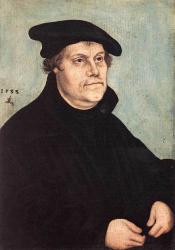
Martin Luther

1483 - 1546 Person Name: Martin Luther, 1483-1546 Topics: Cast Out Fear; Family Worship; God Fortress; God Truth of; God: His Being, Word and Works God the Father Almighty: The Divine Attributes; Reformation Day Author of "A mighty fortress is our God" in The Book of Praise Luther, Martin, born at Eisleben, Nov. 10, 1483; entered the University of Erfurt, 1501 (B.A. 1502, M.A.. 1503); became an Augustinian monk, 1505; ordained priest, 1507; appointed Professor at the University of Wittenberg, 1508, and in 1512 D.D.; published his 95 Theses, 1517; and burnt the Papal Bull which had condemned them, 1520; attended the Diet of Worms, 1521; translated the Bible into German, 1521-34; and died at Eisleben, Feb. 18, 1546. The details of his life and of his work as a reformer are accessible to English readers in a great variety of forms. Luther had a huge influence on German hymnody. i. Hymn Books. 1. Ellich cristlich lider Lobgesang un Psalm. Wittenberg, 1524. [Hamburg Library.] This contains 8 German hymns, of which 4 are by Luther. 2. Eyn Enchiridion oder Handbuchlein. Erfurt, 1524 [Goslar Library], with 25 German hymns, of which 18 are by Luther. 3. Geystliche Gesangk Buchleyn. Wittenberg, 1524 [Munich Library], with 32 German hymns, of which 24 are by Luther. 4. Geistliche Lieder auffs new gebessert. Wittenberg. J. Klug, 1529. No copy of this book is now known, but there was one in 1788 in the possession of G. E. Waldau, pastor at Nürnberg, and from his description it is evident that the first part of the Rostock Gesang-Buch, 1531, is a reprint of it. The Rostock Gesang-Buch, 1531, was reprinted by C. M. Wiechmann-Kadow at Schwerin in 1858. The 1529 evidently contained 50 German hymns, of which 29 (including the Litany) were by Luther. 5. Geistliche Lieder auffs new gebessert. Erfurt. A. Rauscher, 1531 [Helmstädt, now Wolfenbüttel Library], a reprint of No. 4. 6. Geistliche Lieder. Wittenberg. J. Klug, 1535 [Munich Library. Titlepage lost], with 52 German hymns, of which 29 are by Luther. 7. Geistliche Lieder auffs new gebessert. Leipzig. V. Schumann, 1539 [Wernigerode Library], with 68 German hymns, of which 29 are by Luther. 8. Geistliche Lieder. Wittenberg. J. Klug, 1543 [Hamburg Library], with 61 German hymns, of which 35 are by Luther. 9. Geystliche Lieder. Leipzig. V. Babst, 1545 [Gottingen Library]. This contains Luther's finally revised text, but adds no new hymns by himself. In pt. i. are 61 German hymns, in pt. ii. 40, of which 35 in all are by Luther. For these books Luther wrote three prefaces, first published respectively in Nos. 3, 4, 9. A fourth is found in his Christliche Geseng, Lateinisch und Deudsch, zum Begrebnis, Wittenberg, J. Klug, 1542. These four prefaces are reprinted in Wackernagel’s Bibliographie, 1855, pp. 543-583, and in the various editions of Luther's Hymns. Among modern editions of Luther's Geistliche Lieder may be mentioned the following:— Carl von Winterfeld, 1840; Dr. C. E. P. Wackernagel, 1848; Q. C. H. Stip, 1854; Wilhelm Schircks, 1854; Dr. Danneil, 1883; Dr. Karl Gerok, 1883; Dr. A. F. W. Fischer, 1883; A. Frommel, 1883; Karl Goedeke, 1883, &c. In The Hymns of Martin Luther. Set to their original melodies. With an English version. New York, 1883, ed. by Dr. Leonard Woolsey Bacon and Nathan H. Allen, there are the four prefaces, and English versions of all Luther's hymns, principally taken more or less altered, from the versions by A. T. Russell, R. Massie and Miss Winkworth [repub. in London, 1884]. Complete translations of Luther's hymns have been published by Dr. John Anderson, 1846 (2nd ed. 1847), Dr. John Hunt, 1853, Richard Massie, 1854, and Dr. G. Macdonald in the Sunday Magazine, 1867, and his Exotics, 1876. The other versions are given in detail in the notes on the individual hymns. ii. Classified List of Luther's Hymns. Of Luther's hymns no classification can be quite perfect, e.g. No. 3 (see below) takes hardly anything from the Latin, and No. 18 hardly anything from the Psalm. No. 29 is partly based on earlier hymns (see p. 225, i.). No. 30 is partly based on St. Mark i. 9-11, and xvi., 15, 16 (see p. 226, ii.). No. 35 is partly based on St. Luke ii. 10-16. The following arrangement, however, will answer all practical purposes. A. Translations from the Latin. i. From Latin Hymns: 1. Christum wir sollen loben schon. A solis ortus cardine 2. Der du bist drei in Einigkeit. O Lux beata Trinitas. 3. Jesus Christus unser Heiland, Der von. Jesus Christus nostra salus 4. Komm Gott Schopfer, heiliger Geist. Veni Creator Spiritus, Mentes. 5. Nun komm der Beidenheiland. Veni Redemptor gentium 6. Was flirchst du Feind Herodes sehr. A solis ortus cardine ii. From Latin Antiphons, &c.: 7. Herr Gott dich loben wir. Te Deum laudamus. 8. Verleih uns Frieden gnädiglich. Dapacem, Domine 9. Wir glauben all an einen Gott. iii. Partly from the Latin, the translated stanzas being adopted from Pre-Reformation Versions: 10. Komm, heiliger Geist, Herre Gott. 11. Mitten wir im Leben sind. Media vita in morte sumus. B. Hymns revised and enlarged from Pre-Reformation popular hymns. 12. Gelobet seist du Jesus Christ. 13. Gott der Vater wohn uns bei. 14. Gott sei gelobet und gebenedeiet. 15. Nun bitten wir den heiligen Geist. C. Psalm versions. 16. Ach Gott vom Himmel, sieh darein. 17. Aus tiefer Noth schrei ich zu dir. 18. Ein' feste Burg ist unser Gott. 19. Es spricht der Unweisen Mund wohl. 20. Es wollt uns Gott genädig sein. 21. War Gott nicht mit uns diese Zeit. 22. Wohl dem, der in Gotten Furcht steht. D. Paraphrases of other portions of Holy Scripture. 23. Diess sind die heilgen zehn Gebot. 24. Jesaia dem Propheten das geschah. 25. Mensch willt du leben seliglich. 26. Mit Fried und Freud ich fahr dahin. 27. Sie ist mir lieb die werthe Magd. 28. Vater unser im Himmelreich. E. Hymns mainly Original. 29. Christ lag in Todesbanden. 30. Christ unser Herr zum Jordan kam. 31. Ein neues Lied wir heben an. 32. Erhalt uns Herr bei deinem Wort. 33. Jesus Christus unser Heiland, Der den, 34. Nun freut euch lieben Christengemein. 35. Vom Himmel hoch da komm ich her. 36. Vom Himmel kam der Engel Schaar. In addition to these — 37. Fur alien Freuden auf Erden. 38. Kyrie eleison. In the Blätter fur Hymnologie, 1883, Dr. Daniel arranges Luther's hymns according to what he thinks their adaptation to modern German common use as follows:— i. Hymns which ought to be included in every good Evangelical hymn-book: Nos. 7-18, 20, 22, 28, 29, 30, 32, 34, 35, 36, 38. ii. Hymns the reception of which into a hymn-book might be contested: Nos. 2, 3, 4, 19, 21, 22, 23, 24, 25, 33. iii. Hymns not suited for a hymn-book: Nos. 1, 5, 6, 27, 31, 37. [Rev. James Mearns, M.A.] --John Julian, Dictionary of Hymnology (1907)

Pages


Export as CSV
It looks like you are using an ad-blocker. Ad revenue helps keep us running. Please consider white-listing Hymnary.org or getting Hymnary Pro to eliminate ads entirely and help support Hymnary.org.