You help make Hymnary.org possible. More than 10 million people from 200+ countries found hymns, liturgical resources and encouragement on Hymnary.org in 2025, including you. Every visit affirms the global impact of this ministry.

If Hymnary has been meaningful to you this year, would you take a moment today to help sustain it? A gift of any size—paired with a note of encouragement if you wish—directly supports the server costs, research work and curation that keep this resource freely available to the world.

Give securely online today, or mail a check to:
Hymnary.org
Calvin University
3201 Burton Street SE
Grand Rapids, MI 49546

Thank you for your partnership, and may the hope of Advent fill your heart.

Person Results

Topics:devout+aspirations+and+affections
In:people

Planning worship? Check out our sister site, ZeteoSearch.org, for 20+ additional resources related to your search.
Showing 11 - 19 of 19Results Per Page: 102050

Jane Cotterill

1790 - 1825 Person Name: Mrs. Cotterill Topics: Devout Aspirations and Affections Living to God's glory Author of "O thou, who hast at thy command" in A Collection of Psalms and Hymns for Christian Worship. 16th ed. Cotterill, Jane, née Boak, daughter of Rev. John Boak, and mother of the Right Rev. Henry Cotterill, Bishop of Edinburgh; born in 1790, married 1811 to the Rev. Joseph Cotterill; died 1825. Mrs. Cotterill contributed to the Appendix to the 6th ed. of Cotterill’s Selection, 1815, the following hymns:— 1. "O! from the world's vile slavery," (For Holiness). 2. "O Thou! Who hast at Thy command," (For Resignation). These hymns were repeated in Montgomery's Christian Psalmist, 1825, and Mrs. Cotterill's name was appended thereto for the first time. Their use is not extensive. The first, "O! from the world's," &c, is found in Kennedy, 1863, No. 521, as, "From this enslaving world's control," the alterations being by Dr. Kennedy. --John Julian, Dictionary of Hymnology (1907)

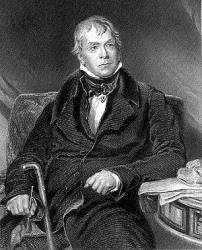
Sir Walter Scott

1771 - 1832 Topics: Devout Aspirations and Affections Seeking the Divine presence, influence and light Author of "When Israel, of the Lord beloved" in A Collection of Psalms and Hymns for Christian Worship. 16th ed. Walter Scott was born in Edinburgh, August 15, 1771. In 1786, he commenced his apprenticeship as writer to the Signet. In 1796, he first appeared before the public in a translation of Burger's "William and Helen." Many poetical works followed, until in 1814, he began the series of "Waverly Novels." He died at Abbotsford, September 21, 1832. It is related that on his death-bed he distinctly repeated portions of the Latin original, upon which "That day of wrath, that dreadful day" is based. --Annotations of the Hymnal, Charles Hutchins, M.A., 1872 ====================== Scott, Sir Walter, Bart., was born in Edinburgh, Aug. 15, 1771, and died at Abbotsford, Sept. 21, 1832. Although so successful and widely known as a poet, he made no direct contributions to hymnody whatever. His condensed rendering of the “Dies Irae", and his hymn of Rebecca in Ivanhoe, "When Israel of the Lord beloved" (q.v.) were utilized as hymns for congregational use by others, but were never intended for such a purpose by himself. His work and rank as poet, novelist, and historian are fully set forth in his Life by J. G. Lockhart. --John Julian, Dictionary of Hymnology (1907)

Baptist Wriothesley Noel

1799 - 1873 Person Name: Noel Topics: Devout Aspirations and Affections Hope and comfort in trouble Author of "When musing sorrow weeps the pest" in A Collection of Psalms and Hymns for Christian Worship. 16th ed. Noel, Hon. Baptist Wriothesley, M.A., younger son of Sir Gerard Noel Noel, Bart., and brother of the Earl of Gainsborough, was born at Leithmont, near Leith, July 10, 1799, and educated at Trinity College, Cambridge. Taking Holy Orders he was for some time Incumbent of St. John's Episcopal Chapel, Bedford Row, London, and Chaplain to the Queen; but in 1848 he seceded from the Church of England, and subsequently became a Baptist Minister. He was pastor of St. John's Street Chapel, Bedford Row, until 1868. He died Jan. 19, 1873. His prose works, about twelve in all, were published between 1847 and 1863. His association with hymnology is through:— (1) A Selection of Psalms and Hymns adapted chiefly for Congregational and Social Worship by Baptist Wriothesley Noel, M.A. (2) Hymns about Jesus, by Baptist Wriothesley Noel, N.D. A collection of 159 hymns, the greater part of which are his own or recasts by him of older hymns. The Selection appeared in 1832. It passed through several editions (2nd ed., 1838; 3rd, 1848, &c), that for 1853 being enlarged, and having also an Appendix of 39 original "Hymns to be Used at the Baptism of Believers." From this Selection the following hymns are still in common use:— 1. Devoted unto Thee. Holy Baptism. From "0 God, Who art our Friend." 2. Glory to God, Whose Spirit draws. Holy Baptism. 3. Jesus, the Lord of glory died. Jesus the Guide. 4. Lord, Thou hast promised to baptize. Holy Baptism. 5. We gave [give] ourselves to Thee. Holy Baptism. --John Julian, Dictionary of Hymnology (1907)

John Patrick

1632 - 1695 Person Name: Patrick Topics: Devout Aspirations and Affections Holy desires Author of "God, who is just and kind" in A Collection of Psalms and Hymns for Christian Worship. 16th ed. John Patrick, a brother of Bishop Simon Patrick, was Prebendary of Peterborough, 1685; Precentor of Chichester, 1690; and preacher at the Charter-House, in the Chapel of which he was buried on his death, in 1695. His "Psalms of David, in Metre," were much used by Presbyterians and Independents until superseded by the compositions of Watts. ----Annotations of the Hymnal, Charles Hutchins, M.A. 1872.

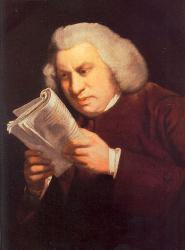
Samuel Johnson

1709 - 1784 Person Name: Dr. Johnson Topics: Devout Aspirations and Affections Seeking the Divine presence, influence and light Author of "O Thou whose power o'er moving worlds presides" in A Collection of Psalms and Hymns for Christian Worship. 16th ed.

T. Humphries

Topics: Devout Aspirations and Affections Lord, remember me Author of "O thou, from whom all goodness flows" in A Collection of Psalms and Hymns for Christian Worship. 16th ed.

James Merrick

1720 - 1769 Person Name: Merrick Topics: Devout Aspirations and Affections Submission and resignation Author of "Author of good, we rest on thee" in A Collection of Psalms and Hymns for Christian Worship. 16th ed. Merrick, James , M.A., was born in 1720, and educated at Oxford, where he became a Fellow of Trinity College. He entered Holy Orders, but his health would not admit of parish work. He died at Reading, 1769. His publications include:— (1) Messiah, a Divine Essay. Humbly dedicated to the Reverend the Vice-Chancellor of the University of Oxford and the Visitors of the Free School in Reading. By James Merrick, Ætat. 14, Senior Scholar of the School at their last Terminal Visitation, the 7th of October, 1734. Reading. (2) The Destruction of Troy. Translated from the Greek of Tryphiodorus into English Verse, with Notes, &c. 1742. (3) Poems on Sacred Subjects. Oxford . 1763. (4) The Psalms of David Translated or Paraphrased in English Verse. By James Merrick, M.A., late Fellow of Trinity College, Oxford. Reading. J. Carnan and Co. 1765. 2nd ed. 1766. A few only of these paraphrases were divided into stanzas. In 1797 the Rev. W. D. Tattersall pulished the work "Divided into stanzas for Parochial Use, and paraphrased in such language as will be intelligible to every capacity . . . with a suitable Collect to each Psalm from the Works of Archbishop Parker." Merrick's paraphrases, although weak and verbose, were in extensive use in the early part of the present century, both in the Church of England and with Nonconformists. They have, however, fallen very much into disuse. Those in modern hymn-books, mainly in the form of centos, include:— 1. Blest Instructor, from Thy ways. Ps. xix. 2. Descend, O Lord! from heaven descend. Ps. cxliv. (In time of National Peril.) 3. Far as creation's bounds extend. Ps. cxlv. 4. God of my strength, the wise, the just. Ps. xxxi. 5. He who with generous pity glows. Ps. xli. 6. How pleasant, Lord.Thy dwellings are. Ps. lxxxiv. 7. Lift up your voice and thankful sing. Ps. cxxxvi. 8. Lo, my Shepherd's hand divine. Ps. xxiii. 9. Lord, my Strength, to Thee I pray. Ps. xxviii. 10. My heart its noblest theme has found. Ps.xlv. 11. O let me, [gracious] heavenly Lord extend. Ps. xxxix. 12. O turn, great Ruler of the skies. Ps. li. 13. Praise, O praise the Name divine. Ps. cl. 14. Sing, ye sons of [men] might, O sing. Ps. xxix. 15. Teach me, O teach me, Lord, Thy way. Ps. cxix. 16. The festal morn, my [O] God, is come. Ps. cxxii, (Sunday Morning.) 17. The morn and eve Thy praise resound. Ps. lxv. (Harvest.) 18. To Thy pastures, fair and large. Ps. xxiii. From his Poems on Sacred Subjects, 1763, the following centos have also come into common use: -- 19. Author of good, to Thee we turn. Resignation. 20. Eternal God, we look to Thee. Resignation. 21. 'Tis enough, the hour is come. Nunc Dimittis. John Julian, Dictionary of Hymnology (1907)

Thomas Scott

1705 - 1775 Person Name: Scott Topics: Devout Aspirations and Affections Submission and resignation Author of "The swift not always in the race" in A Collection of Psalms and Hymns for Christian Worship. 16th ed. Thomas Scott was born at Norwich, and was the son of a Dissenting minister. After his education he began his ministerial life at Wartmell, in Norfolk, adding also the labours of school-teaching. Subsequently he changed his pastoral relations several times, spending the last years of his life at Hupton, in Norfolk, where he died in 1776. He was the author of some prose works, several poems, and a few hymns. --Annotations of the Hymnal, Charles Hutchins, M.A., 1872 ============================ Scott, Thomas, son of Thomas Scott, Independent Minister at Norwich, brother of Elizabeth Scott, and nephew of Dr. Daniel Scott, was born at Norwich, 1705. As a young man he kept a school at Wortwell, and preached once a month at Harleston, Norfolk. Then, after a short ministry at Lowestoft, he removed in 1734 to Ipswich as co-pastor with Mr. Baxter of the Presbyterian congregation meeting in St. Nicholas Street Chapel. On the death of his senior in 1740 he became sole pastor. In 1774 he retired to Hapton, and died there in 1775. He was the author of various poetical works, including:— (1) The Table of Cebes; or, the Picture of Human Life, in English Verse, with Notes, 1754; (2) The Book of Job, in English Verse; translated from the original Hebrew, with Remarks, Historical, Critical, and Explanatory, 1771; 2nd ed. 1773; (3) Lyric Poems, Devotional and Moral. By Thomas Scott, London, James Buckland, 1773. To Dr. Enfield's Hymns for Public Worship, Warrington, 1772, he contributed "All-knowing God, 'tis Thine to know" (p. 43, ii.); "Angels! roll the rock away" (p. 69, i.); "As various as the moon " (p. 85, ii.); and the following:— 1. Absurd and vain attempt to bind. Persecution. 2. Behold a wretch in woe. Mercy. 3. Imposture shrinks from light. Private Judgment, its Rights and Duties. 4. Mark, when tempestuous winds arise. Meekness. 5. O come all ye sons of Adam and raise. Universal Praise to God. 6. Th' uplifted eye and bended knee. Devotion vain without Virtue. 7. Was pride,alas, e'er made for man? Humility. 8. Why do I thus perplex? Worldly Anxiety reproved. In his Preface to his Lyric Poems, 1773, he said that the object of his work was:— "To form a kind of little poetical system of piety and morals. The work opens with natural religion. Thence it proceeds to the mission of Jesus Christ, his sufferings, his exaltation, and the propagation of his doctrine. Next is the call to repentance, the nature and blessedness of a Christian life, and the entrance into it. These topics are succeeded by the various branches of devotion: after which are ranked the moral duties, personal and social, the happy end of a sincere Christian, and the coming of Jesus Christ to finish his mediatorial kingdom by the general judgment. The whole is closed with a description of the illustrious times, when by means of the everlasting gospel, the earth shall be full of the knowledge of the Lord as the waters cover the sea." Of Scott's better known hymns this volume contained most of those named above, and:— 9. Hasten, sinner, to be wise. p. 493, ii. 10. Who, gracious Father, can complain? The Divine Dispensation In the Collection of Hymns and Psalms, &c, 1795, by Kippis, Rees, and others, several of the above were repeated, and the following were new:— 11. If high or low our station be. Justice. 12. Happy the meek whose gentle breast. Meekness. Doctrinally Scott might be described as an evangelical Arian. Hymns of his appear in most of the old Presbyterian collections at the close of the last century, and in the early Unitarian collections. Several are still in common use in G. Britain and America. [Rev. Valentine D. Davis, B.A.] -- John Julian, Dictionary of Hymnology (1907)

Ottiwell Heginbotham

1744 - 1768 Person Name: Heginbotham Topics: Devout Aspirations and Affections Praising God in all changes Author of "Father of mercies, God of love" in A Collection of Psalms and Hymns for Christian Worship. 16th ed. Heginbothom, Ottiwell, born in 1744, and died in 1768, was for a short time the Minister of a Nonconformist congregation at Sudbury, Suffolk. The political and religious disputes which agitated the congregation, in the origin of which he had no part, and which resulted in a secession and the erection of another chapel, so preyed upon his mind, and affected his health, that his pastorate terminated with his death within three years of his appointment. His earliest hymn, "When sickness shakes the languid corse [frame]," was printed in the Christian Magazine, Feb. 1763. In 1791 the Rev. John Mead Ray communicated several of Heginbothom's hymns to the Protestant Magazine; and in the same year, these and others to the number of 25, were published as:— Hymns by the late Rev. Ottiwell Heginbothom of Sudbury, Suffolk. Sudbury, Printed by J. Burket, mdccxciv. These 25 hymns were repeated in J. M Ray's Collection of Hymns from various authors in¬tended as a Supplement to Dr. Watts's Psalms and Hymns, 1799, and 12 in Collyer's Collection, 1812. In modern collections in Great Britain and America the following are in common use in addition to those annotated under their respective first lines:— 1. Blest Jesus, when my soaring thoughts. Jesus, most Precious. 2. Come, humble souls; ye mourners come. Good Hope through Grace. 3. Come saints and shout the Saviour's praise. The Second Advent. 4. Come, shout aloud the Father's grace. Praise to God the Father. 6. Father of mercies, God of love. God the Father. 6. God of our life! Thy various praise. New Year. 7. Great God, let all our [my] tuneful powers. New Year. 8. Hark, the loud trumpet of our God. National Fast. 9. Hark, 'tis your heavenly Father's call. A Prayer to be used by the Young. 10. I ask not [honour] wealth, nor pomp, nor power. Wisdom and Knowledge desired. 11. Now let my soul, eternal King. Praise of the Gospel. Sometimes given as "To Thee, my heart, eternal King." 12. See, mighty God, before Thy throne. Fifth of November; a National Hymn. 13. Sweet peace of Conscience, heavenly guest. A good Conscience. 14. To Thee, my Shepherd, and my Lord. The Good Shepherd. 15. Unhappy city, hadst thou known. Christ weeping over Jerusalem. From this the cento, "And can mine eyes without a tear?" is taken. 16. When sickness shakes the languid corse [frame]. Resignation. Printed in the Christian's Magazine, Feb. 1763, and again in Hymns, &c, 1794. 17. Yes, I will bless Thee, O my God. Praise of the Father. The text is often altered. The cento "My soul shall praise Thee, O my God," in the Unitarian Hymn land Tune] Book, &c, Boston, 1868, is from this hymn. Most of these hymns are in Collyer's Collection, 1812. There are also 8 in Hatfield's Church Hymn Book, N.Y., 1872, and 7 in the Songs for the Sanctuary, N.Y., 1865. [William T. Brooke] -- John Julian, Dictionary of Hymnology

Pages


Export as CSV
It looks like you are using an ad-blocker. Ad revenue helps keep us running. Please consider white-listing Hymnary.org or getting Hymnary Pro to eliminate ads entirely and help support Hymnary.org.