You help make Hymnary.org possible. More than 10 million people from 200+ countries found hymns, liturgical resources and encouragement on Hymnary.org in 2025, including you. Every visit affirms the global impact of this ministry.

If Hymnary has been meaningful to you this year, would you take a moment today to help sustain it? A gift of any size—paired with a note of encouragement if you wish—directly supports the server costs, research work and curation that keep this resource freely available to the world.

Give securely online today, or mail a check to:
Hymnary.org
Calvin University
3201 Burton Street SE
Grand Rapids, MI 49546

Thank you for your partnership, and may the hope of Advent fill your heart.

Person Results

Topics:in+time+of+war
In:person

Planning worship? Check out our sister site, ZeteoSearch.org, for 20+ additional resources related to your search.
Showing 11 - 20 of 38Results Per Page: 102050

Henry Thomas Smart

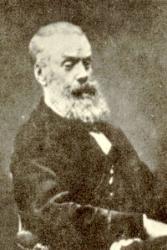
1813 - 1879 Person Name: H. Smart Topics: In time of war Composer of "TROY" in Worship Song Henry Smart (b. Marylebone, London, England, 1813; d. Hampstead, London, 1879), a capable composer of church music who wrote some very fine hymn tunes (REGENT SQUARE, 354, is the best-known). Smart gave up a career in the legal profession for one in music. Although largely self taught, he became proficient in organ playing and composition, and he was a music teacher and critic. Organist in a number of London churches, including St. Luke's, Old Street (1844-1864), and St. Pancras (1864-1869), Smart was famous for his extemporiza­tions and for his accompaniment of congregational singing. He became completely blind at the age of fifty-two, but his remarkable memory enabled him to continue playing the organ. Fascinated by organs as a youth, Smart designed organs for impor­tant places such as St. Andrew Hall in Glasgow and the Town Hall in Leeds. He composed an opera, oratorios, part-songs, some instrumental music, and many hymn tunes, as well as a large number of works for organ and choir. He edited the Choralebook (1858), the English Presbyterian Psalms and Hymns for Divine Worship (1867), and the Scottish Presbyterian Hymnal (1875). Some of his hymn tunes were first published in Hymns Ancient and Modern (1861). Bert Polman

Aleksēi Federovich L'vov

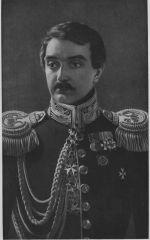
1798 - 1870 Person Name: A. Lyoff Topics: In time of war Composer of "RUSSIA" in Worship Song Alexis Federovich L’vov Estonia 1798-1870. Born at Reval, Estonia, son of the St. Petersburg imperial court chapel director, he learned violin as a child and gave regular concerts in his home at age 9. Studying under a number of teachers until age 19, he then studied independently and developed his own personal style of playing. He entered the Russian army in 1818, became a civil engineer there eventually a General in 1828, when he was appointed Aide-de-camp to Tsar Nicholas I. He married Praskovya Aggeyevna, and they had a son and two daughters. He eventually took over his father’s post after he died in 1837 and stayed at that position for 24 years. He formed a string quartet in St. Petersburg and held weekly concerts at his private residence, which were attended by members of high society, including Franz Liszt, Robert and Clara Schumann, and Berlioz. In charge of the Russian chapel choir, it was described by Berlioz as of exceptional quality, expressing regret that Europeans were unable to hear the extraordinary sounds of the chapel choir (80 singers). L’vov took his quartet on several European tours where he could play to public audiences. He met Mendelssohn, Meyerbeer, and Spontini, who became personal friends. L’vov codified the Russian liturgical musical style ‘Obikhod’, the standard repertory of most Russian Orthodox churches in the world. L’vov was a member of the Russian musical establishment. Two of his friends who attained musical fame were Glinka and Berlioz, both impressed with L’vov’s superb violin playing and composing abilities. He composed violin music, operas and various religious pieces. His opera “Undine” (1846) became famous. In 1850 he founded the Russian Concert Society. His musical style was eclectic, combining traditions of Russian culture with Italian and German influences. He retired in 1867 due to deafness. He died near Kovno, Lithuania. John Perry

John Baptiste Calkin

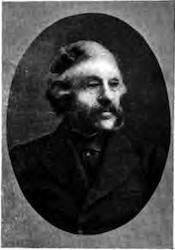
1827 - 1905 Person Name: J. B. Calkin, b. 1827 Topics: In time of war Composer of "ST. JOHN THE BAPTIST" in Church Hymns John Baptiste Calkin United Kingdom 1827-1905. Born in London, he was reared in a musical atmosphere. Studying music under his father, and with three brothers, he became a composer, organist, and music teacher. At 19, he was appointed organist, precenter, and choirmaster at St. Columbia's College, Dublin, Ireland, 1846 to 1853. From 1853 to 1863 we was organist and choirmaster at Woburn Chapel, London. From 1863 to 1868, he was organist of Camden Road Chapel. From 1870 to 1884 he was organist at St. Thomas's Church, Camden Town. In 1883 he became professor at Guildhall School of Music and concentrated on teaching and composing. He was also a professor of music and on the council of Trinity College, London, and a member of the Philharmonic Society (1862). In 1893 he was a fellow of the College of Organists. John and wife, Victoire, had four sons, each following a musical carer. He wrote much music for organ and scored string arrangements, sonatas, duos, etc. He died at Hornsey Rise Gardens. John Perry

Henry F. Chorley

1808 - 1872 Person Name: H. F. Chorley Topics: In time of war Author of "God the All-terrible! King, who ordainest" in Worship Song Chorley, Henry Fothergill, was born at Blackleyhurst, Lancashire, Dec. 15, 1808, and educated at the Royal Institution, Liverpool. In 1834 he was engaged as a member of the staff of the London Athenaeum. This connection he retained for 35 years. He died Feb. 15, 1872. He published some novels and a large number of songs. --John Julian, Dictionary of Hymnology, Appendix, Part II (1907) ============ Born: De­cem­ber 15, 1808, Black­ley Hurst, near Bil­linge, Lan­ca­shire, Eng­land. Pseudonym: Paul Dell. Died: Feb­ru­a­ry 16, 1872, Lon­don, Eng­land. Buried: Bromp­ton Cem­e­te­ry, Lon­don, Eng­land. Son of an ir­on work­er and lock mak­er, Chor­ley moved with his fam­i­ly to Li­ver­pool af­ter his fa­ther’s death in 1816. He was ed­u­cat­ed by pri­vate tu­tors in Li­ver­pool and at the school of the Roy­al In­sti­tu­tion. His youth was shaped part­ly by time spent in the house­hold of the wealthy and in­tel­lect­u­al Mrs. Ben­son Rath­bone of Green Bank, and he be­came a close friend of her son Ben­son, who died in an ac­ci­dent in 1834. Chorley be­gan writ­ing for the Lon­don Athen­æ­um in 1830, and was the pa­per’s mu­sic critic and lit­er­a­ry re­view­er un­til 1868. He al­so be­came mus­ic crit­ic for the Lon­don Times and wrote, for these and other jour­nals, re­views and mu­sic­al gos­sip col­umns, dis­cuss­ing com­pose­rs and per­form­ers in Bri­tain and on the Eur­o­pean con­ti­nent. He was quite con­ser­va­tive, and was a per­sist­ent op­po­nent of in­no­va­tion, but was a live­ly chron­ic­ler of Lon­don life. In the Athen­æ­um and else­where, Chor­ley oft­en cri­ti­cized the mu­sic of Schu­mann and Wag­ner for what he called "de­ca­dence." In 1850 and 1851, Chor­ley ed­it­ed the La­dies’ Com­pan­ion, which co­vered fa­shion and do­mes­tic wo­men’s is­sues. Chorley was al­so a jour­nal­ist, no­vel­ist, play­wright, and po­et, and op­era li­bret­tist. One of his best known piec­es was his obit­u­ary of Tur­ge­nev, mis­tak­en­ly writ­ten while the Russ­ian was still ve­ry much alive. Tur­ge­nev was not of­fend­ed by the er­ror near­ly as much as he was by the cri­tic­al opin­ions of his work Chorley gave in the obit­u­a­ry. Chorley was con­sid­ered ec­cen­tric and abras­ive, but was re­spect­ed for his in­te­gri­ty and kind­ness. He en­thus­i­as­tic­al­ly gave and at­tend­ed din­ner par­ties, and cul­ti­vat­ed friend­ships with Eliz­a­beth Bar­rett, Fe­lix Men­dels­sohn, Charles Dick­ens, Ar­thur Sul­li­van and Charles Sant­ley. Af­ter the death of his bro­ther, John Rut­ter Chor­ley (1806–1867), Hen­ry in­her­it­ed enough mo­ney to re­tire from the Athen­æ­um, though he con­tin­ued to con­trib­ute ar­ti­cles for that pa­per and for The Or­ches­tra. In spite of Chorley’s ef­forts to pro­mote the mu­sic of Charles Gou­nod in Eng­land, the com­poser dis­liked Chor­ley in­tense­ly. When Gou­nod lived in Eng­land in the ear­ly 1870’s, he wrote a satir­i­cal pi­a­no piece in­tende­d to be a par­o­dy of Chor­ley’s per­son­al­i­ty. It great­ly amused Gou­nod’s Eng­lish pa­tron, Geor­gi­na Weld­on, who de­scribed Chor­ley as hav­ing a "thin, sour, high-pitched so­pran­ish voice" and mov­ing like a "stuffed red-haired mon­key." Gou­nod in­tend­ed to pub­lish the piece with a ded­i­ca­tion to Chor­ley, but died be­fore this was pos­si­ble. Wel­don then in­vent­ed a new pro­gram for the piece, which was re-titled Fun­er­al March of a Mar­i­onette. It be­came pop­u­lar as a con­cert piece, and in the 1950s, its open­ing phras­es be­came well known as the theme mu­sic for the tel­e­vi­sion pro­gram Al­fred Hitch­cock Pre­sents. Chorley’s works in­clude: Music and Man­ners in France and Ger­ma­ny, 1841 Pomfret, 1845 Roccabella, 1859 The Pro­di­gy, 1866 --www.hymntime.com/tch/

Jane Borthwick

1813 - 1897 Person Name: Jane Laurie Borthwick, 1813-1897 Topics: Words and Deeds of Prophetic Women and Men In Time To Come; Peace and War; Unity and Diversity Author of "Now Is the Time Approaching" in Singing the Living Tradition Miss Jane Borthwick, the translator of this hymn and many others, is of Scottish family. Her sister (Mrs. Eric Findlater) and herself edited "Hymns from the Land of Luther" (1854). She also wrote "Thoughts for Thoughtful Hours (1859), and has contributed numerous poetical pieces to the "Family Treasury," under the signature "H.L.L." --Annotations of the Hymnal, Charles Hutchins, M.A. 1872. ================================= Borthwick, Jane, daughter of James Borthwick, manager of the North British Insurance Office, Edinburgh, was born April 9, 1813, at Edinburgh, where she still resides. Along with her sister Sarah (b. Nov. 26, 1823; wife of the Rev. Eric John Findlater, of Lochearnhead, Perthshire, who died May 2, 1886) she translated from the German Hymns from the Land of Luther, 1st Series, 1854; 2nd, 1855; 3rd, 1858; 4th, 1862. A complete edition was published in 1862, by W. P. Kennedy, Edinburgh, of which a reprint was issued by Nelson & Sons, 1884. These translations, which represent relatively a larger proportion of hymns for the Christian Life, and a smaller for the Christian Year than one finds in Miss Winkworth, have attained a success as translations, and an acceptance in hymnals only second to Miss Winkworth's. Since Kennedy's Hymnologia Christiana, 1863, in England, and the Andover Sabbath Hymn Book, 1858, in America, made several selections therefrom, hardly a hymnal in England or America has appeared without containing some of these translations. Miss Borthwick has kindly enabled us throughout this Dictionary to distinguish between the 61 translations by herself and the 53 by her sister. Among the most popular of Miss Borthwick's may be named "Jesus still lead on," and "How blessed from the bonds of sin;" and of Mrs. Findlater's "God calling yet!" and "Rejoice, all ye believers." Under the signature of H. L. L. Miss Borthwick has also written various prose works, and has contributed many translations and original poems to the Family Treasury, a number of which were collected and published in 1857, as Thoughts for Thoughtful Hours (3rd edition, enlarged, 1867). She also contributed several translations to Dr. Pagenstecher's Collection, 1864, five of which are included in the new edition of the Hymns from the Land of Luther, 1884, pp. 256-264. Of her original hymns the best known are “Come, labour on” and "Rest, weary soul.” In 1875 she published a selection of poems translated from Meta Heusser-Schweizer, under the title of Alpine Lyrics, which were incorporated in the 1884 edition of the Hymns from the Land of Luther. She died in 1897. [Rev. James Mearns, M.A.] -- John Julian, Dictionary of Hymnology (1907) ======================== Borthwick, Jane, p. 163, ii. Other hymns from Miss Borthwick's Thoughtful Hours, 1859, are in common use:— 1. And is the time approaching. Missions. 2. I do not doubt Thy wise and holy will. Faith. 3. Lord, Thou knowest all the weakness. Confidence. 4. Rejoice, my fellow pilgrim. The New Year. 5. Times are changing, days are flying. New Year. Nos. 2-5 as given in Kennedy, 1863, are mostly altered from the originals. --John Julian, Dictionary of Hymnology, Appendix, Part II (1907) ============= Works: Hymns from the Land of Luther

George James Webb

1803 - 1887 Person Name: George James Webb, 1803-1887 Topics: Words and Deeds of Prophetic Women and Men In Time To Come; Peace and War; Unity and Diversity Composer of "WEBB" in Singing the Living Tradition George James Webb, b. 1803,England; d. 1887, Orange, N. J. Evangelical Lutheran Hymnal, 1908

John Hampden Gurney

1802 - 1862 Person Name: J. H. Gurney Topics: In time of war Author of "Through centuries of sin and woe" in Worship Song Gurney, John Hampden, M.A., eldest son of Sir John Gurney, a Baron of the Exchequer, was born in Serjeants’ Inn, London, Aug. 15, 1802, and educated at Trinity College, Cambridge, where he graduated in 1824. On taking Holy Orders he became Curate of Lutterworth (1827-1844), and subsequently Rector of St. Mary's, Marylebone, and Prebendary of St. Paul's Cathedral. He died in London, March 8, 1862. The Society for Promoting Christian Knowledge and other religious societies had his cordial sympathy, and received his active support. His publications include several small volumes in prose, and the following:— (1) Church Psalmody; Hints for the improvement of a Collection of Hymns published by the Society for Promoting Christian Knowledge, 1853; (2) A Collection of Hymns for Public Worship. Lutterworth, 1838. This contains 300 hymns, and is known as his Lutterworth Collection; (3) Psalms and Hymns for Public Worship, selected for some of the Churches of Marylebone. London, 1851. This collection of 300 hymns and psalm versions is known as his Marylebone Collection. The Preface is signed by "Charles Baring," "Thomas Garnier," and "John Hampden Gurney," but the work was practically done by Gurney. To the Lutterworth Collection 1838, he contributed :— 1. Earth to earth, and dust to dust. Burial. 2. Great King of nations, hear our prayer. Fast Day. 3. Lord, as to Thy dear Cross we flee. Lent. 4. Lord, at Thy word the constant sun. Harvest. 5. Saviour, what wealth was Thine. Passiontide. 6. Soon to the dust we speed. Heaven anticipated. 7. Thou God of mercy and of might. Good Friday. 8. Thou plenteous source of light and love. Advent. 9. Thou Who of old didst raise. Ascension. 10. Through centuries of sin and woe. For Peace. 11. We praise Thee, everlasting God. Te Deum. These hymns were all signed "J. H. G.," and Nos. 1, 2, 3, 7, 8, 9 and 11, were repeated in the Marylebone Collection, 1851; and to these were added:— 12. Fair waved the golden corn. Child's Hymn. 13. How vast the debt we owe. Offertory. 14. Lord of the Harvest, Thee we hail. Harvest. This is No. 4 above rewritten. 15. Lord, we lift our eyes above. Love of Christ. In addition to these we are specially indebted to Gurney for, "We saw Thee not when Thou didst come" (q.v.), and "Yes, God is good," &c. (q.v.). Several of the above-named hymns are in extensive use in Great Britain and America. The most popular are annotated under their respective first lines. -- John Julian, Dictionary of Hymnology (1907)

W. Shrubsole

1759 - 1829 Person Name: William Shrubsole Jr. Topics: Prayer in time of war Author of "The soul's Advocate" in Hymnal of the Methodist Episcopal Church William Shrubsole was born in Sheerness, Kent, in 1759. His first occupation was as a shipwright in Sheerness Dockyard, but he was promoted, and afterwards removed to London, where he at length held the position of Secretary to the Committee of the Treasury in the Bank of England. He died at Highbury, in 1829. Mr. Shrubsole was the author of several hymns, and some articles in the religious magazines of his day. --Annotations of the Hymnal, Charles Hutchins, M.A. 1872. ============================= Shrubsole, William, eldest son of William Shrubsole, a master mastmaker in the dockyard at Sheerness, Kent, and a Lay Preacher, was born at Sheerness, Nov. 21, 1759. In his earlier years he was engaged as a shipwright in the dockyard, and then as a clerk. In 1765 he removed to London, and entered the Bank of England as a clerk. He subsequently became the Secretary to the Committee of the Treasury. He died at Highbury, Aug. 23, 1829. Mr. Shrubsole was for some time a communicant at St. Anne's, Blackfriars, during the incumbency of the Rev. W.Goode; but during the last twenty years of his life he was a member with the Congregationalists, and attended the Hoxton Academy Chapel. He interested himself in religious societies, and especially the London Missionary Society (of which he became a director and one of the secretaries), the Bible Society, and the Religious Tract Society. He contributed hymns to the Evangelical Magazine, the Christian Magazine, the Theological Miscellany, the Christian Observer and the Youths' Magazine, at various dates, from 1775 to 1813. To these works we have traced nearly twenty of his hymns. A Memoir of Shrubsole was contributed by his daughter to Dr. Morison's Fathers and Founders of the London Missionary Society, 2 vols., London, Fisher, Sons & Co., 1844. Seven of his hymns are also given, together with a portrait, in the same work. His hymns in common use include:— 1. Arm of the Lord, awake, awake. Put on Thy strength, the nations shake. Missions. This appeared in Missionary Hymns, 1795; and in Morison's Fathers and Founders, &c, 1844, vol. i. p. 451, in 6 stanzas of 4 lines. Dr. Rogers in his Lyra Britannica, 1867, attributes this hymn to Shrubsole's father, and dates it 1780. Against this statement we can only put the fact that it is claimed in Morison for the son. Original text, Lyra Britanica, 1867, p. 502. 2. Bright as the sun's meridian blaze . Missions. Written Aug. 10, 1795, for the first meeting of the London Missionary Society. It was printed in the Evangelical Magazine, Sept., 1795, headed “On the intended Mission," and signed "Junior." It is also in Morison, 1844, i. p. 449, together with the note that the hymn "was duly acknowledged by Mr. Shrubsole in his lifetime, and the original manuscript, with numerous corrections, is in possession of his family, in his own autograph," and that it bears date "August 10, 1795." Original text Lyra Britanica, 1867, p. 504. 3. In all the paths my feet pursue. Looking unto Jesus. Appeared in the Evangelical Magazine, 1794; in Morison, i., 1844, p. 454; and Lyra Britanica, 1867, p. 503. 4. Shall science distant lands explore? Missions. Published in the Evangelical Magazine, 1795; and again in Morison, 1844, i. p. 452. 5. When streaming from the Eastern skies . Daily Duties; or, Morning. Published in the Christian Observer, Aug., 1813, in 8 stanzas of 8 lines, headed "Daily Duties, Dependence and Enjoyment," and signed Probus. Also in Morison, 1844, i. p. 453; and Lyra Brittanica, 1867, p. 505. The well-known cento, "As every day Thy mercy spares," is from this hymn, and begins with st. iii. 6. Ye saints, your grateful praises bring

Rudyard Kipling

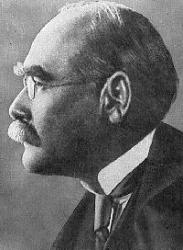
1865 - 1936 Topics: In time of war Author of "God of our fathers, known of old" in Worship Song Born: December 30, 1865, Bombay (now Mumbai), India. Died: January 18, 1936, London, England. Buried: Westminster Abbey, London, England. Kipling, Rudyard, the well-known poet and story-teller, was born at Bombay, India, Dec. 30, 1865, and now (1906) lives at Burwash in Sussex. His noble poem, "The Recessional," was written in 1897 at the time of the Diamond Jubilee of Queen Victoria, contributed to the Times for July 17, 1897, and first published by the author in his The Five Nations, 1903, p. 214, beginning "God of our fathers, known of old" (National). It has passed into Sursum Corda, Phil., 1898, The English Hymnal, 1906. [Rev. James Mearns, M.A.] --John Julian, Dictionary of Hymnology, New Supplement (1907)

Ludwig van Beethoven

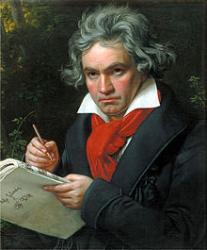
1770 - 1827 Person Name: Ludwig van Beethoven, 1770-1827 Topics: Words and Deeds of Prophetic Women and Men In Time To Come; Peace and War; World Community Composer of "HYMN TO JOY" in Singing the Living Tradition A giant in the history of music, Ludwig van Beethoven (b. Bonn, Germany, 1770; d. Vienna, Austria, 1827) progressed from early musical promise to worldwide, lasting fame. By the age of fourteen he was an accomplished viola and organ player, but he became famous primarily because of his compositions, including nine symphonies, eleven overtures, thirty piano sonatas, sixteen string quartets, the Mass in C, and the Missa Solemnis. He wrote no music for congregational use, but various arrangers adapted some of his musical themes as hymn tunes; the most famous of these is ODE TO JOY from the Ninth Symphony. Although it would appear that the great calamity of Beethoven's life was his loss of hearing, which turned to total deafness during the last decade of his life, he composed his greatest works during this period. Bert Polman

Pages


Export as CSV
It looks like you are using an ad-blocker. Ad revenue helps keep us running. Please consider white-listing Hymnary.org or getting Hymnary Pro to eliminate ads entirely and help support Hymnary.org.