You help make Hymnary.org possible. More than 10 million people from 200+ countries found hymns, liturgical resources and encouragement on Hymnary.org in 2025, including you. Every visit affirms the global impact of this ministry.

If Hymnary has been meaningful to you this year, would you take a moment today to help sustain it? A gift of any size—paired with a note of encouragement if you wish—directly supports the server costs, research work and curation that keep this resource freely available to the world.

Give securely online today, or mail a check to:
Hymnary.org
Calvin University
3201 Burton Street SE
Grand Rapids, MI 49546

Thank you for your partnership, and may the hope of Advent fill your heart.

Person Results

Topics:life+of+discipleship
In:people

Planning worship? Check out our sister site, ZeteoSearch.org, for 20+ additional resources related to your search.
Showing 11 - 20 of 655Results Per Page: 102050

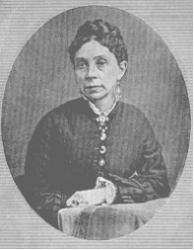
Annie S. Hawks

1835 - 1918 Topics: Life of Discipleship Prayer and Guidance; God's Church Life of Discipleship: Prayer and Guidance Author of "I Need Thee Every Hour" in Chalice Hymnal Hawks, Annie Sherwood. Mrs. Hawks was born in Hoosick, N. Y., May 28, 1835, and has resided for many years at Brooklyn. Her hymns were contributed to Bright Jewels, Pure Gold, Boyal Diadem, Brightest and Best, Temple Anthems, Tidal Wave, and other popular Sunday School hymnbooks. They include "I need Thee every hour" (written April, 1872), "Thine, most gracious Lord," "Why weepest thou? Whom seekest thou?" and others of the same type. --John Julian, Dictionary of Hymnology (1907) ==============

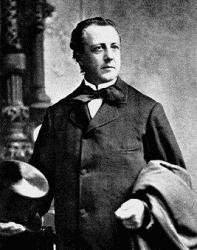
William B. Bradbury

1816 - 1868 Topics: Life of Discipleship Faith and Hope; God's Church Life of Discipleship: Faith and Hope Composer of "THE SOLID ROCK" in Chalice Hymnal William Batchelder Bradbury USA 1816-1868. Born at York, ME, he was raised on his father's farm, with rainy days spent in a shoe-shop, the custom in those days. He loved music and spent spare hours practicing any music he could find. In 1830 the family moved to Boston, where he first saw and heard an organ and piano, and other instruments. He became an organist at 15. He attended Dr. Lowell Mason's singing classes, and later sang in the Bowdoin Street church choir. Dr. Mason became a good friend. He made $100/yr playing the organ, and was still in Dr. Mason's choir. Dr. Mason gave him a chance to teach singing in Machias, ME, which he accepted. He returned to Boston the following year to marry Adra Esther Fessenden in 1838, then relocated to Saint John, New Brunswick. Where his efforts were not much appreciated, so he returned to Boston. He was offered charge of music and organ at the First Baptist Church of Brooklyn. That led to similar work at the Baptist Tabernacle, New York City, where he also started a singing class. That started singing schools in various parts of the city, and eventually resulted in music festivals, held at the Broadway Tabernacle, a prominent city event. He conducted a 1000 children choir there, which resulted in music being taught as regular study in public schools of the city. He began writing music and publishing it. In 1847 he went with his wife to Europe to study with some of the music masters in London and also Germany. He attended Mendelssohn funeral while there. He went to Switzerland before returning to the states, and upon returning, commenced teaching, conducting conventions, composing, and editing music books. In 1851, with his brother, Edward, he began manufacturring Bradbury pianos, which became popular. Also, he had a small office in one of his warehouses in New York and often went there to spend time in private devotions. As a professor, he edited 59 books of sacred and secular music, much of which he wrote. He attended the Presbyterian church in Bloomfield, NJ, for many years later in life. He contracted tuberculosis the last two years of his life. John Perry

Hugh Wilson

1766 - 1824 Topics: Life of Discipleship Prayer and Guidance; God's Church Life of Discipleship: Prayer and Guidance Composer of "MARTYRDOM" in Chalice Hymnal Hugh Wilson (b. Fenwick, Ayrshire, Scotland, c. 1766; d. Duntocher, Scotland, 1824) learned the shoemaker trade from his father. He also studied music and mathematics and became proficient enough in various subjects to become a part-­time teacher to the villagers. Around 1800, he moved to Pollokshaws to work in the cotton mills and later moved to Duntocher, where he became a draftsman in the local mill. He also made sundials and composed hymn tunes as a hobby. Wilson was a member of the Secession Church, which had separated from the Church of Scotland. He served as a manager and precentor in the church in Duntocher and helped found its first Sunday school. It is thought that he composed and adapted a number of psalm tunes, but only two have survived because he gave instructions shortly before his death that all his music manuscripts were to be destroyed. Bert Polman

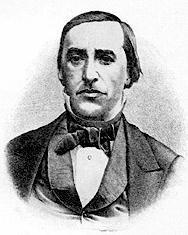
George Duffield

1818 - 1888 Person Name: George Duffield, Jr. Topics: Life of Discipleship Loyalty and Courage; God's Church Life of Discipleship: Loyalty and Courage Author of "Stand Up, Stand Up for Jesus" in Chalice Hymnal Duffield, George, Jr., D.D., son of the Rev. Dr. Duffield, a Presbyterian Minister, was born at Carlisle, Pennsylvania, Sept. 12, 1818, and graduated at Yale College, and at the Union Theological Seminary, New York. From 1840 to 1847 he was a Presbyterian Pastor at Brooklyn; 1847 to 1852, at Bloomfield, New Jersey; 1852 to 1861, at Philadelphia; 1861 to 1865, at Adrian, Michigan; 1865 to 1869, at Galesburg, Illinois; 1869, at Saginaw City, Michigan; and from 1869 at Ann Arbor and Lansing, Michigan. His hymns include;— 1. Blessed Saviour, Thee I love. Jesus only. One of four hymns contributed by him to Darius E. Jones's Temple Melodies, 1851. It is in 6 stanzas of 6 lines. In Dr. Hatfield's Church Hymnbook it is given in 3 stanzas. The remaining three hymns of the same date are:— 2. Parted for some anxious days. Family Hymn. 3. Praise to our heavenly Father, God. Family Union. 4. Slowly in sadness and in tears. Burial. 5. Stand up, stand up for Jesus. Soldiers of the Cross. The origin of this hymn is given in Lyra Sac. Americana, 1868, p. 298, as follows:— "I caught its inspiration from the dying words of that noble young clergyman, Rev. Dudley Atkins Tyng, rector of the Epiphany Church, Philadelphia, who died about 1854. His last words were, ‘Tell them to stand up for Jesus: now let us sing a hymn.' As he had been much persecuted in those pro-slavery days for his persistent course in pleading the cause of the oppressed, it was thought that these words had a peculiar significance in his mind; as if he had said, ‘Stand up for Jesus in the person of the downtrodden slave.' (Luke v. 18.)" Dr. Duffield gave it, in 1858, in manuscript to his Sunday School Superintendent, who published it on a small handbill for the children. In 1858 it was included in The Psalmist, in 6 stanzas of 8 lines. It was repeated in several collections and in Lyra Sac. Amer., 1868, from whence it passed, sometimes in an abbreviated form, into many English collections. [Rev. F. M. Bird, M.A.] - John Julian, Dictionary of Hymnology (1907) See also in: Hymn Writers of the Church

William D. Longstaff

1822 - 1894 Person Name: W. D. Longstaff Topics: Life of Discipleship Prayer and Guidance; God's Church Life of Discipleship: Prayer and Guidance Author of "Take Time to Be Holy" in Chalice Hymnal William Dunn Longstaff United Kingdom 1822-1894. Born at Sunderland, Durham, England, the son of a wealthy ship owner, he was a person of independent financial means. Although Longstaff had everything he desired, he still had an empty feeling in his life, and attended church one day and was inspired by words of a China missionary, Griffith John, on furlough to England, preaching at a service in Keswick, England, citing I Peter 1:16, “Be ye holy, for I am holy”. That resulted in him giving his heart to the Lord and beginning a Christian life, dedicated to God. He became a generous philanthropist and was influential in evangelical circles. Following his friend, Rev Arthur A Rees, a persuasive Welsh preacher, who left the Anglican priesthood after disagreements with his rector and bishop, Dunn served as church treasurer for Ree’s Bethesda Free Chapel in Sunderland. He married Joice Burlinson in 1853 and they had eight children: William, Hannah, Rhoda, Amelia, Ernest, Nora, Marnia, and Minnie. Longstaff befriended well-known evangelists, including William Booth of the Salvation Army, to whose work he generously contributed. Some of Langstaff’s hymns were published in the Salvation Army magazine, “The War Cry” during the 1880s. He also financed Dwight Moody’s evangelical crusades in England and Scotland when Moody’s funding dried up after their financier died. During the crusade they preached to 20,000 people. Longstaff did not forget that first sermon he heard, and it prompted the writing of his hymn lyrics, which he later showed to Ira Sankey during their crusade. Sankey showed it to George Stebbins, who set it to music in 1882 during a revival in India. In 1881 Longstaff’s wife died. He died at Sunderland, England. John Perry

Adelaide A. Pollard

1862 - 1934 Topics: Life of Discipleship Prayer and Guidance; God's Church Life of Discipleship: Prayer and Guidance Author of "Have Thine Own Way, Lord!" in Chalice Hymnal Not to be confused with Adelaide A. Procter

Mary E. Byrne

1880 - 1931 Topics: Life of Discipleship Prayer and Guidance; God's Church Life of Discipleship: Prayer and Guidance Translator of "Be Thou My Vision" in Chalice Hymnal Mary Elizabeth Byrne, M.A. (July 2, 1880 – January 19, 1931) was born in Ireland. She translated the Old Irish Hymn, "Bí Thusa 'mo Shúile," into English as "Be Thou My Vision" in Ériu (the journal of the School of Irish Learning), in 1905. See also in: Wikipedia

George C. Stebbins

1846 - 1945 Topics: Life of Discipleship Prayer and Guidance; God's Church Life of Discipleship: Prayer and Guidance Composer of "HOLINESS" in Chalice Hymnal Stebbins studied music in Buffalo and Rochester, New York, then became a singing teacher. Around 1869, he moved to Chicago, Illinois, to join the Lyon and Healy Music Company. He also became the music director at the First Baptist Church in Chicago. It was in Chicago that he met the leaders in the Gospel music field, such as George Root, Philip Bliss, & Ira Sankey. At age 28, Stebbins moved to Boston, Massachusetts, where he became music director at the Claredon Street Baptist Church; the pastor there was Adoniram Gordon. Two years later, Stebbins became music director at Tremont Temple in Boston. Shortly thereafter, he became involved in evangelism campaigns with Moody and others. Around 1900, Stebbins spent a year as an evangelist in India, Egypt, Italy, Palestine, France and England. (www.hymntime.com/tch)

Charles C. Converse

1832 - 1918 Topics: Life of Discipleship Prayer and Guidance; God's Church Life of Discipleship: Prayer and Guidance Composer of "CONVERSE" in Chalice Hymnal Pseudonyms: Clare, Lester Vesé, Nevers, Karl Re­den, Revons ================================= Charles Crozat Converse LLD USA 1832-1918. Born in Warren, MA, he went to Leipzig, Germany to study law and philosophy, as well as music theory and composition under Moritz Hauptmann, Friedrich Richter, and Louis Plaidy at the Leipzig Conservatory. He also met Franz Liszt and Louis Spohr. He became an author, composer, arranger and editor. He returned to the states in 1859 and graduated from the Albany, NY, Law School two years later. He married Lida Lewis. From 1875 he practiced law in Erie, PA, and also was put in charge of the Burdetta Organ Company. He composed hymn tunes and other works. He was offered a DM degree for his Psalm 126 cantata, but he declined the offer. In 1895 Rutherford College honored him with a LLD degree. He spent his last years in Highwood, NJ, where he died. He published “New method for the guitar”, “Musical bouquet”, “The 126th Psalm”, “Sweet singer”, “Church singer”, “Sayings of Sages” between 1855 and 1863. he also wrote the “Turkish battle polka” and “Rock beside the sea” ballad, and “The anthem book of the Episcopal Methodist Church”. John Perry

William W. Walford

1772 - 1850 Person Name: William Walford Topics: Life of Discipleship Prayer and Guidance; God's Church Life of Discipleship: Prayer and Guidance Author of "Sweet Hour of Prayer" in Chalice Hymnal William W. Walford, a blind preacher of England, is the author of the hymn beginning "Sweet hour of prayer." This hymn first appeared in print in the New York Observer September 13, 1845. The contributor who furnished the hymn says: "During my residence at Coleshill, Warwickshire, England, I became acquainted with W. W. Walford, the blind preacher, a man of obscure birth and connections and no education, but of strong mind and most retentive memory. In the pulpit he never failed to select a lesson well adapted to his subject, giving chapter and verse with unerring precision, and scarcely ever misplacing a word in his repetition of the Psalms, every part of the New Testament, the prophecies, and some of the histories, so as to have the reputation of knowing the whole Bible by heart." Rev. Thomas Salmon, who was settled as the pastor of the Congregational Church at Coleshill in 1838, remained until 1842, and then removed to the United States, is believed to have been the contributor who says of the hymn: "I rapidly copied the lines with my pencil as he uttered them, and send them for insertion in the Observer if you think them worthy of preservation." From: Nutter, C. S., & Tillett, W. F. (1911). The hymns and hymn writers of the church, an annotated edition of The Methodist hymnal. New York: Methodist Book Concern.

Pages


Export as CSV
It looks like you are using an ad-blocker. Ad revenue helps keep us running. Please consider white-listing Hymnary.org or getting Hymnary Pro to eliminate ads entirely and help support Hymnary.org.