You help make Hymnary.org possible. More than 10 million people from 200+ countries found hymns, liturgical resources and encouragement on Hymnary.org in 2025, including you. Every visit affirms the global impact of this ministry.

If Hymnary has been meaningful to you this year, would you take a moment today to help sustain it? A gift of any size—paired with a note of encouragement if you wish—directly supports the server costs, research work and curation that keep this resource freely available to the world.

Give securely online today, or mail a check to:
Hymnary.org
Calvin University
3201 Burton Street SE
Grand Rapids, MI 49546

Thank you for your partnership, and may the hope of Advent fill your heart.

Person Results

Topics:progress
In:person

Planning worship? Check out our sister site, ZeteoSearch.org, for 20+ additional resources related to your search.
Showing 11 - 20 of 250Results Per Page: 102050

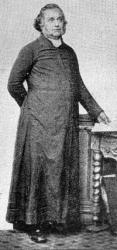
Lewis Hensley

1824 - 1905 Topics: Social Progress Author of "Thy kingdom come, O God" in The Hymnal Hensley, Lewis, M.A., born May, 1824, and educated at Trinity College, Cambridge, where in 1846 he graduated as Senior Wrangler, and first Smith's Prizeman. From 1846 to 1852 he was a Fellow and Assistant Tutor of Trinity College. Taking Holy Orders in 1851, he held successively the Curacy of Upton-with-Chalvey, Bucks; the Vicarage of Ippolyts-with-Great-Wymondly, Hertfordshire, and that of Hitchin, in the same county; Rural Dean, 1867. His works include Household Devotions; Shorter Household Devotions, &c. His hymns appeared in his Hymns for the Sundays after Trinity, London, Bell & Daldy, 1864; and Hymns for the Minor Sundays from Advent to Whitsuntide, London, Bell & Daldy, 1867. His Advent hymn, "Thy Kingdom come, O God," is from the latter of these works. --John Julian, Dictionary of Hymnology (1907) =============== Hensley, L. , p. 511, i., was b. May 20, 1824, and d. suddenly in a railway train, near Great Eyburgh, Norfolk, Aug. 1, 1905. --John Julian, Dictionary of Hymnology, New Supplement (1907)

Samuel Longfellow

1819 - 1892 Topics: Social Progress Author of "Out of the dark, the circling sphere" in The Pilgrim Hymnal Longfellow, Samuel, B. A., brother of the Poet, was born at Portland, Maine, June 18, 1819, and educated at Harvard, where he graduated in Arts in 1839, and in Theology in 1846. On receiving ordination as an Unitarian Minister, he became Pastor at Fall River, Massachusetts, 1848; at Brooklyn, 1853; and at Germantown, Pennsylvania, 1860. In 1846 he edited, with the Rev. S. Johnson (q. v.), A Book of Hymns for Public and Private Devotion. This collection was enlarged and revised in 1848. In 1859 his Vespers was published, and in 1864 the Unitarian Hymns of the Spirit , under the joint editorship of the Rev. S. Johnson and himself. His Life of his brother, the Poet Longfellow, was published in 1886. To the works named he contributed the following hymns:— i. To A Book of Hymns , revised ed., 1848. 1. Beneath the shadow of the Cross. Love. 2. 0 God, thy children gathered here. Ordination. ii. To the Vespers 1859. 3. Again as evening's shadow falls. Evening. 4. Now on land and sea descending. Evening. iii. To the Hymns of the Spirit, 1864. 5. A voice by Jordan's shore. Advent. 6. Father, give Thy benediction. Ordination. 7. Go forth to life, 0 child of earth. Life's Mission. 8. God of ages and of nations. Holy Scriptures. 9. Holy Spirit, Truth divine. The Holy Spirit desired. 10. I look to Thee in every need. Trust in God. 11. In the beginning was the Word. The Word. 12. Love for all, and can it be? Lent. The Prodigal Son. 13. 0 God, in Whom we live and move. God's Law and Love. 14. 0 God, Thou Giver of all good. Prayer for Food. 15. O still in accents sweet and strong. Missions. 16. 0 Thou, Whose liberal sun and rain. Anniversary of Church dedication. 17. One holy Church of God appears. The Church Universal. 18. Out of the dark, the circling sphere. The Outlook. 19. Peace, peace on earth! the heart of man for ever. Peace on Earth. 20. The loving Friend to all who bowed. Jesus of Nazareth. 21. ’Tis winter now, the fallen snow. Winter. Of these, hymn No. 2 was written for the Ordination of E. E. Hale (q. v.), at Worcester, 1846. Several are included in Martineau's Hymns, 1873. Died Oct. 3, 1892. [Rev. F. M. Bird, M.A.] --John Julian, Dictionary of Hymnology (1907), p. 685 =============== Longfellow, S., p. 685, i. Since Mr. Longfellow's death on Oct. 3, 1892, his hymns have been collected by his niece, Miss Alice Longfellow, as Hymns and Verses(Houghton, Mifflin & Co., 1904.) From this work we find many of the hymns signed Anon, in the Index to Longfellow and Johnson's Hymns of the Spirit, 1864, were his; several of these, including E. Osier's "O God unseen, yet ever near," were popular English hymns which he rewrote from his own theological standpoint. These re¬written hymns are very widely used by Unitarians and others. During the last ten years the following additional hymns by S. Long¬fellow have come into common use:— 1. Eternal One, Thou living God. Faith in God. 2. God of the earth, the sky, the sea. God in Nature. 3. God's trumpet wakes the slumbering world. Call to duty. 4. Light of ages and of nations. God in and through all time. 5. Lo, the earth is risen again. Spring. (1876.) 6. Now while we sing our closing psalm. Close of Worship. 7. O Life that maketh all things new. Unity. (1874.) 8. O Thou in Whom we live and move. The Divine Law. 9. The summer days are come again. Summer. From his hymn,"The sweet[bright] June days are come again." 10. Thou Lord of lite, our saving health. In Sickness. (1886.) Of these hymns Nos. 2, 3 appeared in the Hymns of the Spirit, 1864, and all with the dates appended in Hymns and Verses, 1904. --John Julian, Dictionary of Hymnology, New Supplement (1907) ================== http://en.wikipedia.org/wiki/Samuel_Longfellow

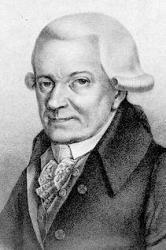
Michael Haydn

1737 - 1806 Person Name: J. Michael Haydn Topics: Social Progress Composer (arr. from) of "GREENLAND" in The Hymnal Johann Michael Haydn Austria 1737-1806. Born at Rohrau, Austria, the son of a wheelwright and town mayor (a very religious man who also played the harp and was a great influence on his sons' religious thinking), and the younger brother of Franz Joseph Haydn, he became a choirboy in his youth at the Cathedral of St. Stephen in Vienna, as did his brother, Joseph, an exceptional singer. For that reason boys both were taken into the church choir. Michael was a brighter student than Joseph, but was expelled from music school when his voice broke at age 17. The brothers remained close all their lives, and Joseph regarded Michael's religious works superior to his own. Michael played harpsichord, violin, and organ, earning a precarious living as a freelance musician in his early years. In 1757 he became kapellmeister to Archbishop, Sigismund of Grosswardein, in Hungary, and in 1762 concertmaster to Archbishop, Hieronymous of Salzburg, where he remained the rest of his life (over 40 years), also assuming the duties of organist at the Church of St. Peter in Salzburg, presided over by the Benedictines. He also taught violin at the court. He married the court singer, Maria Magdalena Lipp in 1768, daughter of the cathedral choir-master, who was a very pious women, and had such an affect on her husband, trending his inertia and slothfulness into wonderful activity. They had one daughter, Aloysia Josepha, in 1770, but she died within a year. He succeeded Wolfgang Amadeus Mozart, an intimate friend, as cathedral organist in 1781. He also taught music to Carl Maria von Weber. His musical reputation was not recognized fully until after World War II. He was a prolific composer of music, considered better than his well-known brother at composing religious works. He produced some 43 symphonies,12 concertos, 21 serenades, 6 quintets, 19 quartets, 10 trio sonatas, 4 due sonatas, 2 solo sonatas, 19 keyboard compositions, 3 ballets, 15 collections of minuets (English and German dances), 15 marches and miscellaneous secular music. He is best known for his religious works (well over 400 pieces), which include 47 antiphons, 5 cantatas, 65 canticles, 130 graduals, 16 hymns, 47 masses, 7 motets, 65 offertories, 7 oratorios, 19 Psalms settings, 2 requiems, and 42 other compositions. He also composed 253 secular vocals of various types. He did not like seeing his works in print, and kept most in manuscript form. He never compiled or cataloged his works, but others did it later, after his death. Lothar Perger catalogued his orchestral works in 1807 and Nikolaus Lang did a biographical sketch in 1808. In 1815 Anton Maria Klafsky cataloged his sacred music. More complete cataloging has been done in the 1980s and 1990s by Charles H Sherman and T Donley Thomas. Several of Michael Haydn's works influenced Mozart. Haydn died at Salzburg, Austria. John Perry

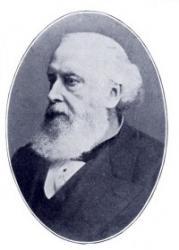
William Henry Monk

1823 - 1889 Person Name: William H. Monk Topics: Social Progress Composer of "UNDE ET MEMORES" in The Hymnal William H. Monk (b. Brompton, London, England, 1823; d. London, 1889) is best known for his music editing of Hymns Ancient and Modern (1861, 1868; 1875, and 1889 editions). He also adapted music from plainsong and added accompaniments for Introits for Use Throughout the Year, a book issued with that famous hymnal. Beginning in his teenage years, Monk held a number of musical positions. He became choirmaster at King's College in London in 1847 and was organist and choirmaster at St. Matthias, Stoke Newington, from 1852 to 1889, where he was influenced by the Oxford Movement. At St. Matthias, Monk also began daily choral services with the choir leading the congregation in music chosen according to the church year, including psalms chanted to plainsong. He composed over fifty hymn tunes and edited The Scottish Hymnal (1872 edition) and Wordsworth's Hymns for the Holy Year (1862) as well as the periodical Parish Choir (1840-1851). Bert Polman

Henry J. Gauntlett

1805 - 1876 Person Name: H. J. Gauntlett Topics: Progress Composer of "UNIVERSITY COLLEGE" in The Church Hymnal Henry J. Gauntlett (b. Wellington, Shropshire, July 9, 1805; d. London, England, February 21, 1876) When he was nine years old, Henry John Gauntlett (b. Wellington, Shropshire, England, 1805; d. Kensington, London, England, 1876) became organist at his father's church in Olney, Buckinghamshire. At his father's insistence he studied law, practicing it until 1844, after which he chose to devote the rest of his life to music. He was an organist in various churches in the London area and became an important figure in the history of British pipe organs. A designer of organs for William Hill's company, Gauntlett extend­ed the organ pedal range and in 1851 took out a patent on electric action for organs. Felix Mendelssohn chose him to play the organ part at the first performance of Elijah in Birmingham, England, in 1846. Gauntlett is said to have composed some ten thousand hymn tunes, most of which have been forgotten. Also a supporter of the use of plainchant in the church, Gauntlett published the Gregorian Hymnal of Matins and Evensong (1844). Bert Polman

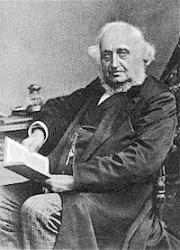
George J. Elvey

1816 - 1893 Person Name: G. J. Elvey Topics: Progress Composer of "DIADEMATA" in The Church Hymnal George Job Elvey (b. Canterbury, England, 1816; d. Windlesham, Surrey, England, 1893) As a young boy, Elvey was a chorister in Canterbury Cathedral. Living and studying with his brother Stephen, he was educated at Oxford and at the Royal Academy of Music. At age nineteen Elvey became organist and master of the boys' choir at St. George Chapel, Windsor, where he remained until his retirement in 1882. He was frequently called upon to provide music for royal ceremonies such as Princess Louise's wedding in 1871 (after which he was knighted). Elvey also composed hymn tunes, anthems, oratorios, and service music. Bert Polman

Henry Thomas Smart

1813 - 1879 Person Name: H. Smart Topics: Progress Composer of "LANCASHIRE" in The Church Hymnal Henry Smart (b. Marylebone, London, England, 1813; d. Hampstead, London, 1879), a capable composer of church music who wrote some very fine hymn tunes (REGENT SQUARE, 354, is the best-known). Smart gave up a career in the legal profession for one in music. Although largely self taught, he became proficient in organ playing and composition, and he was a music teacher and critic. Organist in a number of London churches, including St. Luke's, Old Street (1844-1864), and St. Pancras (1864-1869), Smart was famous for his extemporiza­tions and for his accompaniment of congregational singing. He became completely blind at the age of fifty-two, but his remarkable memory enabled him to continue playing the organ. Fascinated by organs as a youth, Smart designed organs for impor­tant places such as St. Andrew Hall in Glasgow and the Town Hall in Leeds. He composed an opera, oratorios, part-songs, some instrumental music, and many hymn tunes, as well as a large number of works for organ and choir. He edited the Choralebook (1858), the English Presbyterian Psalms and Hymns for Divine Worship (1867), and the Scottish Presbyterian Hymnal (1875). Some of his hymn tunes were first published in Hymns Ancient and Modern (1861). Bert Polman

John Warrington Hatton

1710 - 1793 Person Name: John Hatton, d. 1793 Topics: Kingdom of Christ Progress of Composer of "DUKE STREET" in Hymnal and Liturgies of the Moravian Church John Warrington Hatton (b. Warrington, England, c. 1710; d, St. Helen's, Lancaster, England, 1793) was christened in Warrington, Lancashire, England. He supposedly lived on Duke Street in Lancashire, from where his famous tune name comes. Very little is known about Hatton, but he was most likely a Presbyterian, and the story goes that he was killed in a stagecoach accident. Bert Polman

Conrad Kocher

1786 - 1872 Person Name: Conrad Kocher, 1786-1872 Topics: Kingdom of Christ Progress of Composer of "ELLACOMBE" in Hymnal and Liturgies of the Moravian Church Trained as a teacher, Conrad Kocher (b. Ditzingen, Wurttemberg, Germany, 1786; d. Stuttgart, Germany, 1872) moved to St. Petersburg, Russia, to work as a tutor at the age of seventeen. But his love for the music of Haydn and Mozart impelled him to a career in music. He moved back to Germany in 1811, settled in Stuttgart, and remained there for most of his life. The prestigious Cotta music firm published some of his early compositions and sent him to study music in Italy, where he came under the influence of Palestrina's music. In 1821 Kocher founded the School for Sacred Song in Stuttgart, which popularized four-part singing in the churches of that region. He was organist and choir director at the Stiftskirche in Stuttgart from 1827 to 1865. Kocher wrote a treatise on church music, Die Tonkunst in der Kirche (1823), collected a large number of chorales in Zions Harfe (1855), and composed an oratorio, two operas, and some sonatas. William H. Monk created the current form of DIX by revising and shortening Conrad Kocher's chorale melody for “Treuer Heiland, wir sind hier,” found in Kocher's Stimmen aus dem Reiche Gottes (1838). Bert Polman

John Goss

1800 - 1880 Person Name: Sir John Goss, 1800-1880 Topics: Kingdom of Christ Progress of Composer of "ARTHUR'S SEAT" in Hymnal and Liturgies of the Moravian Church John Goss (b. Fareham, Hampshire, England, 1800; d. London, England, 1880). As a boy Goss was a chorister at the Chapel Royal and later sang in the opera chorus of the Covent Garden Theater. He was a professor of music at the Royal Academy of Music (1827-1874) and organist of St. Paul Cathedral, London (1838-1872); in both positions he exerted significant influence on the reform of British cathedral music. Goss published Parochial Psalmody (1826) and Chants, Ancient and Modern (1841); he edited William Mercer's Church Psalter and Hymn Book (1854). With James Turle he published a two-volume collection of anthems and Anglican service music (1854). Bert Polman

Pages


Export as CSV
It looks like you are using an ad-blocker. Ad revenue helps keep us running. Please consider white-listing Hymnary.org or getting Hymnary Pro to eliminate ads entirely and help support Hymnary.org.