You help make Hymnary.org possible. More than 10 million people from 200+ countries found hymns, liturgical resources and encouragement on Hymnary.org in 2025, including you. Every visit affirms the global impact of this ministry.

If Hymnary has been meaningful to you this year, would you take a moment today to help sustain it? A gift of any size—paired with a note of encouragement if you wish—directly supports the server costs, research work and curation that keep this resource freely available to the world.

Give securely online today, or mail a check to:
Hymnary.org
Calvin University
3201 Burton Street SE
Grand Rapids, MI 49546

Thank you for your partnership, and may the hope of Advent fill your heart.

Person Results

Topics:safety+-+security
In:people

Planning worship? Check out our sister site, ZeteoSearch.org, for 20+ additional resources related to your search.
Showing 11 - 20 of 322Results Per Page: 102050

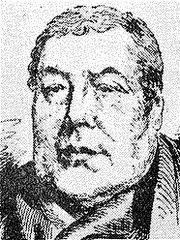
Samuel Webbe

1740 - 1816 Topics: Safety and Comfort Composer of "ALMA" in The Pilgrim Hymnal Samuel Webbe (the elder; b. London, England, 1740; d. London, 1816) Webbe's father died soon after Samuel was born without providing financial security for the family. Thus Webbe received little education and was apprenticed to a cabinet­maker at the age of eleven. However, he was determined to study and taught himself Latin, Greek, Hebrew, French, German, and Italian while working on his apprentice­ship. He also worked as a music copyist and received musical training from Carl Barbant, organist at the Bavarian Embassy. Restricted at this time in England, Roman Catholic worship was freely permitted in the foreign embassies. Because Webbe was Roman Catholic, he became organist at the Portuguese Chapel and later at the Sardinian and Spanish chapels in their respective embassies. He wrote much music for Roman Catholic services and composed hymn tunes, motets, and madrigals. Webbe is considered an outstanding composer of glees and catches, as is evident in his nine published collections of these smaller choral works. He also published A Collection of Sacred Music (c. 1790), A Collection of Masses for Small Choirs (1792), and, with his son Samuel (the younger), Antiphons in Six Books of Anthems (1818). Bert Polman

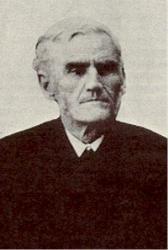
W. H. Havergal

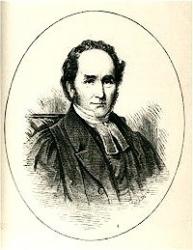
1793 - 1870 Person Name: William H. Havergal Topics: Afflictions Comfort under; Aspirations For Christ; Aspirations For Heaven; Assurance Declared; Assurance Enjoyed; Christ Communion with; Christ Grace and Love of; Christ Preciousness of; Christ Providences of; Christians Blessedness of; Christians Conscious of Safety; Christians Death of; Christians Heirs of Heaven; Christians Saved by Grace; Comfort in Trials; Contentment; Death Comfort In; Death Of Saints; Etermal Life; Faith Confidence of; Faith Walking by; Glory of God In Providence; God Our Guardian; God Our Guide; God Love and Mercy; Gospel Freeness of ; Grace Restoring; Heaven; Immortality; Lord's Supper; Nature An Emblem of Grace; Prayer For Christ's Sake; Preservation; Resurrection; The Righteous Honor and Safety of; Wandering sheep; Walking with God; Worship Grace Needed for Composer of "EVAN" in The Psalter Havergal, William Henry, M.A, son of William Havergal, was born at High Wycombe, Buckinghamshire, 1793, and was educated at St. Edmund's Hall, Oxford (B.A. 1815, M.A. 1819). On taking Holy Orders he became in 1829 Rector of Astley, Worcestershire; in 1842, Rector of St. Nicholas, Worcester; and in 1860, Rector of Shareshill, near Wolverhampton. He was also Hon. Canon in Worcester Cathedral from 1845. He died April 18, 1870. His hymns, about 100 in all, were in many instances written for special services in his own church, and printed as leaflets. Several were included in W. Carus Wilson's Book of General Psalmody, 1840 (2nd ed., 1842); and in Metrical Psalms & Hymns for Singing in Churches, Worcester, Deighton, 1849, commonly known as the Worcester Diocesan Hymn Book, and of which he was the Editor. In Life Echoes, 1883, his hymns are given with those of Miss Havergal. Of those in common use the greater part are in Mercer, and Snepp's Songs of Grace & Glory. Although his hymns are all good, and two or three are excellent, it is not as a hymnwriter but as a musician that Canon Havergal is best known. His musical works and compositions included, in addition to numerous individual hymn tunes and chants, the Gresham Prize Service, 1836; the Gresham Prize Anthem, 1845; Old Church Psalmody, 1849; History of the Old 100th Psalm tune, 1854, &c. He also reprinted Ravenscroft’s Psalter of 1611. His hymns in common use include:— 1. Blessed Jesus, lord and Brother. School Festivals, 1833. Published in Life Echoes, 1883. 2. Brighter than meridian splendour. Christ the glory of His Church. 1830. Published in W. C. Wilson's Book of General Psalms, 1840; the Worcester Psalms & Hymns, 1849, &c. 3. Christians, awake to joy and praise. Christmas Carol, c. 1860. Printed on broadsheet, with music by the author, and sold on behalf of the Lancashire Cotton Distress Fund. 4. Come, Shepherds, come, 'tis just a year. Christmas Carol. 1860. Published in Snepp's Songs of Grace & Glory, 5. For ever and for ever, Lord. Missions, 1866, for the Church Mission Society. Published in Snepp's Songs of Grace & Glory, 1872, and the Life Echoes, 1883. 6. Hallelujah, Lord, our voices. Sunday. 1828. Published in W. C. Wilson's Book of General Psalms, 1840; the Worcester Psalms & Hymns, 1849; Life Echoes, 1883, &c. 7. Heralds of the Lord of glory. Missions. First sung in Astley Church, Sep. 23, 1827. Published in Miss Havergal's Starlight through the Shadows, 1880; Snepp's Songs of Grace & Glory, 1872, &c. 8. Hosanna, raise the pealing hymn. Praise to Christ, 1833, and first sung in Astley Church, June 9, 1833. Published in W. C. Wilson's Book of General Psalmody, 1840; the Worcester Psalms & Hymns, 1849; Life Echoes 1883, &c. 9. How vast the field of souls. Missions. 1858. Printed for Shareshill Church Miss. Anniversary, 1863, and published in Snepp's Songs of Grace & Glory, 1872, and the Life Echoes, 1883. 10. In doubt and dread dismay. Missions. Written in 1837, and published in W. C. Wilson's Book of General Psalmody, 1840; the Worcester Psalms & Hymns, 1849, &c. 11. Jerusalem the golden, The home of saints shall be. Heaven. Published in Life Echoes, 1883. 12. My times are in Thy hand, Their best, &c. 1860. Published in Snepp's Songs of Grace & Glory, 1872, the Records of the author's life and work, and Life Echoes, 1883. The editor of the Records says (p. 159) "this hymn has been much appreciated, and well illustrates the devotional and cheerful spirit of the writer." 13. No dawn of holy light. Sunday. 1825. Printed in 1831 on a leaflet, and published in W. C. Wilson's Book of General Psalmody, 1840; the Worcester Psalms & Hymns, 1849; Life Echoes, 1883, &c. 14. Our faithful God hath sent us. Harvest. Written at Shareshill in 1863, for a Harvest Festival. Published in Snepp's Songs of Grace & Glory 1872, and Life Echoes, 1883. 15. Shout, 0 earth! from silence waking. Praise to Jesus for Redemption. 1841. Published in the Worcester Psalms & Hymns, 1849; Snepp's Songs of Grace & Glory, 1872, &c. 16. So happy all the day. Christmas Carol, c. 1834. Published in Snepp's Songs of Grace & Glory, 1872. 17. Soon the trumpet of salvation. Missions. 1826. Published in Snepp's Songs of Grace & Glory, 1872. 18. To praise our Shepherd's [Saviour's] care. The Good Shepherd. Written after witnessing the death of Elizabeth Edwards, aged 12, of St. Nicholas, Worcester, and printed as a leaflet. Published in W. C. Wilson's Book of General Psalmody, 1840; the Worcester Psalms & Hymns, 1849; Life Echoes, &c, 1883. The author also published a Memoir of the child. 19. Widely 'midst the slumbering nations. Missions. 1828. Published in the Worcester Psalms & Hymns, 1849; Snepp's Songs of Grace & Glory, 1872, &c. In addition to these hymns, his carols, "How grand, and how bright," "Our festal morn is come," and others are annotated under their respective first lines. Most of these carols and hymns were reprinted in Christmas Carols & Sacred Songs, Chiefly by the Rev. W. H. Havergal, London, Nisbet, 1869. --John Julian, Dictionary of Hymnology (1907) ===================== Havergal, W. H., p. 498, i. Other hymns are: — 1. Lord, if judgments now are waking. Second Advent. Published in W. Carus Wilson's Book of General Psalmody, 1840; in Kennedy, 1863, &c. 2. Remember, Lord, Thy word of old displayed. Missions. "Composed for a special prayer-meeting for missionary labourers, held in the author's schoolroom, in the parish of St. Nicholas's, Worcester." (W. F. Stevenson's Hymns for Church and Home, 1873, where the original text is also given.) It must be noted that No. 17, at p. 498, ii., "Soon the trumpet of salvation," was first published in A Collection of Original Airs adapted to Hymns, &c, 1826. --John Julian, Dictionary of Hymnology, Appendix, Part II (1907)

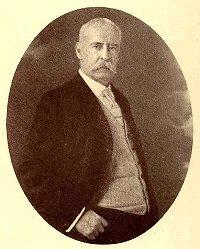
William B. Bradbury

1816 - 1868 Person Name: Wm. B. Bradbury Topics: Familiar Hymns; Guidance; Prayer; Protection; Safety; Shepherd Composer of "BRADBURY" in Sunday School Voices William Batchelder Bradbury USA 1816-1868. Born at York, ME, he was raised on his father's farm, with rainy days spent in a shoe-shop, the custom in those days. He loved music and spent spare hours practicing any music he could find. In 1830 the family moved to Boston, where he first saw and heard an organ and piano, and other instruments. He became an organist at 15. He attended Dr. Lowell Mason's singing classes, and later sang in the Bowdoin Street church choir. Dr. Mason became a good friend. He made $100/yr playing the organ, and was still in Dr. Mason's choir. Dr. Mason gave him a chance to teach singing in Machias, ME, which he accepted. He returned to Boston the following year to marry Adra Esther Fessenden in 1838, then relocated to Saint John, New Brunswick. Where his efforts were not much appreciated, so he returned to Boston. He was offered charge of music and organ at the First Baptist Church of Brooklyn. That led to similar work at the Baptist Tabernacle, New York City, where he also started a singing class. That started singing schools in various parts of the city, and eventually resulted in music festivals, held at the Broadway Tabernacle, a prominent city event. He conducted a 1000 children choir there, which resulted in music being taught as regular study in public schools of the city. He began writing music and publishing it. In 1847 he went with his wife to Europe to study with some of the music masters in London and also Germany. He attended Mendelssohn funeral while there. He went to Switzerland before returning to the states, and upon returning, commenced teaching, conducting conventions, composing, and editing music books. In 1851, with his brother, Edward, he began manufacturring Bradbury pianos, which became popular. Also, he had a small office in one of his warehouses in New York and often went there to spend time in private devotions. As a professor, he edited 59 books of sacred and secular music, much of which he wrote. He attended the Presbyterian church in Bloomfield, NJ, for many years later in life. He contracted tuberculosis the last two years of his life. John Perry

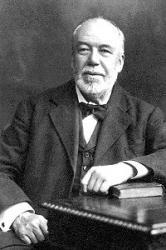
W. O. Cushing

1823 - 1902 Person Name: William O. Cushing (1823-1902) Topics: La Vida Christian Confianza y seguridad; The Christian Life Trust and safety Author of "¡Oh!, salvo en la Roca" in Himnario Adventista del Séptimo Día Rv William Orcutt Cushing USA 1823-1902. Born at Hingham, MA, he read the Bible as a teenager and became a follower of the Orthodox Christian school of thought. At age 18 he decided to become a minister, following in his parents theology. His first pastorate was at the Christian Church, Searsburg, NY. He married Hena Proper in 1854. She was a great help to him throughout his ministry. He ministered at several NY locations over the years, including Searsburg, Auburn, Brookley, Buffalo, and Sparta. Hena died in 1870, and he returned to Searsburg, again serving as pastor there. Working diligently with the Sunday school, he was dearly beloved by young and old. Soon after, he developed a creeping paralysis that caused him to lose his voice. He retired from ministry after 27 years. He once gave all his savings ($1000) to help a blind girl receive an education. He was instrumental in the erection of the Seminary at Starkey, NY. He gave material aid to the school for the blind at Batavia. He was mindful of the suffering of others, but oblivious to his own. After retiring, he asked God to give him something to do. He discovered he had a talent for writing and kept busy doing that. He authored about 300 hymn lyrics. The last 13 years of his life he lived with Rev. and Mrs. E. E Curtis at Lisbon Center, NY, and joined with the Wesleyan Methodist Church there. He died at Searsburg, NY. John Perry ================== Cushing, William Orcutt , born at Hingham, Massachusetts, Dec. 31, 1823, is the author of the following hymns which appear in I. D. Sankey's Sacred Songs and Solos:— 1. Beautiful valley of Eden. Heaven. 2. Down in the valley with my Saviour I would go. Trusting to Jesus. 3. Fair is the morning land. Heaven. 4. I am resting so sweetly in Jesus now. Rest and Peace in Jesus. 5. I have heard of a land far away. Heaven. 6. O safe to the Rock that is higher than I. The Rock of Ages. 1. Ring the bells of heaven, there is joy today. Heavenly Joy over repenting Sinners. 8. We are watching, we are waiting. Second Advent anticipated. Mr. Cushing has also several additional hymns in some American Sunday School collections, and collections of Sacred Songs. -- John Julian, Dictionary of Hymnology ================= Cushing, W. 0., p. 274, i. Other hymns are:— 1. O I love to think of Jesus . Thinking of Jesus. 2. There is joy in heaven! there is joy to-day. Angels joy over returning Sinners. 3. When He cometh, when He cometh. Advent. --John Julian, Dictionary of Hymnology, Appendix, Part II (1907)

George Nelson Allen

1812 - 1877 Person Name: George N. Allen Topics: Aspirations For Heaven; Assurance Declared; Assurance Enjoyed; Christ Burial of; Christ Communion with; Christ Confessing; Christ Ressurection of; Christ The Saviour; Christians Believers; Christians Christ the Life of; Christians Conscious of Safety; Christians Death of; Christians Fellowship of; Christians Heirs of Heaven; Etermal Life; Faith Act of; Faith Blessedness of; God Omnipotence of; God Source of All Good; Heaven; Immortality; Joy Divinely Bestowed; Joy Reasons for; Praise For Spiritual Blessings; Providence of God Over Saints; Resurrection; The Christian's Reward Composer of "MAITLAND" in The Psalter George Nelson Allen (1812-1871), studied at Western Reserve Academy in Hudson, Oh OH and with Lowell Mason in Boston. Allen gave a strong musical foundation to Oberlin College in its earliest years; in addition to being Professor of Music he also served as Professor of Geology and Natural History, Secretary and Treasurer. In 1835 he compiled The Oberlin Social and Sabbath Hymn Book, in which appeared his most well known tune MAITLAND (also known as CROSS AND CROWN or WESTERN MELODY) with the text "Must Jesus bear the cross alone?". This was adapted by Thomas A. Dorsey in 1938 for his hymn "Precious Lord, take my hand". hand." He composed anthems and wrote some additional music for Isaac Woodbury's Oratorio "Absalom." He compiled a small 3" x 4" hymnal that every student should keep in his pocket that went through several printings. Mary Louise VanDyke

James Walch

1837 - 1901 Topics: Christian Living Safety and Peace Composer of "EAGLEY" in The Sanctuary Hymnal, published by Order of the General Conference of the United Brethren in Christ James Walch was a musician and composer, born near Bolton, Lancashire, England in 1837. He spent his early life in the town and was organist in several churches there, including the parish church of St George’s. From 1870-1877, he was conductor for the Bolton Philharmonic Society. He also composed at least four published hymn tunes, the best known of which is called “Tidings”. Written in 1875, it’s usually used as the tune to a hymn called “O Zion Haste”. James Walch was a musical instrument dealer by trade, and moved to Barrow-in-Furness in 1877. He later moved to Llandudno Junction in North Wales, where he died in August 1901 and was buried locally. His wife later donated money to pay for the organs in two local churches, St Paul's Llandudno and All Saints Deganwy, in his memory. Three decades later, an article in the London Gazette reported on a dispute arising from his will, and mentioned that he had a son, Harry West Walch, who was a pianist and lived in Hereford. St Paul's Church, Llandudno newsletter; used by permission of Christ Dearden (Walch's wife paid for the organ at St. Paul's Church)

Jeremiah Clarke

1669 - 1707 Person Name: Jeremiah Clark Topics: Christian Living Safety and Peace Composer of "ST. MAGNUS" in The Sanctuary Hymnal, published by Order of the General Conference of the United Brethren in Christ

Russell Kelso Carter

1849 - 1928 Person Name: R. Kelso Carter (1849-1928) Topics: La Vida Christian Confianza y seguridad; The Christian Life Trust and safety Author of "Todas las promesas" in Himnario Adventista del Séptimo Día Russel Kelso Carter was a professor in the Pennsylvania Military College of Chester. While there he was licensed to preach by the Methodist Episcopal Church. He became very active in leading camp meetings and revivals. After failing health forced him to abandon this work, he studied and became a medical doctor as well as a writer. He wrote novels as well as hymns. Dianne Shapiro, from "The Singers and Their Songs: sketches of living gospel hymn writers" by Charles Hutchinson Gabriel (Chicago: The Rodeheaver Company, 1916)

S. J. Vail

1818 - 1884 Person Name: Silas J. Vail Topics: Access to God; Aspirations For Church Priveleges; Aspirations For Heaven; Benevolence; Character Tests of; Christ Communion with; Christians Duties of; Christians Fellowship of; Christians Graces of; Fidelity; Lord's Supper; The Christian's Reward; The Righteous Character of; The Righteous Honor and Safety of; Sin Hindrance to Communion with God; The Wicked Separation from; Worship Sincerity in Composer of "HELEN" in The Psalter In his youth Silas Jones Vail learned the hatter's trade at Danbury, Ct. While still a young man, he went to New York and took employment in the fashionable hat store of William H. Beebe. Later he established himself in business as a hatter at 118 Fulton Street, where he was for many years successful. But the conditions of trade changed, and he could not change with them. After his failure in 1869 or 1870 he devoted his entire time and attention to music. He was the writer of much popular music for use in churches and Sunday schools. Pieces of music entitled "Scatter Seeds of Kindness," "Gates Ajar," "Close to Thee," "We Shall Sleep, but not Forever," and "Nothing but Leaves" were known to all church attendants twenty years ago. Fanny Crosby, the blind authoress, wrote expressly for him many of the verses he set to music. --Vail, Henry H. (Henry Hobart). Genealogy of some of the Vail family descended from Jeremiah Vail at Salem, Mass., 1639, p. 234.

A. H. Mann

1850 - 1929 Person Name: Dr. A. H. Mann, 1850- Topics: Christ Heavenly Lamb; Christ Hiding Place; Christ Lamb of God; Christ Refuge; Christ Rock of Ages; Sun Of Righteousness; Rock Of Ages; Safety in Christ; Lamb Christ, the Heavenly ; Lamb Jesus, the; Refuge Christ, our ; Hiding Place Composer of "ANGELS' STORY" in Methodist Hymn and Tune Book Arthur Henry ‘Daddy’ Mann MusB MusD United Kingdom 1850-1929. Born at Norwich, Norfolk, England, he graduated from New College, Oxford. He married Sarah Ransford, and they had five children: Sarah, Francis, Arthur, John, and Mary. Arthur died in infancy. Mann was a chorister and assistant organist at Norwich Cathedral, then, after short stints playing the organ at St Peter’s, Wolverhampton (1870-71); St. Michael’s Tettenhall Parish Church (1871-75); and Beverley Minster (1875-76); he became organist at King’s College Chapel, Cambridge (1876-1929), Cambridge University organist (1897-1929), and music master and organist at the Leys School, Cambridge (1894-1922). In addition to composing an oratorio and some hymn tunes, he was music editor of the Church of England Hymnal (1894). In 1918 he directed the music and first service of “Nine lessons & carols” at King’s College Chapel. He was an arranger, author, composer, and editor. His wife, Sarah, died in 1918. He died at Cambridge, England. John Perry

Pages


Export as CSV
It looks like you are using an ad-blocker. Ad revenue helps keep us running. Please consider white-listing Hymnary.org or getting Hymnary Pro to eliminate ads entirely and help support Hymnary.org.