

 My Starred Hymns
 My FlexScores
 My Hymnals
 My Purchased Files
Planning worship?
Check out our sister site, ZeteoSearch.org,
for 20+ additional resources related to your search.
- |
User Links
Person Results
Washington Gladden

1836 - 1918 Topics: Trinity 14 Collect; Trinity 22 Old Testament Author of "O Master, let me walk with thee" in Magnify the Lord Washington Gladden (1836-1918) was called to the First Congregational Church in Columbus, OH in 1882 and remained there for 32 years. In 1883-84 he was known for his success in fighting the corrupt Tweed Ring, for arbitrating the Telegraphers' Strike and the Hocking Valley Coal Strike. He attacked John D. Rockefeller, Sr. for giving $100,000 of "tainted money" to the Congregational Church's Foreign Missions program. Throughout his ministry he emphasized applying the gospel to life in America. He wrote "O Master, let me walk with thee" in 1879.
Mary Louise VanDyke
===================
Gladden, Washington, was born at Pottsgrove, Pennsylvania, Feb. 11, 1836; was educated at Williams College: and entered the Congregational Ministry. He was for some time editor of the New York Independent, and of the Sunday Afternoon. In the Sunday Afternoon, his hymn, "O Master, let me walk with Thee" (Walking with God), appeared in 3 stanzas of 8 lines, in March 1879. Of these stanzas i. and iii. are in Laudes Domini, 1884, and others.
--John Julian, Dictionary of Hymnology, Appendix, Part II (1907)
==================
Gladden, W., p. 1565, ii. Dr. Gladden has been Pastor of the First Congregational Church, Columbus, Ohio, since 1882. His hymn-writing has not been extensive. The most popular of his hymns is "0 Master, let me walk with Thee," noted on p. 1565, ii. It has come into somewhat extensive use during the last ten years. Additional hymns in common use include:—
1. Behold a Sower from afar. [The Kingdom of God.] In the Boston Pilgrim Hymnal, 1904, this is dated 1897.
2. Forgive, 0 Lord, the doubts that break Thy promises to me. [Doubting repented of.] Dated 1879, in The Pilgrim Hymnal, 1904.
--John Julian, Dictionary of Hymnology, New Supplement (1907)
Washington Gladden
Wilhelm Erasmus Arends
1677 - 1721 Person Name: W. E. Arends, 1677-1721 Topics: Trinity 21 Author of "Rise! To Arms! With Prayer Employ You" in Evangelical Lutheran Hymnary Arends, Wilhelm Erasmus, son of E. F. Arnds, pastor at Langenstein, near Halberstadt, was born at Langenstein, Feb. 5,1677. He became, in 1707, pastor at Crottorf, near Halberstadt, and in 1718, pastor of the church of St. Peter and St. Paul in Halberstadt. He died at the latter place, May 16,1721 (Koch, iv. 389; Allg. Deutsche Biog., i. 516; manuscript from Pastor Spierling, Halberstadt, and Pastor Schafft, Langenstein). He is said to have contributed three hymns to pt. ii., 1714, of Freylinghausen's Gesang-Buch Of these Nos. 118, 303 are ascribed to him at p. 3 of the Grischow-Kirchner Nachricht, 1771, to Freylinghausen's Gesang-Buch, while the other is left anonymous. It is:—
Rüstet euch ihr Christenleute. [Christian Warfare.] First published as No. 360 in 1714 as above, in 4 stanzas of 11 lines. Dr. Jacobs of Wernigerode informs me that Count Christian Ernst of Wernigerode (d. 1771), a well-known German hymnologist, ascribed it to Arends in a marked copy of the 1741 ed. of Freylinghausen's Gesang-Buch. Koch styles it "a call to arms for spiritual conflict and victory." Included in many later hymnbooks, and recently as No. 675 in the Berlin Geistliche Liedersegan, ed. 1863.
Translation in common use:—
Christians, prayer may well employ you. A full and good translation contributed by J. M. Sloan as No. 289 to Wilson's Service of Praise, 1865. [Rev. James Mearns, M.A.]
- John Julian, Dictionary of Hymnology (1907)
Wilhelm Erasmus Arends
Aemilie Juliane, Gräfin von Schwarzburg Rudolstadt

1637 - 1706 Person Name: Emilia Juliana, Countess of Schwarzburg-Rudolstadt Topics: Sixteenth Sunday after Trinity Author of "Who knows how near my end may be?" in Church Book Emilie Juliane was daughter of Count Albert Friedrich of Barby and Mühlingen (on the Elbe, near its junction with the Saale). During the Thirty Years' war her father and family had to seek refuge in the Heidecksburg, the castle of his uncle, Count Ludwig Günther of Schwarzburg Rudolstadt, and Emilie was born at the Heidecksburg, Aug. 16, 1637. After the death of her father (1641) and mother (1642), she was adopted by her mother's sister (who was her godmother, and had become the wife of Count Ludwig Günther), and was educated at Rudolstadt with her cousins, under the care of Dr. Ahasuerus Fritsch, and other tutors. She became the wife of her cousin, Albert Anton, July 7, 1665, and died at Rudolstadt, Dec. 3, 1706 (Koch, iv. 56-63; Allg. Deutsche Biog, i. 127; Pasig's Introduction; Bode, pp. 63-64, &c).
She was the most productive of German female hymn-writers, some 600 being attributed to her. Her early education in music and in poetry, and the influence of the kindred spirits of her cousin Ludamilia Elizabeth and of Dr. Ahasuerus Fritsch, no doubt fostered and developed her gifts. Her hymns, which are full of deep and child-like love to the Lamb of God, the Bridegroom of the Soul, partake too largely of the character of revelations of her inner life, and of reflections in verse, “improving" the events of her daily life, to be suited for Church use. A considerable number did, however, pass into the hymn-books, and the first here noted is a hymn of the first rank. Of those published in her lifetime the most appeared in her devotional works. (1) Geistliche Lieder und Gebete vor und nach Erlangung gottl Ehesegens, Rudolstadt, 1683. (2) Kühlwasser in grosser Hitze des Creutzes, Rudolstadt, 1685. (3) Tägliches Morgen- Mittags- und Abend-Opffer, Rudolstadt, 1685 (2nd ed., enlarged, 1699). Others appeared in the editions of the Rudolstadt Gesang-Buch, 1682-1704. After her death they appeared, collected, under the title of Der Freundin des Lammes Geistlicher Brautschmuck, pt. i., 1714, and enlarged 1742; pt. ii. 1742; pt. iii. 1770; a number of hymns by other authors, which the editors had found transcribed in the Countess's handwriting, being included by mistake. A selection of 108 of her Geistliche Lieder, ed. with an introduction, biographical and critical, by Dr. Pasig, appeared at Halle, 1855.
Three have passed into English, viz.:—
i. Wer weiss wie nahe mir mein Ende. For the Dying. This beautiful hymn was in last century the subject of an unpleasant controversy. It 1st appeared in the Appendix of 1688 to the Rudolstadt Gesang-Buch, 1682; and, like all the other hymns in that collection, it was given without an author's name. It at once passed into other collections, generally as anonymous, but sometimes under the name of the Countess. In the Schwartzburgische Denhmahl einer Christ-Gräflichen Lammes-Freundin, 1707, she was expressly named as author. On this G. M. Pfefferkorn (q.v.) claimed it as his own. The resulting controversy is given in detail in Wetzel, i. 4-26, ii. 294-307; iii. 156-191, and his A. Hymns i. 9-10, ii. 115-117; in Fischer, ii. 365-369; in Pasig's Introduction, xxiii.-xxxi.; and in Koch, viii. 637-639.
The translations in common use are:—
1. Who knows how near my life's expended, omitting stanzas ix., x., in Dr. H. Mill's Horae Germanica, 1845 (1856, p. 245). His translations of stanzas i., vi.-viii. are included as No. 982 in the American Lutheran General Synod's Hymn Book, 1850-52, and as No. 430 in the Ohio Lutheran Hymnal, 1880.
2. Who knows how near my end may be! Time speeds away, a good and full translation by Miss Winkworth, in the 2nd Series of her Lyra Germanica, 1858, p. 204, and then as No. 187 in her Chorale Book for England, 1863. In the Pennsylvania Lutheran Church Book, 1868, stanzas i., vi., xi., xii., were included as No. 546.
Other translations are: (1) "Who knows how soon my end may be," by Dr. G. Walker, I860, p. 97; (2) "Who knows how near my end may be? Time," &c, by E. Massie, 1867, p. 155.
In addition the following have been translation, but are not in English common use:—
ii. "Herr! mein Gott! lehre mich!" Evening, in No. iii., 1685, p. 30. iii. "Jesu Güte hat kein Ende." Morning, in No. ii., 1685, p. 228. Both translations are by H. J. Buckoll, 1842, p. 104. [Rev. James Mearns, M.A.]
-- Excerpts from John Julian, Dictionary of Hymnology (1907)
=====================
Emilie Juliane , p. 330, i. The title of her 1683 book begins Geistliches Weiber-Aqua-Vit [ VVolfenbüttel Library].
--John Julian, Dictionary of Hymnology, Appendix, Part II (1907)
Aemilie Juliane, Gräfin von Schwarzburg Rudolstadt
Frank Mason North
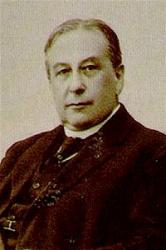
1850 - 1935 Topics: Trinity 1 Gospel; Trinity 13 Gospel; Trinity 14 Old Testament; Trinity 17 Gospel; Trinity 24 Gospel Author of "Where cross the crowded ways of life" in Magnify the Lord North, Frank Mason, D.D., b. at New York, Dec. 3, 1850, graduated at Wesleyan University 1872, and entered the ministry of the Methodist Episcopal Church 1872. In 1892 he became Correspondence Secretary of the New York City Church Extension and Missionary Society, and is now (1905) editor of The Christian City. His hymns in common use include:—
1. Jesus, the calm that fills my breast. [Peace.] In The Plymouth Hymnal,1894; Sursum Corda, 1898; The Methodist Hymnal, 1905, &c.
2. When cross the crowded ways of life. [City Missions.] In The Methodist Hymnal, 1905. [Rev. L. F. Benson, D.D.]
--John Julian, Dictionary of Hymnology, New Supplement (1907)
=================
North, Frank Mason, D.D. (December 3, 1850--December 17, 1935). The Appendix Index reference, p.1607 in Julian, to Dr. North is to John Post Attwater who used "Frank North" as his nom de plume. In addition to the information included in the short biographical sketch at p.1677 it should be added that Dr. North continued his studies at Wesleyan University, advancing to the M.A. degree in 1875, later being honored by that institution's D.D., 1894, and L.L.D., 1918. He was a member of the New York East Conference of the Methodist Episcopal Church and served several pastorates in New York State and City as well as one at Middletown, Connecticut, 1887-1892. During the years 1892-1912, while Corresponding Secretary of the New York City Extension and Missionary Society and the editor of The Christian City, he was also Corresponding Secretary of the National City Evangelical Union of the Methodist Episcopal Church. From 1912 to 1924 he was the Secretary of the Board of Foreign Missions of his church and through these years he served as Chairman of its Executive Committee. He was also Secretary, Chairman of the Executive Committee, and President of the Federal Council of the Churches of Christ in America. It was largely through his efforts and influence that the Federal Council was organized.
Trustee and member of governing boards of numerous institutions in the United States, China, and Japan, among the additional honors which came to him were Chevalier Legion of Honor and "Officer de l'Instruction Publique," France; Officer of the Royal Order of George I, Greece. He was one of the great Protestant leaders of his generation. The leading article in The Hymn, 30 April 1950, was an excellent appreciation of Dr. North and his work.
Sources: Handbooks of various hymnals; Who Was Who I; Foote, Henry Wilder, Three Centuries of American Hymnody; Ninde, Edward S., Story of the American Hymn; Bailey, ALbert E., The Gospel in Hymns; Pratt, John Barnes, Present Day Hymns; correspondence.
--Robert G. McCutchan, DNAH Archives
Frank Mason North
Samuel Francis Smith
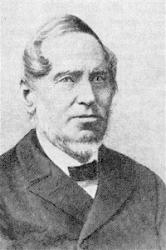
1808 - 1895 Person Name: Samuel Francis Smith (1808-1895) Topics: Trinity 10 Epistle Author of "Grafted in Christ, the living Vine" in Magnify the Lord Smith, Samuel Francis, D.D., was born in Boston, U.S.A., Oct. 21, 1808, and graduated in arts at Harvard, and in theology at Andover. He entered the Baptist ministry in 1832, and became the same year editor of the Baptist Missionary Magazine. He also contributed to the Encyclopaedia Americana. From 1834 to 1842 he was pastor at Waterville, Maine, and Professor of Modern Languages in Waterville College. In 1842 he removed to Newton, Massachusetts, where he remained until 1854, when he became the editor of the publications of the Baptist Missionary Union. With Baron Stow he prepared the Baptist collection known as The Psalmist, published in 1843, to which he contributed several hymns. The Psalmist is the most creditable and influential of the American Baptist collections to the present day. Dr. Smith also published Lyric Gems, 1854, Rock of Ages, 1870, &c. A large number of his hymns are in use in America, and several have passed into some of the English collections. Taking his hymns in common use in alphabetical order, we have the following:—
1. And now the solemn deed is done. Ordination. Given in The Psalmist, 1843, No. 954. In Dr. Hatfield's Church Hymn Book, N. Y., 1872, it is altered to "The solemn service now is done."
2. As flows the rapid river. Life Passing Away. In Christian Psalmody, 1833, No. 33; the Hymns for the Vestry and Fireside, Boston, 1841; and The Psalmist, 1843, No. 1059. Found in a few English hymn-books, and in Lyra Sacra Americana, 1868.
3. Auspicious morning, hail. American National Anniversary. Written for July 4th, 1841, and published in The Psalmist, 1843, No. 1007.
4. Beyond where Cedron's waters flow. Gethsemane. In L. Bacon's Appendix, 1833; the Psalmist, 1843, No. 220, and later collections.
5. Blest is the hour when cares depart. Divine Worship. In The Psalmist, 1843, No. 947, and others.
6. Constrained by love we follow where. Holy Baptism. Appeared in the Baptist edition of the Plymouth Hymn Book, 1857.
7. Down to the sacred wave. Holy Baptism. Contributed to Winchell's Additional Hymns added to his Collection of 1817, in 1832, No. 510; repeated in The Psalmist, 1843, No. 818, and in several collections. Also in Lyra Sacra Americana, 1868.
8. Hail! ye days of solemn meeting. Public Worship. An altered form of No. 26 below, in Spurgeon's Our Own Hymn Book, 1866, as an "American Hymn, 1840."
9. How blest the hour when first we gave. Holy Baptism. Appeared in the Baptist edition of thePlymouth Hymn Book, 1857, No. 1468.
10. How calmly wakes the hallowed morn. Holy Baptism. Given in The Psalmist, 1843, No. 810, in later collections, and in Lyra Sacra Americana, 1868.
11. Jesus, Thou hast freely saved us. Salvation. In Winchell's Additional Hymns, 1832, No. 503, and others.
12. Meekly in Jordan's Holy Stream. Holy Baptism. Contributed to The Psalmist, 1843, No. 808.
13. My country, 'tis of thee. National Hymn. "Written in 1832, and first sung at a children's Fourth of July celebration in Park Street church, Boston." Included in The Psalmist, 1843, No. 1000, and found in a large number of American hymn-books, but not in use in Great Britain. It is one of the most popular of Dr. Smith's compositions. Text, with note in Lyra Sacra Americana, 1868.
14. 0 not my own these verdant hills. Bought with a Price. Appeared in Nason's Congregational Hymn Book, 1857, and given inLaudes Domini, 1884.
15. Onward speed thy conquering flight. Missions. Appeared in The Psalmist, 1843, No. 892, and is found in several modern collections in Great Britain and America. Also in Lyra Sac. Americana, 1868.
16. Planted in Christ, the living Vine. Christian Fellowship; or, For Unity. Given in The Psalmist, 1843, No. 929, inLyra Sacra Americana, 1868, and several hymn-books. Of the hymns contributed by Dr. Smith to The Psalmist this is the best, and one of the most popular.
17. Remember thy Creator. Youthful Piety Enforced. In Christian Psalmody, 1832, No. 32; the Hymns for the Vestry and Fireside, 1841; The Psalmist, 1843, No. 778; Lyra Sac. Americana, 1868, and other collections.
18. Sister, thou wast mild and lovely. Death and Burial. Written on the death of Miss J. M. C. of Mount Vernon School, Boston, July 13,1833, and published in The Psalmist, 1843, No. 1096.
19. Softly fades the twilight ray. Sunday Evening. Written in 1832, and included in The Psalmist, 1843, No. 56. Also in Lyra Sacra Americana, and several hymn-books.
20. Spirit of holiness, descend. Whitsuntide. Appeared in the Hymns for the Vestry and Fireside, 1841, No. 295, and again in The Psalmist, 1843, No. 384. In the Unitarian Hymns for the Church of Christ, Boston, 1853. St. ii., iii., iv. were given as "Spirit of God, Thy churches wait." This form of the text and the original are both in modern hymn-books.
21. Spirit of peace and holiness. Institution of a Minister. Appeared in The Psalmist, 1843, No. 953, and Hatfield's Church Hymn Book, 1872.
22. The morning light is breaking. Missions. Written in 1832, and included in Hastings's Spiritual Songs, 1832-33, No. 253; and The Psalmist, 1843, No. 912. This hymn is very popular and has been translated into several languages. Dr. Smith says of it that “it has been a great favourite at missionary gatherings, and I have myself heard it sung in five or six different languages in Europe and Asia. It is a favourite with the Burmans, Karens, and Telegus in Asia, from whose lips I have heard it repeatedly.”
23. The Prince of Salvation in triumph is riding. Missions. Given in Hastings and Mason's Spiritual Songs, 1832-33, No. 274; The Psalmist, 1843, and later collections.
24. Tis done, the [important] solemn act is done. Ordination. Appeared in The Psalmist 1843, No. 951, and later hymn-books.
25. Today the Saviour calls. Invitation. First sketch by Dr. Smith, the revised text, as in Hastings and Mason's Spiritual Songs, No. 176, and The Psalmist, No. 453, by Dr. T. Hastings (p. 495, i. 19).
26. Welcome, days of solemn meeting. Special Devotional Services. Written in 1834, and given in Dr. Hatfield's Church Hymn Book, 1872. See No. 8.
27. When shall we meet again ? Parting. This is a cento. The first stanza is from Alaric A. Watts's Poetical Sketches, &c, 1822, p. 158 ; and st. ii.-iv. are by Dr. Smith. In this form it was published in L. Bacon's Supplement to Dwight, 1833, No. 489. It is in several American hymn-books; and also the English Baptist Psalms & Hymns, 1858, &c.
28. When the harvest is past and the summer is gone. Close of Worship. Contributed to Hastings and Mason's Spiritual Songs, 1831, No. 244; and repeated in the Fuller and Jeter Supplement to The Psalmist, 1847, No. 22, and later collections.
29. When thy mortal life is fled. The Judgment. Contributed to Winchell's Additional Hymns, 1832, No. 379, and repeated in The Psalmist, 1843, No. 455, and later hymn-books. Also in Lyra Sacra Americana, 1868.
30. While in this sacred rite of Thine. Holy Baptism. Appeared in The Psalmist, 1843, No. 803: Lyra Sacra Americana, 1868, &c.
31. With willing hearts we tread. Holy Baptism. In The Psalmist, 1843, No. 798; and again in the Baptist Praise Book, 1871.
32. Yes, my native land, I love thee. A Missionary's Farewell. Contributed to Winchell's Additional Hymns, 1832, No. 445, and found in later collections. Also in Lyra Sacra Americana, 1868. [Rev. F. M. Bird, M.A.]
--John Julian, Dictionary of Hymnology (1907)
Samuel Francis Smith
Job Hupton
1762 - 1849 Person Name: J. Hupton (1762-1849) Topics: Trinity Sunday The Trinity Author of "Alleluia! raise the anthem" in Hymns for Today's Church (2nd ed.) Hupton, Job, was born in 1762, at a small village near Burton-on-Trent. He was brought up to work at a forge, but after his conversion through the preaching of the Rev. John Bradford, one of Lady Huntingdon's ministers, whom he heard at Walsal, he began to preach; and after a few months at Trevecca College, was himself employed by Lady Huntingdon for some years as one of her itinerating ministers. Having changed his views on the subject of Baptism, he became, in 1794, pastor of the Baptist church at Claxton, in Norfolk, where he laboured with much success for many years. He died Oct. 19, 1849.
Hupton wrote much both in prose and verse, his compositions appearing in the Gospel Magazine under the signatures of “Ebenezer," "Eliakini, and "J. H—n." His prose writings were collected and published in 1843, under the title The Truth as it is in Jesus. In 1861, D. Sedgwick reprinted his Hymns & Spiritual Poems, with a brief memoir.
Of his 22 hymns three only are in common use:—
1. Come ye saints and raise an anthem. Praise.
2. Glorious, high, and lofty One. The Dominion of God. In Gospel Magazine, June, 1806.
3. Jesus, Omnipotent to save. Lent.
The first of these, "Come ye," &c. (q.v.), in its altered form by Dr. Neale, is in extensive use, the rest ore in a few hymn-books only. Hupton had a bold and vigorous imagination and great command of language. If in early life he had enjoyed better educational advantages, he would probably have attained to eminence as a poet. [Rev. W. R. Stevenson, M. A.]
-- John Julian, Dictionary of Hymnology
Job Hupton
Mary Howarth
Topics: Trinity Composer (acc.) of "KI RI SU TO NO" in Lift Up Your Hearts
Mary Howarth
John H. Hopkins
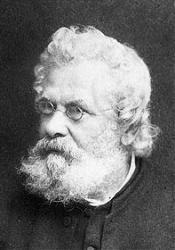
1820 - 1891 Person Name: John Henry Hopkins, Jun. Topics: Sundays after Trinity Faith Author of "We three kings of Orient are" in The Hymnal John Henry Hopkins, Jr MA USA 1820-1891. Born in Pittsburgh, PA, having 12 siblings, the son of pioneer parents (his father from Dublin, his mother from Hamburg) he became an ecclesiologist. His father had been an ironmaster, school teacher, lawyer, priest and second Episcopal Bishop of Vermont, (becoming presiding bishop in 1865). When his father founded the Vermont Episcopal Institute, he needed an assistant to help run it, so he picked his son to become a tutor and disciplinarian. The younger Hopkins played the flute and bugle in the school orchestra and also taught Sunday school. John Henry reflected the artistic talents of both parents in music, poetry, and art. After graduating from the University of Vermont in 1839, he returned to help his father with the school, but a financial crisis hit that year and the school had to close. He worked as a reported in New York City while studying law. He developed a throat ailment and went south to be in a warmer climate. From 1842-1844 he tutored the children of Episcopal Bishop Elliott of Savannah, GA, returning to take his M.A. from Vermont in 1845. He graduated from General Theological Seminary in 1850 and was ordained a deacon, serving as first instructor in church music at the Seminary. He founded and edited the “Church Journal” from 1853 to 1868. Interested in New York’s Ecclesiological Society, his artistic talents were apparent in designing stained-glass windows, episcopal seals, and a variety of other church ornaments. At the same time, his musical talents led to the writing and composing of a number of fine hymns and tunes, as well as anthems and services. He was ordained a priest in 1872, and was Rector of Trinity Church, Plattsburg, NY, from 1872-1876, then of Christ Episcopal Church in Williamsport, PA, from 1876-1887. He helped get the building debt paid off by 1879 with(in 10 years of its construction). During his time there a Sunday school building was also erected, having steam heat and a tiled floor. He designed some of the church furniture and bishop periphernalia as well as wrought iron tombs in Wildwood Cemetery. He also helped design two other church buildings in the area. A man of many talents, he was much beloved as a scholar, writer, preacher, controvertialist, musician, poet, and artist, excelling in all that he did. Totally devoted to his parish people, he especially loved children and was kind to anyone in need. He was considered very down-to-earth. He delivered the eulogy at the funeral of President Usysses S Grant in 1885. He was considered a great developer of hymnody in the Episcopal Church in the mid-19th century. His “Carols, hymns, and songs,”, published in 1863, had a 4th edition in 1883. In 1887 he edited “Great hymns of the church”. He wrote a biography of his father (the life of John Henry Hopkins, S.T.D.) He never married. He died at Hudson, NY.
John Perry
=======================
Hopkins, John Henry, D.D., Jun., son of J. H. Hopkins, sometime Bishop of Vermont, was born at Pittsburg, Pa., Oct. 28, 1820, educated at the University of Vermont, ordained in 1850, Rector of Christ's Church, Williamsport, Pa., 1876, and died at Troy, New York, Aug. 13, 1891. He published Poems by the Wayside written during more than Forty Years, N.Y., James Pott, 1883; and Carols, Hymns, and Songs, 1862; 3rd ed. 1882. Of his hymns the following are in common use:
1. Blow on, thou [ye] mighty Wind. Missions.
2. Come with us, O blessed Jesus. Holy Communion.
3. Glory to God the Father be. (Dated 1867.) Holy Trinity.
4. God hath made the moon whose beam. (Dated 1840.) Duty.
5. Lord, now round Thy Church behold. (Dated 1867.) For the Reunion of Christendom.
These hymns are in his Poems by the Wayside, 1883. In the same volume there are translations of the O Antiphons.
--John Julian, Dictionary of Hymnology, Appendix, Part II (1907)
==============
Hopkins, J. H., p. 1571, ii. The following additional hymns by him are in the American Hymnal, revised and enlarged .... Protestant Episcopal Church. . . U.S.A., 1892:—
1. God of our fathers, bless this our land. National Hymn.
2. When from the east the wise men came. Epiphany.
--John Julian, Dictionary of Hymnology, New Supplement (1907)
John H. Hopkins
William T. Sleeper
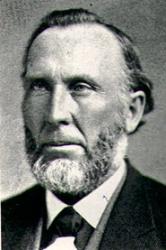
1819 - 1904 Topics: The Holy Trinity Author of "Out of my bondage, sorrow and night" in Alleluia Sleeper, W. T. is given in I. D. Sankey’s Sacred Songs & Solos, 1881, as the author of “A ruler once came to Jesus by night” (Need for the New Birth).
--John Julian, Dictionary of Hymnology, Appendix, Part II (1907)
===============
William T. Sleeper (1819-1904)]
Born: February 9, 1819, Danbury, New Hampshire.
Died: September 24, 1904, Wellesley, Massachusetts.
Sleeper attended Phillips-Exeter Academy, the University of Vermont, and the Andover Theological Seminary. After ordination, he conducted home ministry work in Massachusetts and Maine. He later became pastor of the Summer Street Congregational Church in Worcester, Massachusetts, where he served over 30 years. His works include:
The Rejected King, and Hymns of Jesus, 1883.
-- www.hymntime.com
William T. Sleeper
James Walch
1837 - 1901 Topics: Twentieth Sunday after Trinity; Seventh Sunday after Trinity Composer of "EAGLEY" in Evangelical Lutheran hymnal James Walch was a musician and composer, born near Bolton, Lancashire, England in 1837. He spent his early life in the town and was organist in several churches there, including the parish church of St George’s. From 1870-1877, he was conductor for the Bolton Philharmonic Society. He also composed at least four published hymn tunes, the best known of which is called “Tidings”. Written in 1875, it’s usually used as the tune to a hymn called “O Zion Haste”.
James Walch was a musical instrument dealer by trade, and moved to Barrow-in-Furness in 1877. He later moved to Llandudno Junction in North Wales, where he died in August 1901 and was buried locally. His wife later donated money to pay for the organs in two local churches, St Paul's Llandudno and All Saints Deganwy, in his memory.
Three decades later, an article in the London Gazette reported on a dispute arising from his will, and mentioned that he had a son, Harry West Walch, who was a pianist and lived in Hereford.
St Paul's Church, Llandudno newsletter; used by permission of Christ Dearden (Walch's wife paid for the organ at St. Paul's Church)
James Walch
Pages




