You help make Hymnary.org possible. More than 10 million people from 200+ countries found hymns, liturgical resources and encouragement on Hymnary.org in 2025, including you. Every visit affirms the global impact of this ministry.

If Hymnary has been meaningful to you this year, would you take a moment today to help sustain it? A gift of any size—paired with a note of encouragement if you wish—directly supports the server costs, research work and curation that keep this resource freely available to the world.

Give securely online today, or mail a check to:
Hymnary.org
Calvin University
3201 Burton Street SE
Grand Rapids, MI 49546

Thank you for your partnership, and may the hope of Advent fill your heart.

Person Results

Topics:warning
In:person

Planning worship? Check out our sister site, ZeteoSearch.org, for 20+ additional resources related to your search.
Showing 11 - 20 of 418Results Per Page: 102050

John J. Overholt

1918 - 2000 Topics: Warning Message The Accepted Time Arranger of "GREENVILLE NEW" in The Christian Hymnary John J. Overholt was born to an Amish family of limited means in the state of Ohio in 1918. As a child he was soon introduced to his father's personal collection of gospel songs and hymns, which was to have a marked influence on his later life. With his twin brother Joe, he early was exposed to the Amish-Mennonite tradition hymn-singing and praising worship. An early career in Christian service led to a two-year period of relief work in the country of Poland following World War II. During that interim he began to gather many European songs and hymns as a personal hobby, not realizing that these selections would become invaluable to The Christian Hymnary which was begun in 1960 and completed twelve years later in 1972, with a compilation of 1000 songs, hymns and chorales. (The largest Menn. hymnal). A second hymnal was begun simultaneously in the German language entitled Erweckungs Lieder Nr.1 which was brought to completion in 1986. This hymnal has a total of 200 selections with a small addendum of English hymns. Mr. Overholt married in 1965 to an accomplished soprano Vera Marie Sommers, who was not to be outdone by her husband's creativity and compiled a hymnal of 156 selections entitled Be Glad and Sing, directed to children and youth and first printed in 1986. During this later career of hymn publishing, Mr. Overholt also found time for Gospel team work throughout Europe. At this writing he is preparing for a 5th consecutive tour which he arranges and guides. The countries visited will be Belgium, Switzerland, France, Germany, Poland, USSR and Romania. Mr. Overholt was called to the Christian ministry in 1957 and resides at Sarasota, Florida where he is co-minister of a Beachy Amish-Mennonite Church. Five children were born to this family and all enjoy worship in song. --Letter from Hannah Joanna Overholt to Mary Louise VanDyke, 10 October 1990, DNAH Archives. Photo enclosed.

Thomas Augustine Arne

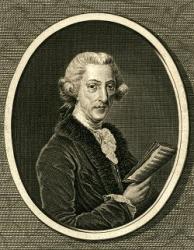
1710 - 1778 Person Name: Thomas A. Arne Topics: Salvation Invitation and Warning Composer of "ARLINGTON" in The Evangelical Hymnal Dr. Thomas Augustine Arne was born March 12, 1710, in London; became early celebrated as a composer, and established his reputation by settling Milton's "Comus" to music - light, airy, and original; he composed many songs, and nearly all his attempts were successful; died March 5, 1778, aged 68. A Dictionary of Musical Information by John W. Moore, Boston: Oliver, Ditson & Company, 1876

Joseph P. Holbrook

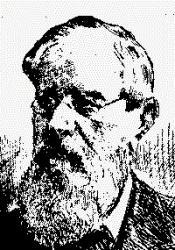
1822 - 1888 Topics: Salvation Invitation and Warning Composer of "SEGUR" in The Evangelical Hymnal Joseph P. Holbrook was a tune writer in the parlor music style, and used the popular melodies of Mason and Hastings, Bradbury and Root, Greatorex and Kingsley in his collections. He furnished settings for the choir hymns in Songs for the Sanctuary in his Quartet and chorus Choir (New York, 1871, and sought more recogniation than had been given him in a hymnal of his own, Worship in Song (New York, 1880); a book that found no welcome. from The English hymn: its development and use in worship By Louis FitzGerald Benson

Johann Crüger

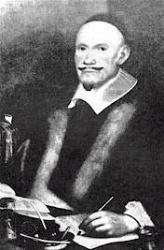
1598 - 1662 Person Name: Johann Crüger, 1598-1662 Topics: The Life in Christ Warning and Invitation Composer of "WIE SOLL ICH DICH EMPFANGEN" in Hymnal and Liturgies of the Moravian Church Johann Crüger (b. Grossbriesen, near Guben, Prussia, Germany, 1598; d. Berlin, Germany, 1662) Crüger attended the Jesuit College at Olmutz and the Poets' School in Regensburg, and later studied theology at the University of Wittenberg. He moved to Berlin in 1615, where he published music for the rest of his life. In 1622 he became the Lutheran cantor at the St. Nicholas Church and a teacher for the Gray Cloister. He wrote music instruction manuals, the best known of which is Synopsis musica (1630), and tirelessly promoted congregational singing. With his tunes he often included elaborate accom­paniment for various instruments. Crüger's hymn collection, Neues vollkomliches Gesangbuch (1640), was one of the first hymnals to include figured bass accompaniment (musical shorthand) with the chorale melody rather than full harmonization written out. It included eighteen of Crüger's tunes. His next publication, Praxis Pietatis Melica (1644), is considered one of the most important collections of German hymnody in the seventeenth century. It was reprinted forty-four times in the following hundred years. Another of his publications, Geistliche Kirchen Melodien (1649), is a collection arranged for four voices, two descanting instruments, and keyboard and bass accompaniment. Crüger also published a complete psalter, Psalmodia sacra (1657), which included the Lobwasser translation set to all the Genevan tunes. Bert Polman =============================== Crüger, Johann, was born April 9, 1598, at Gross-Breese, near Guben, Brandenburg. After passing through the schools at Guben, Sorau and Breslau, the Jesuit College at Olmütz, and the Poets' school at Regensburg, he made a tour in Austria, and, in 1615, settled at Berlin. There, save for a short residence at the University of Wittenberg, in 1620, he employed himself as a private tutor till 1622. In 1622 he was appointed Cantor of St. Nicholas's Church at Berlin, and also one of the masters of the Greyfriars Gymnasium. He died at Berlin Feb. 23, 1662. Crüger wrote no hymns, although in some American hymnals he appears as "Johann Krüger, 1610,” as the author of the supposed original of C. Wesley's "Hearts of stone relent, relent" (q.v.). He was one of the most distinguished musicians of his time. Of his hymn tunes, which are generally noble and simple in style, some 20 are still in use, the best known probably being that to "Nun danket alle Gott" (q.v.), which is set to No. 379 in Hymns Ancient & Modern, ed. 1875. His claim to notice in this work is as editor and contributor to several of the most important German hymnological works of the 16th century, and these are most conveniently treated of under his name. (The principal authorities on his works are Dr. J. F. Bachmann's Zur Geschichte der Berliner Gesangbücher 1857; his Vortrag on P. Gerhard, 1863; and his edition of Gerhardt's Geistliche Lieder, 1866. Besides these there are the notices in Bode, and in R. Eitner's Monatshefte für Musik-Geschichte, 1873 and 1880). These works are:— 1. Newes vollkömmliches Gesangbuch, Augspur-gischer Confession, &c, Berlin, 1640 [Library of St. Nicholas's Church, Berlin], with 248 hymns, very few being published for the first time. 2. Praxis pietatis melica. Das ist: Ubung der Gottseligkeit in Christlichen und trostreichen Gesängen. The history of this, the most important work of the century, is still obscure. The 1st edition has been variously dated 1640 and 1644, while Crüger, in the preface to No. 3, says that the 3rd edition appeared in 1648. A considerable correspondence with German collectors and librarians has failed to bring to light any of the editions which Koch, iv. 102, 103, quotes as 1644, 1647, 1649, 1650, 1651, 1652, 1653. The imperfect edition noted below as probably that of 1648 is the earliest Berlin edition we have been able to find. The imperfect edition, probably ix. of 1659, formerly in the hands of Dr. Schneider of Schleswig [see Mützell, 1858, No. 264] was inaccessible. The earliest perfect Berlin edition we have found is 1653. The edition printed at Frankfurt in 1656 by Caspar Röteln was probably a reprint of a Berlin edition, c. 1656. The editions printed at Frankfurt-am-Main by B. C. Wust (of which the 1666 is in the preface described as the 3rd) are in considerable measure independent works. In the forty-five Berlin and over a dozen Frankfurt editions of this work many of the hymns of P. Gerhardt, J. Franck, P. J. Spener, and others, appear for the first time, and therein also appear many of the best melodies of the period. 3. Geistliche Kirchen-Melodien, &c, Leipzig, 1649 [Library of St. Katherine's Church, Brandenburg]. This contains the first stanzas only of 161 hymns, with music in four vocal and two instrumental parts. It is the earliest source of the first stanzas of various hymns by Gerhardt, Franck, &c. 4. D. M. Luther's und anderer vornehmen geisU reichen und gelehrten Manner Geistliche Lieder und Psalmen, &c, Berlin, 1653 [Hamburg Town Library], with 375 hymns. This was edited by C. Runge, the publisher, and to it Crüger contributed some 37 melodies. It was prepared at the request of Luise Henriette (q.v.), as a book for the joint use of the Lutherans and the Re¬formed, and is the earliest source of the hymns ascribed to her, and of the complete versions of many hymns by Gerhardt and Franck. 5. Psalmodia Sacra, &c, Berlin, 1658 [Royal Library, Berlin]. The first section of this work is in an ed. of A. Lobwasser's German Psalter; the second, with a similar title to No. 4, and the date 1657, is practically a recast of No. 4,146 of those in 1653 being omitted, and the rest of the 319 hymns principally taken from the Praxis of 1656 and the hymn-books of the Bohemian Brethren. New eds. appeared in 1676, 1700, 1704, 1711, and 1736. [Rev. James Mearns, M.A.] -- Excerpt from John Julian, Dictionary of Hymnology (1907) ======================= Crüger, Johann, p. 271, ii. Dr. J. Zahn, now of Neuendettelsau, in Bavaria, has recently acquired a copy of the 5th ed., Berlin, 1653, of the Praxis. --John Julian, Dictionary of Hymnology, Appendix, Part II (1907)

Albert Midlane

1825 - 1909 Topics: Salvation Invitation and Warning Author of "All things are ready, Come, Come to the supper spread" in The Evangelical Hymnal Midlane, Albert, was born at Newport, Isle of Wight, Jan. 23, 1825, and was engaged in business in that town for many years. To his Sunday school teacher he ascribes the honour of prompting him to poetic efforts: and the same teacher did much to shape his early life. His first printed hymn, "Hark! in the presence of our God," was written in September, 1842, at Carisbrooke Castle, and printed in the Youth’s Magazine in November of the same year. Since then he has written over 300, and of these a large proportion are in common use. They appeared in magazines and small mission hymn-books, including:— (1) The Youth's Magazine; (2) The British Messenger; (3) The London Messenger; (4) Trotter's Evangelical Hymn Book, 1860; (5) The Ambassador's Hymn Book, 1861; (6) Second edition of the same, 1868; (7)Hymn Book for Youth; (8) Good News for the Little Ones, 1860; (9) William Carter's Gospel Hymn Book, 1862; and several other works of a similar kind. In addition to several small works in prose, Mr. Midlane has gathered his verse together from time to time and published it as:— (1) Poetry addressed to Sabbath School Teachers, 1844; (2) Vecta Garland, 1850; (3) Leaves from Olivet, 1864; (4) Gospel Echoes, 1865; (5) Above the Bright Blue Sky, 1867; (6) Early Lispings, 1880. Of the hymns contained in these works nearly 200 have been in common use from 1861 to 1887, the most popular being "There's a Friend for little children." The hymn-books, however, in which many of them are found are usually very small, are used in what are commonly known as Gospel Missions, and have gradually given way to other and more important collections. We therefore append only those hymns which are at the present time in use in official or quasi-official hymn-books, or such collections as have a wide circulation. Those hymns which are omitted from the following list may be found in the works given above, and especially in the Gospel Echoes. The bracketed dates below are those of the composition of the hymns. i. Given in Trotter's Evangelical Hymn Book, 1860. 1. How sweet the cheering words. (Aug. 1860.) The Gospel. 2. Lord Jesus, save! (July 1860.) Lent. ii. Given in The Ambassador's Hymn Book, 1861. 3. Angels rejoice o'er sinners saved. (Aug. 1860.) Joy in Heaven over Repenting Sinners. 4. Come to the royal feast. (Aug. 1860.) The Gospel Feast. 5. Father, bless the heavenly message. (Aug. 1860.) Divine blessing implored. 6. How vast, how full, how free. (Aug. 1860.) Divine Mercy. 7. I am not told to labour. (June 25, 1860.) Salvation by Faith. 8. Jesus died upon the tree. (Aug. 13, 1860.) Good Friday. 9. Lord, prepare the hearts of sinners. (Aug. 28, 1861.) Preparation of the heart. 10. Not all the gold of all the world. Peace through Jesus. 11. Now we'll render to the Saviour. (Sept. 1, 1861.) Praise for Salvation. 12. O what a gift the Father gave. (Aug. 22, 1860.) The Gift of The Son. 13. O what a Saviour is Jesus the Lord. (Aug. 29, 1861.) Jesus the Saviour. 14. Passing onward, quickly passing. (Sept. 10, 1861.) Prepared? 15. Salvation, Lord, is Thine. (Aug., 1860.) Salvation through Jesus. 16. Sinner, where is room for doubting? (Sept., 1861.) Expostulation. 17. Soft the voice of mercy sounded. Grace. 18. The perfect righteousness of God. (Sept. 21, 1861.) God our Righteousness. 19. There is a throne of grace. (Sept. 14, 1860.) The Throne of Grace. 20. We speak of the mercy of God. (Sept. 19, 1861.) Divine Mercy. iii. Given in W. Carter's Gospel Hymn Book, 1863. 21. Can any say, I do believe ? (Aug., 1860.) Assurance in Christ. 22. If Jesus came to seek and save. (Oct., 1861.) Salvation in Jesus. iv. Given in Leaves from Olivet, 1864. 23. See the blessed Saviour dying. (Oct. 5, 1860.) Good Friday. 24. Sweet the theme of Jesus' love. (April 22, 1862.) The Love of Jesus. v. Given in Gospel Echoes, 1865. 25. Come and welcome to the Saviour. (June 8, 1862) Invitation. 26. God be gracious to a sinner. (May 21, 1861.) Lent. 27. God speaks from heaven; in love He speaks. (July, 1860.) Love and Mercy of God. 28. Hark! the cry, Behold He cometh. (June 8, 1862.) Advent. 29. He saves because He will. (April 20, 1862.) The "I Wills" of Jesus. 30. How solemn are the words. (Aug. 1, 1865.) The New Birth. 31. Himself He could not save. (Sept. 1861.) Good Friday. 32. I once was bound in Satan's chains. Pardon. 33. Jesus lived. He lived for sinners. (Jan. 4, 1862.) Easter. 34. Jesus never answered "Nay." (May 13, 1862.) Jesus always the same. 35. Jesus the blessed centre is. (June 8, 1862). Father glorified in the Son. 36. Jesus, the risen Saviour. (July 31, 1862.) Easter. 37. Jesus, the soul that trusts in Thee. (May 7, 1864.) Salvation through Jesus. 38. Look, poor sinner, look to Calvary. Good Friday. 39. Lord, when I think upon the love. (Oct. 1, 1860.) The Love of Jesus. 40. Peace with God ! How great a treasure (Oct. 18, 1861.) Peace. 41. Salvation! What a precious word. (Nov. 22, 1861.) Salvation. 42. Scripture says Where sin abounded. (March 3, 1862.) Abounding Grace. 43. Shall Jesus' love be spoken? (May 4, 1862.) Love of Jesus. 44. The Lamb was slain, the blood was brought. (Aug. 24,1862.) The Passover. 45. The silver trumpets sounding. (May 7, 1862.) The Year of Jubilee. 46. There is a rest for weary souls. (Dec. 4, 1863.) Rest. Peace in Jesus. 47. 'Tis the voice of mercy calls thee. (Nov. 5, 1861.) Mercy. 48. When the Saviour said "'Tis finished" (Oct. 1861.) Good Friday. 49. When God begins His gracious work. (Dec. 27, 1860.) God Unchangeable. 50. Who can praise the blessed God ? (Oct. 1861.) Praise for Salvation. 51. Why those fears, poor trembling sinner. Safety in Jesus. vi. Given in the Ambassador's Hymn Book, 2nd ed., 1868. 52. Life from the dead, eternal life. (Oct. 11, 1867.) Work of the Holy Spirit. 53. Stern justice cries for blood. (March 2, 1867.) The Atonement. vii. Various. 54. Apart from every worldly care. (June 1866.) Prayer Meetings. Written for Spurgeon's Our Own Hymn Book 1866. 55. Be not weary, toiling Christian. (Feb. 1857.) Encouragement. In the British Messenger, Sept. 1857. 56. Eighteen hundred years ago. (Aug. 1859.) Fulness of Time. In the London Messenger, April, 1861. 57. Father, for Thy promised blessing. (Feb. 20, 1860.) Outpouring of the Spirit desired. In The Revival, July, 1860. 58. God bless our Sunday School. Sunday School Anniversary. First printed in the Baptist Children's Magazine, July, 1844. It has passed into numerous collections for children, but usually st. ii. is omitted, thus reducing it to 3 st. 59. He comes! He comes! the Bridegroom comes. (Sept. 9, 1850.) Advent. In The Present Testimony, 1851. 60. Kept by the power of God. (May 6 ,1858.) Security in God. In the London Messenger, Sept., 1860. 61. Let the waves of blessing roll. (Jan. 6, 1868.) Missions. In the Enlarged London Hymn Book, 1873. 62. Lord, 'our waiting spirits bow. (June, 1866.) Prayer Meetings. Written for Spurgeon's Our Own Hymn Book 1866. 63. Love us freely, blessed Jesus. (July 2, 1858.) Lent. In the Churchman's Penny Magazine. Oct., 1858. 64. Never perish! words of mercy. Mercy in Christ. Printed in the monthly Girdle, June, 1857, and in the British Messenger, Aug. 1857, in 4 double st. In the collections it is reduced to the first two stanzas. 65. No separation, O my soul. (May 6, 1863.) Perseverance. In the British Herald, Aug., 1863. 66. Nought but the voice of God can speak. (Jan. 29, 1863.) All things are of God. In the 1873 Appendix to Snepp's Songs of Grace & Glory. 67. Now, O joy, my sins are pardoned. Pardon and Peace. (Nov. 9, 1860). Printed in the London Messenger, March, 1861, then in the Gospel Echoes, 1865; and then in several hymn-books. The original began, "Once I sang, but not in earnest." Usually st. ii., iii., of 8 l, are given as "Now, O joy, &c." 68. O art thou an heir of glory? (June 4, 1861.) Cautions. In Hymn Book for Youth, 1862. 69. O what a glorious truth is this. (Aug. 3, 1860.) Jesus Died. In the London Messenger, Sept., 1860. 70. Once it was mine, the cup of wrath. (Aug. 8, 1860.) Wrath and Pardon. In the London Messenger, Oct., 1861. 71. Onward, upward, heavenward. (Feb. 7, 1860.) Pressing Onward. In the London Messenger, March, 186l. 72. Perennial spring of pure delight. (March 17, 1864.) Jesus All in All. In the London Messenger, Jan., 1865. 73. Sheltered by the [Thy] sprinkled blood. (Sept. 23, 1863.) Safety in Jesus. In the London Messenger, Feb. 1864. 74. Showers of blessing, gracious promise. (April 19, 1862.) Missions. In the London Messenger, Aug., 1862, and Leaves from Olivet, 1864. 75. The Church of God, amazing, precious thought. (July 6, 1857.) The Church. In The Present Testimony, 1858, and Leaves from Olivet, 1864. 76. The whispers of Thy love divine. (May 3, 1868.) Love of God. In the Island Greeting, Oct., 1872. 77. Though billows round me roll. (April 2, 1853.) Trust. In Food for Christ's Flock, 1853. 78. 'Tis finished, cried the dying Lamb. (Feb. 21, 1850.) Good Friday. In the Baptist Children's Magazine, 1850). 79. Tis heaven where Jesus is. (Oct. 23, 1862.) Joy and Peace in Jesus. In the Enlarged London Hymn Book, 1873. 80. Together all things work for good. (Aug. 14, 1860.) All work for Good. In the Enlarged London Hymn Book, 1813. 81. Waiting for Jesus, and loving while waiting. (Jan. 9, 1872.) Second Advent desired. In the 1873 Appendix to Snepp's Songs of Grace & Glory. 82. Without a cloud between. (Mar. 18,1862.) Jesus, Face to Face. In the London Messenger, June, 1862. 83. Yet awhile; how sweet the thought. (Dec, 1864.) Second Advent desired. In theLondon Messenger, 1865. The collections in which these hymns are mainly found are Spurgeon's Our Own Hymn Book, 1866; Snepp's Songs of Grace & Glory, 1872-3; Hurditch's Enlarged London Hymn Book, 1873, and smaller books for Evangelical mission work. Of Mr. Midlane's hymns as a whole, Miher's estimate that "His hymns are full of spiritual thought, careful in their wording, and often very pleasing without reaching the highest form of poetical excellence " (Singers and Songs, p. 572), is just. A marked feature of these hymns is the constant and happy use of Scripture phraseology. --John Julian, Dictionary of Hymnology (1907) ======================== Midlane, A., p. 733, ii. Mr. Midlane published in 1901 The Bright Blue Sky Hymn Book, of 315 of his hymns, and the same year The Gospel Hall Hymn Book, for use in the Gospel Hall, Newport, I.W., with 218 additional, making 533 original compositions. A broad-sheet of seven special hymns for Jewish children, in connection with the Mildmay Mission to the Jews, was also issued in December, 1904. Other publications previously noticed give, with these, over 800 hymns to Mr. Midlane as his contribution to the hymnody of the Church. --John Julian, Dictionary of Hymnology, New Supplement (1907)

John Zundel

1815 - 1882 Topics: Warning Composer of "BEECHER" in Psalter Hymnal (Blue) John Zundel; b. 1815, near Stuttgart, Germany; organist in Brooklyn, N. Y., from 1847 to 1878; d. Cannstadt, Germany, 1882 Evangelical Lutheran Hymnal, 1908

Edward Miller

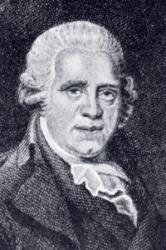
1735 - 1807 Person Name: Edward Miller, 1735-1807 Topics: The Life in Christ Warning and Invitation Composer of "ROCKINGHAM, OLD" in Hymnal and Liturgies of the Moravian Church Edward Miller, Born in the United Kingdom. The son of a pavior (stone paver), Miller left home to study music at King's Lynn. He was a flautist in Handel's orchestra. In 1752 he published “Six Solos for the German Flute”. In 1756 he was appointed organist of St. George Minster Doncaster, continuing in that post for 50 years. He also gave pianoforte lessons. He published hymns and sonatas for harpsichord, 16 editions of “The Institues of Music”, “Elegies for Voice & Pianoforte”, and Psalms of David set to music, arranged for each Sunday of the year. That work had over 5000 subscribers. He published his thoughts on performance of Psalmody in the Church of England, addressed to clergy. In 1801 he published the Psalms of Watts and Wesley for use by Methodists, and in 1804 the history and antiques of Doncaster with a map. John Perry

C. G. Gläser

1784 - 1829 Person Name: Carl Gotthelf Glaser Topics: The Sinner Warning and Inviting Composer of "AZMON" in The Tribute of Praise Carl Gotthelf Gläser Germany 1781-1829. Born at Weissenfels, Burgenlandkreis, Sachsen-Anhalt, Germany, he received musical training from his father, after which he attended St. Thomas school in Leipzig. He became an author and composer. At Barmen he taught voice, piano, and violin. He also wrote and conducted chorale music. He died at Barmen. John Perry

John Baptiste Calkin

1827 - 1905 Person Name: J. B. Calkin Topics: Warning Composer of "[Fling out the banner, let it float]" in Jubilant Voices for Sunday Schools and Devotional Meetings John Baptiste Calkin United Kingdom 1827-1905. Born in London, he was reared in a musical atmosphere. Studying music under his father, and with three brothers, he became a composer, organist, and music teacher. At 19, he was appointed organist, precenter, and choirmaster at St. Columbia's College, Dublin, Ireland, 1846 to 1853. From 1853 to 1863 we was organist and choirmaster at Woburn Chapel, London. From 1863 to 1868, he was organist of Camden Road Chapel. From 1870 to 1884 he was organist at St. Thomas's Church, Camden Town. In 1883 he became professor at Guildhall School of Music and concentrated on teaching and composing. He was also a professor of music and on the council of Trinity College, London, and a member of the Philharmonic Society (1862). In 1893 he was a fellow of the College of Organists. John and wife, Victoire, had four sons, each following a musical carer. He wrote much music for organ and scored string arrangements, sonatas, duos, etc. He died at Hornsey Rise Gardens. John Perry

Charles William Everest

1814 - 1877 Person Name: Charles W. Everest Topics: Warning Author of "Take Up Thy Cross" in Baptist Hymnal (1975 ed) Everest, Charles William, M.A., born at East Windsor, Connecticut, May 27, 1814, graduated at Trinity College, Hartford, 1838, and took Holy Orders in 1842. He was rector at Hamden, Connecticut, from 1842 to 1873, and also agent for the Society for the Increase of the Ministry. He died at Waterbury, Connecticut, Jan. 11, 1877 (See Poets of Connecticut, 1843). In 1833 he published Visions of Death, and Other Poems; from this work his popular hymn is taken:— Take up thy cross, the Saviour said. Following Jesus. The original text of this hymn differs very materially from that which is usually found in the hymn-books. The most widely known form of the text is that in Hymns Ancient & Modern, where it appeared in 1861. It was copied by the Compilers from another collection, but by whom the alterations were made is unknown. The nearest approach to the original is in Horder's Congregational Hymn Book, 1884. Original text in Biggs's English Hymnology, 1873, p. 24. [Rev. F. M. Bird, M.A.] -- John Julian, Dictionary of Hymnology (1907)

Pages


Export as CSV
It looks like you are using an ad-blocker. Ad revenue helps keep us running. Please consider white-listing Hymnary.org or getting Hymnary Pro to eliminate ads entirely and help support Hymnary.org.