You help make Hymnary.org possible. More than 10 million people from 200+ countries found hymns, liturgical resources and encouragement on Hymnary.org in 2025, including you. Every visit affirms the global impact of this ministry.

If Hymnary has been meaningful to you this year, would you take a moment today to help sustain it? A gift of any size—paired with a note of encouragement if you wish—directly supports the server costs, research work and curation that keep this resource freely available to the world.

Give securely online today, or mail a check to:
Hymnary.org
Calvin University
3201 Burton Street SE
Grand Rapids, MI 49546

Thank you for your partnership, and may the hope of Advent fill your heart.

Person Results

Tune Identifier:"^das_neugeborne_kindelein_vulpius$"
In:person

Planning worship? Check out our sister site, ZeteoSearch.org, for 20+ additional resources related to your search.
Showing 11 - 20 of 34Results Per Page: 102050

L. Tuttiett

1825 - 1897 Person Name: Lawrence Tuttiette, 1825-1897 Author of "O Quickly, Come, Great Judge of All" in Hymnal for the Hours Laurence Tuttiett was born at Colyton, Devon, in 1825; was educated at Christ Hospital, and at King's College, London; ordained Deacon, 1848, Priest, 1849; entered upon the living of Lea Marston, Coleshill, 1854, and subsequently was appointed Curate of S. Paul's, Knightsbridge, London. He is the author of several volumes and tracts. --Annotations of the Hymnal, Charles Hutchins, M.A. 1872. ================== Tuttiett, Lawrence, son of John Tuttiett, surgeon in the R.N., was born at Cloyton, Devonshire, in 1825, and educated at Christ's Hospital, and King's College, London. It was originally purposed that he should follow the medical profession, but, abandoning it for the ministry, he took Holy Orders in 1848. In 1854 he became vicar of Lea Marston, Warwickshire; and in 1870 incumbent of the Episcopal Church of St. Andrews, Scotland. He was also preferred to a prebendaryship in St. Ninian's Cathedral, Perth, in 1880. He is the author of several manuals of prayers, published by the Society for Promoting Christian Knowledge and other prose works, and also of:— (1) Hymns for Churchmen, 1854; (2) Counsels of a Godfather, 1861; (3) Hymns for the Children of the Church, 1862; (4) Germs of Thought on the Sunday Services, 1864; (5) Through the Clouds; Thoughts in Plain Verse, 1866. From those works and other sources the following hymns have come into common use:— 1. As calmly in the glowing west. Evening. 2. Come, our Father's voice is calling. Confirmation. Appeared in his Hymns for the Children of the Church, 1862, in 6 stanzas of 4 lines. It passed into Mrs. C. Brock's Children's Hymn Book, 1881. 3. Grant us Thy light that we may know. Divine Guidance. Included in his Germs of Thought, &c, 1864, in 6 stanzas of 4 lines. In Horder's Congregational Hymn Book, 1884; the Universal Hymn Book, 1885, it begins, “O grant us light that we may know." 4. I come, 0 Father kind. Holy Communion. 5. Lo, like a bride, in pure array. Septuagesima. 6. No sign we ask from heaven above. After Holy Baptism. Published in his Hymns for Churchmen, 1854, in 4 stanzas of 6 lines. It has passed into several collections, includ¬ing the S. P. C. K. Church Hymns, 1871, Thring's Collection, 1882, &c. 7. Now, eternal Father, bless. Holy Baptism. In his Hymns for the Children of the Church, 1862, in 3 stanzas of 6 lines, and Mrs. Brock's Children's Hymn Book, 1881. In the latter it is attributed to Bishop Maclagan in error. 8. 0 happy Christian children. Divine Protection. From his Hymns for the Children of the Church, 1862, into Mrs. Brock's Children's Hymn Book, 1881, &c. 9. 0 Jesu, ever present. The Good Shepherd. Published in his Germs of Thought, 1864; the S. P.C. K. Church Hymns, 1871, and many others. 10. Shepherd, good and gracious. The Good Shepherd. In his Hymns for the Children of the Church, 1862; Mrs. Brock's Children's Hymn Book, 1881, &c. 11. Sometimes o'er our pathway. In time of Trouble. From his Hymns for the Children of the Church, 1862, in 3 st. of 8 1., into Mrs. Brock's Children's Hymn Book, 1881. 12. When the world is brightest. Litany to the Saviour. Published in his Through the Clouds, &c, 1866, in 10 stanzas of 8 lines, with the note :—"Those words were written for the music of a Roman Litany 'Ave Stella Maria.'" This Litany is in extensive use. 13. Who is this? the long expected. Advent. In addition to these, several of Mr. Tuttiett's hymns are annotated under their respective first lines, the most popular of which are, "Father, let me dedicate"; "Go forward, Christian soldier"; and "0 quickly come, dread Judge of all." Mr. Tuttiett's hymns are characterised by smoothness of rhythm, directness of aim, simplicity of language, and deep earnestness. Those for special services and seasons are of great merit. He died May 21, 1897. -- John Julian, Dictionary of Hymnology (1907) ================== Tuttiett, L., p. 1188, ii. He was born at Colyton, not Cloyton, Devonshire, in 1825. His hymns "As now Thy children lowly kneel (For the Young), and "Give light. O Lord, that we may learn" (The Light of Life) are in Hymns Ancient & Modern, 1904. --John Julian, Dictionary of Hymnology, New Supplement (1907) ===================== See also in: Hymn Writers of the Church

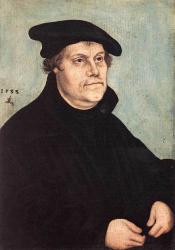
Martin Luther

1483 - 1546 Person Name: Martin Luther, 1483-1546 Author of "Come, Holy Spirit, God and Lord!" in Pilgrim Hymnal Luther, Martin, born at Eisleben, Nov. 10, 1483; entered the University of Erfurt, 1501 (B.A. 1502, M.A.. 1503); became an Augustinian monk, 1505; ordained priest, 1507; appointed Professor at the University of Wittenberg, 1508, and in 1512 D.D.; published his 95 Theses, 1517; and burnt the Papal Bull which had condemned them, 1520; attended the Diet of Worms, 1521; translated the Bible into German, 1521-34; and died at Eisleben, Feb. 18, 1546. The details of his life and of his work as a reformer are accessible to English readers in a great variety of forms. Luther had a huge influence on German hymnody. i. Hymn Books. 1. Ellich cristlich lider Lobgesang un Psalm. Wittenberg, 1524. [Hamburg Library.] This contains 8 German hymns, of which 4 are by Luther. 2. Eyn Enchiridion oder Handbuchlein. Erfurt, 1524 [Goslar Library], with 25 German hymns, of which 18 are by Luther. 3. Geystliche Gesangk Buchleyn. Wittenberg, 1524 [Munich Library], with 32 German hymns, of which 24 are by Luther. 4. Geistliche Lieder auffs new gebessert. Wittenberg. J. Klug, 1529. No copy of this book is now known, but there was one in 1788 in the possession of G. E. Waldau, pastor at Nürnberg, and from his description it is evident that the first part of the Rostock Gesang-Buch, 1531, is a reprint of it. The Rostock Gesang-Buch, 1531, was reprinted by C. M. Wiechmann-Kadow at Schwerin in 1858. The 1529 evidently contained 50 German hymns, of which 29 (including the Litany) were by Luther. 5. Geistliche Lieder auffs new gebessert. Erfurt. A. Rauscher, 1531 [Helmstädt, now Wolfenbüttel Library], a reprint of No. 4. 6. Geistliche Lieder. Wittenberg. J. Klug, 1535 [Munich Library. Titlepage lost], with 52 German hymns, of which 29 are by Luther. 7. Geistliche Lieder auffs new gebessert. Leipzig. V. Schumann, 1539 [Wernigerode Library], with 68 German hymns, of which 29 are by Luther. 8. Geistliche Lieder. Wittenberg. J. Klug, 1543 [Hamburg Library], with 61 German hymns, of which 35 are by Luther. 9. Geystliche Lieder. Leipzig. V. Babst, 1545 [Gottingen Library]. This contains Luther's finally revised text, but adds no new hymns by himself. In pt. i. are 61 German hymns, in pt. ii. 40, of which 35 in all are by Luther. For these books Luther wrote three prefaces, first published respectively in Nos. 3, 4, 9. A fourth is found in his Christliche Geseng, Lateinisch und Deudsch, zum Begrebnis, Wittenberg, J. Klug, 1542. These four prefaces are reprinted in Wackernagel’s Bibliographie, 1855, pp. 543-583, and in the various editions of Luther's Hymns. Among modern editions of Luther's Geistliche Lieder may be mentioned the following:— Carl von Winterfeld, 1840; Dr. C. E. P. Wackernagel, 1848; Q. C. H. Stip, 1854; Wilhelm Schircks, 1854; Dr. Danneil, 1883; Dr. Karl Gerok, 1883; Dr. A. F. W. Fischer, 1883; A. Frommel, 1883; Karl Goedeke, 1883, &c. In The Hymns of Martin Luther. Set to their original melodies. With an English version. New York, 1883, ed. by Dr. Leonard Woolsey Bacon and Nathan H. Allen, there are the four prefaces, and English versions of all Luther's hymns, principally taken more or less altered, from the versions by A. T. Russell, R. Massie and Miss Winkworth [repub. in London, 1884]. Complete translations of Luther's hymns have been published by Dr. John Anderson, 1846 (2nd ed. 1847), Dr. John Hunt, 1853, Richard Massie, 1854, and Dr. G. Macdonald in the Sunday Magazine, 1867, and his Exotics, 1876. The other versions are given in detail in the notes on the individual hymns. ii. Classified List of Luther's Hymns. Of Luther's hymns no classification can be quite perfect, e.g. No. 3 (see below) takes hardly anything from the Latin, and No. 18 hardly anything from the Psalm. No. 29 is partly based on earlier hymns (see p. 225, i.). No. 30 is partly based on St. Mark i. 9-11, and xvi., 15, 16 (see p. 226, ii.). No. 35 is partly based on St. Luke ii. 10-16. The following arrangement, however, will answer all practical purposes. A. Translations from the Latin. i. From Latin Hymns: 1. Christum wir sollen loben schon. A solis ortus cardine 2. Der du bist drei in Einigkeit. O Lux beata Trinitas. 3. Jesus Christus unser Heiland, Der von. Jesus Christus nostra salus 4. Komm Gott Schopfer, heiliger Geist. Veni Creator Spiritus, Mentes. 5. Nun komm der Beidenheiland. Veni Redemptor gentium 6. Was flirchst du Feind Herodes sehr. A solis ortus cardine ii. From Latin Antiphons, &c.: 7. Herr Gott dich loben wir. Te Deum laudamus. 8. Verleih uns Frieden gnädiglich. Dapacem, Domine 9. Wir glauben all an einen Gott. iii. Partly from the Latin, the translated stanzas being adopted from Pre-Reformation Versions: 10. Komm, heiliger Geist, Herre Gott. 11. Mitten wir im Leben sind. Media vita in morte sumus. B. Hymns revised and enlarged from Pre-Reformation popular hymns. 12. Gelobet seist du Jesus Christ. 13. Gott der Vater wohn uns bei. 14. Gott sei gelobet und gebenedeiet. 15. Nun bitten wir den heiligen Geist. C. Psalm versions. 16. Ach Gott vom Himmel, sieh darein. 17. Aus tiefer Noth schrei ich zu dir. 18. Ein' feste Burg ist unser Gott. 19. Es spricht der Unweisen Mund wohl. 20. Es wollt uns Gott genädig sein. 21. War Gott nicht mit uns diese Zeit. 22. Wohl dem, der in Gotten Furcht steht. D. Paraphrases of other portions of Holy Scripture. 23. Diess sind die heilgen zehn Gebot. 24. Jesaia dem Propheten das geschah. 25. Mensch willt du leben seliglich. 26. Mit Fried und Freud ich fahr dahin. 27. Sie ist mir lieb die werthe Magd. 28. Vater unser im Himmelreich. E. Hymns mainly Original. 29. Christ lag in Todesbanden. 30. Christ unser Herr zum Jordan kam. 31. Ein neues Lied wir heben an. 32. Erhalt uns Herr bei deinem Wort. 33. Jesus Christus unser Heiland, Der den, 34. Nun freut euch lieben Christengemein. 35. Vom Himmel hoch da komm ich her. 36. Vom Himmel kam der Engel Schaar. In addition to these — 37. Fur alien Freuden auf Erden. 38. Kyrie eleison. In the Blätter fur Hymnologie, 1883, Dr. Daniel arranges Luther's hymns according to what he thinks their adaptation to modern German common use as follows:— i. Hymns which ought to be included in every good Evangelical hymn-book: Nos. 7-18, 20, 22, 28, 29, 30, 32, 34, 35, 36, 38. ii. Hymns the reception of which into a hymn-book might be contested: Nos. 2, 3, 4, 19, 21, 22, 23, 24, 25, 33. iii. Hymns not suited for a hymn-book: Nos. 1, 5, 6, 27, 31, 37. [Rev. James Mearns, M.A.] --John Julian, Dictionary of Hymnology (1907)

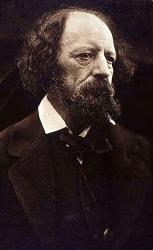
Alfred Tennyson, Baron Tennyson

1809 - 1892 Person Name: Alfred Tennyson Author of "Strong Son of God, immortal Love" in The Chapel Hymnal Tennyson, Alfred, Lord, son of the Rev. G. C. Tennyson, Rector of Somersby, Lincolnshire, was born at Somersby, Aug. 6, 1809; educated at Trinity College, Cambridge; appointed Poet Laureate in 1850, and raised to the Peerage in 1884. Although Lord Tennyson has not written any hymns, extracts from his poems are sometimes used as such, as "Strong Son of God, immortal Love" (Faith in the Son of God), from the Introduction to his In Memoriam, 1850; the well-known "Too late, too late, ye cannot enter now," and others. The former is sometimes given as "Spirit of immortal Love," and again as "Eternal God, immortal Love." --John Julian, Dictionary of Hymnology, Appendix, Part II (1907)

John Hampden Gurney

1802 - 1862 Person Name: John Hampden Gurney, 1802-1862 Author of "No Te Vimos en Belén" in Cántico Nuevo Gurney, John Hampden, M.A., eldest son of Sir John Gurney, a Baron of the Exchequer, was born in Serjeants’ Inn, London, Aug. 15, 1802, and educated at Trinity College, Cambridge, where he graduated in 1824. On taking Holy Orders he became Curate of Lutterworth (1827-1844), and subsequently Rector of St. Mary's, Marylebone, and Prebendary of St. Paul's Cathedral. He died in London, March 8, 1862. The Society for Promoting Christian Knowledge and other religious societies had his cordial sympathy, and received his active support. His publications include several small volumes in prose, and the following:— (1) Church Psalmody; Hints for the improvement of a Collection of Hymns published by the Society for Promoting Christian Knowledge, 1853; (2) A Collection of Hymns for Public Worship. Lutterworth, 1838. This contains 300 hymns, and is known as his Lutterworth Collection; (3) Psalms and Hymns for Public Worship, selected for some of the Churches of Marylebone. London, 1851. This collection of 300 hymns and psalm versions is known as his Marylebone Collection. The Preface is signed by "Charles Baring," "Thomas Garnier," and "John Hampden Gurney," but the work was practically done by Gurney. To the Lutterworth Collection 1838, he contributed :— 1. Earth to earth, and dust to dust. Burial. 2. Great King of nations, hear our prayer. Fast Day. 3. Lord, as to Thy dear Cross we flee. Lent. 4. Lord, at Thy word the constant sun. Harvest. 5. Saviour, what wealth was Thine. Passiontide. 6. Soon to the dust we speed. Heaven anticipated. 7. Thou God of mercy and of might. Good Friday. 8. Thou plenteous source of light and love. Advent. 9. Thou Who of old didst raise. Ascension. 10. Through centuries of sin and woe. For Peace. 11. We praise Thee, everlasting God. Te Deum. These hymns were all signed "J. H. G.," and Nos. 1, 2, 3, 7, 8, 9 and 11, were repeated in the Marylebone Collection, 1851; and to these were added:— 12. Fair waved the golden corn. Child's Hymn. 13. How vast the debt we owe. Offertory. 14. Lord of the Harvest, Thee we hail. Harvest. This is No. 4 above rewritten. 15. Lord, we lift our eyes above. Love of Christ. In addition to these we are specially indebted to Gurney for, "We saw Thee not when Thou didst come" (q.v.), and "Yes, God is good," &c. (q.v.). Several of the above-named hymns are in extensive use in Great Britain and America. The most popular are annotated under their respective first lines. -- John Julian, Dictionary of Hymnology (1907)

Edward Caswall

1814 - 1878 Person Name: Edward Caswall, 1814-1878 Translator of "O Saviour Victim" in The Hymn Book of the Anglican Church of Canada and the United Church of Canada Edward Caswall was born in 1814, at Yately, in Hampshire, where his father was a clergyman. In 1832, he went to Brasenose College, Oxford, and in 1836, took a second-class in classics. His humorous work, "The Art of Pluck," was published in 1835; it is still selling at Oxford, having passed through many editions. In 1838, he was ordained Deacon, and in 1839, Priest. He became perpetural Curate of Stratford-sub-Castle in 1840. In 1841, he resigned his incumbency and visited Ireland. In 1847, he joined the Church of Rome. In 1850, he was admitted into the Congregation of the Oratory at Birmingham, where he has since remained. He has published several works in prose and poetry. --Annotations of the Hymnal, Charles Hutchins, M.A. 1872 ===================== Caswall, Edward, M.A., son of the Rev. R. C. Caswall, sometime Vicar of Yately, Hampshire, born at Yately, July 15, 1814, and educated at Brasenose College, Oxford, graduating in honours in 1836. Taking Holy Orders in 1838, he became in 1840 Incumbent of Stratford-sub-Castle, near Salisbury, and resigned the same in 1847. In 1850 (Mrs. Caswall having died in 1849) he was received into the Roman Catholic communion, and joined Dr. Newman at the Oratory, Edgbaston. His life thenceforth, although void of stirring incidents, was marked by earnest devotion to his clerical duties and a loving interest in the poor, the sick, and in little children. His original poems and hymns were mostly written at the Oratory. He died at Edgbaston, Jan. 2, 1878, and was buried on Jan. 7 at Redwall, near Bromsgrove, by his leader and friend Cardinal Newman. Caswall's translations of Latin hymns from the Roman Breviary and other sources have a wider circulation in modern hymnals than those of any other translator, Dr. Neale alone excepted. This is owing to his general faithfulness to the originals, and the purity of his rhythm, the latter feature specially adapting his hymns to music, and for congregational purposes. His original compositions, although marked by considerable poetical ability, are not extensive in their use, their doctrinal teaching being against their general adoption outside the Roman communion. His hymns appeared in:— (1) Lyra Catholica, which contained 197 translations from the Roman Breviary, Missal, and other sources. First ed. London, James Burns, 1849. This was reprinted in New York in 1851, with several hymns from other sources added thereto. This edition is quoted in the indices to some American hymn-books as Lyra Cath., as in Beecher's Plymouth Collection, 1855, and others. (2) Masque of Mary, and Other Poems, having in addition to the opening poem and a few miscellaneous pieces, 53 translations, and 51 hymns. 1st ed. Lon., Burns and Lambert, 1858. (3) A May Pageant and Other Poems, including 10 original hymns. Lon., Burns and Lambert, 1865. (4) Hymns and Poems, being the three preceding volumes embodied in one, with many of the hymns rewritten or revised, together with elaborate indices. 1st ed. Lon., Burns, Oates & Co., 1873. Of his original hymns about 20 are given in the Roman Catholic Crown of Jesus Hymn Book, N.D; there are also several in the Hymns for the Year, N.D., and other Roman Catholic collections. --John Julian, Dictionary of Hymnology (1907) ====================== Caswall, E. , p. 214, ii. Additional original hymns by Caswall are in the Arundel Hymns, 1902, and other collections. The following are from the Masque of Mary, &c, 1858:— 1. Christian soul, dost thou desire. After Holy Communion. 2. Come, let me for a moment cast. Holy Communion. 3. O Jesu Christ [Lord], remember. Holy Communion. 4. Oft, my soul, thyself remind. Man's Chief End. 5. Sleep, Holy Babe. Christmas. Appeared in the Rambler, June 1850, p. 528. Sometimes given as "Sleep, Jesus, sleep." 6. The glory of summer. Autumn. 7. This is the image of the queen. B. V. M. His "See! amid the winter's snow,” p. 1037, i., was published in Easy Hymn Tunes, 1851, p. 36. In addition the following, mainly altered texts or centos of his translations are also in common use:— 1. A regal throne, for Christ's dear sake. From "Riches and regal throne," p. 870, ii. 2. Come, Holy Ghost, Thy grace inspire. From "Spirit of grace and union," p. 945, i. 3. Hail! ocean star, p. 99, ii,, as 1873. In the Birmingham Oratory Hymn Book, 1850, p. 158. 4. Lovely flow'rs of martyrs, hail. This is the 1849 text. His 1873 text is "Flowers of martyrdom," p. 947, i. 5. None of all the noble cities. From "Bethlehem! of noblest cities," p. 946, ii. 6. O Jesu, Saviour of the World. From “Jesu, Redeemer of the world," p. 228, ii. 7. 0 Lady, high in glory raised. From "O Lady, high in glory, Whose," p. 945, i. The Parochial Hymn Book, 1880, has also the following original hymns by Caswall. As their use is confined to this collection, we give the numbers only:— IS os. 1, 2, 3, 159 (Poems, 1873, p. 453), 209 (1873, p. 288), 299, 324 (1873, p. 323), 357, 402, 554, 555, 558, 569 (1873, p. 334). These are from his Masque of Mary 1858. Nos. 156, 207 (1873, p. 296), 208 (1873, p. 297), 518. These are from his May Pageant, 1865. As several of these hymns do not begin with the original first lines, the original texts are indicated as found in his Poems, 1873. [Rev. James Mearns, M.A.] --John Julian, Dictionary of Hymnology, New Supplement (1907)

Frank Mason North

1850 - 1935 Author of "Where cross the crowded ways of life" in The Harvard University Hymn Book North, Frank Mason, D.D., b. at New York, Dec. 3, 1850, graduated at Wesleyan University 1872, and entered the ministry of the Methodist Episcopal Church 1872. In 1892 he became Correspondence Secretary of the New York City Church Extension and Missionary Society, and is now (1905) editor of The Christian City. His hymns in common use include:— 1. Jesus, the calm that fills my breast. [Peace.] In The Plymouth Hymnal,1894; Sursum Corda, 1898; The Methodist Hymnal, 1905, &c. 2. When cross the crowded ways of life. [City Missions.] In The Methodist Hymnal, 1905. [Rev. L. F. Benson, D.D.] --John Julian, Dictionary of Hymnology, New Supplement (1907) ================= North, Frank Mason, D.D. (December 3, 1850--December 17, 1935). The Appendix Index reference, p.1607 in Julian, to Dr. North is to John Post Attwater who used "Frank North" as his nom de plume. In addition to the information included in the short biographical sketch at p.1677 it should be added that Dr. North continued his studies at Wesleyan University, advancing to the M.A. degree in 1875, later being honored by that institution's D.D., 1894, and L.L.D., 1918. He was a member of the New York East Conference of the Methodist Episcopal Church and served several pastorates in New York State and City as well as one at Middletown, Connecticut, 1887-1892. During the years 1892-1912, while Corresponding Secretary of the New York City Extension and Missionary Society and the editor of The Christian City, he was also Corresponding Secretary of the National City Evangelical Union of the Methodist Episcopal Church. From 1912 to 1924 he was the Secretary of the Board of Foreign Missions of his church and through these years he served as Chairman of its Executive Committee. He was also Secretary, Chairman of the Executive Committee, and President of the Federal Council of the Churches of Christ in America. It was largely through his efforts and influence that the Federal Council was organized. Trustee and member of governing boards of numerous institutions in the United States, China, and Japan, among the additional honors which came to him were Chevalier Legion of Honor and "Officer de l'Instruction Publique," France; Officer of the Royal Order of George I, Greece. He was one of the great Protestant leaders of his generation. The leading article in The Hymn, 30 April 1950, was an excellent appreciation of Dr. North and his work. Sources: Handbooks of various hymnals; Who Was Who I; Foote, Henry Wilder, Three Centuries of American Hymnody; Ninde, Edward S., Story of the American Hymn; Bailey, ALbert E., The Gospel in Hymns; Pratt, John Barnes, Present Day Hymns; correspondence. --Robert G. McCutchan, DNAH Archives

Sedulius

400 - 499 Person Name: Caelius Sedulius Author of "How Vain Was Impious Herod's Dread" in The Cyber Hymnal Sedulius, Coelius. The known facts concerning this poet, as contained in his two letters to Macedonius, are, that in early life, he devoted himself to heathen literature; that comparatively late in life he was converted to Christianity; and that amongst his friends were Gallieanus and Perpetua. The place of his birth is generally believed to have been Rome; and the date when he flourished 450. For this date the evidence is, that he referred to the Commentaries of Jerome, who died 420; is praised by Cassiodorus, who d. 575, and by Gelasius, who was pope from 492 to 496. His works were collected, after his death, by Asterius, who was consul in 494. They are (1) Carmen Paschale, a poem which treats of the whole Gospel story; (2) Opus Paschale, a prose rendering of the former; (3) Elegia, a poem, of 110 lines, on the same subject as the Carmen; (4) Veteris et Novi Testamenti Collatio; and (5) the hymn, "A solis ortus cardine". Areval(1794) quotes 16 manuscripts of Sedulius's work, ranging in date from the 7th to the 16th century. The best edition of his Opera is that by Dr. J. Huemer, pulished. at Vienna in 1885. Areval's text is printed in Migne's Patrology: Series Latina vol. xix. This Sedulius must not be confounded with the Irish, or with the Scottish Sedulius, as is sometimes done. --John Julian, Dictionary of Hymnology (1907)

Timothy Dudley-Smith

1926 - 2024 Person Name: Timothy Dudley-Smith (born 1926) Author of "Our Saviour Christ once knelt in prayer" in Hymns for Today's Church (2nd ed.) Timothy Dudley-Smith (b. 1926) Educated at Pembroke College and Ridley Hall, Cambridge, Dudley-Smith has served the Church of England since his ordination in 1950. He has occupied a number of church posi­tions, including parish priest in the diocese of Southwark (1953-1962), archdeacon of Norwich (1973-1981), and bishop of Thetford, Norfolk, from 1981 until his retirement in 1992. He also edited a Christian magazine, Crusade, which was founded after Billy Graham's 1955 London crusade. Dudley-Smith began writing comic verse while a student at Cambridge; he did not begin to write hymns until the 1960s. Many of his several hundred hymn texts have been collected in Lift Every Heart: Collected Hymns 1961-1983 (1984), Songs of Deliverance: Thirty-six New Hymns (1988), and A Voice of Singing (1993). The writer of Christian Literature and the Church (1963), Someone Who Beckons (1978), and Praying with the English Hymn Writers (1989), Dudley-Smith has also served on various editorial committees, including the committee that published Psalm Praise (1973). Bert Polman

William Merrell Vories

1880 - 1964 Author of "Let there be light, Lord God of Hosts" in At Worship

Arthur T. Russell

1806 - 1874 Translator of "How Vain Was Impious Herod's Dread" in The Cyber Hymnal Arthur Tozer Russell was born at Northampton, March 20, 1806. He entered S. John's College, Cambridge, in 1824, took the Hulsean Prize in 1825, and was afterwards elected to a scholarship. He was ordained Deacon in 1829, Priest in 1830, and the same year was appointed Vicar of Caxton. In 1852, he was preferred to the vicarage of Whaddon. In 1863, he removed to S. Thomas', Toxteth Park, near Liverpool, and in 1867, to Holy Trinity, Wellington, Salop. He is the editor and author of numerous publications, among them several volumes of hymns. --Annotations of the Hymnal, Charles Hutchins, 1872. ================================= Russell, Arthur Tozer , M.A. He was the son of the Rev. Thomas Clout, who later changed his surname for Russell (Gentlemen’s Magazine, 1848), an Independent or Congregational minister who won for himself a good reputation by editing the works of Tyndale, Frith, Barnes, and Dr. John Owen, &c. He was born at Northampton, March 20, 1806; educated at St. Saviour's School, Southwark, and at the Merchant Taylors' School, London. In 1822-24 he was at Manchester College, York. In 1825 he entered St. John's College, Cambridge, as a sizar, and in his freshman year gained the Hulsean Prize, its subject being, "In what respects the Law is a Schoolmaster to bring men to Christ." In 1829 he was ordained by the Bishop of Lincoln (Kaye), and licensed to the Curacy of Great Gransden, Hunts, and in 1830 was preferred to the Vicarage of Caxton, which he held till 1852. During his ministry here he published the following works: The Claims of the Church of England upon the Affections of the People (1832); Sermons for Fasts and Festivals; A Critique upon Keble's Sermon on Tradition, in opposition. About 1840 appeared his Apology of the Church of England and an Epistle to Seignor Sapio concerning the Council of Trent, translated from the original Latin of Bishop Jewell. About the same time appeared Hymn Tunes, Original and Selected from Ravenscroft and other old Musicians, In 1841 was published A Manual of Daily Prayer. In 1844 Memorials of the Works and Life of Dr. Thomas Fuller…. His first appearance as a hymnwriter was in the 3rd edition of the hymn-book published by his father (1st ed. 1813), and known amongst Congregationalists as Russet's Appendix. In 1847 followed The Christian Life. In 1851 Psalms and Hymns, partly original, partly selected, for the use of the Church of England. … In 1867 he removed to Wrockwardine Wood, Shropshire, where he remained until 1874, when he was presented to the Rectory of Southwick, near Brighton. Here he died after a long and distressing illness, on the 18th of November, 1874. In his earlier years he was an extreme High Churchman, but by the study of St. Augustine his views were changed and he became, and continued to the end, a moderate Calvinist. His original hymns are gracious and tender, thoughtful and devout. His translations on the whole are vigorous and strong, but somewhat ultra-faithful to the original metres, &c. He left behind him a History of the Bishops of England and Wales in manuscript sufficient to form three or four goodly octavos, and numerous MS. Notes on the Text of the Greek Testament; and also a large number of original chants and hymntunes in manuscripts. [Rev. A. B. Grossart, DD. LLD.] Of Russell's hymns a large number are included i Kennedy, 1863, and several also are in a few of the lesser known collections….Of his original hymns, about 140 in all, including those in Dr. Maurice's Choral Hymn Book, 1861, the following are found in a few collections:— 1. Christ is risen! O'er His foes He reigneth. Easter. 2. Give praise to God our King. Praise. 3. Great is the Lord; 0 let us raise. Ps. xlviii. 4. Hail, 0 hail, Our lowly King. Praise to Christ. 5. Hail, 0 Lord, our Consolation. Christ, the Consoler. 6. Holy Ghost, Who us instructest. Whitsuntide. 7. Holy Spirit given. Whitsuntide. 8. Hosanna, bless the Saviour's Name. Advent. 9. In the mount it shall be seen. Consolation. 10. In the tomb, behold He lies. Easter Eve. Sometimes "In the night of death, He lies." 11. Jesu, at Thy invitation. Holy Communion. 12. Jesu, Thou our pure [chief] delight. Praise for Salvation. 13. Jesu, when I think on Thee. In Afflictio. 14. Jesu, Who for my transgression. Good Friday. 15. Jesu, Lord most mighty. Lent . 16. Lift thine eyes far hence to heaven. Looking Onward. Sometimes "Lift thy longing eyes to heaven." 17. Lo, in 'mid heaven the angel flies. The Message of The Gospel. 18. Lord, be Thou our Strength in weakness. In Affliction. 19. Lord, my hope in Thee abideth. Hope in Jesus. 20. Lord, when our breath shall fail in death. Death anticipated. 21. Lord, Who hast formed me. Self-Consecration. 22. My God, to Thee I fly. In Affliction. Sometimes "Great God, to Thee we fly." 23. Night's shadows falling. Evening. 24. Now be thanks and praise ascending . Praise. 25. Now to Christ, our Life and Light. Evening. 26. 0 glorious, 0 triumphal day. Easter. 27. O God of life, Whose power benign. Trinity. In the Dalston Hymns for Public Worship, &c, 1848. 28. 0 Head and Lord of all creation. Passiontide. 29. 0 Jesu, blest is he. Consolation. 30. O Jesu! we adore Thee. Good Friday. 31. O Saviour, on the heavenly throne. The Divine Guide and Protector. 32. O Thou Who over all dost reign. Church Defence. 33. Praise and blessing, Lord, be given. Praise to Jesus. 34. Praise the Lord: praise our King. Advent. 35. The Lord unto my Lord thus said. Ps. cx. 36. The Morning [promised] Star appeareth. Christmas. 37. The night of darkness fast declineth. Missions. 38. The way to heaven Thou art, O Lord. Jesus the Way, Truth, and Life. Sometimes "Thou art the Way: Heaven's gate, O Lord." 39. Thou Who hast to heaven ascended. Ascension. 40. To Him Who for our sins was slain. Praise to Jesus, the Saviour. Written Friday, Jan. 24, 1851. 41. We praise, we bless Thee. Holy Trinity. 42. What, my spirit, should oppress thee. In Affliction. 43. What though through desert paths Thou leadest? Security and Consolation in Christ. 44. Whom shall I, my [we our] refuge making. Lent. Sometimes "Whom shall we our Refuge making." 45. Whosoe'er in Me believeth. The Resurrection. 46. Why, O why cast down, my spirit? In Affliction. 47. With awe Thy praise we sinners sing. Lent. Sometimes "With trembling awe Thy praise we sing." 48. With cheerful hope, my soul, arise. Security in God. 49. Ye hosts that His commands attend. Universal Praise of Jesus. 50. Your adoration, O earth and heaven, unite. Universal Praise to Christ. Unless otherwise stated, all the above appeared in Russell's Psalms & Hymns, 1851. The total number of original hymns contributed by him to Maurice's Choral Hymn Book was 21. --Exerpts from John Julian, Dictionary of Hymnology (1907)

Pages


Export as CSV
It looks like you are using an ad-blocker. Ad revenue helps keep us running. Please consider white-listing Hymnary.org or getting Hymnary Pro to eliminate ads entirely and help support Hymnary.org.