You help make Hymnary.org possible. More than 10 million people from 200+ countries found hymns, liturgical resources and encouragement on Hymnary.org in 2025, including you. Every visit affirms the global impact of this ministry.

If Hymnary has been meaningful to you this year, would you take a moment today to help sustain it? A gift of any size—paired with a note of encouragement if you wish—directly supports the server costs, research work and curation that keep this resource freely available to the world.

Give securely online today, or mail a check to:
Hymnary.org
Calvin University
3201 Burton Street SE
Grand Rapids, MI 49546

Thank you for your partnership, and may the hope of Advent fill your heart.

Person Results

Tune Identifier:"^devizes_tucker$"
In:person

Planning worship? Check out our sister site, ZeteoSearch.org, for 20+ additional resources related to your search.
Showing 11 - 20 of 21Results Per Page: 102050

Simon Browne

1680 - 1732 Person Name: Browne Author of "Frequent the day of God returns" in African Methodist Episcopal hymn and tune book Simon Browne was born at Shepton Mallet, Somersetshire, about 1680. He began to preach as an "Independent" before he was twenty years of age, and was soon after settled at Portsmouth. In 1716, he became pastor in London. In 1723, he met with some misfortunes, which preyed upon his mind, and produced that singular case of monomania, recorded in the text-books of Mental Philosophy; he thought that God had "annihilated in him the thinking substance, and utterly divested him of consciousness." "Notwithstanding," says Toplady, "instead of having no soul, he wrote, reasoned, and prayed as if he had two." He died in 1732. His publications number twenty-three, of which some are still in repute. --Annotations of the Hymnal, Charles Hutchins, M.A., 1872. ================== Browne, Simon. A contemporary of Dr. Watts, born at Shepton Mallet, Somersetshire, cir. 1680, and died in 1732. After studying for the Independent Ministry under the Rev. John Moore, of Bridgewater, he became pastor of an Independent charge in Portsmouth, and then, in 1716, of the Independent-Chapel in Old Jewry, London. His lateryears were clouded by a peculiar malady, under the influence of which "he imagined that God had in a gradual manner annihilated in him the thinking substance, and utterly divested him of consciousness." It is supposed that the death of a highwayman at his hands during a violent struggle, followed by that of his wife and son a short time after, had much to do in producing this sad result. Whilst thus contending that he had no power to think, he produced a work in defence of Christianity, another in defence of the Trinity, a third as an Exposition of the 1st Epistle to the Corinthians, and a fourth in the form of a Dictionary. His publications number over 20. Of these works, he is known to hymnology through his:— Hymns and Spiritual Songs, in Three Books, designed as a Supplement to Dr. Watts, &c, 1720, 2nd edition 1741, 3rd edition 1760. It contains 166 hymns, 7 doxologies, and a Preface of some historical interest. In the old collections Simon Browne's hymns (all of which are from the above collection) held a prominent position, but in modern hymnals they are fast passing out of use. The best known and most widely used are "Come, Holy [gracious] Spirit, Heavenly Dove," "O God, on Thee we all depend," and "Lord, at Thy feet we sinners lie." In addition the following are also in common use:— 1. Eternal God, Almighty Cause. Unity of God. 2. Eternal God, of beings First. God all in all . 3. Frequent the day of God returns. Sunday. 4. Great First of beings, Mighty Lord. Creation. 5. Great God, my joyful thanks to Thee. Thanksgiving. 6. Great God, Thy peerless excellence. Imitation of God. 7. Great Lord of earth and seas and skies. Providence. 8. Great Ruler of the earth and sky. Providence. 9. Hail, Holy Spirit, bright, immortal, Dove. Whitsuntide. 10. Hail, happy day, the [thou] day of holy rest. Sunday. 11. I cannot shun the stroke of death. Death. 12. Lord, Thou art good; all nature shows. Divine Goodness. 13. Lord, what a feeble frame is ours. Frailty of Life. 14. O God, on Thee we all depend. Confidence in God. -- John Julian, Dictionary of Hymnology (1907)

Isaac Tucker

1761 - 1825 Composer of "DEVIZES" in A. M. E. C. Hymnal

Anonymous

Person Name: Unknown Author of "This is the day the first ripe sheaf" in New Christian Hymn and Tune Book In some hymnals, the editors noted that a hymn's author is unknown to them, and so this artificial "person" entry is used to reflect that fact. Obviously, the hymns attributed to "Author Unknown" "Unknown" or "Anonymous" could have been written by many people over a span of many centuries.

Samuel Francis Smith

1808 - 1895 Person Name: S. F. Smith Author of "Meekly in Jordan's holy stream" in The Seventh-Day Adventist Hymn and Tune Book Smith, Samuel Francis, D.D., was born in Boston, U.S.A., Oct. 21, 1808, and graduated in arts at Harvard, and in theology at Andover. He entered the Baptist ministry in 1832, and became the same year editor of the Baptist Missionary Magazine. He also contributed to the Encyclopaedia Americana. From 1834 to 1842 he was pastor at Waterville, Maine, and Professor of Modern Languages in Waterville College. In 1842 he removed to Newton, Massachusetts, where he remained until 1854, when he became the editor of the publications of the Baptist Missionary Union. With Baron Stow he prepared the Baptist collection known as The Psalmist, published in 1843, to which he contributed several hymns. The Psalmist is the most creditable and influential of the American Baptist collections to the present day. Dr. Smith also published Lyric Gems, 1854, Rock of Ages, 1870, &c. A large number of his hymns are in use in America, and several have passed into some of the English collections. Taking his hymns in common use in alphabetical order, we have the following:— 1. And now the solemn deed is done. Ordination. Given in The Psalmist, 1843, No. 954. In Dr. Hatfield's Church Hymn Book, N. Y., 1872, it is altered to "The solemn service now is done." 2. As flows the rapid river. Life Passing Away. In Christian Psalmody, 1833, No. 33; the Hymns for the Vestry and Fireside, Boston, 1841; and The Psalmist, 1843, No. 1059. Found in a few English hymn-books, and in Lyra Sacra Americana, 1868. 3. Auspicious morning, hail. American National Anniversary. Written for July 4th, 1841, and published in The Psalmist, 1843, No. 1007. 4. Beyond where Cedron's waters flow. Gethsemane. In L. Bacon's Appendix, 1833; the Psalmist, 1843, No. 220, and later collections. 5. Blest is the hour when cares depart. Divine Worship. In The Psalmist, 1843, No. 947, and others. 6. Constrained by love we follow where. Holy Baptism. Appeared in the Baptist edition of the Plymouth Hymn Book, 1857. 7. Down to the sacred wave. Holy Baptism. Contributed to Winchell's Additional Hymns added to his Collection of 1817, in 1832, No. 510; repeated in The Psalmist, 1843, No. 818, and in several collections. Also in Lyra Sacra Americana, 1868. 8. Hail! ye days of solemn meeting. Public Worship. An altered form of No. 26 below, in Spurgeon's Our Own Hymn Book, 1866, as an "American Hymn, 1840." 9. How blest the hour when first we gave. Holy Baptism. Appeared in the Baptist edition of thePlymouth Hymn Book, 1857, No. 1468. 10. How calmly wakes the hallowed morn. Holy Baptism. Given in The Psalmist, 1843, No. 810, in later collections, and in Lyra Sacra Americana, 1868. 11. Jesus, Thou hast freely saved us. Salvation. In Winchell's Additional Hymns, 1832, No. 503, and others. 12. Meekly in Jordan's Holy Stream. Holy Baptism. Contributed to The Psalmist, 1843, No. 808. 13. My country, 'tis of thee. National Hymn. "Written in 1832, and first sung at a children's Fourth of July celebration in Park Street church, Boston." Included in The Psalmist, 1843, No. 1000, and found in a large number of American hymn-books, but not in use in Great Britain. It is one of the most popular of Dr. Smith's compositions. Text, with note in Lyra Sacra Americana, 1868. 14. 0 not my own these verdant hills. Bought with a Price. Appeared in Nason's Congregational Hymn Book, 1857, and given inLaudes Domini, 1884. 15. Onward speed thy conquering flight. Missions. Appeared in The Psalmist, 1843, No. 892, and is found in several modern collections in Great Britain and America. Also in Lyra Sac. Americana, 1868. 16. Planted in Christ, the living Vine. Christian Fellowship; or, For Unity. Given in The Psalmist, 1843, No. 929, inLyra Sacra Americana, 1868, and several hymn-books. Of the hymns contributed by Dr. Smith to The Psalmist this is the best, and one of the most popular. 17. Remember thy Creator. Youthful Piety Enforced. In Christian Psalmody, 1832, No. 32; the Hymns for the Vestry and Fireside, 1841; The Psalmist, 1843, No. 778; Lyra Sac. Americana, 1868, and other collections. 18. Sister, thou wast mild and lovely. Death and Burial. Written on the death of Miss J. M. C. of Mount Vernon School, Boston, July 13,1833, and published in The Psalmist, 1843, No. 1096. 19. Softly fades the twilight ray. Sunday Evening. Written in 1832, and included in The Psalmist, 1843, No. 56. Also in Lyra Sacra Americana, and several hymn-books. 20. Spirit of holiness, descend. Whitsuntide. Appeared in the Hymns for the Vestry and Fireside, 1841, No. 295, and again in The Psalmist, 1843, No. 384. In the Unitarian Hymns for the Church of Christ, Boston, 1853. St. ii., iii., iv. were given as "Spirit of God, Thy churches wait." This form of the text and the original are both in modern hymn-books. 21. Spirit of peace and holiness. Institution of a Minister. Appeared in The Psalmist, 1843, No. 953, and Hatfield's Church Hymn Book, 1872. 22. The morning light is breaking. Missions. Written in 1832, and included in Hastings's Spiritual Songs, 1832-33, No. 253; and The Psalmist, 1843, No. 912. This hymn is very popular and has been translated into several languages. Dr. Smith says of it that “it has been a great favourite at missionary gatherings, and I have myself heard it sung in five or six different languages in Europe and Asia. It is a favourite with the Burmans, Karens, and Telegus in Asia, from whose lips I have heard it repeatedly.” 23. The Prince of Salvation in triumph is riding. Missions. Given in Hastings and Mason's Spiritual Songs, 1832-33, No. 274; The Psalmist, 1843, and later collections. 24. Tis done, the [important] solemn act is done. Ordination. Appeared in The Psalmist 1843, No. 951, and later hymn-books. 25. Today the Saviour calls. Invitation. First sketch by Dr. Smith, the revised text, as in Hastings and Mason's Spiritual Songs, No. 176, and The Psalmist, No. 453, by Dr. T. Hastings (p. 495, i. 19). 26. Welcome, days of solemn meeting. Special Devotional Services. Written in 1834, and given in Dr. Hatfield's Church Hymn Book, 1872. See No. 8. 27. When shall we meet again ? Parting. This is a cento. The first stanza is from Alaric A. Watts's Poetical Sketches, &c, 1822, p. 158 ; and st. ii.-iv. are by Dr. Smith. In this form it was published in L. Bacon's Supplement to Dwight, 1833, No. 489. It is in several American hymn-books; and also the English Baptist Psalms & Hymns, 1858, &c. 28. When the harvest is past and the summer is gone. Close of Worship. Contributed to Hastings and Mason's Spiritual Songs, 1831, No. 244; and repeated in the Fuller and Jeter Supplement to The Psalmist, 1847, No. 22, and later collections. 29. When thy mortal life is fled. The Judgment. Contributed to Winchell's Additional Hymns, 1832, No. 379, and repeated in The Psalmist, 1843, No. 455, and later hymn-books. Also in Lyra Sacra Americana, 1868. 30. While in this sacred rite of Thine. Holy Baptism. Appeared in The Psalmist, 1843, No. 803: Lyra Sacra Americana, 1868, &c. 31. With willing hearts we tread. Holy Baptism. In The Psalmist, 1843, No. 798; and again in the Baptist Praise Book, 1871. 32. Yes, my native land, I love thee. A Missionary's Farewell. Contributed to Winchell's Additional Hymns, 1832, No. 445, and found in later collections. Also in Lyra Sacra Americana, 1868. [Rev. F. M. Bird, M.A.] --John Julian, Dictionary of Hymnology (1907)

Philip Doddridge

1702 - 1751 Person Name: Philip Doddridge, 1702-1751 Author of "Thrice Happy Souls" in The Cyber Hymnal Philip Doddridge (b. London, England, 1702; d. Lisbon, Portugal, 1751) belonged to the Non-conformist Church (not associated with the Church of England). Its members were frequently the focus of discrimination. Offered an education by a rich patron to prepare him for ordination in the Church of England, Doddridge chose instead to remain in the Non-conformist Church. For twenty years he pastored a poor parish in Northampton, where he opened an academy for training Non-conformist ministers and taught most of the subjects himself. Doddridge suffered from tuberculosis, and when Lady Huntington, one of his patrons, offered to finance a trip to Lisbon for his health, he is reputed to have said, "I can as well go to heaven from Lisbon as from Northampton." He died in Lisbon soon after his arrival. Doddridge wrote some four hundred hymn texts, generally to accompany his sermons. These hymns were published posthumously in Hymns, Founded on Various Texts in the Holy Scriptures (1755); relatively few are still sung today. Bert Polman ======================== Doddridge, Philip, D.D., was born in London, June 26, 1702. His grandfather was one of the ministers under the Commonwealth, who were ejected in 1662. His father was a London oilman. He was offered by the Duchess of Bedford an University training for ordination in the Church of England, but declined it. He entered Mr. Jennings's non-conformist seminary at Kibworth instead; preached his first sermon at Hinckley, to which Mr. Jennings had removed his academy. In 1723 he was chosen pastor at Kibworth. In 1725 he changed his residence to Market Harborough, still ministering at Kibworth. The settled work of his life as a preceptor and divine began in 1729, with his appointment to the Castle Hill Meeting at Northampton, and continued till in the last stage of consumption. He sailed to Lisbon, in 1751, where he died October 26, the same year. Two hundred pupils in all, gathered from England, Scotland and Holland, were prepared in his seminary, chiefly for the dissenting ministry, but partly for professions. The wide range of subjects, including daily readings in Hebrew and Greek, Algebra, Trigonometry, Watts' Logic, outline of Philosophy, and copious Divinity, is itself a proof of Doddridge's learning. He was presented with his D.D. degree by the University of Aberdeen. His fame as a divine, combined with his wide sympathies and gentle, unaffected goodness, won for him the friendship of Watts, Col. Gardiner and Hervey, and the esteem of Seeker and Warburton. He welcomed the work of Wesley and Whitefield, and entertained the latter on his visit to Northampton. His Rise and Progress of Religion in the Soul and The Family Expositor both did good work in their day. For criticism of his hymns see English Hymnody, Early, § XIV. [Rev. H. Leigh Bennett, M.A.] After Dr. Doddridge's death his hymns were published by his friend Job Orton, in 1755, as:— "Hymns founded on Various Texts in the Holy Scriptures. By the late Reverend Philip Doddridge, D.D. Published from the Author's Manuscript by Job Orton . . . Salop. Printed by J. Eddowes and J. Cotton, &c. MDCCLV." Concerning the text of the hymns, Orton says in his Preface:— "There may perhaps be some improprieties, owing to my not being able to read the author's manuscript in particular places, and being obliged, without a poetical genius, to supply those deficiencies, whereby the beauty of the stanza may be greatly defaced, though the sense is preserved." The 1st edition contained 370 hymns; the 2nd, 1759, 374; and the 3rd, 1766, and later editions, 375. In 1839 Doddridge's great-grandson re-edited the hymns from the original manuscript and published the same as:— Scriptural Hymns by the Rev. Philip Doddridge, D.D. New and corrected edition containing many hymns never before printed. Edited from the Original Documents by the Author's great-grandson, John Doddridge Humphreys, Esq. Lond. Darton & Clark, 1839. This work contains 22 additional hymns. The text differs in many instances from Orton's, but these changes have not come into common use. In addition to the manuscript used by Orton and J. D. Humphreys, another containing 100 hymns (five of which are not in any edition of the Hymns), all in the author's handwriting, and most of them dated, is referred to in this Dictionary as the "D. Manuscripts." It is the property of Mr. W. S. Booker and family. A manuscript, not in Doddridge's handwriting, of 77 "Hymns by P. Doddridge, Mar. 16, 1739/1740," is in the possession of Mr. W. T. Brooke. The existence of these manuscripts is accounted for from the fact that Doddridge's hymns were freely circulated in manuscript during his lifetime. It is from his correspondence with R. Blair (q.v.) that the few compositions traceable to him in the Scottish Trans. & Paraphrases were derived. The hymns by Doddridge which have attained to the greatest popularity are:— “Awake, my soul, stretch every nerve"; " Do not I love Thee, O my Lord? " "Grace 'tis a charming sound”; " Hark, the glad sound, the Saviour comes"; "My God, and is Thy table spread?" "O happy day, that fixed my choice"; "O God of Jacob [Bethel], by Whose hand”; " See Israel's gentle Shepherd stand"; "Ye servants of the Lord." These hymns, with many besides, are annotated under their respective first lines. Of the rest, taken from the Hymns, &c, 1755, the following are also in common use:— 1. Behold the gloomy vale. Death anticipated. 2. Behold the Great Physician stands. Christ the Physician. 3. Captives of Israel, hear. Spiritual Deliverance. 4. Eternal God, our wondering souls. Enoch's Piety and Translation. 5. Eternal Source of life and thought. Subjection to the Father. G. Exalted Prince of Life, we own. Christ the Prince and Saviour. 7. Father Divine, the Saviour cried. Christ's Submission to the Father. 8. Father Divine, Thy piercing eye. Secret Prayer. 9. Father of mercies, send Thy grace. Sympathy. The Good Samaritan. 10. Go, saith the Lord, proclaim my grace. Forgiveness. 11. God of Eternity, from Thee. Redeeming the Time. 12. God of my life, through all its [my] days. Praising God continually. 13. God. of salvation, we adore. Praise to God for Redemption. 14. Great Father of mankind. Gentiles brought into the Church. 15. Great God, we sing that mighty hand. The New Tear. 16. Great Leader of Thine Israel's host. During Persecution. 17. Great Lord of angels, we adore. Ordination. 18. Great Spirit of immortal love. Purity of Heart desired. 19. Great Teacher of Thy Church, we own. The Divine Precepts. 20. Hail, everlasting Prince of Peace. Sympathy. 21. Hail to the Prince of life and peace. Praise to Christ. 22. Hear, gracious [Saviour] Sovereign, from Thy throne. The Blessings of the Holy Spirit desired. 23. How gentle God's commands. God's Care of His Own. 24. How rich Thy favours, God of grace. God and His Living Temple. 25. How swift the torrent flows [rolls]. Our Fathers, where are they? 26. Jesus the Lord, our souls adore. Christ the Forerunner. 27. Jesus, we own Thy Sovereign hand. Christ to be fully known hereafter. 28. Loud let the tuneful trumpet sound. Gospel Jubilee. 29. My gracious Lord, I own Thy right. Life in Jesus. 30. My [Dear] Saviour, I am [we are] Thine. Joined to Christ through the Spirit. 31. My soul, with all thy waking powers. The Choice of Moses. 32. Now let our voices join. Singing in the ways of God. 33. 0 injured Majesty of heaven. Lent. 34. 0 Zion, tune thy voice. Glory of the Church of Christ. 35. Peace, 'tis the Lord Jehovah's hand. Resignation. 36. Praise the Lord of boundless might. The Father of Lights. 37. Praise to Thy Name, Eternal God. Growth in Grace desired. 38. Remark, my soul, the narrow bounds. The New Year. 39. Repent, the Voice celestial cries. Lent. 40. Return, my roving heart, return. Heart communing. 41. Salvation, O melodious sound. God our Salvation. 42. Saviour of men, and Lord of love. Ministry and Death of Christ. 43. Searcher of hearts, before Thy face. Peter to Simon Magus. 44. Shepherd of Israel, Thou dost keep. Induction or Settlement of a Minister. 45. Shine forth, eternal Source of light. Knowledge of God desired. 46. Shine on our souls, eternal God. Sunday. 47. Sing, ye redeemed of the Lord. Joy on the Homeward Way. 48. Sovereign of life, before Thine eye. Life and Death in God's hands. 49. The darkened sky, how thick it lours. Sorrow followed by Joy. 50. The day approacheth, O my soul. Judgment anticipated. 51. The King of heaven His table spreads. The Gospel Feast. 52. The promises I sing. The unchanging promises of God. 53. The swift-declining day. Walk in the Light. 54. These mortal joys, how soon they fade. Treasures, Perishable and Eternal. 55. Thy judgments cry aloud. Retributive Providence. 56. Thy presence, Everlasting God. Omnipresence of the Father. 57. 'Tis mine, the covenant of His grace. Death anticipated. 58. To Thee, my God; my days are known. Life under the eye of God. 59. Tomorrow, Lord, is Thine. Uncertainty of Life. 60. Triumphant Lord, Thy goodness reigns. The Divine Goodness. 61. Triumphant Zion, lift thy head. The Church Purified and Guarded. 62. Unite my roving thoughts, unite. Peace. 63. What mysteries, Lord, in Thee combine. Christ, the First and Last. 64. While on the verge of life I stand. Death anticipated with Joy. 65. With ecstacy of Joy. Christ the Living Stone. 66. Ye golden lamps of heaven, farewell. Heaven opening. 67. Ye hearts with youthful vigour warm. The Young encouraged. 68. Ye humble souls, that seek the Lord. Easter. 69. Ye sons of men, with joy record. Praise of the Works of God. 70. Yes, the Redeemer rose. Easter In Dr. Hatfield's Church HymnBook, N. Y., 1872, Nos. 9, 12, 14, 15, 21, 23, 25, 29, 30, 32, 34, 35, 39, 40, 44, 47, 51, 61, 64, 65, 67, 69, 70, as above, are dated 1740. What authority there may be for this date we cannot say, these hymns not being in any “D. MSS." with which we are acquainted, and no dates are given in the Hymns, &c, 1755. Some later American editors have copied this date from Dr. Hatfield. Doddridge's hymns are largely used by Unitarians both in Great Britain and America. As might be expected, the Congregationalists also draw freely from his stores. The Baptists come next. In the hymnals of the Church of England the choicest, only are in use. Taken together, over one-third of his hymns are in common usage at the present time. -- John Julian, Dictionary of Hymnology (1907) ================ Doddridge, Philip, D.D. At p. 305 an account is given of a manuscript volume of Doddridge's Hymns, which is the property of the Rooker family. Since that article was written another manuscript vol. has been found. It was the property of Lady Frances Gardiner, née Erskine, an intimate friend of Doddridge, and wife of Col. Gardiner. It is a copy of the Rooker manuscipt, with the revised text, as in the margin of that ms., and is in Doddridge's hand¬writing. It was from this manuscript that the Doddridge hymns were taken for the Scottish Translationsand Paraphrases, 1745. Additional hymns by Dr. Doddridge still in common use include:— 1. My God, how cheerful is the sound. All in Christ. 2. My Saviour, let me hear Thy voice. Pardon desired. 3. My soul, triumphant in the Lord. Divine Guidance assured. 4. No «iore, ye wise, your wisdom boast. Glorying in God alone. From Hymns, No. 128. 5. Now be that Sacrifice survey'd. Christ our Sacrifice. 6. 0 Israel, blest beyond compare. Happiness of God's Israel. 7. Our fathers, where are they? Considering the Past. From Hymns, No. 164. 8. Praise to the Lord on high. Missions. 9. Praise to the radiant Source of bliss. Praise for Divine Guidance. 10. Return, my soul, and seek thy rest. Rest in Jesus. 11. Salvation doth to God belong. National Thanksgiving. 12. Sovereign of Life, I own Thy hand. On Recovery from Sickness. 13. The sepulchres, how thick they stand. Burial. 14. There is a Shepherd kind and strong. The Good Shepherd. From Hymns, No. 216. 15. Wait on the Lord, ye heirs of hope. Waiting on God. 16. We bless the eternal Source of light. Christ's care of the Church. 17. With transport, Lord, our souls proclaim. Immutability of Christ. 18. Ye mourning saints, whose streaming tears. Death and Burial. These all appeared in Dr. Doddridge's Hymns, 1755. --John Julian, Dictionary of Hymnology, Appendix, Part II (1907)

Joseph Hoskins

1745 - 1788 Person Name: Rev. Joseph Haskins (1745-1788) Author of "In Thy great name, O Lord, we come" in Hymns of the Ages Hoskins, Joseph, was born in 1745, but at what place is unknown. He was a Congregational Minister, who for ten years laboured with great success at Castle Green Chapel, Bristol, and died Sept. 28, 1788, aged 43. During the three years previous to his death ho had written 384 hymns, which in the year following, after correction and revision, were published by Messrs. Moody & Bottomley, Congregational Ministers. The book is entitled, Hymns on Select Texts of Scripture and Occasional Subjects (Bristol, 1789). From this work the following hymns are in common use:— 1. Alas! my [the] Lord my Life is gone. Spiritual darkness and death. 2. Great Light of life, Thou nature's Lord. God, the True Light. 3. In Thy great Name, 0 Lord, we come. Divine Worship. 4. 0 how the hearts of those revive. Joy in Salvation. 5. Prisoners of sin and Satan too. Hope. 6. Saviour of sinners, deign to shine. Christ's light desired. 7. The time is short, ere all that live. Shortness of Time. Hoskins's hymns are said to have been greatly esteemed by his friends and hearers, but they have little poetic merit. [Rev. W. R. Stevenson, M.A.] -- John Julian, Dictionary of Hymnology ====================== Hoskins, J., p. 535, ii. Additional pieces from his Hymns, &c, 1789, in common use, in America include:— (1) "Let thoughtless thousands choose the road" (Life in Christ), p. 312; (2) "To-day the Saviour rose" (Easter), p. 364; (3) "Behold, behold the Lamb of God" (Invitation!), p. 242. --John Julian, Dictionary of Hymnology, Appendix, Part II ============ Hoskins, Joseph, pp. 535, ii., 1571, ii. The following additional hymns by Hoskins are in The New Psalms and Hymns (Presbyterian), Richmond, Va., 1901:— 1. It shall be well, let sinners know. The Promises of God. 2. Sinners, behold the Lamb of God. The Atonement; and in the Book of Worship with Hymns and Tunes ... of the Evang. Lutheran Church, Philadelphia, 1899:— 3. On Christ, by faith, my soul would live, from "Let thoughtless thousands," &c. p. 1571, ii. These hymns are from his Hymns, &c, 1789. [Rev. James Mearns, M.A.] --John Julian, Dictionary of Hymnology, New Supplement (1907)

Mrs. T. D. Crewdson

1808 - 1863 Person Name: Jane Crewdson Author of "There is no sorrow, Lord, too light" in Laudamus Crewdson, Jane, née Fox, daughter of George Fox, of Perraw, Cornwall, was born at Perraw, October, 1809; married to Thomas Crewdson, of Manchester, 1836; and died at Summerlands, near Manchester, Sept. 14, 1863. During a long illness Mrs. Crewdson composed her works published as:— (1) Lays of the Reformation, 1860. (2) A Little While, and Other Poems (posthumous), 1864. (3) The Singer of Eisenach, n.d.; and (4) Aunt Jane's Verses for Children, 1851. 2nd ed. 1855, 3rd 1871. From these works nearly a dozen of her hymns have come into common use. The best known are, "O for the peace which floweth as a river," and "There is no sorrow, Lord, too light." In addition to these and others which are annotated under their respective first lines, there are the following in various collections: 1. Give to the Lord thy heart. 1864. Offertory. 2. How tenderly Thy hand is laid . 1864. Resignation. 3. Looking unto Jesus. 1864. Jesus All in All. 4. Lord, we know that Thou art near us. 1864. Resignation. 5. 0 Saviour, I have naught to plead. 1864. During Sickness. These plaintive lines were written a short time before her death. 6. 0 Thou whose bounty fills my cup. 1860. Peace. 7. The followers of the Son of God. 1864. The Daily Cross. 8. Though gloom may veil our troubled skies. 1864. Resignation. --John Julian, Dictionary of Hymnology (1907) ====================== Crewdson, Jane, p. 268, ii. The following additional hymns by Mrs. Crewdson have recently come into common use through The Baptist Church Hymnal, 1900:— 1. For the sunshine and the rain. Harvest. 2. O Fount of grace that runneth o'er. Public Worship. 3. There is an unsearchable joy. Joy in God. 4. When I come with troubled heart. Prayer. These hymns are all from her A Little While, and Other Poems, 1864. --John Julian, Dictionary of Hymnology, New Supplement (1907) =================== Crewdson, Jane, née Fox, p. 269, i. From her A Little While, and Other Poems, 1864, are:— 1. I've found a joy in sorrow. Power of Faith. 2. One touch from Thee, the Healer of diseases. Christ the Healer. 3. Tis not the Cross I have to bear. Faith desired . --John Julian, Dictionary of Hymnology, Appendix, Part II (1907)

Humphreys

Person Name: Humphries Author of "Enthroned on high, almighty Lord" in Worship in the School Room

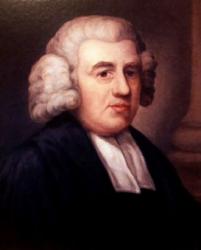
John Newton

1725 - 1807 Person Name: Juan Newton Author of "El nombre más caro" in Himnario de la Iglesia Metodista Episcopal John Newton (b. London, England, 1725; d. London, 1807) was born into a Christian home, but his godly mother died when he was seven, and he joined his father at sea when he was eleven. His licentious and tumul­tuous sailing life included a flogging for attempted desertion from the Royal Navy and captivity by a slave trader in West Africa. After his escape he himself became the captain of a slave ship. Several factors contributed to Newton's conversion: a near-drowning in 1748, the piety of his friend Mary Catlett, (whom he married in 1750), and his reading of Thomas à Kempis' Imitation of Christ. In 1754 he gave up the slave trade and, in association with William Wilberforce, eventually became an ardent abolitionist. After becoming a tide-surveyor in Liverpool, England, Newton came under the influence of George Whitefield and John and Charles Wesley and began to study for the ministry. He was ordained in the Church of England and served in Olney (1764-1780) and St. Mary Woolnoth, London (1780-1807). His legacy to the Christian church includes his hymns as well as his collaboration with William Cowper (PHH 434) in publishing Olney Hymns (1779), to which Newton contributed 280 hymns, including “Amazing Grace.” Bert Polman ================== Newton, John, who was born in London, July 24, 1725, and died there Dec. 21, 1807, occupied an unique position among the founders of the Evangelical School, due as much to the romance of his young life and the striking history of his conversion, as to his force of character. His mother, a pious Dissenter, stored his childish mind with Scripture, but died when he was seven years old. At the age of eleven, after two years' schooling, during which he learned the rudiments of Latin, he went to sea with his father. His life at sea teems with wonderful escapes, vivid dreams, and sailor recklessness. He grew into an abandoned and godless sailor. The religious fits of his boyhood changed into settled infidelity, through the study of Shaftesbury and the instruction of one of his comrades. Disappointing repeatedly the plans of his father, he was flogged as a deserter from the navy, and for fifteen months lived, half-starved and ill-treated, in abject degradation under a slave-dealer in Africa. The one restraining influence of his life was his faithful love for his future wife, Mary Catlett, formed when he was seventeen, and she only in her fourteenth year. A chance reading of Thomas à Kempis sowed the seed of his conversion; which quickened under the awful contemplations of a night spent in steering a water-logged vessel in the face of apparent death (1748). He was then twenty-three. The six following years, during which he commanded a slave ship, matured his Christian belief. Nine years more, spent chiefly at Liverpool, in intercourse with Whitefield, Wesley, and Nonconformists, in the study of Hebrew and Greek, in exercises of devotion and occasional preaching among the Dissenters, elapsed before his ordination to the curacy of Olney, Bucks (1764). The Olney period was the most fruitful of his life. His zeal in pastoral visiting, preaching and prayer-meetings was unwearied. He formed his lifelong friendship with Cowper, and became the spiritual father of Scott the commentator. At Olney his best works—-Omicron's Letters (1774); Olney Hymns (1779); Cardiphonia, written from Olney, though published 1781—were composed. As rector of St. Mary Woolnoth, London, in the centre of the Evangelical movement (1780-1807) his zeal was as ardent as before. In 1805, when no longer able to read his text, his reply when pressed to discontinue preaching, was, "What, shall the old African blasphemer stop while he can speak!" The story of his sins and his conversion, published by himself, and the subject of lifelong allusion, was the base of his influence; but it would have been little but for the vigour of his mind (shown even in Africa by his reading Euclid drawing its figures on the sand), his warm heart, candour, tolerance, and piety. These qualities gained him the friendship of Hannah More, Cecil, Wilberforce, and others; and his renown as a guide in experimental religion made him the centre of a host of inquirers, with whom he maintained patient, loving, and generally judicious correspondence, of which a monument remains in the often beautiful letters of Cardiphonia. As a hymnwriter, Montgomery says that he was distanced by Cowper. But Lord Selborne's contrast of the "manliness" of Newton and the "tenderness" of Cowper is far juster. A comparison of the hymns of both in The Book of Praise will show no great inequality between them. Amid much that is bald, tame, and matter-of-fact, his rich acquaintance with Scripture, knowledge of the heart, directness and force, and a certain sailor imagination, tell strongly. The one splendid hymn of praise, "Glorious things of thee are spoken," in the Olney collection, is his. "One there is above all others" has a depth of realizing love, sustained excellence of expression, and ease of development. "How sweet the name of Jesus sounds" is in Scriptural richness superior, and in structure, cadence, and almost tenderness, equal to Cowper's "Oh! for a closer walk with God." The most characteristic hymns are those which depict in the language of intense humiliation his mourning for the abiding sins of his regenerate life, and the sense of the withdrawal of God's face, coincident with the never-failing conviction of acceptance in The Beloved. The feeling may be seen in the speeches, writings, and diaries of his whole life. [Rev. H. Leigh Bennett, M.A.] A large number of Newton's hymns have some personal history connected with them, or were associated with circumstances of importance. These are annotated under their respective first lines. Of the rest, the known history of which is confined to the fact that they appeared in the Olney Hymns, 1779, the following are in common use:— 1. Be still, my heart, these anxious cares. Conflict. 2. Begone, unbelief, my Saviour is near. Trust. 3. By the poor widow's oil and meal. Providence. 4. Chief Shepherd of Thy chosen sheep. On behalf of Ministers. 5. Darkness overspreads us here. Hope. 6. Does the Gospel-word proclaim. Rest in Christ. 7. Fix my heart and eyes on Thine. True Happiness. 8. From Egypt lately freed. The Pilgrim's Song. 9. He Who on earth as man was Known. Christ the Rock. 10. How blest are they to whom the Lord. Gospel Privileges. 11. How blest the righteous are. Death of the Righteous. 12. How lost was my [our] condition. Christ the Physician. 13. How tedious and tasteless the hours. Fellowship with Christ. 14. How welcome to the saints [soul] when pressed. Sunday. 15. Hungry, and faint, and poor. Before Sermon. 16. In mercy, not in wrath, rebuke. Pleading for Mercy. 17. In themselves, as weak as worms. Power of Prayer. 18. Incarnate God, the soul that knows. The Believer's Safety. 19. Jesus, Who bought us with His blood. The God of Israel. "Teach us, 0 Lord, aright to plead," is from this hymn. 20. Joy is a [the] fruit that will not grow. Joy. 21. Let hearts and tongues unite. Close of the Year. From this "Now, through another year," is taken. 22. Let us adore the grace that seeks. New Year. 23. Mary to her [the] Saviour's tomb. Easter. 24. Mercy, 0 Thou Son of David. Blind Bartimeus. 25. My harp untun'd and laid aside. Hoping for a Revival. From this "While I to grief my soul gave way" is taken. 26. Nay, I cannot let thee go. Prayer. Sometimes, "Lord, I cannot let Thee go." 27. Now may He Who from the dead. After Sermon. 28. 0 happy they who know the Lord, With whom He deigns to dwell. Gospel Privilege. 29. O Lord, how vile am I. Lent. 30. On man in His own Image made. Adam. 31. 0 speak that gracious word again. Peace through Pardon. 32. Our Lord, Who knows full well. The Importunate Widow. Sometimes altered to "Jesus, Who knows full well," and again, "The Lord, Who truly knows." 33. Physician of my sin-sick soul. Lent. 34. Pleasing spring again is here. Spring. 35. Poor, weak, and worthless, though I am. Jesus the Friend. 36. Prepare a thankful song. Praise to Jesus. 37. Refreshed by the bread and wine. Holy Communion. Sometimes given as "Refreshed by sacred bread and wine." 38. Rejoice, believer, in the Lord. Sometimes “Let us rejoice in Christ the Lord." Perseverance. 39. Salvation, what a glorious plan. Salvation. 40. Saviour, shine and cheer my soul. Trust in Jesus. The cento "Once I thought my mountain strong," is from this hymn. 41. Saviour, visit Thy plantation. Prayer for the Church. 42. See another year [week] is gone. Uncertainty of Life. 43. See the corn again in ear. Harvest. 44. Sinner, art thou still secure? Preparation for the Future. 45. Sinners, hear the [thy] Saviour's call. Invitation. 46. Sovereign grace has power alone. The two Malefactors. 47. Stop, poor sinner, stop and think. Caution and Alarm. 48. Sweeter sounds than music knows. Christmas. 49. Sweet was the time when first I felt. Joy in Believing. 50. Ten thousand talents once I owed. Forgiveness and Peace. 51. The grass and flowers, which clothe the field. Hay-time. 52. The peace which God alone reveals. Close of Service. 53. Thy promise, Lord, and Thy command. Before Sermon. 54. Time, by moments, steals away. The New Year. 55. To Thee our wants are known. Close of Divine Service. 56. We seek a rest beyond the skies. Heaven anticipated. 57. When any turn from Zion's way. Jesus only. 58. When Israel, by divine command. God, the Guide and Sustainer of Life. 59. With Israel's God who can compare? After Sermon. 60. Yes, since God Himself has said it. Confidence. 61. Zion, the city of our God. Journeying Zionward. -- John Julian, Dictionary of Hymnology (1907) ================= Newton, J., p. 803, i. Another hymn in common use from the Olney Hymns, 1779, is "Let me dwell on Golgotha" (Holy Communion). --John Julian, Dictionary of Hymnology, Appendix, Part II (1907) ----- John Newton was born in London, July 24, 1725. His mother died when he was seven years old. In his eleventh year he accompanied his father, a sea captain, on a voyage. For several years his life was one of dissipation and crime. He was disgraced while in the navy. Afterwards he engaged in the slave trade. Returning to England in 1748, the vessel was nearly wrecked in a storm. This peril forced solemn reflection upon him, and from that time he was a changed man. It was six years, however, before he relinquished the slave trade, which was not then regarded as an unlawful occupation. But in 1754, he gave up sea-faring life, and holding some favourable civil position, began also religious work. In 1764, in his thirty-ninth year, he entered upon a regular ministry as the Curate of Olney. In this position he had intimate intercourse with Cowper, and with him produced the "Olney Hymns." In 1779, Newton became Rector of S. Mary Woolnoth, in London, in which position he became more widely known. It was here he died, Dec. 21, 1807, His published works are quite numerous, consisting of sermons, letters, devotional aids, and hymns. He calls his hymns "The fruit and expression of his own experience." --Annotations of the Hymnal, Charles Hutchins, M.A. 1872 See also in: Hymn Writers of the Church =======================

Benjamin H. Kennedy

1804 - 1889 Person Name: B. H. Kennedy Alterer of "There is no sorrow, Lord, too light" in Laudamus Kennedy, Benjamin Hall, D.D., son of the Rev. Raun Kennedy, sometime Incumbent of St. Paul's, Birmingham, and editor of A Church of England Psalm-Book, &c, 1821 (12th ed. 1848), was born at Summer Hill, near Birmingham, Nov. 6, 1804, and educated at King Edward's School, Birmingham; Shrewsbury School; and St. John's College, Cambridge. He graduated B.A. in 1827 (First Class Classical Tripos and First Chancellor's Medallist). He was Fellow of his College 1828-36; Head Master of Shrewsbury School, 1836-66; and Regius Professor of Greek in the University of Cambridge and Canon of Ely , 1867. Dr. Kennedy took Holy Orders in 1829, and was for some time Prebendaiy in Lichfield Cathedral and Rector of West Felton, Salop. He was elected Hon. Fellow of St. John's College, Cambridge, in 1880. Besides his Public School Latin Grammar, Palaestra Latina, Palaestra Stili Latini, &c, his editions of some of the Classics, and University Sermons, Dr. Kennedy published the following:— (1) The Psalter, or the Psalms of David, in English Verse. By a Member of the University of Cambridge, 1860; (2) Hymnologia Christiana, or Psalms & Hymns Selected and Arranged in the Order of the Christian Seasons (quoted in this Dictionary as Kennedy), 1863. i. From these two works many psalms and hymns have passed into other collections. The following versions of the Psalms first appeared in The Psalter, 1860, and again in the Hymnologia Christiana 1863. In many instances they have undergone considerable alteration in the latter work, and those of great length are broken into parts:— 1. All ye people, come and clap, &c. Ps. xlvii. 2. Arise, 0 Lord, with healing rod. Ps. x. 3. As pants the hind for cooling streams. Ps. xlii. 4. As Thy mercy lasts for ever. Ps. cix. 5. Be merciful to me, 0 God. Ps. lvii. 6. Be Thou my Judge, and I will strive. Ps. xvii. 7. Bless ye the Lord, His solemn praise record. Ps. cxxxiv. 8. Bow down Thine ear, and hear my cry. Ps. lxxxvi. 9. Come, ye children, list to me. Ps. xxxiv. 10. Ever, O my God and King. Ps. cxlv. 11. Ever will I bless the Lord. Ps. xxxiv. 12. Every king shall bow before Him. Ps. lxxii. 13. Full oft my chafing thoughts, &c. Ps. lxxiii. 14. God, avert the deadly blow. Ps. lix. 15. God, in Judah's homes is known. Ps. lxxvi. 16. God of my righteousness. Ps. iv. 17. Hear Thou my prayer, O Lord. Ps. cxliii. 18. Help us, O Lord, the good decay. Ps. xii. 19. How blest are they who flee, &c. Ps. cxix. 20. How blest the man, who fears to stray. Ps. i. 21. How blest the man whose errors, &c. Ps. xxxii. 22. How good it is to praise the Lord. Ps. xcii. 23. How long art silent, Lord? how long. Ps. xxxv. 24. How long forgotten, Lord, by Thee. Ps. xiii. 25. How long wilt Thou conceal Thy face. Ps. lxxxix. 26. I lift mine eyes unto the hills. Ps. cxxi. 27. I love the Lord, for He is nigh. Ps. cxvi. 28. I muse upon Thine ancient praise. Ps. lxxvii. 29. I praise Thee, Lord, who o'er my foes. Ps. xxx. 30. I trod the path of life, my strength. Ps. cii. 31. In trouble to the Lord I prayed. Ps. cxx. 32. Jehovah reigns, arrayed in light. Ps. xciii. 33. Judge me, O God; maintain my cause. Ps. xliii. 34. Lord, hear my prayer, and let my cry. Ps. cii. 35. Lord, I am not lofty-minded. Ps. cxxxi. 36. Lord, I lift my soul to Thee. Ps. xxv. 37. Lord, my Rock. I cry to Thee. Ps. xxviii. 38. Lord, save me from the foeman's wrath. Ps. cxl. 39. Lord, Thou wilt guard with faithful love. Ps. xxxvii. 40. Lord, Thy love and truth I praise. Ps. ci. 41. My God, my God, to Thee I cry, Ah! why hast Thou, &c. Ps. xxii. 42. My heart is fain, O God, my heart. Ps. cviii. 43. My portion is the living Lord. Ps. cxix. 44. My Saviour is the living Lord. Ps. xi. 45. My Shepherd is the Lord, no care. Ps. xxiii. 46. My trust is in Thy holy Name. Ps. lxxi. 47. My voice to God ascends on high. Ps. lxxvii. 48. Not in envy, not in anger. Ps. xxxvii. 49. Not in Thy fury, Lord, reprove. Ps. xxxviii. 50. O grant us, God of love. Ps. lxvii. 51. O God, be merciful to me. Ps. li. 52. 0 God of hosts, a vine. Ps. lxxx. 53. 0 God, subdue the power of sin. Ps. vii. 54. O Lord, in Thine accepted day. Ps. lxix. 55. 0 Lord our King, how bright Thy fame. Ps. viii. 56. O Lord, the God of my salvation. Ps. lxxxviii. 57. 0 praise ye the Lord, Praise Him in His shrine. Ps. cl. 58. O rejoice, ye righteous, in the Lord. Ps. xxxiii. 59. Oft, as to scatter kings. Ps. lxviii. 60. Out of the depths to Thee I cry. Ps. cxxx. 61. Praise, O my soul, the Lord and all. Ps. ciii. 62. Praise, 0 my soul, the Lord; how great. Ps. civ. 63. Praise the Lord, for good is He. Ps. cxxxvi. 64. Praise the Lord, for it is wise. Ps. cxlvii. 65. Praise the Lord from heaven on high. Ps. cxlviii. 66. Praise the Lord, His people; raise. Ps. cxlvi. 67. Praise ye the Lord, all nations. Ps. cxvii. 68. Praise ye the Lord, for good is He. Ps. cxviii. 69. Praise ye the Lord, for very good. Ps. cvii. 70. Praised be the Lord, my Rock of might. Ps. cxliv. 71. Save me, O God, the dangerous, &c. Ps. lxix. 72. Save me through Thy name, 0 God. Ps. liv. 73. Seek we Jehovah's house, they said. Ps. cxxii. 74. Sing a new song unto the Lord. Ps. xcvi. 75. Sing the Lord, ye sons of heaven. Ps. xxix. 76. Sing unto the Lord with mirth. Ps. c. 77. Take note, O Lord, of all my fears. Ps. lvi. 78. The heavens declare Thy wondrous fame. Ps. lxxxix. 79. The heavens, O God, Thy glory tell. Ps. xxx. 80. The king, 0 Lord, with hymns of praise. Ps. xxi. 81. The life of man is like the grass. Ps. ciii. 82. The Lord in thy distressful day. Ps. xx. 83. The Lord is King; glad earth, and ye. Ps. xcvii. 84. There is no God, so saith the fool. Ps. xiv. 85. Thou searchest all my secret ways. Ps. cxxxix. 86. To Thee I call. O Lord, be swift. Ps. cxli. 87. 'Twas dream-like, when the Lord's decree. Ps. cxxvi. 88. Unless the Lord with us had wrought. Ps. cxxiv. 89. Unto my feet a lantern shines Thy word. Ps. cxix. 90. Unto the Lord I make my moan. Ps. cxlii. 91. We sat and wept by Babel's stream. Ps. cxxxvii. 92. When Israel came from Egypt's strand. Ps. cxiv. 93. When through the dismal waste. Ps. lxviii. 94. Who rules his life by God's behest. Ps. cxxviii. 95. Whoe'er his secret home has made. Ps. xci. 96. With weary care brought low. Ps. lxix. 97. With my whole heart I will praise Thee. Ps. cxxxviii. 98. Within Thy tabernacle, Lord. Ps. xv. 99. Ye Judges of the earth, be still. Ps. lxxxii. ii. The following also appeared in The Psalter, 1860, and again in Hymnologia Christiana 1863, mostly altered, and based upon the corresponding Psalms by George Sandys (q.v.), published in his Paraphrase upon the Psalms of David, 1636:— 100. Blest he whose timely mercies heed. Ps. xli. 101. Hide not, 0 Lord, Thy cheering face. Ps. xl. 102. I waited for a gentle word. Ps. xl. 103. Israel of God, be Christ your Guide. Ps. cxv. 104. Who in the Lord securely lay. Ps. cxxv. iii. To the Rev. A. T. Russell's Psalms & Hymns, 1851, Dr. Kennedy was indebted to a limited extent in preparing his Psalter, 1860. In his Preface he says, p. viii.," Mr. Russell's metres, and occasionally his words, have been adopted in the following Psalms: 2, 24, 39, 45, 46, 50, 84, 85, 90, 110, 111, 113." Of these the following, sometimes with alterations of the 1860 text, were given in the

Pages


Export as CSV
It looks like you are using an ad-blocker. Ad revenue helps keep us running. Please consider white-listing Hymnary.org or getting Hymnary Pro to eliminate ads entirely and help support Hymnary.org.