

 My Starred Hymns
 My FlexScores
 My Hymnals
 My Purchased Files
Planning worship?
Check out our sister site, ZeteoSearch.org,
for 20+ additional resources related to your search.
- |
User Links
Person Results
N. F. S. Grundtvig
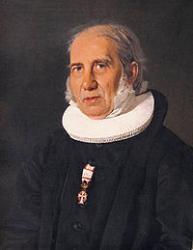
1783 - 1872 Person Name: N. F .S. Grundtvig Author of "Ry Jeso Tompo velona mpiandry sy mpamelona" in Protestant Madagascar Hymnal, 2001 Nicolai Frederik Severin Grundtvig was the son of a pastor, and was born at Udby, in Seeland, in 1783. He studied in the University of Copenhagen from 1800-1805; and, like some other eminent men, did not greatly distinguish himself; his mind was too active and his imagination too versatile to bear the restraint of the academic course. After leaving the university he took to teaching; first in Langeland, then (1808) in Copenhagen. Here he devoted his attention to poetry, literature, and Northern antiquities. In 1810 he became assistant to his father in a parish in Jutland. The sermon he preached at his ordination, on the subject "Why has the Lord's word disappeared from His house," attracted much attention, which is rarely the case with "probationers'" sermons. On his father's death, in 1813, he returned to Copenhagen, and for eight years devoted himself mainly to literature. The poetry, both secular and religious, that he produced, drew from a friend the remark that "Kingo's harp had been strung afresh." In 1821 King Frederik vi. appointed him pastor of Prasloe, a parish in Seeland, from which he was the next year removed to Copenhagen, and made chaplain of St. Saviour's church in Christianshavn. From the time of his ordination he had been deeply impressed with Evangelical church sentiments, in opposition to the fashionable Rationalism and Erastianism of the day; and adhered to the anti-rationalist teaching of Hauge, whose death at this time (1824) seemed to be a call to Grundtvig to lift up his voice. An opportunity soon presented itself; Professor Clausen brought out a book entitled Katholicismens og Protestantismens Forfatning, Ldre, og Ritus ("The condition, teaching, and ritual of Catholicism and Protestantism"). This book was replete with the Erastian Rationalism which was so especially distasteful to Grundtvig, who forthwith, in his Kirkens Gjenmsele ("The Church's Reply," 1825), strongly opposed its teaching, and laid down truer principles of Christian belief, and sounder views of the nature of the Church. This caused a sensation: Grandtvig (who had not spared his opponent) was fined 100 rixdollars, and the songs and hymns which he had written for the coming celebration of the tenth centenary of Northern Christianity were forbidden to be used. On this he resigned his post at St. Saviour's, or rather was forced to quit it by a sentence of suspension which was pronounced in 1826, and under which he was kept for 13 years. He took the opportunity of visiting England in 1829, 30, and 31, and consulting its libraries, mainly with a view to a further insight into Northern antiquities, and to help his studies in the early English tongue. His edition of Cynewulfs beautiful poem of the Phenix from the Codex Exoniensis, the Anglo-Saxon (so-called) text, with a preface in Danish, and a fri Fordanskning (free rendering in Danish), published in 1840*, is a result of this journey and enforced leisure. Tired of his long silence, his numerous friends and admirers proposed to erect a church for him, and form themselves into an independent congregation, but this was not permitted. He was allowed, however, to hold an afternoon service in the German church at Christianshavn. There ho preached for eight years, and compiled and wrote his hymn-book, Sang-Vdrk til den Danske Kirkce ("Song-work for the Danish Church"). He still worked on towards his object of raising the Christian body to which ho belonged from the condition of a mere slate establishment to the dignity of a gospel-teaching national church. In 1839 (the year of the death of King Frederik vr., and the accession of his cousin Chrisliem vni.) the suspension was removed, and he was appointed chaplain of the hospital Vartou, a position which he held till his death. In 1863 the king (Frederik vn.) conferred on him the honorary title of bishop. The good old man died suddenly, in his 89th year, on Sept. 2, 1872, having officiated the day before. As Kingo is the poet of Easter, and Brorson of Christmas, so Grundtvig is spoken of as the poet of Whitsuntide.
--John Julian, Dictionary of Hymnology,, p. 1001 (1907)
N. F. S. Grundtvig
Stephen P. Starke
b. 1955 Person Name: Stephen P. Starke, b. 1955 Author of "Awake, O Sleeper, Rise and See" in Christian Worship Rev. Stephen P. Starke has always had a heart for hymns. At a young age, Starke played hymns out of The Lutheran Hymnal and read through the hymnal to pass the time before Sunday services.
Pastor Starke graduated from Concordia University Chicago with a BA. While completing his MDiv from Concordia Theological Seminary, Fort Wayne, Indiana, he attempted his first hymn text and was encouraged to write more. Since that time, he has written more than 175 hymns inspired by music and the Scriptures. He has been commissioned to write hymns for special occasions, including the 125th anniversary of Concordia University Wisconsin, as well as his daughter’s wedding.
Because of his extensive work as a hymnwriter, Pastor Starke received an honorary doctor of letters degree from Concordia University, Irvine, California, and an honorary doctor of divinity degree from Concordia University Wisconsin in Mequon.
It is through the medium of hymns that Pastor Starke desires to preserve and pass on the truths of the Gospel for generations to come.
Stephen P. Starke
Pope Gregory I
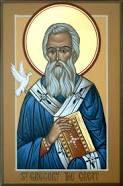
540 - 604 Person Name: Gregor den store Author of "Kom Helligaand med Skaber-Magt" in M. B. Landstads Kirkesalmebog og "Nokre Salmar" ved Professor Dr. E. Blix, samt følgende tillæg Gregory I., St., Pope. Surnamed The Great. Was born at Rome about A.D. 540. His family was distinguished not only for its rank and social consideration, but for its piety and good works. His father, Gordianus, said to have been the grandson of Pope Felix II. or III., was a man of senatorial rank and great wealth; whilst his mother, Silvia, and her sisters-in-law, Tarsilla and Aemiliana, attained the distinction of canonization. Gregory made the best use of his advantages in circumstances and surroundings, so far as his education went. "A saint among saints," he was considered second to none in Rome in grammar, rhetoric, and logic. In early life, before his father's death, he became a member of the Senate; and soon after he was thirty and accordingly, when his father died, he devoted the whole of the large fortune that he inherited to religious uses. He founded no less than six monasteries in Sicily, as well as one on the site of his own house at Rome, to which latter he retired himself in the capacity of a Benedictine monk, in 575. In 577 the then Pope, Benedict I, made him one of the seven Cardinal Deacons who presided over the seven principal divisions of Rome.
The following year Benedict's successor, Pelagius II, sent him on an embassy of congratulation to the new emperor Tiberius, at Constantinople. After six years' residence at Constantinople he returned to Rome. It was during this residence at Rome, before he was called upon to succeed Pelagius in the Papal chair, that his interest was excited in the evangelization of Britain by seeing some beautiful children, natives of that country, exposed for sale in the slave-market there ("non Angli, sed Angeli"). He volunteered to head a mission to convert the British, and, having obtained the Pope's sanction for the enterprise, had got three days' journey on his way to Britain when he was peremptorily recalled by Pelagius, at the earnest demand of the Roman people.
In 590 he became Pope himself, and, as is well known, carried out his benevolent purpose towards Britain by the mission of St. Augustine, 596. His Papacy, upon which he entered with genuine reluctance, and only after he had taken every step in his power to be relieved from the office, lasted until 604, when he died at the early age of fifty-five. His Pontificate was distinguished by his zeal, ability, and address in the administration of his temporal and spiritual kingdom alike, and his missionaries found their way into all parts of the known world. In Lombardy he destroyed Arianism; in Africa he greatly weakened the Donatists; in Spain he converted the monarch, Reccared: while he made his influence felt even in the remote region of Ireland, where, till his day, the native Church had not acknowledged any allegiance to the See of Rome. He advised rather than dictated to other bishops, and strongly opposed the assumption of the title of "Universal Patriarch" by John the Faster of Constantinople, on the ground that the title had been declined by the Pope himself at the Council of Chalcedon, and declared his pride in being called the “Servant of God's Servants." He exhibited entire toleration for Jews and heretics, and his disapproval of slavery by manumitting all his own slaves. The one grave blot upon his otherwise upright and virtuous character was his gross flattery in congratulating Phocas on his accession to the throne as emperor in 601, a position the latter had secured with the assistance of the imperial army in which he was a centurion, by the murder of his predecessor Mauricius (whose six sons had been slaughtered before their father's eyes), and that of the empress Constantina and her three daughters.
Gregory's great learning won for him the distinction of being ranked as one of the four Latin doctors, and exhibited itself in many works of value, the most important of which are his Moralium Libri xxxv., and his two books of homilies on Ezekiel and the Gospels. His influence was also great as a preacher and many of his sermons are still extant, and form indeed no inconsiderable portion of his works that have come down to us. But he is most famous, perhaps, for the services he rendered to the liturgy and music of the Church, whereby he gained for himself the title of Magister Caeremoniarum. His Sacramentary, in which he gave its definite form to the Sacrifice of the Mass, and his Antiphonary, a collection which he made of chants old and new, as well as a school called Orplianotrophium, which he established at Rome for the cultivation of church singing, prove his interest in such subjects, and his success in his efforts to render the public worship of his day worthy of Him to Whom it was addressed. The Gregorian Tones, or chants, with which we are still familiar after a lapse of twelve centuries, we owe to his anxiety to supersede the more melodious and flowing style of church music which is popularly attributed to St. Ambrose, by the severer and more solemn monotone which is their characteristic.
The contributions of St. Gregory to our stores of Latin hymns are not numerous, nor are the few generally attributed to him quite certainly proved to be his. But few as they are, and by whomsoever written, they are most of them still used in the services of the Church. In character they are well wedded to the grave and solemn music which St. Gregory himself is supposed to have written for them.
The Benedictine editors credit St. Gregory with 8 hymns, viz. (1) “Primo dierum omnium;" (2) "Nocte surgentes vigilemus;" (3) "Ecce jam noctis tenuatur tunbra;" (4) “Clarum decus jejunii;" (5) "Audi benigne conditor;" (6) "Magno salutis gaudio;" (7) “Rex Christe factor omnium;" (8) "Lucis Creator Optime." Daniel in his vol. i. assigns him three others. (9) “Ecce tempus idoneum;" (10) "Summi largitor praemii;" (11) "Noctis tempus jam praeterit." For translations of these hymns see under their respective first lines. (For an elaborate account of St. Gregory, see Smith and Wace's Dictionary of Christian Biography.) [Rev. Digby S. Wrangham, M.A.]
-- John Julian, Dictionary of Hymnology (1907)
===================
Gregory I., St., Pope, p. 469, i. We have been unable to discover any grounds which justified the Benedictine editors and Daniel in printing certain hymns (see p. 470, i.) as by St. Gregory. Modern scholars agree in denying him a place among hymnwriters; e.g., Mr. F. H. Dudden, in his Gregory the Great (London, 1905, vol. i.,p. 276), says "The Gregorian authorship of these compositions [the hymns printed by the Benedictine editors] however cannot be maintained... Gregory contributed ... nothing at all to the sacred music and poetry of the Roman Church." [Rev. James Mearns, M.A.]
--John Julian, Dictionary of Hymnology, New Supplement (1907)
Pope Gregory I
John Cosin
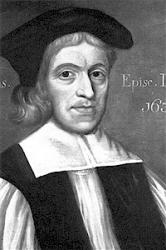
1594 - 1672 Person Name: John Cosin, 1594-1672 Translator of "Come, Holy Ghost, Our Souls Inspire" in Lutheran Book of Worship The following note is from Bird's "Songs of the Spirit," p. 171. "Cosin was a native of Norwich, and scholar of Caius College, Cambridge; Prebend of Durham, 1624; Rector of Branspeth, 1626; in 1660, Dean and then Bishop of Durham. His 'Collection of Private Devotions for the Hours of Prayer,' much offended the Puritans, who styled it 'a book of Cozening Devotions.' This work contains ten short hymns (three of them from the Latin), which are supposed to be his.
--Annotations of the Hymnal, Charles Hutchins, M.A., 1872.
=======================
Cosin, John, D.D., son of Giles Cosin, of Norwich, born at Norwich Nov. 30, 1594; educated at the Free School of that city and Caius College, Cambridge. Taking Holy Orders he became (besides holding minor appointments) Prebendary of Durham Cathedral; Rector of Brancepeth, 1626; Master of Peterhouse, Cambridge, 1634, and Vice-Chancellor of the University and Dean of Peterborough, 1640. He suffered much at the hands of the Puritans; but after the Restoration in 1660, he became Dean and then Bishop of Durham. Died at Westminster, Jan. 15, 1672. His translation of the Veni Greater Spiritus (q. v.), 44. “Come, Holy Ghost, our souls inspire," was included in his Collection of Private Devotions, 1627.
--John Julian, Dictionary of Hymnology (1907)
John Cosin
Johann Walter
1496 - 1570 Person Name: J. Walther Composer of "VENI, CREATOR" in American Lutheran Hymnal Johann Walther (b. Kahla, Thuringia, Germany, 1496: d. Torgau, Germany, 1570) was one of the great early influences in Lutheran church music. At first he seemed destined to be primarily a court musician. A singer in the choir of the Elector of Saxony in the Torgau court in 1521, he became the court's music director in 1525. After the court orchestra was disbanded in 1530 and reconstituted by the town, Walther became cantor at the local school in 1534 and directed the music in several churches. He served the Elector of Saxony at the Dresden court from 1548 to 1554 and then retired in Torgau.
Walther met Martin Luther in 1525 and lived with him for three weeks to help in the preparation of Luther's German Mass. In 1524 Walther published the first edition of a collection of German hymns, Geystliche gesangk Buchleyn. This collection and several later hymnals compiled by Walther went through many later editions and made a permanent impact on Lutheran hymnody.
Bert Polman
================
Walther, Johann, was born in 1496 at a village near Cola (perhaps Kahla, or else Colleda, near Sachsenburg) in Thuringia. In 1524 we find him at Torgau, as bassist at the court of Friedrich the Wise, Elector of Saxony. The Elector Johann of Saxony made him "Sengermeister" (choirmaster) in 1526. When the Electoral orchestra (Kapelle) at Torgau was disbanded in 1530, it was reconstituted by the town, and in 1534 Walther was also appointed cantor (singing-master) to the school at Torgau. On the accession of the Elector Moritz of Saxony, in 1548, Walther went with him to Dresden as his Kapellmeister. He was pensioned by decree of Aug. 7, 1554, and soon after returned to Torgau, still retaining the title of "Sengermeister." He died at Torgau, perhaps on March 25, or at least before April 24, 1570. (Monatshefte für Musikgeschichte, 1871, p. 8, and 1878, p. 85; Archiv für Litteraturgeschichte, vol. xii., 1884, p. 185; Dr. Otto Taubert's Pflege der Musilz in Torgau, 1868, and his Gymnasial Singe-Chor zu Torgau, n.d., 1870, &c.)
Walther was more distinguished as a musician than as a hymnwriter. In 1524 he spent three weeks in Luther's house at Wittenberg, helping to adapt the old church music to the Lutheran services, and harmonising the tunes in five parts for the Geystliche gesangk Bucklyn, published at Wittenberg in 1524. He was also present in the Stadtkirche at Wittenberg, when, on Oct. 29, 1525, the service for the Holy Communion, as rearranged by Luther and himself, was first used in German. His hymns appeared mostly in his Das christlich Kinderlied D. Martini Lutheri, Erhalt uns Herr, &c. Auffs new in sechs Stimmen gesetzt, und rait etlichen schönen Christlichen Texten, Lateinischen und Teutschen Gesengen gemehrt, &c, Wittenberg.
Those of Walther's hymns which have passed into English are:—
i. Herzlich Lieb hab ich dich, mein Gott. Trinity Sunday. First published in 1566 as above, and thence in Wackernage, iii. p. 204, in 4 stanzas of 8 lines. Translated as:—
0 God, my Rock! my heart on Thee. This is a good translation of stanza i., iii., iv., by A. T. Russell, as No. 133 in his Psalms & Hymns, 1851.
ii. Herzlich thut mich erfreuen. Eternal Life. First published separately, in 33 stanzas, at Wittenberg, in 1552, entitled "A beautiful spiritual and Christian new miner's song, of the Last Day and Eternal Life" [Konigsberg Library]. Thence in Wackernagel, iii. p. 187, in 34 stanzas, stanza 33 being added from the Dresden reprint of 1557. It is set to the melody of a popular song on the Joys of Summer. It is a fresh and beautiful hymn, but is only partially available on account of its length. Translated as:—
1. Now fain my joyous heart would sing. This is a translation of stanza 1, 4, 5, 17, 33, 34, by Miss Winkworth, in her Lyra Germanica 2nd Ser., 1858, p. 223. Her translations of stanzas 1, 4, 5, were included in the English Presbyterian Psalms & Hymns, 1867, No. 325.
2. Soon will the heavenly Bridegroom come. This is by Dr. Kennedy, in his Hymn. Christanza, 1863, No. 1009, and follows the text of the Geistliche Lieder omitting stanza 16, 18, 13. It is repeated in the Laudes Domini, N. Y., 1884, &c.
3. The Bridegroom soon will call us. By Dr. M. Loy, from the Geistliche Lieder, but omitting stanzas 18, 13, as No. 24 in the Ohio Lutheran Hymnal, 1880. [Rev. James Mearns, M.A. ]
--Excerpts from John Julian, Dictionary of Hymnology (1907)
Johann Walter
Johan Olof Wallin
1779 - 1839 Person Name: Johan Olaf Wallin, 1779-1839 Author of "Come, Holy Spirit, From Above" in Hymnal and Order of Service Johan Olaf Wallin was born at Stora Tuna, in 1779, and early displayed his poetical powers. In 1805, and again in 1809, he gained the chief prize for poetry at Upsala. In the latter year he became pastor at Solna; here his ability as a preacher was so striking that he was transferred to Stockholm, in 1815, as "pastor primarius," a title for which we have no exact equivalent. In 1818 he was made Dean of Westeras, and set about the task of editing a revised hymn-book for the whole of Sweden. This task he completed in 1819, and published it as, Den Swenska Psalmboken, af Konungen gillad och stadfästad (The Swedish hymn-book, approved and confirmed by the King). To it he contributed some 150 hymns of his own, besides translations and recastings; and the book remains now in the form in which he brought it out. It is highly prized by the Swedes, and is in use everywhere.
--John Julian, Dictionary of Hymnology, p. 1000 (1907)
Johan Olof Wallin
Richard Massie
1800 - 1887 Translator of "Creator, Spirit, Heavenly Dove" in American Lutheran Hymnal Massie, Richard, eldest son of the Rev. R. Massie, of Goddington, Cheshire, and Rector of Eccleston, was born at Chester, June 18, 1800, and resides at Pulford Hall, Coddington. Mr. Massie published a translation of Martin Luther’s Spiritual Songs, London, 1854. His Lyra Domestica, 1st series, London, 1860, contains translations of the 1st Series of Spitta's Psalter und Harfe. In 1864 he published vol. ii., containing translations of Spitta's 2nd Series, together with an Appendix of translations of German hymns by various authors. He also contributed many translations of German hymns to Mercer's Church Psalter & Hymn Book; to Reid's British Herald; to the Day of Rest, &c. He died Mar. 11,1887.
-- John Julian, Dictionary of Hymnology (1907)
Richard Massie
Paul Eber
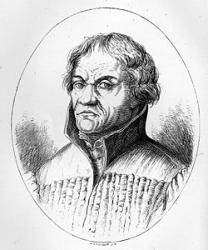
1511 - 1569 Person Name: Paul Eber, 1511-69 Translator (into German) of "Lord God, to You We All Give Praise" in Lutheran Worship Eber, Paul, son of Johannes Eber, master tailor at Kitzingen, Bavaria, was born at Kitzingen, Nov. 8, 1511. He was sent in 1523 to the Gymnasium at Ansbach, but being forced by illness to return home, was on his way thrown from horseback and dragged more than a mile, remaining as a consequence deformed ever after. In 1525 he entered the St. Lorentz school at Nürnberg, under Joachim Camerarius, and in 1532 went to the University of Wittenberg, where he graduated 1536, and thereafter became tutor in the Philosophical Faculty. He was appointed Professor of Latin in 1544, then in 1557 Professor of Hebrew and Castle preacher, and in 1558 Town preacher and General Superintendent of the Electorate, receiving in 1559 the degree D.D. from the University. He died at Wittenberg, Dec. 10, 1569 (Koch, i. 271-278; Allgemeines Deutsche Biog., v. 529).
At Wittenberg he was a close friend of Melanchthon, was privy to all his plans, and conducted the greater part of his correspondence. After Melanchthon's death in 1560, he became leader of his party, and had to engage in various controversies with the Crypto-Calvinists, &c.; the seeds of his fatal illness being sown on his return journey from the fruitless conference held at Altenburg with the theologians of Jena, which lasted from Oct. 20, 1568, to March 9, 1569.
Eber was, next to Luther, the best poet of the Wittenberg school. His hymns, some of them written for his own children to sing to Luther's melodies, are distinguished for their child-like spirit and beautiful simplicity. Seventeen hymns have been attributed to him, four of which are certainly his, and probably two others. Of these six, five have been translated into English, one of which is noted under "Dicimus grates," and the others are:—
i. Herr Jesu Christ, wahr Mensch und Gott. For the Dying. The first hymnbook in which this simple and beautiful hymn has been found is the Low German Enchiridion, published at Hamburg, 1565, where it is in 8 stanzas of 6 lines., entitled "A prayer to Christ for a happy departure from this troublous life," and marked as "D. Paulus Eberus Filiolis suis faciebat MDLVII. Wackernagel, iv. p. 4, gives this and a second form in High German from the Psalmen, Geystliche Lieder und Gesänge, Strassburg, 1569. In his Bibliographie, 1855, p. 233, Wackernagel describes an undated broadsheet, which he would date 1550, and at p. 279 says it forms the first of Neun Schöne Geistliche Lieder, Nürnberg N.D., c. 1556. G. Döring, in his Choralkunde, Danzig, 1865, p. 434, says it appeared as "Panie Jezu ty's czlowiek i Bog" in the Polish Cantional, edited by Pastor Seklucyan, and published at Königsberg, 1559. Lauxmann, in Koch, viii, 591-594, adds that it comforted Eber himself while he lay a-dying, Dec. 10, 1569; was repeated by Hugo Grotius a few minutes before his death, Aug. 28, 1645; and was a favourite hymn of Prince Wolfgang of Anhalt (d. 1566), Christian I., Elector of Saxony (d. 1591), of the Margrave Georg Friedrieh of Brandenburg-Kulmbach (d. 1603), &c. Included as No. 820 in the Unv. L. S., 1851. The translations in common use are:—
1. Lord Jesus Christ, true Man and God, Who borest. Good and full, by Miss Winkworth in the first Ser. of her Lyra Germanica, 1855, p. 239. Of this stanzas i.-iv. appear in the Psalms & Hymns., Bedford, 1859; i., ii., viii. in the Harrow School Hymn Book, 1866 ; and i.-iii., v., viii. in the Pennsylvania Lutheran Church Book,1868. A cento from stanza ii., line 3-6, iii., 11. 1-4, vii., 1line 3-6, beginning, "When from my sight all fades away," is No. 1181 in the American Sabbath Hymn Book, 1858.
2. Lord Jesus Christ, true Man and God, Thou Who. A translation by E. Cronenwett, in nine stanzas of L.M., based on stanzas i., ii., iv.-viii., as No. 434, in the Ohio Lutheran Hymnal 1880.
Other translations are, (1) "0 God, support me, death is near," by Dr. G. Walker, 1860, p. 103. (2) "Lord Jesus Christ, true Man and God, who hast”, by E. Massie, 1867, p. 10.
ii. Wenn wir in höchsten Nöthen sein. In Trouble. Founded on a hymn by Joachim Camerarius, his former master at Nürnberg [b. at Bamberg, April 12, 1500, d. as Professor of Greek and Latin at Leipzig, April 17, 1574], which in Wackernagel, i. p. 324, runs thus:—
"In tenebris nostrae et densa caligine mentis,
Cum nihil est toto pectore consilii,
Turbati erigimus, Deus, ad Te lumina cordis
Nostra, tuamque fides solius erat opem.
Tu rege consiliis actus, Pater optime, nostros,
Nostrum opus ut laudi serviat omne Tuae."
These lines comforted Melanchthon in 1546; and Lauxmann, in Koch, viii. 161-165, thinks probably Eber also. He relates that on Ascension Day, 1547, after the battle of Mühlberg, the Wittenbergers having received a message from the captive Elector to deliver their city to the Emperor Charles V. assembled for prayer in church; and quotes a portion of the prayer by Bugenhagen which greatly resembles Eber's hymn. But that the hymn was written then we have no proof, and the earliest source quoted by Wackernagel, iv. p. 6, is the Naw Betbüchlein, Dresden 1566, in 7 stanza of 4 line., though in his Bibliographie, 1855, p. 312, he describes a broadsheet printed at Nürnberg, N.D., c. 1560. In M. Moller's Meditationes sanctorum Patrum, Görlitz, 1584, it is entitled "A beautiful prayer of the venerable Dr. Paul Eber, which he composed on the beautiful words of King Jehoshaphat, 2 Chron. xx. 12." Included as No. 583 in the Unv. L. S., 1851.
A "Cry from the depths," though not in despair but in trustful confidence in God, it is one of the finest and most widely used hymns of the Reformation period. Lauxmann relates how the singing of this hymn and the prayers of Martin Rinkart (q.v.), Archidiaconus of Eulenburg near Leipzig, prevailed to move the heart of the Swedish Lieutenant-Colonel, who on Feb. 21, 1635, had demanded from the inhabitants a ransom of £4500, but eventually accepted 2000 florins; says that in commemoration of a similar deliverance from the Swedish army in 1642 the hymn was long sung at the end of the Sunday afternoon service at Pegau, near Leipzig, and adds other incidents regarding its use.
The only translation in common use is :—
When in the hour of utmost need. A full and very good translation by Miss Winkworth in the 2nd Ser. of her Lyra Germanica, 1858, p. 180, and thence as No. 141 in her Chorale Book for England, 1863. Included in full in the American Presbyterian Hymnal 1874, and the Ohio Lutheran Hymnal, 1880. In full, though slightly altered, as No. 233, in Hymns Ancient & Modern, 1861, but omitted in the revised edition, 1875. In the Hymnary, 1871, Psalmist, 1878, J. L. Porter's Collection, 1876, Thring's Collection, 1882, and the Evangelical Hymna, N. Y., 1880, st. v. is omitted.
Other translations are, (1) "When we are under great distress," by J. C. Jacobi, 1720, p. 19 (1722, p. 119; 1732, p. 184, altered, and thence as No. 140 in p. i. of the Moravian Hymn Book, 1754). (2) "When neither help nor counsel's nigh," by Dr. G. Walker, 1860, p. 89. (3) "When all our way is hedged around," by N. L. Frothingham, 1870.
His hymns not in English common use are:—
iii. Helft mir Gottes Güte preisen. [New Year.] Written on the name Helena, borne both by his wife and his daughter, the initial letters of each stanza composing it. Wackernagel, iv. p. 6, quotes it from Eichorn's Geistliche Lieder, Frankfurt a. Oder, c. 1580, in 6 st. of 8 l., entitled, "A Thanksgiving and Prayer for the New Year, in remembrance of God's goodness, for the Children." Older but less correct forms are noted by Mützell, p. 486, as in the Copenhagen GesangBuch,1511, and the Stettin, 1576. Included as No. 68 in the Unv. L. S., 1851. It is translation as, "Ye Christians in this nation," by J. C. Jacobi, 1722, p. 11 (1732, p. 10, altered and beginning, "Come, let us all, with Fervour.")
iv. In Christi Wunden schlaf ich ein. [For the Dying.] Appears in Jeremias Weber's Gesang-Buch, Leipzig, 1638, p. 797, marked as "Another" (the hymn immediately preceding is ascribed to Eber), in 3 st. of 4 1. In the Berlin Geistlicher Lieder Schatz, ed. 1863, No. 1468, the text is slightly varied, and arranged in 2 st. of 6 1. It was first ascribed to Eber in the Nürnberg Gesang-Buch, 1676. Lauxmann, in Koch, viii. 595-601, says of it, "That the hymn is much older than the date of its appearance [i.e. than 1638] seems obvious; that it breathes the childlike spirit of Eber is certain. More than this we cannot say." St. i., 11. 3-6, "Ja Christi Blut und Gerechtigkeit," has been adopted by many pious Germans, young and old, as a prayer in life and death, and Lauxmann relates many interesting incidents regarding its use by A. G. Spangenberg, by Wilhelm Hey, and others. These four lines were adopted by N. L. von Zinzendorf, as the first stanza of his well-known hymn, "Christi Blut und Gerechtigkeit" (q. v.). It is translation as, "I fall asleep in Jesus' arms," by Miss Winkworth, i860, p. 121. [Rev .James Mearns]
-- John Julian, Dictionary of Hymnology (1907)
Paul Eber
Charles Venn Pilcher
1879 - 1961 Person Name: Charles V. Pilcher, 1879-1961 Author of "Upon the Cross the Robber Prayed" in Ambassador Hymnal Pilcher, Charles Venn. (Oxford, June 4, 1879--July 4, 1961, Sydney, Australia). Anglican. Grandnephew of Charlotte Elliott. Hertford College, Oxford, B.A., 1902; M.A., 1905; B.D., 1909; D.D., 1921. Curacies at Birmingham, 1903-1905; St. James, Toronto, 1910-1916; taught theology at Auckland Castle, England, 1905-1906, and at Wycliffe College, Toronto, 1916-1936. Elected coadjutor bishop of Sydney, Australia, at the instance of a former Wycliffe colleague, Archbishop Mowll. He composed hymn tunes and other music, and long played bass clarinet in the Toronto Symphony Orchestra. Also, he translated and published much devotional material from Iceland, notably Iceland Christian Classics (1950). These side interests, like his hymn writing, merely served to heighten and deepen his effectiveness and influence as a teacher.
--Hugh D. McKellar, DNAH Archives
Charles Venn Pilcher
E. Cronenwett
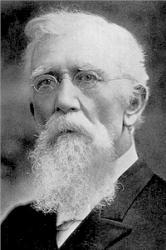
1841 - 1931 Person Name: Emanuel Cronenwett, 1841-1931 Translator (into English) of "Lord God, to You We All Give Praise" in Lutheran Worship Cronenwett, Emmanuel, a Lutheran Pastor at Butler, Pennsylvania, U.S.A., contributed to the Evangelical Lutheran Hymnal, Published by Order of the Evangelical Lutheran Joint Synod of Ohio and other States, 1880, in addition to 20 translations from the German, the following original hymns, some of which rank with the best in the collection:—
1. A holy state is wedded life. Domestic Worship.
2. Faith is wisdom from on high. Faith.
3. Heavenly Father, Jesus taught us. Prayer.
4. Lord, Thine omniscience I adore. Omniscience.
5. O Triune God, Thy blessing great. Domestic Worship.
6. Of omniscient grace I sing. Omniscience.
7. Of Zion's honour angels sing. Ordination.
8. The precepts of the word are pure. Holy Scripture.
9. The Spirit's fruits are peace and love. Fruits of the Spirit.
10. 'Tis a marvel in our eyes. Foundation Stone laying of a Church.
11. To Thee, our fathers' God, we bow. Domestic Worship.
12. Unto Caesar let us render. National Thanksgiving.
13. We have a sure, prophetic word. Holy Scripture.
--John Julian, Dictionary of Hymnology (1907)
E. Cronenwett
Pages




