You help make Hymnary.org possible. More than 10 million people from 200+ countries found hymns, liturgical resources and encouragement on Hymnary.org in 2025, including you. Every visit affirms the global impact of this ministry.

If Hymnary has been meaningful to you this year, would you take a moment today to help sustain it? A gift of any size—paired with a note of encouragement if you wish—directly supports the server costs, research work and curation that keep this resource freely available to the world.

Give securely online today, or mail a check to:
Hymnary.org
Calvin University
3201 Burton Street SE
Grand Rapids, MI 49546

Thank you for your partnership, and may the hope of Advent fill your heart.

Person Results

Tune Identifier:"^lucius_kingsley$"
In:person

Planning worship? Check out our sister site, ZeteoSearch.org, for 20+ additional resources related to your search.
Showing 11 - 20 of 21Results Per Page: 102050

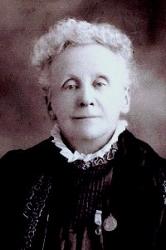
Mrs. T. D. Crewdson

1808 - 1863 Person Name: Jane Fox Crewdson Author of "O Thou whose bounty fills my cup" in College Hymnal Crewdson, Jane, née Fox, daughter of George Fox, of Perraw, Cornwall, was born at Perraw, October, 1809; married to Thomas Crewdson, of Manchester, 1836; and died at Summerlands, near Manchester, Sept. 14, 1863. During a long illness Mrs. Crewdson composed her works published as:— (1) Lays of the Reformation, 1860. (2) A Little While, and Other Poems (posthumous), 1864. (3) The Singer of Eisenach, n.d.; and (4) Aunt Jane's Verses for Children, 1851. 2nd ed. 1855, 3rd 1871. From these works nearly a dozen of her hymns have come into common use. The best known are, "O for the peace which floweth as a river," and "There is no sorrow, Lord, too light." In addition to these and others which are annotated under their respective first lines, there are the following in various collections: 1. Give to the Lord thy heart. 1864. Offertory. 2. How tenderly Thy hand is laid . 1864. Resignation. 3. Looking unto Jesus. 1864. Jesus All in All. 4. Lord, we know that Thou art near us. 1864. Resignation. 5. 0 Saviour, I have naught to plead. 1864. During Sickness. These plaintive lines were written a short time before her death. 6. 0 Thou whose bounty fills my cup. 1860. Peace. 7. The followers of the Son of God. 1864. The Daily Cross. 8. Though gloom may veil our troubled skies. 1864. Resignation. --John Julian, Dictionary of Hymnology (1907) ====================== Crewdson, Jane, p. 268, ii. The following additional hymns by Mrs. Crewdson have recently come into common use through The Baptist Church Hymnal, 1900:— 1. For the sunshine and the rain. Harvest. 2. O Fount of grace that runneth o'er. Public Worship. 3. There is an unsearchable joy. Joy in God. 4. When I come with troubled heart. Prayer. These hymns are all from her A Little While, and Other Poems, 1864. --John Julian, Dictionary of Hymnology, New Supplement (1907) =================== Crewdson, Jane, née Fox, p. 269, i. From her A Little While, and Other Poems, 1864, are:— 1. I've found a joy in sorrow. Power of Faith. 2. One touch from Thee, the Healer of diseases. Christ the Healer. 3. Tis not the Cross I have to bear. Faith desired . --John Julian, Dictionary of Hymnology, Appendix, Part II (1907)

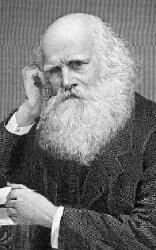
William Cullen Bryant

1794 - 1878 Author of "All praise to him of Nazareth" in The Sanctuary Hymnal, published by Order of the General Conference of the United Brethren in Christ Bryant, William Cullen. First in order of time of the great American poets, Bryant was born at Cummington, Mass., Nov. 3, 1794, and was educated at Williams College. In 1815 he'was called to the Bar, and practised for a time at Great Barrington. In 1825 he retired from the Bar, settled at New York, and devoted himself to literary pursuits, founding the New York Review, and editing for a short time the New York Evening Post. He died June 12, 1878. His poetical and other works are well known. His hymns were written at intervals during his long life. They were collected and privately printed in 1869, and number over 20. Those in common use are:— 1. Almighty, listen while we raise. Praise. This is given as "Almighty hear us,” &c, in the Unitarian Hymn and Tune Book, Boston, 1868. It was introduced into Great Britain through Beard's Collection, 1857. 2. Deem not that they are blest alone. Mourning. In this form it is in Beard's Collection, 1837. It is best known as "0 deem not they are," &c, and in this form it is No. 964 in Songs for the Sanctuary, N. Y., 1865-72, No. 452, in Dr. Martineau's Hymns of Prayer and Praise, Lond., 1873, &c. 3. Father, to Thy kind love we owe. God's Lovingkindness. This is given in several modern collections, including the Unitarian Hymn and Tune Book, Boston, 1868, Martineau, 1873, &c. 4. 0 God, whose dread and dazzling brow. Compassion desired. Is No. 57 in the Boston Hymn and Tune Book, 1868, as above. 5. When he who from the scourge of wrong. Hope of the Resurrection. This is seldom found in modern hymnals. Text in Lyra Sacra Americana, 1868. The above hymns (1-5) appeared in Dr. H. D. Sewall's (Unitarian) Psalms & Hymns for Social and Private Worship, 1820, and were written at the instance of a Miss Sedgwick. Following as near as possible the chronological order of the hymns we have next:— 6. O Thou Whose own vast temple stands. Opening of a Place of Worship. Written in 1835 for the Dedication of a Chapel in Prince Street, N. Y. This is the most widely known of this author's hymns. It was introduced into Great Britain as early as 1837, when it was included in Beard's Collection, No. 405. It is in 4 stanzas of 4 lines. Orig. text in Songs for the Sanctuary, N. Y., 1865, No. 1017, and Martineau, 1873, No. 727. Another form of the hymn is "Thou, Whose unmeasured temple stands," This is No. 569 in the American Presb. Psalms and Hymns, Richmond, 1867, Horder's Congregational Hymns, Lond. 1884, No. 747, and others. 7. All that in this wide world we see. Omnipresence. This is dated 1836. In his Collection in 1837, No. 17, Beard gives it as an original contributed thereto, thus fixing its first publication. 8. Thou unrelenting past. The Past. Dates from 1836. Also in Martineau, 1873, No. 508. 9. Not in the solitude. God in the City. Dates from 1836, and is No. 26 in Martineau, 1873. 10. Whither, midst falling dew. Divine Guidance. This, in common with Nos. 8 and 9, is more a poem than hymn. It is addressed "To a Waterfowl," and dates from 1836. In Martineau, 1873. 11. Dear ties of mutual succour bind. Charity Sermons. No. 905 in the Amer. Methodist Episcopal Hymnal, 1878. It dates from about 1836. 12. 0 Thou whose love can ne'er forget. Ordination. Given (but not as an original contributed thereto) in Beard's Collection (Eng.), 1837. 13. Mighty One, before Whose face. Ordination. This is dated 1840 (but is probably earlier), and is given in several collections, including Mr. Beecher's Plymouth Collection, 1855, and others. 14. Look from Thy sphere of endless day. Home Missions. This hymn has also attained to considerable use both in Great Britain and America. It dates from 1840. It is in the Song. for the Sanctuary, N. Y., 1865, Horder's Congregational Hymns, 1884, &c. 15. Lord, who ordainest for mankind. Thanks for a Mother's love. Written at Dr. Osgood's suggestion, and printed in his Christian Worship, 1862. It is repeated in Martineau, 1873. 16. All praise to Him of Nazareth. Holy Communion. Dr. Hatfield in his Church Hymn Bk., 1872, No. 736, gives this in 3 stanzas of 4 lines. In the Songs for the Sanctuary it is in its full form of 5 stanzas. It dates from 1864. 17. As shadows cast by cloud and sun. Epiphany. In the Methodist Episcopal Hymnal, N. Y., 1878. It was contributed to that Hymnal, 1877, but was composed for the Semi-Centennial Celebration of the Church of the Messiah, Boston, March 19, 1875. 18. When doomed to death the Apostle lay. On behalf of Drunkards. Also in the Methodist Episcopal Hymnal, 1878. In addition to the above the following hymns by Bryant are in limited use:— 19. All things that are on earth. Love of God. In Beard's Collection, 1837. 20. Close softly, fondly, while ye weep. Death. In Mr. Beecher's Plymouth Coll., 1855. 21. How shall I know thee in the sphere which keeps? The Future Life. In the Supplement to the Boston Hymns for the Church of Christ, 1853. 22. Standing forth in life's rough way. On behalf of Children. In Dr. Alton's Children's Worship, 1878; Horder's Congregational Hymns, 1884, and others. 23. When this song of praise shall cease. Death anticipated. In his Hymns, 1869, and W. R. Stevenson's School Hymnal, 1880, No 313. 24. When the blind suppliant in the way. Opening the eyes of the blind. In the Methodist Episcopal Hymnal, 1878, N. Y., No. 201. It dates from 1874. 25. Wild was the day, the wintry sea. The Pilgrim Fathers. In Hymns of the Spirit, by Longfellow and Johnson. Boston, 1864. In 1869, Hymns by W. C. Bryant, 12mo, were privately printed. In this work the texts of many of the older hymns are altered. The dates of his hymns are difficult to determine, and many of those given above are approximate only. Bryant's genius was cool, meditative, and not distinguished by lyric fire. His hymns are correct and solid, but none reach the highest rank. [Rev. F. M. Bird, M.A.] -- John Julian, Dictionary of Hymnology (1907)

Matilda Betham-Edwards

1836 - 1919 Person Name: Matilda B. Edwards Author of "God make my life a little light" in Hymns of the Centuries Born: March 4, 1836, West­er­field (near Ip­swich), Eng­land. Died: Jan­u­a­ry 4, 1919, Hast­ings, Sus­sex, Eng­land. [Matilda Betham Edwards (1836-1919)] Daughter of Ed­ward Ed­wards, and cou­sin of Egypt­ol­o­gist Amel­ia B. Ed­wards, Ma­til­da was ed­u­cat­ed in Ips­wich and Peck­ham, and tra­veled ex­tens­ive­ly, es­pe­cial­ly in Ger­ma­ny and France. Her works in­clude: The White House by the Sea, 1857 Dr. Jacob, 1864 Kitty, 1869 Po­ems, 1885 Lord of the Har­vest, 1899 --www.hymntime.com/tch ============================== Edwards, Matilda Barbara Betham (Betham-Edwards), daughter of Edward Edwards, and cousin of Amelia B. Edwards, the Egyptologist, was born at Westerfield, near Ipswich, March 4, 1836. Miss Edwards is well known as the author of Kitty, The Sylvesters, and other stories. Her Poems were published in 1885. Her hymn for Children's Services, "God make my life a little light," in the Congregational Church Hymnal, 1887, first appeared in Good Words, 1873, p. 393, together with another hymn for children, "The little birds now seek their rest" (Evening). Several of her religious pieces have passed into devotional and other works. --John Julian, Dictionary of Hymnology, Appendix, Part II (1907)

Wilhelm Andreas Wexels

1797 - 1866 Person Name: W. A. Wexels Author of "Hevero ny fihaonam-be" in Protestant Madagascar Hymnal, 2001 Wexels, Wilhelm Andreas. (Copenhagen, Denmark, March 29, 1797--May 14, 1866, Oslo, Norway). Lutheran. After studies in Copenhagen and Christiana (Oslo), became catechist and curate of Our Savior's Lutheran Church in Christiana. Preached against the inroads of rationalism, emphasizing the need for spiritual revival. Church historians claim that his ministry was the turning point in the Church of Norway. Failed in his attempt to give Norway a hymnal, but many of his hymns survived. --J. Irving Erickson, DNAH Archives

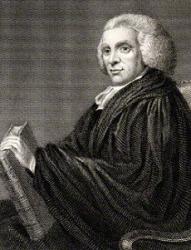
William Jones

1726 - 1800 Person Name: William Jones, 1726-1800 Composer of "LUCIUS" in Together in Song Born: Ju­ly 30, 1726, Lo­wick, North­amp­ton­shire, Eng­land. Died: Jan­u­ary 6, 1800, Hol­ling­bourne, Kent, Eng­land. Pseudonym: Jones of Nay­land. Jones was ed­u­cat­ed at Char­ter­house and Un­i­ver­si­ty Coll­ege, Ox­ford. He be­came Vi­car of Beth­ers­den, Kent (1764); Pluck­ley, Kent; and Pas­ton, North­amp­ton­shire; per­pe­tu­al Cur­ate of Nay­land, Suf­folk (1777); and Rec­tor of Hol­ling­bourne, Kent (1798). He be­came a Fel­low of the Roy­al So­ci­e­ty in 1775. His works in­clude: The Ca­tho­lic Doc­trine of the Trin­i­ty, 1756 Fairchild Dis­cours­es, 1775 Physiological Dis­qui­si­tions, 1781 A Treatise on the Art of Mu­sic, 1784 Church Piec­es for the Or­gan with Four An­thems in Score, 1789 Jones was a de­scend­ant of the Col. J. Jones, who was one of the sig­na­tor­ies to the death war­rant of King Charles I of Eng­land. He used to reg­u­lar­ly ob­serve Jan­u­a­ry 30 as a day of fast­ing and hu­mil­i­a­tion for his an­ces­tor’s sin. Music: ST. STEPHEN --www.hymntime.com/tch/

Alain Rocourt

Person Name: A. R. Translator of "All praise to our redeeming Lord (Tout gloua sé pou Rédanmtè nou)" in An Nou Chanté! Rev. Alain Rocourt, as cited in An Nou Chanté.

Anonymous

Person Name: Anon. Author of "Our God is love, and all his saints" in The Seventh-Day Adventist Hymn and Tune Book In some hymnals, the editors noted that a hymn's author is unknown to them, and so this artificial "person" entry is used to reflect that fact. Obviously, the hymns attributed to "Author Unknown" "Unknown" or "Anonymous" could have been written by many people over a span of many centuries.

G. Cousins

Author of "Mivory eto izahay, handre" in Protestant Madagascar Hymnal, 2001

C. Kinchen

? - 1742 Person Name: Rev. C. Kinchin Translator of "I am a little child you see" in Hymnal and Liturgies of the Moravian Church Kinchen, Charles, educated at Corpus Christi College, Oxford (B.A. 1729); an associate of the Wesleys; became Rector of Dummer, Hants; then joined the Fetter Lane Society, and d. Jan. 4, 1742. --John Julian, Dictionary of Hymnology, New Supplement (1907)

James C. Wallace

1793 - 1841 Person Name: J. C. Wallace, 1793-1841 Author of "There is an Eye that never sleeps" in The Sunday School Hymnary Wallace, James Cowden, was born at Dudley, circa 1793. He was brother of the Rev. Robert Wallace (1791-1880), Professor of Theology in Manchester New College, and author of Antitrinitarian Biography. J. C. Wallace was Unitarian minister at Totnes, 1824, and afterwards at Brighton and Wareham. He died at Wareham in 1841. He was a prolific hymnwriter, and contributed various other poetical pieces to the Monthly Repository. In a Selection of Hymns for Unitarian Worship, by R. Wallace, Chesterfield, 1822, there are 13 of his hymns, and in the 2nd edition of the same, 1826, there are 29 more. There are also 10 of his hymns in the Dukinfield Selection of Psalms & Hymns for Christian Worship, 1822 (still in use), and 64 in Beard's Collection of Hymns, 1837. Of these hymns the following are still in common use:— 1. Is there no balm to soften grief? The Efficacy of Prayer (1837). 2. It is not rank, or power, or state. The Universality of the Gospel. 3. There's not a place in earth's vast round. God seen in Everything. 4. Through every clime God's care extends. Divine Care of All. 5. There is an eye that never sleeps. The Divine Helper in Need. [Rev. Valentine D. Davis, B.A.] -- John Julian, Dictionary of Hymnology (1907) ===================== Wallace, James Cowdan, 1793 (?>-184l. Minister at various places in the south of England, finally at Wareham, author of a considerable number of hymns, to be found in his brother Robert's Selection of Hymns for Unitarian Worship, Chesterfield, 1822, enlarged ed., 1826, and in Beard's Collection, 1837. In the Baptist Hymnal is, "There is an eye that never sleeps” (The Divine watchfulness). See "There's not a star whose trembling light.” --John Julian, Dictionary of Hymnology (1907)

Pages


Export as CSV
It looks like you are using an ad-blocker. Ad revenue helps keep us running. Please consider white-listing Hymnary.org or getting Hymnary Pro to eliminate ads entirely and help support Hymnary.org.