You help make Hymnary.org possible. More than 10 million people from 200+ countries found hymns, liturgical resources and encouragement on Hymnary.org in 2025, including you. Every visit affirms the global impact of this ministry.

If Hymnary has been meaningful to you this year, would you take a moment today to help sustain it? A gift of any size—paired with a note of encouragement if you wish—directly supports the server costs, research work and curation that keep this resource freely available to the world.

Give securely online today, or mail a check to:
Hymnary.org
Calvin University
3201 Burton Street SE
Grand Rapids, MI 49546

Thank you for your partnership, and may the hope of Advent fill your heart.

Person Results

Tune Identifier:"^penitence_lane$"
In:people

Planning worship? Check out our sister site, ZeteoSearch.org, for 20+ additional resources related to your search.
Showing 11 - 20 of 20Results Per Page: 102050

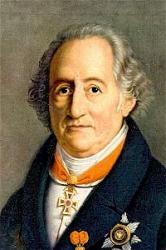
J. W. von Goethe

1749 - 1832 Author of "Purer yet and purer I would be in mind" in In Excelsis for School and Chapel Goethe, Johann Wolfgang von, son of Johann Caspar Goethe, a lawyer at Frankfurt-am-Main; was born at Frankfurt Aug. 28,1749, and died at Weimar, March 22, 1832. The greatest German poet of his day, and one of the most famous literary men of his own or any age, his sympathies were Classical rather than distinctively Christian; and as he himself said (Conversations with Eckerman, January 4, 1827), he wrote no poems suited for use in public worship. A few pieces, principally from his well-known dramatic poem of Faust (pt. i. 1808; pt. ii. pub. posthumously, 1832), are found under his name in one or two Unitarian hymn-books. Good translations of both parts of Faust have been published by Dr. John Anster, Bayard Taylor, Sir Theodore Martin, and others; while a very large number of other persons have published translations of the first part. No attempt has accordingly been made to notice any translations except those in the hymn-books. i. From Faust, pt. i., 1808. i. Christ ist erttanden! Freude dem Sterbliche. Easter. The chorus of angels on Easter Day. Translated as “Christ has arisen! Joy to our buried Head," by Dr. F. H. Hedge, in his Supplement to Hymns for the Church of Christ, Boston, U.S., 1853, No. 836. A free version is also noted under A. C. Cox, No. 4. ii. Die Sonne tönt nach alter Weise. Praise. The Song of the three Archangels in the Prologue in Heaven. Translated as "The sun is still for ever sounding," by Dr. F. H. Hedge, as above, 1853, No. 190. iii. Verlassen nab ich Feld und Auen. [Evening]. Faust's Soliloquy on entering his study with the dog, Translated as "O'er silent field and lonely lawn," as No. 21 in W. J. Fox's Hymns & Anthems, 1841, repeated in English and American Unitarian collections. ii. Miscellaneous. iv. Des Maurers Wandeln. Written for the Freemasons' Lodge at Weimar, of which he became a member in 1780, and included in his Werke, 1828, vol. iii. p. 61, entitled "Symbolum." Translated as "The Mason’s ways are A type of Existence," by T. Carlyle, in his Past and Present, 1843, p. 318. Included,beginning "The future hides in it" (st. ii.), as No. 854 in Dr. Hedge's Collection, 1853, as above. Two pieces are also found in collections under his name, viz.:— 1. Without haste! without rest, in Hymns of the Ages, Boston, U.S., 3rd Ser., 1865, p. 76, and repeated as "Without haste and without rest," in Stopford Brooke's Christian Hymns, 1881, &c. It is suggested by " Wie das Gestern Ohne Hast, Aber Ohne Hast, Drehe sich jeder, Urn die eigne Last," in Goethe's Zahme Xenien, 2nd Ser., 1823 (Werke, 1828, iii. p. 245). 2. Rest is not quitting The busy career. [Rest]| This is part of a piece beginning "Sweet is the pleasure Itself cannot spoil." No. 853 in Dr. Hedge's Collection, 1853, as above, marked as by " J. S. Dwight." There does not appear to be any equivalent poem in Goethe's Werke. [Rev. James Mearns, M.A.] --John Julian, Dictionary of Hymnology, (1907) =========================== Goethe, J. W. von, p. 441, i. The Exeter Unitarian Hymns, Psalms and Anthems, of 1863 and 1884, contains the several additional hymns from Goethe, the translations in each case being by the Rev. T. W. Chignell. Some of the versions are very free, and the distinctively Christian character of the translations is only very faintly present in the originals. [Rev. James Mearns, M.A.] --John Julian, Dictionary of Hymnology, Appendix, Part II (1907)

Heinrich S. Oswald

1751 - 1834 Person Name: H. S. Oswald Author of "Oh, let him whose sorrow" in The Presbyterian Book of Praise Oswald, Heinrich Siegmund, son of Johann Heinrich Oswald or Osswald, of Nimmersatt, near Liegnitz, in Silesia, was born at Nimmersatt, June 30, 1751. After passing through the school at Schmiedeberg he was for seven years clerk in a public office at Breslau. In 1773 he became Secretary to the Landrath von Prittwitz at Glatz, with whom he remained two years, and was thereafter in business at Hamburg and at Breslau. Through J. D. Hermes, Oberconsistorialrath at Potsdam, whose daughter he married, he became acquainted with King Friedrich Wilhelm II. of Prussia, and in 1791 was appointed reader to the king. He accordingly removed to Potsdam, and was in 1791 appointed also Geheimrath. After the king's death, on Nov. 16, 1797, Oswald received a pension, and retired first to Hirschberg, and then to Breslau, where he died Sept. 8, 1834. (Allgemeine Deutsche Biographie xxiv. 528; Miller's Singers & Songs, 1869, p. 303; extracts from the Breslauer Zeitung, Sept. 12, 1834, and the Schlesische Provinzialblätter, 1835, p. 289, kindly communicated by Dr. Markgraf of the Breslau Stadt Bibliothek, &c.) Oswald's hymns, over 100 in all, appeared principally in his (1) Unterhaltungen für gläubige Seelen, Berlin, 1792. (2) Gedichte und Lieder fürs Herz, Berlin, 1793. (3) Letzten Mittheilungen meiner der Wahrheit und Religion geweihter Muse, Breslau, 1826. (4) Schwanengesänge, Breslau, n.d. (preface Aug. 1827). Three or four of Oswald's hymns have passed into German hymnbooks. One has been translated into English, viz.:— Wem in Leidenstagen. For Mourners. In his Letzte Mittheilungen, 1826, p. 42, in 14 stanza of 4 lines, and entitled "An exhortation to Tranquillity. To the Suffering. Psalm 50, v. 15." Bunsen, in his Versuch, 1833, No. 813 (Allgemeine Gesangbuche, 1846, No. 333), selects st. i.-iii., x., xii.-xir. The singing of this beautiful hymn (in Miss Cox's version) formed an impressive part of the service in the church at Edensor at the funeral of Lord Frederick Cavendish, May 11, 1882. Translated as:— 1. 0! Let him whose sorrow. A very good translation from Bunsen's text, by Miss Cox, in her Sacred Hymns from the German, 1841… included in Alford's Psalms & Hymns, 1844, and others…. Another translation is: "When in thine hours of grief," by Lady E. Fortescue, 1843, p. 71. [Rev. James Mearns, M.A.] --Excerpts from John Julian, Dictionary of Hymnology (1907)

Frances A. Hutton

1811 - 1877 Person Name: Francis A. Hutton, 1811-1877 Alterer of "In the Hour of Trial" in The Mennonite Hymnary, published by the Board of Publication of the General Conference of the Mennonite Church of North America

William P. Hutton

1804 - 1855 Person Name: W. P. Hutton Alterer of "In the hour of trial" in The Church Hymnal Hutton, William Pepperrell, sometime Vicar of St. Bridget's, Chester, born Aug. 1, 1804, died Aug. 1, 1855. His hymn, "Child of sorrow, lorn, forsaken" (Comfort in Affliction) appeared in Drummond & Grevilie's Church of England Hymn Book, 1838. --John Julian, Dictionary of Hymnology, Appendix, Part II (1907)

Allen Eastman Cross

1864 - 1942 Author of "The Great Companion" in Songs of Life Born: De­cem­ber 30, 1864, Man­ches­ter, New Hamp­shire. Died: Ap­ril 23, 1942, Man­ches­ter, New Hamp­shire. Cross at­tend­ed Phil­lips An­do­ver Academy, Am­herst Coll­ege and the An­do­ver The­o­log­ic­al Sem­in­ary. He pas­tored in Clif­ton­dale, Mass­a­chu­setts (1892-96); Spring­field, Mass­a­chu­setts (1896-1901); at the Old South Church, Bos­ton, Mass­a­chu­setts (1901-12); and Mil­ford, Mass­a­chu­setts (1916-25). His works in­clude: Pass on the Torch, 1929 Thunder Over Je­ru­sa­lem/, 1936 --www.hymntime.com/tch/

Theodore Chickering Williams

1855 - 1915 Person Name: Theodore C. Williams Author of "As the storm retreating" in The Beacon Hymnal Williams, Theodore Chickering, an American Unitarian minister, b. at Brookline, Mass., in 1855, and educated at Harvard, 1876, and the Harvard Divinity School, 1882. He was from 1882 to 1896 pastor of All Souls, N. Y., and has been since 1899 headmaster of Hackley School, Tarrytown, N.Y. His hymns include:— 1. As the storm retreating leaves the vales in peace. [Evening.] (1888). 2. Glory to God on high . . . Let the whole creation cry. [Praise.] (1889). 3. I long did roam afar from home. [Brought Home by Christ.] (1889). 4. Lord, Who dost the voices bless. [Ordination.] (1881). 5. My heart of dust was made. [The Image of God desired.] This is Anon, in Amore Dei, but in the Index of Authors thereto it is given to this author. 6. When thy heart with joy o'erflowing. [Unity with others desired.] (1891). These facts and dates are from Mrs. Theodore C. Williams's Hymnal, Amore Dei, Boston, 1900-1904. --John Julian, Dictionary of Hymnology, New Supplement (1907) =================================== Willias, Rev. Theodore Chickering. (Brookline, Massachusetts, July 2, 1855--May 6, 1915, Boston, Mass.). He graduated from Harvard College in 1876, and from the Harvard Divinity School in 1882. He was ordained minister of the Unitarian Church in Winchester, Mass., in 1882, but became minister of All Souls' Church, New York, in 1883. He resigned in 1896, and spent two years in Europe. After his return he served as headmaster of Hackley School, Tarrytown, New York, 1899-1905. A classical scholar, and gifted as a poet, he published a fine metrical translation of Virgil's Aeneid, wrote a number of hymns which are religious poetry of a high order, and assisted his wife, Velma C. Williams, in compiling her Hymnal: Amore Dei, 1890, revised edition 1897. --Henry Wilder Foote, DNAH Archives

Harry C. Ayres

b. 1849 Person Name: H.C. Ayres, c. 1849- Author of "One there is Who loves thee, waiting still for thee" in The Book of Praise Ayres, H. C., born about 1849, a member of the Baptist denomination, and a resident in Philadelphia, is the author of:— 1. One there is who loves thee. [Love of Christ.] A popular hymn and well known in Great Britain, through I. D. Sankey's Sacred Sings & Solos, enlarged edition, No. 310. It was written during the Centennial Exhibition in Philadelphia, the theme having been suggested by the expression," One there is Who loves and waits to bless," used by Mr. W. H. Doane (q. v.) in prayer at a meeting of friends at which Mr. Ayres was present. The manuscript was presented to Mr. Doane a day or two afterwards. It was set to music by Mr. Doane, and published forthwith. The original text and music are in Mr. Sankey's Songs & Solos as above. Mr. Ayres is also the author of:— 2. No other Name. [The Name of Jesus.] This hymn is unknown to the English collections. -- John Julian, Dictionary of Hymnology (1907)

Martinho Lutero Hasse

1919 - 2004 Author of "Ouves no Calvário" in Hinário Luterano

Lucy H. King Smith

Author of "A Prayer for Peace" in The Cokesbury Worship Hymnal

George Ford

1851 - 1928 Person Name: جورج فورد Author of "أيها المجيد" in كتاب الترانيم الروحية للكنائس الإنجيلية George Edward Ford, son of an American Missionary, was born in Aleppo, Syria, and lived in Sidon. There he founded the National Evangelical Institute for Girls & boys, along with Rev. William King Eddy, on the 1st Dec. 1881 He died in 1928. جورج فورد دكتور. ولد بحلب في العام 1851، ونشأ بسورية، وسكن صيداء وأسس فيها مدرسة الفنون والصنائع. توفي بعين حلوة 1928

Pages


Export as CSV
It looks like you are using an ad-blocker. Ad revenue helps keep us running. Please consider white-listing Hymnary.org or getting Hymnary Pro to eliminate ads entirely and help support Hymnary.org.





