You help make Hymnary.org possible. More than 10 million people from 200+ countries found hymns, liturgical resources and encouragement on Hymnary.org in 2025, including you. Every visit affirms the global impact of this ministry.

If Hymnary has been meaningful to you this year, would you take a moment today to help sustain it? A gift of any size—paired with a note of encouragement if you wish—directly supports the server costs, research work and curation that keep this resource freely available to the world.

Give securely online today, or mail a check to:
Hymnary.org
Calvin University
3201 Burton Street SE
Grand Rapids, MI 49546

Thank you for your partnership, and may the hope of Advent fill your heart.

Person Results

Tune Identifier:"^penitentia_dearle$"
In:people

Planning worship? Check out our sister site, ZeteoSearch.org, for 20+ additional resources related to your search.
Showing 11 - 20 of 26Results Per Page: 102050

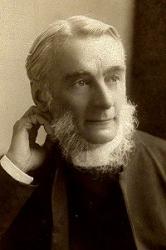
Edward Henry Bickersteth

1825 - 1906 Person Name: Edward Henry Bickersteth, 1825-1906 Author of "Not worthy, Lord,to gather up the crumbs" in The Book of Praise Bickersteth, Edward Henry, D.D., son of Edward Bickersteth, Sr. born at Islington, Jan. 1825, and educated at Trinity College, Cambridge (B.A. with honours, 1847; M.A., 1850). On taking Holy Orders in 1848, he became curate of Banningham, Norfolk, and then of Christ Church, Tunbridge Wells. His preferment to the Rectory of Hinton-Martell, in 1852, was followed by that of the Vicarage of Christ Church, Hampstead, 1855. In 1885 he became Dean of Gloucester, and the same year Bishop of Exeter. Bishop Bickersteth's works, chiefly poetical, are:— (l) Poems, 1849; (2) Water from the Well-spring, 1852; (3) The Rock of Ages, 1858 ; (4) Commentary on the New Testament, 1864; (5) Yesterday, To-day, and For Ever, 1867; (6) The Spirit of Life, 1868; (7) The Two Brothers and other Poems, 1871; (8) The Master's Home Call, 1872 ; (9) The Shadowed Home and the Light Beyond, 1874; (10) The Beef and other Parables, 1873; (11) Songs in the House of Pilgrimage, N.D.; (12) From Year to Year, 1883. As an editor of hymnals, Bp. Bickersteth has also been most successful. His collections are:— (1) Psalms & Hymns, 1858, based on his father's Christian Psalmody, which passed through several editions; (2) The Hymnal Companion, 1870; (3) The Hymnal Companion revised and enlarged, 1876. Nos. 2 and 3, which are two editions of the same collection, have attained to an extensive circulation.   [Ch. of England Hymnody.] About 30 of Bp. Bickersteths hymns are in common use. Of these the best and most widely known are:—" Almighty Father, hear our cry"; "Come ye yourselves apart and rest awhile"; "Father of heaven above"; "My God, my Father, dost Thou call"; "O Jesu, Saviour of the lost"; "Peace, perfect peace"; "Rest in the Lord"; "Stand, Soldier of the Cross"; " Thine, Thine, for ever"; and "Till He come.” As a poet Bp. Bickersteth is well known. His reputation as a hymn-writer has also extended far and wide. Joined with a strong grasp of his subject, true poetic feeling, a pure rhythm, there is a soothing plaintiveness and individuality in his hymns which give them a distinct character of their own. His thoughts are usually with the individual, and not with the mass: with the single soul and his God, and not with a vast multitude bowed in adoration before the Almighty. Hence, although many of his hymns are eminently suited to congregational purposes, and have attained to a wide popularity, yet his finest productions are those which are best suited for private use. -John Julian, Dictionary of Hymnology (1907) ================= Bickersteth, Edward Henry, p. 141, ii. Bishop Bickersteth's 1890 edition of his Hymnal Companion is noted on p. 1312, i., and several of his own hymns and translations, which appear therein for the first time, are annotated in this Appendix. One of these, "All-merciful, Almighty Lord," for the Conv. of St. Paul, was written for the 1890 edition of Hymnal Companion. --John Julian, Dictionary of Hymnology, Appendix, Part II (1907) ================== Bickersteth, B. H., p. 141, ii. Bp. Bickersteth died in London, May 16, 1906. --John Julian, Dictionary of Hymnology, New Supplement (1907)

William H. Burleigh

1812 - 1871 Person Name: W. H. Burleigh Author of "Lead us, O Father, in the paths of peace" in University Hymns Burleigh, William Henry, an active reformer and member of the Unitarian body, was born at Woodstock, Connecticut, Feb. 12, 1812, and brought up on a farm at Stainfield in the same state. In 1837 he went to Pittsburg, Pennsylvania, where, having been previously apprenticed to the printing trade, he published the Christian Witness and Temperance Banner. In 1843 he undertook the duties of editor of the Christian Freeman, at Hartford. From 1849 to 1855 he was agent of the New York State Temperance Society; and from 1855 to 1870 Harbour Master at New York. Died at Brooklyn, March 18, 1871. His poetical pieces and hymns were contributed to various periodicals and journals. Many of these were collected and published as Poems, Phila. in 1841. This volume was enlarged by additional pieces, and republished by his widow, in 1871. The dates of these hymns and poems are most difficult to determine. Where possible they are given in detail. It is somewhat curious that Burleigh's hymns are generally more extensively used in England than at home. The introduction of some of his best compositions into the English collections is due to the Lyra Sacra Americana, whence they were mostly taken by the compilers. Those in use in Great Britain and America are:— 1. Fades from the west the farewell nigh. Night . This poem, entitled “A Psalm of Night," is given in his Poems, N. Y., 1871, pp. 275-6. Although not in the 1st edition of his Poems, 1841, it was in common use as early as 1844. It is in 5 stanzas of 8 lines. From it the following centos have come into common use:— (1) “Day unto day uttereth speech." This is composed of stanzas iii.-v., and was given in the Christian Hymns of the Cheshire Pastoral Association (Amer. Unitarian), 1844, as an "Evening Hymn." (2) "O Holy Father, mid the calm." This cento In Longfellow and Johnson's Book of Hymns, 1846, and their Hymns of the Spirit, 1864, &c, is composed of stanzas iv.-v. (3) "Not only doth the voiceful day," No. 324 in Longfellow and Johnson's Hymns of the Spirit, 1864, is composed of st. ii.-iii. Another arrangement beginning with the same stanza is in the Lyra Sacra Americana, p. 41. (4) “The brightening dawn and voiceful day." In the Hymnary (Lond.), 1872, is, altered from the Lyra Sacra Americana as above, with the addition of a doxology. In and through these various forms, the use of this hymn is very extensive. 2. Father, beneath Thy sheltering wing. Trust and Peace. Appeared in Longfellow and Johnson's Hymns of the Spirit, 1864, No. 471, in 4 stanzas of 4 lines. It is given in many American collections, and in the Baptist Hymnal, 1879, Horder's Cong. Hymns , 1884, and others in Great Britain. Orig. text in Lyra Sacra Americana, p. 39, with "that" for "which” in st. ii. line 4. 3. For the dear love that kept us through the night. Morning. From Poems, 1871, into Horder's Congregational Hymns, 1884. 4. From profoundest depths of tribulation. Lent. This appeared in the Supplement to Hedge and Huntington's Hymns, &c. (Unitarian), 1853, No 843. 5. Lead us, 0 Father, in the paths of peace. Divine Guidance. No. 32 of the Lyra Sacra Americana, in 4 stanzas of 4 lines, being "A Prayer for Guidance." With English compilers this hymn ranks amongst Burleigh’s productions next in popularity to No. 8, and is found in most of the collections there named. 6. Not in vain I poured my supplication . Lent. This is a continuation of the same thought as No. 4 preceding, and follows it in the same Supplement. 7. O deem not that earth's crowning bliss. Mourning. This, passed from the Lyra Sacra Americana, 1868, into the Eng. Bap. Hymnal , 1879; Horder's Congregational Hymns, 1884, and others. It is in his Poems, 1i871, p. 258. The hymn, "From lips divine, like healing balm," in the Methodist Episcopal Hymnal, N. Y., 1878, is a cento from this hymn. 8. Still will we trust though earth seems dark and dreary. Faith. Appeared in the Lyra Sac. Amer., 1868, pp. 43-44, in 5 stanzas of 4 lines. This is the most widely adopted of this author's hymns by the English compilers. It is given in some of the best collections, as the New Congregational Hymn Book, Thring, Horder, the Baptist Hymnal, Allon, &c. 9. There is a beautiful land by the spoiler untrod. Heaven. Dr. Cleveland Lyra Sac. Americana, 1868, p. 298) says, "This piece was first published in the Independent, Jan. 18, 1866." 10. They who have kept their spirit's virgin whiteness. Purity. In Lyra Sacra Americana, 1868, p. 46. 11. Thou Who look'st with pitying eye. Lent. In Lyra Sacra Americana, 1868, p. 47. 12. Through the changes of the day. Evening. From his Poems, 1841. It is given in the Lyra Sac. Amer., p. 50, the Society for Promoting Christian Knowledge Psalms. and Hymns, 1852, Thring's Collection, and others. 13. We ask not that our path be always bright. Trust in God. From the Lyra Sac. Amer, 1868, into Horder's Congregational Hymns, 1884. 14. When gladness gilds our prosperous day. Good in all. Also from Lyra Sacra Americana into Horder's Cong. Hymns, 1884. It has been already noted that Burleigh's hymns have a more extended use in Great Britain, than in his own country. The foregoing notes will also show that his productions are more widely known and used outside of his own denomination than by his own people. Concerning the hymns included in the Lyra Sac. Amer., Dr. Cleveland, the editor, says, "Most of these beautiful hymns of Mr. Burleigh's were given to me in manuscript by the author," but he does not indicate what was new and what was old. -- John Julian, Dictionary of Hymnology (1907)

Anonymous

Author of "Draw Nigh and Take the Body of the Lord" in The Cyber Hymnal In some hymnals, the editors noted that a hymn's author is unknown to them, and so this artificial "person" entry is used to reflect that fact. Obviously, the hymns attributed to "Author Unknown" "Unknown" or "Anonymous" could have been written by many people over a span of many centuries.

William Hiram Foulkes

1877 - 1961 Person Name: William H. Foulkes Author of "Take Thou our minds, dear Lord, we humbly pray" in Christian Worship and Praise Born: June 26, 1877, Quin­cy, Mi­chi­gan. Died: De­cem­ber 9, 1961, Smith­town, New York. Buried: Smith­town, New York. Foulkes grad­uat­ed from the Coll­ege of Em­por­ia, Kan­sas, in 1897 and went on to the Mc­Cor­mick The­o­log­ic­al Sem­in­ary, Chi­ca­go, Il­li­nois; he re­ceived the Ber­na­dine Orme Smith Fel­low­ship, and stu­died for a year at New Coll­ege in Ed­in­burgh, Scot­land. He lat­er pas­tored at Pres­by­ter­i­an church­es in El­mi­ra, Il­li­nois; Port­land, Or­e­gon; New York Ci­ty; Cleve­land, Ohio; and New­ark, New Jer­sey. He served as Gen­er­al Sec­re­tary of the Board of Min­is­ter­i­al Re­lief and Sus­ten­ta­tion (1913-18), as chair­man of the New Era Move­ment, on the Gen­er­al Coun­cil of the Pres­by­ter­i­an Church, and as moderator of the Gen­er­al As­sem­bly (1937). Lyrics: Gird Us, O God, with Hum­ble Might Take Thou Our Minds, Dear Lord --www.hymntime.com/tch/

Federico J. Pagura

1923 - 2016 Person Name: F. J. Pagura Translator of "Tu Faz Alcanzo a Ver" in Cántico Nuevo Federico José Pagura was an Argentine Methodist bishop and author and translator of hymns. Leland Bryant Ross

Lady Lucy Whitmore

1792 - 1840 Person Name: Lady L. E. G. Whitmore, 1792-1840 Author of "Father, again in Jesus' name we meet" in Methodist Hymn and Tune Book Whitmore, Lady Lucy Elizabeth Georgina

Vernon L. Peterson

Person Name: Vernon L. Peterson, 1932- Translator of "Venid a Mí, Venid a Descansar" in Himnos de Vida y Luz

Eliza Scudder

1821 - 1896 Author of "Thou Life within my life, than self more near" in The New Church Hymnal Scudder, Eliza , niece of Dr. E. H. Sears, (q.v.), was born in Boston, U.S.A., Nov. 14,1821, and now (1888) lives in Salem, Massachusetts. Formerly an Unitarian, she some time ago joined the Protestant Episcopal Church. Her hymns in common use are:— 1. From past regret and present[faithlessness] feebleness . Repentance. In the Quiet Hours, Boston, 1875. 2. I cannot find Thee! Still on restless pinion . Seeking after God. Appeared in Longfellow and Johnson's Unitarian Hymns of the Spirit, 1864. 3. In Thee my powers and treasures live. Faith. 4. Life of our life, and light of all our seeing! Prayer. In the Boston Quiet Hours, 1875. 5. The day is done; the weary day of thought and toil is past. Evening. In Sermons and Songs of the Christian Life, by E. H. Sears, Boston, 2nd ed.,1878, p. 296, entitled "Vesper Hymn," and dated "October, 1874." This is possibly her finest hymn. 6. Thou grace divine, encircling all . Divine Grace. Appeared in Dr. E. H. Sears's Pictures of the Olden Time, as shown in the Fortunes of a Family of Pilgrims, 1857. It was written in 1852, and included in the Boston Hymns of the Spirit, 1864. It has sometimes been taken as "An Ancient Catholic Hymn" (Universalist's Psalms & Hymns 1865), but in error. 7. Thou long disowned, reviled, oppresst. The Spirit of Truth. In the Boston Hymns of the Spirit, 1864. Of these hymns, Nos. 2, 6, and 7 are in Dr. Martineau's Hymns, 1873. Some of Miss Scudder's poetical pieces appeared in Dr. Sears's Monthly Religious Magazine. Her Hymns and Sonnets, by E. S., were published by Lockwood, Brooks & Co., Boston, 1880. From this her hymn "Thou hast gone up again" (Ascension), is taken. [Rev. F. M. Bird, M.A.] -- John Julian, Dictionary of Hymnology (1907) ==================== Scudder, Eliza, pp. 1035, L, 1589, i. Miss Scudder died in 1896. Her Hymns & Sonnets, with biographical notes, &c, by Horace E. Scudder, was published by Houghton & Mifflin, 1897. In The Pilgrim Hymnal, 1904, the hymn," Thou Life within my life," begins with st. ii. of "From past regret and present [faithlessness] feebleness," p. 1035, i. 1), which was written in Feb. 1871. Another of Miss Scudder's hymns is “ Let whosoever will enquire" (New Heaven), from which "My God, I rather look to Thee," in Horder's Worship Song, 1905, is taken. --John Julian, Dictionary of Hymnology, New Supplement (1907)

Emily Taylor

1795 - 1872 Author of "God of the Changing Year" in The Cyber Hymnal Taylor, Emily, born 1795, was the daughter of Samuel Taylor, of New Buckenham, Norfolk, niece of John Taylor, of Norwich, the hymnwriter, and great grand-daughter of Dr. John Taylor, the Hebraist. Miss Taylor was the writer of numerous tales for children, chiefly historical, and of various books of instruction, and of descriptive natural history. Amongst her publications are:— (1) Letters to a Child on Maritime Discovery, 1820; (2) Vision of Las Casas, and other Poems, 1825; (3) Poetical Illustrations of Passages of Scripture, 1826 ; (4) Tales of the Saxons, 1832; (5) Tales of the English, 1833; (6) Memoir of Sir T. More, 1834; (7) The Boy and the Birds, 1835. She also edited Sabbath Recreations, 1826; and Flowers and Fruit in Old English Gardens, 1836; and contributed to the Magnet Stories, 1860, &c.; and the Rainbow Stories, 1870, &c. Miss Taylor wrote several hymns, which appeared as follows:—To the Unitarian Collection of Psalms & Hymns, printed for the Renshaw Street Chapel, Liverpool, 1818, she contributed anonymously:— 1. Come to the house of prayer. Invitation to Public Worship. Sometimes given as "O come to the house of Prayer." 2. God of the changing year Whose arm of power. Lessons of the Changing Year. 3. O Father, though the anxious fear. Sunday. 4. O here, if ever, God of love. Holy Communion. These, and the following 6 hymns, were given anonymously in the 2nd ed. of the Norwich Unitarian Hymn Book, 1826:— 5. Here, Lord, when at Thy Table met. Holy Communion. 6. O not for these alone I pray. Holy Communion. Sometimes, "No, not for these alone I pray." 7. The Gospel is the light. Worth and Power of the Gospel. Sometimes “It is the one true light." 8. Thus shalt thou love the Almighty God [Lord] . Self-consecration to God. 9. Who shall behold the King of kings? Purity. 10. Who that o'er many a barren part. Missions. Sometimes it begins with st. ii., "Thy kingdom come! The heathen lands." Of the above No. 6 is part of a longer poem which was given in her Poetical Illustrations of Passages of Scripture, 1826. This work also contains:— 11. O Source of good! around me spread. Seek, and ye shall find. 12. Truly the light of morn is sweet. Early Piety. 13. When summer suns their radiance fling. Resignation with Praise. In the Rev. J. R. Beard's Collection of Hymns for Public and Private Worship, 1837, several of the above are repeated, and also:— 14. If love, the noblest, purest, best. Communion with Jesus. Of these 14 hymns 10 are in Dr. Martineau's Hymns, &c, 1840, and 9 in his Hymns, &c, 1873. Several are also found in other collections, as Horder's Congregational Hymns, 1881, and some American and other hymn-books. Although for the greater part of her life Miss Taylor was a Unitarian, latterly, under the influence of F. D. Maurice, she joined the Church of England She died in 1872. [Rev. Valentine D. Davis, B.A.] -- John Julian, Dictionary of Hymnology (1907)

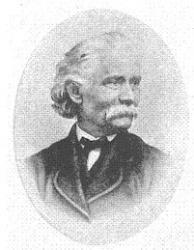
Edward Dearle

1806 - 1891 Composer of "PENITENTIA" in The Hymnal

Pages


Export as CSV
It looks like you are using an ad-blocker. Ad revenue helps keep us running. Please consider white-listing Hymnary.org or getting Hymnary Pro to eliminate ads entirely and help support Hymnary.org.