You help make Hymnary.org possible. More than 10 million people from 200+ countries found hymns, liturgical resources and encouragement on Hymnary.org in 2025, including you. Every visit affirms the global impact of this ministry.

If Hymnary has been meaningful to you this year, would you take a moment today to help sustain it? A gift of any size—paired with a note of encouragement if you wish—directly supports the server costs, research work and curation that keep this resource freely available to the world.

Give securely online today, or mail a check to:
Hymnary.org
Calvin University
3201 Burton Street SE
Grand Rapids, MI 49546

Thank you for your partnership, and may the hope of Advent fill your heart.

Person Results

Tune Identifier:"^seymour_weber$"
In:person

Planning worship? Check out our sister site, ZeteoSearch.org, for 20+ additional resources related to your search.
Showing 11 - 20 of 94Results Per Page: 102050

John Reynell Wreford

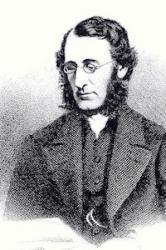
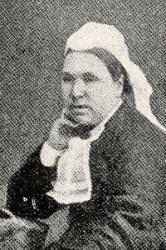
1800 - 1891 Person Name: J. R. Wreford Author of "When, my love to Christ grows weak" in The Congregational Mission Hymnal Wreford, John Reynell, an English Unitarian minister, was born December 12, 1800, at Barnstaple; educated at Manchester College, and in 1826 became pastor of a Church in Birmingham. In 1831, on account of the failure of his voice, he withdrew from the active work of the ministry and, in conjunction with Rev. Hugh Hutton, established a school at Edgbaston. He wrote a History of Presbyterian Nonconformity in Birmingham, 1832, and Lays of Loyalty, 1837. He contributed fifty-five hymns to Rev. J. R. Beard's Collection, 1837. His most popular and valuable hymn is the one given in this book. The last years of his life were spent in retirement at Bristol, where he died in 1891. —Hymn Writers of the Church by Charles Nutter ================= Wreford, John Keynell, D.D., born Dec. 12, 1800, educated at Manchester College, York, and in 1826 succeeded the Rev. James Yates as co-pastor to the Rev. John Kentish at the New Meeting, Birmingham. In 1830 he published a translation of Cellerier's Discourse on the Authenticity and Divine Origin of the Old Testament. In the following year, in consequence of failure of voice, he withdrew from the Ministry, and in conjunction with the Rev. Hugh Hutton, Minister of the Old Meeting, opened a school at Edgbaston. In 1832 he published a Sketch of the History of Presbyterian Nonconformity in Birmingham; and in 1837, Lays of Loyalty, in celebration of the Queen's accession. He also contributed, in 1837, to the Rev. J. R. Beard's Collection of Hymns for Public and Private Worship 55 hymns, of which the following are still in common use:— 1. God of the ocean, earth, and sky. God seen in His Works. In various collections, including those by Page Hopps, G. Dawson, and others. 2. Lord, I believe; Thy power I own. For increase of Faith. In Martineau's Hymns, &c, 1840. 3. Lord, while for all mankind we pray. National Hymn. This is in a large number of collections of various denominations, and is by far the most popular of his hymns. Sometimes it begins with stanza iii., "O! guard our shores from every foe." 4. When my love to Christ[God]grows weak. Passiontide. In Longfellow and Johnson's Unitarian Hymns of the Spirit, Boston, U. S. A., 1864, "When my love to God grows weak." This is repeated in Martineau's Hymns, &c, 1873. Dr. Wreford was also the author of several volumes of verse, chiefly devotional. The latter years of his life he spent in retirement at Bristol, and died there in 1881. [Rev. Valentine D. Davis, B.A.] -- John Julian, Dictionary of Hymnology (1907)

Johann Caspar Lavater

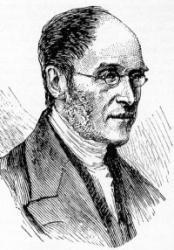
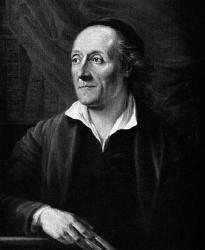
1741 - 1801 Author of "Großer Schöpfer, Herr der Welt" in Glockenklänge Lavater, Johann Caspar, son of Johann Heinrich Lavater, physician in Zürich, was born at Zürich, Nov. 15, 1741. He entered the Academic Gymnasium at Zürich in 1758, and in the end of 1759 began his studies in its theological department. After completing his course he was ordained in the spring of 1762, but did not undertake any regular clerical work till April 1769, when he was appointed diaconus of the Orphanage church at Zürich, where he became pastor in 1775. In July 1778 he was appointed diaconus of St. Peter's church, and in Dec. 1786 pastor there. When, during the Revolutionary period, the French laid the Swiss Cantons under contribution, and then in April 1799 deported ten of the principal citizens of Zürich, Lavater felt compelled to protest in the pulpit and in print. Consequently while on a visit to Baden, near Zürich, he was seized by French dragoons, May 14, 1799, and taken to Basel, but was allowed to return to Zürich, Aug. 16, 1799. When on Sept. 25, 1799, the French under Massena entered Zürich, Lavater was treacherously shot through the body by a French grenadier, who had just before thanked him for his charity, and from this wound he never entirely recovered. He resigned his charge in January 1800, and died at Zürich, Jan. 2, 1801. (Koch, vi. 499; Allgemeine Deutsche Biographie, xvii. 783, &c.) Lavater was one of the most celebrated and influential literary characters of his time; a most popular and striking preacher; and a lovable, genuine, frank-hearted man, who was the object of an almost incredible veneration. His devotional writings (Aussichten in die Ewigkeit, 4 vols., Zürich,1768-78, &c), and his works on Physiognomy (Von der Physiognomik, Leipzig, 1772; Physiognomische Fragmente, 4 vols., Leipzig and Winterthur, 1775-78), were eagerly read and admired all over Europe, but were very soon forgotten. He was no theologian, and his warm heart and fertile imagination led him into many untenable positions. His works on Physiognomy are without order or philosophical principles of connection, and their permanent interest is mainly in the very numerous and often well-executed engravings. Of his poems the Schweizerlieder (Bern, 1767, 4th enlarged ed., 1775), are the utterances of a true patriot, and are the most natural and popular of his productions. His Epic poems ((1) Jesus Messias, oder die Zukunft des Herrn, N.D., Zürich, 1780, a poetical version of the Apocalypse; (2) Jesus Messias, oder die Evangelien und Apostelgeschichte in Gesängen, 4 vols., Winterthur, 1733-86. (3) Joseph von Arimathea, Hamburg, 1794) have little abiding value. As a hymn-writer Lavater was in his day most popular. His hymns are well adapted for private or family use. Many of them are simple, fresh, and popular in style, and evangelical, earnest and devout in substance. But for church use he is too verbose, prolix, and rhetorical. Of his hymns (some 700) a considerable number survive in German collections compiled before 1850, e.g. the Berlin Geistliche Lieder, ed. 1840, has 13; the Württemberg Gesang-Buch, 1843 has 15; the Hamburg Gesang-Buch,1842, has 23,&c. But in the more recent collections almost all have disappeared, e.g., the new hymn-book for the Kingdom of Saxony, 1883, has not a single one. The most important appeared principally in the following works:—(1) Funfzig Christlicher Lieder, Zürich, 1771. (2) Lieder zum Gebrauche des Waysenhauses zu Zürich, Zürich, 1772. (3) Christliche Lieder der Vaterländischen Jugend, besonders auf der Landschaft, gewiedmet, Zürich, 1774. (4) Zweytes Funfzig Christlicher Lieder, Zürich, 1776. (5) Christliche Lieder . . . Zweytes Hundert, Zürich, 1780. (6) Sechszig Lieder nach dem Zürcherischen Catechismus, Zürich, 1780. [Nos.1-6 in the Royal Library, Berlin, and 3-6 in the British Museum] Those of his hymns which have passed into English include:— i. 0 du, der einst im Grabe lag. Sunday. In his Lieder, &c, 1772, No. 7, in 9 stanzas of 4 1., entitled "Sunday Hymn." Included in the Zürich Gesang-Buch, 1787 and 1853; Bunsen's Versuch, 1833, No. 6, &c. The translation in common use is :— 0 Thou, once laid within the grave. A good translation, omitting st. iii., vii., viii., by H. J. Buckoll, in his Hymns from the German, 1842, p. 9. Repeated, abridged, in the Dalston Hospital Hymn Book 1848, and the Rugby SchoolHymn Book, 1850 and 1876. Another translation is: "0 Thou who in the grave once lay," by R. Massie, in the British Herald, June, 1865. ii. 0 Jesus Christus, wachs in mir. Sanctification. His finest hymn. Founded on St. John iii. 30. First published in his Christlcehe Lieder, 1780, No. 85, in 10 stanzas of 4 1., marked as "On New Year's Day, 1780," and with the motto "Christ must increase, but I must decrease." In Knapp's Evangelischer Lieder-Schatz, 1837, No. 1644. The translation in common use is:— 0 Jesus Christ, grow Thou in me. A good and full translation in theBritish Messenger for Nov. 1, 1860. In Schaff's Christ in Song, 1870, p. 108, it is marked as translated by Mrs. E. L. Smith, the statement that this was its first appearance being an error. If the translation is really by her, it must have appeared in some American publication prior to Nov. 1860. It has passed, in varying centos, into the Baptist Hymnal, 1879, Snepp's Songs of Grace & Glory, 1872, Supplement of 1874 to the New Congregational Hymn Book, and others: also in Hymns & Songs of Praise, N. Y., 1874, Christian Hymnal Adelaide, 1872, &c. iii. 0 süssesteir der Namen all. Name of Jesus, or, New Year. First published in his Sechszig Lieder, 1780, No. 25, in 4 stanzas of 7 1., as the second hymn on "Jesus Christ, the only begotten Son of God, our Lord. Second article of the Christian Faith." It is appointed for the 16th Sunday, and for the 39th and 40th questions of the Zürich Catechism. In the Berg Mark Gesang-Buch, 1835, No. 319; and included in a number of the German Roman Catholic Hymn Books as those for St. Gall, 1863, Rottenburg, 1865, and others. The translation in common use is:— 0 Name, than every name more dear. A good translation of stanzas i., iii., iv., by A. T. Russell, in his Psalms & Hymns, 1851, No. 68. Repeated in Maurice's Choral Hymn Book, 1861, Methodist New Connexion Hymn Book, 1863, New Zealand Hymnal, 1872, &c. iv. Vereinigt zum Gebete war. Whitsuntide. First published in his Christliche Lieder, 1774, No. 23, in 15 stanzas of 4 lines. The form translation into English is that in Bunsen's Versuch, 1833, No. 225, which begins, "O Geist des Herrn! nur deine Kraft," and consists of stanza x. lines 3, 4; xi. lines 1, 2; xii.-xv. The translation is:— 0 Holy Ghost! Thy heavenly dew. A good translation from Bunsen, by Miss Cox, in her Sacred Hymns from the German, 1841, p. 43, and the Gilman-Schaff Library of Religious Poetry, ed. 1883, p. 814. Slightly altered in Lyra Messianica, 1864, p. 386, and thence in Alford's Year of Praise, 1867. Again slightly altered in Miss Cox's Hymns from the German, 1864, p. 67, and thence in J. L. Porter's Collection, 1876. Another translation is: "Blest Spirit, by whose heavenly dew," by Lady E. Fortescue, 1843, p. 10. The following are not in English common use:— v. Ach! nach deiner Gnade schmachtet. Cross and Consolation. Zweytes Funfzig, 1116, No. 5, in 8 stanzas, entitled "The Conflict of Prayer in hours of darkness." The translations are: (1) "As the hart for water panteth, So my soul," by R. Massie, in the British Herald, March 1865, p. 40. (2) "Lord for Thee my soul is thirsting," by R. Massie, in theDay of Rest, 1877, vol. vii. p. 58. vi. Auf dich, mein Vater, will ich trauen. Cross and Consolation. Christliche Lieder, 1774, No. 4, in 8 stanzas, entitled "Encouragement to trust upon God." The translations are (1) "On Thee will I depend, my Father," by R. Massie, in the British Herald, May, 1865, p. 66. (2) "On Thee I build, 0 heavenly Father," by R. Massie, in the Day of Rest, 1878, vol. viii. p. 378. vii, Von dir, o Vater, nimmt mein Herr. Cross and Consolation. Funfzig Christlicher Lieder, 1771, No. 33, in 15 stanzas, entitled "Encouragement to Patience." Translated as, "Father! from Thee my grateful heart," by Miss Knight, in her Translations from the German in Prose and Verse, 1812, p. 89. Besides the above a considerable number of pieces by Lavater have been translated by Miss Henrietta J. Fry, in herPastor's Legacy, 1842 (which consists entirely of translations from Lavater); in her Hymns of the Reformation, 1845; and in her Echoes of Eternity, 1859. [Rev. James Mearns, M.A.] --John Julian, Dictionary of Hymnology (1907)

Winter

Composer of "SEYMOUR" in The New Sabbath School Hosanna

James Drummond Burns

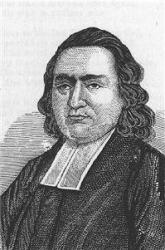
1823 - 1864 Person Name: James D. Burns Author of "Thou who didst on Calvary bleed" in Songs for the Lord's House Burns, James Drummond, M.A., was born at Edinburgh, February 18, 1823. He studied and graduated M.A. at the University of Edinburgh. In 1845 he became Free Church minister of Dunblane, but resigned through failing health, in 1848, and took charge of the Presbyterian Church at Funchal, Madeira. In 1855 he became minister of Hampstead Presbyterian Church, London. Died at Mentone, Nov. 27, 1864, and was buried in Highgate Cemetery, London. His hymns appeared in:— (l) The Vision of Prophecy: and other Poems (Edin., Edmonston and Douglas). This was originally published in 1854, and enlarged in 1858. The Poems are distinguished by vivid colouring and poetic imagination, along with directness, delicacy of execution, pensive sweetness, and tenderness. They have never however become widely popular. Included are 29 "Hymns and Meditations," many of which rank among the very best of our modern hymns for beauty, simplicity of diction, and depth of religious feeling. (2) The Evening Hymn (Lond., T. Nelson & Sons), 1857. This consists of an original hymn and an original prayer for every evening in the month— 31 in all. The Hymns and Prayers alike are characterised by reverence, beauty, simplicity, and pathos. Some of the hymns in this volume are now well known; e.g. "Still with Thee, 0 my God," "Hushed was the evening hymn," "As helpless as a child who clings." (3) Memoir and Remains of the late Rev. James D. Burns, M.A., of Hampstead. By the late Rev. James Hamilton, D.D. (London, J. Nisbet & Co.), 1869. Besides 13 Sermons and the Memoir, this work includes 40 “Hymns and Miscellaneous Pieces." A number of these had appeared in periodicals. Some of them are very good though not equal to those previously published. Also 39 translations of German hymns, which appeared in the Family Treasury, &c., are rendered exactly in the metres of the originals and many had not previously been translated. The translations are generally very good. (4) Burns also wrote the article Hymn in the 8th edition of the Encyclopedia Britannica. [Rev. James Mearns, M.A.] -- John Julian, Dictionary of Hymnology (1907) ===================== Burns, James Drummond, p, 197, i. Additional hymns in common use are:— 1. Not, Lord, unto that mount of dread. Safety in Christ. From Vision of Prophecy, 1st ed., 1854, p. 266. 2. O Thou whose tender [sacred] feet have trod. Resignation. From Vision of Prophecy, 1st ed., 1854, p. 227. 3. Thou, Lord, art love, and everywhere. Divine Love. From Vision of Prophecy, 2nd ed., 1858, p. 275. --John Julian, Dictionary of Hymnology, Appendix, Part II (1907) See also in: Hymn Writers of the Church

Henry Downton

1818 - 1885 Author of "For Thy mercy and Thy grace" in The Hymnal Downton, Henry, M.A, son of Mr. John Downton, Sub-Librarian of Trinity College, Cambridge, was born at Pulverbatch, Shropshire, Feb. 12, 1818, and educated at Trinity College, Cambridge, where he graduated B.A. 1840, and M.A. 1843. Taking Holy Orders in 1843, he became Curate of Bembridge, Isle of Wight, 1843, and of Holy Trinity, Cambridge, 1847. In 1849 he was preferred to the Incumbency of St. John's, Chatham. He went to Geneva as English Chaplain in 1857; and was appointed Rector of Hopton in 1873. He was also for some time Domestic Chaplain to the late Lord Monson. He died at Hopton, June 8, 1885. Mr. Downton published a translation of Professor Ernest Naville's Lectures on Modern Atheism, 1865; and Holy Scripture and the Temperance Question, 1878. His hymns were chiefly contributed to the Church of England Magazine; A. T. Russell's Psalms & Hymns, 1851; Barry's Psalms & Hymns, 1862; and the Sunday Magazine. In 1873 he collected these and published them as Hymns and Verses. His translations from the French of Alexandre Vinet are also in the volume. His best known hymns are "Another year, another year" (given anonymously in the Harrow School Hymns, 1855); "For Thy mercy, and Thy grace"; and " Harp awake, tell out the story." These have attained to great popularity, and are in extensive use. - John Julian, Dictionary of Hymnology (1907)

Henry Francis Lyte

1793 - 1847 Person Name: Lyte Author of "Who O Lord, when life is o'er" in Worship in the School Room Lyte, Henry Francis, M.A., son of Captain Thomas Lyte, was born at Ednam, near Kelso, June 1, 1793, and educated at Portora (the Royal School of Enniskillen), and at Trinity College, Dublin, of which he was a Scholar, and where he graduated in 1814. During his University course he distinguished himself by gaining the English prize poem on three occasions. At one time he had intended studying Medicine; but this he abandoned for Theology, and took Holy Orders in 1815, his first curacy being in the neighbourhood of Wexford. In 1817, he removed to Marazion, in Cornwall. There, in 1818, he underwent a great spiritual change, which shaped and influenced the whole of his after life, the immediate cause being the illness and death of a brother clergyman. Lyte says of him:— "He died happy under the belief that though he had deeply erred, there was One whose death and sufferings would atone for his delinquencies, and be accepted for all that he had incurred;" and concerning himself he adds:— "I was greatly affected by the whole matter, and brought to look at life and its issue with a different eye than before; and I began to study my Bible, and preach in another manner than I had previously done." From Marazion he removed, in 1819, to Lymington, where he composed his Tales on the Lord's Prayer in verse (pub. in 1826); and in 1823 he was appointed Perpetual Curate of Lower Brixham, Devon. That appointment he held until his death, on Nov. 20, 1847. His Poems of Henry Vaughan, with a Memoir, were published in 1846. His own Poetical works were:— (1) Poems chiefly Religious 1833; 2nd ed. enlarged, 1845. (2) The Spirit of the Psalms, 1834, written in the first instance for use in his own Church at Lower Brixham, and enlarged in 1836; (3) Miscellaneous Poems (posthumously) in 1868. This last is a reprint of the 1845 ed. of his Poems, with "Abide with me" added. (4) Remains, 1850. Lyte's Poems have been somewhat freely drawn upon by hymnal compilers; but by far the larger portion of his hymns found in modern collections are from his Spirit of the Psalms. In America his hymns are very popular. In many instances, however, through mistaking Miss Auber's (q. v.) Spirit of the Psalms, 1829, for his, he is credited with more than is his due. The Andover Sabbath Hymn Book, 1858, is specially at fault in this respect. The best known and most widely used of his compositions are "Abide with me, fast falls the eventide;” “Far from my heavenly home;" "God of mercy, God of grace;" "Pleasant are Thy courts above;" "Praise, my soul, the King of heaven;" and "There is a safe and secret place." These and several others are annotated under their respective first lines: the rest in common use are:— i. From his Poems chiefly Religious, 1833 and 1845. 1. Above me hangs the silent sky. For Use at Sea. 2. Again, 0 Lord, I ope mine eyes. Morning. 3. Hail to another Year. New Year. 4. How good, how faithful, Lord, art Thou. Divine care of Men. 5. In tears and trials we must sow (1845). Sorrow followed by Joy. 6. My [our] rest is in heaven, my [our] rest is not here. Heaven our Home. 7. 0 Lord, how infinite Thy love. The Love of God in Christ. 8. Omniscient God, Thine eye divine. The Holy Ghost Omniscient. 9. The leaves around me falling. Autumn. 10. The Lord hath builded for Himself. The Universe the Temple of God. 11. Vain were all our toil and labour. Success is of God. 12. When at Thy footstool, Lord, I bend. Lent. 13. When earthly joys glide swift away. Ps. cii. 14. Wilt Thou return to me, O Lord. Lent. 15. With joy we hail the sacred day. Sunday. ii. From his Spirit of the Psalms, 1834. 16. Be merciful to us, O God. Ps. lvii. 17. Blest is the man who knows the Lord. Ps. cxii. 18. Blest is the man whose spirit shares. Ps. xli. 19. From depths of woe to God I cry. Ps. cxxxx. 20. Gently, gently lay Thy rod. Ps. vi. 21. Glorious Shepherd of the sheep. Ps. xxiii. 22. Glory and praise to Jehovah on high. Ps. xxix. 23. God in His Church is known. Ps. lxxvi. 24. God is our Refuge, tried and proved. Ps. xlvi. 25. Great Source of my being. Ps. lxxiii. 26. Hear, O Lord, our supplication. Ps. lxiv. 27. How blest the man who fears the Lord. Ps.cxxviii. 28. Humble, Lord, my haughty spirit. Ps. cxxxi. 29. In this wide, weary world of care. Ps. cxxxii. 30. In vain the powers of darkness try. Ps.lii. 31. Jehovah speaks, let man be awed. Ps. xlix. 32. Judge me, O Lord, and try my heart. Ps. xxvi. 33. Judge me, O Lord, to Thee I fly. Ps. xliii. 34. Lord, I have sinned, but O forgive. Ps. xli. 35. Lord, my God, in Thee I trust. Ps. vii. 36. Lord of the realms above, Our Prophet, &c. Ps.xlv. 37. Lone amidst the dead and dying. Ps. lxii. 38. Lord God of my salvation. Ps. lxxxviii. 39. Lord, I look to Thee for all. Ps. xxxi. 40. Lord, I would stand with thoughtful eye. Ps. lxix. 41. Lord, my God, in Thee I trust. Ps. vii. 42. My God, my King, Thy praise I sing. Ps. cviii. 43. My God, what monuments I see. Ps. xxxvi. 44. My spirit on [to] Thy care. Ps. xxxi. 45. My trust is in the Lord. Ps. xi. 46. Not unto us, Almighty Lord [God]. Ps. cxv. 47. O God of glory, God of grace. Ps. xc. 48. O God of love, how blest are they. Ps. xxxvii. 49. O God of love, my God Thou art. Ps. lxiii. 50. O God of truth and grace. Ps. xviii. 51. O had I, my Saviour, the wings of a dove. Ps. lv. 52. O how blest the congregation. Ps. lxxxix. 53. O how safe and [how] happy he. Ps. xci. 54. O plead my cause, my Saviour plead. Ps. xxxv. 55. O praise the Lord, 'tis sweet to raise. Ps. cxlvii. 56. O praise the Lord; ye nations, pour. Ps. cxvii. 57. O praise ye the Lord With heart, &c. Ps. cxlix. 58. O that the Lord's salvation. Ps. xiv. 59. O Thou Whom thoughtless men condemn. Ps. xxxvi. 60. Of every earthly stay bereft. Ps. lxxiv. 61. Our hearts shall praise Thee, God of love. Ps. cxxxviii. 62. Pilgrims here on earth and strangers. Ps. xvi. 63. Praise for Thee, Lord, in Zion waits. Ps. lxv. 64. Praise to God on high be given. Ps. cxxxiv. 65. Praise ye the Lord, His servants, raise. Ps. cxiii. 66. Redeem'd from guilt, redeem'd from fears. Ps. cxvi. 67. Save me by Thy glorious name. Ps. liv. 68. Shout, ye people, clap your hands. Ps. xlvii. 69. Sing to the Lord our might. Ps. lxxxi. 70. Strangers and pilgrims here below. Ps. cix. 71. Sweet is the solemn voice that calls. Ps. cxxii. 72. The Church of God below. Ps. lxxxvii. 73. The Lord is King, let earth be glad. Ps. xcvii. 74. The Lord is on His throne. Ps. xciii. 75. The Lord is our Refuge, the Lord is our Guide. Ps. xlvii. 76. The mercies of my God and King. Ps. lxxxix. 77. The Lord Who died on earth for men. Ps. xxi. 78. Tis a pleasant thing to fee. Ps. cxxxiii. 79. Thy promise, Lord, is perfect peace. Ps. iii. 80. Unto Thee I lift mine [my] eyes. Ps. cxxiii. 81. Whom shall [should] we love like Thee? Ps. xviii. Lyte's versions of the Psalms are criticised where their sadness, tenderness and beauty are set forth. His hymns in the Poems are characterized by the same features, and rarely swell out into joy and gladness. --John Julian, Dictionary of Hymnology (1907) ================== Lyte, Henry Francis, p. 706, i. Additional versions of Psalms are in common use:-- 1. Lord, a thousand foes surround us. Psalms lix. 2. Praise, Lord, for Thee in Zion waits. Psalms lxv. 3. The Christian like his Lord of old. Psalms cxl. 4. The Lord of all my Shepherd is. Psalms xxiii. 5. The Lord of heaven to earth is come. Psalms xcviii. 6. Thy mercy, Lord, the sinner's hope. Psalms xxxvi. 7. To Thee, O Lord, in deep distress. Psalms cxlii. Sometimes given as "To God I turned in wild distress." 8. Uphold me, Lord, too prone to stray. Psalms i. 9. When Jesus to our [my] rescue came. Psalms cxxvi. These versions appeared in the 1st edition of Lyte's Spirit of the Psalms, 1834. It must be noted that the texts of the 1834, the 1836, and the 3rd ed., 1858, vary considerably, but Lyte was not responsible for the alterations and omissions in the last, which was edited by another hand for use at St. Mark's, Torquay. Lyte's version of Psalms xxix., "Glory and praise to Jehovah on high" (p. 706, ii., 22), first appeared in his Poems, 1st ed., 1833, p. 25. Read also No. 39 as "Lord, I look for all to Thee." --John Julian, Dictionary of Hymnology, Appendix, Part II (1907)

Samson Occom

1723 - 1792 Person Name: Samson Occum Author of "Now the shades of night are gone" in Hymnal and Liturgies of the Moravian Church Occom, Samson (sometimes given as Ockum, and again as Occum), a Mohican Indian, was born at Norwich, Connecticut, in 1723. He was converted from Paganism under G. Whitefield, in 1739-40, and educated by the Revs. E. Wheelock and Benjamin Pomeroy. In 1748 he removed to Long Island and laboured amongst a remnant of his people. In 1759 he received Presbyterian orders, visited England, 1766-67, where he preached often (once for J. Newton at Olney), and with acceptance, and raised about ten thousand pounds for Dartmouth College, and for Indian education. His later life was spent first among his own race on Long Island, and, from 1786, in Oneida County, N.Y. He died in July, 1792. Occom's Choice Collection of Hymns and Spiritual Songs was published at New London, Connecticut, in 1774 (2nd ed. 1785). He is credited as the author of several hymns, but none of those hymns are found in his own collection. They are:— 1. Now the shades of night are gone. Morning. The date of 1770 is given to this hymn, but on insufficient authority. No evidence connects it with Occom, though it has not, on the other hand, been claimed for another. It is first found in the Hartford Congregational Collection, 1799, and was brought into general use by the Prayer-Book Collection, 1826. It is in several modern hymn-books. 2. Awaked by Sinai's awful sound. Peace with God. By this hymn, from its extensive use, Occom is chiefly known. We are satisfied, however, that in this form it is not his. It is first found in the Connecticut Evangelical Magazine, July, 1802, p. 39, "communicated as original." It is however altered from "Waked by the gospel's powerful sound," which is No. 285 in Josiah Goddard's Collection, Walpole, N. H.,1801, and possibly earlier, This older text is probably Occom's own composition. 3. When shall we three meet again? Parting. This once popular hymn has been ascribed to Occom, but the claim is doubtful. We find it in no collection earlier than Leavitt's Christian Lyre, 1830, although it is known to have been sung at an earlier date. It is sometimes given as, "When shall we all meet again?" as in H. W. Beecher's Plymouth Collection, 1855. [Rev. F. M. Bird, M.A.] --John Julian, Dictionary of Hymnology (1907)

George P. Simmonds

1890 - 1991 Person Name: J. Pablo Simón Translator of "Alma Mía, Pide a Dios" in El Himnario Used pseudonyms G Paul S., J. Paul Simon, and J. Pablo Símon

Thomas Aquinas

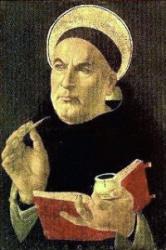
1225 - 1274 Person Name: Thomas Aquinas, d. 1274 Author of "Lo, upon the altar lies" in Evangelical Lutheran hymnal Thomas of Aquino, confessor and doctor, commonly called The Angelical Doctor, “on account of," says Dom Gueranger, "the extraordinary gift of understanding wherewith God had blessed him," was born of noble parents, his father being Landulph, Count of Aquino, and his mother a rich Neapolitan lady, named Theodora. The exact date of his birth is not known, but most trustworthy authorities give it as 1227. At the age of five he was sent to the Benedictine monastery at Monte Cassino to receive his first training, which in the hands of a large-hearted and God-fearing man, resulted in so filling his mind with knowledge and his soul with God, that it is said the monks themselves would often approach by stealth to hear the words of piety and wisdom that fell from the lips of the precocious child when conversing with his companions. After remaining at Monte Cassino for seven years, engaged in study, St. Thomas, "the most saintly of the learned, and the most learned of the saints," returned to his family, in consequence of the sack of the abbey by the Imperial soldiers. From thence he was sent by his parents to the University of Naples then at the height of its prosperity, where, becoming intimate with the Fathers of the Dominican Order, and being struck, probably, by the devotedness and ability of the Dominican Professors in the University, he was induced to petition for admission into that order, though he was at that time not more than seventeen years of age. This step gave such umbrage to his mother that she caused him to be waylaid on the road to Paris (whither he was being hurried to escape from her), and to be kept for more than two years in prison, during which time his brothers, prompted by their mother, used all means, even the most infamous, to seduce him from religion. At last the Dominicans' influence with the Pope induced the latter to move the Emperor Frederick to order his release, when St. Thomas was at once hurried back to Naples by the delighted members of his order. He was afterwards sent to Rome, then to Paris, and thence to Cologne. At Cologne his studies were continued under the celebrated Albertus Magnus, with whom, in 1245, he was sent by the Dominican Chapter once more to Paris for study, under his direction, at the University. In 1248, when he had completed his three years' curriculum at Paris, St. Thomas was appointed, before he was twenty-three years of age, second professor and “magister studentium,” under Albertus, as regent, at the new Dominican school (on the model of that at Paris), which was established by the Dominicans in that year at Cologne. There he achieved in the schools a great reputation as a teacher, though he by no means confined himself to such work. He preached and wrote; his writings, even at that early age, were remarkable productions and gave promise of the depth and ability which mark his later productions. His sermons also at that time enabled him to attract large congregations into the Dominican church. In 1248 he was directed to take his degree at Paris; and though his modesty and dislike of honour and distinction made the proposal distasteful to him, he set out and begged his way thither; but it was not until October 23rd, 1257, that he took his degree. The interval was filled by such labours in writing, lecturing, and preaching, as to enable him by the time he became a doctor to exercise an influence over the men and ideas of his time which we at this time can scarcely realise. So much was this the case that Louis IX. insisted upon St. Thomas becoming a member of his Council of State, and referred every question that came up for deliberation to him the night before, that he might reflect on it in solitude. At this time he was only thirty-two years of age. In 1259 he was appointed, by the Dominican Chapter at Valenciennes, a member of a Commission, in company with Albertus Magnus and Pierre de Tarentaise, to establish order and uniformity in all schools of the Dominicans. In 1261 the Pope, Urban IV., immediately upon his election to the Pontifical throne, sent for St. Thomas to aid him in his project for uniting into one the Eastern and Western Churches. St. Thomas in that same year came to Rome, and was at once appointed by the General of his Order to a chair of theology in the Dominican College in that city, where he obtained a like reputation to that which he had secured already at Paris and Cologne. Pope Urban being anxious to reward his services offered him, first the Patriarchate of Jerusalem, and then a Cardinal's hat, but he refused both. After lecturing, at the request of the Pope, with great success at Vitervo, Orvieto, Perugia, and Fondi, he was sent, in 1263, as "Definitor," in the name of the Roman Province, to the Dominican Chapter held in London. Two years later Clement IV., who succeeded Urban as Pope, appointed him, by bull, to the archbishopric of Naples, conferring on him at the same time the revenues of the convent of St. Peter ad Aram. But this appointment he also declined. In 1269 he was summoned to Paris—his last visit— to act as "Definitor" of the Roman Province at the General Chapter of his Order, and he remained there until 1271, when his superiors recalled him to Bologna. In 1272, after visit¬ing Rome on the way, he went to Naples to lecture at the University. His reception in that city was an ovation. All classes came out to welcome him, while the King, Charles I., as a mark of royal favour bestowed on him a pension. He remained at Naples until he was summoned, in 1274, by Pope Gregory X., by special bull, to attend the Second Council of Lyons, but whilst on the journey thither he was called to his rest. His death took place in the Benedictine Abbey of Fossa Nuova in the diocese of Terracina, on the 7th of March 1274, being barely forty-eight years of age. St. Thomas was a most voluminous writer, his principal work being the celebrated Summa Theologiae, which, although never completed, was accepted as such an authority as to be placed on a table in the council-chamber at the Council of Trent alongside of the Holy Scriptures and the Decrees of the Popes. But it is outside the province of this work to enlarge on his prose works. Though not a prolific writer of hymns, St. Thomas has contributed to the long list of Latin hymns some which have been in use in the services of the Church of Rome from his day to this. They are upon the subject of the Lord's Supper. The best known are:— Pange lingua gloriosi Corporis Mysterium; Adoro te devote latens Deitas; Sacris sollemniis juncta sint gaudia; Lauda Sion Salvatorem; and Verbum supernum prodiens. The 1st, 3rd, and 5th of these are found in the Roman Breviary, the 2nd, 4th, and 5th in Newman's Hymni Ecclesiae; the 4th in the Roman Missal; all of them appear in Daniel; the 2nd and 4th in Mone; and the 2nd, 4th, and 5th in Königsfeld. Of these hymns numerous translations have been made from time to time, and amongst the translators are found Caswall, Neale, Woodford, Morgan, and others. [Rev. Digby S. Wrangham, M.A.] -- Excerpts from John Julian, Dictionary of Hymnology (1907)

Mary Fawler Maude

1819 - 1913 Person Name: Mrs. Mary F. Maude Author of "Thine for ever! God of love" in Sacred Songs for School Use Maude, Mary Fawler, née Hooper, daughter of George Henry Hooper, of Stanmore, Middlesex, was married in 1841 to the late Joseph Maude, some time Vicar of Chirk, near Ruabon, and Hon. Canon of St. Asaph, who died in Feb. 1887. Mrs. Maude's hymns were published in her Twelve Letters on Confirmation, 1848, and in Memorials of Past Years, 1852 (privately printed). Her best known hymn, is "Thine for ever, God of love" (Confirmation). Concerning it Mrs. Maude says: -- "It was written in 1847 for my class in the Girls' Sunday School of St. Thomas, Newport, Isle of Wight, and published in 1848 at the beginning of a little book called ‘Twelve Letters on Confirmation,' by a Sunday School Teacher, and reprinted in the Memorials, 1852." [S. MSS.] The original is in 7 stanzas of 4 lines. It is usually abbreviated, and stanzas ii., iii. transposed, as in the Society for Promoting Christian Knowledge Church Hymns, 1871; the Hymnal Companion; Hymns Ancient & Modern, 1875, Thring's Collection, 1882, and most other hymnbooks. As a hymn for Confirmation its use is extensive. The omitted stanzas are:— "Thine for ever in that day When the world shall pass away: When the trumpet note shall sound, And the nations underground "Shall the awful summons hear, Which proclaims the judgment near. Thine for ever. 'Neath Thy wings Hide and save us, King of Kings." -- John Julian, Dictionary of Hymnology (1907)

Pages


Export as CSV
It looks like you are using an ad-blocker. Ad revenue helps keep us running. Please consider white-listing Hymnary.org or getting Hymnary Pro to eliminate ads entirely and help support Hymnary.org.